
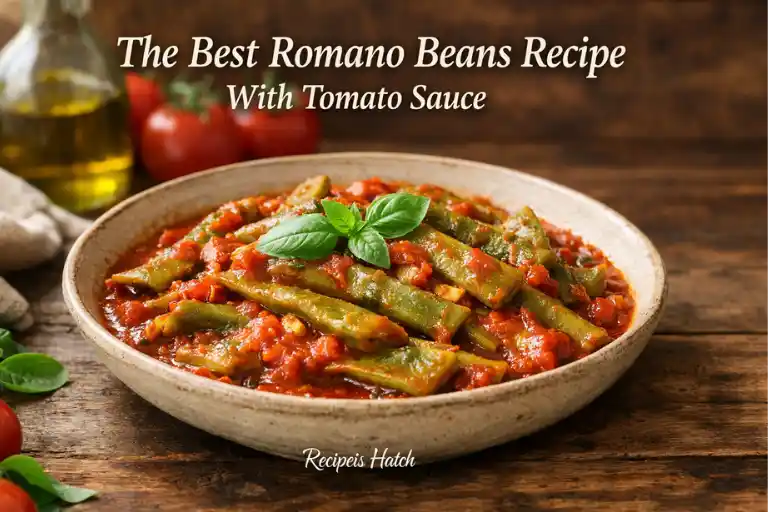
If you’re looking for a Romano beans recipe with tomato sauce that is simple, flavorful, and reliable, you’re in the right place. These flat Italian green beans, also known as Romano green beans, are thicker and more tender than regular green beans. When slowly simmered in a rich garlic tomato sauce, they absorb flavor beautifully and turn into a comforting Mediterranean side dish.
This recipe shows you how to cook Romano beans so they become soft but never mushy. Whether you prefer a classic Italian Romano beans recipe, a light vegan side dish, or a rustic braised Romano beans style preparation, this guide walks you through every step. With simple ingredients like olive oil, fresh tomatoes, and garlic, you’ll create a dish that tastes authentic, wholesome, and perfect for any dinner table.
Quick Answer – How to Make Romano Beans in Tomato Sauce
To make this Romano beans recipe with tomato sauce, start by trimming fresh Romano green beans (flat Italian beans). Heat olive oil in a pan and gently cook minced garlic until fragrant — this step, known as garlic blooming, builds deep flavor in the base. Add crushed or fresh tomatoes, season lightly with salt and pepper, then stir in the beans. Cover and slow simmer on low heat for about 25–30 minutes, stirring occasionally.
The key to tender braised Romano beans is cooking them slowly so the tomato sauce softens the fibers without turning them mushy. They’re ready when a fork slides in easily but the beans still hold their shape. Total cook time, including prep, is about 40 minutes, making this an easy, comforting Mediterranean vegetable side dish.
What Are Romano Beans? (And Why They’re Perfect for This Dish)
Romano beans, often called flat Italian green beans, are wide, flat pods that are thicker than regular green beans. They are sometimes labeled as Romano pole beans or Italian flat beans at farmers’ markets. Unlike thin green beans, Romano beans have a meatier texture and a slightly sweeter, more earthy flavor.
When comparing Romano vs green beans, the biggest difference is structure. Regular green beans are slender and cook quickly, while Romano beans are broader and hold up beautifully during slow simmering. This makes them perfect for a Romano beans recipe with tomato sauce, where the beans need time to absorb the rich garlic tomato flavor without falling apart.
In terms of texture and flavor, Romano beans stay tender yet firm when properly cooked. They soak up sauce better than most flat beans, which is why they’re often used in Italian Romano beans recipes and other Mediterranean vegetable dishes. Romano beans are typically in season during late spring through early fall, making them a popular summer vegetable side dish in Italian and Middle Eastern cooking.

You might also like: How to Grow Cucumbers 7 Proven Tips
Why This Recipe Works
A great Romano beans recipe with tomato sauce isn’t just about ingredients — it’s about technique. The reason this dish turns out tender and flavorful comes down to simple cooking science.
First, tomato acidity helps gently break down the natural fibers in Romano green beans. Because these flat Italian beans are thicker than regular green beans, they need time for their structure to soften. The mild acidity in crushed or fresh tomatoes slowly tenderizes them without making them mushy.
Second, this recipe uses slow braising instead of high heat. Cooking on low heat allows the beans to absorb the garlic tomato sauce evenly. High heat can cause the outside to soften too quickly while the inside stays firm. A gentle slow simmer ensures even cooking and better texture.
Another key step is oil blooming garlic. Heating minced garlic in olive oil before adding tomatoes releases fat-soluble flavor compounds, creating a deeper and richer base for the sauce. This step builds authentic flavor in any Italian Romano beans recipe.
Finally, the sauce reduction technique matters. Letting the tomato sauce simmer uncovered toward the end helps excess moisture evaporate. This naturally thickens the sauce, allowing it to cling beautifully to the beans and transform them into perfectly braised Romano beans in tomato sauce.
Ingredients (With Smart Substitutions)
This Romano beans recipe with tomato sauce uses simple, wholesome ingredients that highlight the natural flavor of these flat Italian beans. Each ingredient plays an important role in building a rich and balanced dish.
- Fresh Romano beans – The star of this recipe. Choose bright green, firm Romano green beans without blemishes. Their wide shape helps them absorb the garlic tomato sauce beautifully.
- Fresh vs canned tomatoes – Fresh tomatoes give a lighter, summer flavor, while canned crushed or whole tomatoes create a deeper, richer sauce. Both work well in this Italian Romano beans recipe.
- Garlic – Essential for aroma and depth. Properly blooming garlic in olive oil builds the foundation of flavor.
- Olive oil – Use good-quality extra virgin olive oil for authentic Mediterranean taste.
- Herbs (basil, parsley) – Fresh basil adds sweetness, while parsley gives freshness and balance.
- Optional spice (red pepper flakes or coriander) – Add a gentle heat or a subtle Middle Eastern twist to your braised Romano beans.
Ingredient Substitution Guide
Can I use regular green beans?
Yes, but keep in mind that regular green beans are thinner and cook faster. The texture will be lighter and less hearty than true Romano beans in tomato sauce. Reduce the simmer time by about 5–10 minutes.
Can I use frozen Romano beans?
Yes. Thaw them first and pat dry before cooking. They may release a bit more water, so allow extra time for sauce reduction.
Can I use canned beans?
Canned beans are not ideal for this recipe because they are already soft. This dish relies on slow simmering fresh Romano green beans so they absorb flavor properly. If using canned, reduce cooking time significantly and focus on thickening the tomato sauce.
Step-by-Step Foolproof Method
Follow this method carefully and you’ll get perfectly tender Romano beans in tomato sauce every time. The key is patience, proper heat control, and simple technique.
Step 1 – Prep the Romano Beans Properly
Start by rinsing your fresh Romano beans under cool water. Trim the ends with a knife or snap them off by hand. If the beans are very long, cut them in half so they cook evenly and are easier to serve.
Blanch or skip?
For most Romano beans recipes, blanching is not necessary. Because this is a slow-braised Romano beans dish, the gentle simmer in tomato sauce softens them naturally. However, if your beans are older or very thick, a quick 3-minute blanch can help reduce cooking time. For cutting size, keep pieces about 2–3 inches long. This helps the beans hold their shape while absorbing the garlic tomato sauce.
Step 2 – Build the Garlic Tomato Base
Heat extra virgin olive oil in a wide pan over medium-low heat. Add minced garlic and let it gently cook for about 30–45 seconds. This step is called blooming garlic, and it releases deep flavor into the oil.
Once fragrant (but not browned), add your crushed or fresh tomatoes. Stir well and let the sauce simmer for a few minutes before adding the beans. Practice salt layering here — add a small pinch of salt to the sauce first, then adjust later. This builds balanced flavor in your Italian Romano beans recipe instead of over-salting at the end.
Step 3 – Slow Simmer for Perfect Tenderness
Add the prepared Romano green beans into the tomato sauce and stir to coat. Cover the pan partially.
Lid on vs lid off?
Keep the lid mostly on during the first 15–20 minutes to trap steam and help soften the beans. Remove the lid during the final 5–10 minutes to allow sauce reduction.
Simmer gently on low heat for about 25–30 minutes total. Avoid high heat, as it can toughen the outer layer before the inside becomes tender. To test doneness, pierce a bean with a fork. It should slide in easily but the bean should still hold its shape — not collapse. That’s the perfect texture for braised Romano beans.
Step 4 – Final Flavor Adjustment
Once the beans are tender, check the sauce consistency. If it looks watery, let it simmer uncovered a few more minutes. The sauce should lightly cling to the beans — this is your sauce thickness test.
Turn off the heat and stir in freshly chopped basil or parsley for brightness. Finish with a small drizzle of raw olive oil for a rich Mediterranean touch. Let the dish rest for 5 minutes before serving. This short rest helps the flavors settle and makes your Romano beans recipe with tomato sauce even more delicious.
How to Get Perfect Texture Every Time
Getting the right texture is what separates an average Romano beans recipe with tomato sauce from a truly memorable one. Because Romano green beans are thicker than regular green beans, small technique changes make a big difference.
Ideal simmer range
Keep the heat on low to medium-low. The sauce should gently bubble, not boil. A steady slow simmer for about 25–30 minutes allows the tomato acidity to soften the fibers while keeping the beans intact. High heat can cause uneven cooking and tough outer skins.
Visual tenderness test
Look for beans that are slightly darker in color and flexible but not collapsing. When you press one with a fork, it should pierce easily yet still hold its flat shape. That’s perfect braised Romano beans texture.
How to avoid mushy beans
Do not overcook past 35 minutes. Also, avoid adding too much water. Excess liquid weakens the structure of the beans and dilutes the sauce in your Italian Romano beans recipe.
Why beans turn tough
Beans can stay firm if cooked too quickly at high heat or if they are very mature. Slow braising allows moisture and tomato acidity to gently break down the structure.
Fixing watery tomato sauce
Remove the lid during the final 5–10 minutes and let the sauce reduce naturally. This thickens the garlic tomato base so it clings beautifully to your Romano beans in tomato sauce.
Common Mistakes to Avoid
Even a simple Romano beans recipe with tomato sauce can go wrong if a few key details are ignored. Avoid these common mistakes to make sure your braised Romano beans turn out tender, flavorful, and balanced every time.
Cooking at too high heat
High heat may seem faster, but it actually works against you. Boiling the beans aggressively can toughen the outer layer while the inside stays firm. A gentle slow simmer is the secret to properly cooked Romano green beans.
Adding too much water
Romano beans release natural moisture as they cook. Adding extra water can thin out the tomato sauce and weaken the flavor. If you need liquid, add just a small splash — then rely on natural sauce reduction for thickness.
Over-salting early
Salt layering is important, but adding too much at the beginning can make the dish overly salty once the sauce reduces. Season lightly at first, then adjust at the end for balance.
Not reducing the sauce properly
If the lid stays on the entire time, the sauce may remain watery. Remove the lid during the final minutes so the tomato sauce thickens and clings beautifully to the beans.
Overcrowding the pan
Using a pan that’s too small traps excess moisture and prevents proper simmering. A wide pan allows even cooking and helps create perfectly textured Romano beans in tomato sauce.
Flavor Variations (Italian + Mediterranean + Middle Eastern)
One of the best things about this Romano beans recipe with tomato sauce is how easily it adapts to different flavors. Whether you prefer a traditional Italian Romano beans recipe or a bold Mediterranean twist, these variations keep the dish exciting while using the same base method.
Classic Southern Italian version
Keep it simple and authentic. Use crushed tomatoes, plenty of olive oil, and fresh basil. Finish with chopped parsley and a light drizzle of extra virgin olive oil. This version highlights the natural sweetness of the Romano green beans and the richness of the garlic tomato sauce.
Spicy cherry tomato version
Swap crushed tomatoes for halved cherry tomatoes and add red pepper flakes. The cherry tomatoes break down naturally, creating a slightly chunky sauce with gentle heat — perfect for spicy braised Romano beans.
Grilled then stewed variation
Lightly grill the flat Italian beans first until they develop light char marks. Then simmer them in tomato sauce. The smoky flavor adds depth and makes the dish feel more rustic and hearty.
Middle Eastern spiced Romano beans
Add a pinch of coriander, a touch of allspice, and finish with fresh herbs. Serve over rice for a comforting Mediterranean-style bean dish with warm spice notes.
Lemon & basil fresh summer version
For a lighter finish, add lemon zest and extra fresh basil at the end. This brightens the flavors and turns your Romano beans in tomato sauce into a refreshing summer vegetable side dish.
Romano Beans vs Other Flat Beans
Understanding the difference between Romano beans and other similar beans helps you choose the right ingredient for your dish. Not all flat beans behave the same when cooked in a rich tomato sauce.
Romano vs green beans
Regular green beans are thin, round, and cook quickly. In comparison, Romano green beans (also called flat Italian beans) are wider and meatier. They hold up better during a slow simmer, which makes them ideal for a true Romano beans recipe with tomato sauce. Green beans can work as a substitute, but they will cook faster and have a lighter texture.
Romano vs runner beans
Runner beans are also flat but tend to be longer and slightly firmer. They may need longer cooking and sometimes require string removal. Romano beans are naturally more tender and better suited for classic braised Romano beans preparations.
Texture comparison
Romano beans have a dense yet tender bite when cooked properly. They soften evenly while maintaining shape. This makes them perfect for slow braising without turning mushy.
Flavor absorption comparison
Because Romano beans are thicker, they absorb garlic tomato sauce deeply. Their structure allows the sauce to cling beautifully, making them superior for dishes like Romano beans in tomato sauce and other Mediterranean vegetable recipes.
What to Serve With Romano Beans
This Romano beans recipe with tomato sauce is versatile and works beautifully as both a side dish and a light main course. Because the beans are slowly braised in a rich garlic tomato sauce, they pair well with simple, hearty foods.

Crusty bread
A warm slice of crusty Italian bread is perfect for soaking up the extra tomato sauce. This is one of the most traditional ways to serve Italian Romano beans.
Basmati rice
Serving Romano beans in tomato sauce over fluffy basmati rice turns the dish into a satisfying plant-based meal. This pairing works especially well for a Mediterranean or Middle Eastern variation.
Grilled chicken or lamb
The rich, slow-simmered beans balance beautifully with grilled meats. A plate of braised Romano beans alongside grilled chicken or lamb creates a complete, wholesome dinner.
Mezze platter
Add these beans to a mezze spread with hummus, olives, and fresh herbs. Their tender texture and bright tomato flavor make them a standout vegetable dish.
Italian dinner pairing
Serve them next to roasted potatoes, grilled fish, or pasta for a comforting, home-style Italian meal.
Nutrition & Dietary Benefits
This Romano beans recipe with tomato sauce is not only comforting and flavorful, but it’s also naturally wholesome. Because it uses simple ingredients like Romano green beans, tomatoes, garlic, and olive oil, it fits easily into many healthy eating styles.
Calories per serving
One serving of braised Romano beans (about 1 cup) contains roughly 120–160 calories, depending on the amount of olive oil used. It’s light enough for a side dish but filling enough to enjoy as a plant-based meal.
Fiber & plant protein
Romano beans are rich in dietary fiber, which supports digestion and helps you feel full longer. They also provide a modest amount of plant protein, making this a satisfying Mediterranean vegetable dish.
Vegan & gluten-free
This recipe is naturally vegan, vegetarian, dairy-free, and gluten-free. There are no processed ingredients, making it suitable for clean eating and whole-food diets.
Mediterranean diet alignment
With its focus on olive oil, fresh vegetables, and herbs, this Italian Romano beans recipe fits perfectly within the Mediterranean diet, known for heart-healthy benefits and balanced nutrition.
Make-Ahead, Storage & Freezing Guide
One of the best things about this Romano beans recipe with tomato sauce is that it tastes even better the next day. The flavors deepen as the garlic tomato sauce settles into the beans, making it perfect for meal prep.
Fridge storage time
Store leftover Romano beans in tomato sauce in an airtight container in the refrigerator for up to 4 days. Let the dish cool completely before sealing to maintain texture and freshness.
Freezer compatibility
Yes, you can freeze braised Romano beans. Place them in freezer-safe containers and store for up to 2 months. Keep in mind that the beans may soften slightly after thawing, but the flavor will remain rich and comforting.
Best reheating method
Reheat gently on the stovetop over low heat. Add a small splash of water if needed and allow the sauce to warm slowly. Avoid high heat, as it can overcook the Romano green beans.
Meal prep tips
Prepare a double batch and portion it into containers with rice or grilled protein. This makes a balanced, ready-to-eat Mediterranean-style meal throughout the week.
FAQs About Romano Beans Recipe With Tomato Sauce
Do I need to blanch Romano beans first?
No, blanching is usually not necessary for a proper Romano beans recipe with tomato sauce. Because the beans are slowly simmered, the tomato acidity naturally softens them. However, if the Romano green beans are very thick or mature, a quick 2–3 minute blanch can shorten cooking time slightly.
How long should I simmer Romano beans?
For tender braised Romano beans, simmer them gently on low heat for about 25–30 minutes. Keep the heat at a slow simmer, not a boil. The beans are ready when a fork slides in easily but they still hold their flat shape.
Can I use canned tomatoes?
Yes, canned crushed or whole tomatoes work very well in this Italian Romano beans recipe. They provide consistent flavor and help create a rich garlic tomato sauce. Choose high-quality canned tomatoes for the best results.
Can I substitute green beans?
Yes, regular green beans can be used if Romano beans are unavailable. Keep in mind they cook faster and have a lighter texture. Reduce simmer time by about 5–10 minutes to avoid overcooking.
Are Romano beans healthy?
Yes, Romano green beans are rich in fiber, vitamins, and antioxidants. When cooked with simple ingredients like olive oil and tomatoes, they create a naturally vegan and gluten-free Mediterranean dish that supports balanced eating.
Can I freeze Romano beans in tomato sauce?
Yes, you can freeze Romano beans in tomato sauce for up to 2 months. Let them cool completely before freezing. Reheat gently on low heat to preserve texture and prevent the beans from becoming too soft.
Pro Chef Tips for Maximum Flavor
Small details can turn a good Romano beans recipe with tomato sauce into something truly special. These simple chef-level tips will help you build deeper flavor and better texture every time.
- Use high-quality olive oi: Because this dish uses very few ingredients, the quality of your extra virgin olive oil really matters. A rich, fruity olive oil enhances the garlic tomato base and gives your Italian Romano beans recipe authentic Mediterranean depth.
- Don’t rush the simmer: Patience is key. A steady slow simmer allows the Romano green beans to soften evenly while absorbing the sauce. Cooking too fast can toughen the outer skin and prevent proper flavor development.
- Let flavors rest before serving: Once the beans are cooked, let them sit for about 5–10 minutes off the heat. This resting time helps the sauce settle and cling better to the beans, improving overall taste.
- Finish with a raw olive oil drizzle: Just before serving, add a light drizzle of fresh olive oil. This final touch adds shine, aroma, and richness to your perfectly braised Romano beans in tomato sauce.
Final Thoughts
This Romano beans recipe with tomato sauce proves that simple ingredients can create something deeply comforting and full of flavor. With just Romano green beans, tomatoes, garlic, and olive oil, you can prepare a wholesome Mediterranean vegetable dish that feels both rustic and refined.
By using a gentle slow simmer, proper garlic blooming, and careful sauce reduction, you ensure the beans turn out tender — never mushy, never tough. Whether you enjoy this as a classic Italian Romano beans recipe, a light vegan side dish, or a hearty meal served over rice, it’s a recipe that fits many occasions.
What makes this dish special is its balance: rich yet fresh, simple yet satisfying. Once you master the texture and technique, this braised Romano beans recipe can easily become a staple in your kitchen — perfect for weeknights, meal prep, or sharing around the table.