

Moqueca Da Banana Da Terra is a traditional Brazilian plantain stew made with ripe plantains, coconut milk, peppers, tomatoes, garlic, and spices. It is a flavorful vegan moqueca inspired by the classic seafood version from Brazil’s coastal regions. Instead of fish, this recipe uses banana da terra (plantains), which add natural sweetness and a soft, creamy texture.
If you are searching for an authentic moqueca de banana da terra recipe, this dish is known for its rich coconut broth, gentle heat, and bright lime finish. It is a comforting one-pot Brazilian vegan stew that is both simple and satisfying.
Many people love this plantain stew recipe because it is naturally dairy-free, gluten-free, and easy to customize. It’s a perfect example of how traditional Brazilian flavors can shine in a plant-based meal.
Why This Brazilian Plantain Stew Is So Popular
There’s a reason Moqueca Da Banana Da Terra is loved by so many people. This Brazilian plantain stew feels like true comfort food. The creamy coconut milk, soft plantains, and warm spices create a rich and cozy dish that satisfies both the heart and the stomach.
Another reason for its popularity is its one-pot meal simplicity. This plantain stew recipe does not require complicated steps. Everything cooks together slowly, allowing the flavors to blend into a smooth, fragrant broth. It’s perfect for busy days when you want something homemade without too much effort.
It is also a beautiful plant-based alternative to seafood moqueca. Traditional moqueca recipe versions use fish, but this vegan moqueca keeps the authentic Brazilian taste while being fully plant-based. With the global rise of vegan Brazilian cuisine, this dish has become a favorite for those looking for bold flavors in a healthy, comforting meal.
The Origins of Moqueca – Cultural & Regional History
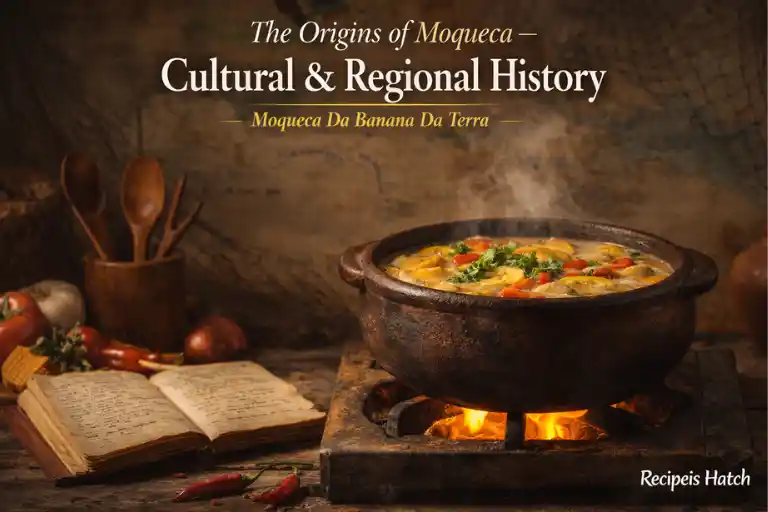
Moqueca is more than just a stew. It is a dish deeply connected to Brazilian coastal cuisine and cultural history. Long before modern recipes existed, this slow-cooked stew was prepared by Indigenous communities using clay pots and local ingredients. Over time, African and Portuguese influences shaped what we now know as the classic moqueca recipe. Understanding the roots of Moqueca Da Banana Da Terra helps you appreciate how this simple Brazilian plantain stew carries generations of flavor and tradition.
You might also like: Tostones vs Patacones Differences
Indigenous & Afro-Brazilian Roots
The earliest form of moqueca came from Indigenous Brazilian cooking methods. They used clay pots to gently simmer fish with herbs and native ingredients. When African communities arrived in Brazil, they introduced dendê oil (palm oil) and bold spices, adding richness and color to the stew. This blend of Indigenous and Afro-Brazilian techniques created the base of what we now call authentic Brazilian stew culture.
Moqueca Baiana vs Moqueca Capixaba
There are two main regional versions:
- Moqueca Baiana (from Bahia) uses coconut milk, dendê oil, and stronger spices.
- Moqueca Capixaba (from Espírito Santo) skips coconut milk and focuses on tomatoes, herbs, and olive oil.
Both versions are traditional, but their flavor profiles are quite different.
How Banana da Terra Became a Vegan Adaptation
As plant-based eating became more popular, cooks began replacing seafood with banana da terra (plantains). Their firm texture and natural sweetness make them perfect for absorbing the rich coconut broth. This change turned the dish into a flavorful vegan moqueca, while still keeping the heart of the original tradition alive.
What Does “Banana da Terra” Mean?
The term “banana da terra” is Portuguese and simply means “banana of the land.” In Brazil, it refers to plantains, not the sweet dessert bananas most people eat raw. If you are making an authentic Moqueca Da Banana Da Terra, choosing the right type of plantain is very important.
Plantain vs Banana – What’s the Difference?
While both look similar, plantains are firmer, less sweet, and usually cooked before eating. Regular bananas are soft and sweet when ripe, but plantains hold their shape better in a Brazilian plantain stew. This makes them perfect for absorbing the rich coconut milk and spices in a traditional moqueca recipe.
Ripeness Levels Explained
Plantains change color as they ripen:
- Green – firm and starchy
- Yellow with black spots – slightly sweet
- Mostly black – soft and very sweet
Best Plantain Stage for Moqueca
For the best vegan moqueca, use yellow plantains with a few black spots. They are soft enough to cook evenly but still hold their shape in the stew.
Can You Substitute Regular Bananas?
No, regular bananas are too soft and sweet. They break apart quickly and will not give your moqueca de banana da terra recipe the right texture or flavor balance.
Ingredient Breakdown (Traditional + Substitutions Table)
To make an authentic Moqueca Da Banana Da Terra (Brazilian plantain stew), using the right ingredients is important. But don’t worry — if you live outside Brazil, there are easy substitutes. Below is a simple guide to help you prepare a rich and balanced vegan moqueca anywhere in the world.
| Ingredient | Traditional Use | Substitute Outside Brazil |
| Banana da terra (plantains) | Main base of the stew | Ripe plantains from Latin or Asian stores |
| Dendê oil (palm oil) | Adds color and deep flavor | Red palm oil or a mix of olive oil + paprika |
| Coconut milk | Creamy broth base | Full-fat canned coconut milk |
| Tomatoes | Adds acidity and body | Fresh or canned diced tomatoes |
| Bell peppers | Sweetness and texture | Any red or yellow pepper |
| Garlic & onions | Flavor foundation | Shallots if needed |
| Cilantro | Fresh herbal finish | Parsley + small squeeze of lime |
| Chili peppers | Heat | Red chili flakes |
The Role of Dendê Oil
Dendê oil is one of the most important ingredients in traditional moqueca baiana. It gives the stew its bright orange color and deep, slightly smoky flavor. Without it, the dish may still taste good, but it will not have the same authentic Brazilian character. If you cannot find dendê oil, use red palm oil or add paprika to olive oil for color.
Coconut Milk & Flavor Balance
Coconut milk creates the creamy base of this Brazilian vegan stew. It balances the natural sweetness of the plantains and softens the heat from chili. Always use full-fat coconut milk for the best texture and richness in your plantain stew recipe.
Optional Add-ins (Hearts of Palm, Bell Peppers, Chili)
You can customize your moqueca de banana da terra recipe by adding hearts of palm, extra bell peppers, or more chili for spice. These additions enhance texture and give your stew more depth while keeping it fully plant-based and flavorful.
Step-by-Step – How to Make Moqueca Da Banana Da Terra
Making Moqueca Da Banana Da Terra is simple when you follow the right order. This Brazilian plantain stew is a one-pot dish, which means everything cooks together gently to build rich flavor.
- Prep time: 15 minutes
- Cook time: 25–30 minutes
- Total time: About 45 minutes
- Servings: 4 generous portions
Basic Steps
- Heat oil in a deep pan and sauté onions and garlic until soft.
- Add bell peppers and tomatoes. Cook until slightly tender.
- Layer sliced banana da terra (plantains) on top.
- Pour in coconut milk and a small amount of water.
- Add salt, chili, and a squeeze of lime.
- Cover and simmer gently until plantains are soft but firm.
- Finish with fresh cilantro.
Flavor Layering Method
The secret to a perfect vegan moqueca is layering flavors. First build the base with garlic and onions. Then add vegetables for sweetness. Finally, let the plantains absorb the creamy coconut broth. This slow layering creates a balanced moqueca recipe with depth and warmth.
Timing & Texture Control
Do not overcook the plantains. They should be soft but still hold their shape. Simmer gently — never boil — to keep the texture smooth and creamy.
Common Cooking Mistakes to Avoid
- Using overly ripe plantains (they become mushy)
- Boiling instead of simmering
- Adding too much coconut milk
- Skipping salt balance
With proper timing, your moqueca de banana da terra recipe will turn out rich, comforting, and authentic.
Flavor Profile & Texture Science
One reason Moqueca Da Banana Da Terra stands out from other stews is its carefully balanced flavor and texture. This Brazilian plantain stew is not just creamy — it is layered, bright, and deeply comforting. Understanding the flavor science helps you cook it perfectly every time.
Sweet vs Savory Balance
The natural sweetness of banana da terra (plantains) is the heart of this dish. But it never tastes like dessert. The sweetness is balanced by savory ingredients like garlic, onions, peppers, salt, and herbs. This contrast creates a smooth harmony that makes the vegan moqueca rich but not heavy.
Coconut Fat Structure
Coconut milk adds creaminess because of its natural fat content. The fat coats the plantains and vegetables, creating a silky mouthfeel. In a traditional moqueca recipe, this creamy base helps carry the spices evenly through the stew.
Spice Heat Calibration
Chili should enhance, not overpower. A mild heat warms the dish without hiding the plantain flavor. You can adjust spice levels easily based on your preference.
Acid Brightness (Lime)
A squeeze of lime at the end adds brightness. The acid cuts through the coconut richness and lifts the entire moqueca de banana da terra recipe.
Creamy Yet Chunky Consistency
The perfect texture is creamy broth with tender but intact plantain pieces. Simmer gently to maintain that ideal balance.
How to Adjust the Recipe
One of the best things about Moqueca Da Banana Da Terra is how easy it is to adjust. This Brazilian plantain stew is flexible, which means you can change the flavor or nutrition without losing its authentic character. Whether you want more heat, extra creaminess, or added protein, this vegan moqueca adapts beautifully.
Make It Spicier
If you enjoy more heat, add extra fresh chili peppers or red chili flakes while cooking. You can also use a small amount of smoked paprika for deeper warmth. Remember, spice should enhance the flavor of the plantain stew recipe, not overpower the coconut base. Add gradually and taste as you go.
Make It Creamier
For a richer texture, use full-fat coconut milk and reduce the added water. You can also let the stew simmer a little longer so the broth thickens naturally. This creates a silkier consistency in your moqueca de banana da terra recipe.
Lower-Fat Version
To make a lighter version, use light coconut milk and reduce the amount of oil. The stew will still be flavorful but slightly less rich. The natural sweetness of the plantains will still shine.
Add Protein (Tofu, Chickpeas, Hearts of Palm)
To make this Brazilian vegan stew more filling, add cubed tofu, cooked chickpeas, or hearts of palm. These ingredients absorb the coconut broth and blend well with the traditional moqueca recipe flavors while keeping it fully plant-based.
What to Serve With Brazilian Plantain Stew
A rich and creamy Moqueca Da Banana Da Terra is even better when served with the right side dishes. This flavorful Brazilian plantain stew has a silky coconut broth, so pairing it with simple and fresh sides creates a perfect balance.
White Rice
The most traditional choice is plain white rice. It absorbs the creamy coconut milk sauce beautifully and keeps the meal simple. In Brazil, rice is almost always served with a classic moqueca recipe.
Farofa
Farofa is toasted cassava flour mixed with oil and sometimes onions. It adds a slightly crunchy texture that contrasts nicely with the soft plantains in this vegan moqueca.
Brazilian Vinaigrette
A fresh Brazilian vinaigrette made with tomatoes, onions, vinegar, and herbs adds brightness. Its light acidity balances the richness of the stew.
Toasted Cassava Flour
Sprinkling toasted cassava flour on top gives subtle crunch and absorbs extra broth.
Grilled Vegetables
Simple grilled vegetables like zucchini or bell peppers add freshness and make your Brazilian vegan stew meal more colorful and complete.
Nutrition & Health Benefits

Beyond its rich flavor, Moqueca Da Banana Da Terra is also a nourishing and balanced meal. This Brazilian plantain stew is naturally plant-based, making it a smart option for anyone looking for wholesome comfort food.
Calories Per Serving
A typical serving of this vegan moqueca contains around 350–450 calories, depending on the amount of coconut milk and oil used. It is filling without feeling heavy, especially when paired with rice or vegetables.
High Fiber Benefits
Plantains are a great source of dietary fiber, which supports healthy digestion and helps you feel full longer. This makes the plantain stew recipe satisfying and steady in energy.
Potassium Content
Banana da terra (plantains) are naturally rich in potassium, an important mineral that supports heart health and muscle function.
Dairy-Free & Gluten-Free
This moqueca recipe is naturally dairy-free and gluten-free, making it suitable for many dietary needs without special changes.
Anti-Inflammatory Ingredients
Garlic, onions, peppers, and lime all contain natural compounds that support overall wellness.
Vegan Meal Balance
With healthy fats from coconut milk, fiber from plantains, and optional protein add-ins like tofu or chickpeas, this Brazilian vegan stew offers a well-balanced plant-based meal.
Storage, Reheating & Meal Prep Guide
One of the best things about Moqueca Da Banana Da Terra is that it stores very well. This rich and creamy Brazilian plantain stew can easily be prepared in advance, making it perfect for weekly meal prep.
How Long It Lasts in the Fridge
Store your vegan moqueca in an airtight container in the refrigerator for up to 3–4 days. The flavors continue to blend over time, which often makes the stew taste even better the next day.
Can You Freeze Moqueca?
Yes, you can freeze this moqueca de banana da terra recipe for up to 2 months. However, keep in mind that plantains may become slightly softer after thawing. Let it cool completely before freezing.
Best Reheating Method
Reheat gently on the stovetop over low heat. Add a small splash of water or coconut milk to restore the creamy texture. Avoid high heat to prevent the plantains from breaking apart.
Does Flavor Improve the Next Day?
Yes. Like many traditional Brazilian stews, the flavor deepens overnight as the spices and coconut broth fully combine, creating an even richer taste.
Traditional Cooking Tips for Authentic Flavor
If you want your Moqueca Da Banana Da Terra to taste truly authentic, small cooking details make a big difference. These traditional techniques help bring out the full flavor of this classic Brazilian plantain stew.
Use of Clay Pot (Panela de Barro)
In Brazil, moqueca is often cooked in a panela de barro, a traditional clay pot. Clay holds heat evenly and keeps the stew warm for longer. It also allows the flavors to develop slowly, giving your moqueca recipe a deeper and more balanced taste. If you don’t have one, use a heavy-bottomed pot.
Oil Timing Technique
If using dendê oil, add it after sautéing onions and garlic. This preserves its color and rich flavor. Adding it too early can dull its unique taste.
Toasting Aromatics
Lightly sauté garlic, onions, and spices before adding liquids. This releases natural oils and builds the base of a flavorful vegan moqueca.
Simmering vs Boiling
Always simmer gently, never boil. Boiling can break apart the plantains and ruin the creamy texture of your moqueca de banana da terra recipe.
FAQs About Moqueca Da Banana Da Terra
What is banana da terra?
Banana da terra is the Brazilian name for plantains. Unlike sweet dessert bananas, plantains are firmer and usually cooked before eating. They are the main ingredient in Moqueca Da Banana Da Terra, giving this Brazilian plantain stew its unique texture and mild sweetness.
Is moqueca vegan?
Traditional moqueca recipe versions often include seafood. However, moqueca de banana da terra is completely vegan, using plantains, coconut milk, vegetables, and spices instead of fish.
Is moqueca spicy?
Moqueca is usually mildly spiced, not overly hot. You can adjust the heat by adding more or less chili in your vegan moqueca.
Can I make it without dendê oil?
Yes. While dendê oil adds authentic flavor and color, you can substitute it with olive oil or red palm oil if needed.
How ripe should plantains be?
Use yellow plantains with small black spots. They are soft enough to cook well but still hold their shape in the stew.
Can I use green plantains?
Yes, but they will be firmer and less sweet. The texture will be slightly starchier in your plantain stew recipe.
What does moqueca taste like?
This Brazilian vegan stew tastes creamy, slightly sweet, gently spiced, and fresh with a hint of lime.
How long does moqueca last?
Stored in the refrigerator, moqueca de banana da terra lasts about 3–4 days in an airtight container.
Final Thoughts
Moqueca Da Banana Da Terra is more than just a recipe — it is a beautiful reflection of Brazilian culture, history, and flavor. This comforting Brazilian plantain stew brings together creamy coconut milk, tender plantains, fresh herbs, and warm spices in one simple pot.
What makes this vegan moqueca special is its balance. It is rich but not heavy, sweet but still savory, and traditional yet adaptable. Whether you are exploring Brazilian vegan cuisine for the first time or looking for a new plant-based comfort dish, this moqueca de banana da terra recipe offers both authenticity and flexibility.
With the right ingredients, gentle simmering, and proper flavor layering, you can create a dish that feels homemade and deeply satisfying. Serve it with rice, share it with family, and enjoy a meal that carries tradition in every bite.