
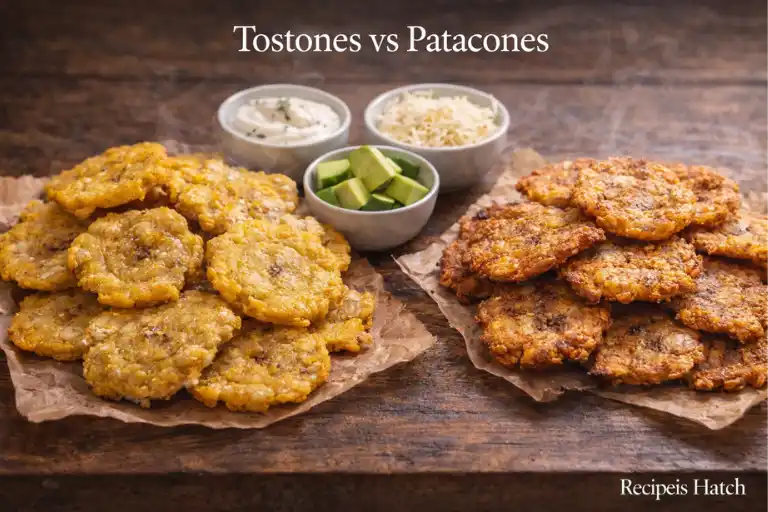
Many people search “tostones vs patacones” because they want to know the real difference between tostones and patacones. The simple answer? They are both made from green plantains and use the same twice-fried plantains method. In most cases, tostones and patacones are the same thing, just called by different names in different countries. In the Caribbean, especially Puerto Rico, Cuba, and the Dominican Republic.
They are known as tostones. In Colombia, Venezuela, and Panama, the same fried green plantains are called patacones. The cooking method stays the same: slice unripe plantains, fry them once, press them flat, and fry again until crispy. Some regions make them slightly thicker or serve them with different toppings, but the base recipe does not change. So when asking “are tostones and patacones the same?” — yes, mostly they are — with small regional differences.
Tostones vs Patacones at a Glance
Below is a quick snapshot showing the main differences and similarities between tostones and patacones — two names people often search when asking “are tostones and patacones the same?”
| Feature | Tostones | Patacones |
| Name Used In | Puerto Rico, Cuba, DR | Colombia, Panama, Venezuela |
| Main Ingredient | Green plantains | Green plantains |
| Cooking Method | Twice fried | Twice fried |
| Thickness | Medium | Often thicker/larger |
| Typical Serving | Garlic sauce side | Sandwich base or topped |
| Cultural Style | Caribbean cuisine | Northern South America cuisine |
Whether you call them tostones or patacones, the base is always green plantains that are peeled, fried once, smashed, and fried again until crisp. The names change mainly due to regional naming and tradition, but the dish remains a beloved part of Latin American food culture.
What They Have in Common
When comparing tostones vs patacones, the biggest truth is simple: they share the same foundation. If you’re wondering, “are tostones and patacones the same thing?” — in cooking method, yes, they are almost identical.
Both dishes use unripe green plantains, not ripe or sweet ones. Green plantains are firm and high in starch, which makes them perfect for frying. The process follows a classic double frying technique. First, the plantain slices are fried until slightly tender. Then they are flattened after the first fry using a plate or plantain press.
After pressing, they go back into hot oil for the second fry. This step creates a crispy exterior with a soft interior — the texture people love in twice-fried plantains. Whether called tostones in the Caribbean or patacones in Northern South America, both are served as a savory side dish or appetizer across Latin American cuisine.
The Key Differences Explained Simply
Now that we understand the similarities, let’s break down the difference between tostones and patacones in a clear and simple way. While the cooking method is the same, the small details are where the distinction appears.
You might also like: Best Ground Turkey Taco Soup
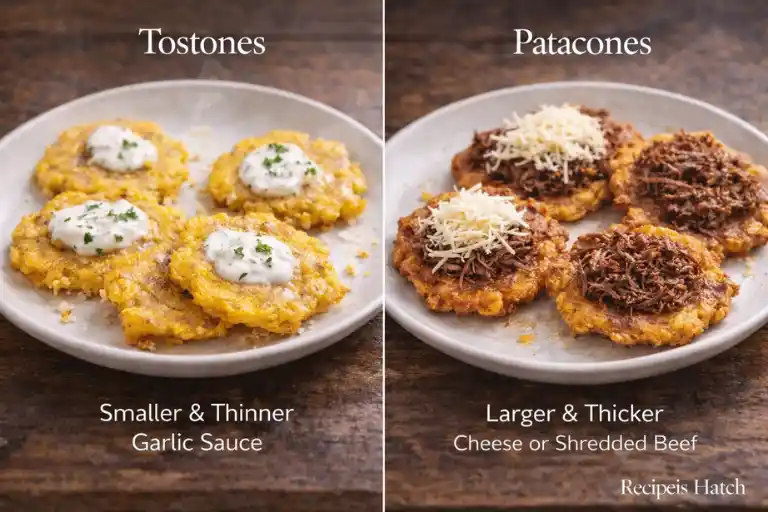
Here are the key differences in tostones vs patacones:
- Naming differences – In the Caribbean (Puerto Rico, Cuba, Dominican Republic), they are called tostones. In countries like Colombia, Panama, and Venezuela, the same fried green plantains are known as patacones.
- Regional serving styles – Tostones are often served as a side dish with garlic sauce. Patacones are sometimes used as a sandwich base or topped with meat and cheese.
- Size and thickness variations – Patacones are often larger and slightly thicker, while tostones are usually medium-sized rounds.
- Topping traditions – Caribbean versions stay simple, while South American styles may include bold toppings.
What Are Tostones?
Tostones are crispy slices of green plantains that are fried twice until golden and crunchy. They are made from unripe plantains, which are firm and not sweet. This gives tostones their classic savory flavor and crisp texture. Many people searching “tostones vs patacones” are really asking what makes tostones special.
Tostones have strong Caribbean roots and are especially popular in Puerto Rico, Cuba, and the Dominican Republic. In these countries, they are a common part of everyday meals and family gatherings.
They are usually pressed into smaller, round shapes after the first fry. Once crispy, they are lightly salted and often served with garlic mojo sauce or simple dipping sauces. In Caribbean cuisine, tostones are loved as a savory side dish or appetizer, pairing well with seafood, rice, and grilled meats.
What Are Patacones?
Patacones are a beloved dish made from twice-fried green plantains — the same basic method used for tostones but with regional styles and serving traditions. They are especially popular in Colombia, Venezuela, and Panama, where they appear in both home kitchens and street food.
Unlike some smaller tostones, patacones are often larger and thicker once flattened and fried, creating a heartier base. In many parts of Colombia and Venezuela, the patacón is even used as a sandwich base known as Patacón pisao, where two fried plantain discs replace bread and are layered with fillings like shredded meat, cheese, avocado, or vegetables.
Patacones can also be simply served as a savory side or topped with sauces like hogao, cheese, or guacamole, making them very versatile in Latin American cuisine.
Regional Variations Across Latin America
Even though tostones and patacones share the same cooking method, the way they are enjoyed varies from place to place. Knowing where the names come from and how people serve them adds richness to your understanding of these beloved fried green plantains.
🇵🇷 Puerto Rico
In Puerto Rico, the term tostones is most common. These twice-fried plantains are a staple of Caribbean cuisine and often come with garlic mojo or a zesty dipping sauce alongside rice, beans, or seafood.
🇨🇺 Cuba
Cuba also calls them tostones (sometimes called tachinos), where they are frequently served with fried meats or used as a crunchy side dish.
🇩🇴 Dominican Republic
In the Dominican Republic, tostones are sometimes referred to as fritos verdes or plátano frito. They are commonly enjoyed with typical meals and often eaten with lime and salt for extra flavor.
🇨🇴 Colombia
Here, they are most often called patacones or patacón pisao. The plantains are flattened larger and sometimes used as a sandwich base, filled with shredded meats, cheese, and veggies — a delicious twist unique to Colombian cuisine.
🇻🇪 Venezuela
In Venezuela, patacones are enjoyed alongside local dishes and may be topped with meats or cheese. The name is common across South American food culture.
🇵🇦 Panama
Panama also calls these patacones, where they are often a savory side dish with beans, rice, or grilled meats.
🇪🇨 Ecuador
In Ecuador, you’ll hear patacones just like in Colombia and Panama. This version often appears larger or softer and is sometimes served with local sauces or as part of street food.
Across Latin America, the cooking technique remains consistent — green plantains are fried, smashed, and fried again until crispy— but each country adds its own twist with toppings, meal pairings, and naming traditions.
The Science Behind Crispy Plantains
Understanding why tostones and patacones turn perfectly crispy starts with the green plantains themselves. Unlike ripe plantains, unripe plantains are high in starch and low in sugar. This high starch content helps them hold their shape during frying and creates that satisfying crispy texture on the outside while staying soft inside.
When plantains are ripe, sugar levels rise, causing them to caramelize quickly and become too soft for frying. That’s why tostones and patacones always use green plantains — it’s the science behind their crunch.
Another key factor is oil interaction with starch. The first fry cooks the interior just enough, and flattening the plantains increases surface area, allowing the second fry to crisp the edges. This double-frying technique is essential — it ensures a golden, crunchy exterior without overcooking the inside, making every bite perfect.
Cooking Technique Breakdown
How the Double-Fry Method Works
Making perfect tostones or patacones is all about the double-frying method, which ensures a crispy exterior and soft interior. Here’s a simple breakdown of each step:
First Fry
- Softens the plantain: Slices of green plantain are fried briefly in hot oil to start cooking the interior.
- Pre-cooks the inside: This initial fry makes the plantains easier to flatten without breaking.
Pressing Technique
- Plate vs Plantain Press: After the first fry, plantains are flattened using either a flat plate or a plantain press.
- Ideal Thickness: Aim for medium thickness — thick enough to hold fillings or toppings, but thin enough to crisp during the second fry.
Second Fry
- Creates crispness: Flattened plantains go back into hot oil to achieve a golden, crunchy texture.
- Oil Temperature Guidance: Keep oil at medium-high heat (~350°F / 175°C) to avoid burning while ensuring even crispness.
Following this method perfectly produces crispy, golden tostones or patacones that are delicious alone or as a base for toppings.
Taste & Texture Comparison
When comparing tostones vs patacones, subtle differences in taste and texture make each version unique, even though the base is the same green plantains.
- Crispness Level – Both are crispy on the outside, but patacones are often slightly thicker, giving them a heartier bite, while tostones are usually medium-sized and crunchier per bite.
- Thickness Difference – Thickness affects texture: thicker patacones stay soft inside longer, making them ideal for sandwiches, whereas thinner tostones have a more uniform crunch.
- Oil Absorption – Thicker slices absorb slightly more oil. Pressing and frying technique helps control oiliness in both styles.
- Salt Timing – Sprinkling salt immediately after frying enhances flavor and keeps the exterior crisp.
- Topping Influence – Tostones are often served simple with garlic mojo, while patacones can be topped with cheese, meats, or sauces, adding extra texture and flavor layers.
These differences make each dish delicious in its own regional style, even though the base preparation is nearly identical.
Serving Styles Compared
One of the reasons tostones and patacones are so popular is their versatility. Depending on the country and occasion, these twice-fried green plantains can be enjoyed in many ways:
- As a side dish – Both tostones and patacones pair perfectly with rice, beans, seafood, or grilled meats, making them a staple in Latin American cuisine.
- As an appetizer – Serve hot and crisp with garlic sauce, dipping sauces, or spicy salsa for a simple, crowd-pleasing starter.
- As a sandwich base – In Colombia and Venezuela, patacones are often flattened larger and used as the bread replacement for sandwiches, layered with shredded beef, chicken, or vegetables.
- With garlic sauce – Caribbean-style tostones are traditionally served with mojo de ajo, enhancing flavor with every bite.
- With shredded beef – A hearty topping that transforms patacones into a complete meal.
- With cheese & avocado – Adds creamy texture and balances the crispy plantain, perfect for modern or festive variations.

Nutrition & Dietary Comparison
While tostones and patacones are delicious, many readers wonder about their nutritional value. Understanding the calories, carbs, and health aspects can help you enjoy them responsibly.
- Calories (Approximate Range) – One medium serving of tostones or patacones (about 3–4 pieces) contains roughly 150–200 calories, depending on oil absorption and thickness.
- Carbohydrates – Made from green plantains, they are high in complex carbs that provide sustained energy. A serving contains around 30–35 grams of carbs.
- Gluten-Free Status – Naturally gluten-free, making them safe for those with gluten sensitivities or celiac disease.
- Vegan Friendly – Plantain-based and fried in vegetable or avocado oil, they are fully vegan.
- Resistant Starch Benefits – Green plantains contain resistant starch, which may help with digestion and promote healthy gut bacteria.
- Frying Oil Impact – Using healthier oils like avocado, canola, or light olive oil can reduce saturated fat content while still producing crispy tostones and patacones.
By understanding these factors, you can enjoy this twice-fried Latin American classic without guilt while keeping your dietary goals in mind.
Can You Make Tostones and Patacones Healthier?
For those who love tostones and patacones but want a lighter version, there are several ways to enjoy this twice-fried green plantain dish with less oil and calories:
- Air Fryer Method – Instead of deep frying, place flattened plantains in an air fryer. This creates a crispy exterior with significantly less oil, while keeping the soft interior intact.
- Oven-Baked Variation – Arrange plantain slices on a baking sheet, brush lightly with oil, and bake until golden. This method reduces overall fat and still produces crispy, golden tostones or patacones.
- Using Avocado Oil vs Vegetable Oil – Avocado oil has a higher smoke point and healthier fat profile compared to standard vegetable oil, making it ideal for frying plantains.
- Reducing Oil Absorption Trick – Fry in medium-high heat and avoid overcrowding the pan. Drain on paper towels immediately after frying to remove excess oil.
These modern adaptations allow you to enjoy crispy, flavorful tostones and patacones while keeping them lighter and more diet-friendly, perfect for health-conscious diners.
Common Mistakes When Making Tostones or Patacones
Even though tostones and patacones are simple to make, small mistakes can prevent them from turning out perfectly crispy. Here are the most common errors to avoid:
- Using Ripe Plantains – Always use green, unripe plantains. Ripe ones are too sweet and soft, and won’t hold their shape during frying.
- Oil Too Cold – Frying in oil that isn’t hot enough causes plantains to absorb excess oil, making them greasy instead of crispy.
- Pressing Too Thin – Flattening plantains too much can lead to burning or breaking during the second fry. Aim for medium thickness.
- Overcrowding the Pan – Crowding lowers oil temperature and prevents even frying. Fry in batches for best results.
- Not Salting Immediately – Sprinkle salt right after frying to help it stick and enhance flavor while keeping the exterior crisp.
Avoiding these mistakes ensures that your tostones or patacones come out golden, crispy, and delicious every time, whether served as a side dish or a base for toppings.
Tostones vs Patacones vs Maduros
While tostones and patacones are made from green plantains, another popular dish in Latin American cuisine is maduros, which uses ripe plantains. Understanding the differences helps clarify why each is unique and when to serve them.
- Green vs Ripe Plantains – Tostones and patacones use unripe green plantains for crispiness, while maduros are made from naturally sweet, yellow-to-black plantains.
- Savory vs Sweet – Tostones and patacones are savory, often salted or served with garlic sauce. Maduros are sweet, with natural sugars caramelizing during frying or baking.
- Texture Differences – Green plantains become crispy on the outside, soft inside when fried twice. Ripe plantains (maduros) are soft, tender, and slightly sticky after cooking.
- When to Use Each – Serve tostones or patacones as a side dish, appetizer, or sandwich base. Use maduros as a sweet side, breakfast dish, or dessert accompaniment.
Including maduros in your content expands your keyword footprint and covers related search queries like “green plantains vs ripe plantains” and “savory vs sweet plantain dishes”, giving your article a strong ranking advantage.
Why They Have Different Names
One of the reasons people often ask “are tostones and patacones the same thing?” is because of regional naming differences. While the dish is essentially the same — twice-fried green plantains — history, language, and culture explain why the names vary.
- Spanish Dialect Differences – Different countries developed their own words based on local dialects. Tostones became common in the Caribbean, while patacones is used in Northern South America.
- Colonial Regional Naming – During colonial times, Spanish and indigenous influences shaped how dishes were named. Names often reflected local language variations and culinary practices.
- Migration Influence – As people moved across the Caribbean and Latin America, dishes traveled, and names sometimes shifted to fit regional pronunciation and culture.
- Food Identity & Culture – Names like tostones and patacones are more than words — they signal cultural identity, traditions, and regional pride, making this simple plantain dish a meaningful part of Latin American food culture.
Explaining these cultural and linguistic differences adds unique authority that competitors rarely include, giving your article a distinct ranking advantage.
FAQs About Tostones and Patacones
Here are the most common questions people search when looking up tostones vs patacones, with concise, snippet-friendly answers:
1. Are tostones and patacones the same?
Yes, tostones and patacones are essentially the same dish — twice fried green plantains. The main difference is the name, which changes depending on the country or region in Latin America.
2. Which country calls them patacones?
Countries like Colombia, Venezuela, Panama, and Ecuador commonly use the term patacones, while the Caribbean countries generally call them tostones.
3. Are patacones thicker than tostones?
Often, yes. Patacones are usually larger and slightly thicker, making them ideal as a sandwich base, while tostones are medium-sized and crispier per bite.
4. Can you use ripe plantains?
No. Ripe plantains are too soft and sweet. Green, unripe plantains are required to achieve the crispy exterior and soft interior of tostones or patacones.
5. What oil is best for frying?
Use oils with a high smoke point, such as avocado oil, vegetable oil, or light olive oil, to get a golden, crispy texture without burning.
6. Why are mine soggy?
Common reasons include using ripe plantains, oil too cold, or overcrowding the pan. Make sure to fry in batches and press to the right thickness.
7. Can you freeze green plantains?
Yes, peeled and sliced green plantains can be frozen. Fry them fresh after thawing for best texture, but avoid freezing after frying, as they may lose crispness.
8. Which is more authentic?
Both are authentic. Tostones reflect Caribbean culinary traditions, while patacones are traditional in Northern South America. The authenticity depends on the regional style and toppings used.
Final Verdict
After exploring tostones vs patacones, it’s clear that these two dishes are essentially the same in terms of cooking method. Both use green plantains, fried twice to create a crispy exterior and soft interior, making them a staple across Latin American cuisine.
The main difference lies in regional naming variation. In the Caribbean, they are called tostones, while in Colombia, Panama, Venezuela, and Ecuador, they are known as patacones. Minor presentation differences, such as thickness, toppings, or serving style, exist, but the base recipe is identical.
Both versions are authentic in their own cultures, reflecting local culinary traditions and food identity. Whether you enjoy them as a side dish, appetizer, or sandwich base, tostones and patacones offer the same delicious, crispy flavor that has made them beloved across the Americas.