
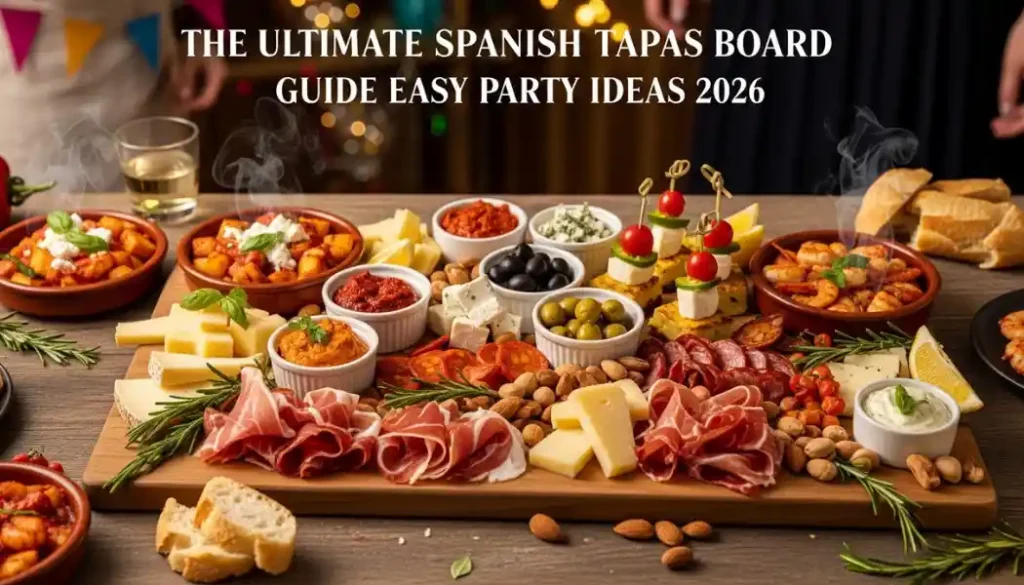
A Spanish Tapas Board is one of the most enjoyable and stylish ways to serve food for sharing. It brings together a mix of small Spanish dishes like cheeses, cured meats, olives, and bread, all arranged beautifully on one board. This simple idea comes from Spain’s traditional tapas culture, where people enjoy small bites with friends over drinks and conversation. Today, a Spanish tapas board has become popular worldwide for parties, family gatherings, and casual nights at home.
What makes it special is its flexibility—you can keep it authentic with traditional Spanish tapas ingredients or make it easy with store-bought items. Whether you are planning a dinner party or just exploring new food ideas, a tapas board is always a great choice. In this guide, you will learn how to create a perfect Spanish tapas board, what to include, and easy ideas to make it look and taste amazing.
Quick Answer
A Spanish Tapas Board is a shared platter of small Spanish foods like cheeses, cured meats, olives, bread, and snacks, served together for easy entertaining. It comes from Spain’s tapas culture, where people enjoy small bites while socializing.
Unlike a charcuterie board, a tapas board includes a wider mix of flavors and ingredients, not just meats and cheese. It is perfect for parties, wine nights, and casual gatherings, and can be made with both traditional and easy store-bought items.
What Is a Spanish Tapas Board?
A Spanish Tapas Board is a shared food platter that includes a mix of small Spanish dishes served together on one board or tray. It usually features items like Spanish cheeses, cured meats, olives, bread, and simple snacks, arranged in a way that is easy to pick and enjoy. The idea comes from Spain’s long tradition of serving small plates called tapas, which are meant for sharing with others.
Origin of Spanish Tapas Culture
The tapas culture in Spain started as a simple way to serve small bites with drinks in bars. Over time, it became a social tradition where people gather, talk, and enjoy different flavors in small portions. This culture is all about sharing food and enjoying time together, not just eating a full meal.
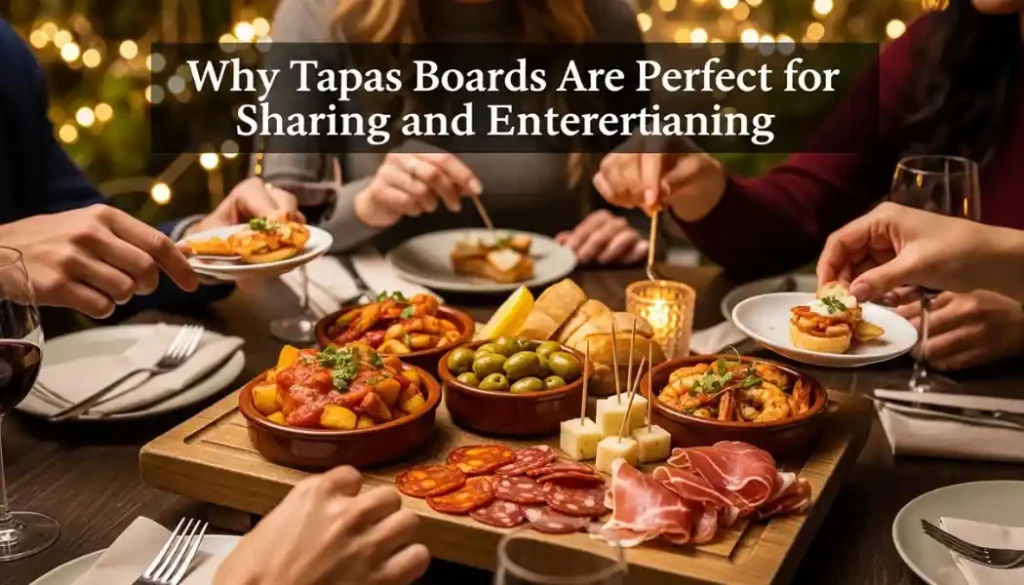
Why Tapas Boards Are Perfect for Sharing and Entertaining
A Spanish tapas board is perfect for parties because it brings variety, color, and flavor to the table. Guests can try different items without needing a full plate, making it ideal for social gatherings, wine nights, and casual hosting. It also looks beautiful and feels inviting.
Difference Between Tapas Board and Traditional Tapas Servings
Traditional tapas in Spain are usually served in small individual dishes at bars, while a tapas board brings all these items together on one shared platter. A board is more modern, convenient, and designed for home entertaining, making it easier to serve and enjoy a variety of flavors at once.
Spanish Tapas Board vs Charcuterie Board
A Spanish Tapas Board and a charcuterie board may look similar at first, but they come from very different food traditions. A tapas board is rooted in Spanish food culture, while a charcuterie board comes from French cuisine.
Spain vs France Food Culture
In Spain, tapas are about sharing small plates in a social and relaxed way, often enjoyed with drinks and conversation. In France, charcuterie focuses more on cured meats and cheeses presented in a refined, structured style.
Ingredient Differences
A Spanish tapas board includes a wider mix of items like olives, bread, vegetables, and small cooked bites, while a charcuterie board mainly highlights meats, cheeses, and crackers.
Serving Style and Experience
Tapas boards feel more casual, colorful, and flexible. Charcuterie boards are usually more organized and elegant. Tapas is about variety and sharing, while charcuterie is more about presentation and pairing.
When to Choose Each
Choose a Spanish tapas board for parties, wine nights, or casual gatherings. Choose a charcuterie board when you want a more classic, structured appetizer setup.
What Goes on a Spanish Tapas Board?
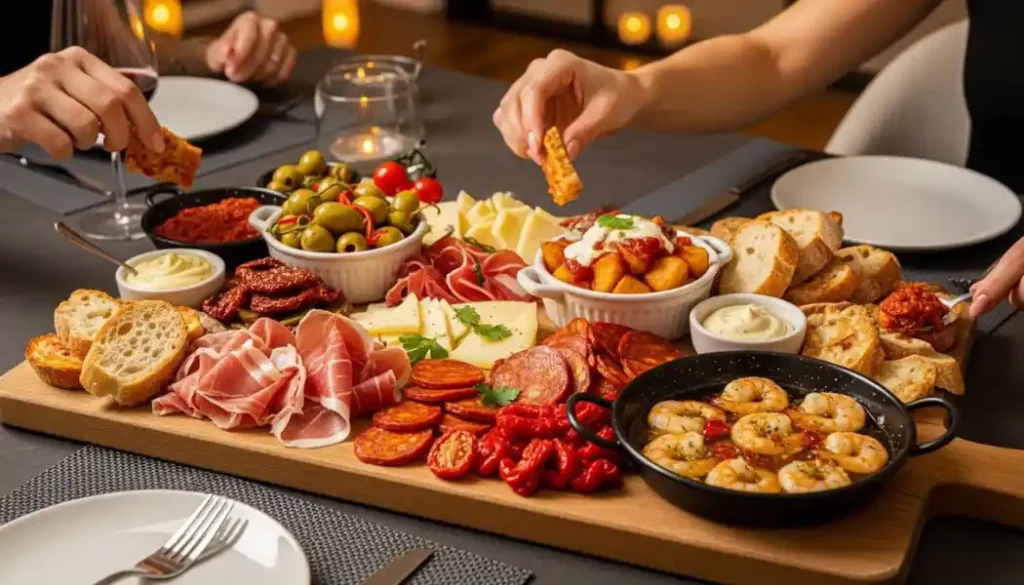
A well-balanced Spanish tapas board includes a mix of cheeses, meats, and classic Spanish sides. The goal is to create variety in flavor, texture, and color.
Spanish Cheeses
- Manchego – the most famous Spanish cheese with a rich, nutty flavor
- Iberian cheeses – soft, creamy, and slightly tangy varieties
Traditional Spanish Meats
- Jamón serrano – lightly cured Spanish ham with a smooth taste
- Jamón ibérico – premium ham with deep, rich flavor
- Chorizo – spiced Spanish sausage with smoky notes
- Salchichón – mild cured sausage with pepper seasoning
Classic Tapas Additions
- Olives – a must-have salty element
- Marcona almonds – buttery and lightly salted nuts
- Roasted peppers – sweet and smoky flavor
- Olive oil & bread – perfect for dipping and balance
A good Spanish tapas board is all about mixing these elements in a way that feels natural, colorful, and easy to share.
Authentic Spanish Tapas Board (Traditional Ingredients & Culture)
An authentic Spanish tapas board is deeply connected to everyday life in Spain. It reflects real regional Spanish food traditions, where each area has its own flavors, ingredients, and serving styles.
Regional Spanish Influence
In Spain, tapas vary from region to region. In southern areas like Andalusia, you’ll often find fried seafood and olives, while northern regions focus more on meat, cheese, and rustic bread. This regional variety is what makes tapas culture so rich and diverse.
Authentic Combinations Used in Spain
Locals don’t follow strict recipes. Instead, they combine simple, high-quality ingredients like Manchego cheese, jamón serrano, olives, roasted peppers, and fresh bread. The focus is always on balance—salty, creamy, and fresh flavors together.
How Locals Actually Serve Tapas
In Spain, tapas are usually served in small portions at bars, often shared across the table. People don’t focus on presentation perfection—instead, it’s about conversation, sharing, and enjoying small bites slowly with drinks.
How to Make a Spanish Tapas Board (Step-by-Step Guide)
Creating a Spanish tapas board is simple if you follow a clear order. The goal is to balance flavors, textures, and colors.
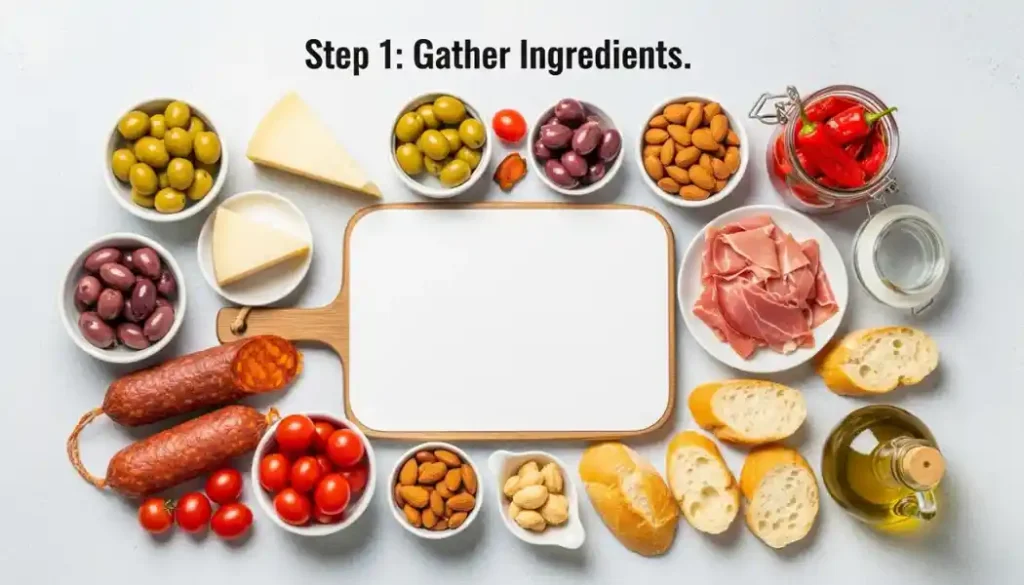
- Choose a large wooden board or platter
- Start by placing cheeses like Manchego or Iberian cheese
- Add cured meats such as jamón serrano and chorizo
- Place olives and small dips in different corners
- Fill empty spaces with bread, nuts, and roasted peppers
- Finish with a final styling touch to make it look full and inviting
A good tapas board should look natural, not overly arranged.
How Many Items Should a Tapas Board Include?
The number of items on a Spanish tapas board depends on the group size and occasion. The key is balance, not quantity.
Small board (2–3 people)
Include 5–7 items such as cheese, meat, olives, bread, and one extra snack.
Medium board (4–6 people)
Include 8–12 items with more variety in meats, cheeses, and sides.
Large party board (6+ people)
Include 12–18 items with multiple cheese types, meats, dips, and extras for variety.
Balance rule (flavor + texture mix)
Always combine salty, creamy, crunchy, and fresh elements so every bite feels different and interesting.
Easy Spanish Tapas Board Ideas
If you are new to making a Spanish tapas board, start simple and build confidence with easy combinations.
5-ingredient quick board
Use Manchego cheese, chorizo, olives, bread, and almonds for a fast and balanced setup.
Budget-friendly supermarket version
Choose simple store-bought items like cheddar-style cheese, olives, crackers, and cured ham alternatives.
No-cook tapas board
Use ready-to-eat ingredients only, such as cheese slices, olives, nuts, bread, and roasted peppers from jars. This makes it easy to create a tapas board without cooking while still keeping it flavorful and enjoyable.
Spanish Tapas Board Themes for Every Occasion
A Spanish Tapas Board can easily be adapted to different events and moods. By changing ingredients and style, you can create a board that fits any occasion while still keeping it simple and flavorful.
Classic Spanish Night
This theme focuses on traditional Spanish flavors. Use ingredients like jamón serrano, Manchego cheese, chorizo, olives, and crusty bread. It gives an authentic feel that reflects real Spanish tapas culture.
Wine Night Tapas Board
This version is designed around wine pairing. Include stronger cheeses, cured meats, olives, and roasted nuts. It works especially well with red wine, white wine, or sangria, making it perfect for relaxed evenings.
Budget-Friendly Board
A budget Spanish tapas board uses simple and affordable ingredients like basic cheese, olives, bread, and store-bought cured meats. The focus is on keeping it easy without losing flavor variety.
Healthy Fresh Tapas Board
This option highlights lighter choices such as fresh vegetables, olives, hummus-style dips, nuts, and fruit elements. It is perfect for those who want a healthier version of a tapas board.
How to Arrange a Tapas Board Like a Pro
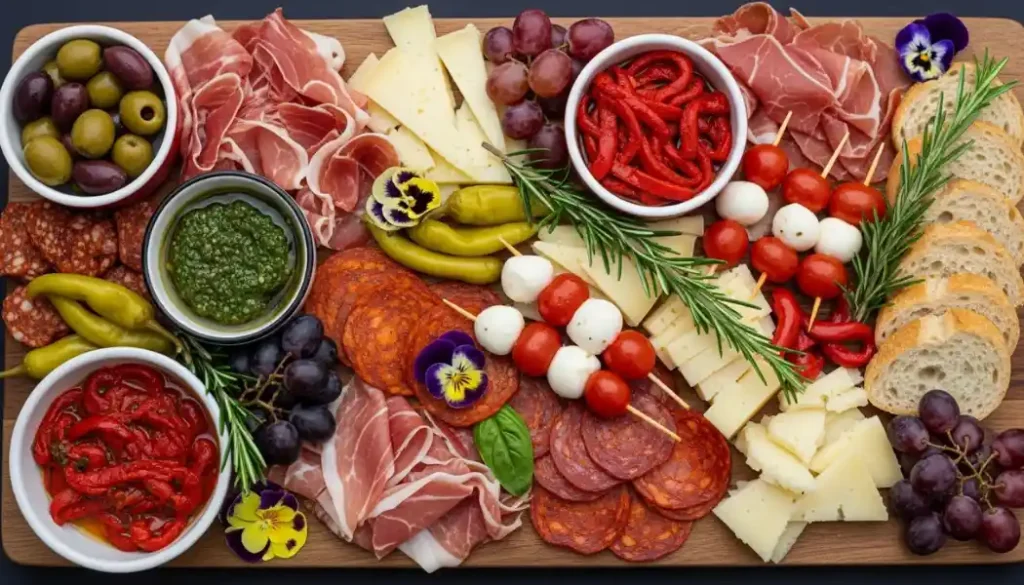
A well-arranged Spanish tapas board is not just about taste—it’s also about presentation. A beautiful layout makes the food more inviting and enjoyable.
Color Balance Technique
Use different colors like red peppers, green olives, white cheese, and dark meats to make the board visually appealing.
Height and Layering Tips
Stack or fold ingredients slightly to add height. For example, fold jamón slices or stack cheese pieces to avoid a flat look.
Grouping Ingredients Strategically
Keep similar items together but spread them evenly across the board so every section has variety.
Making It Instagram/Pinterest-Ready
Fill empty spaces naturally with nuts, herbs, or small bread pieces. A full but balanced board always looks more attractive in photos.
Tips for Serving a Spanish Tapas Board
Serving a Spanish tapas board the right way can improve both flavor and guest experience.
Best Serving Temperature
Serve cheeses at room temperature and meats slightly cool, not cold, for better flavor.
Timing Before Guests Arrive
Prepare the board just 20–30 minutes before serving so ingredients stay fresh and visually appealing.
Portion Planning
Estimate portions based on guests—more variety is better than large quantities of one item.
Keeping Food Fresh During Parties
Cover delicate items lightly if needed and refill small portions during the event to maintain freshness and presentation. A well-prepared tapas board should stay inviting from the first bite to the last.
Make-Ahead Tips for Stress-Free Hosting
A Spanish Tapas Board is perfect for entertaining, and the best part is that many elements can be prepared in advance. With a little planning, you can reduce stress and enjoy your time with guests.
What Can Be Prepared in Advance
You can prepare most of the dry and shelf-stable items ahead of time. This includes slicing cured meats like jamón serrano and chorizo, cutting cheeses like Manchego, and portioning olives, nuts, and roasted peppers into small containers. Bread can also be pre-sliced and stored properly.
What Must Be Fresh
Some items should always be added just before serving. These include fresh bread for best texture, soft cheeses at room temperature, and any freshly cut vegetables or fruits. This keeps the board tasting fresh and visually appealing.
Storage and Prep Strategy
Store prepped ingredients in airtight containers in the refrigerator. Keep meats and cheeses separated to preserve flavor. Bring items out 20–30 minutes before serving so they reach the ideal temperature for a better tasting experience.
Spanish Wine Pairing with Tapas
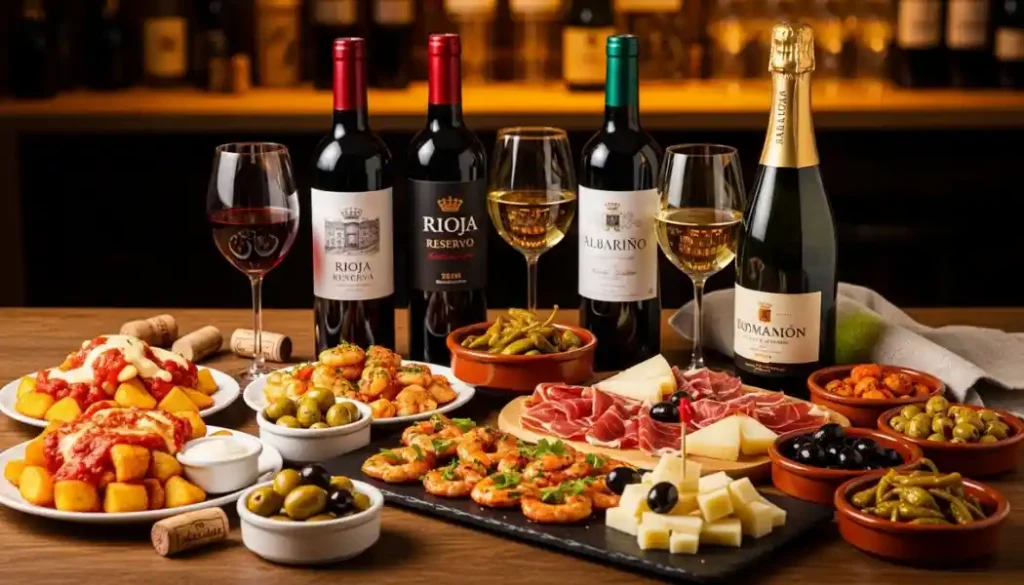
Pairing wine with a Spanish Tapas Board enhances the overall experience and brings out deeper flavors in the food.
Red Wine Pairings
Rich red wines like Tempranillo or Garnacha pair well with cured meats such as jamón serrano and chorizo, balancing their salty and smoky flavors.
White Wine Pairings
Light and crisp white wines like Albariño or Verdejo go well with cheeses, olives, and seafood-based tapas, offering a refreshing contrast.
Rosé & Sangria Options
Rosé wines and traditional sangria are great for casual gatherings. They pair well with almost all tapas ingredients and keep the board experience light and festive.
Seasonal Spanish Tapas Board Ideas
A Spanish Tapas Board can easily be adapted for different seasons and celebrations, making it a year-round entertaining option.
Summer Fresh Tapas Board
Focus on light and refreshing ingredients such as fresh vegetables, olives, cheeses, and chilled fruits. This version feels cool and vibrant.
Winter Cozy Tapas Board
Use richer flavors like cured meats, aged cheeses, roasted nuts, and warm bread. This creates a comforting and hearty experience.
Holiday or Celebration Version
For special occasions, include premium items like Iberian ham, gourmet cheeses, and wine pairings. Add decorative touches for a festive presentation.
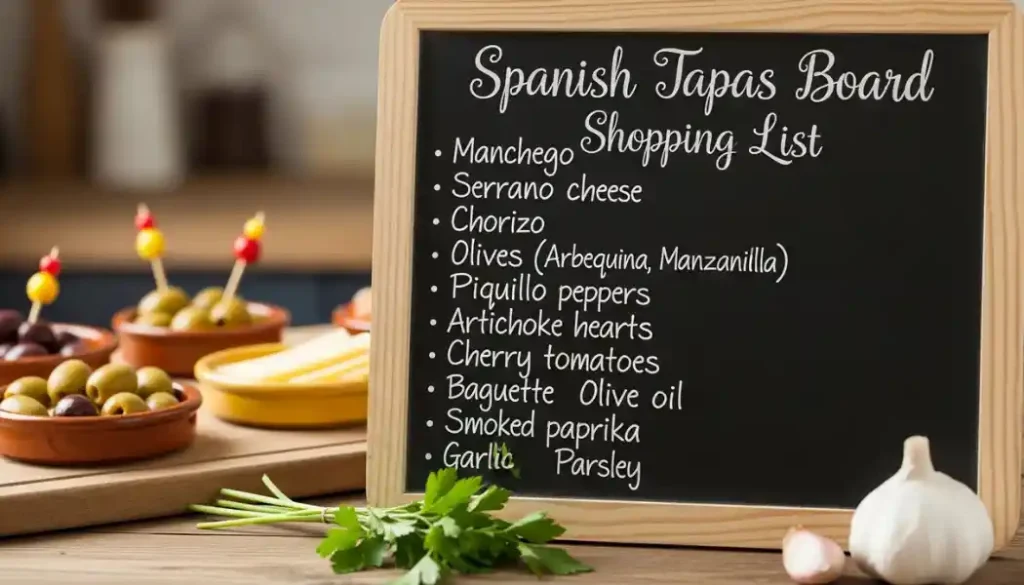
Spanish Tapas Board Shopping List
Having a structured shopping list makes preparing a Spanish Tapas Board much easier and more organized.
Cheeses Checklist
- Manchego
- Iberian-style cheeses
- Soft and semi-hard Spanish cheeses
Meats Checklist
- Jamón serrano
- Jamón ibérico
- Chorizo
- Salchichón
Pantry Essentials
- Olives
- Marcona almonds
- Olive oil
- Crusty bread or baguette
- Roasted peppers
Budget vs Premium Options
For a budget board, choose basic cured meats, local cheeses, and simple olives. For a premium version, upgrade to Iberian ham, aged Manchego, and high-quality Spanish olives.
A well-planned shopping list ensures your Spanish tapas board is balanced, flavorful, and easy to prepare without last-minute stress.
FAQs About Spanish Tapas Boards
What is included in a Spanish tapas board?
A Spanish tapas board usually includes a mix of cheeses (like Manchego), cured meats (such as jamón serrano), olives, bread, nuts, and roasted vegetables. The goal is to offer variety in flavor and texture.
How is tapas different from charcuterie?
Tapas come from Spain and focus on small shared dishes with a variety of ingredients, while charcuterie comes from France and mainly includes meats, cheeses, and crackers in a more structured style.
What cheese is best for tapas?
Manchego cheese is the most popular choice because of its nutty and rich flavor, but other Spanish cheeses also work well depending on taste preference.
Can tapas be prepared ahead of time?
Yes, many parts of a Spanish tapas board can be prepared in advance, such as slicing meats, cutting cheese, and prepping olives. Fresh items like bread should be added just before serving.
How do you serve tapas for a party?
Serve tapas on a large board or platter with a mix of flavors, colors, and textures, allowing guests to pick and share small bites throughout the gathering.
Final Thoughts
A Spanish Tapas Board is more than just a food platter—it’s a simple way to bring people together through sharing, flavor, and experience. Whether you choose an authentic Spanish tapas board with traditional ingredients or an easy beginner-friendly version, the key is balance, variety, and presentation.
From cured meats like jamón, rich Manchego cheese, olives, and fresh bread, every element works together to create a mix of textures and tastes that feel both casual and special at the same time.
What makes a tapas board truly stand out is not perfection, but the feeling it creates—relaxed conversations, shared bites, and a warm social atmosphere. By avoiding common mistakes and following simple preparation tips, you can easily build a board that looks beautiful and tastes even better. In the end, a Spanish tapas board is all about enjoying food the way it is meant to be enjoyed—together.