
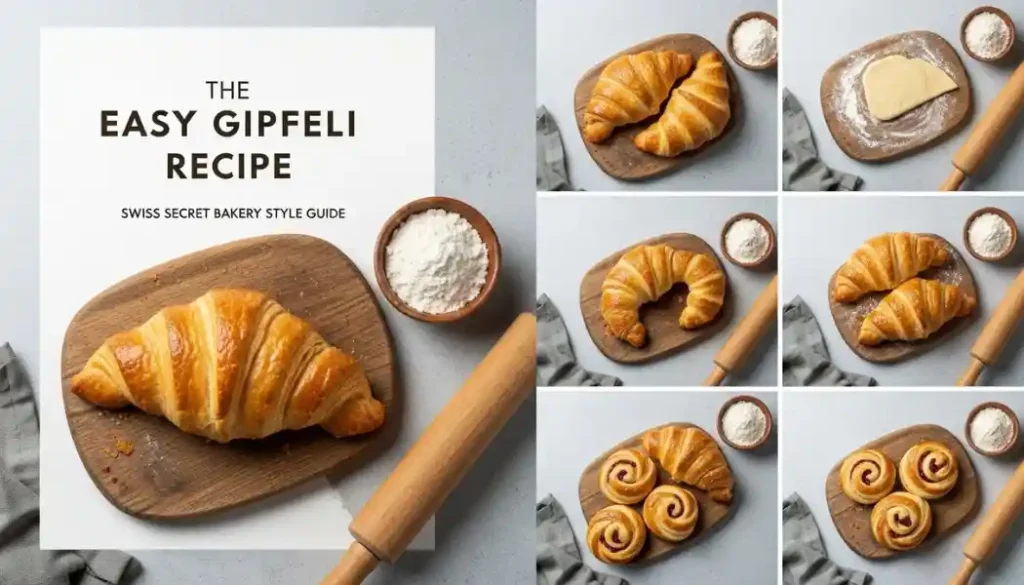
If you love buttery, flaky pastries, then this Gipfeli recipe is something you will enjoy making at home. Gipfeli is a famous Swiss breakfast pastry that looks similar to a croissant but has a slightly softer texture and a lighter taste. Many people search for a homemade gipfeli recipe because they want bakery-style results without going to a Swiss bakery.
In this guide, you will learn a simple way to make swiss gipfeli using basic ingredients and easy steps. Even if you are a beginner, you can follow this method to get a golden, flaky pastry with perfect layers. We will also cover tips for shaping, baking, and fixing common mistakes so your gipfeli turns out perfect every time. This is your complete guide to making easy swiss croissants at home with confidence and success.
Quick Answer
This Gipfeli recipe shows how to make soft, flaky Swiss croissants at home using simple ingredients like flour, yeast, butter, milk, and sugar. The key is proper dough lamination, cold butter control, and correct proofing time.
Which creates light bakery-style layers. It also includes easy steps, filling options like almond or chocolate, and tips to avoid common mistakes so beginners can get perfect results every time.
Why This Homemade Gipfeli Recipe Works
This homemade gipfeli recipe works because it follows the same basic ideas used in real Swiss bakeries. The goal is to create a light, flaky pastry with soft layers inside and a golden crust outside.
Butter Layering Importance
The most important secret is butter layering (lamination). When thin layers of butter are folded into the dough, they melt during baking and create those soft, airy layers. Without proper layering, the gipfeli becomes dense instead of flaky.
Dough Temperature Control
Keeping the dough cold is another key factor. If the dough gets too warm, the butter melts too early and the layers disappear. Cold dough helps maintain structure and gives a true bakery-style texture.
Proofing Timing Impact on Texture
Proper proofing time allows the dough to rise slowly. If you rush this step, the gipfeli can turn out heavy. Correct timing gives a light and soft inside.
Why Most Homemade Versions Fail
Most recipes fail because of warm dough, weak layering, or over-proofing. This guide avoids those mistakes, giving you a reliable way to make perfect Swiss gipfeli at home every time.
Ingredients for Gipfeli Recipe
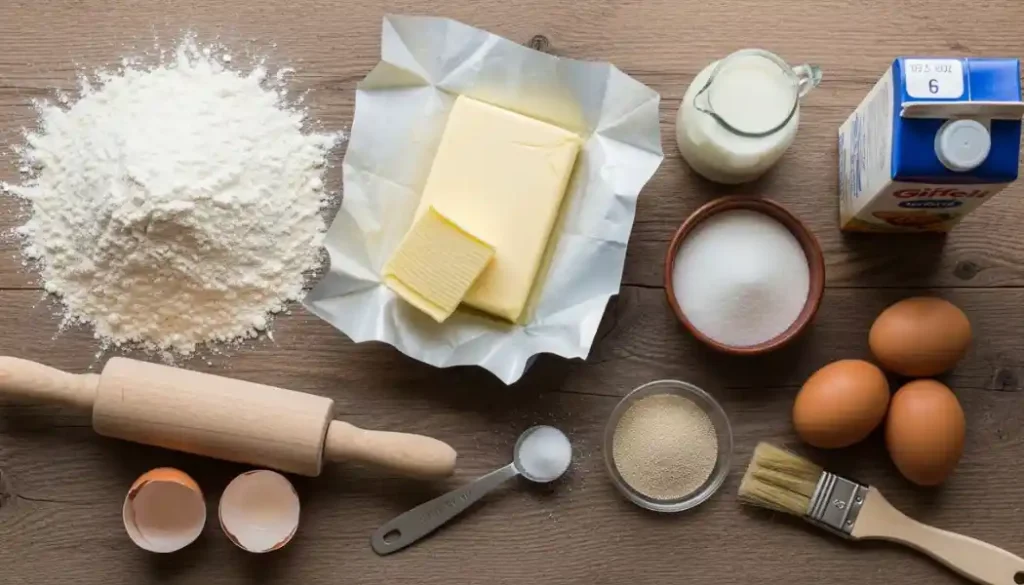
To make a perfect gipfeli recipe, you only need simple ingredients that you may already have at home. These ingredients are used to create a soft Swiss pastry dough with rich, buttery layers and a light texture.
Dough Ingredients
For the main gipfeli dough, you will need:
- All-purpose flour (for structure)
- Warm milk (helps activate yeast)
- Sugar (slight sweetness for flavor)
- Salt (balances taste)
- Instant yeast (helps the dough rise)
- Egg (adds softness and color)
- Butter (gives richness to the dough)
These basic ingredients form the base of a soft and homemade Swiss croissant dough.
Butter Lamination Layer Ingredients
The key to a flaky texture is the butter layer. You will need:
- Cold unsalted butter (very important for layers)
- A small amount of flour (to help shape butter, optional)
This step creates the classic flaky pastry layers that make gipfeli light and airy.
Optional Fillings
You can also add fillings to make your homemade gipfeli recipe more flavorful:
- Almond (Mandelgipfel) – sweet almond paste filling for a traditional Swiss taste
- Chocolate – soft melted chocolate for a dessert-style gipfeli
- Cheese or savory options – perfect for a breakfast or snack version
These variations help you turn a simple recipe into multiple Swiss bakery-style pastries.
Easy & Quick Gipfeli Recipe Version
If you want a faster way to make homemade gipfeli, this shortcut method is perfect for beginners. It still gives you a soft and slightly flaky pastry, but with less effort and time.
Faster Dough Option
Instead of a long traditional process, you can use a quick yeast dough. Mix the ingredients and let it rise just once. This saves time while still giving a soft Swiss gipfeli texture.
Simple Folding Technique
Instead of multiple laminations, you only fold the dough 1–2 times with butter. This keeps the layers light but easy to manage.
Beginner-Friendly Shortcut Lamination
Use softened (not melted) butter and gently fold it into the dough. This method is great for anyone making easy Swiss croissants at home for the first time.
How to Make Gipfeli (Step-by-Step Guide)
This is the complete method for making a classic gipfeli recipe with bakery-style results.
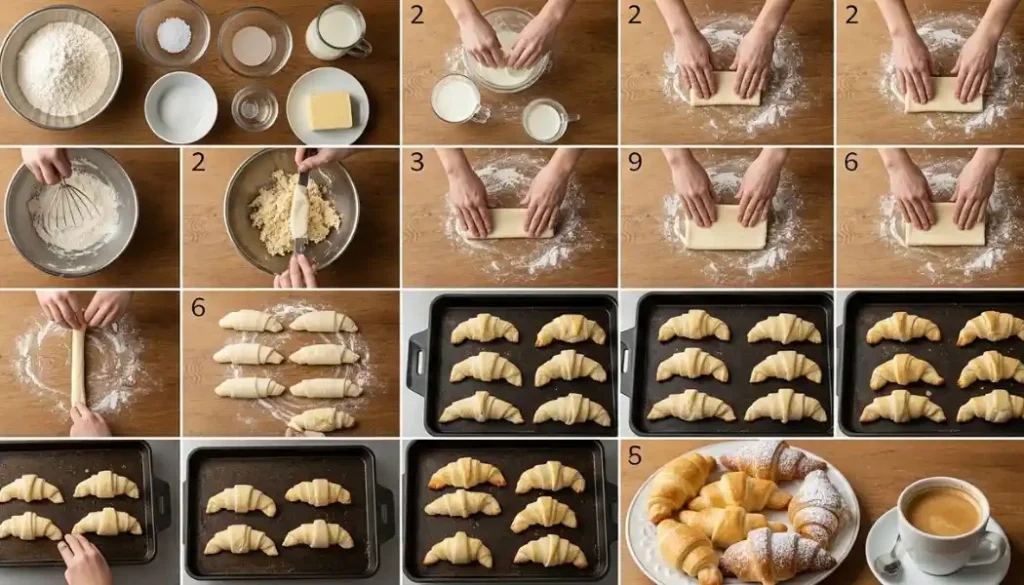
Step 1 – Prepare the Dough
Start by mixing flour, yeast, sugar, salt, milk, egg, and butter. Knead the dough until it becomes smooth and soft. Proper kneading helps build structure for a better flaky pastry base.
Step 2 – First Resting / Proofing
Let the dough rest in a warm place until it doubles in size. Ideal proofing time is around 1 to 2 hours. This step helps develop a light and airy texture in your homemade gipfeli dough.
Step 3 – Lamination (Butter Layering Technique)
Roll the dough flat and place cold butter in the center. Fold the dough over the butter and gently roll again. Repeat once or twice for light layers. Always keep the butter cold to maintain clear flaky layers in the pastry.
Step 4 – Shaping Crescent Gipfeli
Cut the dough into triangles and roll each piece into a crescent shape. Try to keep sizes even so they bake uniformly. This step creates the classic Swiss croissant shape.
Step 5 – Final Proofing Before Baking
Let the shaped gipfeli rest again for 30–45 minutes. This final rise is important because it makes the dough soft and helps it expand in the oven, giving a lighter texture.
Step 6 – Baking Instructions (Temperature & Time)
Bake the gipfeli in a preheated oven at 180–190°C until golden brown. Brush with egg wash before baking for a shiny crust. Proper baking time ensures a crisp outside and soft inside, giving you the perfect bakery-style Swiss gipfeli.
Dough Lamination Explained
The real magic behind a perfect gipfeli recipe is dough lamination. This is the technique that creates soft, airy layers inside a flaky pastry, just like a Swiss bakery.
Layer Structure Science
Lamination works by building thin layers of dough and butter. When baked, the butter melts and releases steam, which pushes the layers apart. This is what creates the light, airy texture inside homemade gipfeli.
Folding Technique Breakdown
The dough is rolled flat, butter is added, and then it is folded over multiple times. Each fold increases the number of layers. Even 2–3 folds can create noticeable flakiness if done correctly.
Butter Melting Control
The key rule is to always keep the butter cold. If it melts too early, the layers blend together and you lose the structure. Cold butter ensures clean separation and a true Swiss croissant-style texture.
Common Mistakes
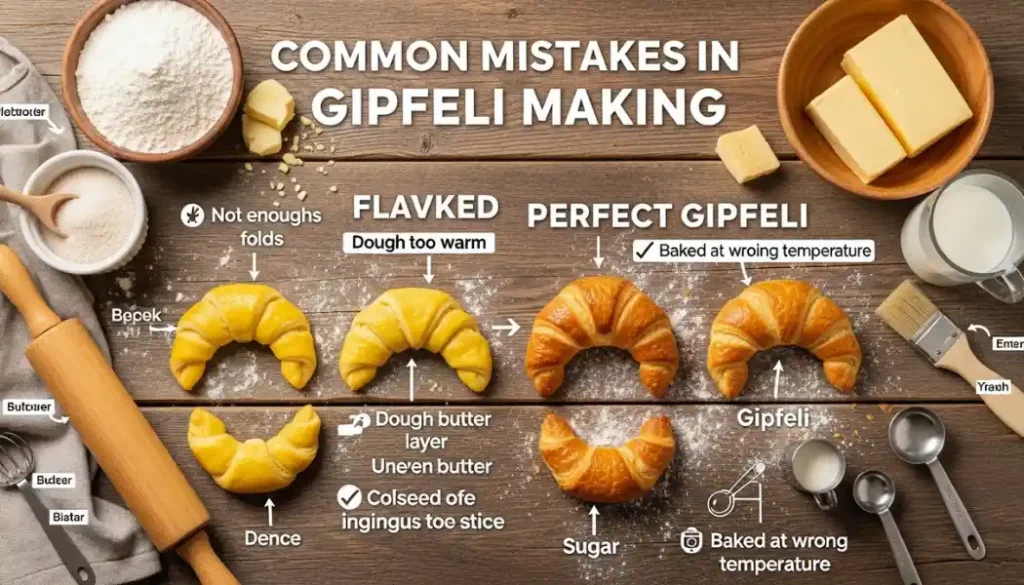
Even a good homemade gipfeli recipe can fail if small mistakes happen during baking. Here are the most common problems and how to fix them.
Why Gipfeli is Not Flaky
This usually happens when the butter melts into the dough too early. To fix it, keep everything cold and avoid overworking the dough.
Why Dough Becomes Dense
Dense texture comes from poor proofing or not enough resting time. Always allow the dough to rise properly so it becomes light and soft.
Butter Leaking Issue
If butter leaks during baking, it means the dough was not sealed well or the butter was too soft. Chill the dough before baking to solve this problem.
Shape Collapsing After Baking
This happens when the final proofing is too long or the dough is over-handled. Keep shaping gentle and avoid over-proofing for better structure in your Swiss gipfeli.
Popular Gipfeli Variations
You can easily customize your gipfeli recipe into different flavors depending on your taste.
Almond Gipfeli (Mandelgipfel)
A traditional Swiss version filled with sweet almond paste. It is rich, nutty, and very popular in bakeries.
Chocolate Filled Gipfeli
A soft and sweet variation filled with melted chocolate. Perfect for breakfast or dessert lovers who enjoy a rich sweet pastry.
Savory Cheese & Herb Gipfeli
This version uses cheese, herbs, or even ham for a salty snack option. It is great for lunch boxes or quick snacks.
Healthy Whole Wheat Version
A lighter version made with whole wheat flour. It has a slightly nutty flavor and is a healthier take on the classic Swiss croissant recipe.
Pro Baking Tips for Bakery-Style Results
If you want your homemade gipfeli recipe to taste like it came from a Swiss bakery, these simple but powerful tips make a big difference.

Overnight Dough Advantage
Letting the dough rest overnight in the fridge improves flavor and texture. It also makes the dough easier to handle, giving better structure for a light flaky pastry.
Cold Butter Control Trick
Always use very cold butter during lamination. If the butter stays firm, it creates clear layers and prevents the dough from becoming greasy or dense.
Steam Effect for Crisp Crust
Adding a little steam in the oven (like placing a small tray of water) helps create a crisp golden crust while keeping the inside soft.
Egg Wash Technique
Brushing the gipfeli with egg wash before baking gives a shiny, golden finish and improves the bakery-style look.
Time-Saving Hacks
These shortcuts help you make an easy Swiss gipfeli recipe without losing too much quality.
Quick Chill Method
Instead of long resting times, chill the dough in the fridge for a shorter period. This helps control butter and keeps the process faster.
Shortcut Folding Technique
Reduce the number of folds to save time. Even a simple 1–2 fold method can still create light layers for a quick gipfeli recipe.
No-Stress Version for Beginners
Skip complex lamination and focus on a soft dough with minimal folding. This version is perfect for first-time bakers.
Why Your Gipfeli Isn’t Turning Out Perfect
If your Swiss gipfeli recipe is not turning out right, these are the most common issues.
Not Rising Properly
This happens when yeast is old or the dough is not kept in a warm enough place. Always allow proper proofing time.
Not Flaky After Baking
Usually caused by warm butter or over-mixing the dough. Keep ingredients cold and avoid heavy handling.
Dough Too Sticky
Too much liquid or not enough flour can cause stickiness. Add small amounts of flour while kneading until the dough becomes smooth.
Butter Melting Too Fast
This happens when the dough gets warm during handling. Always chill the dough between steps to maintain layers.
Storage & Make-Ahead Guide
Proper storage helps you enjoy your homemade gipfeli even after baking.
How to Store Baked Gipfeli
Store in an airtight container at room temperature for up to 2–3 days. This keeps them soft while preserving some crispness.
Can You Freeze Gipfeli Dough?
Yes, you can freeze unbaked dough after shaping. This is perfect for preparing make-ahead Swiss croissants.
Best Reheating Method for Crisp Texture
Reheat in the oven for a few minutes instead of the microwave. This restores the crisp outer layer and soft inside.
Overnight Preparation Method
Prepare the dough a day before and let it rest in the fridge overnight. This improves flavor and makes the baking process easier the next day.
How to Serve Gipfeli
Once your homemade gipfeli recipe is ready, serving it the right way makes it even more enjoyable and closer to a Swiss bakery experience.
Swiss Breakfast Ideas
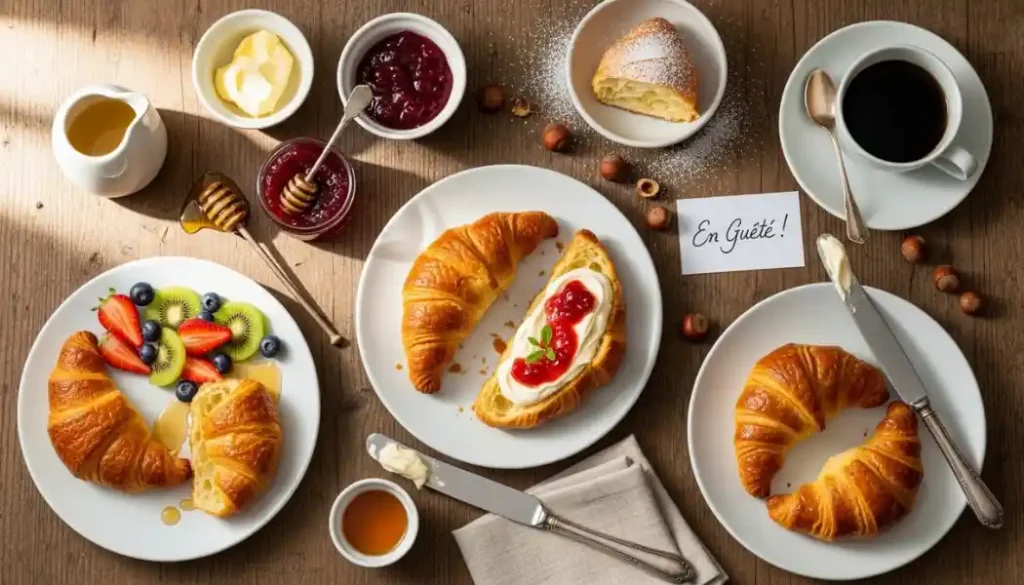
Gipfeli is traditionally eaten as part of a Swiss breakfast. It pairs well with butter, jam, honey, or even fresh fruit. Many Swiss homes enjoy it as a light morning meal.
Coffee Pairing Suggestions
A warm cup of coffee, cappuccino, or hot chocolate goes perfectly with flaky Swiss gipfeli. The buttery texture balances well with strong or creamy drinks.
Sweet vs Savory Serving Styles
You can serve gipfeli in two ways:
- Sweet version with chocolate, jam, or almond filling
- Savory version with cheese, eggs, or herbs
This makes it a flexible Swiss breakfast pastry for any time of day.
FAQs About Gipfeli Recipe
What is Gipfeli made of?
Gipfeli is made from simple yeast dough, butter, milk, flour, and sugar, creating a soft and flaky pastry.
Why is Gipfeli different from croissant?
Unlike French croissants, Gipfeli is usually less buttery and slightly softer, making it lighter and easier to digest.
Can I make Gipfeli without lamination?
Yes, but the texture will be less flaky. Lamination is what creates the classic layered pastry structure.
How long does Gipfeli stay fresh?
Freshly baked gipfeli stays soft for about 2–3 days when stored properly in an airtight container.
Can I freeze baked Gipfeli?
Yes, you can freeze them and reheat in the oven. This helps maintain a crisp texture and fresh taste.
Final Thoughts
Making homemade gipfeli may look complex, but with the right steps, anyone can achieve bakery-style results at home. The key is proper dough handling, butter layering, and proofing time.
With this guide, you now have everything from ingredients to troubleshooting and variations. Even beginners can create light, flaky, and golden Swiss croissants at home. Keep practicing, stay patient with the dough, and soon your kitchen will smell just like a Swiss bakery every morning.