
Shrimp paste is a powerful ingredient used in many Thai, Malaysian, and Southeast Asian recipes. It adds a deep umami flavor, saltiness, and a rich fermented taste that makes dishes like Pad Thai, curry, and sambal more authentic. However, many home cooks often look for shrimp paste substitutes when the ingredient is hard to find, too strong in flavor, or not suitable for their diet.
Some people also need a vegan shrimp paste substitute because they avoid seafood or follow a plant-based lifestyle. The good news is that there are many simple options you can use instead. Ingredients like fish sauce, anchovy paste, miso paste, and soy sauce can work as a great substitute for shrimp paste while still adding that important savory depth. In this guide, you will discover the best shrimp paste substitutes, how to use them in cooking, and which alternatives work best for different recipes.
Quick Answer: Best Shrimp Paste Substitutes
If you do not have shrimp paste available, several ingredients can work as a great substitute for shrimp paste while still adding the rich umami flavor found in many Southeast Asian recipes. The best shrimp paste substitutes replicate its salty, fermented, and savory taste used in dishes like Thai curry, sambal, and Pad Thai.
Here are some of the best shrimp paste substitutes you can use:
- Fish sauce – One of the closest alternatives because it provides a similar salty and umami flavor.
- Anchovy paste – A strong seafood-based substitute that mimics the fermented taste of shrimp paste.
- Miso paste – A popular vegan shrimp paste substitute made from fermented soybeans with deep umami notes.
- Soy sauce – An easy shrimp paste alternative that adds saltiness and savory depth.
- Fermented soybean paste – Works well as a plant-based shrimp paste substitute in many Asian dishes.
- Worcestershire sauce – Contains fermented ingredients that provide a complex umami flavor.
- Seaweed paste – A great vegetarian substitute for shrimp paste that adds a mild ocean-like taste.
- Mushroom seasoning – A strong umami-rich vegan substitute often used in plant-based cooking.
Each of these shrimp paste alternatives works differently depending on the recipe, but they can all help recreate the savory flavor profile that shrimp paste brings to traditional dishes.
What Is Shrimp Paste
Shrimp paste is a traditional fermented seafood condiment widely used in Southeast Asian cooking. It is made by fermenting small shrimp with salt until they form a thick, concentrated paste. This ingredient is known for its strong aroma and deep umami flavor, which enhances many dishes such as Thai curry, sambal, and Pad Thai. Because of its bold taste, even a small amount can transform a recipe and add authentic depth.
Many people look for a shrimp paste substitute when the ingredient is unavailable or when they need a vegan shrimp paste alternative. Understanding what shrimp paste is and how it works in recipes helps you choose the best shrimp paste substitutes for your cooking.
How Shrimp Paste Is Made
Traditional shrimp paste is made using a simple but time-intensive process. Fresh small shrimp are first mixed with salt and then left to ferment under the sun for several days or weeks. During this time, natural fermentation develops the strong savory and umami flavor that shrimp paste is known for.
After fermentation, the shrimp mixture is ground into a thick paste and sometimes dried or compressed into blocks. This process creates the rich taste that makes shrimp paste a key ingredient in many Thai, Malaysian, and Indonesian recipes.
Flavor Profile of Shrimp Paste
The flavor of shrimp paste is strong, salty, and deeply umami-rich. It has a powerful aroma that may seem intense at first, but once cooked into a dish, it adds a complex savory depth that is difficult to replace.
Key flavor characteristics include:
- Strong umami flavor
- Salty fermented taste
- Seafood richness
- Savory depth that enhances sauces and curries
Because of this unique flavor profile, people often search for the closest substitute for shrimp paste that can replicate its fermented and savory taste.
Types of Shrimp Paste Used in Asian Cuisine
Different countries use their own version of shrimp paste, each with slightly different flavors and textures. These varieties are commonly used in Southeast Asian dishes.
Belacan (Malaysia)
Belacan is a Malaysian shrimp paste usually sold in firm blocks. It is often toasted before use to enhance its umami flavor and reduce its strong aroma.
Kapi (Thailand)
Thai kapi shrimp paste is softer and smoother than belacan. It is widely used in Thai curry pastes, dipping sauces, and stir-fries.
Terasi (Indonesia)
Terasi is a darker and more concentrated shrimp paste from Indonesia. It is commonly used in sambal sauces and other traditional Indonesian recipes.
These regional varieties show why shrimp paste is such an important ingredient in Asian cuisine, and why finding the right shrimp paste alternative can help preserve the authentic flavor of many dishes.
Why Shrimp Paste Is Used in Cooking
You might also like: Easy Oven Baked Pork Chops Recipe
Shrimp paste is widely used in Southeast Asian cooking because it adds a deep, rich flavor that is hard to achieve with other ingredients. Even a small amount can transform a dish by adding saltiness, complexity, and strong umami flavor. This is why many traditional recipes rely on shrimp paste as a key seasoning. When it is not available, cooks often look for the best shrimp paste substitutes that can provide a similar savory depth in dishes like Thai curry, sambal, and Pad Thai.
Understanding why shrimp paste is used in cooking helps you choose the right shrimp paste alternative or substitute for shrimp paste when preparing your recipes.
Umami Flavor Enhancement
One of the main reasons shrimp paste is used in cooking is its ability to deliver a strong umami flavor. Umami is the savory taste that makes food rich, satisfying, and flavorful. Shrimp paste contains natural compounds created during fermentation that intensify this taste.
When added to soups, sauces, and stir-fries, shrimp paste works like a flavor booster. It enhances the overall taste of a dish and balances other ingredients such as chili, garlic, and lime. Because of this, many cooks search for shrimp paste substitutes like fish sauce, anchovy paste, or miso paste that can provide a similar umami effect.
Fermented Ingredient in Southeast Asian Cuisine
Another important reason shrimp paste is used in cooking is that it is a fermented ingredient. Fermentation develops complex flavors that give many Southeast Asian dishes their unique taste.
In traditional cooking, shrimp paste is combined with other fermented ingredients to create sauces, spice pastes, and marinades. The fermentation process produces the deep savory flavor that makes dishes taste authentic.
When shrimp paste is unavailable, cooks may use a shrimp paste substitute such as fermented soybean paste, soy sauce, or miso paste to recreate that fermented depth.
Traditional Role in Thai, Malaysian, and Indonesian Dishes
Shrimp paste has been an essential ingredient in Thai, Malaysian, and Indonesian cuisine for centuries. It is often used as the base for many spice blends and sauces that define these regional dishes.
For example:
- In Thai cuisine, shrimp paste is used in curry pastes, dipping sauces, and stir-fries.
- In Malaysian cooking, belacan shrimp paste adds flavor to sambal and vegetable dishes.
- In Indonesian recipes, terasi shrimp paste is a key ingredient in spicy sambal sauces.
Because shrimp paste plays such an important role in these dishes, finding the best shrimp paste substitute can help maintain the authentic taste when the original ingredient is not available.
Why You Might Need a Shrimp Paste Substitute
Although shrimp paste is a popular ingredient in many Thai, Malaysian, and Indonesian recipes, there are several reasons why someone might need a shrimp paste substitute. Its strong seafood flavor, dietary restrictions, or limited availability can make it difficult for some people to use in everyday cooking. In these situations, choosing the right shrimp paste alternative helps maintain the umami flavor that traditional recipes rely on.
Below are some of the most common reasons people search for the best shrimp paste substitutes.
Shellfish Allergies
One major reason people look for a substitute for shrimp paste is shellfish allergies. Since shrimp paste is made from fermented shrimp, it can cause allergic reactions in individuals who are sensitive to shellfish.
To avoid health risks, cooks often choose alternatives that still provide a savory and umami flavor. Ingredients like miso paste, soy sauce, or fermented soybean paste can act as safer shrimp paste substitutes while still enhancing the taste of a dish.
Vegan and Vegetarian Diets
Another common reason for replacing shrimp paste is dietary preference. People who follow a vegan or vegetarian diet avoid seafood products, including shrimp paste.
Fortunately, there are several effective vegan shrimp paste substitutes that provide similar depth and richness. Options such as miso paste, seaweed paste, soy sauce, and mushroom seasoning can recreate the savory umami flavor without using any animal ingredients.
Shrimp Paste Not Available in Local Stores
In many regions, especially outside of Asia, shrimp paste can be difficult to find in regular grocery stores. It is usually sold in Asian specialty markets, which may not be easily accessible for everyone.
Because of this, many home cooks search for a simple shrimp paste alternative that can be found in common kitchens. Ingredients like fish sauce, anchovy paste, or soy sauce are often used as convenient substitutes for shrimp paste in everyday recipes.
Reducing Strong Seafood Flavor
Shrimp paste has a very strong aroma and intense seafood flavor, which can sometimes be overpowering for people who are not used to it. While the flavor becomes milder once cooked, some cooks still prefer a softer taste in their dishes.
Using a shrimp paste substitute such as miso paste or soy sauce allows you to keep the savory umami depth without the strong seafood smell. This makes the dish more balanced while still maintaining the flavor profile common in Southeast Asian cooking.
Best Shrimp Paste Substitutes (Explained)
If you cannot find shrimp paste or prefer not to use it, there are several ingredients that work well as shrimp paste substitutes. The goal is to find alternatives that recreate the same salty, fermented, and umami-rich flavor that shrimp paste brings to Southeast Asian recipes like Pad Thai, Thai curry, sambal, and laksa.
Below are some of the best shrimp paste substitutes you can use in cooking. Each option provides a slightly different flavor, but all can help replace shrimp paste in many dishes.
Fish Sauce
Fish sauce is one of the closest substitutes for shrimp paste because it also comes from fermented seafood. It has a strong salty and umami flavor that works well in many Thai and Southeast Asian dishes.
Although fish sauce is thinner than shrimp paste, it still delivers a similar savory depth. Many cooks use it as a quick shrimp paste alternative when preparing curries, stir-fries, and dipping sauces.
Best use: Thai curry, noodle dishes, and soups.
Anchovy Paste
Anchovy paste is another excellent shrimp paste substitute because it provides a rich seafood flavor and strong umami taste. Made from ground anchovies and salt, it closely mimics the savory intensity found in shrimp paste.
A small amount goes a long way, so it should be used carefully. This ingredient works well in sauces where a fermented seafood flavor is needed.
Best use: Sambal, sauces, and stir-fries.
Miso Paste
Miso paste is a popular vegan shrimp paste substitute made from fermented soybeans. It has a deep umami flavor that can replace the savory taste of shrimp paste without using seafood.
Because miso is fermented, it adds complexity and richness to dishes. Many plant-based cooks use miso when they need a vegetarian shrimp paste alternative.
Best use: Soups, sauces, and plant-based Asian recipes.
Soy Sauce
Soy sauce is one of the easiest ingredients to use as a substitute for shrimp paste because it is widely available. It provides saltiness and savory depth, making it useful when shrimp paste is not available.
While soy sauce does not have the same fermented seafood taste, it still helps create a balanced umami flavor in dishes.
Best use: Stir-fries, noodle dishes, and marinades.
Fermented Soybean Paste
Fermented soybean paste is another strong shrimp paste alternative that works well in Asian cooking. Similar to miso, it has a thick texture and a deep fermented umami flavor.
This ingredient is often used in Korean and Chinese cuisines, but it can also replace shrimp paste in many recipes that require strong savory notes.
Best use: Stews, sauces, and curry pastes.
Worcestershire Sauce
Worcestershire sauce may seem unusual, but it can work as a mild shrimp paste substitute. It contains fermented ingredients, including anchovies, which provide a subtle umami taste.
Because the flavor is lighter than shrimp paste, it is best used in small amounts to enhance sauces or marinades.
Best use: Sauces, marinades, and noodle dishes.
Fish Sauce + Miso Combination
One of the most effective ways to create a closer substitute for shrimp paste is by combining fish sauce and miso paste. This mixture blends the seafood umami flavor from fish sauce with the fermented richness of miso.
Together, they create a more balanced shrimp paste replacement that works well in many Thai and Southeast Asian recipes.
Best use: Curry pastes, sambal, and stir-fries.
Best Vegan Shrimp Paste Substitutes
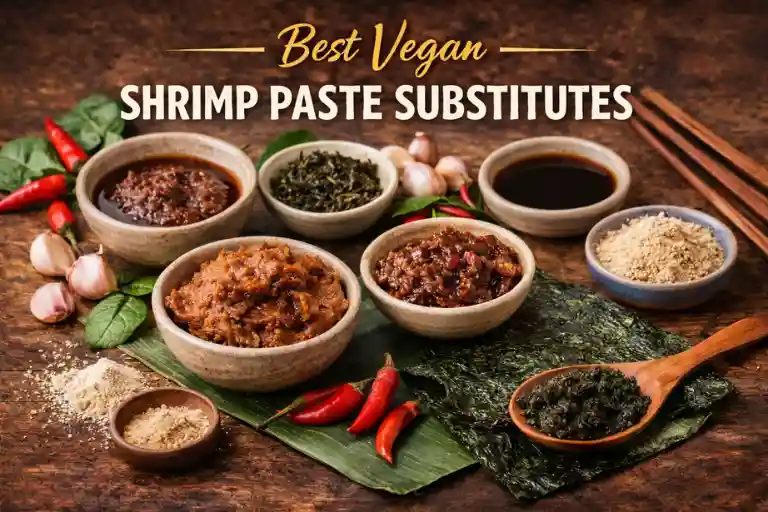
For people who follow a vegan or vegetarian diet, traditional shrimp paste is not an option because it is made from fermented shrimp. However, there are several excellent vegan shrimp paste substitutes that can recreate the umami-rich flavor commonly found in Thai and Southeast Asian recipes.
These plant-based ingredients help add the same savory depth and balance to dishes such as Pad Thai, curry, sambal, and noodle stir-fries. Choosing the right vegetarian shrimp paste alternative ensures that your dish still tastes rich and flavorful.
Below are some of the best vegan substitutes for shrimp paste.
Miso Paste
Miso paste is one of the most popular vegan shrimp paste substitutes. It is made from fermented soybeans, salt, and sometimes rice or barley. Because it goes through a fermentation process, miso naturally develops a deep umami flavor similar to shrimp paste.
Its thick texture also helps it blend easily into sauces, soups, and curry pastes. Many plant-based cooks rely on miso as a reliable shrimp paste alternative when preparing vegan Asian dishes.
Best use: Soups, curry pastes, sauces, and noodle dishes.
Seaweed Paste
Seaweed paste is another excellent vegetarian substitute for shrimp paste because it provides a mild ocean-like flavor without using seafood. Seaweed naturally contains minerals and compounds that create a strong umami taste, making it useful in plant-based cooking.
Seaweed paste works especially well when you want to mimic the subtle seafood flavor of shrimp paste in dishes like sambal or stir-fries.
Best use: Sauces, dips, and vegan Asian recipes.
Soy Sauce + Mushroom Powder
A simple but effective vegan shrimp paste substitute is a mixture of soy sauce and mushroom powder. Soy sauce adds saltiness and savory flavor, while mushroom powder provides a strong umami boost.
This combination works well because mushrooms contain natural compounds that create the same rich taste found in many fermented ingredients. Together, they form a balanced shrimp paste replacement for many recipes.
Best use: Stir-fries, noodle dishes, and sauces.
Fermented Bean Paste
Fermented bean paste is another great plant-based shrimp paste alternative. Made from fermented beans and salt, it has a thick texture and a deep savory flavor that works well in Asian cooking.
Like shrimp paste, fermented bean paste adds complexity and richness to dishes. It can easily replace shrimp paste in sauces, curries, and marinades while keeping the dish completely vegan.
Best use: Curry bases, sauces, and vegetable stir-fries.
Shrimp Paste Substitute Ratio Guide
When replacing shrimp paste in recipes, it is important to adjust the quantity because each shrimp paste substitute has a different level of saltiness and umami flavor. Some alternatives are stronger, while others are milder. Using the correct ratio helps maintain the balance of flavor in dishes like Thai curry, Pad Thai, sambal, and other Southeast Asian recipes.
The chart below shows simple measurements you can use when choosing a substitute for shrimp paste.
| Shrimp Paste | Substitute |
| 1 tsp shrimp paste | 1 tsp fish sauce |
| 1 tsp shrimp paste | ½ tsp anchovy paste |
| 1 tsp shrimp paste | 1 tsp miso paste |
| 1 tsp shrimp paste | 1 tsp soy sauce |
| 1 tsp shrimp paste | 1 tsp fermented soybean paste |
| 1 tsp shrimp paste | ¾ tsp Worcestershire sauce |
| 1 tsp shrimp paste | ½ tsp seaweed paste |
| 1 tsp shrimp paste | ½ tsp soy sauce + mushroom powder mix |
Flavor Comparison of Shrimp Paste Substitutes
When choosing the best shrimp paste substitute, it helps to understand how each option compares in umami intensity, saltiness, and fermented flavor. These three elements are what make shrimp paste such a powerful ingredient in Thai and Southeast Asian cooking.
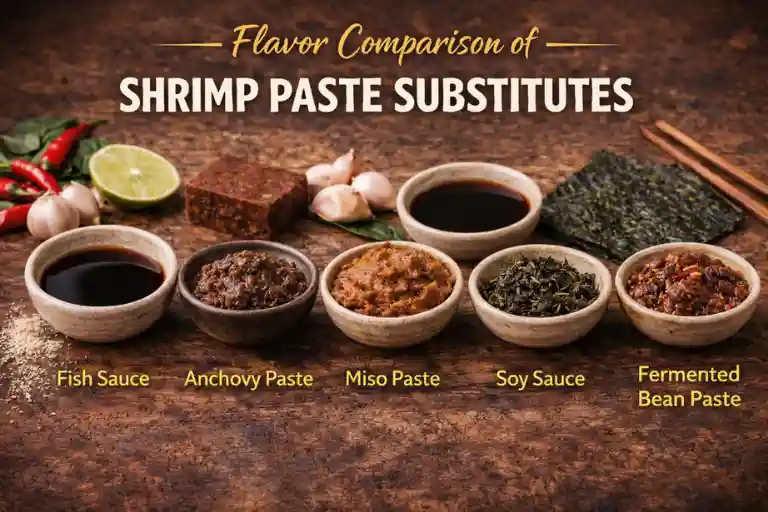
Because every substitute has a slightly different taste, selecting the right shrimp paste alternative depends on the type of recipe you are preparing. Some ingredients provide stronger umami flavor, while others mainly add saltiness or mild fermentation notes.
Below is a simple comparison to help you pick the closest substitute for shrimp paste.
| Substitute | Umami Intensity | Saltiness | Fermented Flavor |
| Fish Sauce | High | High | Medium |
| Anchovy Paste | Very High | High | Medium |
| Miso Paste | High | Medium | High |
| Soy Sauce | Medium | High | Low |
| Fermented Soybean Paste | High | Medium | High |
| Worcestershire Sauce | Medium | Medium | Medium |
| Seaweed Paste | Medium | Low | Low |
| Soy Sauce + Mushroom Powder | High | Medium | Low |
Understanding the Flavor Differences
Umami Intensity
Umami is the rich savory taste that gives depth to dishes. Ingredients like anchovy paste, fish sauce, and miso paste provide strong umami, making them some of the best shrimp paste substitutes.
Saltiness
Shrimp paste naturally contains a lot of salt because of the fermentation process. Alternatives such as soy sauce and fish sauce can easily replicate this salty flavor in recipes like Pad Thai or curry.
Fermented Flavor
The fermented taste is what gives shrimp paste its unique character. Ingredients like miso paste and fermented soybean paste come closest to recreating that complex fermented profile.
By understanding these differences, you can choose the most suitable substitute for shrimp paste depending on whether your recipe needs more umami richness, saltiness, or fermented depth.
How to Replicate the Umami Flavor of Shrimp Paste
One of the biggest challenges when using a shrimp paste substitute is recreating the deep umami flavor that shrimp paste naturally provides. Shrimp paste is powerful because it combines saltiness, fermentation, and savory richness in one ingredient. When replacing it in recipes like Thai curry, sambal, or Pad Thai, the goal is to recreate that same balance.
By combining certain ingredients and understanding how flavors work together, you can create a shrimp paste alternative that still gives your dish the same rich and satisfying taste.
Umami Ingredients
To replicate shrimp paste, it is important to use ingredients that naturally contain umami, the savory flavor that makes food taste rich and satisfying.
Some of the best umami-rich shrimp paste substitutes include:
- Miso paste – A fermented soybean paste with deep savory flavor
- Anchovy paste – Strong seafood umami similar to shrimp paste
- Mushroom powder – Rich plant-based umami commonly used in vegan cooking
- Fish sauce – Fermented seafood seasoning with strong umami depth
- Soy sauce – A simple ingredient that adds saltiness and savory taste
These ingredients help recreate the savory intensity that shrimp paste adds to many Southeast Asian dishes.
Fermented Flavors
Another important element of shrimp paste is its fermented flavor. Fermentation creates complex tastes that develop over time and add depth to food.
To mimic this flavor, you can use fermented ingredients such as:
- Miso paste
- Fermented soybean paste
- Fish sauce
- Worcestershire sauce
These ingredients provide the slightly tangy and complex flavor that makes shrimp paste unique. Using them in small amounts can help create a convincing substitute for shrimp paste.
Balancing Salty and Savory Ingredients
The best way to create a realistic shrimp paste replacement is to balance salty and savory ingredients together. Instead of relying on one ingredient, combining two or more flavors can produce a closer match.
For example:
- Fish sauce + miso paste creates both seafood umami and fermented richness
- Soy sauce + mushroom powder works well as a vegan shrimp paste substitute
- Seaweed paste + miso can recreate a mild ocean flavor with fermentation
By balancing saltiness, umami, and fermentation, you can easily build a shrimp paste alternative that keeps your dish flavorful and authentic.
Best Substitute Combinations for Similar Flavor
Sometimes a single ingredient cannot fully replace the complex taste of shrimp paste. Because shrimp paste contains saltiness, fermentation, and strong umami flavor, combining two ingredients can create a closer shrimp paste substitute. These combinations help replicate the rich depth commonly found in Thai, Malaysian, and Indonesian dishes.
Using a blend of ingredients is one of the best ways to create a balanced shrimp paste alternative that works well in recipes like Pad Thai, curry, sambal, and stir-fries.
Below are some of the most effective substitute combinations.
Fish Sauce + Miso
A mixture of fish sauce and miso paste creates one of the closest replacements for shrimp paste. Fish sauce provides the salty seafood flavor, while miso paste adds fermented umami richness.
This combination works well because it mimics both the fermented taste and savory depth of shrimp paste.
How to use:
Mix ½ teaspoon fish sauce + ½ teaspoon miso paste to replace 1 teaspoon shrimp paste.
Best for: Thai curry, sauces, and noodle dishes.
Soy Sauce + Mushroom Powder
This combination is a great vegan shrimp paste substitute. Soy sauce adds saltiness and savory flavor, while mushroom powder provides a strong umami boost that helps recreate the depth of shrimp paste.
Mushrooms naturally contain compounds that enhance savory flavor, making this mix a reliable vegetarian shrimp paste alternative.
How to use:
Combine 1 teaspoon soy sauce + a pinch of mushroom powder for a balanced flavor.
Best for: Stir-fries, noodle dishes, and plant-based Asian recipes.
Seaweed + Miso
If you want to mimic the ocean-like flavor of shrimp paste without using seafood, a mixture of seaweed paste and miso paste works very well. Seaweed provides a subtle seafood taste, while miso contributes fermented umami richness.
This combination is one of the most effective plant-based shrimp paste substitutes for people following a vegan diet.
How to use:
Mix ½ teaspoon seaweed paste + ½ teaspoon miso paste to replace 1 teaspoon shrimp paste.
Best for: Sambal, sauces, and vegan Southeast Asian dishes.
Using these substitute combinations allows you to recreate the balanced salty, savory, and fermented flavor that shrimp paste brings to traditional recipes. This method is especially helpful when you want the closest substitute for shrimp paste in authentic Asian cooking.
Best Shrimp Paste Substitutes for Popular Recipes
Different dishes use shrimp paste in different ways, so the best shrimp paste substitute can vary depending on the recipe. Some dishes need a stronger umami flavor, while others require a balanced mix of saltiness and fermented taste.
Choosing the right shrimp paste alternative helps keep the flavor authentic in popular Southeast Asian recipes like Pad Thai, Thai curry, sambal, and laksa. Below are the most effective substitutes for each dish.
Substitute for Shrimp Paste in Pad Thai
In Pad Thai, shrimp paste adds a deep savory and umami flavor to the sauce. If you do not have shrimp paste, you can still recreate the taste using other ingredients.
The best substitute for shrimp paste in Pad Thai is:
- Fish sauce – Provides a similar salty and seafood flavor
- Soy sauce + mushroom powder – A great vegan shrimp paste substitute
- Anchovy paste – Adds strong umami depth
These options help maintain the rich balance of sweet, salty, and savory flavors that Pad Thai is known for.
Substitute for Shrimp Paste in Thai Curry
Thai curry pastes rely on shrimp paste for their deep fermented umami flavor. Without it, the curry may taste less complex.
The best shrimp paste substitutes for Thai curry include:
- Fish sauce + miso paste – Closely replicates the fermented seafood flavor
- Anchovy paste – Adds strong savory depth
- Fermented soybean paste – Works well as a plant-based option
These ingredients help recreate the rich curry base commonly found in Thai cooking.
Substitute for Shrimp Paste in Sambal
Sambal is a spicy condiment widely used in Indonesian and Malaysian cuisine. Traditional sambal recipes use terasi shrimp paste to add a strong savory flavor.
If you need a substitute for shrimp paste in sambal, try:
- Anchovy paste – One of the closest flavor matches
- Fish sauce – Adds saltiness and seafood taste
- Seaweed paste + miso – A good vegan shrimp paste alternative
These substitutes help maintain the bold and spicy character of sambal sauces.
Substitute for Shrimp Paste in Laksa
Laksa is a rich noodle soup known for its creamy and flavorful broth. Shrimp paste adds depth and umami richness to the soup base.
The best shrimp paste substitutes for laksa include:
- Fish sauce + miso paste – Creates balanced savory flavor
- Fermented soybean paste – Adds fermented complexity
- Soy sauce + mushroom powder – A mild vegetarian shrimp paste substitute
Using these alternatives ensures the broth still has the savory depth that makes laksa so delicious.
How to Choose the Right Shrimp Paste Substitute
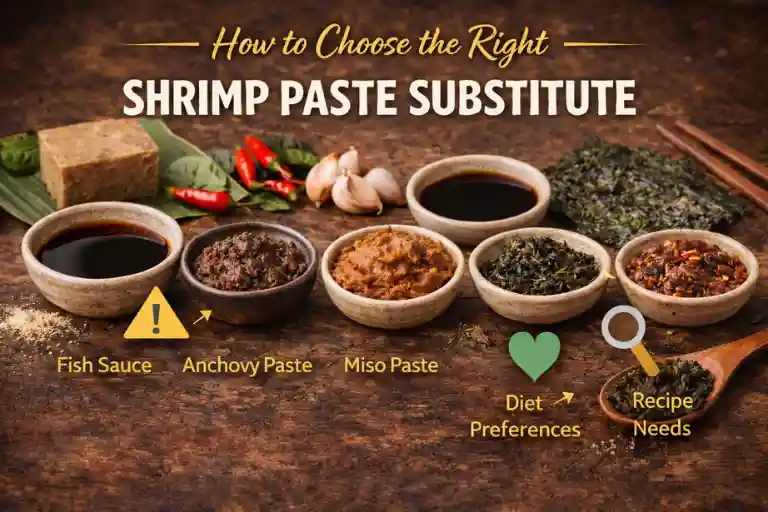
Choosing the right shrimp paste substitute depends on several factors. Because shrimp paste has a strong umami flavor, saltiness, and fermented depth, not every ingredient will work the same in every recipe. The best shrimp paste alternative should match the flavor and purpose of shrimp paste in the dish you are preparing.
By considering the type of recipe, the strength of flavor needed, and your dietary preferences, you can select the most suitable substitute for shrimp paste.
Recipe Type
The first thing to consider is the recipe you are cooking. Different dishes require different levels of flavor intensity.
For example:
- Thai curry and sambal need strong fermented and umami-rich substitutes like fish sauce, anchovy paste, or fermented soybean paste.
- Pad Thai and stir-fries work well with milder options such as soy sauce or fish sauce.
- Soups and broths like laksa may benefit from a balanced mixture such as fish sauce and miso paste.
Choosing a substitute based on the recipe type ensures the dish keeps its authentic flavor.
Flavor Strength
Another important factor is the strength of flavor. Shrimp paste has a very intense savory and salty taste, so the substitute should provide a similar level of richness.
Some substitutes are stronger, while others are milder:
- Strong flavor substitutes: Anchovy paste, fish sauce, fermented soybean paste
- Medium flavor substitutes: Miso paste, Worcestershire sauce
- Milder substitutes: Soy sauce, seaweed paste
If you want the closest substitute for shrimp paste, choose ingredients with strong umami intensity.
Dietary Preference
Dietary needs also play an important role when choosing a shrimp paste substitute.
For example:
- Vegan or vegetarian diets: Use miso paste, seaweed paste, soy sauce, or mushroom seasoning as a vegan shrimp paste substitute.
- Seafood-friendly diets: Options like fish sauce or anchovy paste provide a flavor closer to traditional shrimp paste.
- Low-sodium diets: Milder substitutes such as miso paste or fermented bean paste may be better choices.
Considering dietary preferences ensures that your chosen shrimp paste alternative works well for both the recipe and the person eating it. By understanding these three factors, you can confidently select the best shrimp paste substitute for any dish while keeping the rich savory flavor that makes Southeast Asian cuisine so delicious.
Cooking Tips When Using Shrimp Paste Alternatives
When using a shrimp paste substitute, it is important to adjust your cooking method slightly. Since every shrimp paste alternative has a different level of saltiness, umami flavor, and fermentation, using the right technique helps keep the dish balanced and flavorful.
Whether you are preparing Thai curry, Pad Thai, sambal, or laksa, these simple tips will help you use shrimp paste substitutes effectively while maintaining the rich taste that shrimp paste normally provides.
Adjust Salt Levels
Many shrimp paste substitutes are naturally salty. Ingredients like fish sauce, soy sauce, and anchovy paste contain a high amount of salt, so adding them in the same quantity as shrimp paste can sometimes make the dish too salty.
To avoid this problem:
- Start with smaller amounts of the substitute
- Taste the dish while cooking
- Adjust seasoning gradually
This method ensures your recipe keeps the right balance of saltiness and savory flavor.
Balance Umami Flavor
The main purpose of shrimp paste in cooking is to provide a deep umami flavor. When using a substitute for shrimp paste, try to include ingredients that naturally enhance savory taste.
Some useful umami-rich ingredients include:
- Miso paste
- Mushroom powder
- Fermented soybean paste
- Fish sauce
Combining these ingredients can help recreate the rich depth of flavor that shrimp paste adds to many Southeast Asian dishes.
Avoid Overpowering Substitutes
Some substitutes have very strong flavors. For example, anchovy paste and fish sauce can easily overpower a dish if used in large amounts.
To prevent this:
- Use small quantities first
- Mix strong substitutes with milder ingredients
- Adjust flavors gradually as the dish cooks
By controlling the strength of the shrimp paste alternative, you can keep your recipe balanced while still achieving the savory umami taste found in traditional Asian cooking.
Common Mistakes When Replacing Shrimp Paste
Using a shrimp paste substitute can work very well in many recipes, but small mistakes can change the flavor of the dish. Because shrimp paste has a unique balance of umami, saltiness, and fermented depth, replacing it incorrectly may result in a dish that tastes too salty, too mild, or lacking complexity.
Understanding these common mistakes will help you choose the right shrimp paste alternative and maintain the authentic flavor in Thai and Southeast Asian dishes.
Using Too Much Fish Sauce
One of the most common mistakes is adding too much fish sauce when using it as a substitute for shrimp paste. Fish sauce is very salty and concentrated, so using the same amount as shrimp paste can easily overpower the dish.
To avoid this problem:
- Start with a smaller quantity
- Taste the dish as it cooks
- Gradually increase the amount if needed
This approach ensures the umami flavor is present without making the dish overly salty.
Ignoring Fermented Flavor
Another mistake people make when choosing a shrimp paste substitute is forgetting about the fermented flavor that shrimp paste provides. This fermented depth is what gives many Southeast Asian recipes their rich and complex taste.
If the substitute lacks fermentation, the dish may taste flat. To recreate this flavor, try using ingredients like:
- Miso paste
- Fermented soybean paste
- Worcestershire sauce
These ingredients help mimic the fermented umami profile that shrimp paste normally adds to dishes.
Not Adjusting Seasoning
Every shrimp paste alternative has a slightly different flavor profile. Some are saltier, while others are milder or sweeter. If you do not adjust the seasoning, the dish may become unbalanced.
For example:
- Soy sauce may require less added salt
- Miso paste may add extra richness
- Anchovy paste may intensify the seafood flavor
The best approach is to taste the dish during cooking and adjust seasoning gradually. This ensures the recipe keeps the savory depth and umami richness expected from dishes that traditionally use shrimp paste.
When You Should NOT Substitute Shrimp Paste
While many ingredients can work as a shrimp paste substitute, there are certain situations where replacing shrimp paste may significantly change the taste of the dish. Some traditional recipes rely heavily on the unique fermented flavor and strong umami depth that shrimp paste provides. In these cases, using a shrimp paste alternative may result in a dish that tastes less authentic.
Understanding when it is best not to replace shrimp paste helps preserve the original flavor of important Southeast Asian recipes.
Authentic Sambal Recipes
Many traditional Indonesian and Malaysian sambal recipes rely on shrimp paste, especially varieties like terasi or belacan. In these dishes, shrimp paste is not just a seasoning—it is a key ingredient that defines the flavor of the sauce.
When preparing authentic sambal, shrimp paste adds:
- A strong fermented umami flavor
- Depth that balances chili heat
- A rich savory aroma
Although ingredients like anchovy paste or fish sauce can work as a mild substitute for shrimp paste, they may not fully recreate the authentic taste that traditional sambal requires.
Fermented Sauces
Shrimp paste is also an important component in many fermented sauces and spice pastes used in Thai and Southeast Asian cuisine. These sauces depend on the natural fermentation process to develop their deep and complex flavor.
Because of this, using a simple shrimp paste substitute such as soy sauce or Worcestershire sauce may not provide the same fermented depth. Recipes that rely on fermentation often need the real shrimp paste to achieve the correct taste and aroma.
Traditional Dishes Requiring Shrimp Paste
Some traditional dishes are built around the flavor of shrimp paste, making it difficult to replace without changing the recipe completely.
Examples include:
- Thai curry pastes
- Sambal sauces
- Certain Malaysian stir-fries
- Traditional Indonesian spice blends
In these dishes, shrimp paste acts as a flavor foundation, contributing strong umami richness and fermented complexity. While you can use a shrimp paste alternative in many modern recipes, using authentic shrimp paste is often the best choice when cooking traditional Southeast Asian dishes.
How to Make a Homemade Shrimp Paste Substitute
If you cannot find shrimp paste in stores, you can easily create a homemade shrimp paste substitute using simple ingredients from your kitchen. The goal is to recreate the umami-rich, salty, and slightly fermented flavor that shrimp paste brings to Thai and Southeast Asian recipes.
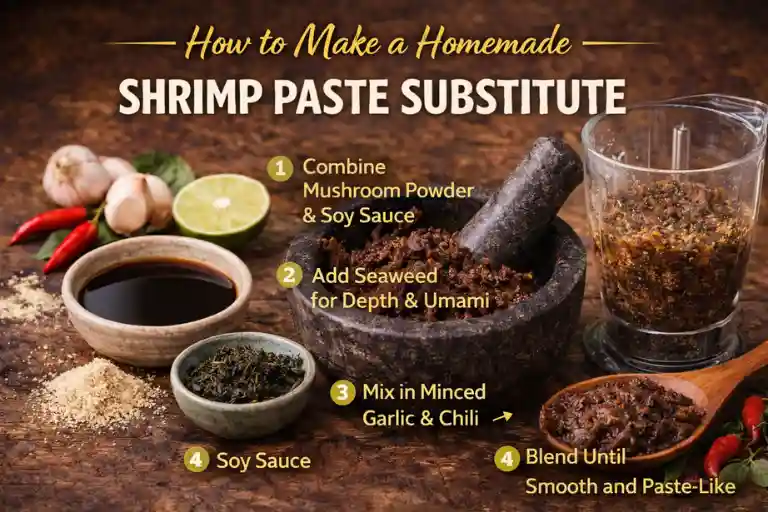
By combining ingredients that provide savory depth and mild ocean flavor, you can build a reliable shrimp paste alternative that works well in dishes like Pad Thai, curry, sambal, and stir-fries.
Below is a simple way to make your own substitute for shrimp paste at home.
Ingredients
- 1 teaspoon soy sauce – Adds saltiness and savory flavor
- 1 teaspoon miso paste – Provides fermented umami depth
- ½ teaspoon seaweed paste or finely ground seaweed – Adds a mild ocean-like taste
- A pinch of mushroom powder – Boosts natural umami flavor
How to Prepare the Substitute
- In a small bowl, combine soy sauce and miso paste until smooth.
- Add the seaweed paste to introduce a subtle seafood-like flavor.
- Sprinkle in a small amount of mushroom powder to enhance the savory depth.
- Mix everything together until it forms a thick paste.
This mixture creates a balanced vegan shrimp paste substitute that mimics the saltiness, umami richness, and fermented taste of traditional shrimp paste.
How to Use It
Use 1 teaspoon of this homemade shrimp paste substitute to replace 1 teaspoon of shrimp paste in most recipes.
This homemade mixture works best in:
- Thai curry pastes
- Pad Thai sauces
- Sambal and chili sauces
- Stir-fries and noodle dishes
Although it will not perfectly match the original ingredient, this blend provides a very close shrimp paste replacement and helps maintain the savory depth that many Southeast Asian dishes require.Shrimp Paste Storage and Shelf Life
Proper storage is important for maintaining the flavor and quality of shrimp paste. Because shrimp paste is a fermented ingredient, it naturally has a longer shelf life than many other condiments. However, storing it correctly helps preserve its strong umami flavor and prevents the aroma from spreading to other foods in the refrigerator.
If you are using a shrimp paste substitute, storage requirements may be different depending on the ingredient. Understanding how to store both shrimp paste and its alternatives ensures they stay fresh and safe to use.
Storage Tips
To keep shrimp paste fresh and flavorful, follow these simple storage tips:
- Store shrimp paste in an airtight container to prevent strong odors from spreading.
- Keep it in the refrigerator after opening to maintain its quality.
- Wrap block-style shrimp paste in plastic wrap or foil before placing it in a container.
- Always use a clean spoon when taking shrimp paste from the container to avoid contamination.
These steps help maintain the rich fermented flavor that shrimp paste adds to many Thai and Southeast Asian dishes.
Shelf Life
Thanks to the fermentation process, shrimp paste has a relatively long shelf life.
Typical storage times include:
- Unopened shrimp paste: Can last 1 to 2 years in a cool, dry place.
- Opened shrimp paste: Usually stays fresh for 6 to 12 months in the refrigerator.
If shrimp paste develops an unusual smell, mold, or discoloration, it should be discarded. However, the strong smell alone is normal because fermented seafood paste naturally has a powerful aroma.
How Substitutes Differ
Different shrimp paste substitutes have their own storage requirements and shelf lives.
For example:
- Fish sauce: Can last 1 year or longer after opening when refrigerated.
- Miso paste: Usually stays fresh for 6 months to 1 year in the refrigerator.
- Soy sauce: Has a long shelf life and can last over a year after opening.
- Seaweed paste or mushroom seasoning: Should be stored in a cool, dry place and sealed tightly.
Because these shrimp paste alternatives vary in texture and ingredients, their storage needs are not always the same. Checking the product label and storing them properly helps maintain their umami flavor and quality when using them as a substitute for shrimp paste in your recipes.
FAQs About Shrimp Paste Substitutes
Below are some common questions people ask when looking for shrimp paste substitutes or learning how to replace shrimp paste in Thai and Southeast Asian recipes.
What is the closest substitute for shrimp paste?
The closest substitute for shrimp paste is usually fish sauce or anchovy paste because both provide a strong umami flavor and a salty seafood taste similar to fermented shrimp paste. These ingredients work well in dishes like Thai curry, sambal, and stir-fries. For plant-based cooking, miso paste is often considered the best vegan shrimp paste substitute because it delivers a deep fermented flavor.
Can fish sauce replace shrimp paste?
Yes, fish sauce can work as a reliable substitute for shrimp paste in many recipes. Both ingredients come from fermented seafood and provide a strong savory umami taste. However, fish sauce is thinner and saltier than shrimp paste, so it is best to start with a smaller amount and adjust the flavor gradually when cooking.
What is the best vegan substitute for shrimp paste?
The best vegan shrimp paste substitute is miso paste because it has a similar fermented umami flavor. Other good plant-based options include soy sauce with mushroom powder, seaweed paste, and fermented bean paste. These ingredients help recreate the savory depth of shrimp paste while keeping the recipe completely vegan.
Can I skip shrimp paste in recipes?
Yes, you can skip shrimp paste, but the dish may lose some of its savory richness and fermented depth. Shrimp paste is often used to enhance umami flavor in sauces, curries, and stir-fries. If you do not have it, using a shrimp paste alternative such as fish sauce, miso paste, or soy sauce can help maintain the flavor balance.
What does shrimp paste taste like?
Shrimp paste has a strong salty, fermented, and umami-rich flavor. It also has a powerful aroma that becomes milder when cooked. In many Southeast Asian dishes, shrimp paste adds depth and complexity to sauces, soups, and curry pastes. Because of this unique flavor, people often search for the best shrimp paste substitutes that can recreate its savory taste in recipes.
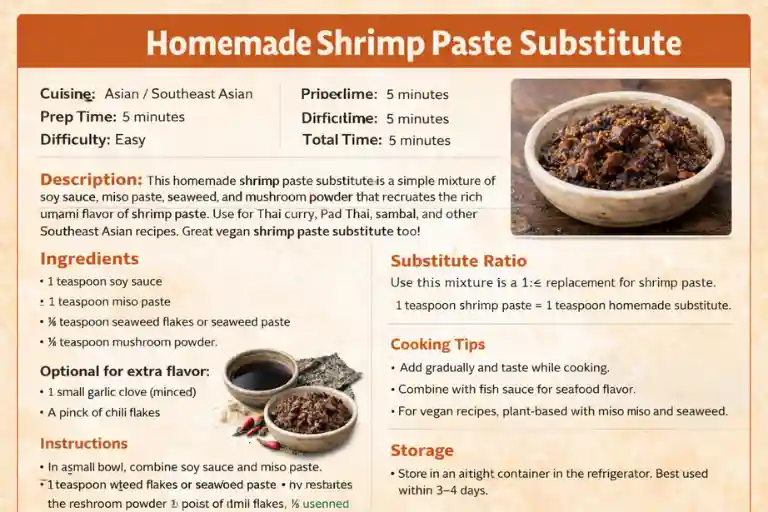
Recipe Card-Homemade Shrimp Paste Substitute
Course: Cooking SubstituteCuisine: Asian / Southeast AsianDifficulty: Easy2
servings5
minutes300
kcalThis homemade shrimp paste substitute is a simple mixture of soy sauce, miso paste, seaweed, and mushroom powder that recreates the rich umami flavor of shrimp paste. It works well in Thai curry, Pad Thai, sambal, and other Southeast Asian recipes. This recipe is also a great vegan shrimp paste substitute for plant-based cooking.
Ingredients
1 teaspoon soy sauce
1 teaspoon miso paste
½ teaspoon seaweed flakes or seaweed paste
¼ teaspoon mushroom powder
- Optional for extra flavor:
1 small garlic clove (minced)
A pinch of chili flakes
Instructions
- In a small bowl, combine soy sauce and miso paste.
- Add the seaweed flakes or paste to create a mild seafood-like flavor.
- Mix in the mushroom powder to boost the umami depth.
- Stir everything until it forms a smooth paste.
- Use immediately or store in a small airtight container in the refrigerator.
- Nutrition (Approximate per serving)
Calories: 15
Protein: 1g
Carbohydrates: 2g
Fat: 0g
Sodium: 250mg
Recipe Video
@nivithelankangirl Replying to @Sue ozzy if needed you can groud this paste using a food processor. Hope you enjoy the recipe! Recipe; Dried shrimp heads 100g Coconut oil 50ml Onion 50g Chili flakes 50g Garlic 20g Ginger 20g Suger 30g Soya sauce 2tbsp Fish sauce 2tbsp Lime juice 2tbsp Salt 1 1/2 tbsp ♬ France Accordion Swing – MIZUSATO Masaki
Notes
- Add the mixture gradually and taste while cooking.
- Combine with fish sauce if you want a stronger seafood flavor.
- For vegan recipes, keep the mixture plant-based with miso and seaweed.
Conclusion
Finding the right shrimp paste substitute is easier than many people think. While shrimp paste adds a unique combination of umami flavor, saltiness, and fermented depth to dishes, several ingredients can successfully recreate a similar taste. Options like fish sauce, anchovy paste, miso paste, soy sauce, and fermented soybean paste are some of the best shrimp paste substitutes and work well in many Thai and Southeast Asian recipes.
The best choice often depends on the dish you are preparing. For example, fish sauce or anchovy paste works well in Thai curry and sambal, while miso paste or soy sauce with mushroom powder can be a great vegan shrimp paste substitute for plant-based cooking. Understanding the flavor strength and purpose of shrimp paste in a recipe helps you choose the most suitable shrimp paste alternative.
Cooking is also about creativity, so do not be afraid to experiment with different substitute combinations. By balancing salty, savory, and fermented flavors, you can still achieve the rich taste that makes many Southeast Asian dishes so delicious—even without traditional shrimp paste.