
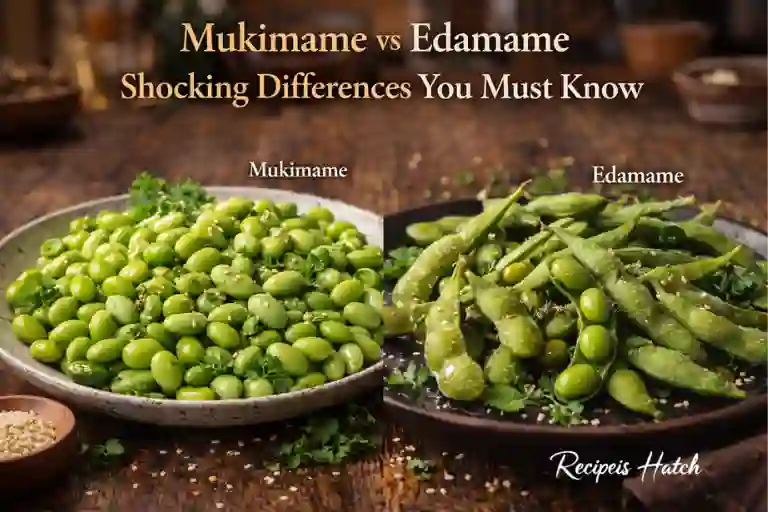
Edamame are young, immature soybeans harvested before they fully harden. These bright green edamame beans grow inside soft pods and are usually boiled or steamed before eating. If you’ve ever ordered a Japanese appetizer, you’ve likely seen edamame served in the pod with a sprinkle of salt.
The word edamame simply refers to these fresh green soybeans, which are picked early to keep their mild, slightly sweet flavor. Unlike mature soybeans used for tofu or soy milk, edamame has a softer texture and is eaten whole (after removing the beans from the pod).
Many people search for an Mukimame vs Edamame definition because they confuse it with other legumes. In simple terms, edamame is just a fresh soybean snack. It’s also known as a plant-based protein source, rich in fiber, vitamins, and essential nutrients.
What Is Mukimame?
Mukimame is simply shelled edamame, meaning the beans have been removed from the pod. In other words, it is the same young soybean, just without the outer shell. If you’ve seen packages labeled “shelled edamame”, that is mukimame. The word mukimame comes from Japanese. “Muki” means removed or peeled, and “mame” means beans. So the literal meaning is beans removed from the pod.
Many people ask about the difference between mukimame and edamame, but the truth is they come from the same plant. The only change is the pod is taken away. Mukimame is more convenient because it’s ready to use. You don’t have to squeeze beans out of pods. It’s perfect for salads, stir-fries, grain bowls, fried rice, and meal prep recipes, especially when you want quick plant-based protein added to a dish.
Mukimame vs Edamame: Quick Comparison Table
If you are searching for mukimame vs edamame, this quick table makes the difference between mukimame and edamame easy to understand at a glance.
| Feature | Edamame | Mukimame |
| Served in Pod | Yes | No |
| Prep Required | Remove beans from pod | Ready to use |
| Texture | Slightly firmer | Softer |
| Cooking Time | 5–7 minutes | 3–5 minutes |
| Nutrition | Same (young soybeans) | Same (young soybeans) |
| Best Use | Snack or appetizer | Recipes & meal prep |
Both come from the same immature soybeans, so their nutrition facts, including protein, fiber, and vitamins, are nearly identical. The main difference is convenience and how they are served. If you enjoy an interactive snack, choose edamame in pods. If you want shelled edamame for salads or stir-fries, go with mukimame.
The Real Differences Explained
You might also like: The Ultimate Ranch Potato Salad Recipe
While mukimame vs edamame may seem confusing at first, the real differences are simple and practical. Both are young soybeans, but how they are served and used makes a noticeable difference.
Pod vs No Pod
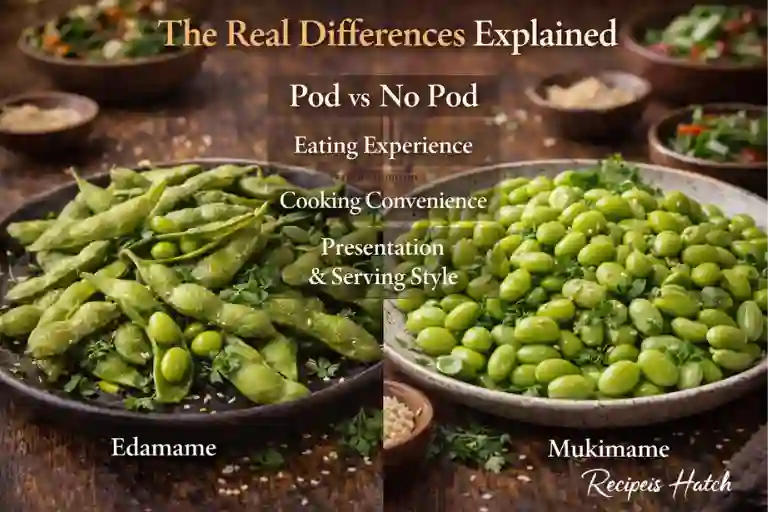
The biggest difference between edamame and mukimame is the pod. Edamame is served whole in its soft green shell. You squeeze the beans out before eating. Mukimame, on the other hand, is already removed from the pod. It is basically shelled edamame, ready to cook or add directly to recipes.
Eating Experience
Eating edamame in pods feels more interactive. It’s often enjoyed as a snack or appetizer. Mukimame is easier to eat with a fork or spoon, making it ideal for meals.
Cooking Convenience
Because mukimame has no shell, it cooks faster. This makes it better for quick recipes and meal prep.
Presentation & Serving Style
Edamame looks attractive in a bowl as a starter. Mukimame blends smoothly into salads, rice bowls, and stir-fries, especially when adding plant-based protein.
Nutrition Face-Off (Detailed Breakdown)
When comparing mukimame vs edamame, the nutrition is almost the same because both come from the same young soybean. Both are excellent plant-based protein sources, rich in fiber, vitamins, and minerals.
Here’s a quick nutrition comparison per 100g serving:
| Nutrient | Edamame | Mukimame |
| Calories | 121 kcal | 121 kcal |
| Protein | 11 g | 11 g |
| Fiber | 5 g | 5 g |
| Carbohydrates | 9 g | 9 g |
| Fat | 5 g | 5 g |
| Iron | 2.3 mg | 2.3 mg |
| Folate | 311 µg | 311 µg |
| Magnesium | 64 mg | 64 mg |
Health Benefits of Mukimame and Edamame
Both mukimame and edamame are nutrient-packed young soybeans that provide a wide range of health benefits. They are not only delicious but also excellent for overall wellness.
High-Protein Plant Food
Edamame and mukimame are rich in plant-based protein, offering about 11 grams per 100g serving. This makes them ideal for vegetarians, vegans, or anyone looking to increase protein intake without consuming meat.
Rich in Fiber
They provide around 5 grams of dietary fiber per 100g, supporting healthy digestion, stabilizing blood sugar, and promoting fullness.
Heart Health Support
The unsaturated fats and isoflavones in these soybeans can help lower cholesterol levels and support cardiovascular health.
Supports Muscle Growth
The combination of complete plant protein and essential amino acids helps in muscle repair and growth, especially for active individuals.
Contains Isoflavones
Isoflavones are plant compounds that mimic estrogen in the body. Research shows they may support bone health, hormonal balance, and reduce the risk of certain chronic diseases.
Mini Scientific Insight:
Studies indicate that consuming soy protein regularly can help maintain healthy cholesterol and promote heart and bone health. Both edamame and mukimame deliver these benefits while being low in calories and high in nutrients, making them a smart plant-based dietary choice.
Taste & Texture Comparison
When looking at mukimame vs edamame, the taste and texture play a big role in how you enjoy them. Both are mild, slightly nutty, and naturally sweet, but there are subtle differences that affect their use in recipes and as snacks.
Flavor Profile
- Edamame: Mild, slightly grassy, with a subtle sweetness. The pod adds a fresh aroma when served as a snack.
- Mukimame: Same mild, nutty flavor, but without the pod, the taste blends more seamlessly into dishes.
Texture Difference
- Edamame: Slightly firmer because the beans are cooked inside the pod. Great for snacking, popping the beans in your mouth.
- Mukimame: Softer and smoother, making it ideal for salads, stir-fries, rice bowls, and soups.
Snack Satisfaction
- Edamame feels more interactive and fun to eat, perfect as a starter or appetizer.
- Mukimame is easier to eat in meals, giving quick bites of protein without fuss.
Blending in Dishes
- Mukimame blends effortlessly into recipes without changing texture.
- Edamame works well in dishes where the pod can be removed, adding visual appeal and slight firmness.
Cooking Methods Compared
Cooking mukimame vs edamame is simple, but knowing the right techniques can make a big difference in taste, texture, and nutrition. Here’s a quick guide for both.
How to Cook Edamame
- Boiling: Bring salted water to a boil, add edamame pods, and cook for 5–7 minutes until tender. Drain and sprinkle with sea salt.
- Steaming: Steam pods for 5–6 minutes to preserve nutrients and maintain a slightly firmer texture.
- Seasoning Tips: Toss with sea salt, garlic powder, or chili flakes for extra flavor. Serve warm as a snack or appetizer.
How to Cook Mukimame
- Sautéing: Quickly sauté shelled beans in olive oil with garlic or spices for 3–4 minutes.
- Stir-Frying: Add mukimame to stir-fries with vegetables and sauces for a soft, protein-rich addition.
- Adding to Salads & Bowls: Toss mukimame into salads, rice bowls, or grain dishes for convenience and nutrition.
Common Cooking Mistakes
- Overcooking: Leads to mushy beans and dull flavor.
- Oversalting: Soybeans naturally taste good; add salt gradually.
- Not Drying Before Stir-Frying: Moist beans can cause steam instead of crisp sauté, reducing texture quality.
Can You Substitute Mukimame for Edamame?
The short answer is YES — you can easily substitute mukimame for edamame in most recipes. Since both come from the same young soybean, the nutrition, flavor, and protein content remain nearly identical.
Best Situations to Substitute
- When you want quick meal prep without removing pods.
- Adding beans to salads, grain bowls, soups, or stir-fries.
- When cooking for convenience, as mukimame is ready to use.
When Substitution Is Not Ideal
- If you’re serving edamame as a snack or appetizer, where popping the beans from the pod is part of the interactive eating experience.
- For dishes where the presentation of whole pods adds visual appeal or texture contrast.
In summary, mukimame is perfect for cooking and recipes, while edamame shines as a snack or starter. Both are plant-based protein-rich options suitable for any diet.

When to Use Each (Practical Guidance)
Knowing when to use edamame vs mukimame can make your meals more enjoyable and convenient. Both come from the same young soybean, but their form and presentation affect how they are best used.
Use Edamame When:
- Serving as an appetizer: The pods make for a fun, interactive starter.
- Hosting guests: Popping beans from the pods adds a social and engaging experience.
- Wanting an interactive snack: Edamame pods are perfect for casual snacking or alongside drinks.
Use Mukimame When:
- Meal prepping: Shelled beans are ready to add to lunch boxes or bowls.
- Making salads: Mukimame blends smoothly into green salads, grain salads, or pasta salads.
- Cooking stir-fries: They cook quickly and absorb sauces and flavors easily.
- Adding protein to rice bowls: Provides instant plant-based protein without extra prep.
Buying Guide
If you’re looking to buy edamame or mukimame, knowing what to choose and where to find it can save time and ensure the best quality and freshness.
Frozen vs Fresh
- Frozen: Most common and convenient. Freezing preserves nutrition, flavor, and texture. Ideal for meal prep and long-term storage.
- Fresh: Available at some grocery stores or farmers’ markets. Tends to have a slightly sweeter taste but must be eaten quickly.
Where to Find in Grocery Stores
- Look in the frozen vegetable section for both edamame and mukimame.
- Some stores carry fresh pods near salad greens or specialty produce sections.
What Labels to Look For
- “Shelled” for mukimame (ready to use).
- Non-GMO if you prefer soy without genetic modification.
- Check for added salt or seasonings if you want plain beans.
Organic vs Conventional
- Organic edamame/mukimame avoids synthetic pesticides and may taste slightly fresher.
- Conventional is more widely available and usually more affordable.
Price Comparison
- Frozen edamame: affordable, usually $3–5 per 12 oz package.
- Shelled mukimame: slightly higher due to preparation convenience.
Storage Tips
- Frozen: Keep in the freezer until ready to cook; do not refreeze after thawing.
- Fresh: Store in the fridge and consume within 2–3 days.
Edamame vs Other Beans
Expanding your understanding beyond mukimame vs edamame, it’s helpful to compare edamame with other popular beans. This gives a clear view of taste, nutrition, and best uses.
Edamame vs Lima Beans
- Taste & Texture: Edamame is milder and slightly nutty, while lima beans are creamier with a stronger flavor.
- Nutrition: Both are high in protein and fiber, but edamame has slightly more plant-based protein per serving.
- Best Use: Edamame works well as a snack or in stir-fries; lima beans are better in soups or casseroles.
Edamame vs Peas
- Taste & Texture: Peas are sweeter and softer; edamame is firmer with a nutty taste.
- Nutrition: Edamame has more protein, making it a better protein-rich plant option.
- Best Use: Peas in soups and sides, edamame in salads, snacks, or bowls.
Edamame vs Chickpeas
- Taste & Texture: Chickpeas are nuttier and starchier. Edamame is softer and slightly sweet.
- Nutrition: Chickpeas have more carbohydrates; edamame provides more protein per 100g.
- Best Use: Chickpeas for hummus or roasting; edamame for quick stir-fries, salads, and snacking.
Edamame vs Mature Soybeans
- Taste & Texture: Mature soybeans are harder and less sweet. Edamame is tender and fresh-tasting.
- Nutrition: Mature soybeans are higher in calories and fat but similar in protein.
- Best Use: Edamame for fresh consumption; mature soybeans for tofu, soy milk, and fermented products.
Key Takeaway: Edamame stands out as a versatile, high-protein, plant-based bean, ideal for quick snacks, salads, and meals, while other beans serve more specialized purposes.
Allergies, Safety & Dietary Considerations
While mukimame and edamame are nutritious and safe for most people, it’s important to be aware of potential allergies and dietary considerations.
Soy Allergy Warning
Both edamame and mukimame are soybeans, which are common allergens. People with soy allergies should avoid them entirely, even in small amounts. Symptoms can include hives, digestive issues, or more severe reactions.
GMO Concerns
Some soybeans are genetically modified (GMO). If this is a concern, look for non-GMO labels or organic options when buying edamame or mukimame.
Hormone Myths
Soy contains isoflavones, plant compounds that act like estrogen. Some worry this affects hormones, but research shows that moderate consumption of edamame or mukimame is safe for adults and may even support heart and bone health.
Safe Consumption Levels
- For most adults, 1–2 cups of cooked edamame or mukimame per day is safe.
- Excessive intake may cause mild digestive discomfort due to fiber.
Common Myths Debunked
There are many misconceptions about mukimame vs edamame, but the truth is simpler than most people think. Let’s clear up some of the most common myths.
“Mukimame is healthier.”
Both mukimame and edamame come from the same young soybean, so their nutrition is nearly identical. The difference is only in convenience — mukimame is shelled and ready to use.
“Edamame has more protein.”
This is false. Protein content is the same in both forms, making them equally excellent plant-based protein sources.
“They taste completely different.”
Both have a mild, slightly nutty flavor. The taste difference is subtle, mostly due to pod presence and texture, not the beans themselves.
“One is processed.”
Neither is highly processed. Edamame is just young soybeans in pods, while mukimame is simply shelled. Both are natural, wholesome foods.
FAQs About Mukimame vs Edamame
Here are the most commonly asked questions about mukimame vs edamame, answered clearly and concisely. This section is perfect for FAQ schema and featured snippets.
Q1: Are mukimame and edamame the same?
A: They come from the same young soybean. The only difference is that edamame is served in pods, while mukimame is shelled and ready to use.
Q2: Which is healthier?
A: Nutritionally, they are nearly identical. Both are rich in protein, fiber, vitamins, and minerals, making them excellent plant-based foods.
Q3: Can I eat edamame raw?
A: No, edamame should be boiled, steamed, or microwaved before eating to remove natural toxins and improve digestibility.
Q4: Is mukimame already cooked?
A: Shelled mukimame is usually blanched before packaging, so it may require only quick cooking or reheating before adding to recipes.
Q5: Is edamame good for weight loss?
A: Yes! Edamame is low in calories, high in protein and fiber, helping you feel full longer while providing essential nutrients.
Q6: How much protein does edamame have?
A: About 11 grams of protein per 100 grams, making it a great plant-based protein source for meals and snacks.
Q7: Are they gluten-free?
A: Yes, both edamame and mukimame are naturally gluten-free and safe for people with gluten intolerance or celiac disease.
Expert Tips & Pro Recommendations
Here are some expert tips to get the most out of your mukimame and edamame, whether you’re cooking, snacking, or meal prepping.
Best Seasoning Combinations
- Simple Salt & Pepper: Classic and lets the natural nutty flavor shine.
- Garlic & Olive Oil: Sauté musimame or toss boiled edamame for a savory twist.
- Spicy Kick: Chili flakes, smoked paprika, or a drizzle of soy sauce adds depth.
- Citrus Zest: Lemon or lime zest brightens the flavor for salads or bowls.
Pairing Ideas
- With Grains: Rice, quinoa, or farro bowls for protein-packed meals.
- With Vegetables: Roasted veggies, spinach, or kale for color and nutrients.
- With Nuts & Seeds: Toasted sesame, almonds, or pumpkin seeds for texture and crunch.
How to Enhance Flavor
- Lightly toast in a dry pan before adding to dishes.
- Add fresh herbs like parsley, cilantro, or mint for freshness.
- Toss with a small amount of miso or soy-based dressing for umami.
Meal Prep Tricks
- Cook large batches of mukimame and store in airtight containers for quick lunches or dinners.
- Freeze extra edamame pods or shelled beans for long-term use.
- Mix mukimame into salads, stir-fries, or soups straight from the fridge for convenience.
Final Verdict: Which One Should You Choose?
After exploring mukimame vs edamame, the choice depends on convenience, presentation, and how you plan to eat them.
Quick Summary
- Edamame: Served in pods, slightly firmer, perfect for snacking or appetizers.
- Mukimame: Shelled, softer, ideal for recipes, salads, stir-fries, and meal prep.
Who Should Choose What
- Choose Edamame if you enjoy interactive eating, hosting guests, or snacking straight from the pod.
- Choose Mukimame if you want ready-to-use beans for quick cooking, adding protein to meals, or making smooth blends in salads and bowls.
Final Recommendation
Both edamame and mukimame are nutrient-rich, protein-packed plant foods. The best choice depends on your meal style and convenience needs. For snacking, go with edamame; for cooking and versatility, mukimame is the winner.