
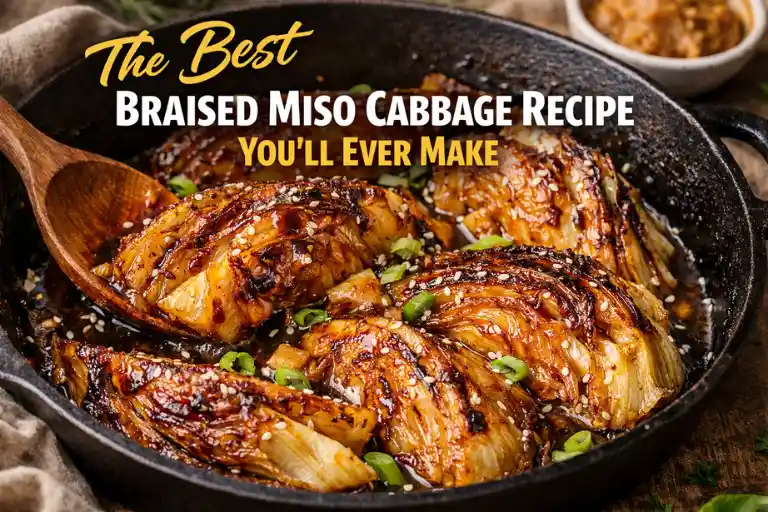
Braised Miso Cabbage is one of those simple dishes that tastes far more special than it looks. With just a few pantry ingredients, you can turn basic cabbage into a rich, deeply savory side packed with umami flavor. The magic happens when cabbage wedges are seared until golden, then gently braised in a light miso glaze that brings out their natural sweetness. The result? Tender centers, caramelized edges, and a glossy miso sauce that clings to every layer.
This easy miso cabbage recipe works as a cozy weeknight side, a vegetarian main, or even a holiday dish. Whether you prefer miso butter cabbage, a fully vegan cabbage recipe, or a bold Japanese-inspired version, this guide will show you exactly how to braise cabbage with miso the right way—so it turns out perfectly every time.
Quick Answer
Braised Miso Cabbage is a simple Japanese-inspired cabbage recipe made by searing cabbage wedges until golden, then gently cooking (braising) them in a light miso sauce. The miso adds deep umami flavor, while the braising process keeps the inside tender and juicy.
To make it, cut cabbage into thick wedges, sear them in a hot pan until caramelized, then add a mixture of miso paste, a little broth, and vinegar. Cover and cook for about 10–15 minutes until soft but not mushy. Finish by reducing the sauce into a glossy miso glaze. The result is a deeply savory, slightly sweet miso braised cabbage that works as a vegan side dish or pairs beautifully with salmon, tofu, or rice bowls.
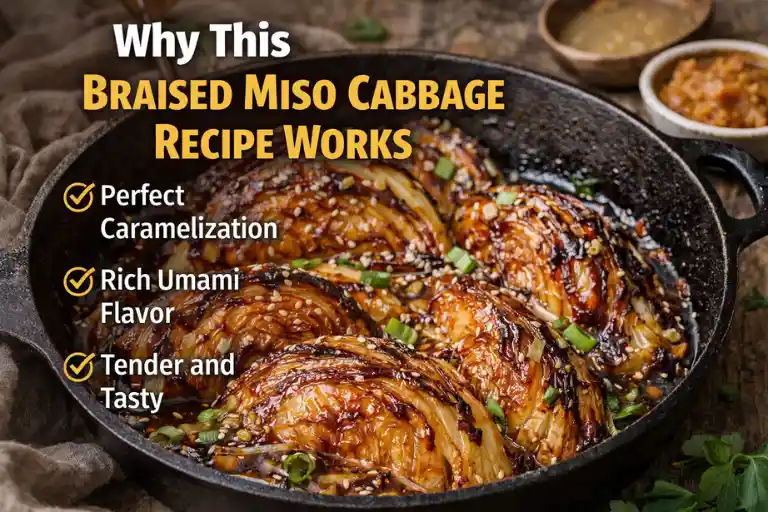
Why This Braised Miso Cabbage Recipe Works
You might also like: Best Vegan Protein Powders
This braised miso cabbage recipe is simple, but every step has a purpose. Here’s why it turns out deeply flavorful and perfectly textured every time:
Perfect Salt–Sweet Balance
Cabbage naturally becomes slightly sweet when cooked. When you add miso paste, it brings a deep umami flavor with gentle saltiness. As the cabbage braises, the sweetness and savory notes blend together. A small splash of rice vinegar brightens everything, so the dish never tastes heavy or overly salty. This balance is what makes this miso cabbage recipe so addictive.
Caramelization Method Explained
The key to great miso braised cabbage is searing first. When cabbage wedges hit a hot pan, the outer layers turn golden brown. This process creates caramelized cabbage edges, which add depth and richness. Only after that do we add the miso mixture and braise gently. This two-step method gives you crispy edges and a tender center, instead of soggy cabbage.
One-Pan Simplicity
You don’t need complicated tools. This is a true one-pan cabbage side dish. Sear, braise, reduce the glaze — all in the same skillet. Fewer dishes, more flavor. It’s perfect for weeknight dinners or when you need a quick Japanese-inspired cabbage recipe without extra effort.
Beginner-Friendly Technique
If you’ve ever wondered how to braise cabbage with miso, this method is easy to follow. There are no advanced skills required. As long as you:
- Keep the wedges intact
- Don’t overcrowd the pan
- Add the miso at the right time
You’ll get a glossy miso glaze, tender cabbage, and restaurant-level flavor at home.
What Is Braised Miso Cabbage?
Braised Miso Cabbage is a simple yet deeply flavorful dish where thick cabbage wedges are first seared, then gently cooked in a light miso sauce until tender. It’s inspired by Japanese flavors, especially the rich, savory depth of miso paste, which gives the dish its signature umami taste.
Japanese-Inspired Flavor Profile
While this isn’t a traditional Japanese recipe, it uses classic ingredients like white miso, soy sauce, and sometimes sesame oil or rice vinegar. The result is a balanced flavor that is slightly sweet, salty, and deeply savory. This makes it a perfect Japanese-inspired cabbage recipe that feels both comforting and modern.

What Braising Actually Means
Braising is a cooking method that uses both high heat and gentle simmering. First, you sear the cabbage to create color and flavor. Then you add a small amount of liquid, cover the pan, and let it cook slowly. This process keeps the inside soft while allowing the outside to stay flavorful.
In simple terms, braising means:
- Brown first
- Cook slowly with a little liquid
- Finish with a glaze
That’s how you get perfectly tender miso braised cabbage.
Difference Between Braising & Roasting
Many people confuse braised cabbage with roasted cabbage, but they are different.
| Braising | Roasting |
| Uses stovetop + liquid | Uses dry oven heat |
| Softer texture | Crispier exterior |
| Sauce absorbs into layers | Glaze stays mostly outside |
| Faster cooking time | Slightly longer cook time |
If you prefer a juicy and tender result, braising is best. If you want crispy edges all around, roasted miso cabbage may suit you better.
Why Miso and Cabbage Work So Well (Flavor Science)
Most recipes don’t explain this part, but understanding the science helps you cook better.
What Is Umami?
Umami is known as the fifth taste. It’s the deep, savory flavor found in foods like mushrooms, soy sauce, and miso. When you add miso to cabbage, you’re adding a natural flavor booster that makes the dish taste richer and more satisfying.
That’s why miso cabbage recipes feel comforting and full-bodied, even though they use simple ingredients.
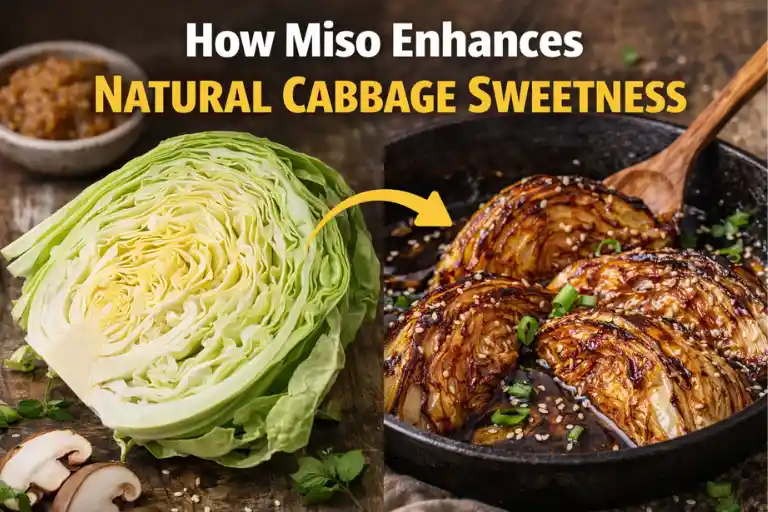
How Miso Enhances Natural Cabbage Sweetness
Cabbage contains natural sugars. When it cooks, those sugars become more noticeable. Miso adds salt and fermented depth, which actually makes that sweetness stand out more. This creates the perfect salt-sweet balance in your braised miso cabbage.
Maillard Reaction Simplified
When cabbage hits a hot pan, it turns golden brown. This happens because of something called the Maillard reaction. It’s just a fancy way of saying that heat changes the surface of the cabbage, creating deeper flavor and color.
That’s why caramelized cabbage edges taste better than steamed cabbage.
Why High Heat First Matters
If you skip the searing step and add liquid too early, the cabbage will steam instead of brown. That means less flavor. Starting with high heat helps you build:
- Crispy outer layers
- Deeper savory notes
- Better sauce absorption later
This is the secret to making restaurant-quality miso braised cabbage at home.
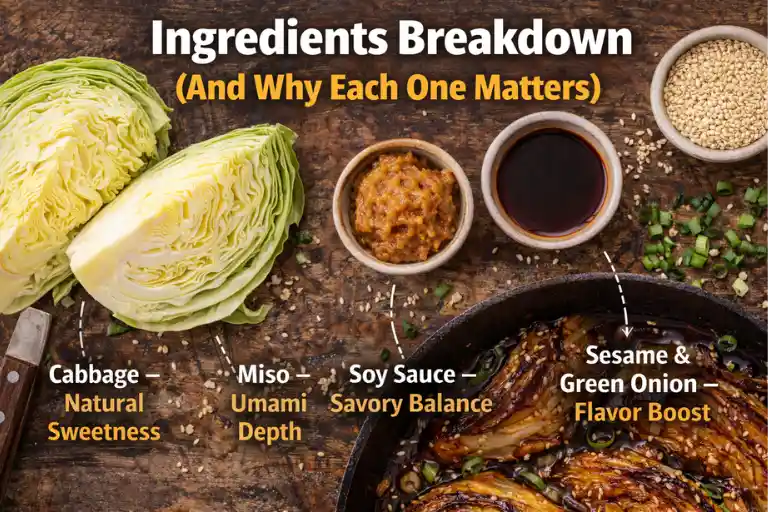
Ingredients Breakdown (And Why Each One Matters)
The beauty of braised miso cabbage is that it uses simple ingredients — but each one plays an important role. When combined properly, they create that rich umami cabbage flavor everyone loves.
Cabbage Types
Choosing the right cabbage changes the texture of your final dish.
Green Cabbage
This is the most common and best choice for a classic miso braised cabbage recipe. It holds its shape well, caramelizes beautifully, and becomes tender without falling apart.
Savoy Cabbage
Savoy cabbage has softer, crinkled leaves. It cooks faster and absorbs the miso glaze deeply. The result is slightly more delicate and silky.
Napa Cabbage
Napa cabbage is lighter and juicier. It works well if you prefer a softer texture, but it doesn’t hold wedges as firmly as green cabbage. It’s great for a lighter Japanese-inspired cabbage recipe.
Can You Use Red Cabbage?
Yes, but it will taste slightly stronger and look darker once cooked. Red cabbage works better in roasted versions, but you can still make a flavorful miso cabbage side dish with it.
Miso Types
The type of miso you use will change the flavor balance.
White Miso
Mild, slightly sweet, and perfect for beginners. This is the safest choice for most miso cabbage recipes.
Yellow Miso
A bit stronger than white miso but still balanced. It gives a deeper savory tone without overpowering the cabbage.
Red Miso
Bold and salty. Use less of it, as it can dominate the natural sweetness of cabbage.
Low-Sodium Options
If you’re watching salt intake, look for low-sodium miso. This keeps your braised miso cabbage flavorful but not overly salty.
Flavor Builders
These ingredients bring balance and depth.
Butter vs Oil
- Butter creates a rich miso butter cabbage flavor and helps with caramelization.
- Oil (like olive oil or sesame oil) keeps it lighter and works well for a vegan cabbage recipe.
Garlic
Adds aroma and warmth. Just be careful not to burn it, as it can turn bitter.
Rice Vinegar
Adds brightness. It balances the saltiness of miso and enhances sweetness.
Soy Sauce
Boosts savory depth. A small amount strengthens the overall umami flavor.
Optional Add-Ins
- Mushrooms for extra earthiness
- Lemon juice for freshness
- Chili flakes or chili oil for heat
These variations turn basic miso braised cabbage into something new each time.
Step-by-Step Braised Miso Cabbage Recipe
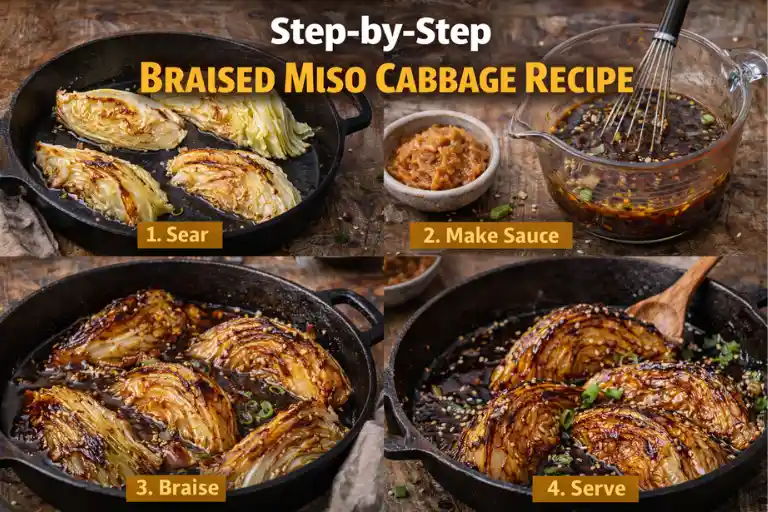
Now let’s walk through exactly how to braise cabbage with miso so it turns out perfect.
Step 1 – Prep & Cut
- Remove any damaged outer leaves.
- Cut the cabbage into thick wedges
- Keep the core intact — this helps the wedges hold together during cooking.
This is key for preventing the cabbage from falling apart while braising.
Step 2 – Sear for Caramelization
Heat a large skillet over medium-high heat. Add butter or oil.
Place the cabbage wedges flat-side down and let them cook undisturbed for several minutes.
Important tips:
- Don’t overcrowd the pan.
- Let the cabbage develop golden-brown edges.
- Avoid flipping too early.
This step creates the caramelized cabbage flavor that makes this dish special.
Step 3 – Braise Properly
Once the cabbage is browned, reduce the heat to medium.
Mix a small amount of:
- Broth or water
- Miso paste
- Rice vinegar
Pour it gently into the pan.
Liquid Ratio
Use just enough liquid to lightly coat the bottom of the pan — not submerge the cabbage.
Lid On vs Off Timing
- Cover for about 8–10 minutes to soften the inside.
- Remove the lid for the last few minutes to let excess liquid reduce.
This creates tender layers while keeping structure intact.
Step 4 – Glaze & Finish
The timing of miso matters.
If you didn’t mix miso in earlier, dissolve it in a bit of warm liquid and add it during the last few minutes of cooking. This prevents the miso from losing flavor.
Let the sauce simmer uncovered until it thickens into a glossy miso glaze.
The final result should be:
- Tender inside
- Golden outside
- Lightly coated in rich, savory sauce
That’s how you achieve restaurant-quality braised miso cabbage at home.
Cooking Time & Temperature Guide
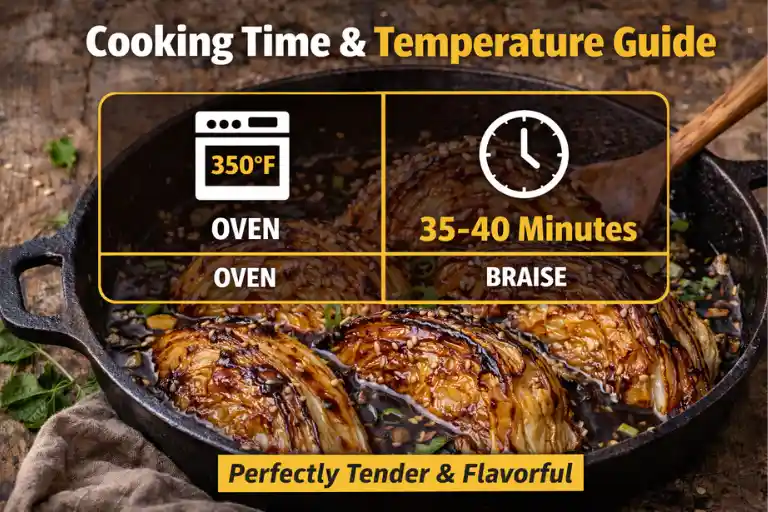
One of the most common questions about braised miso cabbage is: How long should it cook? Getting the timing right ensures you have tender cabbage with caramelized edges — not soggy leaves.
Stovetop Timing
For classic miso braised cabbage, the stovetop method is the fastest and most controlled option.
- Searing: 4–6 minutes per side over medium-high heat
- Braising (covered): 8–10 minutes over medium heat
- Glaze reduction (uncovered): 2–4 minutes
Total time: About 18–20 minutes
This timing gives you a tender center while keeping the structure of the cabbage wedges intact.
Oven Option
If you prefer a hands-off approach, you can finish the dish in the oven.
- Preheat to 375°F (190°C)
- Sear cabbage first on the stovetop
- Add miso mixture
- Transfer to oven (covered) for 15–20 minutes
The oven method works well if you’re making a larger batch of this miso cabbage side dish.
How to Know It’s Done
Your braised cabbage with miso sauce is ready when:
- The outer leaves are golden brown
- A knife slides easily into the thickest part
- The glaze looks slightly thick and glossy
Avoid cooking until it collapses completely — that means it’s overdone.
Internal Texture Indicators
Perfect miso braised cabbage should have:
- Soft inner layers
- Slight bite in the core
- Caramelized exterior
- Sauce lightly coating each layer
If the center feels too firm, give it 2–3 more minutes covered. If it feels mushy, you braised it too long.
Texture Control Guide (Crispy vs Tender)
This is where you can really customize your miso cabbage recipe. Small adjustments in heat and timing make a big difference.
Crispy-Edge Method
If you love bold, golden edges:
- Use slightly higher heat during searing
- Let cabbage cook undisturbed longer
- Use less braising liquid
- Keep lid off longer during final reduction
This method creates more caramelized cabbage with deeper flavor and a slightly firmer center.
Soft Melt-in-Mouth Method
If you prefer very tender cabbage:
- Use a bit more liquid
- Keep the lid on slightly longer (10–12 minutes)
- Lower heat slightly
This creates a softer, almost buttery texture — especially good for miso butter cabbage variations.
Balanced Texture Method
For the perfect middle ground:
- Sear properly
- Use moderate liquid
- Cover for 8–9 minutes
- Finish uncovered
This gives you crispy edges with a tender but structured interior — ideal for most Japanese-inspired cabbage recipes.
How to Prevent Sogginess
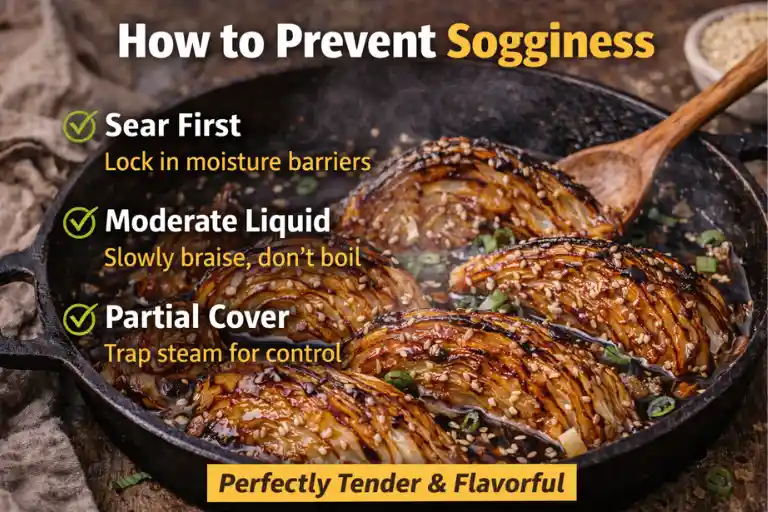
Soggy cabbage usually happens when:
- Too much liquid is added
- Heat is too low during searing
- The pan is overcrowded
- The lid stays on too long
To fix it:
- Increase heat slightly
- Remove the lid
- Let excess liquid evaporate
The goal of great braised miso cabbage is tender, not watery. Keep the liquid minimal and let the glaze reduce naturally.
Braised vs Roasted Miso Cabbage
Many people confuse braised miso cabbage with roasted miso cabbage, but they give very different results. Understanding the difference helps you choose the right method for your meal.
| Braised Miso Cabbage | Roasted Miso Cabbage |
| More tender texture | More crisp exterior |
| Sauce is absorbed into layers | Glaze stays mostly outside |
| Cooked on stovetop | Oven-based cooking |
| Faster overall method | Slightly longer cook time |
| Juicier inside | Drier, crisp edges |
When to Choose Braising
- You want a softer, juicy interior
- You love sauce soaking into every layer
- You need a quicker miso cabbage recipe
When to Choose Roasting
- You prefer crispy edges all around
- You want bold caramelization
- You don’t mind using the oven
Both methods highlight the deep umami flavor of miso, but braising creates a more tender, comforting result.
10 Flavor Variations to Try
Once you master the basic miso braised cabbage, you can easily adjust the flavor. These variations keep things exciting while staying simple.

1. Miso Butter Cabbage
Add extra butter during the searing stage for a richer, glossy finish. This creates a creamy, indulgent version of miso butter cabbage.
2. Lemon Miso Glaze
Add fresh lemon juice and a bit of zest at the end. The acidity brightens the savory miso and balances sweetness.
3. Spicy Chili Oil Miso
Drizzle chili oil or add red pepper flakes for heat. This version works beautifully in rice bowls.
4. Miso Mushroom Version
Sauté sliced mushrooms before adding cabbage. Mushrooms boost the natural umami cabbage flavor even more.
5. Maple Miso Glaze
Add a small spoon of maple syrup to the miso mixture. It enhances caramelization and gives a subtle sweet touch.
6. Sesame Soy Twist
Add a splash of soy sauce and finish with toasted sesame oil and sesame seeds. This leans further into a Japanese-inspired cabbage recipe.
7. Vegan Coconut Miso
Use coconut oil instead of butter and add a tiny splash of coconut milk for creaminess. Perfect for a fully vegan cabbage recipe.
8. Garlic-Heavy Version
Increase the garlic and add roasted garlic at the end for a stronger savory profile.
9. Gochujang Fusion
Mix a small amount of gochujang with miso for a Korean-inspired spicy depth.
10. Honey Miso Caramelized
Add honey to the glaze and cook slightly longer uncovered. This creates deeper caramelized cabbage edges with a sweet-savory balance.
What to Serve With Braised Miso Cabbage
One of the best things about braised miso cabbage is how flexible it is. The deep umami flavor pairs well with both plant-based and protein-heavy meals.

With Salmon
The savory miso glaze works beautifully with baked or grilled salmon. The rich fish balances the sweet, caramelized cabbage. This combination makes a simple but elegant dinner.
With Tofu
For a fully vegan cabbage recipe, serve it with crispy pan-fried tofu. The tofu absorbs extra sauce, creating a balanced and satisfying vegetarian plate.
With Grilled Chicken
Grilled chicken adds lean protein and mild flavor that complements the bold miso braised cabbage. Add a squeeze of lemon for extra freshness.
Over a Rice Bowl
Turn this dish into a full meal by serving it over steamed rice. Add:
- Soft-boiled egg
- Sesame seeds
- Chili oil
This creates a comforting miso cabbage rice bowl packed with flavor.
Holiday Side Dish Pairing
Because it looks impressive and tastes rich, braised cabbage with miso sauce works well as a holiday side. It pairs nicely with:
- Roasted turkey
- Glazed ham
- Baked tofu
- Stuffed mushrooms
It’s a modern twist on traditional cabbage dishes.
With Noodles
Serve it with soba or udon noodles for a quick Japanese-inspired dinner. The sauce lightly coats the noodles, making it feel like a complete dish.
Is Braised Miso Cabbage Healthy?
Yes — when prepared properly, miso braised cabbage can be a nutritious and balanced side dish.

Calories Per Serving
A typical serving of braised miso cabbage contains approximately 120–180 calories, depending on how much butter or oil you use. Using oil instead of butter keeps it lighter.
Fiber Content
Cabbage is naturally high in fiber, which supports digestion and helps you feel full longer. That makes this miso cabbage recipe both satisfying and nutrient-dense.
Probiotics in Miso
Miso is a fermented food, meaning it contains beneficial bacteria. While some probiotics reduce during cooking, miso still provides fermented depth and nutritional value.
Low-Carb Friendly?
Yes. Cabbage is naturally low in carbohydrates, making this dish suitable for many low-carb eating plans.
Keto Suitability
In moderate portions, braised cabbage can fit into a keto diet. Just watch added sweeteners like honey or maple in variations.
Vegan & Gluten-Free Note
- Use oil instead of butter for a fully vegan cabbage recipe.
- Choose gluten-free miso if needed.
This makes braised miso cabbage suitable for a wide range of dietary needs while still delivering bold flavor.
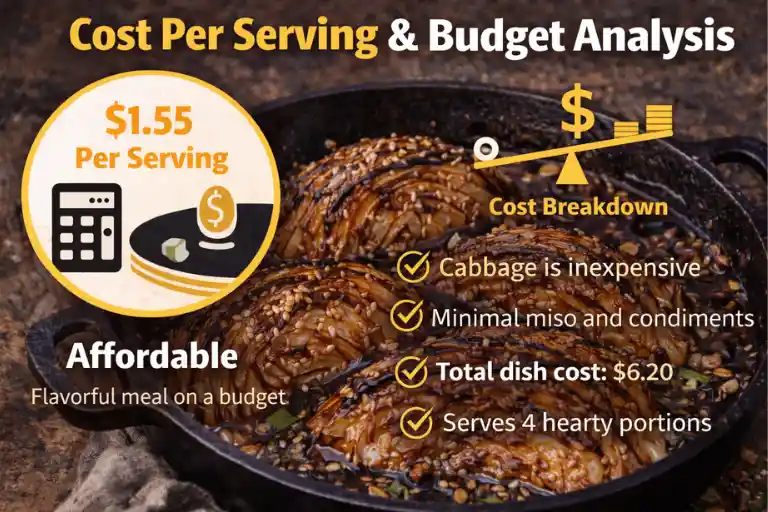
Cost Per Serving & Budget Analysis
One reason braised miso cabbage is so popular is that it delivers big flavor without a big grocery bill. It looks impressive, but it’s actually one of the most affordable vegetable side dishes you can make.
Average Cabbage Price
In most places, one medium head of green cabbage costs around $2–$4. One cabbage easily serves 4–6 people when used in a miso cabbage recipe.
Miso paste may cost $4–$7 per container, but you only use 1–2 tablespoons per recipe. That means the actual cost per dish is very low.
Cost Breakdown (Estimated)
Here’s a simple breakdown for one batch of miso braised cabbage:
- Cabbage: $3
- Miso paste (used portion): $1
- Garlic, vinegar, oil: $1
Total: Around $5 for 4 servings
That’s roughly $1.25 per serving.
Even if you add mushrooms or butter, it remains budget-friendly.
Why It’s an Affordable Side
- Cabbage is inexpensive year-round
- Miso lasts for months in the fridge
- You only need a few pantry ingredients
- It works as both a side and vegetarian main
Compared to many vegetable dishes, this Japanese-inspired cabbage recipe gives maximum flavor for minimal cost.
Restaurant Comparison Value
In restaurants, dishes like miso glazed cabbage or charred cabbage sides often cost $8–$14 per portion. Making it at home gives you the same deep umami flavor for a fraction of the price.
This makes braised miso cabbage a smart choice for budget-conscious cooking without sacrificing taste.
Meal Prep & Make-Ahead Strategy
Another reason this dish works so well is that it’s practical. With a little planning, you can prepare parts of this miso cabbage side dish ahead of time.
Can You Prep Wedges Ahead?
Yes. You can:
- Cut cabbage wedges up to 2 days in advance
- Store them in an airtight container in the fridge
Keeping the core intact helps the wedges stay firm before cooking.
Best Storage Containers
After cooking, let the cabbage cool completely. Store in:
- Glass containers with tight lids
- Airtight meal prep boxes
This prevents the miso glaze from drying out and keeps flavors fresh.
Reheating Without Losing Texture
To keep your braised miso cabbage from becoming soggy:
- Reheat in a skillet over medium heat
- Add a splash of water if needed
- Avoid microwaving when possible
Stovetop reheating helps restore some of the caramelized texture.
Freezing Guide (If Applicable)
Freezing is possible, but texture may soften after thawing. If you freeze:
- Store in freezer-safe containers
- Thaw overnight in the fridge
- Reheat uncovered to reduce excess moisture
For best texture, enjoy your miso braised cabbage fresh or within 3–4 days in the fridge.
5 Mistakes That Ruin Miso Cabbage
Even a simple braised miso cabbage recipe can go wrong if a few small steps are missed. Avoid these common mistakes to keep your cabbage tender, flavorful, and perfectly glazed.
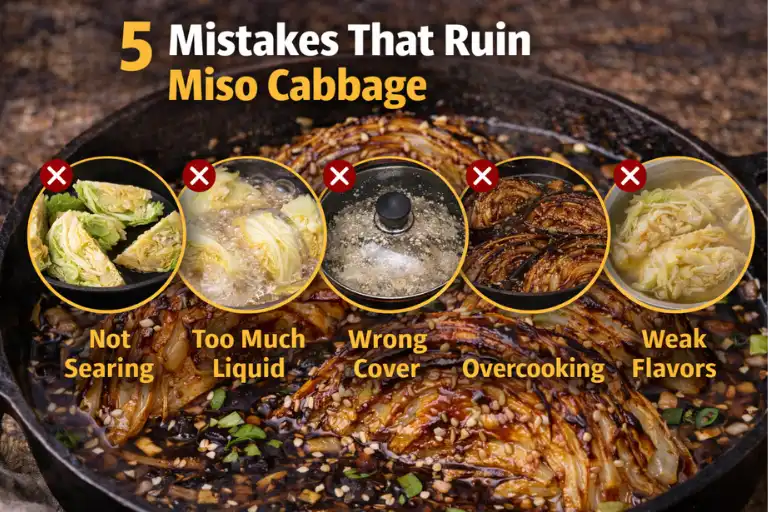
1. Adding Miso Too Early
Miso is delicate. If you add it while the pan is too hot or cook it for too long, it can lose its rich umami flavor and even taste slightly bitter.
Fix:
Dissolve miso in warm liquid and add it during the final braising stage or just before reducing the glaze.
2. Overcrowding the Pan
If cabbage wedges are packed too tightly, they will steam instead of sear. That means no caramelized cabbage edges, and less flavor overall.
Fix:
Cook in batches if needed. Leave space between wedges so they brown properly.
3. Over-Braising
Cooking too long will make your miso braised cabbage soft and mushy. The layers should stay structured.
Fix:
Check tenderness after 8–10 minutes. A knife should slide in easily, but the cabbage should still hold its shape.
4. Burning Garlic
Garlic cooks quickly. If it burns, it becomes bitter and can overpower the entire dish.
Fix:
Add garlic after searing the cabbage or lower the heat slightly before adding it.
5. Oversalting
Miso and soy sauce already contain salt. Adding extra salt too early can make your miso cabbage recipe too salty.
Fix:
Taste at the end before adjusting seasoning.
Quick Troubleshooting Chart
If your braised miso cabbage doesn’t turn out as expected, use this simple guide to fix it fast.
| Problem | Cause | Fix |
| Too salty | Too much miso | Add splash of broth or water and simmer |
| Too soft | Overcooked | Reduce braise time next batch |
| Bitter taste | Burned edges or garlic | Lower heat during searing |
| Bland flavor | Not enough glaze reduction | Let sauce reduce longer uncovered |
Small adjustments make a big difference. Once you understand the balance of heat, timing, and glaze, your miso braised cabbage will turn out perfectly every time.
FAQs About Miso Cabbage Recipe
What type of miso is best?
For most braised miso cabbage recipes, white miso is the best choice. It’s mild, slightly sweet, and balances the natural sweetness of cabbage without overpowering it. If you prefer a stronger, saltier flavor, you can use yellow or red miso — just reduce the amount slightly.
Can I use red cabbage?
Yes, you can use red cabbage, but the flavor will be slightly stronger and the color will darken as it cooks. It may not stay as tender as green cabbage, but it still works well in a miso cabbage recipe, especially if you prefer a firmer texture.
Is this recipe vegan?
Yes, braised miso cabbage can easily be made vegan. Simply use oil instead of butter and ensure your miso paste is vegan-friendly. The result is still rich, savory, and full of deep umami flavor, making it a great plant-based side dish.
How long does it last?
Cooked miso braised cabbage lasts about 3–4 days in the refrigerator when stored in an airtight container. The flavor often becomes even deeper the next day, but the texture may soften slightly.
Can I freeze braised cabbage?
You can freeze it, but the texture may become softer after thawing. For best results, store it in a freezer-safe container and reheat uncovered to allow excess moisture to evaporate. Freshly made braised miso cabbage always has the best texture.
How do I keep cabbage from falling apart?
Keep the core intact when cutting cabbage into wedges. Avoid over-braising and use moderate heat during cooking. Proper searing before adding liquid also helps the wedges stay firm and structured in your miso braised cabbage.
Recipe Card – Braised Miso Cabbage Recipe
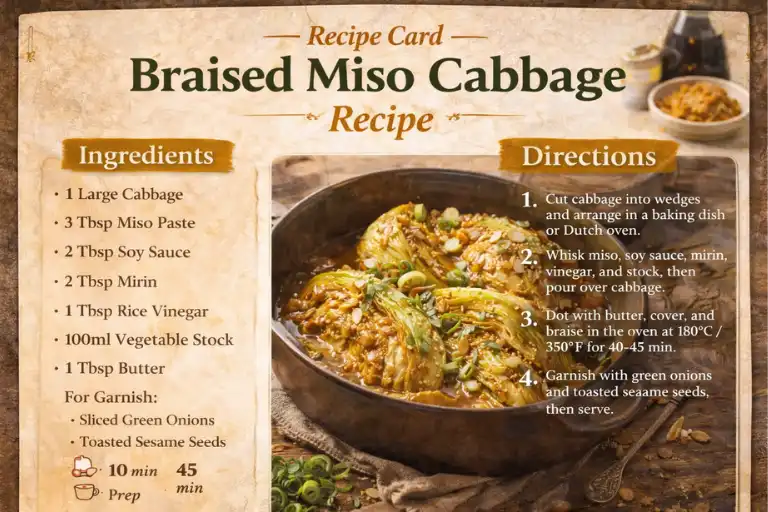
Below is a clean, structured version you can directly adapt into Recipe Schema markup for rich results.
Prep Time:
10 minutes
Cook Time:
20 minutes
Total Time:
30 minutes
Servings:
4 servings
Calories:
Approx. 150 calories per serving
Ingredients
- 1 medium green cabbage, cut into thick wedges (core intact)
- 2 tablespoons white miso paste
- 1 tablespoon butter or olive oil
- 2 cloves garlic, minced
- ½ cup vegetable broth (or water)
- 1 teaspoon rice vinegar
- 1 teaspoon soy sauce (optional)
- ½ teaspoon chili flakes (optional)
- Sesame seeds or sliced green onions for garnish
Instructions
- Prep the Cabbage
Remove damaged outer leaves. Cut into thick wedges, keeping the core intact to prevent falling apart. - Sear for Caramelization
Heat butter or oil in a large skillet over medium-high heat. Place cabbage wedges flat-side down. Cook 4–6 minutes per side until golden brown. - Prepare Miso Mixture
In a small bowl, whisk miso paste with warm broth, rice vinegar, and soy sauce until smooth. - Braise the Cabbage
Reduce heat to medium. Pour the miso mixture into the pan. Cover and cook for 8–10 minutes until tender but structured. - Glaze & Finish
Remove lid and let sauce reduce for 2–4 minutes until glossy. Garnish with sesame seeds or green onions before serving.
Notes
- For a richer flavor, use butter for a classic miso butter cabbage variation.
- For a fully vegan cabbage recipe, use olive oil instead of butter.
- Avoid adding extra salt until tasting — miso already contains salt.
- Do not overcrowd the pan to ensure proper caramelization.
Nutrition (Per Serving – Approximate)
- Calories: 150 kcal
- Carbohydrates: 14g
- Fiber: 4g
- Protein: 3g
- Fat: 9g
- Sodium: Varies depending on miso used
The Science of Umami in Simple Terms
If you’ve ever wondered why braised miso cabbage tastes so deeply satisfying, the answer is simple: umami.
Umami is known as the “fifth taste,” alongside sweet, salty, sour, and bitter. It’s the savory flavor found in foods like mushrooms, soy sauce, aged cheese, and most importantly, miso paste. Scientifically, umami comes from natural compounds called glutamates, which trigger a rich and comforting taste sensation on your tongue.
When you cook cabbage, its natural sugars become more noticeable. When you add miso, you introduce fermented depth and saltiness. Together, they create a powerful flavor balance. This is why miso braised cabbage tastes more complex than plain cooked cabbage.
Another important factor is the Maillard reaction — the browning that happens during searing. High heat transforms the surface of the cabbage, creating deeper flavor before the braising step begins.
In simple terms:
- Cabbage brings sweetness
- Miso brings umami
- Heat builds depth
- Braising blends everything together
That’s the science behind why this humble miso cabbage recipe tastes restaurant-quality with very few ingredients.
Final Thoughts
Miso cabbage may look simple, but when prepared correctly, it becomes something truly special. By using the right braising method, choosing quality miso paste, and allowing proper caramelization, you unlock deep umami flavor with very few ingredients.
This isn’t just another cabbage side dish — it’s a flexible, budget-friendly, and nutrient-rich recipe that works for weeknights, holidays, and meal prep alike. Whether you prefer a classic braised miso cabbage recipe, a buttery variation, or a fully vegan version, the technique stays the same: sear first, braise gently, and finish with a glossy glaze.
Once you understand the balance of heat, timing, and texture, you can confidently make miso cabbage that tastes restaurant-level every single time.