
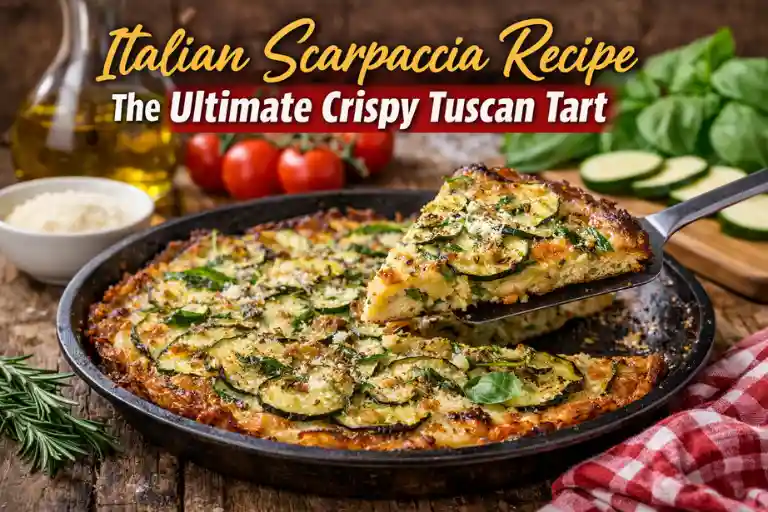
If you love simple Mediterranean food, Italian Scarpaccia is a dish worth discovering. This traditional Tuscan recipe comes from the coastal town of Viareggio in Tuscany, where fresh summer zucchini are turned into a thin, rustic bake. Often called a zucchini scarpaccia or Italian zucchini tart, this dish is known for its crispy edges, soft center, and rich olive oil flavor. Unlike bread or focaccia, scarpaccia is made with a light batter and lots of zucchini, which gives it a delicate texture.
Some versions are savory with Parmesan, herbs, and olive oil, while older Tuscan traditions also include a sweet scarpaccia made with sugar and zucchini. In this guide, you will learn how to make authentic Italian scarpaccia, understand its history, discover pro tips for a crispy thin texture, and explore why this Tuscan zucchini recipe has become a favorite summer dish.
Quick Overview
If you want a fast summary before cooking, here is a simple overview of this Italian Scarpaccia recipe. This quick guide helps you understand the timing, difficulty level, and what kind of texture to expect from this traditional Tuscan zucchini tart.
Prep Time: 15–20 minutes
This includes slicing the fresh zucchini, lightly salting them to remove excess moisture, and mixing the thin batter used for an authentic zucchini scarpaccia.
Cook Time: 30–35 minutes
The scarpaccia recipe bakes in a hot oven until the edges become crispy and golden while the center stays soft and flavorful.
Total Time: 45–55 minutes
Servings: 4–6 slices
Difficulty Level: Easy
This Italian zucchini tart recipe uses simple ingredients and beginner-friendly steps.
Best Occasion:
Perfect for a summer lunch, light dinner, Mediterranean appetizer, or Italian aperitivo snack.
Texture Outcome:
A thin, crispy zucchini scarpaccia with golden edges, tender zucchini layers, and a rustic Tuscan flavor enhanced by olive oil, herbs, and Parmesan.
What Is Italian Scarpaccia?
You might also like: How to Make the Best Crispy Lentils Recipe
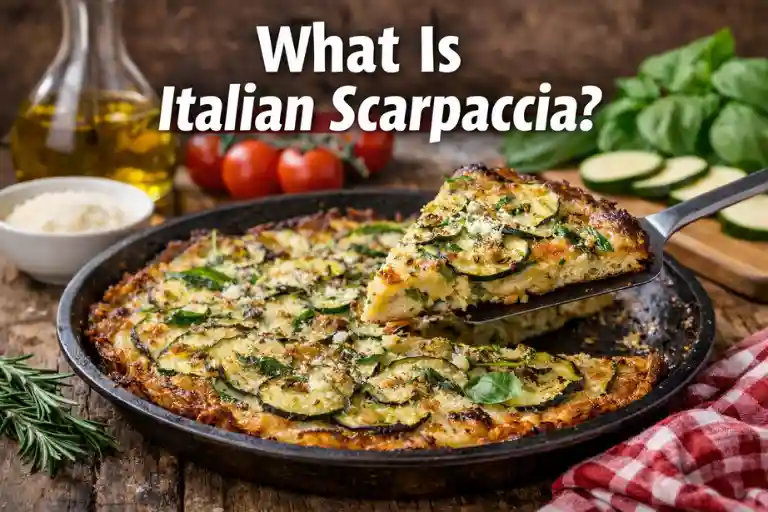
Italian Scarpaccia is a traditional Tuscan zucchini dish that sits somewhere between a savory tart, flatbread, and rustic vegetable bake. It comes from the coastal town of Viareggio in Tuscany, where families created this dish as a simple way to use up large amounts of fresh summer zucchini. Today, zucchini scarpaccia is known as a thin Italian zucchini tart with crispy edges and a soft, flavorful center.
Pronunciation:
Scarpaccia is pronounced “skar-PAHT-cha.”
Meaning of the Name:
The word scarpaccia loosely translates to something like “old shoe” or “flattened shape” in Italian dialect. The name likely refers to the very thin and flat appearance of the dish once baked.
Traditional Ingredients:
A classic scarpaccia recipe uses simple pantry ingredients such as:
- Zucchini
- Flour or cornmeal
- Olive oil
- Parmesan cheese
- Fresh herbs
- Salt and pepper
These ingredients create a light batter that highlights the natural flavor of the zucchini.
Why It Is Thin:
Authentic Italian scarpaccia is intentionally spread very thin in a baking pan. This allows the zucchini to cook evenly and creates the signature crispy golden edges that make this Tuscan zucchini tart so appealing.
Why It’s Considered Rustic Cuisine:
Scarpaccia is part of Italian peasant cooking, where simple seasonal ingredients are turned into flavorful meals. Because it uses garden zucchini, olive oil, and basic pantry staples, it perfectly represents the rustic traditions of Tuscan home cooking.
The History & Origins of Scarpaccia (Viareggio, Tuscany)
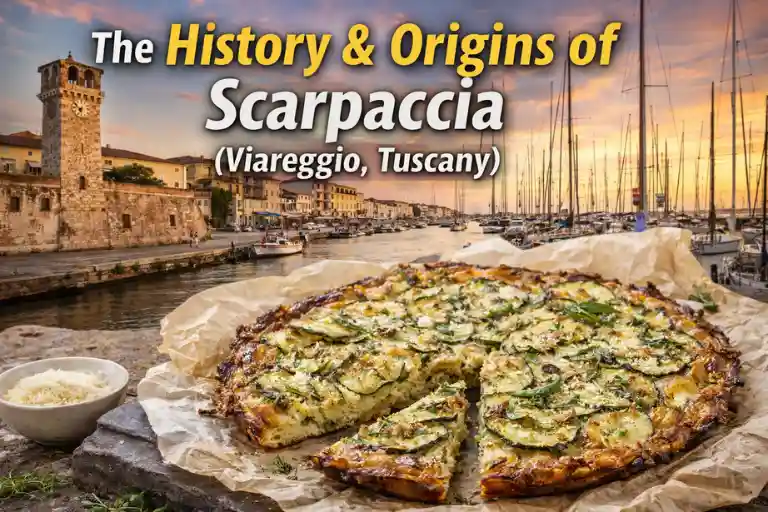
The story of Italian Scarpaccia begins in the coastal town of Viareggio in Tuscany, a region known for its strong Mediterranean food traditions and simple seasonal cooking. This traditional Tuscan recipe developed as a practical way for families to use the large amount of zucchini harvested during the summer months. In many homes, gardens produced more zucchini than people could eat fresh, so cooks created dishes like zucchini scarpaccia, soups, and rustic vegetable bakes.
Tuscan Coastal Roots
Viareggio sits along the Tuscan coast, where the cuisine focuses on fresh vegetables, olive oil, herbs, and simple preparations. Italian scarpaccia fits perfectly into this style of cooking because it uses only a handful of ingredients but delivers rich flavor.
Peasant Cooking Tradition
Historically, scarpaccia was part of Italian peasant cuisine. Families relied on affordable pantry staples such as flour, olive oil, and seasonal vegetables. Instead of wasting surplus zucchini, they mixed it into a thin batter and baked it into a crispy Tuscan zucchini tart that could feed many people.
Seasonal Zucchini Surplus
During the summer harvest, zucchini grows quickly and abundantly. This led to the creation of dishes like authentic zucchini scarpaccia, where the vegetable becomes the star ingredient. The dish highlights the natural flavor of zucchini, enhanced with olive oil, Parmesan, and herbs.
Carnival Sweet Scarpaccia Version
Interestingly, not all scarpaccia recipes are savory. In Viareggio’s traditional carnival celebrations, locals often prepare a sweet scarpaccia made with zucchini, sugar, flour, and sometimes citrus zest. This version reflects the creativity of Tuscan home cooking, where the same vegetable can be used in both sweet and savory dishes.
Sweet vs Savory Scarpaccia (Major Confusion Explained)
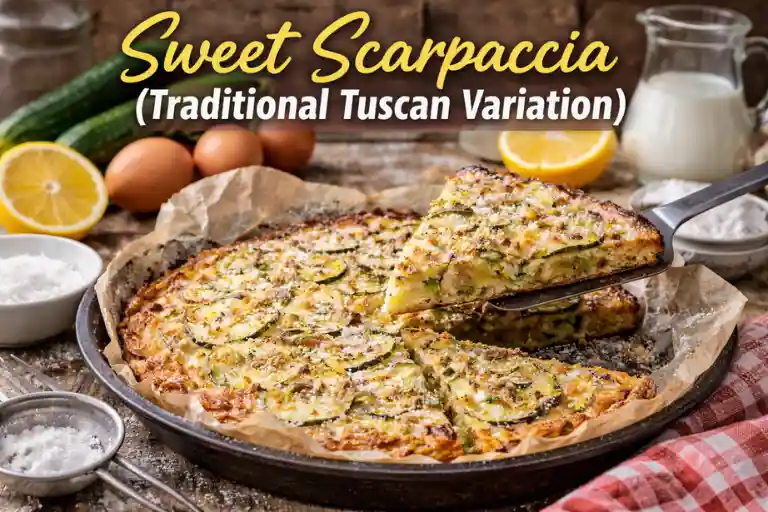
One of the most common questions people ask when discovering Italian scarpaccia is whether it is sweet or savory. The answer is that both versions exist, but the savory zucchini scarpaccia is the one most commonly made today.
Savory Scarpaccia (Most Popular Version)
The savory version is what most people recognize as a traditional Italian zucchini tart. It features fresh vegetables and Mediterranean flavors.
Typical ingredients include:
- Zucchini
- Olive oil
- Parmesan cheese
- Fresh herbs such as basil or thyme
- Flour or cornmeal
- Salt and pepper
This version produces a thin, crispy zucchini scarpaccia with rich savory flavor and golden edges.
Sweet Scarpaccia (Traditional Tuscan Variation)
The sweet scarpaccia comes from older Tuscan culinary traditions, especially around carnival celebrations.
Typical ingredients include:
- Zucchini
- Sugar
- Flour
- Olive oil or butter
- Sometimes citrus zest (lemon or orange)
The result is a lightly sweet baked dish with a delicate zucchini flavor.
Sweet vs Savory Scarpaccia Comparison
| Feature | Savory Scarpaccia | Sweet Scarpaccia |
| Main Flavor | Savory, herb-rich | Lightly sweet |
| Key Ingredients | Zucchini, olive oil, Parmesan, herbs | Zucchini, sugar, flour |
| Texture | Thin, crispy edges | Soft, cake-like |
| When Served | Lunch, appetizer, aperitivo | Dessert or festival treat |
| Popularity Today | Very common | Less common but traditional |
Both versions highlight the beauty of Tuscan seasonal cooking, proving that Italian scarpaccia can be both a savory Mediterranean zucchini dish and a unique sweet zucchini bake depending on the tradition being followed.
What Makes Authentic Scarpaccia Different?
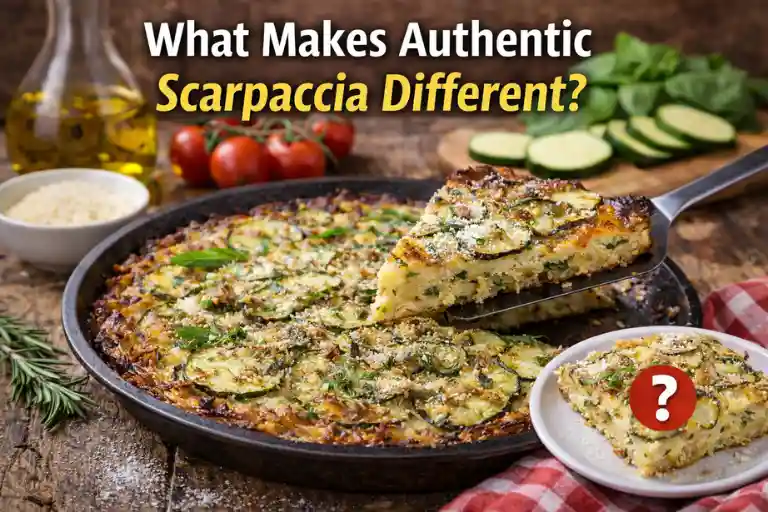
Many people confuse Italian Scarpaccia with dishes like zucchini bread, focaccia, or vegetable pie, but an authentic Tuscan scarpaccia recipe has a few unique characteristics that make it stand out. This traditional Italian zucchini tart follows a very simple approach that highlights fresh ingredients and rustic baking techniques.
Thin Batter
One of the most important features of zucchini scarpaccia is the thin batter. Unlike bread or cake, the mixture is light and spread very thin across the baking pan. This allows the zucchini to cook evenly and helps create the signature crispy golden edges.
No Yeast
Authentic Italian scarpaccia does not use yeast. Instead, it relies on a simple batter made with flour or cornmeal, olive oil, and zucchini. Because there is no rising step, the dish keeps its flat and rustic texture.
High Zucchini Ratio
A true scarpaccia recipe uses a large amount of zucchini compared to the batter. The vegetables are the star of the dish, while the batter simply holds everything together. This is why the finished result tastes fresh, light, and very vegetable-forward.
Crisp Edges
The best Tuscan zucchini scarpaccia has crispy edges and a soft center. Olive oil and a thin spread of batter help achieve that perfect contrast in texture.
Rustic Baking Style
Scarpaccia is part of Italian rustic cuisine, meaning it focuses on simple ingredients and straightforward preparation. It is usually baked in a basic pan without complicated techniques, reflecting the traditions of Tuscan home cooking.
Ingredient Breakdown & Why Each Ingredient Matters
Although Italian scarpaccia uses only a few ingredients, each one plays an important role in the flavor and texture of this traditional Tuscan zucchini tart.

Zucchini
Zucchini is the main ingredient in any zucchini scarpaccia recipe. It provides moisture, natural sweetness, and soft texture. Thinly sliced zucchini spreads evenly through the batter and becomes tender during baking.
Cornmeal or Flour
The batter usually includes flour or cornmeal, which gives the dish structure.
- Flour creates a softer, more delicate texture.
- Cornmeal adds a slightly rustic feel and a light crunch that works well with the crispy scarpaccia edges.
Olive Oil
High-quality olive oil is essential for authentic Italian scarpaccia. It adds richness, enhances flavor, and helps create the golden crispy surface that makes this Tuscan zucchini tart so appealing.
Parmesan
A small amount of Parmesan cheese adds a deep, savory flavor. It also helps the top layer brown nicely during baking, giving the scarpaccia recipe its slightly nutty taste.
Fresh Herbs
Fresh herbs such as basil, thyme, or rosemary bring brightness to the dish. They balance the richness of the olive oil and enhance the Mediterranean flavor profile of this Italian zucchini tart.
Salt
Salt is especially important when making authentic zucchini scarpaccia because it helps draw moisture out of the zucchini. This step prevents sogginess and helps achieve the thin, crispy texture that defines the dish.
Ingredients You Need (Plus Smart Substitutions)
To make an authentic Italian Scarpaccia, you only need a handful of simple ingredients. This traditional Tuscan zucchini tart is known for its minimal ingredients and fresh Mediterranean flavor. The key is using fresh zucchini, good olive oil, and a thin batter.
Basic Ingredients for Italian Scarpaccia
- Zucchini – 2–3 medium, thinly sliced
- Flour or cornmeal – for structure
- Olive oil – adds richness and helps create crispy edges
- Parmesan cheese – for savory flavor
- Fresh herbs – basil, thyme, or rosemary
- Salt and pepper – for seasoning
- Water – to form the light batter
These ingredients create a thin, crispy zucchini scarpaccia that highlights the natural flavor of the vegetables.
Gluten-Free Scarpaccia Option
If you want a gluten-free scarpaccia recipe, simply replace the flour with:
- Gluten-free flour blend
- Rice flour
- Chickpea flour
These options still allow the Tuscan zucchini tart to hold together while keeping the batter light.
Vegan Scarpaccia Option
Making vegan Italian scarpaccia is easy because the dish already relies heavily on vegetables.
Replace Parmesan cheese with:
- Nutritional yeast
- Vegan Parmesan
- Or simply omit cheese and increase herbs for flavor
This keeps the dish fully plant-based while maintaining the rustic Italian flavor.
Cornmeal Substitutes
Some scarpaccia recipes include cornmeal for texture. If you don’t have it, you can use:
- All-purpose flour
- Semolina flour
- Fine polenta
These options still produce the thin crispy edges that define a great Italian zucchini scarpaccia.
Cheese Alternatives
While Parmesan is traditional, you can experiment with:
- Pecorino Romano for a stronger flavor
- Grana Padano for a milder taste
- Vegan cheese for a dairy-free version
These alternatives work well while keeping the savory character of this Italian zucchini tart.
Step-by-Step Authentic Italian Scarpaccia Recipe
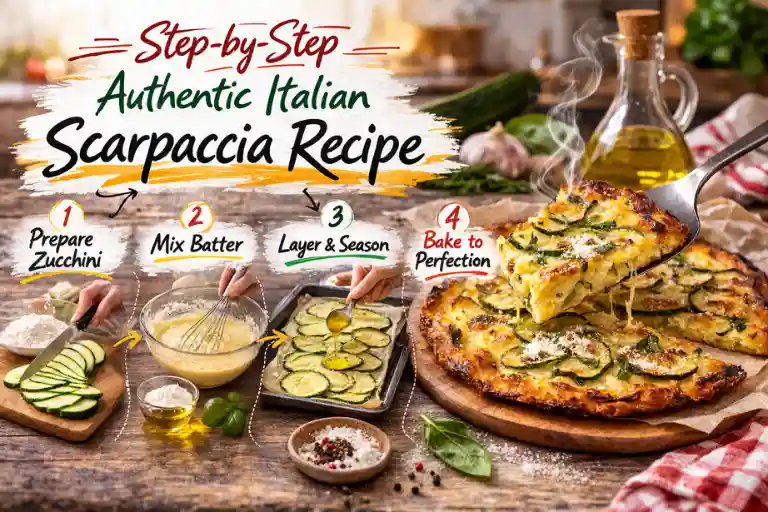
Making traditional Italian scarpaccia is simple, but a few key techniques help achieve the thin, crispy Tuscan texture.
1. Prepare the Zucchini
Wash the zucchini and slice them very thinly using a knife or mandoline. Thin slices help the zucchini cook evenly and blend well with the batter in this zucchini scarpaccia recipe.
2. Remove Moisture
Place the sliced zucchini in a bowl and sprinkle with salt. Let them sit for about 10–15 minutes.
Salt helps draw out excess moisture, which is essential for preventing a soggy scarpaccia.
After resting, gently squeeze or pat the zucchini dry with paper towels.
3. Mix the Batter
In a mixing bowl, combine:
- Flour or cornmeal
- Olive oil
- Water
- Parmesan cheese
- Fresh herbs
- Black pepper
Stir until you get a thin batter, similar to pancake batter. The batter should lightly coat the zucchini rather than overwhelm it.
4. Spread Thin in the Pan
Add the zucchini to the batter and mix well. Pour the mixture into a well-oiled baking pan and spread it very thinly using a spatula.
The thinner the layer, the crisper and more authentic your Italian scarpaccia will be.
5. Bake Until Crispy
Bake in a preheated oven at about 200°C (400°F) for 30–35 minutes.
Visual cues for doneness:
- The edges become golden brown and crispy
- The surface looks lightly caramelized
- The center feels firm when gently pressed
6. Cool Slightly Before Slicing
Let the Tuscan zucchini scarpaccia rest for about 5–10 minutes before cutting.
This allows the structure to set and makes slicing easier while preserving the crispy edges and soft center that define an authentic Italian scarpaccia recipe.
How to Remove Moisture from Zucchini Properly
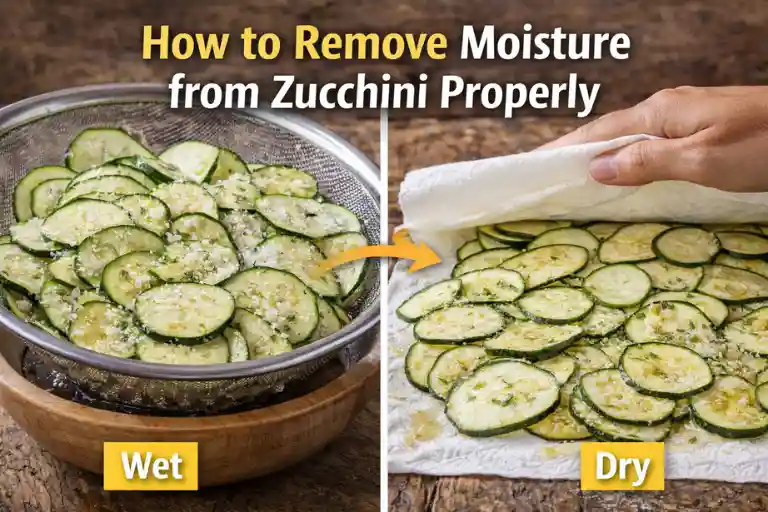
One of the most important steps in making authentic Italian Scarpaccia is removing excess water from the zucchini. Zucchini naturally contains a lot of moisture, and if this water is not reduced, your zucchini scarpaccia can become soft or soggy instead of thin and crispy. This simple step is what helps create the perfect Tuscan zucchini tart texture.
The Salting Method
Start by placing the thinly sliced zucchini in a bowl and sprinkling them with a small amount of salt. Salt helps draw water out of the zucchini through a natural process called osmosis. This technique is commonly used in Mediterranean vegetable recipes to control moisture.
Resting Time
After salting, allow the zucchini to rest for about 10–15 minutes. During this time, you will notice water collecting in the bowl. This resting step is essential for preparing zucchini for an authentic scarpaccia recipe.
Pressing Technique
Once the zucchini has released its moisture, gently press or squeeze the slices with your hands or pat them dry using paper towels. The goal is to remove excess liquid without crushing the zucchini.
Why This Step Matters
Removing moisture ensures your Italian scarpaccia bakes properly. When the zucchini is too wet, the batter becomes diluted, and the tart struggles to crisp. By preparing the zucchini correctly, you help create the signature crispy edges and tender center that define a great Tuscan zucchini scarpaccia.
Texture Science: How to Get Scarpaccia Thin & Crispy
The beauty of Italian scarpaccia lies in its thin, crispy texture. Achieving that perfect balance of golden edges and soft zucchini layers requires attention to a few key details.
Ideal Thickness
Authentic zucchini scarpaccia should be very thin, usually about ¼ inch (5–6 mm) thick when spread in the pan. This thin layer allows the batter to cook evenly and develop the crispy crust typical of a traditional Tuscan scarpaccia recipe.
Batter Consistency
The batter should be light and slightly runny, similar to thin pancake batter. If the batter is too thick, the result will resemble zucchini bread instead of an Italian zucchini tart. A lighter batter allows the zucchini to remain the main ingredient.
Pan Choice
The type of pan you use also affects the final texture. Shallow metal baking pans conduct heat well and help produce crispy edges. A larger pan also allows the mixture to spread thinner, which is ideal for authentic scarpaccia.
Oven Temperature
A relatively hot oven (around 200°C / 400°F) helps the edges caramelize while the zucchini cooks through. High heat is important for achieving the golden, crispy surface that defines this Italian rustic tart.
Olive Oil Effect
Olive oil plays a major role in texture. When the batter is baked with enough oil, it creates a lightly fried effect around the edges, giving the zucchini scarpaccia its famous crispy golden crust and rich Mediterranean flavor.
5 Proven Tips for Crispy Edges
If you want the best Italian scarpaccia recipe, these simple techniques can help guarantee perfect crispy edges every time.
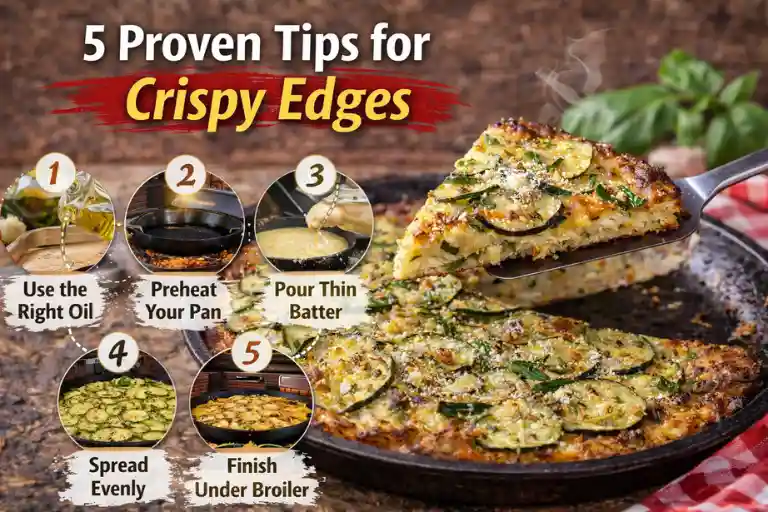
1. Use a Dark Metal Pan
Dark metal pans absorb heat better than glass or ceramic dishes. This helps the bottom of the Tuscan zucchini tart cook faster and develop a crispy crust.
2. Spread the Batter Very Thin
Thin batter is the secret to authentic zucchini scarpaccia. The thinner the layer, the crispier the edges will become during baking.
3. Bake at a Higher Temperature
A hot oven encourages browning and helps remove moisture quickly. This step is essential for achieving the golden texture of a traditional Italian scarpaccia.
4. Use Olive Oil Generously
A good amount of olive oil around the pan edges helps create the signature crispy, slightly caramelized crust found in many Mediterranean zucchini recipes.
5. Don’t Overcrowd the Zucchini
Too many zucchini slices can trap moisture and prevent crisping. Spread them evenly so the scarpaccia recipe bakes properly and develops the perfect balance of crispy edges and soft interior.
Common Mistakes That Ruin Scarpaccia
Even though Italian Scarpaccia is a simple dish, a few small mistakes can affect the final result. If you want a thin, crispy zucchini scarpaccia, avoiding these common errors will make a big difference.
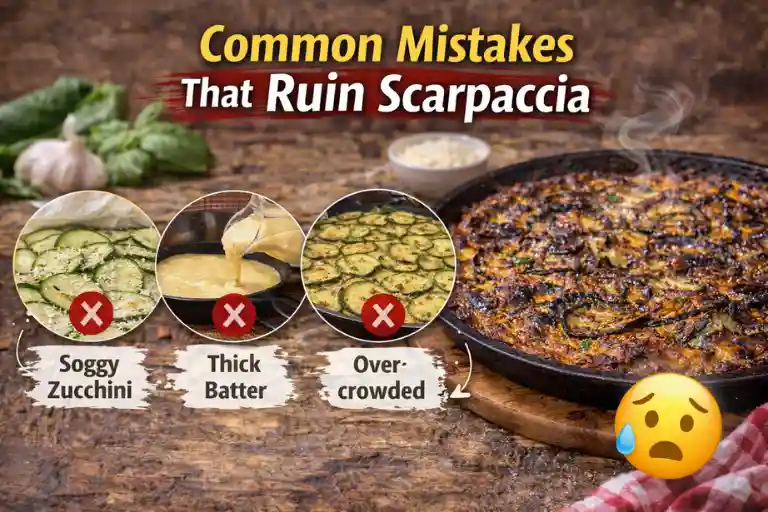
Making the Batter Too Thick
One of the most frequent mistakes in a scarpaccia recipe is using a thick batter. Authentic Tuscan zucchini scarpaccia should have a light, slightly runny batter that spreads easily in the pan. A thick batter creates a dense texture more similar to zucchini bread, rather than the delicate Italian zucchini tart.
Adding Too Much Flour
Using too much flour changes the balance of the dish. In an authentic Italian scarpaccia, the zucchini should be the main ingredient, while the batter simply holds everything together. Too much flour can make the tart heavy and reduce the fresh vegetable flavor.
Not Draining the Zucchini
Skipping the step of removing moisture from the zucchini often leads to soggy scarpaccia. Since zucchini contains a lot of water, salting and draining it is essential for creating the crispy edges that define a great zucchini scarpaccia recipe.
Underbaking the Tart
Another mistake is removing the Italian scarpaccia from the oven too early. The dish needs enough time to develop golden edges and a lightly crisp surface. If it looks pale or soft, it likely needs more time in the oven.
Using a Small Pan
A small pan forces the batter to sit too thickly. Authentic Tuscan scarpaccia should be spread thin across a wide pan so it cooks evenly and forms that classic crispy crust.
What Does Italian Scarpaccia Taste Like?
The flavor of Italian Scarpaccia is simple, fresh, and very typical of Mediterranean cooking. Because the recipe uses only a few ingredients, each one plays an important role in the final taste.

Flavor Profile
A good zucchini scarpaccia has a light, savory flavor that highlights fresh vegetables. The natural sweetness of the zucchini blends with olive oil, Parmesan cheese, and herbs, creating a balanced and comforting dish.
Texture
The texture is what makes authentic Tuscan scarpaccia special. The tart is thin and slightly crisp around the edges, while the center stays soft and tender thanks to the zucchini.
Herb and Olive Oil Notes
Fresh herbs such as basil, thyme, or rosemary add brightness to the dish. Meanwhile, olive oil gives the scarpaccia a rich Mediterranean aroma and helps create the golden crust during baking.
Crispy Edges vs Soft Center
The ideal Italian zucchini tart has a beautiful contrast in texture. The outer edges should be crispy and lightly caramelized, while the center remains soft, delicate, and packed with zucchini flavor. This balance is what makes traditional Italian scarpaccia such a satisfying and unique dish.
Scarpaccia vs Focaccia vs Zucchini Bread
Many people who discover Italian Scarpaccia wonder how it compares to other popular baked dishes like focaccia or zucchini bread. While they may look somewhat similar, these foods are very different in ingredients, texture, and cooking style. Understanding these differences helps explain why zucchini scarpaccia is considered a unique Tuscan zucchini tart.
Key Differences
| Feature | Italian Scarpaccia | Focaccia | Zucchini Bread |
| Texture | Thin, crispy edges with a soft zucchini center | Thick, fluffy bread with an airy texture | Soft, moist cake-like loaf |
| Main Ingredients | Zucchini, flour or cornmeal, olive oil, Parmesan, herbs | Flour, yeast, olive oil, salt | Zucchini, flour, sugar, eggs, oil |
| Cooking Method | Thin batter spread in a pan and baked | Yeasted dough that rises before baking | Batter was poured into a loaf pan and baked |
| When Served | Appetizer, light lunch, aperitivo snack | Side bread or sandwich base | Breakfast, snack, or dessert |
Unlike focaccia, Italian scarpaccia contains no yeast and focuses on vegetables rather than bread dough. Compared with zucchini bread, it is much thinner and savory rather than sweet. This is why traditional Tuscan scarpaccia is often described as a rustic Italian zucchini tart rather than bread.
Flavor Variations to Try
One reason Italian scarpaccia remains popular today is that it can easily be adapted with different flavors while still keeping its thin, crispy texture. These variations add new layers of taste while staying close to the spirit of the authentic scarpaccia recipe.
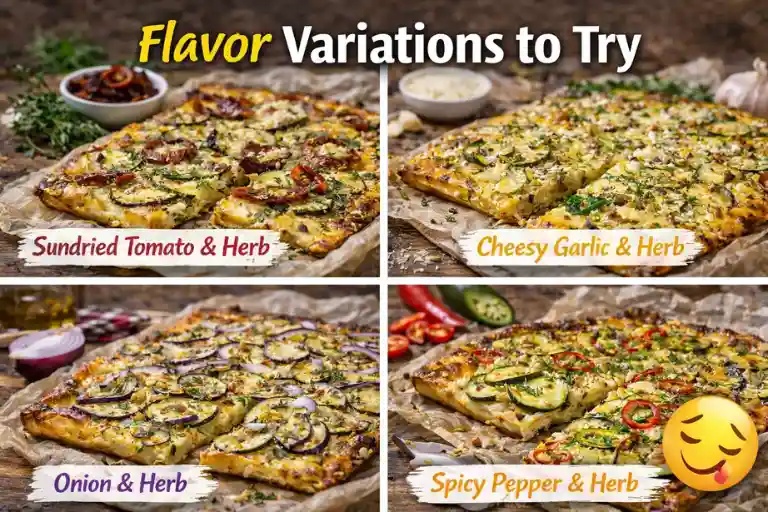
Potato Scarpaccia
A popular twist replaces some of the zucchini with thinly sliced potatoes. This version creates a slightly heartier texture and is sometimes called Italian potato scarpaccia.
Caramelized Onion Scarpaccia
Adding caramelized onions introduces a natural sweetness that pairs beautifully with olive oil and herbs. This variation deepens the flavor of the Tuscan zucchini tart.
Chili Flakes for Heat
For a spicy version, sprinkle red chili flakes into the batter. The mild heat contrasts nicely with the delicate zucchini flavor.
Herb-Loaded Version
You can increase the herbs to create a more aromatic dish. Popular options include basil, rosemary, thyme, and oregano, giving the Italian zucchini scarpaccia a stronger Mediterranean character.
Sweet Carnival Scarpaccia
A traditional sweet scarpaccia is sometimes prepared during carnival celebrations in Tuscany. It includes zucchini, sugar, flour, and sometimes citrus zest, creating a lightly sweet baked treat.
Regional Variations of Scarpaccia
Although Italian Scarpaccia is strongly connected to Viareggio in Tuscany, small regional variations have developed over time as cooks adapted the dish to local ingredients.
Tuscan Coastal Style
The classic Tuscan zucchini scarpaccia from coastal areas focuses on fresh zucchini, olive oil, herbs, and Parmesan. It is baked thin and served as a light appetizer or summer dish.
Potato Variation
In some areas, cooks include thin potato slices along with zucchini. This version creates a slightly thicker and more filling Italian rustic tart while still maintaining the traditional crispy edges.
Sweet Festival Version
During local festivals and carnival celebrations, some families prepare the sweet version of scarpaccia. This recipe uses zucchini mixed with sugar, flour, and citrus zest, producing a dessert-like dish that reflects the creative traditions of Tuscan home cooking.
Best Occasions to Serve Scarpaccia
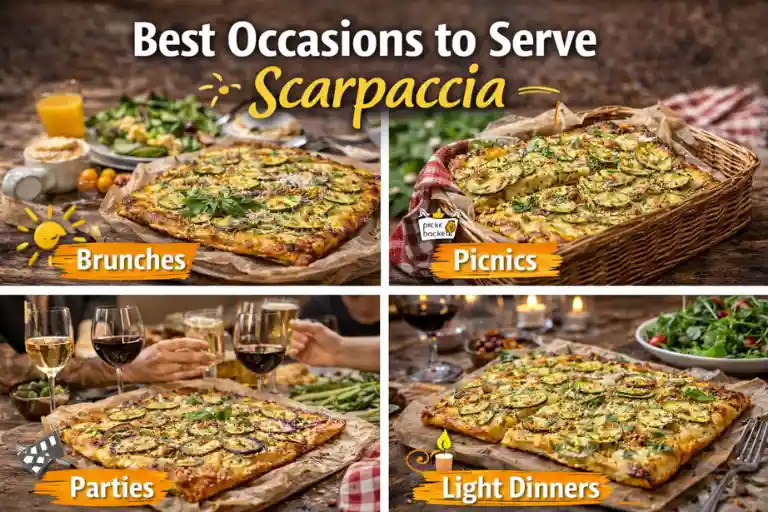
One of the reasons Italian Scarpaccia is so loved in Tuscany is its versatility. This thin, crispy zucchini scarpaccia works well in many situations, from casual meals to elegant gatherings. Because it is light, flavorful, and easy to slice, it fits perfectly into many types of meals.
Aperitivo
In Italy, aperitivo is a relaxed pre-dinner tradition where small bites are served with drinks. Italian zucchini scarpaccia is ideal for this occasion because it can be cut into small squares and served warm or at room temperature.
Summer Lunch
Since zucchini scarpaccia is made with fresh vegetables and olive oil, it makes a perfect light summer lunch. It pairs well with a simple salad and fresh herbs, highlighting the Mediterranean flavors of this Tuscan recipe.
Picnic Food
Another great use for Italian scarpaccia is as a picnic dish. Because it holds its shape well once cooled, it can easily be transported and enjoyed outdoors.
Italian Dinner Party
If you are hosting a dinner inspired by Italian cuisine, this traditional Tuscan zucchini tart makes a great appetizer. Its crispy edges and rustic presentation add authentic Mediterranean charm to the table.
What to Serve With Italian Scarpaccia
Although Italian scarpaccia is delicious on its own, it becomes even better when served with other Mediterranean dishes. Because it is light and savory, it pairs nicely with fresh vegetables and classic Italian flavors.
Fresh Salads
A simple green salad, arugula salad, or tomato and basil salad complements the richness of the olive oil in zucchini scarpaccia.
Antipasti
You can also serve Italian scarpaccia alongside traditional antipasti such as:
- Marinated olives
- Roasted peppers
- Fresh mozzarella
- Prosciutto or cured meats
These foods create a beautiful Mediterranean appetizer platter.
Soups
For a more complete meal, pair Tuscan zucchini scarpaccia with a light soup such as:
- Tomato soup
- Vegetable minestrone
- Italian bean soup
The crispy tart adds texture to a warm, comforting bowl of soup.
Wine Pairings
Because scarpaccia has delicate flavors of zucchini, herbs, and olive oil, it pairs beautifully with certain wines. Choosing the right wine enhances the Mediterranean character of this Italian zucchini tart.
Wine Pairings for Scarpaccia
Although many recipes overlook this step, pairing wine with Italian scarpaccia can elevate the entire experience. Since the dish is light and vegetable-forward, wines that are fresh, crisp, and balanced work best.
Pinot Grigio
Pinot Grigio is one of the most popular choices for Italian zucchini scarpaccia. Its crisp acidity and light citrus notes complement the fresh zucchini and olive oil flavors without overpowering them.
Vermentino
Another excellent option is Vermentino, a Mediterranean white wine often produced along the Italian coast. Its bright acidity and herbal hints pair beautifully with the fresh herbs used in Tuscan scarpaccia recipes.
Light Red Wines
If you prefer red wine, choose a light-bodied red such as Chianti or Pinot Noir. These wines are not too heavy and pair well with the dish’s savory Parmesan and herb notes.
Is Italian Scarpaccia Healthy?
Many people wonder whether Italian scarpaccia fits into a healthy diet. The good news is that this Tuscan zucchini recipe can be a nutritious choice when prepared with fresh ingredients.
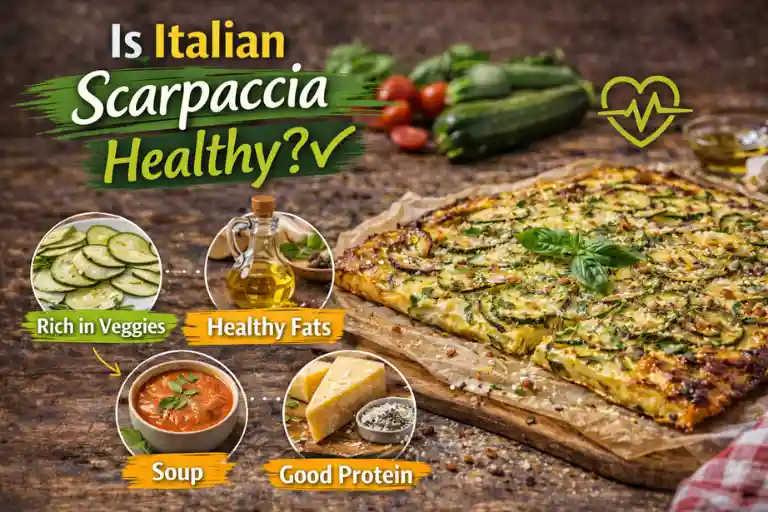
Estimated Calories
A typical serving of zucchini scarpaccia contains roughly 150–220 calories, depending on the amount of olive oil and cheese used.
Mediterranean Diet Context
Because it uses olive oil, vegetables, and simple ingredients, Italian scarpaccia fits well within the principles of the Mediterranean diet, which is often associated with heart health and balanced nutrition.
Vegetable Benefits
The main ingredient, zucchini, is rich in vitamins, antioxidants, and fiber. It also contains a high amount of water, which helps make this Italian zucchini tart feel light and refreshing.
Lower Calorie Option
If you want a lighter version of this traditional scarpaccia recipe, you can:
- Reduce the amount of cheese
- Use a little less olive oil
- Increase the amount of zucchini
These adjustments help keep the dish flavorful while making it a lower-calorie Mediterranean vegetable recipe.
Nutrition Breakdown (Per Serving)
A serving of Italian Scarpaccia is relatively light compared to many baked dishes. Because this zucchini scarpaccia recipe uses fresh vegetables, olive oil, and a small amount of flour, it fits well within a balanced Mediterranean-style diet. The exact nutrition values may vary depending on the amount of olive oil and Parmesan cheese used.
Estimated nutrition for one serving of traditional Italian scarpaccia:
| Nutrient | Amount (Approx.) |
| Calories | 180–220 kcal |
| Carbohydrates | 18–22 g |
| Protein | 5–7 g |
| Fat | 8–10 g |
| Fiber | 2–3 g |
The zucchini provides fiber and vitamins, while olive oil adds healthy fats commonly associated with Mediterranean cuisine. This balance makes Tuscan zucchini scarpaccia a satisfying yet relatively light dish.
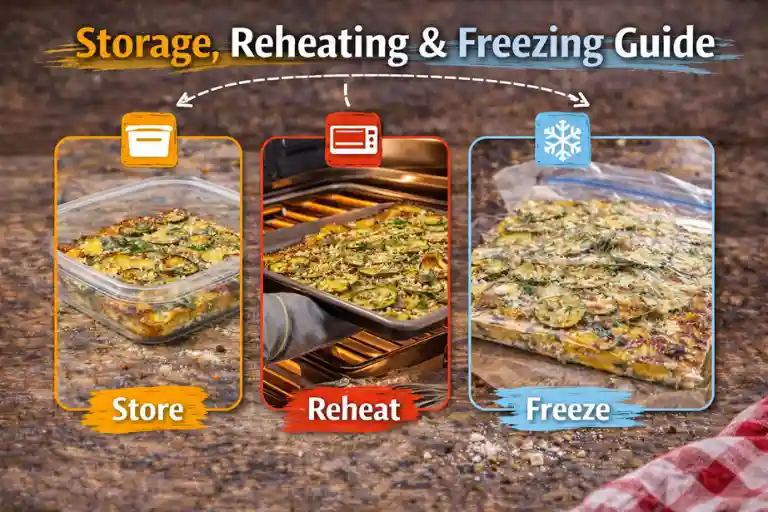
Storage, Reheating & Freezing Guide
Although Italian scarpaccia is best enjoyed fresh from the oven, it can also be stored and reheated later without losing too much of its flavor.
Fridge Lifespan
Once cooled, store leftover zucchini scarpaccia in an airtight container in the refrigerator. It will stay fresh for about 3–4 days.
Best Reheating Method
To keep the crispy edges of your Italian scarpaccia, reheating in the oven works best.
Oven method:
- Preheat oven to 180°C (350°F)
- Place slices on a baking tray
- Heat for 5–8 minutes
Avoid microwaving when possible because it can make the Tuscan zucchini tart softer instead of crispy.
Freezer Impact on Texture
You can freeze Italian scarpaccia, but the texture may change slightly after thawing. Because zucchini contains a lot of water, freezing may soften the tart.
If you plan to freeze it:
- Wrap slices tightly in foil or freezer bags
- Store for up to 2 months
- Reheat directly in the oven to restore some crispiness
Is Scarpaccia Better the Next Day?
Surprisingly, Italian scarpaccia can taste even better the next day. As the dish rests, the flavors of zucchini, olive oil, Parmesan, and herbs blend together more deeply.
Texture Changes
The crispy edges may soften slightly after refrigeration, but the overall flavor often becomes richer. Many people enjoy Tuscan zucchini scarpaccia at room temperature the following day.
Best Way to Reheat
If you prefer the original crispy texture, reheat the slices in a hot oven or skillet for a few minutes. This helps restore the golden edges while keeping the inside soft.
Thanks to its simple ingredients and balanced flavors, Italian scarpaccia remains a delicious dish whether served fresh, reheated, or enjoyed the next day as part of a Mediterranean-style meal.
Cost Per Serving & Budget Analysis
One of the reasons Italian Scarpaccia became popular in Tuscany is that it is affordable, simple, and made with everyday ingredients. This zucchini scarpaccia recipe relies mostly on vegetables and pantry staples, making it a very budget-friendly Mediterranean dish.

Cost of Zucchini
Zucchini is usually inexpensive, especially during the summer harvest season when it grows abundantly.
For this Italian zucchini tart recipe, you typically need 2–3 medium zucchini.
Estimated cost: $1.50 – $2.50
Because zucchini is the main ingredient, this keeps the dish fresh, seasonal, and economical.
Cost of Pantry Ingredients
The rest of the ingredients for authentic Italian scarpaccia are simple pantry staples:
- Flour or cornmeal
- Olive oil
- Parmesan cheese
- Fresh herbs
- Salt and pepper
Since these ingredients are used in small amounts, their cost per recipe remains low.
Estimated cost: $2 – $3
Estimated Price Per Serving
When all ingredients are combined, the total cost of a traditional Tuscan scarpaccia recipe usually falls between:
$3.50 – $5 total per dish
If the dish serves 4–6 slices, the estimated price per serving is approximately:
$0.80 – $1.25 per serving
This makes Italian scarpaccia an excellent low-cost Mediterranean recipe that delivers great flavor without requiring expensive ingredients.
FAQs About Italian Scarpaccia
What is Italian Scarpaccia?
Italian Scarpaccia is a traditional Tuscan zucchini tart originating from Viareggio in Tuscany. It is made with thinly sliced zucchini, flour or cornmeal, olive oil, Parmesan, and herbs, baked into a thin rustic dish. The result is a crispy-edged, savory vegetable tart that highlights fresh Mediterranean ingredients.
Is Scarpaccia sweet or savory?
Scarpaccia can be both sweet or savory, depending on the regional tradition. The most common modern version is savory zucchini scarpaccia, made with olive oil, herbs, and Parmesan cheese. However, a traditional Tuscan carnival version includes zucchini, sugar, and flour, creating a lightly sweet baked dish.
Why is my Scarpaccia soggy?
A soggy scarpaccia usually happens when the zucchini is not drained properly. Zucchini contains a lot of water, so salting and resting the slices for about 10–15 minutes helps remove moisture. Spreading the batter thin in a large pan and baking at a high temperature also helps achieve crispy edges.
Can Scarpaccia be frozen?
Yes, Italian scarpaccia can be frozen for up to two months. Wrap individual slices tightly in foil or freezer bags before storing. Because zucchini contains water, the texture may soften slightly after freezing, but reheating the slices in a hot oven can help restore some crispiness.
Can I make Scarpaccia gluten-free?
Yes, it is easy to make a gluten-free scarpaccia recipe. Simply replace regular flour with gluten-free flour blends, rice flour, or chickpea flour. These alternatives maintain the structure of the Tuscan zucchini tart while keeping the batter light and thin.
How thin should Scarpaccia be?
Authentic Italian scarpaccia should be very thin, typically around ¼ inch (5–6 mm) thick when spread in the baking pan. A thin layer allows the tart to cook evenly and develop crispy golden edges, which is one of the defining features of this traditional zucchini scarpaccia recipe.
Recipe Card – Italian Scarpaccia
This recipe card for Italian Scarpaccia provides a quick summary of the steps, ingredients, and timing needed to make this traditional Tuscan zucchini tart. It is designed for easy reference while cooking.

Prep Time
20 minutes
Cook Time
30–35 minutes
Total Time
50–55 minutes
Servings
4–6 servings
Calories
Approximately 180–220 calories per serving
Ingredients
- 2–3 medium zucchini, thinly sliced
- ½ cup flour (or cornmeal for a rustic texture)
- ¼ cup grated Parmesan cheese
- 3 tablespoons olive oil
- 1 cup water
- 1 tablespoon fresh herbs (basil, thyme, or rosemary)
- ½ teaspoon salt
- ¼ teaspoon black pepper
Optional additions:
- Red chili flakes for heat
- Extra Parmesan for topping
Instructions
1. Prepare the Zucchini
Wash and thinly slice the zucchini using a knife or mandoline.
2. Remove Moisture
Place zucchini in a bowl with a pinch of salt and let it rest for 10–15 minutes. Pat dry with paper towels.
3. Mix the Batter
In a mixing bowl, combine flour, olive oil, water, Parmesan, herbs, and pepper. Stir until a thin batter forms.
4. Combine Ingredients
Add the zucchini slices to the batter and mix until evenly coated.
5. Spread in the Pan
Pour the mixture into a well-oiled baking pan and spread it very thinly using a spatula.
6. Bake
Bake in a preheated oven at 200°C (400°F) for 30–35 minutes, or until the edges turn golden and crispy.
7. Cool and Slice
Allow the Italian scarpaccia to cool for 5–10 minutes before slicing and serving.
Notes
- Always remove moisture from zucchini to prevent sogginess.
- For the crispiest texture, use a wide metal baking pan.
- Spread the batter thinly to achieve the classic Tuscan scarpaccia style.
- This dish can be served warm or at room temperature.
Nutrition (Per Serving – Approximate)
| Nutrient | Amount |
| Calories | 180–220 kcal |
| Carbohydrates | 18–22 g |
| Protein | 5–7 g |
| Fat | 8–10 g |
| Fiber | 2–3 g |
This Italian scarpaccia recipe is a simple and flavorful way to enjoy fresh zucchini in a classic Mediterranean dish.
Final Thoughts
Italian Scarpaccia is a beautiful example of simple Tuscan cooking, where a few fresh ingredients come together to create something truly special. This traditional zucchini scarpaccia recipe highlights the natural flavor of fresh zucchini, olive oil, herbs, and Parmesan, all baked into a thin, crispy rustic tart.
What makes authentic Tuscan scarpaccia unique is its balance of textures—golden crispy edges with a soft, tender center. It’s easy to prepare, budget-friendly, and perfect for many occasions, whether served as a light summer lunch, an Italian aperitivo snack, or a flavorful appetizer at a dinner gathering.
With the tips in this guide—like removing zucchini moisture, spreading the batter thin, and baking at the right temperature—you can easily recreate this classic Italian zucchini tart at home. Once you try it, scarpaccia may quickly become one of your favorite Mediterranean vegetable recipes.