
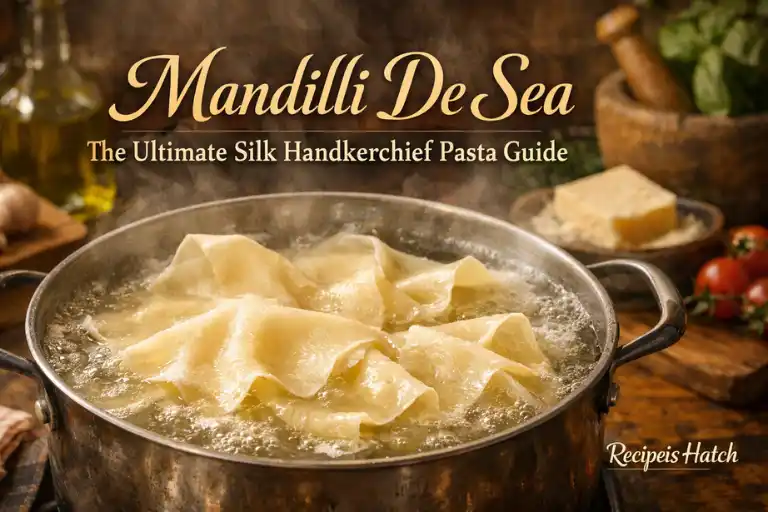
Mandilli de Sea, also called Mandilli de Saea, is a traditional Italian silk handkerchief pasta from the Liguria region of Italy. This beautiful fresh pasta gets its name because the thin pasta sheets look like soft silk handkerchiefs when they float in boiling water. In Italian, mandilli means handkerchiefs, and saea refers to silk.
This unique Ligurian pasta is made by rolling fresh pasta dough very thin and cutting it into large, square pasta sheets. These squares are lighter and more delicate than lasagna, yet wider than most noodles. You may also hear it called fazzoletti pasta or fazzoletti di seta, which means the same thing — handkerchief-style pasta. Because of its smooth texture, Mandilli de Sea pasta holds sauces like pesto alla Genovese beautifully, making it a favorite in traditional Italian cooking.
Meaning & Etymology of “Mandilli de Saea”
The name Mandilli de Saea comes from the old Ligurian dialect, spoken in the coastal areas of Liguria, especially around Genoa. In this local language, “mandilli” means handkerchiefs, and “saea” means silk. So, the full name simply means “silk handkerchiefs.” This name perfectly describes how this Italian silk handkerchief pasta looks and feels when cooked.
Genoa was once a famous silk trading city, and fine silk fabrics were part of everyday life for wealthy families. The thin, smooth sheets of Mandilli de Sea pasta reminded people of these soft silk cloths, which is how the pasta got its name. When this fresh Ligurian pasta is boiled, the large pasta squares float and fold gently in the water, just like real silk handkerchiefs, making the name both beautiful and meaningful.
Where Mandilli de Sea Comes From
You might also like: The Ultimate Sweet Chili Sauce Substitutes Guide 2026
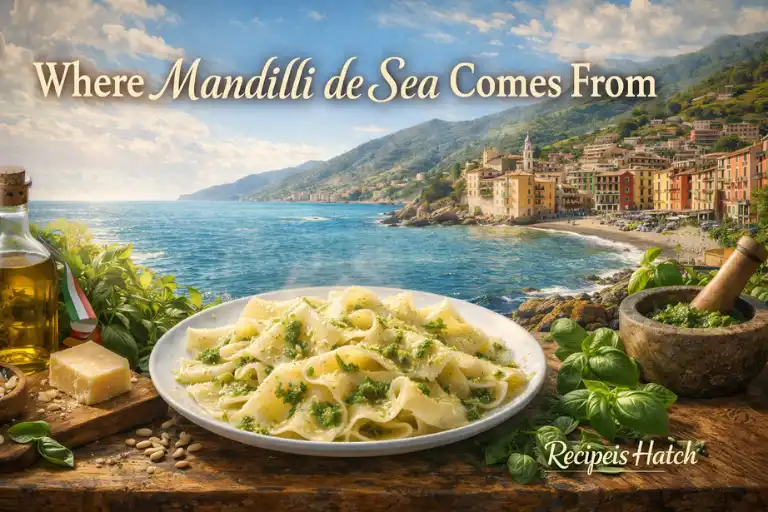
Mandilli de Sea comes from the beautiful Liguria region in northern Italy, along the famous Italian Riviera. This coastal area is known for its fresh herbs, olive oil, and simple but flavorful dishes. The heart of this tradition is Genoa, a historic port city where pesto alla Genovese and Ligurian pasta were born.
In Genoa, families have made silk handkerchief pasta for generations, serving it during special meals and gatherings. The thin fresh pasta sheets pair perfectly with local basil, pine nuts, and olive oil, which are all grown in this region.
This pasta is rare outside Liguria because it is very delicate and best when made fresh. It does not travel well, so most people enjoy Mandilli de Sea pasta only in traditional Italian kitchens or specialty pasta shops.
Why Silk Handkerchief Pasta Is Unique
What makes silk handkerchief pasta truly special is its ultra-thin texture. Mandilli de Sea is rolled much thinner than lasagna or most other fresh pasta, which gives it a light and almost silky feel. When placed in boiling water, the large pasta sheets soften in just a few minutes and gently float to the top.
Because it is so thin, this Italian silk handkerchief pasta cooks very quickly and must be handled with care. It does not need long boiling like thick noodles. Instead, it becomes soft, smooth, and ready to eat almost instantly.
The biggest magic is the mouthfeel and sauce absorption. The delicate surface of Mandilli de Saea holds sauces like pesto alla Genovese beautifully, allowing every bite to be rich, fresh, and full of authentic Ligurian flavor.
How Italians Traditionally Eat Mandilli
In Liguria, Mandilli de Sea is more than just pasta — it’s part of home cooking and family tradition. Families often prepare it for special meals, weekend gatherings, or festive occasions, serving it fresh right from the kitchen. Because it’s delicate and quick-cooking, it’s almost always made on the same day it’s eaten, preserving its silky texture.
The most traditional way to enjoy Mandilli de Sea is with pesto alla Genovese, a classic Ligurian sauce made from fresh basil, pine nuts, garlic, Parmesan, and olive oil. The thin silk handkerchief pasta wraps the sauce perfectly, coating each sheet evenly for a burst of flavor in every bite.
Occasionally, Italians may serve it with simple variations, like a light butter and herb sauce or seasonal vegetables, but pesto remains the iconic pairing that defines this beloved Ligurian pasta.
Ingredients for Authentic Mandilli de Sea
The beauty of Mandilli de Sea lies in its simple, high-quality ingredients. Traditionally, it uses 00 flour, which gives the pasta a smooth and delicate texture. Some recipes also combine semolina flour for a slightly firmer bite.
Fresh eggs are often added to enrich the dough, creating a tender, silky sheet. However, some Ligurian families make egg-free dough, especially in coastal towns, resulting in a lighter, more flexible pasta.
A touch of olive oil helps improve elasticity, while salt enhances flavor. That’s it — just flour, eggs (optional), olive oil, and salt. These minimal ingredients allow the ultra-thin silk handkerchief pasta to shine and pair perfectly with pesto alla Genovese or other delicate sauces.
Ingredients for Traditional Pesto Alla Genovese
No Mandilli de Sea meal is complete without pesto alla Genovese, the classic Ligurian sauce. The secret to its fresh, vibrant flavor lies in high-quality, simple ingredients.
The star is fresh basil, ideally Genovese basil, which gives the sauce its bright green color and aromatic taste. Pine nuts add a gentle nuttiness and creamy texture when blended. Parmesan cheese contributes richness and depth, while a touch of garlic provides a mild, savory bite.
All ingredients are combined with extra virgin olive oil, which binds the sauce into a smooth, silky consistency that clings perfectly to the thin Mandilli de Saea pasta sheets. Using fresh, authentic ingredients ensures that every bite of silk handkerchief pasta with pesto captures the true taste of Liguria.
How Thin Should Mandilli Pasta Be?
One of the defining features of Mandilli de Sea is its ultra-thin thickness, which sets it apart from other pasta like lasagna or fettuccine. Ideally, each sheet should be so thin that you can almost see through it, resembling a delicate silk handkerchief.
For a visual comparison, imagine a single sheet of Mandilli de Saea next to a standard lasagna sheet — the Mandilli is about half the thickness, lightweight, and flexible. This thinness is what gives the pasta its signature soft, silky texture and allows it to absorb sauces beautifully.
Thinness matters because thicker pasta would overpower the sauce and lose the delicate mouthfeel. When cooked correctly, Mandilli de Sea becomes tender yet holds its shape, creating a luxurious, melt-in-your-mouth experience with every bite.
How Thin Should Mandilli Pasta Be?
One of the defining features of Mandilli de Sea is its ultra-thin thickness, which sets it apart from other pasta like lasagna or fettuccine. Ideally, each sheet should be so thin that you can almost see through it, resembling a delicate silk handkerchief.
For a visual comparison, imagine a single sheet of Mandilli de Saea next to a standard lasagna sheet — the Mandilli is about half the thickness, lightweight, and flexible. This thinness is what gives the pasta its signature soft, silky texture and allows it to absorb sauces beautifully.
Thinness matters because thicker pasta would overpower the sauce and lose the delicate mouthfeel. When cooked correctly, Mandilli de Sea becomes tender yet holds its shape, creating a luxurious, melt-in-your-mouth experience with every bite.
Cutting & Shaping the Pasta
After rolling the dough into ultra-thin sheets, it’s time to cut and shape the Mandilli de Sea. Traditionally, the pasta is cut into large squares, usually about 10–12 cm (4–5 inches) per side, though sizes can vary depending on preference. These squares resemble silk handkerchiefs, giving the pasta its iconic look.
Handling tips are important because the sheets are delicate. Work on a lightly floured surface to prevent sticking, and always lift the pasta gently with a flat spatula or your hands. Avoid folding or stacking too many sheets at once, which can cause them to stick together.
To prevent tearing, roll and cut the dough slowly, and keep it slightly floured. With careful handling, the Mandilli de Saea sheets remain smooth, silky, and ready to pair perfectly with pesto or other sauces.
How to Cook Mandilli de Sea Properly
Cooking Mandilli de Sea requires care because of its ultra-thin, delicate texture. Start by bringing a large pot of salted water to a rolling boil. Gently add the pasta squares one at a time to avoid tearing.
Boiling time is very short — usually 2–3 minutes — until the pasta becomes tender but still holds its shape. Stir gently with a wooden spoon to prevent sticking, and avoid overcrowding the pot.
Once cooked, drain carefully using a slotted spoon or a wide sieve. Avoid tossing in a colander, as the thin sheets can easily break or stick together. For best results, serve immediately, or lightly toss with a small amount of olive oil to keep the sheets separate until adding your pesto alla Genovese or other sauce.
How to Toss Mandilli with Pesto Like in Liguria
To achieve authentic Ligurian flavor, tossing Mandilli de Sea with pesto alla Genovese requires a careful technique. Start by reserving a small cup of pasta water before draining the cooked pasta. The starchy water helps thin the pesto slightly and allows it to cling perfectly to the delicate silk handkerchief pasta.
Use a large, shallow pan or bowl and add the cooked Mandilli sheets gently. Apply the folding method: lift and turn the pasta softly with a spatula or tongs, rather than stirring vigorously. This prevents tearing while distributing the sauce evenly.
Continue folding until each square is coated completely, using a little reserved pasta water if needed. The result is a silky, well-coated pasta where every bite delivers rich Ligurian pesto flavor, exactly as it is served in Genoa homes.
Best Sauces for Mandilli de Sea
While pesto alla Genovese is the classic and most popular pairing for Mandilli de Sea, this delicate silk handkerchief pasta works beautifully with a variety of sauces.
Pesto alla Genovese: The traditional choice, made with fresh basil, pine nuts, Parmesan, garlic, and olive oil, clings perfectly to the thin pasta sheets, creating a fresh and aromatic dish.
Walnut Sauce: A creamy alternative, made by blending walnuts, olive oil, garlic, and a touch of cream, which complements the tender texture of Mandilli without overpowering it.
Mushroom Sauce: Sautéed seasonal mushrooms in olive oil or light cream make a rich, earthy topping that pairs wonderfully with the pasta’s silky sheets.
Light Meat Ragù: A delicate veal or chicken ragù can add depth while keeping the pasta light and soft.
Lemon-Butter Sauce: Perfect for a refreshing, simple flavor, this sauce highlights the delicate pasta without masking its texture or aroma.
Mandilli de Sea vs Fazzoletti vs Lasagna
Understanding the differences between Mandilli de Sea, fazzoletti, and lasagna helps highlight why this silk handkerchief pasta is so special.
Thickness:
- Mandilli de Sea is the thinnest, almost translucent, giving it a delicate, melt-in-your-mouth feel.
- Fazzoletti are slightly thicker squares, but still thinner than lasagna.
- Lasagna sheets are thick and sturdy, designed to hold layers and heavy sauces.
Texture:
- Mandilli is silky and tender.
- Fazzoletti has a soft but more substantial bite.
- Lasagna is firm and chewy after baking.
Cooking Method:
- Mandilli de Sea cooks quickly in boiling water (2–3 minutes).
- Fazzoletti requires a few extra minutes.
- Lasagna is usually boiled or baked within layered dishes.
Sauce Pairing:
- Mandilli pairs best with light sauces like pesto, walnut, or lemon-butter.
- Fazzoletti can handle richer sauces but still delicate.
- Lasagna is made for heavier meat ragùs, béchamel, or tomato sauces.
This comparison emphasizes Mandilli de Sea’s uniqueness as a delicate, sauce-friendly, and quick-cooking Ligurian pasta.
Can You Make Mandilli at Home?
Yes, you can make Mandilli de Sea at home, but it requires care and the right tools. To start, you’ll need a pasta machine or a rolling pin to achieve the ultra-thin sheets, a knife or pasta cutter to make squares, and a floured surface to prevent sticking.
Time needed depends on your experience. Kneading and resting the dough usually takes 30–40 minutes, and rolling thin sheets may take another 15–20 minutes. Beginners should allow extra time to handle the delicate pasta without tearing.
If making it from scratch feels intimidating, there are store-bought alternatives. Some specialty Italian stores sell fresh Mandilli de Saea or similar silk handkerchief pasta, which can be boiled and tossed with pesto or other sauces just like homemade pasta, giving you authentic flavor with less effort.
Modern Ways to Serve Mandilli
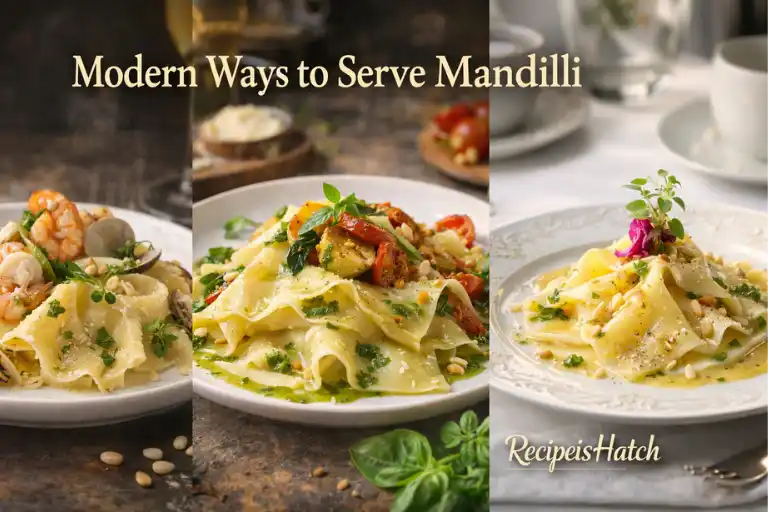
While Mandilli de Sea is traditionally served with pesto alla Genovese, modern chefs and home cooks have found creative ways to enjoy this silk handkerchief pasta.
With Seafood: Toss ultra-thin Mandilli sheets with fresh seafood like shrimp, scallops, or clams. The delicate pasta absorbs the flavors without being overpowered, creating a light and elegant dish.
With Roasted Vegetables: Combine the pasta with seasonal roasted vegetables such as zucchini, bell peppers, or cherry tomatoes. A drizzle of olive oil and a sprinkle of Parmesan elevate the dish while keeping it fresh and healthy.
As Gourmet Plated Pasta: For a restaurant-style presentation, serve Mandilli de Saea in small, carefully folded portions, topped with microgreens, edible flowers, or a light cream sauce. This transforms simple pasta into a visually stunning, fine-dining experience while highlighting its delicate texture.
Is Mandilli de Sea Healthy?
Mandilli de Sea is not only delicious but can also be a nutritious choice when eaten in moderation. A typical serving of fresh silk handkerchief pasta contains around 200–220 calories per 100 grams, making it lighter than heavier pasta types.
In terms of carbohydrates, it provides about 40–45 grams per serving, giving you a good source of energy. Protein comes mainly from eggs in the dough, offering roughly 7–8 grams, which contributes to a balanced meal.
When paired with pesto alla Genovese, the nutritional profile changes slightly. Pesto adds healthy fats from olive oil and pine nuts, along with calcium and protein from Parmesan cheese. This combination creates a well-rounded, flavorful dish that balances energy, protein, and healthy fats — all while highlighting the delicate texture of Mandilli de Sea pasta.
FAQs About Mandilli De Sea
Is Mandilli de Sea gluten-free?
No, traditional Mandilli de Sea is made with wheat flour (00 or semolina), so it contains gluten. However, you can make gluten-free versions using alternative flours like rice or chickpea flour, though the texture will be slightly different.
Is it vegan?
Classic Mandilli de Saea often contains eggs in the dough, so it’s not strictly vegan. Egg-free recipes do exist, which use only flour, water, olive oil, and salt, making it suitable for a vegan diet.
Can lasagna sheets replace it?
While you can use lasagna sheets in a pinch, they are thicker and less delicate than Mandilli. The taste and texture will differ, and they won’t absorb pesto or light sauces as gracefully.
Why does it tear easily?
The thinness of Mandilli de Sea makes it fragile, especially if the dough is overworked or handled roughly. Gentle rolling, careful cutting, and delicate handling during cooking help prevent tearing.
Can it be dried?
Yes, you can dry Mandilli sheets on a floured tray for a few hours. However, dried Mandilli cooks differently and loses some of its silky texture, so fresh pasta is preferred for the best taste and mouthfeel.
Final Thoughts
Mandilli de Sea is truly a gem of Italian cuisine. Its ultra-thin, silky texture sets it apart from other pasta, giving every bite a delicate, melt-in-your-mouth experience. Unlike thicker pastas, it allows sauces to cling perfectly, creating a harmony of flavors that highlights fresh, high-quality ingredients.
Pesto alla Genovese is the perfect match because its aromatic basil, nutty pine nuts, and creamy Parmesan complement the pasta’s softness without overpowering it. The combination is a classic Ligurian pairing that has been cherished for generations.
Finally, Mandilli de Sea deserves global recognition. Its beauty, heritage, and versatility make it more than just pasta — it’s a culinary work of art, representing the rich culture and traditions of Liguria, and offering food lovers around the world a taste of authentic Italian silk handkerchief pasta.