

If you’re out of chili flakes, don’t worry — there are several easy swaps. The best substitute for chili flakes depends on how much heat you want. For similar spice, use crushed red pepper flakes. If you prefer less heat, try paprika. Want something hotter? Go with cayenne pepper. You can also use chili powder, hot sauce, or even fresh red chili as a simple chili flakes alternative.
Here’s a quick ratio to remember:
1 teaspoon chili flakes = ½ teaspoon cayenne pepper
If you’re wondering “what can I use instead of chili flakes?” — choose your substitute based on heat level and flavor. Some options are smoky, some mild, and some very spicy. Below, you’ll find the 9 best chili flakes substitutes, complete with heat levels, ratios, and cooking tips to help you pick the right one.
What Are Chili Flakes?
Before choosing the best chili flakes substitute, it helps to understand what chili flakes really are.
What Are Chili Flakes Made From?
Chili flakes are made from dried red chili peppers that are crushed into small flakes. The seeds are usually included, which adds extra heat. In many recipes, they are also called red pepper flakes or crushed red pepper flakes.
Flavor Profile
Chili flakes have a bold, sharp, and slightly smoky flavor. They add both heat and texture to a dish. Unlike sauces, they don’t change moisture — they simply add spice and a mild earthy taste.
Average Heat Level
On the Scoville scale, chili flakes usually range between 15,000–30,000 SHU. This puts them in the medium-hot category — spicier than paprika, but usually milder than pure cayenne pepper.
Texture
They are dry, coarse, and slightly crunchy, which makes them perfect for topping pizza, pasta, soups, and stir fry.
Chili Flakes vs Crushed Red Pepper
Many people ask, “Is crushed red pepper the same as chili flakes?”
In most cases, yes. Chili flakes and crushed red pepper are often the same product. However, crushed red pepper sometimes contains a blend of different dried chilies, which can slightly change the heat level.
Chili Flakes vs Chili Powder
This is where confusion happens.
- Chili flakes = crushed dried chilies (pure heat and texture)
- Chili powder = ground chili mixed with spices like cumin, garlic powder, and oregano
So if you’re looking for a chili powder substitute for chili flakes, remember that chili powder has added flavors and is usually less spicy. Understanding these differences helps you choose the right red pepper flakes substitute without changing your recipe too much.
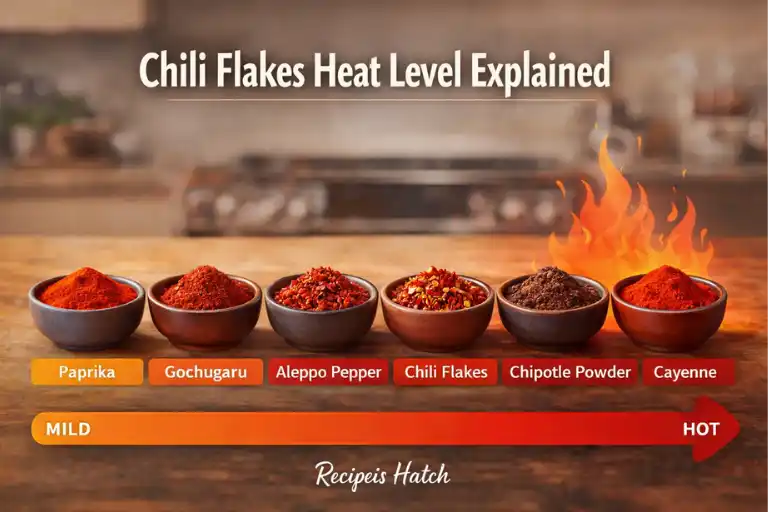
Chili Flakes Heat Level Explained (Scoville Chart)
You might also like: How to Make Crostini Recipes
When choosing the right chili flakes substitute, understanding heat is very important. Not all spices bring the same level of spice. Some are mild and smoky, while others are sharp and intense.
Heat is measured using the Scoville Heat Units (SHU) scale. The higher the number, the hotter the spice.
On average, chili flakes range between 15,000–30,000 SHU, which makes them medium-hot. If you’re looking for a mild substitute for chili flakes, paprika may be better. If you want something stronger, cayenne is much hotter.
Below is a simple comparison chart to help you choose the right red pepper flakes substitute based on heat level.
Scoville Heat Comparison Chart
| Spice | Scoville Heat Units (SHU) | Heat Level |
| Paprika (Sweet) | 0–500 | Very Mild |
| Gochugaru | 1,500–10,000 | Mild to Medium |
| Aleppo Pepper | 10,000–15,000 | Medium |
| Chili Flakes | 15,000–30,000 | Medium-Hot |
| Chipotle Powder | 5,000–10,000 | Medium (Smoky Heat) |
| Cayenne Pepper | 30,000–50,000 | Hot |
What This Means for Substituting
- Want similar heat? → Use Aleppo pepper or crushed red pepper flakes.
- Want milder spice? → Choose paprika or gochugaru.
- Want more heat? → Use cayenne pepper (but reduce the amount).
This heat guide helps you avoid making your dish too spicy or too mild when choosing a substitute for chili flakes.
How to Choose the Right Substitute (Decision Guide)
Choosing the right substitute for chili flakes is not just about heat — it’s also about flavor, texture, and the type of dish you’re cooking. Instead of guessing, use this simple decision guide to find the best chili flakes alternative for your needs.
Want the Same Heat?
If your recipe needs a similar spice level and texture, use crushed red pepper flakes. In most cases, they are almost identical to chili flakes.
Use a 1:1 ratio for an easy swap.
This is the safest red pepper flakes substitute when you don’t want to change the flavor.
Want a Milder Option?
If chili flakes feel too spicy, choose paprika (sweet or mild). It adds color and gentle warmth without strong heat.
Use 1 teaspoon paprika for 1 teaspoon chili flakes.
This works well if you’re looking for a less spicy alternative to red pepper flakes.
Want More Heat?
If you love strong spice, go with cayenne pepper. It is much hotter, so use less.
½ teaspoon cayenne = 1 teaspoon chili flakes
Perfect if you need a hotter chili flakes substitute ratio.
Want a Smoky Flavor?
Choose chipotle powder. It adds both heat and a deep, smoky taste. Great for marinades and grilled dishes.
Want a Cuisine-Specific Flavor?
Some dishes need authentic flavor. For Korean recipes, use gochugaru. For Mediterranean dishes, try Aleppo pepper.
The 9 Best Chili Flakes Substitutes
Below are the 9 best chili flakes substitutes, explained in a simple and practical way. Each option includes heat level, flavor, and the correct substitution ratio so you can swap with confidence.
Cayenne Pepper
Flavor profile: Sharp, clean heat
Heat level: (4/5)
Scoville: 30,000–50,000 SHU
Best used in: Soups, sauces, chili, marinades
Ratio: ½ tsp cayenne = 1 tsp chili flakes
Avoid if: You want texture or mild heat
Cayenne is a powerful substitute for chili flakes if you want more spice. Use less to avoid overpowering your dish.
Crushed Red Pepper
Flavor profile: Similar to chili flakes, slightly mixed chili taste
Heat level: (3/5)
Scoville: 15,000–30,000 SHU
Best used in: Pizza, pasta, stir fry
Ratio: 1:1 replacement
Avoid if: You want milder heat
This is the closest red pepper flakes substitute and often the same product.
Paprika (Sweet, Smoked, Hot)
Flavor profile: Sweet, earthy, sometimes smoky
Heat level: (1–2/5)
Scoville: 0–1,000 SHU (sweet)
Best used in: Stews, dry rubs, baked dishes
Ratio: 1:1
Avoid if: You need strong heat
A great mild substitute for chili flakes.
Chili Powder
Flavor profile: Warm, blended spices (cumin, garlic, oregano)
Heat level: (2/5)
Scoville: 1,000–5,000 SHU
Best used in: Mexican dishes, chili, tacos
Ratio: ¾ tsp chili powder = 1 tsp chili flakes
Avoid if: You don’t want added spices
Fresh Red Chili
Flavor profile: Bright, fresh, slightly sweet heat
Heat level: (varies)
Scoville: 10,000–50,000 SHU (depends on type)
Best used in: Stir fry, curry, sauces
Ratio: 1 small chopped chili = 1 tsp flakes
Avoid if: Recipe needs dry texture
Gochugaru
Flavor profile: Mild, slightly sweet, smoky
Heat level: (2–3/5)
Scoville: 1,500–10,000 SHU
Best used in: Korean dishes, marinades
Ratio: 1:1
Avoid if: You need strong spice
Aleppo Pepper
Flavor profile: Mild heat, fruity, slightly salty
Heat level: (3/5)
Scoville: 10,000–15,000 SHU
Best used in: Mediterranean dishes, roasted vegetables
Ratio: 1:1
Avoid if: You want intense heat
Chipotle Powder
Flavor profile: Smoky, deep, earthy
Heat level: (3/5)
Scoville: 5,000–10,000 SHU
Best used in: BBQ, grilled meats, sauces
Ratio: ¾ tsp = 1 tsp chili flakes
Avoid if: You don’t want smoky flavor
Hot Sauce
Flavor profile: Tangy, spicy, sometimes vinegary
Heat level: (varies)
Scoville: Depends on brand
Best used in: Soups, marinades, dips
Ratio: Start with ½ tsp and adjust
Avoid if: Recipe must stay dry
Hot sauce works as a flexible chili flakes alternative, but it changes texture.
Chili Flakes Substitution Conversion Chart
When replacing chili flakes, using the correct amount is very important. Some substitutes are stronger, while others are milder. If you use the wrong ratio, your dish can become too spicy — or not spicy enough.
Below is a simple chili flakes conversion chart to help you measure correctly. This is especially useful if you’re searching for the exact chili flakes substitute ratio or wondering how much cayenne equals 1 teaspoon chili flakes.
Quick Substitution Chart
| If Recipe Calls For | Use Instead |
| 1 tsp chili flakes | ½ tsp cayenne pepper |
| 1 tsp chili flakes | 1 tsp paprika (mild) |
| 1 tsp chili flakes | ¾ tsp chili powder |
| 1 tsp chili flakes | 1 tsp crushed red pepper |
| 1 tsp chili flakes | 1 small chopped fresh red chili |
Important Tips
- Cayenne is hotter, so always reduce the amount.
- Paprika is milder, so you can use equal amounts.
- Chili powder contains extra spices, which may slightly change flavor.
- Crushed red pepper flakes usually work as a 1:1 substitute.
Using this guide makes choosing a substitute for chili flakes in any recipe simple and stress-free.
Best Substitute by Dish
The best substitute for chili flakes depends on what you’re cooking. Some dishes need texture, some need smoky depth, and others need clean heat. Here’s a simple guide to help you choose the right chili flakes alternative for each recipe.
For Pizza
Use crushed red pepper flakes for the closest match. They give the same heat and crunchy texture.
Use a 1:1 ratio.
If you want milder spice, try paprika instead of chili flakes.
For Pasta Sauce
Choose cayenne pepper for strong heat (use half the amount).
For balanced warmth, chili powder works well but adds extra flavor.
For Soups
Use hot sauce or cayenne for easy mixing. Hot sauce blends smoothly and spreads heat evenly.
For Curry
Fresh chopped red chili or gochugaru adds natural flavor and depth. Great for Asian-style curries.
For Marinades
Chipotle powder is ideal if you want smoky heat. It works especially well for grilled meats.
For Stir Fry
Use fresh red chili or crushed red pepper for bold flavor and quick heat.
For Chili (Stew)
Chili powder is a strong option because it already contains blended spices.
This approach helps you choose the best substitute for chili flakes in pizza, pasta, soup, curry, or stir fry without changing the dish too much.
Best Substitute by Cuisine
Different cuisines use heat in different ways. So the best substitute for chili flakes also depends on the style of food you’re cooking. Choosing the right spice keeps the flavor authentic and balanced.
Italian Cuisine
For pasta, pizza, and arrabbiata sauce, use crushed red pepper flakes as a direct 1:1 swap.
If you want less heat, try mild paprika.
This keeps the flavor close to traditional Italian dishes.
Mexican Cuisine
For tacos, enchiladas, or chili, chili powder works well because it contains blended spices.
For more heat, use cayenne pepper (½ teaspoon for every 1 teaspoon chili flakes).
Indian Cuisine
Indian dishes often need deeper warmth. Use fresh red chili or cayenne for bold heat.
For milder curries, paprika can work as a softer chili flakes alternative.
🇰🇷 Korean Cuisine
The best option is gochugaru. It gives mild, slightly sweet heat that fits Korean recipes perfectly.
Use it as a 1:1 substitute for chili flakes.
🇹🇭 Thai Cuisine
Thai food often needs fresh, sharp spice. Use fresh red chili or a small amount of cayenne for similar heat.
Matching the spice to the cuisine helps you choose the right red pepper flakes substitute without losing authentic flavor.
Best Mild Alternatives
If regular chili flakes feel too spicy, don’t worry. There are several mild substitutes for chili flakes that add color and flavor without strong heat. These options are perfect if you want a less spicy alternative to red pepper flakes.
Paprika (Sweet or Mild)
Heat level: (1/5)
Flavor: Slightly sweet, earthy
Best for: Pasta, soups, roasted vegetables
Ratio: 1 tsp paprika = 1 tsp chili flakes
Paprika is one of the safest swaps. It adds warmth and rich red color but very little spice. Great for kids or anyone sensitive to heat.
Ancho Chili Powder
Heat level: (2/5)
Flavor: Mild, smoky, slightly sweet
Best for: Chili, sauces, marinades
Ratio: 1:1 replacement
Ancho powder gives gentle warmth without overpowering the dish.
Bell Pepper Flakes
Heat level: 0/5
Flavor: Sweet and mild
Best for: Toppings, salads, baked dishes
Ratio: 1:1
Best Extra-Spicy Alternatives
If regular chili flakes are not hot enough for you, these stronger options will raise the heat quickly. Always start small — you can add more, but you can’t take the spice out.
Cayenne Pepper
Heat level: (4/5)
Scoville: 30,000–50,000 SHU
Flavor: Clean, sharp heat
Best for: Soups, sauces, chili, marinades
Ratio: ½ tsp cayenne = 1 tsp chili flakes
Cayenne is the most common hotter substitute for chili flakes. It blends smoothly but has no texture.
Thai Chili Powder
Heat level: (5/5)
Scoville: 50,000–100,000 SHU
Flavor: Bright, intense heat
Best for: Stir fry, Thai curry, spicy noodles
Ratio: Start with ¼–½ tsp per 1 tsp chili flakes
Use carefully — it’s much stronger than crushed red pepper flakes.
Ghost Pepper Powder (Use with Caution)
Heat level: + (Extreme)
Scoville: 800,000+ SHU
Flavor: Very sharp, fiery heat
Best for: Advanced spice lovers only
Ratio: A tiny pinch equals 1 tsp chili flakes
This is an extreme red pepper flakes substitute and not suitable for most everyday recipes. Always handle carefully and use sparingly.

Best Substitute by Cooking Method
Not all chili flakes substitutes behave the same way when cooked. Some spices lose heat, some become stronger, and others change flavor. Choosing the right one based on your cooking method makes a big difference.
Baking
For baked dishes like casseroles or baked pasta, use paprika or chili powder. They spread evenly and won’t create sharp hot spots.
If you want more heat, add a small amount of cayenne pepper.
Frying
When frying, spices cook quickly. Crushed red pepper flakes work best because they release flavor in hot oil.
Fresh red chili is also great for stir fry.
Simmering
For soups, stews, and sauces, use cayenne or hot sauce. These blend smoothly and distribute heat evenly. This makes them an easy substitute for chili flakes in soup.
Grilling
For marinades and grilled meats, choose chipotle powder. It adds smoky heat that stands up to high temperatures.
Raw Finishing
If you’re sprinkling spice on pizza or salad, use crushed red pepper flakes or Aleppo pepper for texture and balanced heat.
How to Make Homemade Chili Flakes
If you don’t have store-bought chili flakes, you can easily make your own at home. This is a great option if you want a fresh, natural chili flakes alternative without additives.
Using Dried Chilies
Start with dried red chilies like cayenne, Thai chilies, or any local variety. Remove the stems. If you want milder heat, remove some seeds before crushing.
Simply crush the dried chilies using your hands, a mortar and pestle, or a spice grinder.
Oven-Drying Method (If You Only Have Fresh Chilies)
Slice fresh red chilies in half and place them on a baking tray.
Dry them in the oven at low heat (around 170°F / 75°C) for 2–3 hours until completely dry and crisp. Then crush them into flakes.
Grinding Tips
Pulse gently — don’t over-grind. You want flakes, not powder. Keep some texture for that classic crushed red pepper flakes look.
Storage Recommendations
Store homemade chili flakes in an airtight container in a cool, dry place. Use within 6 months for the best flavor and heat.
What to Do If Your Dish Becomes Too Spicy
Sometimes when using a substitute for chili flakes, the heat can turn out stronger than expected — especially if you added too much cayenne pepper, Thai chili powder, or another hot red pepper flakes substitute. The good news? You can balance it. Here are simple, effective fixes:
Add Dairy
Dairy is one of the fastest ways to calm heat. Add yogurt, cream, milk, sour cream, butter, or cheese. Dairy contains casein, which helps neutralize capsaicin (the compound that makes food spicy). This works very well in soups, pasta, chili, and curry.
Add Sweetness
A small amount of sugar, honey, maple syrup, or even grated carrot can soften sharp heat. Add slowly and taste as you go. Too much sweetness can change the flavor.
Add Acidity
A splash of lemon juice, lime juice, or vinegar can reduce the harsh burn and brighten the overall taste. Acidity balances spice without making the dish sweet.
Increase the Volume
If possible, add more broth, sauce, vegetables, beans, or protein. This spreads the spice across a larger amount of food, making it milder.
Add Starch
Serve your dish with rice, bread, pasta, tortillas, or potatoes. Starch absorbs heat and makes spicy food easier to eat.
Storage & Shelf Life of Substitutes
Many people focus on finding the right substitute for chili flakes, but very few think about storage. Even the best chili flakes alternative will lose flavor if not stored properly.
How Long Do Spices Last?
- Ground spices (cayenne, paprika, chili powder) last about 1–2 years.
- Whole dried chilies or flakes can last up to 2–3 years.
- Hot sauce usually lasts 6–12 months after opening (check the label).
While they may not “expire” quickly, they do lose strength over time.
How to Maintain Freshness
To keep your red pepper flakes substitute fresh:
- Store in an airtight container
- Keep away from heat, light, and moisture
- Avoid shaking spices directly over steaming pots (moisture ruins them)
- Store in a cool, dry cabinet — not near the stove
Proper storage keeps the flavor bold and the heat consistent.
Signs Your Spice Has Gone Stale
- Faded color
- Weak smell
- Little to no heat
- Clumpy texture (moisture damage)
If your spice smells dull, it won’t give strong flavor. Fresh spices make a big difference when replacing chili flakes in any recipe.
FAQs About 10 Best Chili Flakes Substitutes
Is crushed red pepper the same as chili flakes?
In most kitchens, yes. Crushed red pepper flakes and chili flakes are often the same thing: dried red chilies crushed into flakes (usually with seeds). Some brands use different chili blends, so heat can vary a little.
Can I use paprika instead?
Yes. Paprika is a good chili flakes alternative if you want less heat. Use a 1:1 ratio, but expect a milder, slightly sweet flavor (and sometimes smoky if it’s smoked paprika).
What is the best mild substitute for chili flakes?
The best mild substitute for chili flakes is sweet or mild paprika. Another gentle option is ancho chili powder, which adds warmth without strong heat.
What is the spiciest substitute?
For extreme heat, ghost pepper powder is the strongest option, but it should be used only as a tiny pinch. For a more realistic everyday hot choice, Thai chili powder is very spicy.
Can I use fresh chili instead?
Yes. Fresh red chili works well in stir fry, curry, and sauces. It adds fresh flavor, but it changes texture because it’s not dry like chili flakes.
How much cayenne equals 1 teaspoon chili flakes?
A good starting point is: ½ teaspoon cayenne pepper = 1 teaspoon chili flakes. Cayenne is hotter, so always start small and adjust.
Are chili flakes gluten-free?
Usually, yes. Plain chili flakes are simply dried peppers and are naturally gluten-free. However, always check the label because some spice blends or factory processing may add fillers or cross-contact.
Chili Flakes vs Other Spices
Many home cooks mix up these spices because they look similar. But if you’re choosing the right substitute for chili flakes, small differences in heat, texture, and flavor can change your dish.
Chili Flakes vs Cayenne
- Chili flakes: Crushed dried chilies with seeds. Medium-hot. Adds both heat and texture.
- Cayenne pepper: Fine red powder. Much hotter, smooth texture.
If using cayenne as a chili flakes substitute, use ½ teaspoon cayenne for every 1 teaspoon chili flakes. Cayenne spreads evenly but won’t give that crunchy finish.
Chili Flakes vs Paprika
- Chili flakes: Bold, spicy, sharp heat.
- Paprika: Mild, slightly sweet, sometimes smoky.
Paprika is a great mild substitute for chili flakes, especially if you want color without strong spice. However, it will not give the same heat level.
Chili Flakes vs Chili Powder
- Chili flakes: Pure crushed chilies.
- Chili powder: A spice blend that may include cumin, garlic, oregano, and salt.
Because chili powder contains extra seasonings, it slightly changes the flavor. It works as a chili flakes alternative, but it’s not always a perfect 1:1 match.
Chili Flakes vs Gochugaru
- Chili flakes: Sharp and moderately hot.
- Gochugaru: Milder, slightly sweet, and gently smoky.
Gochugaru is an excellent red pepper flakes substitute for Korean recipes, offering balanced heat without being overpowering.
Final Recommendation Summary Table
After comparing all the options, here’s a simple guide to help you quickly choose the best substitute for chili flakes based on what you need. This makes decision-making easy when you’re cooking.
Quick Decision Guide
| If You Want… | Use This |
| Same heat & texture | Crushed red pepper flakes |
| Less heat (milder option) | Paprika (sweet or mild) |
| More heat (spicier) | Cayenne pepper |
| Smoky flavor | Chipotle powder |
| Korean-style dishes | Gochugaru |
| Fresh heat & brightness | Fresh red chili |
| Blended spice flavor | Chili powder |