
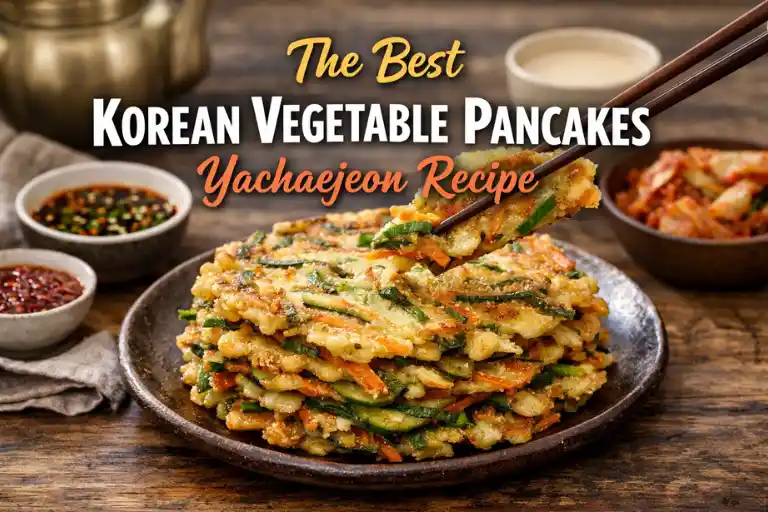
Yachaejeon (야채전) is a type of Korean vegetable pancake made by pan-frying fresh vegetables in a light batter until golden and crispy. The word “yachae” means vegetables, and “jeon” refers to a savory dish cooked in a thin layer of oil. It belongs to the larger jeon family, also known as buchimgae, which includes pajeon (green onion pancake) and kimchi jeon.
This Korean vegetable pancake recipe is loved for its crispy edges and soft center. In Korea, it’s often enjoyed on rainy days, served as banchan (side dish), or paired with a simple soy sauce dipping sauce. If you’re searching for an easy Korean vegetable pancake recipe, this guide will show you how to make yachaejeon crispy, flavorful, and perfectly balanced every time.
What Is Yachaejeon? (Quick Answer – 40–50 Words)
Yachaejeon means “vegetable pancake” in Korean. “Yachae” means vegetables, and “jeon” is a thin pan-fried dish. Unlike pajeon (mainly green onions) or general buchimgae, this version uses mixed vegetables. It’s often eaten on rainy days in Korea and served as banchan or a simple snack.
Quick Recipe Snapshot (For Skimmers)
- Prep Time: 15 minutes
- Cook Time: 10–12 minutes
- Servings: 2–3 people
- Difficulty: Easy, beginner-friendly
- Key Crispiness Secret: Use ice-cold water and cook in hot oil for crispy Korean vegetable pancakes every time.
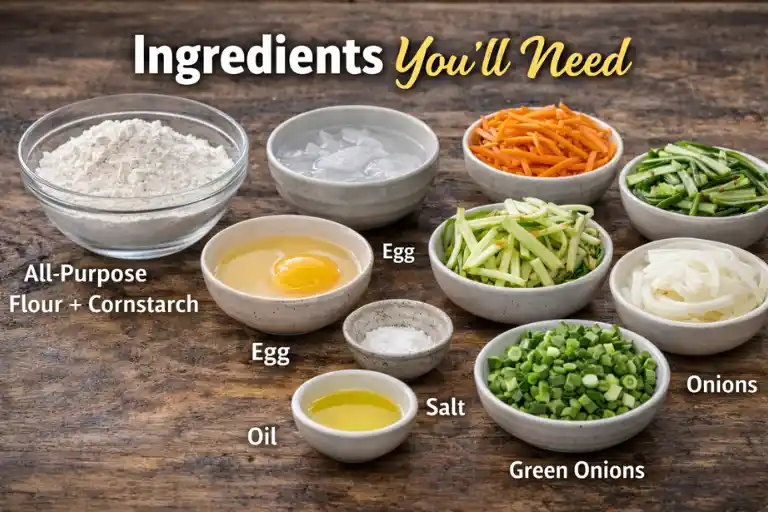
Ingredients You’ll Need
A great Korean vegetable pancake recipe is not just about mixing ingredients — it’s about understanding how they work together.
You might also like: Georgian Salad With Walnut Dressing
- Flour → gives structure and holds everything together.
- Egg → acts as a binder and adds richness.
- Ice water → keeps the batter light and helps create crispy yachaejeon.
- Vegetables (carrots, zucchini, onions, green onions) → add flavor but must be balanced for moisture control.
- Oil → the real texture driver that creates golden, crispy edges.
Understanding this makes it easier to master how to make Korean vegetable pancakes crispy.
Ingredient Substitution Matrix
| Original Ingredient | Substitute Option | Why It Works |
| All-purpose flour | Rice flour | Makes a lighter, crispier texture |
| All-purpose flour | Gluten-free flour blend | Keeps it gluten-free |
| Egg | Flax egg or skip | Makes vegan yachaejeon recipe possible |
| Korean pancake mix | Flour + salt + ice water | Easy pantry workaround |
| Add 1 tbsp flour | Add cornstarch | Boosts extra crispiness |
Rice flour vs all-purpose flour: Rice flour gives a lighter crunch, while all-purpose flour gives more structure.
Adding a little cornstarch for extra crisp is a simple trick most recipes skip.
Step-by-Step Instructions
Follow these simple steps to make a perfect Korean vegetable pancake (yachaejeon) at home.
1️⃣ Prep the Vegetables
Julienne carrots, zucchini, onions, and green onions. Keep slices thin so they cook evenly. If using high-moisture vegetables, lightly pat them dry.
2️⃣ Mix the Batter (Minimal Mixing Rule)
In a bowl, combine flour, egg, salt, and ice-cold water. Mix gently. Do not overmix — small lumps are fine. Overmixing makes the pancake chewy.
3️⃣ Heat the Pan Correctly
Preheat your pan over medium-high heat. A properly heated pan is key for crispy Korean vegetable pancakes.
4️⃣ Oil Depth Rule
Add enough oil to lightly coat the surface. The oil should shimmer but not smoke.
5️⃣ Thin Spreading Technique
Pour batter and spread thin. Thin pancakes cook faster and get crispier.
6️⃣ Flip Timing Indicators
Flip when edges turn golden and you hear a light sizzling sound — about 3–4 minutes per side.
How to Make Yachaejeon Extra Crispy
Most recipes skip the science behind crispy yachaejeon, but texture depends on these key factors:
Oil Temperature Science
Oil must be hot enough to sizzle immediately when batter touches the pan. Too cool = soggy pancake.
Rice Flour vs Wheat Flour
- Rice flour → lighter, crunchier texture
- All-purpose flour → more structure, slightly softer
For best results, combine both.
Ice Water Trick
Using ice-cold water slows gluten formation, creating a lighter and crispier texture.
Pan Type Comparison
- Nonstick pan → easier for beginners
- Cast iron → better heat retention and crisp edges
Why Thin Pancakes Win
Thin layers allow moisture to escape, making edges extra crispy.
Avoid Overcrowding
Cook one pancake at a time. Overcrowding lowers pan temperature and ruins crispiness.
Moisture Management Guide (Rarely Covered Anywhere)
Controlling moisture is essential for mastering how to make Korean vegetable pancakes crispy.
High-Moisture Vegetables
Zucchini releases a lot of water. Too much moisture causes soggy centers.
Pre-Salting Method
Lightly salt zucchini and let it sit for 5–10 minutes. This draws out excess water.
Squeezing Excess Water
After salting, gently squeeze out liquid using your hands or a clean towel.
Vegetable-to-Batter Ratio Balance
Too many vegetables and too little batter makes the pancake fall apart. Aim for enough batter to lightly coat everything — not drown it.
Why Your Yachaejeon Is Not Crispy (Fix Guide)
If your Korean vegetable pancakes (yachaejeon) are not turning out crispy, here’s how to fix the most common problems.
Soggy Center
The pan was not hot enough. Always preheat properly and use enough oil so the batter sizzles immediately.
Falling Apart
Too many vegetables and not enough batter. Keep a balanced vegetable-to-batter ratio so everything binds well.
Too Greasy
Oil was too cool. When oil is not hot, the pancake absorbs it instead of crisping.
Raw Inside
The pancake was too thick. Use the thin spreading technique for even cooking.
Chewy Texture
You overmixed the batter. Follow the minimal mixing rule and use ice water to keep it light.
Best Vegetables to Use (Flavor + Texture Balance)
The best Korean vegetable pancake recipe uses vegetables that balance flavor and moisture.
- Green onions – classic base for savory taste
- Carrots – slight sweetness and color
- Zucchini – soft texture (control moisture)
- Onions – depth of flavor
- Bell peppers – mild sweetness
Mix firm and soft vegetables for the perfect texture in your crispy yachaejeon.
Popular Variations
Vegan Yachaejeon
Skip the egg or use a flax egg. The batter still works well for a vegan Korean vegetable pancake.
Gluten-Free Version
Replace all-purpose flour with rice flour or a gluten-free blend for a lighter texture.
Kimchi Jeon
Add chopped kimchi for a spicy, tangy twist. This version is bold and flavorful.
Seafood Version
Shrimp or squid turns it into a seafood-style pancake similar to haemul pajeon.
High-Protein Add-Ins
Add tofu strips or extra egg for more protein.
Spicy Gochujang Twist
Mix a small spoon of gochujang into the batter for heat and color.
Air Fryer & Oven Method (Alternative Cooking Guide)
If you want a lighter version of Korean vegetable pancakes, try these methods.
Air Fryer Method
- Preheat to 375°F (190°C).
- Lightly brush both sides with oil.
- Cook for 8–10 minutes, flipping halfway.
Texture will be slightly drier but still crisp.
Oven Method
- Preheat oven to 400°F (200°C).
- Place pancakes on a lined tray and brush with oil.
- Bake 15–18 minutes, flipping once.
These methods reduce oil while still helping you achieve a crispy finish.
Korean Dipping Sauce (3 Versions)
A great Korean vegetable pancake (yachaejeon) becomes even better with the right dipping sauce. Here are three easy options:
1️⃣ Classic Soy-Sesame Sauce
Mix soy sauce, a splash of vinegar, a few drops of sesame oil, chopped green onions, and sesame seeds. This is the traditional pairing for crispy Korean vegetable pancakes.
2️⃣ Spicy Version
Add a small spoon of gochujang or a pinch of gochugaru to the classic sauce. It adds heat and depth, perfect for a bold yachaejeon recipe.
3️⃣ Low Sodium Option
Use low-sodium soy sauce and add more vinegar and sesame oil for flavor balance without too much salt.
What to Serve with Yachaejeon
Yachaejeon is flexible and works in many ways:
- As banchan: Serve as a simple Korean side dish.
- With soup: Pair with kimchi stew or light broth for balance.
- With rice bowls: Add to a bowl with rice and vegetables.
- Makgeolli pairing: Traditionally enjoyed with Korean rice wine.
- Party appetizer presentation: Slice into small squares and serve with dipping sauce for gatherings.
This pairing strategy makes your Korean vegetable pancake recipe more complete and practical.
Storage & Reheating Guide
How to Store Without Losing Crispiness
Let pancakes cool completely. Store in an airtight container with parchment between layers.
Best Reheating Method
- Pan: Reheat on medium heat with a small amount of oil for best crisp results.
- Oven: Bake at 375°F (190°C) for 8–10 minutes.
Freezer Instructions
Freeze cooked pancakes flat. Reheat directly from frozen in oven or pan.
Why Microwave Ruins Texture
Microwaving traps steam, making your once crispy yachaejeon soft and soggy.
Is Yachaejeon Healthy?
Many people ask if a Korean vegetable pancake (yachaejeon) is healthy. The answer depends on how you cook it.
Oil Moderation Tips
Traditional jeon is pan-fried, but you don’t need excessive oil. Use just enough to coat the pan. Cooking at the right temperature prevents oil absorption and keeps your crispy yachaejeon lighter.
Lower Calorie Adjustments
- Use more vegetables and slightly less batter
- Choose rice flour for a lighter texture
- Cook thinner pancakes
Air Fryer Health Comparison
The air fryer method uses much less oil. While the texture is slightly drier than classic pan-fried Korean vegetable pancakes, it reduces calories.
Vegetable Density Benefits
Because it’s packed with carrots, zucchini, onions, and green onions, this dish offers fiber and nutrients. When balanced properly, a yachaejeon recipe can be part of a healthy meal.
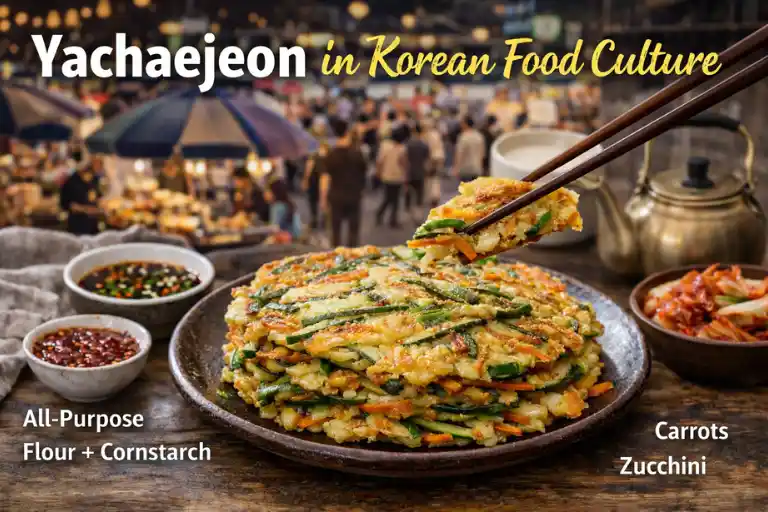
Yachaejeon in Korean Food Culture
Understanding culture adds meaning to this Korean vegetable pancake recipe.
Rainy Day Tradition
In Korea, many families enjoy jeon on rainy days. The sizzling sound in the pan is said to match the sound of rain.
Street Food vs Home-Style
Street vendors often make thinner, crispier versions. At home, pancakes may be slightly thicker and softer.
Difference Between Jeon & Buchimgae
Both are pan-fried dishes, but jeon usually has a more structured batter, while buchimgae can be more casual and mixed.
How Families Serve It
It’s commonly served as banchan, shared in the center of the table, or enjoyed with makgeolli during gatherings.
Yachaejeon vs Pajeon vs Kimchi Jeon
Here’s a simple comparison to understand these popular variations:
| Dish | Main Ingredients | Texture | Flavor Profile | Occasion |
| Yachaejeon | Mixed vegetables | Balanced crispy & soft | Mild, savory | Everyday meal or snack |
| Pajeon | Green onions | Crisp edges, chewy center | Onion-forward | Rainy days, casual meals |
| Kimchi Jeon | Kimchi | Soft inside, crispy outside | Spicy, tangy | Bold appetizer or side dish |
This comparison helps readers searching for differences between Korean vegetable pancakes, pajeon, and kimchi jeon, capturing additional search intent naturally.
FAQs About Korean Vegetable Pancakes (Yachaejeon)
What vegetables go in Korean pancakes?
Traditional Korean vegetable pancakes (yachaejeon) use green onions, carrots, zucchini, and onions. You can also add bell peppers, cabbage, or mushrooms. The key is balancing flavor and moisture so the pancake stays crispy while still packed with vegetables.
How do you keep Korean pancakes crispy?
To keep crispy Korean vegetable pancakes, cook them in properly heated oil and spread the batter thin. Use ice-cold water, avoid overcrowding the pan, and reheat in a pan or oven instead of a microwave to maintain crunch.
Can you make Yachaejeon without egg?
Yes, you can make a vegan yachaejeon recipe by skipping the egg or using a flax egg. The batter still binds well if the vegetable-to-batter ratio is balanced. The texture may be slightly lighter but remains crispy when cooked correctly.
Can I freeze Korean vegetable pancakes?
Yes. Let the pancakes cool completely, then freeze them flat with parchment paper between layers. Reheat directly from frozen in a pan or oven for best results. Avoid microwaving, as it makes the pancake soft.
Why is my pancake soggy?
A soggy yachaejeon usually means the oil was not hot enough or the vegetables released too much moisture. Preheat the pan properly and squeeze excess water from zucchini before mixing the batter.
What is the best oil to use?
Use a neutral oil with a high smoke point, such as vegetable oil, canola oil, or avocado oil. These oils help create golden, crispy edges without overpowering the flavor of the Korean vegetable pancake recipe.
Recipe Card Korean Vegetable Pancakes (Yachaejeon)
Crispy, easy, and authentic Korean vegetable pancakes with balanced flavor and texture.
Ingredients
- 1 cup all-purpose flour (or half rice flour for extra crisp)
- 1 egg (or flax egg for vegan option)
- ¾ cup ice-cold water
- ½ teaspoon salt
- 1 cup julienned zucchini (squeezed dry)
- ½ cup julienned carrots
- ½ cup sliced onions
- ½ cup chopped green onions
- 2–3 tablespoons vegetable oil (for frying)
Step-by-Step Instructions
- Prep and dry vegetables.
- Mix flour, egg, salt, and ice water gently.
- Fold in vegetables.
- Heat oil in pan over medium-high heat.
- Spread batter thin and cook 3–4 minutes per side until golden and crispy.
Nutrition (Per Serving – Approximate)
- Calories: 220–250
- Protein: 6–8g
- Carbohydrates: 28–32g
- Fat: 9–12g
Notes
- Use rice flour + cornstarch for extra crispiness.
- Keep pancakes thin for best texture.
- Reheat in pan or oven for maximum crunch.
Final Thoughts
Making Korean vegetable pancakes (yachaejeon) at home is easier than it looks. Once you understand the balance between batter, vegetables, oil temperature, and moisture control, you can create perfectly crispy Korean vegetable pancakes every time.
The real secret is simple: keep the batter light with ice-cold water, spread it thin, and cook in properly heated oil. Whether you follow the traditional pan-fried method or try the air fryer version, this yachaejeon recipe is flexible, beginner-friendly, and full of flavor.
From rainy-day comfort food in Korea to a quick snack or party appetizer in your kitchen, this dish brings both authentic taste and crispy texture together. Now that you know exactly how to make yachaejeon crispy, it’s time to heat the pan and enjoy your homemade masterpiece.