
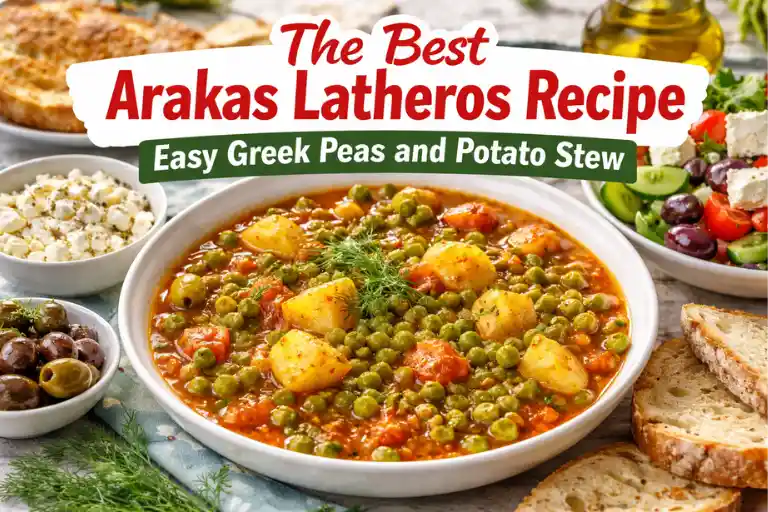
If you love simple Mediterranean meals, Arakas Latheros is a dish you should try. This traditional Greek peas recipe is a comforting Greek pea stew made with peas, potatoes, tomatoes, olive oil, and fresh herbs. In Greek cooking, “lathera” refers to vegetables slowly cooked in olive oil and tomato sauce, creating rich flavor with simple ingredients.
This Arakas Latheros recipe is known for being healthy, naturally vegan, and easy to prepare, which is why it is a staple in many Greek homes. The combination of Greek peas with potatoes and fragrant dill creates a warm Mediterranean vegetable stew that feels both nourishing and satisfying.
In this guide, you will learn how to make authentic Arakas Latheros, discover helpful cooking tips, and explore the traditions behind this beloved Greek vegetable stew. Whether you are new to Greek cuisine or looking for a simple Mediterranean dinner, this recipe is a wonderful place to start.
Quick Overview of Arakas Latheros
Arakas Latheros is a comforting Greek pea stew that represents the heart of Mediterranean home cooking. This classic dish is made with peas, potatoes, tomatoes, olive oil, and fresh herbs, slowly simmered together to create a rich and flavorful Greek vegetable stew. Because it uses simple plant-based ingredients, it is also considered a naturally vegan Greek recipe that fits perfectly into the Mediterranean diet.
Unlike many heavy stews, this traditional Greek peas recipe relies on the quality of olive oil, fresh vegetables, and herbs to build its flavor. The result is a warm and satisfying Mediterranean vegetable stew that is both healthy and easy to prepare. Many families in Greece enjoy Greek peas with potatoes as a comforting meal served with bread, feta cheese, or a fresh salad.
What Is Arakas Latheros?
Arakas Latheros is a traditional Greek dish made with peas cooked in olive oil and tomato sauce, often combined with potatoes and carrots for extra texture and flavor. The word “Arakas” means peas in Greek, which explains why peas are the star ingredient in this Greek pea stew.
This dish belongs to a category of Greek foods known as “lathera dishes,” which are vegetable-based meals slowly cooked in generous amounts of olive oil and tomatoes. Because of this cooking style, Arakas Latheros develops a deep, comforting flavor even though the ingredients are very simple.
Today, many people enjoy Arakas Latheros recipe variations as a healthy Mediterranean pea stew, a vegan Greek dinner, or a nourishing plant-based vegetable stew.
What Does “Lathera” Mean in Greek Cooking
In Greek cuisine, the word “Lathera” (or Ladera) refers to a group of vegetable dishes cooked in olive oil. The term comes from the Greek word “ladi,” meaning olive oil, which is a central ingredient in the Mediterranean diet.
Lathera dishes typically combine seasonal vegetables, tomatoes, herbs, and olive oil, creating simple yet flavorful Greek vegetable stews. Examples of popular lathera recipes include:
- Arakas Latheros (Greek peas stew)
- Fasolakia (Greek green beans in tomato sauce)
- Briam (Greek roasted vegetable dish)
These dishes highlight the importance of olive oil in Mediterranean cooking and show how a few fresh ingredients can create a delicious and nutritious meal.
Why This Dish Is Popular in Greek Cuisine
There are several reasons why Arakas Latheros remains a favorite in Greek home cooking.
First, it is a simple one-pot Mediterranean meal that uses affordable ingredients like peas, potatoes, carrots, and tomatoes. This makes it a great option for families looking for budget-friendly Greek recipes.
Second, the dish fits perfectly into the Mediterranean diet, which focuses on vegetables, olive oil, and plant-based meals. Because of this, Greek pea stew with tomato sauce is often considered a healthy Mediterranean vegetable dish.
Finally, Arakas Latheros is comforting and versatile. It can be served as a main vegan meal, a side dish, or part of a traditional Greek family dinner. With its rich flavors and wholesome ingredients, this authentic Greek peas and potatoes recipe continues to be loved across generations.
Why You’ll Love This Traditional Greek Pea Stew

You might also like: The Best Braised Miso Cabbage Recipe
There are many reasons why Arakas Latheros is a favorite in Greek home cooking. This comforting Greek pea stew combines simple ingredients with rich Mediterranean flavors, making it a dish that is both satisfying and easy to prepare.
Simple Mediterranean ingredients
One of the best things about this Arakas Latheros recipe is that it uses basic ingredients you may already have in your kitchen. Fresh or frozen peas, potatoes, carrots, tomatoes, olive oil, and fragrant herbs like dill come together to create a delicious Mediterranean vegetable stew. These ingredients reflect the simplicity of traditional Greek cuisine, where fresh produce and good olive oil are the stars of the meal.
One-pot comfort food
Another reason people love Greek peas with potatoes is that it is a true one-pot meal. Everything cooks together slowly in one pan, allowing the flavors of the tomato sauce, vegetables, and olive oil to blend beautifully. This makes Greek pea stew with tomato sauce perfect for busy weeknights or relaxed family dinners.
Naturally vegan recipe
This traditional Greek pea recipe is naturally vegan and plant-based, making it ideal for anyone looking for a healthy Mediterranean pea stew. Because it relies on vegetables and olive oil instead of meat, Arakas Latheros fits perfectly into a Mediterranean vegetarian diet.
Healthy olive oil-based meal
Olive oil is a key ingredient in lathera dishes, and it adds both flavor and nutrition. High-quality Greek olive oil provides healthy fats that support heart health, making this Mediterranean pea stew a nourishing and balanced meal.
History of Lathera Dishes in Greek Cuisine
The dish Arakas Latheros belongs to a traditional group of meals in Greek cuisine called lathera dishes. These recipes highlight the beauty of vegetables slowly cooked in olive oil and tomatoes, a cooking style that has been part of Mediterranean culture for centuries.
Traditional Olive Oil Cooking in Greece
In Greece, olive oil has always been one of the most important ingredients in the kitchen. For generations, families have used olive oil to cook vegetables, stews, and simple rustic meals. Dishes like Arakas Latheros, Greek green beans in tomato sauce, and other Greek vegetable stews are examples of how olive oil is used not just as a flavor enhancer but as the base of the entire dish.
This cooking method creates rich, comforting flavors while keeping the meal healthy and nourishing, which is why olive oil vegetable stews are a key part of the Mediterranean diet.
Vegetable Stews in Mediterranean Culture
Across the Mediterranean region, vegetable-based stews have always been an essential part of daily meals. These dishes often use seasonal vegetables, tomatoes, herbs, and olive oil to create filling and flavorful recipes.
In Greece, meals like Arakas Latheros became popular because they were affordable, nutritious, and easy to cook for families. Even today, many people enjoy this authentic Greek peas and potatoes recipe as a comforting Mediterranean vegetable stew that connects modern kitchens with traditional Greek cooking.
Ingredients for Authentic Arakas Latheros
One of the reasons Arakas Latheros is loved in Greek cuisine is its simplicity. This traditional Greek peas recipe uses fresh vegetables and pantry staples to create a comforting Mediterranean vegetable stew. When these ingredients slowly cook together in olive oil and tomato sauce, they produce the rich flavors that make this Greek pea stew so satisfying.
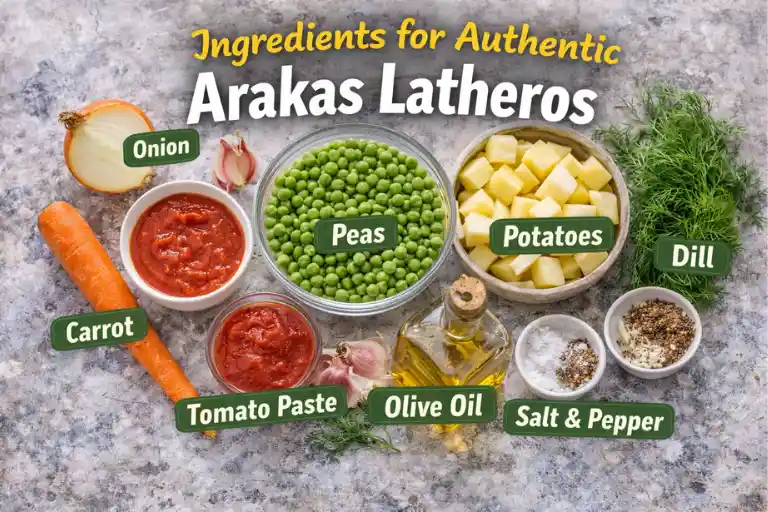
Main Ingredients
Below are the essential ingredients used in a classic Arakas Latheros recipe.
Peas
Peas are the star ingredient in this Greek peas with potatoes dish. They add natural sweetness and a soft texture that blends beautifully with the tomato-based sauce. Fresh peas work well when in season, but frozen peas are commonly used and still create a delicious Mediterranean pea stew.
Potatoes
Potatoes make the dish heartier and help absorb the rich olive oil and tomato flavors. In many traditional versions of Greek pea and potato stew, potatoes are cut into small chunks so they cook evenly.
Carrots
Carrots add a mild sweetness and extra color to this Greek vegetable stew. They also balance the acidity of the tomatoes, giving the dish a more rounded flavor.
Onion
Onions form the aromatic base of the stew. When sautéed in olive oil, they release natural sweetness and depth, which is essential in many Mediterranean vegetable recipes.
Tomato Sauce
Tomatoes give Arakas Latheros its signature rich and slightly tangy flavor. The tomato base helps create the comforting sauce that coats the vegetables in this Greek pea stew with tomato sauce.
Olive Oil
High-quality olive oil is one of the most important ingredients in lathera dishes. It enhances the flavor of the vegetables and provides the smooth, rich texture that makes this Mediterranean vegetable stew so satisfying.
Dill
Fresh dill adds a light herbal aroma that is common in Greek cooking. It pairs perfectly with peas and gives this authentic Arakas Latheros recipe its traditional flavor.
Optional Ingredients
Some families like to add extra ingredients to customize their Greek pea stew. These additions are optional but can enhance the flavor.
- Garlic for a deeper aroma
- Parsley for extra freshness
- Lemon juice for a bright Mediterranean touch
- Tomato paste for a thicker sauce
- Green beans or zucchini for more vegetables
These small adjustments can create different variations of Mediterranean vegetable stew while still keeping the dish true to its Greek roots.
Best Type of Peas (Fresh vs Frozen)
Both fresh and frozen peas work well in Arakas Latheros, and each option has its benefits.
Fresh peas
Fresh peas provide the best natural flavor and slightly firmer texture. When they are in season, they can make your Greek peas recipe taste even more vibrant.
Frozen peas
Frozen peas are the most common choice for home cooks because they are convenient and available year-round. They cook quickly and still create a delicious homemade Greek pea stew.
For most people, making Greek peas with tomato sauce and dill, frozen peas are a practical and reliable option.
Ingredient Spotlight
To truly understand why Arakas Latheros tastes so unique, it helps to look closely at the ingredients that define Mediterranean cooking.
Why Olive Oil Is Essential in Greek Cooking
In Greek cuisine, olive oil is more than just a cooking fat—it is the foundation of many dishes. In lathera recipes, vegetables are gently simmered in generous amounts of olive oil, which creates a silky texture and deep flavor.
High-quality Greek olive oil also provides healthy fats that support heart health, making dishes like Arakas Latheros an important part of the Mediterranean diet.
The Role of Dill in Mediterranean Recipes
Dill is a classic herb in Greek vegetable dishes. Its fresh and slightly sweet flavor complements ingredients like peas, potatoes, and carrots.
In Arakas Latheros, dill adds brightness and balance to the tomato and olive oil sauce, giving the dish its distinctive Mediterranean aroma.
Tomatoes in Greek Vegetable Stews
Tomatoes play a major role in many Greek vegetable stews. They provide acidity, color, and natural sweetness that help bring all the ingredients together.
In this Greek pea stew with tomato sauce, tomatoes create the rich base that allows the vegetables to slowly absorb flavor. Combined with olive oil and herbs, they transform simple vegetables into a comforting Mediterranean pea stew that is both flavorful and nourishing.
Kitchen Tools You Need
Before starting this Arakas Latheros recipe, it helps to gather a few simple kitchen tools. One of the great things about this traditional Greek pea recipe is that it does not require special equipment. With basic cooking tools, you can easily prepare this comforting Greek pea stew at home.
Dutch oven or large pot
A Dutch oven or large cooking pot works best for making Greek peas with potatoes because it allows the vegetables to simmer slowly and evenly. This helps the flavors of the tomato sauce, olive oil, and herbs blend together into a rich Mediterranean vegetable stew.
Cutting board
A sturdy cutting board is important for safely preparing the vegetables. You will use it to chop the potatoes, carrots, and onions for your Greek vegetable stew.
Knife
A sharp kitchen knife makes it easier to slice vegetables into even pieces. Properly cut vegetables cook more evenly in this homemade Greek pea stew.
Wooden spoon
A wooden spoon is perfect for gently stirring the stew while it cooks. It helps mix the peas, tomato sauce, and olive oil without damaging the vegetables.
Having these simple tools ready will make cooking Arakas Latheros easier and more enjoyable.
How to Make Arakas Latheros (Step-by-Step)
Making Arakas Latheros is simple and rewarding. This traditional Greek peas and potatoes recipe comes together in one pot, allowing the vegetables to slowly cook in olive oil and tomato sauce until they become tender and flavorful.
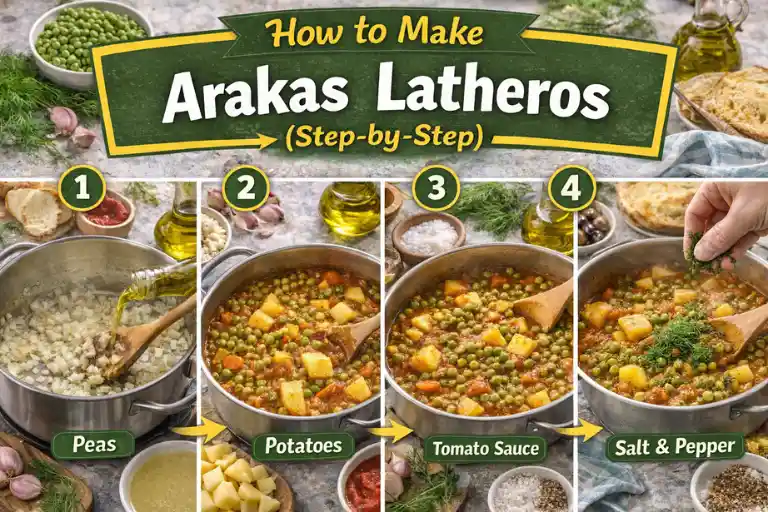
Step 1 – Prepare the Vegetables
Start by preparing all the vegetables for your Greek pea stew. Peel and cut the potatoes into medium-sized cubes so they cook evenly. Slice the carrots into small rounds and finely chop the onion.
If you are using fresh peas, rinse them well before cooking. If using frozen peas, you can add them directly to the pot later. Preparing the vegetables in advance makes cooking this Mediterranean pea stew smoother and faster.
Step 2 – Sauté the Aromatics
Heat a generous amount of olive oil in a Dutch oven or large pot over medium heat. Add the chopped onion and cook for a few minutes until it becomes soft and slightly golden.
This step creates the aromatic base for your Greek vegetable stew. Some cooks also add garlic at this stage for extra flavor, which enhances the richness of this authentic Arakas Latheros recipe.
Step 3 – Add Tomato and Olive Oil
Next, pour in the tomato sauce and stir well with a wooden spoon. The tomatoes combine with the olive oil to form the flavorful base of this Greek pea stew with tomato sauce.
At this stage, you can also add salt, pepper, and a little tomato paste if you prefer a deeper flavor. Let the sauce cook for a few minutes so the ingredients begin to blend together.
Step 4 – Simmer the Peas and Potatoes
Add the peas, potatoes, and carrots to the pot and gently mix them into the sauce. Pour in a small amount of water or vegetable broth to help the vegetables cook evenly.
Reduce the heat and allow the stew to simmer slowly for about 30–40 minutes. During this time, the vegetables absorb the rich flavors of the olive oil and tomato sauce, turning the dish into a comforting Mediterranean vegetable stew.
Step 5 – Finish with Fresh Herbs
Once the vegetables are tender, sprinkle in fresh dill and stir gently. Dill adds a bright herbal aroma that complements the flavor of this Greek peas recipe.
Let the stew rest for a few minutes before serving. This allows the sauce to thicken slightly and the flavors of the peas, potatoes, tomatoes, and olive oil to fully develop. Your Arakas Latheros is now ready to enjoy as a warm Mediterranean pea stew served with crusty bread, feta cheese, or a fresh salad.
Traditional Cooking Method vs Modern Methods
One of the beautiful things about Arakas Latheros is that it can be cooked using both traditional and modern methods. The classic version of this Greek pea stew is made slowly on the stove, but today, many home cooks also prepare this Mediterranean vegetable stew using modern appliances. No matter which method you choose, the goal is the same: allowing the peas, potatoes, olive oil, and tomato sauce to cook together until the flavors blend perfectly.
Classic Greek Stove-Top Method
The traditional way to cook Arakas Latheros is on the stove in a large pot or Dutch oven. In this method, onions are first sautéed in olive oil, then tomatoes, peas, potatoes, and carrots are added to the pot.
The stew is gently simmered over medium-low heat until the vegetables become tender and the tomato and olive oil sauce thickens. This slow cooking process helps create the deep flavor that makes this authentic Greek peas and potatoes recipe so comforting. Many Greek families still prefer this method because it produces the most traditional Greek vegetable stew.
Instant Pot Version
For people who want a faster cooking method, Arakas Latheros can also be made in an Instant Pot. This modern approach reduces the cooking time while still producing a flavorful Greek pea stew with tomato sauce.
To prepare the dish, sauté the onion and olive oil using the sauté setting. Then add the peas, potatoes, carrots, tomato sauce, and seasonings. Cook under pressure for about 5–7 minutes, followed by a quick release. The result is a soft and delicious Mediterranean pea stew that is ready much faster.
Slow Cooker Adaptation
A slow cooker is another convenient way to prepare Greek peas with potatoes. This method works well for busy days because the stew cooks slowly while you focus on other tasks.
Simply combine the peas, potatoes, carrots, onion, tomato sauce, and olive oil in the slow cooker. Cook on low heat for 5–6 hours or high heat for about 3 hours. The slow cooking process allows the vegetables to absorb the flavors of the olive oil and tomatoes, creating a rich and comforting Greek vegetable stew.
Chef Tips for the Best Greek Pea Stew
Cooking a delicious Arakas Latheros recipe does not require complicated techniques, but a few expert tips can make a big difference. These simple tips will help you create a flavorful and authentic Greek peas recipe every time.
Use high-quality olive oil
Because lathera dishes rely heavily on olive oil, choosing a good extra virgin olive oil is essential. High-quality olive oil enhances the flavor of the Mediterranean vegetable stew and gives the dish its smooth and rich texture.
Simmer slowly
One of the secrets to a great Greek pea stew is cooking it slowly. Allow the peas, potatoes, and carrots to simmer gently in the tomato sauce and olive oil. Slow cooking allows the vegetables to absorb flavor and creates the comforting taste that makes this traditional Greek peas recipe so special.
Balance acidity with herbs
Tomatoes bring natural acidity to this Greek pea stew with tomato sauce, so balancing the flavor with fresh herbs is important. Adding dill or parsley at the end of cooking brightens the dish and creates the signature flavor found in authentic Arakas Latheros.
Common Cooking Mistakes to Avoid

Even though Arakas Latheros is a simple Greek pea stew, a few small mistakes can affect the flavor and texture of the dish. Avoiding these common issues will help you make a more balanced and authentic Mediterranean vegetable stew.
Watery sauce
One of the most common mistakes when making Greek peas with potatoes is ending up with a thin or watery sauce. This usually happens when too much water is added during cooking. Since the vegetables release moisture naturally, it is best to add only a small amount of liquid at the beginning. Let the tomato sauce and olive oil slowly thicken as the stew simmers. This helps create the rich texture expected in a traditional Arakas Latheros recipe.
Overcooking peas
Peas cook quickly, especially if you are using frozen peas. Cooking them for too long can make them soft and mushy, which affects the overall texture of the Greek vegetable stew. To keep the peas tender and vibrant, simmer the stew gently and avoid excessive cooking time.
Too little olive oil
In lathera dishes, olive oil is not just an ingredient—it is the foundation of the dish. Using too little olive oil can make the stew taste flat and less authentic. A generous amount of good extra virgin olive oil helps create the rich, comforting flavor that defines Mediterranean pea stew.
Flavor Variations Across Greece
While the classic Arakas Latheros recipe is widely loved across Greece, many regions and families prepare this Greek pea stew with their own unique touches. These variations show how flexible and adaptable this Mediterranean vegetable stew can be.
Athens Style
In Athens, many cooks prepare Arakas Latheros with a slightly lighter sauce. The focus is on the freshness of the vegetables, especially peas, potatoes, and carrots, combined with olive oil, tomato sauce, and fresh dill. This version is simple, balanced, and very close to the classic Greek peas recipe.
Island Style
On the Greek islands, the recipe sometimes includes extra herbs or a squeeze of fresh lemon juice for brightness. Some island cooks also use more olive oil, which gives the stew a richer flavor. This variation highlights the strong influence of Mediterranean ingredients in island cuisine.
Family Recipe Variations
Like many traditional dishes, Arakas Latheros often changes slightly from one household to another. Some families add garlic or parsley, while others include extra vegetables like zucchini or green beans.
These small adjustments create different versions of the Greek peas and potatoes recipe, while still keeping the heart of the dish the same—a comforting Greek vegetable stew cooked in olive oil and tomato sauce.
What to Serve With Arakas Latheros
Arakas Latheros is a comforting Greek pea stew that can be enjoyed as a main dish or as part of a larger Mediterranean meal. Because this traditional Greek peas recipe is rich in flavor yet light and healthy, it pairs well with several classic Greek side dishes.
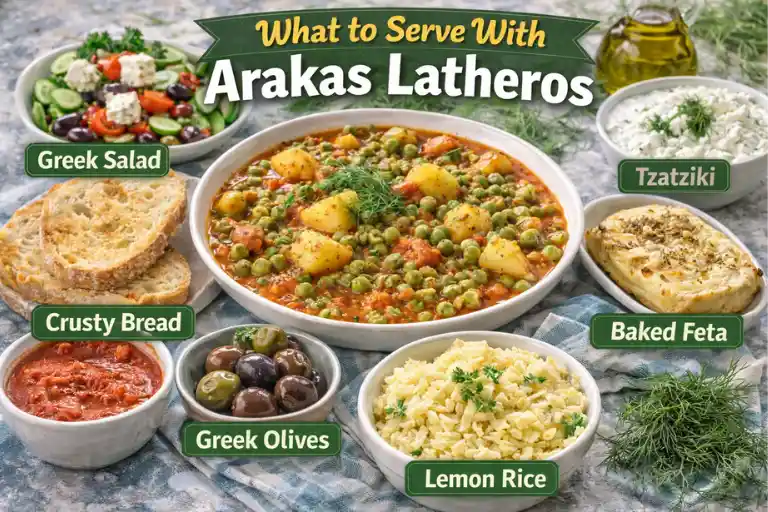
Feta cheese
Creamy feta cheese is one of the most popular pairings with Greek peas with potatoes. The salty and tangy flavor of feta balances the sweetness of the peas and the richness of the tomato and olive oil sauce in this Mediterranean vegetable stew.
Crusty bread
A slice of warm crusty bread is perfect for soaking up the flavorful sauce of Arakas Latheros. Many people enjoy dipping bread into the rich olive oil and tomato stew, which makes the meal even more satisfying.
Olives
Serving Greek olives alongside this Greek vegetable stew adds another classic Mediterranean flavor to the meal. Olives complement the dish beautifully and reflect the simple ingredients found in Mediterranean cuisine.
Greek salad
A fresh Greek salad made with tomatoes, cucumber, olives, and feta is another excellent side dish. The crisp vegetables and light dressing add freshness that balances the warm Greek pea stew with tomato sauce.
Grilled fish
For those who want a heartier meal, grilled fish pairs wonderfully with Arakas Latheros. The mild flavor of fish complements the rich Mediterranean pea stew, creating a balanced and nutritious dinner.
Mediterranean Diet Benefits of This Dish
One reason Arakas Latheros remains popular is that it fits perfectly into the Mediterranean diet, which is widely known for its health benefits. This Greek vegetable stew combines vegetables, olive oil, and herbs to create a meal that is both nourishing and flavorful.
Heart Healthy Olive Oil
A key ingredient in lathera dishes is olive oil, which is known for its healthy fats. Extra virgin olive oil contains antioxidants and monounsaturated fats that support heart health. Because this Mediterranean pea stew uses olive oil as its cooking base, it becomes a naturally healthy dish that aligns with the principles of the Mediterranean diet.
Plant-Based Mediterranean Meals
Arakas Latheros is naturally vegan and plant-based, making it a great option for anyone looking for healthy Mediterranean vegetarian meals. The combination of peas, potatoes, carrots, tomatoes, and herbs provides a satisfying dish without the need for meat. Many people enjoy this Greek peas recipe as a balanced plant-based Mediterranean dinner.
Vegetable Nutrition Benefits
The vegetables in Greek pea stew with tomato sauce offer a wide range of nutrients. Peas provide fiber and plant protein, carrots supply vitamins and antioxidants, and tomatoes add vitamin C and natural flavor. Together, these ingredients create a wholesome Mediterranean vegetable stew that supports a healthy and balanced diet.
Arakas Latheros Nutrition Facts
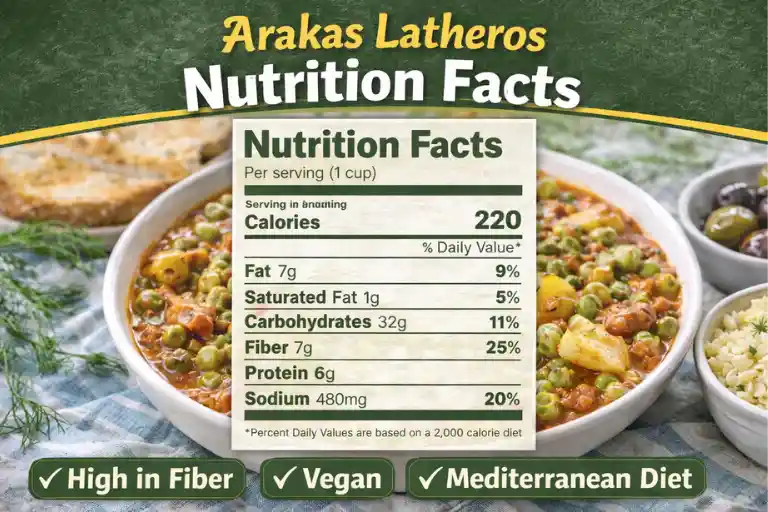
One reason Arakas Latheros is loved in the Mediterranean diet is that it is both delicious and nutritious. This Greek pea stew is made with vegetables, olive oil, and herbs, which provide a balanced mix of nutrients. While the exact nutrition values may vary depending on ingredient amounts, the following is a general estimate for one serving of Arakas Latheros.
Calories
A typical serving of this Mediterranean vegetable stew contains about 200–260 calories. The calories mainly come from peas, potatoes, and olive oil, which provide energy and healthy fats.
Protein
This Greek peas recipe provides around 6–8 grams of protein per serving. Most of the protein comes from the peas, which are naturally rich in plant-based protein.
Carbohydrates
Because the dish includes peas and potatoes, it contains approximately 30–35 grams of carbohydrates. These carbohydrates provide steady energy, making Greek pea stew with tomato sauce a satisfying meal.
Fiber
Vegetables like peas, carrots, and tomatoes add a good amount of fiber. One serving usually contains about 7–9 grams of fiber, which supports digestion and helps you feel full longer.
Fats
Most of the fat in Arakas Latheros comes from extra virgin olive oil, a key ingredient in lathera dishes. A serving typically contains 10–14 grams of healthy fats, which are known to support heart health in the Mediterranean diet.
Cost Per Serving & Budget Analysis
Another reason many families enjoy Arakas Latheros is that it is an affordable Mediterranean meal. This traditional Greek peas recipe uses simple ingredients that are inexpensive and easy to find in most grocery stores.
Ingredient cost
The main ingredients in this Greek vegetable stew—such as peas, potatoes, carrots, onions, tomato sauce, and olive oil—are budget-friendly. Frozen peas are often the most economical choice and work perfectly in this homemade Greek pea stew.
When buying ingredients for a family-sized pot of Greek peas with potatoes, the total cost is usually quite low compared to many other dinner recipes.
Affordable Mediterranean meals
Because the dish relies mostly on vegetables and pantry staples, Arakas Latheros is considered one of the most budget-friendly Mediterranean recipes. It can easily feed several people while keeping the ingredient cost low.
Many households appreciate this Mediterranean vegetable stew because it proves that healthy Greek cooking does not have to be expensive.
Meal Prep and Batch Cooking Tips
One of the best things about Arakas Latheros is that it works well for meal prep and batch cooking. This Greek pea stew stores well and often tastes even better the next day as the flavors continue to develop.
Preparing vegetables in advance
To save time, you can chop the potatoes, carrots, and onions ahead of time and store them in the refrigerator. Having the vegetables ready makes it much easier to cook this traditional Greek peas recipe on busy days.
Storing cooked stew
After cooking your Mediterranean pea stew, allow it to cool completely before storing it in an airtight container. It can be kept in the refrigerator for up to 3–4 days. Many people find that the flavor of Greek pea stew with tomato sauce becomes even richer after resting overnight.
Reheating tips
When reheating Arakas Latheros, warm it slowly on the stove over low heat. You can add a small splash of water or vegetable broth if the sauce has thickened too much. Stir gently so the peas, potatoes, and vegetables remain intact while the stew warms evenly.
How to Store and Reheat Arakas Latheros
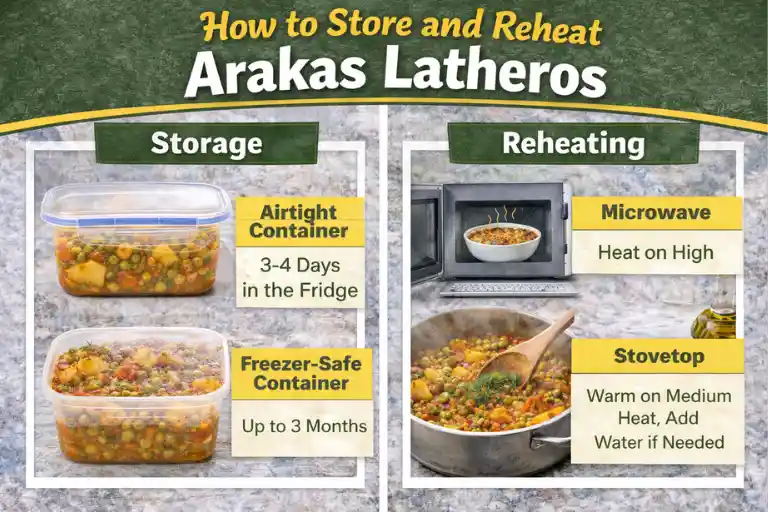
One of the great things about Arakas Latheros is that it stores very well. In fact, this Greek pea stew often tastes even better the next day because the peas, potatoes, olive oil, and tomato sauce continue to absorb flavor. Proper storage helps keep this Mediterranean vegetable stew fresh and delicious for later meals.
Refrigerator Storage
If you plan to eat your Arakas Latheros within a few days, store it in the refrigerator. Allow the Greek peas with potatoes to cool completely before placing the stew in an airtight container.
Stored properly, this Greek vegetable stew can stay fresh in the refrigerator for 3–4 days. The flavors of the tomato sauce, herbs, and olive oil will continue to blend together, making the dish even more flavorful over time.
Freezer Storage
You can also freeze Arakas Latheros if you want to keep it for longer. Let the Mediterranean pea stew cool fully, then transfer it into freezer-safe containers or bags.
This traditional Greek peas recipe can be stored in the freezer for up to 2–3 months. When ready to eat, thaw the stew overnight in the refrigerator before reheating.
Best Reheating Methods
Reheating Arakas Latheros is simple and helps restore the rich flavor of this Greek pea stew with tomato sauce.
The best method is to warm it slowly on the stove over low to medium heat. Stir occasionally with a wooden spoon and add a small splash of water or vegetable broth if the sauce becomes too thick.
You can also reheat this Mediterranean vegetable stew in the microwave, but using the stove helps maintain the best texture for the peas and potatoes.
Beginner Cooking Tips for Perfect Results
If you are making Arakas Latheros for the first time, a few simple tips can help you create a flavorful and authentic Greek pea stew. These tips focus on balancing flavors, achieving the right texture, and using the proper cookware.
Balancing flavors
A good Arakas Latheros recipe balances the richness of olive oil with the brightness of tomatoes and herbs. If the stew tastes too acidic, adding a little more olive oil or fresh dill can help create a smoother flavor. Proper seasoning also helps bring out the natural sweetness of the peas and carrots.
Thickening the stew
A classic Mediterranean vegetable stew should have a slightly thick sauce. If the stew becomes too watery, allow it to simmer uncovered for a few extra minutes. This helps the tomato sauce and olive oil reduce naturally, giving the Greek peas with potatoes a richer consistency.
Choosing the right pot
Using a large pot or Dutch oven is important when making Greek pea stew with tomato sauce. A heavy pot distributes heat evenly and allows the vegetables to cook slowly without burning. This helps create the comforting texture that makes Arakas Latheros such a beloved Greek vegetable dish.
FAQs About Arakas Latheros
Below are some common questions people ask about Arakas Latheros, a classic Greek pea stew made with peas, potatoes, olive oil, tomatoes, and herbs. These answers will help you better understand this traditional Greek peas recipe and how to prepare it successfully at home.
What is Arakas Latheros?
Arakas Latheros is a traditional Greek vegetable stew made with peas cooked in olive oil and tomato sauce, usually combined with potatoes, carrots, and fresh herbs like dill. The word “Arakas” means peas in Greek, while “Lathera” refers to vegetables cooked in olive oil. This dish is a classic example of Mediterranean vegetable stew and is commonly enjoyed as a healthy and comforting meal in Greek households.
Can I use frozen peas?
Yes, frozen peas work perfectly in an Arakas Latheros recipe. In fact, many home cooks prefer them because they are convenient and available year-round. Frozen peas cook quickly and still provide great flavor in this Greek pea stew with tomato sauce, making them a practical option for preparing Greek peas with potatoes.
Is Arakas Latheros vegan?
Yes, Arakas Latheros is naturally vegan. This Mediterranean pea stew is made entirely with vegetables, olive oil, and herbs, without any meat or dairy. Because of this, it is often considered a perfect plant-based Mediterranean meal that fits well into a Mediterranean vegetarian diet.
What does lathera mean?
In Greek cuisine, “lathera” (or ladera) refers to dishes where vegetables are cooked slowly in olive oil and tomato sauce. The name comes from the Greek word “ladi,” which means olive oil. Popular lathera dishes include Arakas Latheros, Greek green beans in tomato sauce, and other Mediterranean vegetable stews.
Can you freeze Greek pea stew?
Yes, Arakas Latheros can be frozen for later use. Once the Greek vegetable stew has cooled, place it in freezer-safe containers. It can be stored for up to 2–3 months in the freezer. When ready to eat, thaw it in the refrigerator overnight and gently reheat it on the stove.
What herbs are used in Arakas Latheros?
The most common herb used in Arakas Latheros is fresh dill, which adds a bright and aromatic flavor to the dish. Some variations of this Greek peas recipe also include parsley or oregano. These herbs complement the peas, potatoes, olive oil, and tomato sauce, giving the Mediterranean vegetable stew its traditional Greek flavor.
Recipe Card – Arakas Latheros (Traditional Greek Peas and Potato Stew)
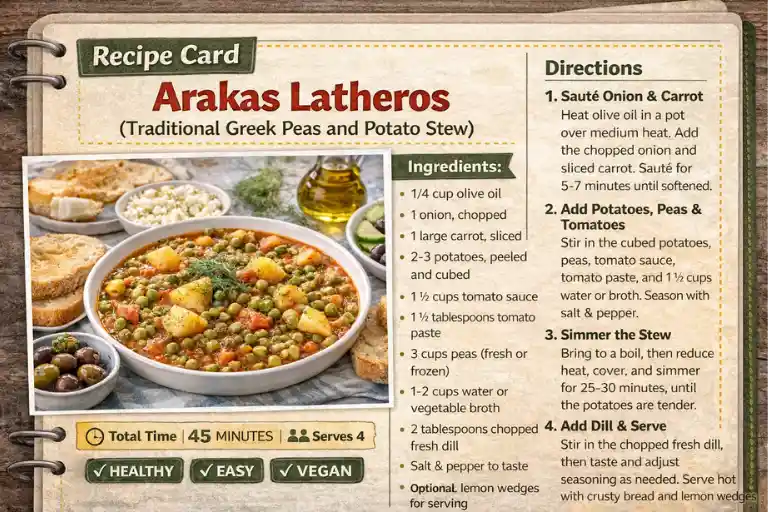
Arakas Latheros is a classic Greek pea stew made with peas, potatoes, carrots, tomatoes, olive oil, and fresh dill. This comforting Mediterranean vegetable stew is naturally vegan, healthy, and easy to prepare. It is a perfect example of a traditional Greek pea recipe that uses simple ingredients to create a rich flavor.
Recipe Name: Arakas Latheros
Cuisine: Greek / Mediterranean
Dish Type: Vegetable Stew
Diet: Vegan / Vegetarian
Skill Level: Easy
Prep Time: 15 minutes
Cook Time: 35–40 minutes
Total Time: 50–55 minutes
Servings: 4 servings
Ingredients
- 2 cups peas (fresh or frozen)
- 2 medium potatoes, peeled and cubed
- 1 large carrot, sliced
- 1 onion, finely chopped
- 2 cups tomato sauce or crushed tomatoes
- ⅓ cup extra virgin olive oil
- 1 teaspoon salt (adjust to taste)
- ½ teaspoon black pepper
- 1 tablespoon tomato paste (optional)
- 2 tablespoons fresh dill, chopped
- 1 cup water or vegetable broth
Instructions
1. Prepare the vegetables
Peel and cube the potatoes, slice the carrots, and finely chop the onion. If using frozen peas, no preparation is needed.
2. Sauté the aromatics
Heat the olive oil in a large pot or Dutch oven over medium heat. Add the chopped onion and cook for about 3–4 minutes until soft and fragrant.
3. Add tomatoes and seasoning
Stir in the tomato sauce, tomato paste, salt, and black pepper. Allow the sauce to cook for a few minutes so the flavors develop.
4. Add the vegetables
Add the peas, potatoes, and carrots to the pot. Pour in the water or vegetable broth, then gently stir everything together.
5. Simmer the stew
Reduce the heat and allow the Greek pea stew to simmer for 30–40 minutes, or until the vegetables are tender and the sauce thickens.
6. Finish with fresh herbs
Stir in the chopped dill and cook for another minute. This final step gives the Arakas Latheros recipe its fresh Mediterranean flavor.
Notes
- Use high-quality olive oil for the best flavor.
- If the stew becomes too thick, add a small amount of water while cooking.
- This Mediterranean pea stew often tastes even better the next day.
Serving Suggestions
Serve Arakas Latheros warm with:
- crusty bread
- feta cheese
- Greek salad
- olives
This Greek vegetable stew is perfect as a main vegan meal or a comforting side dish in a traditional Mediterranean dinner.
Final Thoughts on Arakas Latheros
Arakas Latheros is a beautiful example of how simple ingredients can create a deeply flavorful meal. This authentic Greek recipe combines peas, potatoes, carrots, tomatoes, olive oil, and fresh herbs to produce a comforting Greek pea stew that has been enjoyed in Greek homes for generations.
What makes this dish special is its connection to the Mediterranean diet, where vegetables, olive oil, and natural flavors take center stage. Because it is made with wholesome ingredients, Arakas Latheros is considered a healthy Mediterranean dish that provides fiber, plant-based protein, and heart-healthy fats from olive oil.
Another reason many people love this traditional Greek peas recipe is how easy it is to prepare. With just one pot and a handful of ingredients, you can create a satisfying Mediterranean vegetable stew that works perfectly as a vegan dinner, family meal, or comforting side dish.
Whether you are exploring Greek cuisine for the first time or looking for a new easy home cooking meal, this Arakas Latheros recipe is a delicious way to bring authentic Mediterranean flavors to your table.