

As of March 24, 2026, Korean style fried rice has become one of the most popular quick meals you can make at home—and for good reason. It’s easy, fast, and packed with bold flavor from ingredients like gochujang, kimchi, and sesame oil. Whether you’re using leftover rice or cooking fresh, this dish turns simple ingredients into a restaurant-style Korean fried rice recipe in minutes.
If you’ve ever wondered how to make Korean fried rice at home that actually tastes authentic, you’re in the right place. This easy Korean fried rice recipe is beginner-friendly, fully customizable, and works with chicken, vegetables, or even a vegan version. With the right technique and a few smart tips, you can create a spicy, savory Korean rice dish that’s better than takeout—right in your own kitchen.
What Is Korean Style Fried Rice? (Quick Answer)
Korean style fried rice is a quick stir-fry dish made with rice, vegetables, egg, and bold Korean flavors like gochujang, kimchi, and sesame oil. It’s a popular Korean fried rice recipe known for its spicy, savory, and umami-rich taste.
This easy Korean fried rice can be made in under 20 minutes using leftover rice, and it’s highly customizable. You can turn it into kimchi fried rice, chicken Korean fried rice, or a vegan version, depending on your ingredients. With the right balance of sauce and heat, you can easily make restaurant-style Korean fried rice at home.
Why Korean Style Fried Rice Tastes So Good (Flavor Secrets)
The reason Korean style fried rice stands out is its perfect balance of umami, spice, and aroma. Unlike regular fried rice, this dish layers flavors in a way that creates a deep, satisfying taste in every bite.
Umami + Spice Combination
The heart of any authentic Korean fried rice recipe is gochujang. This Korean chili paste adds a unique mix of spicy, slightly sweet, and savory (umami) flavor that instantly upgrades simple rice into a bold dish.
Fermented Flavor from Kimchi
One of the biggest secrets behind kimchi fried rice is the use of fermented kimchi. It brings a tangy, slightly sour taste that adds depth and complexity. This is why many people say Korean fried rice has a more “alive” flavor compared to other versions.
Aroma Layering with Sesame Oil
A small drizzle of sesame oil at the end creates a rich, nutty aroma. This final touch is what gives restaurant-style Korean fried rice its signature smell and taste.
Street-Food Style Cooking
Korean fried rice is inspired by Korean street food, where dishes are cooked quickly on high heat. This method gives the rice a slightly smoky flavor and keeps everything fresh and flavorful.
What Makes Korean Fried Rice Different from Other Fried Rice

You might also like: How To Make Seitan Recipe
Not all fried rice is the same. Korean fried rice has its own identity, mainly because of its bold ingredients and cooking style.
Korean vs Chinese Fried Rice
- Chinese fried rice focuses more on soy sauce and light seasoning
- Korean version uses gochujang and kimchi, making it spicier and richer
Korean vs Japanese Fried Rice
- Japanese fried rice (like Yakimeshi) is usually milder and buttery
- Korean fried rice is stronger in flavor with a spicy kick
Key Differences Explained
1. Sauce
- Korean: Gochujang-based (thick, spicy, deep flavor)
- Others: Soy sauce-based (lighter taste)
2. Flavor Profile
- Korean: Spicy, tangy, umami-rich
- Chinese/Japanese: Mild, savory
3. Ingredients
- Korean: Kimchi, gochujang, sesame oil
- Others: Eggs, vegetables, soy sauce
This is why Korean style fried rice feels more bold and exciting. It’s not just fried rice—it’s a flavor-packed Korean rice dish that delivers a completely different experience.
Ingredients You’ll Need (With Roles + Smart Substitutes)
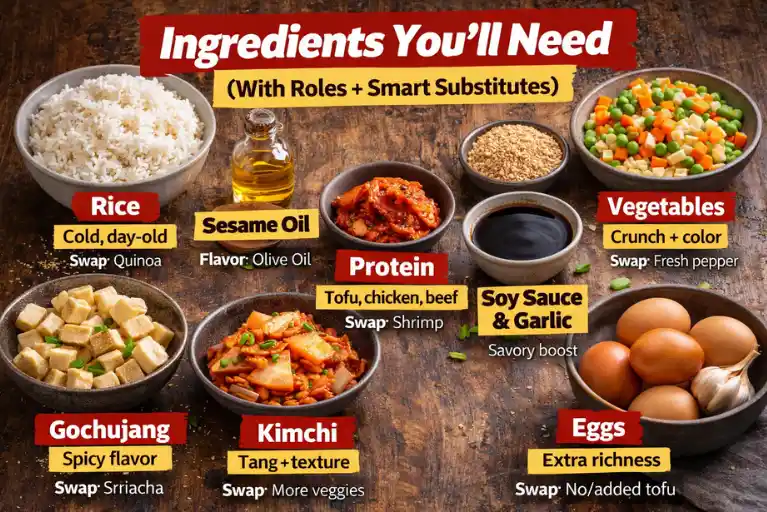
To make a perfect Korean style fried rice, you need simple ingredients—but each one plays an important role in building that spicy, savory, and umami-rich flavor.
Core Ingredients
- Rice (day-old preferred)
The base of any Korean fried rice recipe. Leftover rice works best because it’s dry and separates easily, giving you the right texture. - Gochujang
The key ingredient that gives authentic Korean fried rice its spicy and deep flavor. - Egg
Adds richness, protein, and that classic fried rice texture. - Vegetables
Common options include carrots, peas, onions, or cabbage. They add color, crunch, and balance.
Flavor Builders
- Sesame oil
Used at the end for a nutty aroma—this is what gives restaurant-style Korean fried rice its signature smell. - Soy sauce
Adds saltiness and enhances the overall flavor. - Garlic
A must-have for depth and strong aroma in any easy Korean fried rice recipe.
Ingredient Deep Dive (Flavor Science)
- What is gochujang?
Gochujang is a Korean chili paste made from fermented soybeans, rice, and red chili. It delivers a unique mix of spice, sweetness, and umami, which makes gochujang fried rice stand out. - Why kimchi adds depth
Kimchi is fermented, so it brings a tangy, slightly sour flavor that adds complexity. This is why kimchi fried rice tastes richer than regular fried rice. - When to use sesame oil
Always add sesame oil at the end of cooking. Cooking it too early can reduce its aroma and flavor.
Smart Substitutes
- No gochujang → alternatives
Use a mix of chili paste + a little soy sauce + sugar to mimic the flavor. - No kimchi → options
You can skip it or replace it with slightly pickled vegetables for a mild tangy effect.
Best Type of Rice for Fried Rice
Choosing the right rice is the secret to making perfect Korean fried rice at home.
Why Day-Old Rice Works Best
Day-old rice is slightly dry, which helps the grains stay separate and non-sticky. This gives you that classic fried rice texture.
Fresh Rice vs Leftover Rice
- Fresh rice → soft and sticky (can turn mushy)
- Leftover rice → firm and ideal for frying
If you only have fresh rice, spread it on a tray and let it cool to remove moisture.
Grain Types Comparison
- Short-grain rice → traditional Korean style, slightly sticky but flavorful
- Long-grain rice (like basmati) → less sticky, easier to fry
- Jasmine rice → good balance of aroma and texture
For the best authentic Korean fried rice recipe, use short-grain rice, but for beginners, long-grain is easier to handle.
Step-by-Step Korean Style Fried Rice Recipe
This easy Korean fried rice recipe is quick, simple, and perfect for beginners. Follow these steps to get restaurant-style results at home.
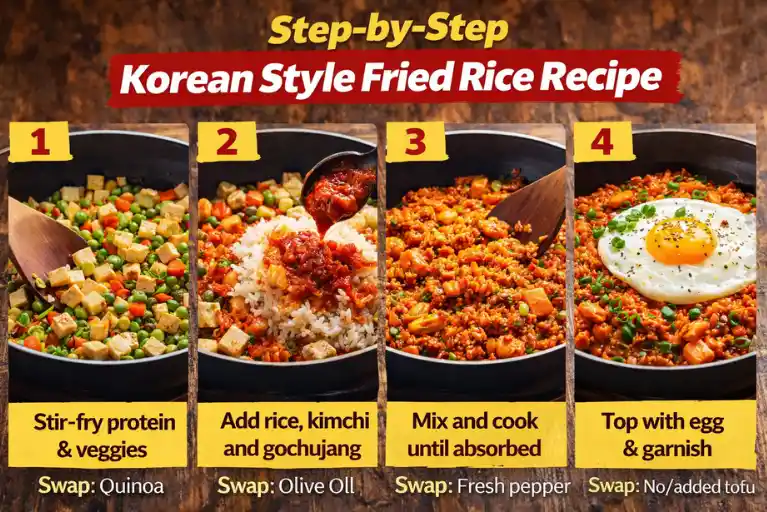
Step 1 – Prep Ingredients Properly
- Use cold, day-old rice
- Chop vegetables finely
- Beat the egg in a bowl
- Keep all ingredients ready (important for fast cooking)
Step 2 – Cook Base (Oil + Aromatics)
- Heat oil in a pan on medium-high heat
- Add garlic and vegetables
- Stir-fry for 1–2 minutes until fragrant
Step 3 – Add Rice & Sauce (High Heat Technique)
- Add rice and break up any clumps
- Mix in gochujang and soy sauce
- Stir-fry on high heat for that smoky flavor
Step 4 – Finish with Egg & Sesame Oil
- Push rice to one side and cook the egg
- Mix everything together
- Add sesame oil at the end for aroma
Common Mistakes That Ruin Fried Rice
Even a simple Korean style fried rice can go wrong if a few key steps are missed. Here are the most common mistakes and how to fix them fast:
- Using fresh rice → Fix:
Fresh rice is too soft and sticky, which makes your dish mushy. Always use day-old or leftover rice for the best texture in your Korean fried rice recipe. - Overcrowding the pan → Fix:
Too many ingredients at once trap moisture. Cook in batches or use a wide pan so your easy Korean fried rice stays dry and slightly crispy. - Too much sauce → Fix:
Adding too much gochujang or soy sauce can make the rice soggy and overpower the flavor. Use small amounts and adjust gradually. - Low heat cooking → Fix:
Fried rice needs high heat to develop that slightly smoky, street-food flavor. Always cook on medium-high to high heat.
Pro Chef Tips for Restaurant-Style Korean Fried Rice
Want your Korean style fried rice to taste like it came from a restaurant? These simple chef tips make a huge difference:
- Use high heat cooking
This gives your rice a light smoky flavor and keeps it from becoming soggy. - Add sesame oil at the end
This keeps its rich aroma strong, which is key for restaurant-style Korean fried rice. - Balance spice + salt
Gochujang adds spice, while soy sauce adds salt. Keep both balanced for a perfect umami flavor. - Don’t overmix the rice
Stir just enough to combine. Overmixing can break the grains and ruin texture.
How to Make It Taste Exactly Like Restaurant Style

If you really want to master an authentic Korean fried rice recipe, focus on these advanced but simple techniques:
Flavor Layering Timing
- Start with garlic and oil
- Add vegetables
- Then rice and sauce
This builds deep, layered flavor instead of a flat taste
Oil Control
- Use just enough oil to coat the pan
- Too much oil makes the rice greasy
Proper oil control gives that clean, street-style Korean fried rice texture
Final Seasoning Tricks
- Taste before serving
- Add a small splash of soy sauce or extra gochujang if needed
- Finish with sesame oil and green onions
Korean Fried Rice Variations You Should Try
One of the best things about Korean style fried rice is how easy it is to customize. Whether you like it spicy, meaty, or plant-based, there’s a version for everyone.
Kimchi Fried Rice (Most Popular)
This is the most loved version of authentic Korean fried rice recipe.
- Uses fermented kimchi for a tangy, deep flavor
- Often topped with a fried egg
- Perfect for a bold, umami-rich Korean rice dish
If you want the real Korean taste, kimchi fried rice is the best choice.
Chicken Korean Fried Rice
A great option if you want a more filling meal.
- Add cooked or shredded chicken
- Increases protein and makes it more satisfying
- Works perfectly with gochujang fried rice base
Spicy Gochujang Fried Rice
For spice lovers, this version takes flavor to the next level.
- Extra gochujang for heat
- Deep, rich, slightly sweet spice
- One of the best spicy Korean fried rice recipes
Vegetarian / Vegan Version
A healthy and simple option.
- Skip egg and meat
- Add more vegetables like mushrooms, cabbage, or tofu
- Use vegan-friendly sauces
This makes a great vegan Korean fried rice recipe without losing flavor.
How to Customize Your Fried Rice (Make It Yours)
The beauty of an easy Korean fried rice recipe is that you can adjust it based on your taste and ingredients.
Protein Options
- Chicken
- Beef
- Shrimp
- Tofu (for vegan option)
Adding protein turns it into a complete meal.
Spice Level Control
- Less gochujang → mild flavor
- More gochujang → spicy kick
- Add chili flakes for extra heat
Add-Ons (Upgrade Your Dish)
- Cheese for a creamy twist (popular Korean style)
- Extra egg for richness
- Green onions or sesame seeds for garnish
Is Korean Fried Rice Healthy? (Nutrition + Smart Tips)

Yes, Korean style fried rice can be healthy if you prepare it the right way.
Calories Estimate
- Average serving: 300–500 calories
- Depends on oil, protein, and portion size
Protein Boost
- Add chicken, egg, or tofu
- Turns your dish into a balanced meal
Healthy Swaps
- Use less oil
- Add more vegetables
- Choose brown rice for extra fiber
These small changes make your healthy Korean fried rice recipe more nutritious without losing flavor.
Meal Prep & Leftover Ideas
Korean fried rice is perfect for meal prep and saving time.
Batch Cooking Tips
- Cook a large portion and store in containers
- Keeps well for 2–3 days in the fridge
Lunchbox Ideas
- Pack with a fried egg on top
- Add simple sides like pickled vegetables
Reusing Leftover Rice
- This dish is perfect for leftover rice recipes
- Turns plain rice into a flavorful meal in minutes
What to Serve With Korean Fried Rice
To make your meal even better, pair your Korean style fried rice with simple side dishes.
- Korean BBQ
Adds a smoky, rich flavor that pairs perfectly with rice - Fried Egg
A classic topping that adds richness and texture - Pickled Vegetables
Balance the dish with a fresh, tangy contrast
How to Store & Reheat Fried Rice Properly
Storing your Korean style fried rice the right way helps keep its flavor, texture, and freshness intact.
Storage Time
- Store in an airtight container
- Keep in the fridge for up to 2–3 days
- Let the rice cool before storing to avoid moisture buildup
Proper storage keeps your Korean fried rice recipe safe and tasty.
Best Reheating Method
- Reheat in a pan on medium heat for best results
- Add a small splash of water or oil
- Stir gently to bring back texture
Avoid microwaving if possible, as it can make the rice uneven and soggy. Pan reheating keeps your restaurant-style Korean fried rice closer to fresh.
Avoid Dryness
- Don’t overheat the rice
- Add a few drops of sesame oil or water while reheating
- Cover briefly to trap moisture
This keeps your easy Korean fried rice soft, flavorful, and not dry.
FAQs About Korean style fried rice Recipe
Can I make Korean fried rice without kimchi?
Yes, you can. While kimchi fried rice is popular, you can skip it or replace it with vegetables. The dish will still taste great using gochujang fried rice base.
What rice is best for fried rice?
The best option is day-old rice because it’s dry and easy to fry. Both short-grain rice (authentic Korean style) and long-grain rice work well.
Is Korean fried rice spicy?
It can be mildly spicy or very spicy depending on how much gochujang you use. You can easily adjust the spice level.
Can I use freshly cooked rice?
Yes, but it’s not ideal. Fresh rice is soft and sticky. If needed, cool it first to reduce moisture for a better Korean fried rice texture.
What does gochujang taste like?
Gochujang has a unique flavor—spicy, slightly sweet, and deeply savory (umami). It’s what makes authentic Korean fried rice taste rich and bold.
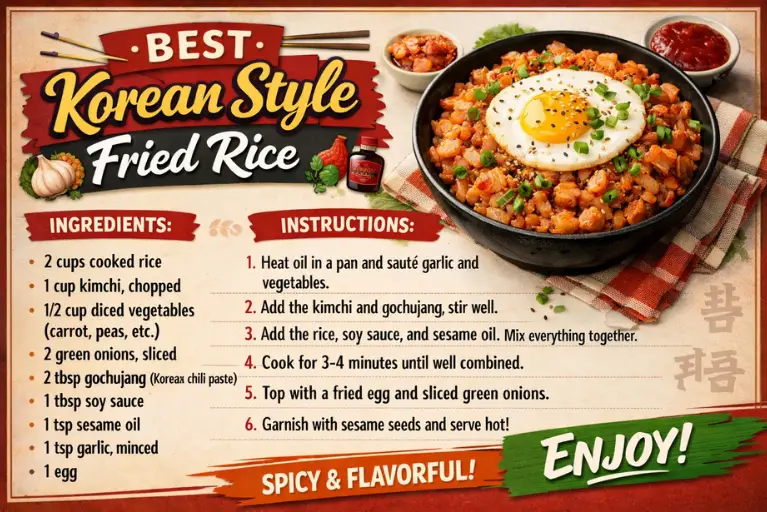
Recipe Card – Best Korean Style Fried Rice Recipe
Course: Main DishesCuisine: KoreanDifficulty: Easy3
servings10
minutes10
minutes300
kcalIngredients
2 cups day-old rice (best for texture)
1–2 tbsp gochujang (adjust for spice level)
2 tbsp soy sauce
1 tbsp sesame oil (add at the end)
2 cloves garlic (minced)
1/2 cup mixed vegetables (carrots, peas, onions)
2 eggs
1 tbsp cooking oil
1/2 cup kimchi (optional but recommended)
1/2 cup chicken / tofu / beef (optional for protein)
Green onions & sesame seeds (for garnish)
Instructions
- Prep Ingredients
Use cold leftover rice, chop vegetables, and beat the eggs. - Cook Base
Heat oil in a pan on medium-high heat, add garlic and vegetables, and stir-fry for 1–2 minutes. - Add Rice & Sauce
Add rice and break clumps. Mix in gochujang and soy sauce, then stir-fry on high heat. - Add Protein & Kimchi (Optional)
Mix in chicken, tofu, or kimchi for extra flavor and texture. - Finish with Egg & Sesame Oil
Push rice aside, cook egg, mix everything, and drizzle sesame oil at the end. - Garnish & Serve
Top with green onions and sesame seeds. Serve hot for best flavor. - Nutrition (Approximate per serving)
Calories: 350–450 kcal
Protein: 12–20g (depending on protein choice)
Carbohydrates: 40–50g
Fat: 10–15g
Recipe Video
Notes
- Always use day-old rice for the best fried rice texture
- Cook on high heat for authentic flavor
- Don’t add too much sauce—balance is key
- Add sesame oil at the end for aroma
Conclusion
Korean style fried rice is one of the easiest and most satisfying meals you can make at home. With simple ingredients like rice, gochujang, kimchi, and sesame oil, you can create a dish that’s full of bold, spicy, and umami-rich flavor.
The key is using day-old rice, cooking on high heat, and balancing your flavors properly. Whether you choose kimchi fried rice, chicken, or a vegan version, this recipe is flexible and perfect for any taste. Now it’s your turn—try this easy Korean fried rice recipe, customize it your way, and enjoy a restaurant-style Korean dish at home.