

If you’re wondering How Many Tablespoons in a Stick of Margarine, the quick answer is simple. One stick of margarine equals 8 tablespoons. In U.S. measurements, that also means ½ cup, 4 ounces, or about 113 grams. This standard stick size is the same format used for butter, which makes margarine tablespoon conversion easy when baking or cooking.
Most margarine stick measurements are clearly marked on the wrapper, showing tablespoon lines so you can cut exactly what you need. This helps avoid mistakes and keeps your recipe accurate. Whether you’re following a cake recipe or checking a margarine conversion guide, knowing that 1 stick = 8 tablespoons saves time and prevents confusion. Simple kitchen measurement basics like this make baking smoother and more precise.
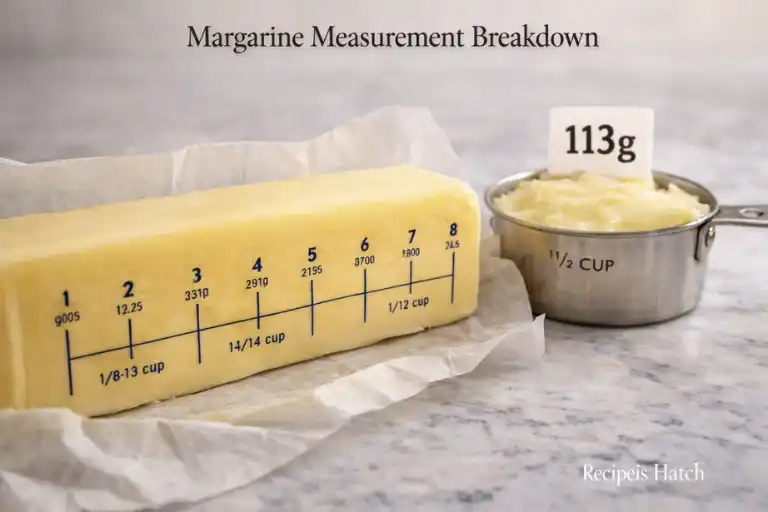
Margarine Measurement Breakdown
In the United States, a stick of margarine follows a standard size used in most baking and cooking recipes. One standard stick size in the U.S. equals ½ cup, which is the same as 8 tablespoons, 4 ounces, or about 113 grams. This uniform measurement system makes margarine stick measurements easy to understand and reliable across different brands.
So why does it equal 8 tablespoons? Because in U.S. customary measurements, 1 cup equals 16 tablespoons. Since one stick equals ½ cup, dividing 16 by 2 gives you 8 tablespoons per stick. This simple math keeps margarine to tablespoons conversion consistent in every recipe.
Most sticks also include packaging marks printed on the wrapper. These lines divide the stick into tablespoon sections, usually labeled from 1 to 8. This visual guide helps you cut exactly what you need, making margarine measurement in baking quick and accurate without using a scale.
You might also like: How Many Tsp in 1 Tbsp
Quick Margarine Conversion Chart (Tablespoons, Cups, Ounces & Grams)
Below is a clean, easy-to-read margarine conversion chart that shows common measurements used in baking. This table covers tablespoons, cups, ounces, and grams, making your margarine to tablespoons conversion simple and accurate.
| Margarine Amount | Tablespoons | Cups | Ounces | Grams (Approx.) |
| ¼ stick | 2 tbsp | ⅛ cup | 1 oz | 28 g |
| ½ stick | 4 tbsp | ¼ cup | 2 oz | 57 g |
| 1 stick | 8 tbsp | ½ cup | 4 oz | 113 g |
| 2 sticks | 16 tbsp | 1 cup | 8 oz | 226 g |
| 1 cup | 16 tbsp | 1 cup | 8 oz | 226 g |
This margarine measurement chart is helpful when adjusting recipes, doubling ingredients, or converting to metric equivalents. Since most margarine stick measurements follow the U.S. standard, this table works for nearly all American recipes.
Why Accurate Margarine Measurement Matters in Baking
Accurate margarine measurement in baking is more important than many people think. Margarine is a fat, and fat plays a key role in baking chemistry. It helps create structure, traps air when creamed with sugar, and supports even baking. Without the right amount, your recipe may not turn out as expected.
Fat also affects texture and moisture. The correct amount of margarine makes cakes soft, cookies tender, and pastries flaky. Too little fat can make baked goods dry and crumbly. Too much can make them greasy or dense. That’s why precise margarine tablespoon conversion matters in every recipe.
Even small measurement errors can change the final result. One extra tablespoon may not seem like much, but it can affect balance. Using weight vs volume accuracy is often better for baking. Measuring by grams with a scale gives more precise results than using tablespoons alone.
Margarine vs Butter — Are Measurements Truly the Same?
In most U.S. recipes, margarine vs butter measurements are the same. One stick of margarine equals 8 tablespoons, just like one stick of butter. That’s why many recipes allow a simple 1:1 substitution rule. If a recipe calls for 1 stick of butter, you can usually use 1 stick of margarine without changing the amount.
However, there are small differences in fat and water content. Butter typically contains about 80% fat, while some margarines may contain slightly less fat and more water. This can affect texture, especially in delicate baking recipes.
There are times when margarine behaves differently. For example, in pastries or cookies that rely on butter’s richness, the flavor and texture may change. Also, consider salted vs unsalted options. If using salted margarine instead of unsalted butter, you may need to reduce added salt in the recipe for balance.
How Many Tablespoons Are in Half a Stick?
If you’re asking how many tablespoons are in half a stick of margarine, the answer is simple: 4 tablespoons. Since one full stick of margarine equals 8 tablespoons, dividing it in half gives you 4 tablespoons, which is also equal to ¼ cup, 2 ounces, or about 57 grams. This makes margarine tablespoon conversion quick and easy when you need a smaller amount for baking or cooking.
Here’s a quick mini recap:
- ½ stick = 4 tablespoons
- 1 stick = 8 tablespoons
- 2 sticks = 16 tablespoons (1 cup)
Knowing these basic margarine stick measurements helps you adjust recipes without confusion. Whether you’re halving a recipe or checking a margarine conversion guide, remembering that half a stick equals 4 tablespoons keeps your measurements accurate and stress-free.
How Many Sticks Are in 1 Cup of Margarine?
In U.S. measurements, 2 sticks of margarine equal 1 cup. Since one stick of margarine equals ½ cup or 8 tablespoons, combining two sticks gives you 16 tablespoons, which equals 1 full cup.
This is one of the most useful margarine stick measurements to remember when doubling recipes or converting ingredients. Many baking recipes list margarine or butter in cups, so understanding this simple margarine to cups conversion saves time and prevents mistakes.
Here’s an easy memory formula:
- 1 stick = ½ cup = 8 tablespoons
- 2 sticks = 1 cup = 16 tablespoons
Think of it this way: if half a cup is one stick, you only need two sticks to make a full cup. Keeping this quick conversion in mind makes everyday cooking and baking much smoother and more accurate.
Measuring Margarine Without a Scale
You don’t always need a kitchen scale for accurate margarine measurement in baking. There are simple ways to measure margarine correctly using basic kitchen tools. These methods help with quick margarine tablespoon conversion when you’re in a hurry.
Using Tablespoon Scoops
The easiest method is using measuring spoons. Since 1 stick of margarine equals 8 tablespoons, you can scoop margarine directly into a tablespoon and level it off with a knife. Make sure not to overpack the spoon. Level measurements give better accuracy for recipes.
Using Packaging Marks
Most stick margarine comes with printed tablespoon lines on the wrapper. These marks divide the stick into clear sections, usually labeled from 1 to 8 tablespoons. Simply cut along the marked line for precise portions. This is one of the quickest and most reliable methods.
Water Displacement Method (Advanced)
For more accuracy, you can use water displacement. Fill a measuring cup with a known amount of water, then add margarine until the level rises to your target measurement. This works well for tub margarine.
When Precision Matters Most
Precision matters most in baking, especially for cakes, pastries, and cookies. Small errors in margarine stick measurements can change texture and moisture, so measure carefully when accuracy is important.
Stick Margarine vs Tub Margarine Measurements
Not all margarine is packaged the same way. Stick margarine follows a clear U.S. standard, where 1 stick equals 8 tablespoons (½ cup). It usually includes printed tablespoon lines on the wrapper, making margarine stick measurements quick and accurate.
On the other hand, tub margarine does not come pre-divided. This can make it less precise, especially when you need exact amounts for baking.
Why Tub Margarine Can Be Less Precise
Tub margarine is soft and easy to scoop, but it’s harder to measure evenly. It can stick to spoons, become uneven, or trap air pockets. Without clear portion marks, small measurement errors can happen, which may affect your recipe.
How to Measure Tub Margarine Accurately
To measure tub margarine properly, use a measuring tablespoon and level it with a knife. For larger amounts, pack it gently into a measuring cup and smooth the top. You can also use the water displacement method for more accuracy when doing margarine to tablespoons conversion.
Baking vs Cooking Differences
In cooking, slight measurement changes usually don’t matter much. But in baking, precision is important. Cakes, cookies, and pastries depend on accurate fat ratios, so measuring margarine carefully makes a big difference in texture and moisture.
Margarine by Weight vs Volume
When measuring margarine, you can use volume (tablespoons and cups) or weight (grams and ounces). While volume works well for everyday cooking, weight is more accurate for baking. Understanding the difference helps improve your margarine measurement in baking.
Tablespoons vs Grams Comparison
Volume measures space, while weight measures mass. For example:
- 1 stick of margarine = 8 tablespoons = 113 grams
- 1 tablespoon ≈ 14 grams
- ½ stick = 4 tablespoons ≈ 57 grams
When doing a margarine to tablespoons conversion, small differences in scooping can slightly change the amount. That’s why grams are more precise.
Why Professional Bakers Prefer Weight
Professional bakers use a kitchen scale because weight stays consistent. One tablespoon can vary depending on how tightly it’s packed. But 113 grams will always equal 113 grams. This reduces errors and keeps recipes balanced, especially for cakes and pastries.
Quick Gram Reference Chart
| Tablespoons | Grams (Approx.) |
| 1 tbsp | 14 g |
| 2 tbsp | 28 g |
| 4 tbsp | 57 g |
| 8 tbsp (1 stick) | 113 g |
| 16 tbsp (1 cup) | 226 g |
Simple Conversion Formula
To convert tablespoons to grams:
Tablespoons × 14 = grams
Example:
8 tablespoons × 14 = 112 grams (rounded to 113 g)
Using this formula makes margarine conversion for baking recipes easier and more accurate when precision matters most.
International Margarine Packaging Differences
Not all countries package margarine the same way. While margarine stick measurements are clear in the United States, international sizes can vary. Understanding these differences helps with metric conversion and prevents mistakes when following global recipes.
U.S. Standard (113g Stick)
In the United States, 1 stick of margarine equals 113 grams, which is also 8 tablespoons or ½ cup. This is the most common format used in American baking recipes and follows the U.S. customary measurement system.
Canada Variations
In Canada, margarine is often sold in 454-gram (1 lb) blocks or tubs. Some brands mark tablespoon lines, but not all follow the exact U.S. stick format. Always check the packaging weight for accurate margarine measurement by weight.
UK & Europe Block Sizes
In the UK and most European countries, margarine is typically sold in 250g or 500g blocks. Recipes usually use grams instead of tablespoons, so using a kitchen scale is recommended.
Australia Packaging
Australia also commonly sells margarine in 250g and 500g packages. Metric measurements are standard, making grams more reliable than volume-based measurements.
Metric Conversion Cheat Sheet
- 113g = 1 U.S. stick = 8 tablespoons
- 226g = 2 sticks = 1 cup
- 250g ≈ 2.2 U.S. sticks
- 500g ≈ 4.4 U.S. sticks
Knowing these differences helps with international margarine packaging sizes and ensures your baking stays accurate no matter where the recipe comes from.
Common Margarine Measurement Mistakes to Avoid

Even small errors in margarine measurement in baking can affect your final results. Knowing what to avoid helps keep your recipes accurate and consistent.
Overpacking Tablespoons
When doing a margarine to tablespoons conversion, it’s important not to overpack the spoon. Pressing margarine too tightly into a tablespoon can add extra fat without you noticing. This may change the texture of cakes or cookies. Always scoop gently and avoid forcing it in.
Melting Before Measuring
Another common mistake is melting margarine before measuring it. Recipes that call for solid margarine expect it to be measured in its firm state. Melted margarine takes up a different volume and can throw off margarine stick measurements, especially in baking.
Confusing Liquid vs Solid Measurement
Liquid measurements (like using a liquid measuring cup) are not the same as solid measurements. Margarine should be measured using dry measuring tools or tablespoons, not liquid cups, unless the recipe specifically says melted.
Not Leveling Tablespoons
After scooping, always level off the top with a knife. Uneven tablespoons can lead to small but noticeable differences. Accurate leveling keeps your margarine conversion for baking recipes precise and reliable.
Printable Margarine Conversion Cheat Sheet
To make things even easier, here’s a printable margarine conversion cheat sheet you can bookmark or save for later. Keeping a quick reference like this in your kitchen helps with fast margarine tablespoon conversion and reduces guesswork while baking.
Quick Reference Guide
- 1 stick = 8 tablespoons = ½ cup = 113 grams
- ½ stick = 4 tablespoons = ¼ cup = 57 grams
- 2 sticks = 16 tablespoons = 1 cup = 226 grams
- 1 tablespoon ≈ 14 grams
This simple margarine measurement chart works for most U.S. recipes and helps with both volume and weight conversions. You can screenshot it, bookmark this page, or print it and keep it inside a cabinet door for quick access. Having a ready-made margarine conversion guide nearby saves time, prevents measurement mistakes, and makes baking feel much more organized and stress-free.
FAQs About How Many Tablespoons in a Stick of Margarine
Can I substitute margarine for butter 1:1?
Yes, in most recipes you can use a 1:1 substitution rule. Since 1 stick of margarine equals 8 tablespoons, the same as butter, you can swap equal amounts. However, small differences in fat and water content may slightly affect flavor or texture in delicate baked goods.
How many grams are in a stick of margarine?
A standard U.S. stick of margarine equals about 113 grams. This is also equal to 8 tablespoons or ½ cup. Using grams can improve accuracy in baking.
Is stick margarine always 8 tablespoons?
In the United States, yes. Most margarine stick measurements follow the standard of 8 tablespoons per stick. However, packaging sizes may differ internationally.
Does salted margarine change measurement?
No, salted margarine does not change the measurement. 1 stick still equals 8 tablespoons. The only difference is salt content, which may require adjusting added salt in your recipe.
What if my margarine isn’t in sticks?
If you’re using tub margarine, measure it using tablespoons or weigh it in grams. For accuracy, use a measuring spoon and level it off, or follow a margarine conversion guide for weight-based measurement.
How many tablespoons in European margarine blocks?
European margarine is usually sold in 250g blocks. Since 1 U.S. stick equals 113g (8 tablespoons), a 250g block equals about 17–18 tablespoons, depending on rounding. For best accuracy, measure by weight when using international packaging.
Conclusion: Quick Reference Summary
To keep things simple, here’s a quick recap of the most important margarine stick measurements:
- 1 stick = 8 tablespoons = ½ cup
- 2 sticks = 1 cup = 16 tablespoons
- 1 stick = 113 grams (about 4 ounces)
In the United States, butter and margarine measure the same, which makes substitutions easy in most recipes. Whether you’re using tablespoons, cups, or grams, knowing these basic conversions helps you bake with confidence. Bookmark this guide or keep the margarine conversion chart handy for quick reference. With these simple measurements in mind, you’ll always know exactly how much margarine to use—no guessing needed.