

Finding the best bok choy substitute is easier when you understand what really matters—flavor, texture, and cooking method. Bok choy isn’t just another leafy green; it combines crisp stems, tender leaves, and a mild balanced taste, which makes it unique in stir fry, soups, ramen, and Asian dishes.
That’s why not every vegetable works as a perfect replacement. Some substitutes match the crunch but miss the softness, while others provide leafy texture but lose structure when cooked. The key is choosing the right alternative based on how you’re cooking your dish.
In this complete guide, you’ll learn exact substitutes, cooking adjustments, texture matching techniques, and real kitchen tips so your dish stays balanced, fresh, and flavorful—even without bok choy.
Quick Answer: What Is the Best Substitute for Bok Choy?
Napa cabbage is the best substitute for bok choy because it closely matches both texture and mild flavor.
For stir fry, use green cabbage for crunch.
For soup or ramen, spinach or Swiss chard works best.
Always choose based on cooking method.
Quick Picks (Best Bok Choy Substitutes by Situation)
If you don’t want to read the full guide, here are the best bok choy substitutes based on your cooking needs:
- Closest overall substitute: Napa cabbage
- Best for stir fry (crunch): Green cabbage
- Best for soup & ramen: Swiss chard or spinach
- Best low-carb option: Spinach
- Best emergency option: Shredded cabbage
This quick guide helps you choose instantly without overthinking.
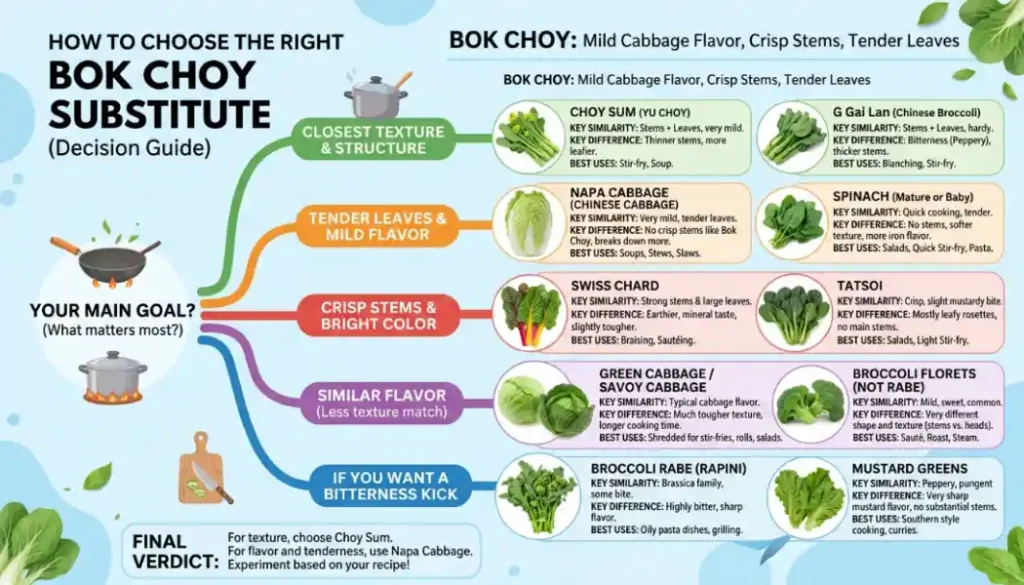
How to Choose the Right Bok Choy Substitute (Decision Guide)
Choosing the right substitute is not about picking a similar vegetable—it’s about matching three key factors: texture, moisture, and flavor.
If your recipe needs crunch, choose vegetables with firm stems like cabbage. If it needs soft leafy texture, use spinach or chard. For balanced dishes like stir fry or curry, napa cabbage is the safest option.
Another important factor is cooking time. Some vegetables cook faster and release more water, which can affect the final dish. Matching cooking behavior ensures your dish stays consistent.
Match These 3 Factors:
- Texture – crunch vs softness
- Moisture release – soggy ya dry hone se bachao
- Cooking time – fast vs slow cook greens
Rule of thumb:
- Stir fry → firm stems needed
- Soup / ramen → soft leaves needed
- Curry → balanced greens needed
Step-by-Step: How to Replace Bok Choy Correctly
- Identify recipe type (stir fry, soup, curry)
- Match texture first (crunch or soft leaves)
- Choose substitute based on cooking time
- Adjust quantity if vegetable wilts fast
- Add leafy greens at the end for best texture
What Makes Bok Choy Unique?
Before choosing the right bok choy substitute, it helps to understand what makes this vegetable special. Bok choy (also called pak choi) has a mild, slightly peppery flavor that is not too strong. This gentle taste is why it works well in stir fry, soup, ramen, and many Asian recipes.
One key feature is its crunchy white stems. These stems stay firm when cooked quickly, adding texture to dishes. At the same time, the tender green leaves soften fast and absorb sauces or broth beautifully. Bok choy also has high moisture content, which keeps dishes juicy but not watery.
It belongs to the cruciferous vegetable family, just like cabbage and broccoli. That’s why vegetables like napa cabbage and green cabbage are often used as a natural substitute for bok choy.

Flavor Profile Breakdown
The flavor of bok choy is light and balanced. It has a small amount of natural sweetness, especially in the white stems. The leaves may carry a slight bitterness, but it is very mild compared to kale or mustard greens.
There are also subtle earthy notes, which give depth without overpowering other ingredients. This makes bok choy perfect for delicate broths and stir fry dishes.
When cooked, bok choy releases some water. Because of this water release when cooked, it softens quickly and blends well into soups and curries. If a bok choy alternative does not release enough moisture, the dish may feel dry. If it releases too much, it can become soggy.

You might also like: How Many Tablespoons in a Stick of Margarine
Why Some Substitutes Change the Taste of Your Dish
Even if a vegetable looks similar to bok choy, it can still change the taste of your dish. Strong-flavored greens like mustard greens or kale can overpower mild broths or sauces.
This happens because bok choy has a very neutral base flavor. It enhances dishes without dominating them. When you replace it with a stronger vegetable, the balance shifts.
Texture & Structure Analysis (Why Substitutes Fail or Work)
Texture is where many bok choy substitutes fail. The crisp stem density is important. Bok choy stems are firm but not hard. If you use a vegetable that is too soft, like spinach, you lose crunch. If you use something too thick, like raw collard greens, it may stay tough. The leaf softness also matters. Bok choy leaves are thin and flexible. They cook fast and become silky in soups and ramen.
Its fiber strength is moderate — strong enough to hold shape, but soft enough to chew easily. Bok choy also has balanced moisture retention, meaning it does not dry out quickly. Finally, its heat response behavior is unique. It wilts fast but keeps structure in the stems. When choosing a substitute for bok choy, always match both crunch and softness, not just flavor.
The 12 Best Bok Choy Substitutes Compared
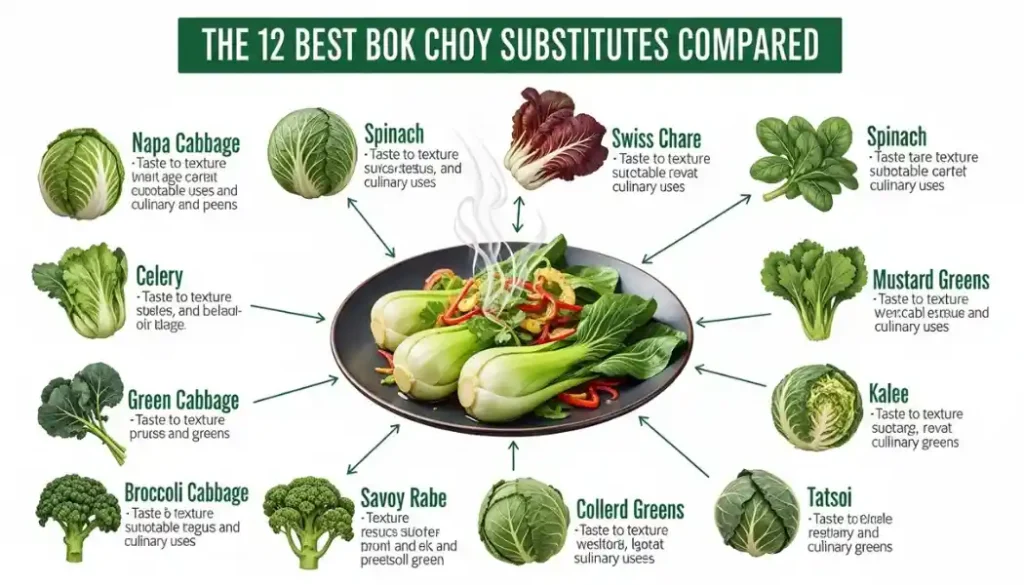
Choosing the right bok choy substitute becomes easier when you compare flavor, texture, and cooking use side by side. Below is a clear guide to help you decide fast.
Comparison Table
| Vegetable | Flavor Match | Texture Match | Best For | Substitution Ratio | Cook Time Adjustment |
| Napa Cabbage | Very close, mild | Very similar | Stir fry, soup | 1:1 | Same |
| Swiss Chard | Mild, slightly earthy | Tender leaves, softer stems | Soup, sauté | 1:1 | Add stems first |
| Spinach | Mild, less peppery | Very soft | Soup, curry | ¾:1 | Add at end |
| Green Cabbage | Slightly stronger | Crunchy | Stir fry | 1:1 | Cook 1–2 min longer |
| Mustard Greens | Peppery | Medium | Asian dishes | 1:1 | Slightly shorter |
| Collard Greens | Mild, earthy | Thick leaves | Slow cook | 1:1 | Cook longer |
| Baby Spinach | Mild | Very soft | Quick soups | ¾:1 | Add last |
| Kale | Slightly bitter | Firm | Stir fry | 1:1 | Massage or sauté longer |
| Pak Choi | Almost identical | Identical | Any recipe | 1:1 | Same |
| Romaine | Neutral | Crisp, watery | Emergency use | 1:1 | Add last |
Cooking Tips for Each Substitute
Different substitutes require different cooking methods to get the best result.
Napa cabbage cooks quickly and behaves almost like bok choy, so no major adjustment is needed. Green cabbage requires slightly longer cooking to soften its thicker structure.
Spinach should always be added at the end because it wilts instantly. Swiss chard needs split cooking—stems first, leaves later.
Best Overall Bok Choy Substitutes
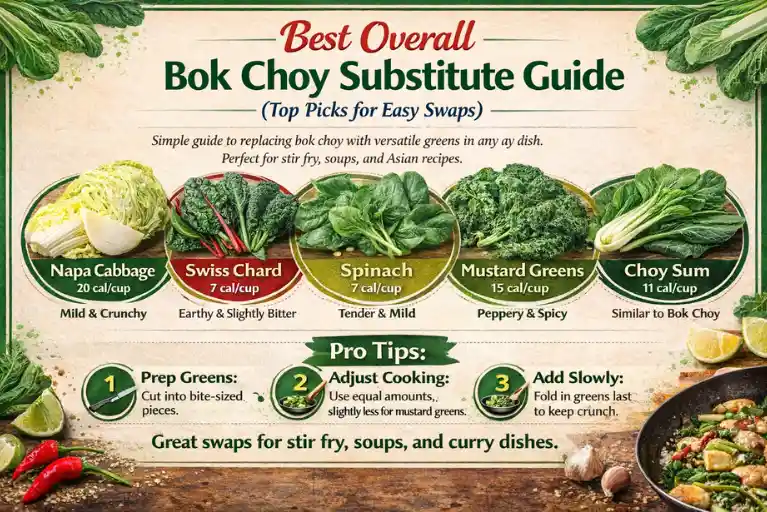
1. Napa Cabbage
The closest substitute for bok choy. It has a similar mild flavor and tender leaves with soft crunch. Perfect for stir fry, ramen, and soup. Use a 1:1 ratio with no major cook changes.
2. Swiss Chard
Great in soups and sautéed dishes. Leaves are soft, but stems are slightly firmer. Use 1:1, but cook stems first for better texture balance.
3. Spinach
Best for soups or curry. Very soft texture and less crunch. Use ¾ cup spinach for every 1 cup bok choy since it wilts quickly.
4. Green Cabbage
Crunchy and easy to find. Works well in stir fry. Use equal amounts but cook slightly longer.
5. Mustard Greens
A bit more peppery, but good for Asian dishes. Use equal amounts and reduce cooking time slightly.
6. Collard Greens
Thicker leaves with mild flavor. Best for slow-cooked meals. Use 1:1 and cook longer.
7. Baby Spinach
Very tender and mild. Ideal for quick soups. Use slightly less due to shrinkage.
8. Kale
Stronger flavor and firm texture. Good in stir fry. Massage or sauté longer before serving.
9. Pak Choi
Almost identical to bok choy. This is the easiest bok choy alternative. Use 1:1.
10. Romaine (Emergency Only)
Neutral taste and watery texture. Only use when no better option is available. Add at the end to avoid sogginess.
Best Substitute by Cooking Method
Choosing the right bok choy substitute depends on how you are cooking it. Stir fry, soup, curry, and salads all need different textures and moisture levels. Here’s how to match them correctly.
Quick Decision Guide
- Closest overall → Napa cabbage
- Best crunch → Green cabbage
- Best soup option → Spinach
- Best ramen option → Swiss chard
- Best emergency fix → Shredded cabbage
How to Use Bok Choy Substitutes in Real Recipes
When replacing bok choy, don’t just swap ingredients—adjust cooking style. In stir fry, add cabbage early so it softens like bok choy stems. In soups, add spinach at the very end to keep texture light. In ramen, napa cabbage works best because it absorbs broth without breaking apart.
Best Substitute for Bok Choy in Stir Fry
For stir fry, the most important thing is crunch retention. Bok choy keeps its crisp white stems even under high heat. That’s why napa cabbage and green cabbage are the best substitute for bok choy in stir fry.
When replacing stems, use the thicker part of cabbage first. This follows the same stem replacement logic as bok choy — cook firm parts first, then add leaves. Also consider the water evaporation rate. Spinach releases too much water and becomes soft quickly, so it is not ideal for stir fry unless added at the very end.
Best Substitute for Bok Choy in Soup & Ramen
In soup and ramen, texture should be softer. You want good leaf softness and proper broth absorption. Swiss chard and spinach work well because they wilt gently and blend into the broth. Timing is important. Add leafy greens near the end to control wilt timing. If you use cabbage, slice it thin so it softens evenly in ramen or clear soups.
Best Substitute for Bok Choy in Curry & Thai Dishes
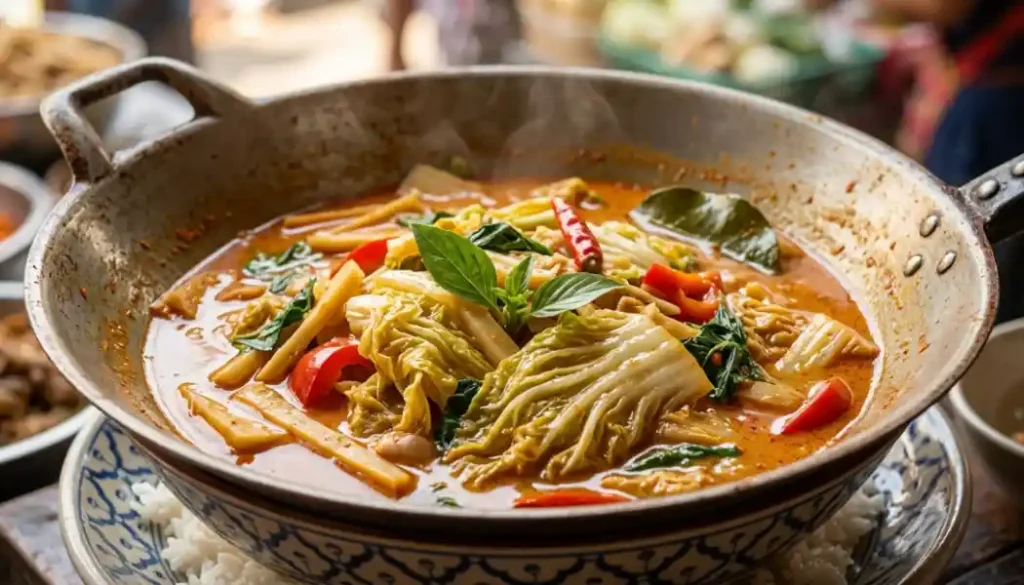
Curry needs greens that handle heat and spices well. A good bok choy alternative for curry is napa cabbage or Swiss chard. They mix smoothly with coconut milk compatibility, keeping the sauce creamy.
For proper spice balance, avoid overly bitter greens like mature kale. Choose mild greens so they don’t overpower Thai or Asian flavors. Heat tolerance matters too — greens should soften without breaking apart.
Best Raw Substitute (Salads & Slaws)
Raw bok choy adds light crunch to salads and slaws. The best raw replacement is napa cabbage or thinly sliced green cabbage. They provide similar crisp texture without strong flavor. For a softer option, mix cabbage with baby spinach to copy both stem and leaf texture. This method works well when you need a balanced bok choy substitute for fresh dishes.
Stem vs Leaf Replacement Guide
One reason many bok choy substitutes fail is because people replace the whole vegetable with just one green. But bok choy has two different parts — crunchy stems and tender leaves. To get the best result, you should match each part separately.
Best Substitute Combinations
Sometimes one vegetable is not enough to replace bok choy perfectly. Combining two ingredients gives better results.
For example:
- Cabbage + spinach → best overall texture match
- Swiss chard stems + baby greens → balanced structure
- Napa cabbage + kale → stronger structure with soft leaves
This method is often used by professional cooks to recreate original texture.
What to Use Instead of Bok Choy Stems
The white stems give bok choy its crunch. If your recipe needs that firm bite, choose vegetables with similar structure. Green cabbage is one of the best swaps. It has strong crunch and works well in stir fry. Slice it into thicker strips to copy stem texture.
Swiss chard stems are another good option. They are slightly softer but still hold shape when cooked. Add them early so they soften evenly. The napa cabbage core is also close in texture. It has mild flavor and light crunch, making it a smart substitute for bok choy stems in Asian recipes.
What to Use Instead of Bok Choy Leaves
The green leaves cook quickly and become silky in soups and ramen.
- Spinach is the easiest replacement. It is tender and mild but wilts fast, so add it at the end.
- Swiss chard leaves are slightly stronger in texture but still soft enough for soup.
- Mustard greens bring a little peppery taste. They work well when you want more flavor depth.
Combining Two Vegetables to Mimic Bok Choy
For the closest match, combine one crunchy vegetable with one tender green.
- Cabbage + spinach → Great for stir fry and soup.
- Swiss chard stems + baby greens → Balanced texture and flavor.
- Napa cabbage + kale → Adds both softness and light structure.
This method creates a smarter, more accurate bok choy alternative and keeps your dish close to the original texture and taste.

Substitution Ratios & Cooking Adjustments
Many articles list bok choy substitutes, but very few explain how much to use or how to adjust cooking time. Getting the ratio right helps your dish taste balanced and keeps the texture close to the original.
Exact Substitution Ratios
When replacing bok choy, follow these simple guides:
- 1 cup chopped bok choy = 1 cup napa cabbage (closest match)
- 1 cup bok choy = 1 cup green cabbage, but cook slightly longer
- 1 cup bok choy = ¾ cup spinach, because spinach wilts quickly
- 1 cup bok choy = 1 cup Swiss chard, cook stems first
If you’re using cabbage as a substitute for bok choy, increase cooking time by 1–2 minutes so it softens properly. For leafy greens like spinach, reduce the amount slightly since they shrink during cooking.
Adjusting Cook Time & Moisture Release
Understanding heat and moisture makes a big difference.
- Sauté longer when using firm vegetables like cabbage or kale.
- Add later when using soft greens like spinach or baby greens.
- To avoid sogginess, cook on medium-high heat so extra water evaporates quickly.
Bok choy has balanced moisture. Some substitutes release more water, which can make stir fry watery. If this happens, cook uncovered and let excess moisture evaporate. Matching both ratio and cooking adjustment ensures your bok choy alternative works smoothly in stir fry, soup, curry, or ramen.
Nutrition & Health Comparison
If you’re choosing a bok choy substitute for health reasons, it helps to compare basic nutrition. Bok choy is low in calories, low in carbs, and rich in vitamins. Many substitutes offer similar benefits, but small differences can matter depending on your diet.

Nutritional Comparison Table
(Approximate values per 1 cup raw)
| Vegetable | Calories | Fiber | Vitamin C | Vitamin K | Carbs |
| Bok Choy | ~9 | 1g | High | Very High | 1.5g |
| Napa Cabbage | ~13 | 1g | Moderate | High | 2g |
| Spinach | ~7 | 0.7g | Moderate | Very High | 1g |
| Swiss Chard | ~7 | 0.6g | Moderate | Very High | 1g |
| Green Cabbage | ~22 | 2g | High | Moderate | 5g |
| Kale | ~33 | 2.6g | High | Very High | 6g |
Bok choy is naturally low calorie and low carb, making it ideal for light meals. Spinach and Swiss chard are very close in calories and carb count, which makes them smart alternatives.
Best Low-Carb & Keto Alternatives
If you follow a keto or low-carb diet, the best substitute for bok choy is spinach or Swiss chard. Both are very low in carbohydrates and calories. Napa cabbage also works well in stir fry and soup without adding too many carbs. Avoid higher-carb options like large amounts of green cabbage if you are strictly tracking macros.
Highest Fiber Substitute
For extra fiber, kale and green cabbage are strong choices. They contain more fiber than bok choy, which can support digestion and help you feel full longer. Choosing the right bok choy alternative depends on your health goals — whether you want fewer carbs, more fiber, or extra vitamins.
Budget, Availability & Storage
Most guides talk about flavor and texture, but they forget real-life shopping. Sometimes you choose a bok choy substitute based on what is easy to find, affordable, and long-lasting. This section helps you make a practical decision.
Most Widely Available Substitute
The most widely available substitute for bok choy is green cabbage. You can find it in almost every grocery store, all year round. It works well in stir fry, soup, and even raw dishes. Spinach is also easy to find and makes a quick book choy alternative for curry or ramen. If you cannot find napa cabbage, green cabbage is usually your safest option.

Cheapest Substitute
In most markets, green cabbage is the cheapest option. It is affordable, large in size, and can be used in many meals. This makes it a budget-friendly replacement when bok choy is unavailable.
Shelf Life & Storage Comparison
- Lasts Longest: Green cabbage (up to 2 weeks in the fridge).
- Medium Shelf Life: Napa cabbage (about 1 week).
- Wilts Fastest: Spinach and Swiss chard (3–5 days).
Prep tips:
Store leafy greens in a dry bag with paper towels to absorb moisture. Chop cabbage only when ready to cook to keep it crisp. Proper storage helps your bok choy substitute stay fresh and ready to use.
Emergency & Pantry Substitutes
Sometimes you realize at the last minute that you don’t have bok choy. In that case, you need a quick last minute bok choy substitute using what’s already in your kitchen. The goal is not perfect flavor — it’s saving the dish. If you’re wondering what to use if bok choy is unavailable, here are smart pantry-friendly options:
- Frozen greens – Frozen spinach or mixed greens can work in soup, ramen, or curry. Thaw and drain well to avoid extra water. Add near the end since they cook fast.
- Broccoli slaw – This mix usually contains shredded broccoli stems and carrots. It adds crunch and works well in stir fry as a stem replacement.
- Pre-shredded cabbage – A very easy substitute for bok choy in stir fry. Cook slightly longer to soften.
- Romaine lettuce (temporary use) – Use only in soups or light sauté dishes. Add at the very end to prevent sogginess.
What NOT to Use Instead of Bok Choy

Choosing the right bok choy substitute is important — but knowing what not to use is just as helpful. Some vegetables may seem similar, yet they can completely change the taste and texture of your dish.
Why Iceberg Lettuce Fails
Iceberg lettuce has high water content but almost no structure. When heated, it becomes limp and watery. It lacks the crunchy stem density and mild flavor that bok choy provides. In stir fry or soup, it quickly turns soggy and adds little nutritional value. It is not a reliable substitute for bok choy.
Why Arugula Is Too Bitter
Arugula has a strong, peppery bite. While bok choy has a mild pepper note, arugula’s flavor is much sharper and can overpower soups, ramen, or curry. It changes the balance of Asian recipes instead of blending smoothly.
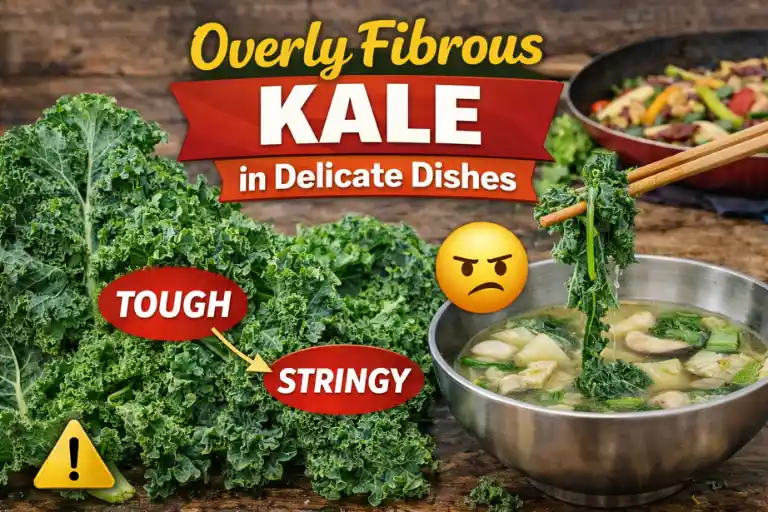
Overly Fibrous Kale in Delicate Dishes
Kale can work in some cases, but mature kale leaves are thick and fibrous. In light soups or stir fry, they may stay tough unless cooked longer. This makes them less suitable when you want bok choy’s soft, silky leaf texture. Avoiding these vegetables helps protect both flavor and texture, keeping your dish closer to the original recipe.
Quick Substitution Cheat Sheet
- Stir fry → Napa cabbage or green cabbage
- Soup → Spinach or Swiss chard
- Curry → Napa cabbage
- Raw dishes → Thin cabbage
- Emergency → Shredded cabbage
Common Mistakes to Avoid
One big mistake is using soft greens like lettuce in stir fry—they become watery and lose structure.
Another mistake is overcooking napa cabbage, which removes its natural crunch.
Also avoid using strong-flavored greens in mild soups, as they overpower the dish.
FAQs – Bok Choy Substitutes Recipe
What is the closest substitute for bok choy?
Napa cabbage is the closest match.
Can I use spinach instead of bok choy?
Yes, but only for soups or curry.
Is cabbage a good substitute?
Yes, especially for stir fry dishes.
What is the closest vegetable to bok choy?
The closest vegetable to bok choy is napa cabbage. It has a similar mild flavor, tender leaves, and light crunch in the stems. This makes it the most reliable bok choy substitute for stir fry, soup, ramen, and curry dishes.

Can I use cabbage instead of bok choy?
Yes, you can use green cabbage as a substitute for bok choy, especially in stir fry. It provides good crunch but has a slightly stronger flavor. Slice it thin and cook it 1–2 minutes longer to soften properly.
Is napa cabbage the same as bok choy?
No, napa cabbage and bok choy are not the same, but they belong to the same plant family. Napa cabbage forms a leafy head, while bok choy has separate stems and leaves. However, napa cabbage is the closest bok choy alternative.
Can I substitute spinach?
Yes, spinach works well in soups, ramen, and curry. It has soft leaves and mild flavor, but it lacks crunchy stems. Use slightly less spinach because it wilts quickly during cooking.
What tastes most like bok choy?
Napa cabbage tastes most like bok choy because both have a mild, slightly sweet flavor with gentle pepper notes. Swiss chard is another good option, though it has a slightly more earthy taste.
Can I use pak choi instead?
Yes, pak choi is essentially the same as bok choy. In many regions, the names are used interchangeably. It is the easiest and most accurate replacement with a perfect 1:1 ratio.
What is the best substitute for baby bok choy?
For baby bok choy, the best substitute is napa cabbage or a mix of spinach and cabbage. Baby bok choy is more tender, so choose softer greens and avoid thick, fibrous leaves for the closest texture match.
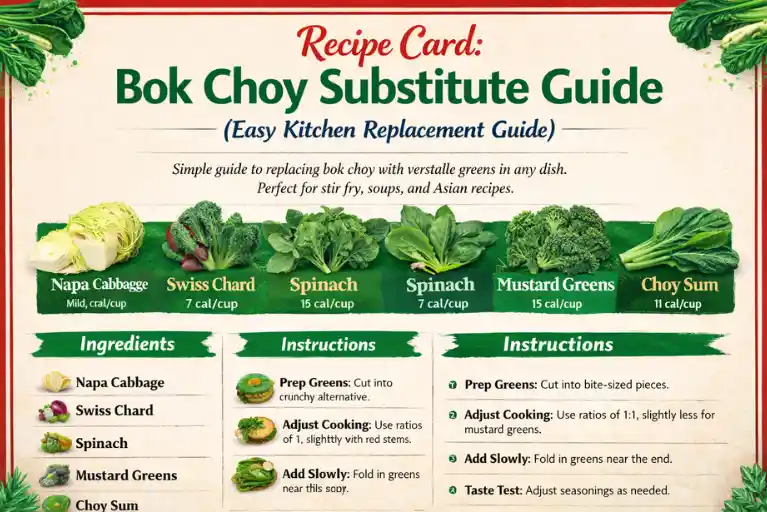
Recipe Card – Bok Choy Substitute Guide (Easy Kitchen Replacement Guide)
Course: Side DishesCuisine: Asian, InternationalDifficulty: Easy4
servings5
minutes10
minutes40
kcalThis bok choy substitute guide helps you quickly choose the best replacement based on flavor, texture, and cooking method. From napa cabbage to spinach, these easy alternatives ensure your dish stays balanced and delicious.
Ingredients
1 cup napa cabbage (best overall substitute)
1 cup green cabbage (for stir fry crunch)
¾ cup spinach (for soups & curry)
1 cup Swiss chard (balanced option)
1 cup kale (firm texture dishes)
1 cup mustard greens (peppery flavor)
1 cup collard greens (slow cooking recipes)
1 cup baby spinach (quick cooking dishes)
1 cup pak choi (closest match)
1 cup romaine lettuce (emergency use only)
Instructions
- Choose Based on Cooking Method
Decide your substitute depending on your recipe. Use napa cabbage for most dishes, green cabbage for stir fry, and spinach or Swiss chard for soups. - Prepare the Vegetable
Wash thoroughly and chop into bite-sized pieces. Separate stems and leaves if needed for even cooking. - Adjust Cooking Time
Cook firm vegetables like cabbage longer, while soft greens like spinach should be added at the end. - Match Texture & Flavor
Combine vegetables if needed (e.g., cabbage + spinach) to mimic bok choy’s crunch and softness. - Cook & Serve
Add your substitute to stir fry, soup, curry, or ramen and cook until tender but not overcooked.
Recipe Video
Notes
- Napa cabbage is the closest match in both flavor and texture
- Spinach works best in soups but lacks crunch
- Cabbage needs slightly longer cooking time
- Always match cooking method for best results
Final Expert Recommendation
Choosing the right bok choy substitute becomes simple when you match it to your cooking goal. Instead of guessing, use this quick decision guide to get the best results.
If You Want the Closest Overall Match → Choose Napa Cabbage
It has the most similar flavor, texture, and moisture balance. Use a 1:1 ratio in stir fry, soup, ramen, or curry.
If You Want the Best Crunch → Choose Green Cabbage
It keeps its structure in high heat cooking. Slice thin and cook slightly longer.
If You’re Making Soup or Ramen → Choose Swiss Chard
Soft leaves and mild flavor blend well into broth.
If You Want the Lowest Carb Option → Choose Spinach
Very low in carbs and calories. Add at the end since it wilts quickly.
If You Need an Emergency Fix → Use Shredded Cabbage
It’s widely available and works in most dishes with small adjustments.
Final tip: Always match both texture and flavor, not just appearance. That’s the secret to choosing the best substitute for bok choy.