
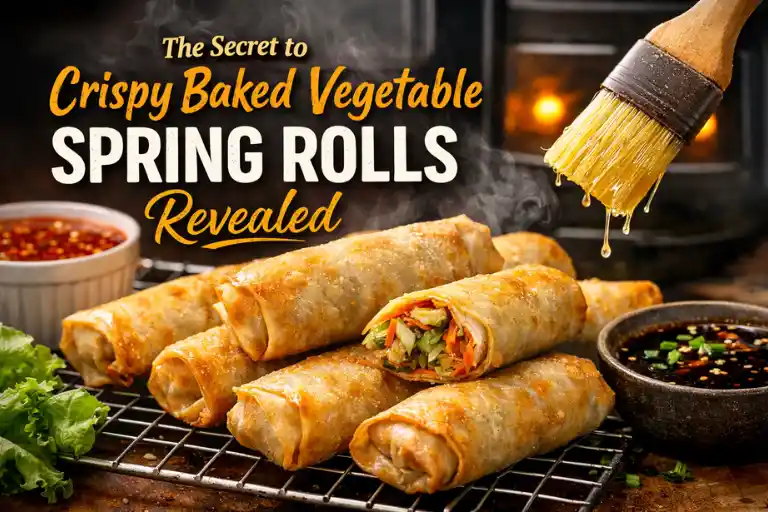
If you love spring rolls but want a lighter option, these Baked Vegetable Spring Rolls are exactly what you need. They are crispy, golden, and healthy, without the extra oil from deep frying. Many people think oven baked spring rolls cannot stay crunchy — but with the right method, they absolutely can. This easy baked vegetable spring rolls recipe shows you how to get that perfect crisp texture while keeping the filling fresh and flavorful.
Whether you’re making a healthy appetizer, a quick snack, or a party platter, these vegetarian baked spring rolls are simple to prepare and full of flavor. You’ll also learn how to prevent soggy rolls, choose the best wrappers, and even try an air fryer vegetable spring rolls option. Let’s make homemade spring rolls that are light, crunchy, and truly satisfying.
Why Baked Vegetable Spring Rolls Are Better Than Fried
When it comes to choosing between baked vegetable spring rolls and deep-fried ones, the difference is bigger than most people think. If you are looking for healthy spring rolls, baking is usually the smarter option. Let’s break down the baked vs fried comparison in a simple way.
Oil Absorption Difference
Fried spring rolls are fully dipped in hot oil. During frying, the wrapper absorbs a noticeable amount of oil, especially if the temperature is not perfectly controlled. This increases the overall fat content.
On the other hand, oven baked spring rolls use only a light brush or spray of oil. Instead of soaking in oil, they cook through dry heat. This simple change can significantly reduce excess fat while still giving you a golden exterior.
Calorie Comparison
Because fried rolls absorb oil, they naturally contain more calories. A single fried roll can have much more fat compared to a baked spring rolls recipe version.
Baked vegetable spring rolls typically have fewer calories and less saturated fat, making them a better option if you are watching your intake. If your goal is a lighter appetizer, baking clearly wins in this baked vs fried comparison.
Texture Difference
Fried rolls often have a slightly thicker and heavier crunch. They are very crispy, but sometimes oily.
With the right technique, crispy baked spring rolls can be just as satisfying. They feel lighter and less greasy. The crunch is clean and crisp, especially when baked at high heat and placed on a wire rack.
Health Benefits
Choosing healthy vegetable spring rolls means:
- Less oil
- Lower fat content
- Fewer calories
- Easier digestion
- A lighter feeling after eating
If you are looking for a vegetarian baked spring rolls option for family dinners, lunchboxes, or gatherings, baking makes them more suitable for regular meals.
When Frying Might Still Be Better
There are moments when frying can work better. If you want an ultra-deep crunch for a special occasion, or you are preparing traditional restaurant-style rolls, frying may give a slightly richer texture. However, for everyday cooking, parties, or meal prep, baked vegetable spring rolls offer the perfect balance of flavor, crunch, and health.
What Makes This Recipe Different From Others
There are many baked vegetable spring rolls recipes online, but not all of them focus on what truly matters — crispiness, consistency, and flexibility. This version is built around solving the common problems people face with oven baked spring rolls, especially sogginess and uneven texture.

You might also like: How to Make Fasole Batuta Recipe
Ultra Crispy Method
The biggest complaint about healthy spring rolls is that they turn soft after baking. This recipe uses a high-heat baking method, light oil brushing, and proper spacing on the tray to help you achieve crispy baked spring rolls without deep frying. The filling is also cooled before rolling, which prevents trapped steam.
Tested Temperature Strategy
Temperature matters more than most people realize. Baking at too low a temperature causes moisture buildup. This method uses a carefully tested temperature range that allows the wrappers to brown evenly and stay crunchy.
This small detail makes a big difference in the baked vs fried comparison, because texture is everything.
Make-Ahead Friendly
These homemade vegetable spring rolls can be assembled in advance and stored in the fridge before baking. You can also freeze them for later. That makes this recipe perfect for meal prep or busy evenings.
Kid-Approved
Because these are vegetarian baked spring rolls with mild seasoning, they are great for children. You can adjust spices easily and even make mini versions for lunchboxes.
Party-Ready
Looking for a healthy appetizer that still feels indulgent? These baked spring rolls are light, easy to reheat, and perfect for serving in batches. Add a few dipping sauces, and you have a complete party platter.
Ingredients Breakdown and Smart Substitutions
Using the right ingredients makes all the difference in your baked vegetable spring rolls. Let’s look at how to choose wisely and customize based on your needs.
Best Vegetables for Maximum Crunch
For the best texture in your crispy baked spring rolls, choose vegetables that stay firm after cooking.
Cabbage
Finely shredded cabbage is the base of most Asian vegetable spring rolls. It adds bulk and light crunch.
Carrots
Julienned carrots bring color and slight sweetness. They also hold their shape well when baked.
Bell Peppers
Thinly sliced bell peppers add freshness and natural flavor without making the filling watery.
Bean Sprouts
These add authentic crunch but must be lightly sautéed to remove excess moisture. Too much water can ruin your baked vegetable spring rolls recipe.
Choosing the Right Spring Roll Wrapper
The wrapper plays a major role in the final texture.
Wheat Wrappers
Traditional wheat spring roll wrappers are ideal for oven baked spring rolls. They crisp up nicely when brushed with oil.
Filo Pastry Comparison
Some people use filo pastry for a thinner texture. While filo can work, it may become too fragile. For consistent results, standard spring roll wrappers are usually better.
Rice Paper Warning
Rice paper is commonly used for fresh rolls, not baked ones. It does not give the same crunch and can become chewy in the oven.
Gluten-Free Option
If you need gluten-free healthy vegetable spring rolls, look for certified gluten-free wrappers or use thin gluten-free pastry sheets.
Vegan, Low-Calorie and Protein Add-Ins
These baked vegetable spring rolls are already vegetarian, but you can customize them further.
Tofu
Crumble firm tofu and sauté it with spices for added protein. It blends well with cabbage and carrots.
Mushrooms
Finely chopped mushrooms add deep flavor and keep the filling juicy without extra oil.
Shredded Chicken (Optional Variation)
If you want a non-vegetarian twist, shredded chicken can be added for extra protein while still keeping the rolls lighter than fried versions. By choosing the right ingredients and smart substitutions, you can turn simple baked vegetable spring rolls into a versatile dish that fits different diets and preferences.
The Secret Science to Crispy Baked Spring Rolls
If you’ve ever wondered why baked spring rolls are soggy, the answer is simple: moisture and low heat. Getting perfectly crispy baked spring rolls is not about luck — it’s about understanding a few small but powerful details. This is the real secret behind making baked vegetable spring rolls that stay crunchy.
Why Moisture Causes Sogginess
Vegetables naturally release water while cooking. If that moisture stays trapped inside the wrapper, steam forms and softens the outer layer. That’s the main reason people struggle with how to keep spring rolls crispy.
Too much moisture = soft wrapper.
Controlled moisture = crisp texture.
Pre-Cooking vs Raw Filling
Using raw vegetables inside oven baked spring rolls might seem easier, but it increases water release during baking.
Lightly sautéing the vegetables first helps remove excess moisture. It also enhances flavor and improves the overall texture. This simple step alone can completely change your baked vegetable spring rolls recipe.
Cooling the Filling Before Rolling
This step is often ignored. If you roll hot filling into the wrapper, steam builds up immediately. That trapped steam softens the inside of the roll before it even goes into the oven.
Always let the filling cool completely before rolling. This prevents internal moisture buildup and helps create crispy baked spring rolls.
Wire Rack vs Tray
Placing rolls directly on a flat tray can trap heat underneath, leading to uneven crisping.
Using a wire rack allows air to circulate around the entire roll. This improves browning and keeps the bottom crispy. If you don’t have a rack, flip the rolls halfway through baking.
Brushing vs Spraying Oil
Oil helps the wrapper brown and crisp.
- Brushing oil gives slightly richer color and crunch.
- Spraying oil keeps the rolls lighter and lower in calories.
Both methods work for healthy vegetable spring rolls, but applying a thin, even layer is important.
High-Heat Baking Technique
Low heat causes drying without crisping. High heat encourages fast browning.
Bake your baked vegetable spring rolls at a properly preheated high temperature. This helps the outside crisp before moisture has time to soften the wrapper.
When all these small techniques come together, you solve the two biggest problems:
- How to keep spring rolls crispy
- Why baked spring rolls are soggy
Step-by-Step Guide to Making Baked Vegetable Spring Rolls
Now let’s put everything into action and make perfect baked vegetable spring rolls at home.
1. Preparing the Filling
Finely shred cabbage, carrots, and bell peppers. Lightly sauté them in a pan with garlic, soy sauce, and simple seasoning. Cook just until slightly softened.
Do not overcook — the vegetables should still have some bite.
2. Draining Moisture Properly
After cooking, transfer the filling to a strainer or spread it on a plate to cool. If needed, gently press out extra liquid.
Troubleshooting Tip:
If the filling looks wet or glossy, it has too much moisture. Let it cool longer before rolling.
3. Rolling Tightly Without Tearing
Place a spring roll wrapper on a flat surface. Add a small amount of filling near one corner.
Fold the bottom over the filling, tuck tightly, fold in the sides, and roll upward firmly. Tight rolling helps prevent air pockets, which improves crispiness.
Troubleshooting Tip:
If wrappers tear, you may be overfilling them.
4. Sealing Edges Correctly
Use a small amount of water or flour paste to seal the edge securely. This prevents the roll from opening during baking.
5. Baking Temperature and Timing
Preheat the oven fully before placing the rolls inside. Arrange them on a wire rack or lined tray with space between each roll. Lightly brush or spray oil on all sides.
Bake until golden brown, flipping halfway if needed. The rolls should look evenly browned and feel crisp when touched.
Troubleshooting Tip:
If they look pale, increase heat slightly and bake a few minutes longer.
If they brown too fast but feel soft, the oven temperature may be too high without proper airflow.
Air Fryer vs Oven – Which Makes Them Crispier?
If you’re deciding between the oven and the air fryer for your baked vegetable spring rolls, both methods can work well. The real question is: which gives better crunch?
Texture Comparison
An air fryer vegetable spring rolls batch usually turns out slightly crispier on the outside because hot air circulates very closely and evenly around each roll. The intense airflow helps create a fast golden crust.
In comparison, oven baked spring rolls can also become very crispy — especially when baked at high heat and placed on a wire rack. However, the crispiness may be slightly lighter than the air fryer version.
If your main goal is maximum crunch, the air fryer has a small advantage. If you want to cook a larger batch at once, the oven is more practical.
Cooking Time Difference
Air fryers generally cook faster. Because of the compact space and strong air circulation, healthy vegetable spring rolls may finish a few minutes earlier than in a traditional oven.
Ovens take a little longer but allow you to bake many rolls at the same time, making them ideal for parties or family meals.
Energy Efficiency
Air fryers use less space and heat up quickly, which makes them more energy efficient for small portions.
Ovens consume more energy but are better when preparing multiple trays of crispy baked spring rolls at once.
When to Choose Each Method
Choose the air fryer vegetable spring rolls method if:
- You’re making a small batch
- You want extra crispiness
- You prefer quicker cooking
Choose the oven if:
- You’re preparing rolls for a party
- You’re batch cooking or meal prepping
- You need to bake many rolls at once
Both methods can produce excellent results. The key is controlling moisture and using proper heat — not just the appliance.
Common Mistakes That Ruin Baked Spring Rolls
Even the best baked vegetable spring rolls recipe can fail if a few small mistakes are made. Avoiding these errors will help you consistently create crispy baked spring rolls that stay crunchy.
Overfilling
Adding too much filling stretches the wrapper and traps steam inside. This often leads to tearing and soggy texture.
Use a moderate amount of filling so the roll stays tight and evenly crisp.
Wet Vegetables
This is the number one reason people ask, “Why baked spring rolls are soggy?”
Vegetables release water naturally. If they are not sautéed lightly or drained properly, that moisture softens the wrapper from inside. Always remove excess liquid before rolling.
Baking at Low Temperature
Low heat dries the wrapper slowly instead of crisping it. The result is a chewy outer layer instead of a crunchy one.
Properly preheated high temperature is essential for how to keep spring rolls crispy.
Overcrowding the Tray
When rolls touch each other, airflow is blocked. This creates steam and prevents even browning.
Leave space between each roll so hot air can circulate fully.
Skipping the Oil Layer
Some people skip oil completely to make ultra healthy spring rolls, but this can reduce crispiness. A very light brush or spray of oil helps achieve golden color and proper crunch without making them greasy.
Nutrition Facts and Calorie Comparison
If you are choosing baked vegetable spring rolls for health reasons, understanding the nutrition difference really helps. Many people search for calories and fat content before deciding between baked and fried options. Let’s make this simple.
Calories – Baked vs Fried
In a typical baked vs fried comparison, baked rolls usually contain fewer calories. Why? Because fried rolls absorb oil during cooking. Oil increases calorie density quickly. Even one tablespoon of oil adds significant calories.
Baked vegetable spring rolls, when lightly brushed or sprayed with oil, can reduce overall calorie intake while still giving a crispy texture. This makes them a smarter choice for anyone looking for healthy spring rolls.
Fat Difference
The biggest difference between baked and fried spring rolls is fat content. Fried rolls absorb oil from the hot fryer, increasing total fat and saturated fat. In contrast, oven baked spring rolls use minimal oil. This helps lower overall fat intake without removing flavor. If your goal is lighter meals or better portion control, crispy baked spring rolls are clearly the healthier option.
Portion Size Guide
Even healthy foods should be eaten in balanced portions.
For most people:
- 2–3 baked vegetable spring rolls make a good snack or appetizer.
- 4–5 rolls can work as a light main meal when served with salad or soup.
Pairing them with fresh vegetables and a lighter dipping sauce keeps the meal balanced and satisfying.
Macro Breakdown
While exact numbers depend on ingredients, a standard baked vegetable spring rolls recipe generally provides:
- Moderate carbohydrates (from wrappers)
- Low to moderate fat (depending on oil used)
- Fiber (from vegetables like cabbage and carrots)
- Small amounts of protein (higher if tofu or chicken is added)
Adding tofu or lean protein can improve the overall macro balance while keeping the rolls healthier than fried versions.
Choosing healthy vegetable spring rolls does not mean sacrificing flavor. It simply means cooking smarter and controlling oil usage.
Global Flavor Variations You Should Try
One of the best things about baked vegetable spring rolls is how easily they adapt to different cuisines. Most recipes stick to one classic filling, but you can experiment with flavors from around the world.
Indo-Chinese Version
This version adds soy sauce, garlic, ginger, and a little chili sauce to the filling. Finely shredded cabbage and carrots remain the base, but the seasoning is slightly bold and spicy. This style is popular in many Asian-inspired kitchens and works beautifully in a crispy baked spring rolls recipe.
Thai-Style
Add a touch of lime juice, fresh cilantro, and a small amount of sweet chili paste. A Thai-style dipping sauce pairs perfectly with oven baked spring rolls. This version feels fresh and slightly tangy while still staying light and healthy.
Korean-Style
For a Korean twist, mix in sesame oil, finely chopped scallions, and a hint of gochujang (Korean chili paste). These flavors bring depth and warmth to your baked vegetable spring rolls while keeping them vegetarian and balanced.
Mediterranean Fusion
Try mixing spinach, feta cheese (optional), olives, and herbs like oregano. This variation transforms classic vegetarian baked spring rolls into something unique and flavorful. Serve with a yogurt-based dip for a refreshing touch.
Mexican Fusion
For a bold twist, add corn, black beans, bell peppers, and mild taco seasoning. These fusion-style homemade vegetable spring rolls can be served with salsa or avocado dip. They make a fun, party-ready option.
Best Dipping Sauces to Elevate Flavor
Even the most crispy baked spring rolls become unforgettable when paired with the right dip. If you’re searching for the best dipping sauce for vegetable spring rolls, these options cover every taste — from sweet to spicy.
Sweet Chili Sauce
This is the classic choice. Sweet chili sauce adds a mild heat with a gentle sweetness that balances the savory filling. It pairs perfectly with baked vegetable spring rolls and keeps the flavor light and fresh. For extra depth, add a squeeze of lime or a pinch of red chili flakes.
Garlic Soy Dip
If you prefer something simple and bold, mix soy sauce with minced garlic and a splash of rice vinegar.
This dip enhances the natural flavor of healthy vegetable spring rolls without overpowering them. A few drops of sesame oil can add warmth and aroma.
Spicy Peanut Sauce
Peanut sauce adds richness and creaminess. Combine peanut butter, soy sauce, lime juice, and a little chili paste.
This sauce turns your oven baked spring rolls into a restaurant-style appetizer. It’s especially good with Thai-style or Indo-Chinese variations.
Low-Calorie Yogurt Dip
For a lighter option, mix plain yogurt with garlic, lemon juice, and fresh herbs.
This works beautifully if you want to keep your healthy spring rolls balanced and lower in calories. It also pairs well with Mediterranean fusion flavors.
Party Platter Dip Trio Idea
If you’re serving baked vegetable spring rolls at a gathering, offer three sauces:
- Sweet chili sauce
- Garlic soy dip
- Spicy peanut sauce
This gives guests variety and makes your platter feel complete and professional.
Make Ahead, Storage and Freezing Guide
One of the biggest advantages of baked vegetable spring rolls is how well they fit into meal prep. Many competitors skip this part, but proper storage can make your life much easier.
Can You Freeze Before Baking?
Yes. After rolling your homemade vegetable spring rolls, place them in a single layer on a tray and freeze until firm. Then transfer them to a freezer-safe bag.
When ready to cook, bake directly from frozen — just add a few extra minutes to the baking time. This makes them perfect for busy days.
Can You Freeze After Baking?
You can also freeze fully baked rolls. Let them cool completely before storing.
While freshly baked rolls have the best texture, freezing after baking still works well if you reheat properly.
How to Reheat Without Losing Crispiness
To keep your crispy baked spring rolls crunchy:
- Reheat in the oven at high temperature.
- Use an air fryer for faster, crisp results.
- Avoid microwaving, as it makes the wrapper soft.
This step is essential if you want to maintain that satisfying crunch.
Meal Prep Strategy
You can prepare the filling 1–2 days in advance and store it in the refrigerator. Roll and bake when needed.
This method saves time and ensures your baked vegetable spring rolls recipe stays fresh.
Batch Cooking System
For parties or weekly planning:
- Prepare multiple trays at once.
- Bake in batches while keeping cooked rolls warm in the oven.
- Store extras in the freezer for later use.
With proper planning, your vegetarian baked spring rolls become a reliable, healthy snack you can enjoy anytime.
When and How to Serve Baked Vegetable Spring Rolls
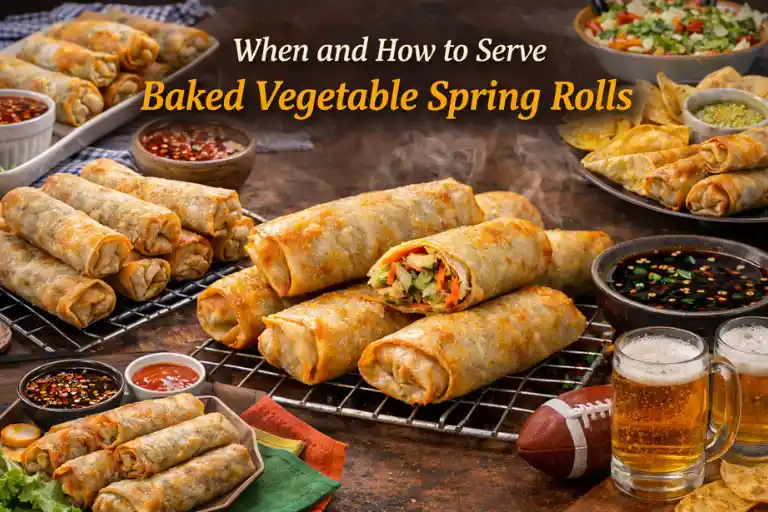
One of the best things about baked vegetable spring rolls is how flexible they are. They are light, crispy, and easy to prepare in batches, which makes them perfect for many occasions. Whether you’re planning a gathering or packing a quick meal, these healthy spring rolls fit almost any setting.
Party Appetizer
If you need a crowd-pleasing starter, crispy baked spring rolls are a perfect choice. Arrange them neatly on a platter and serve with 2–3 dipping sauces like sweet chili or garlic soy dip. Because they are oven baked spring rolls and not fried, they feel lighter, so guests can enjoy them without feeling too full before the main meal.
Potluck Favorite
For potlucks, convenience matters. These vegetarian baked spring rolls travel well and can be reheated easily in an oven. Make them ahead of time, store them properly, and warm them before serving. They are less greasy than fried versions, which makes them cleaner and easier to handle at shared events.
Lunchbox Option
These healthy vegetable spring rolls also work beautifully in lunchboxes. Pack them with a small container of dipping sauce and a fresh salad. Since they are baked, they won’t feel heavy during the day. Mini versions are especially great for kids or portion control.
Ramadan Snack
During Ramadan, many people look for lighter alternatives to fried foods. Baked vegetable spring rolls are a smart replacement for deep-fried snacks. They provide crunch and flavor without excessive oil, making them a better choice for Iftar while still feeling festive and satisfying.
Healthy Game Night Option
If you’re hosting a movie night or casual gathering, skip the greasy snacks. Serve a tray of homemade vegetable spring rolls instead. Pair them with a few dipping sauces, and you have a balanced, flavorful option that feels indulgent but stays healthier than traditional fried appetizers.
FAQs About Baked Vegetable Spring Rolls
Are baked vegetable spring rolls healthy?
Yes, baked vegetable spring rolls are generally healthier than fried ones. Because they use minimal oil, they contain fewer calories and less fat. When filled with cabbage, carrots, and other vegetables, they provide fiber and nutrients, making them a lighter and more balanced snack option.
Why are my baked spring rolls not crispy?
The most common reason baked spring rolls are not crispy is excess moisture in the filling. Wet vegetables release steam during baking, which softens the wrapper. Baking at low temperature or overcrowding the tray can also prevent proper crisping. Removing moisture and using high heat helps keep them crunchy.
Can I air fry instead of bake?
Yes, you can make air fryer vegetable spring rolls instead of using the oven. The air fryer circulates hot air quickly, which can create an even crispier texture. It works best for small batches and often cooks faster than traditional oven baked spring rolls.
Can you freeze baked spring rolls?
Yes, you can freeze baked vegetable spring rolls both before and after baking. For best results, freeze them in a single layer first, then store in an airtight container. Reheat in the oven or air fryer to maintain crispiness. Avoid microwaving, as it can make the wrapper soft.
What wrapper is best for baking?
Traditional wheat-based spring roll wrappers work best for oven baked spring rolls because they crisp evenly. Filo pastry can also be used, but it is more delicate. Rice paper is not ideal for baking, as it tends to become chewy instead of crispy.
Final Thought
Making baked vegetable spring rolls at home is easier than most people think. With the right technique, you can enjoy crispy baked spring rolls that are light, flavorful, and much healthier than fried versions. By controlling moisture, using proper heat, and choosing the best wrapper, you solve the biggest problems people face with oven baking.
These healthy vegetable spring rolls are perfect for parties, meal prep, lunchboxes, or even a light dinner. You can customize the filling, try global flavor variations, and pair them with your favorite dipping sauces. At the end of the day, this is more than just a baked spring rolls recipe — it’s a smarter way to enjoy a classic snack without extra oil. Once you master the method, you’ll never miss the fried version again.