
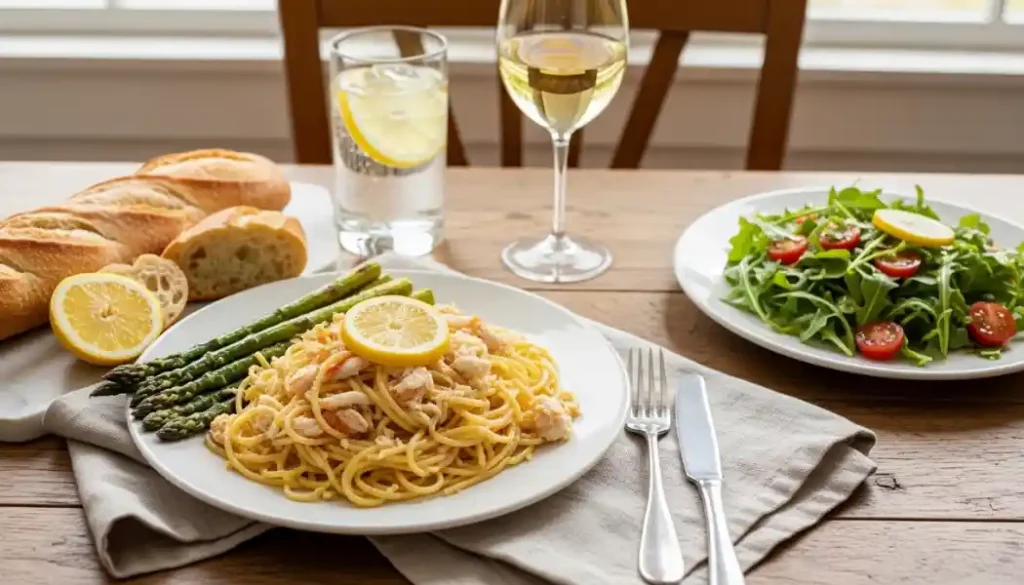
Spring Risotto With Asparagus is a creamy, comforting Italian dish that brings fresh seasonal flavors straight to your table. Made with tender asparagus, sweet green peas, and a hint of lemon, this dish is perfect for anyone looking for a light yet satisfying meal. It’s one of the best spring risotto recipes because it combines freshness with rich, velvety texture.
This asparagus risotto recipe is simple enough for beginners but still tastes like something from a restaurant. The secret lies in slowly cooking Arborio rice so it becomes naturally creamy without heavy cream. Many people love this dish because it feels elegant but is actually easy to prepare at home.
If you are searching for an easy creamy asparagus risotto recipe, this step-by-step guide will help you make a perfect vegetarian spring risotto every time.
Quick Answer
Spring Risotto With Asparagus is a creamy Italian rice dish made with Arborio rice, fresh asparagus, peas, stock, butter, and parmesan. It’s cooked slowly so the rice releases starch, creating a rich texture without cream—perfect as an easy, elegant spring meal.
The Story Behind Spring Risotto
In traditional Italian cooking, spring is all about using fresh, green, and light ingredients that reflect the season. Dishes like Spring Risotto With Asparagus are a perfect example of this philosophy. Italians have long used seasonal vegetables such as asparagus and peas to create simple but deeply flavorful meals that celebrate freshness.
Risotto itself is considered a classic Italian comfort food. Unlike regular rice dishes, it is slowly cooked to release starch, creating a naturally creamy texture without cream. This is why recipes like asparagus risotto or spring vegetable risotto are loved across Italy—they are both comforting and seasonal at the same time.
Today, this traditional dish has been adapted for modern home cooks, making it easier to prepare an easy risotto recipe at home. With simple steps and everyday ingredients, you can enjoy a restaurant-style lemon asparagus risotto without needing professional skills.
What Makes This Spring Risotto Special?
This Spring Risotto With Asparagus stands out because it delivers a true restaurant-style creamy texture while still being simple enough for home cooks. The rice slowly releases starch as it cooks, creating a naturally rich and smooth consistency without needing heavy cream. This is what makes it a classic creamy risotto that feels both light and luxurious.
The flavor is also perfectly balanced. Fresh asparagus and green peas bring a natural sweetness, while lemon juice and zest add a bright, citrusy lift. Combined with parmesan and butter, the result is a savory yet fresh spring vegetable risotto that feels vibrant in every bite.
What makes it even better is that this is a beginner-proof risotto recipe. With simple steps and clear timing, anyone can master it without stress. That’s why it is considered one of the best easy spring risotto recipes for home cooking.
Ingredients You’ll Need
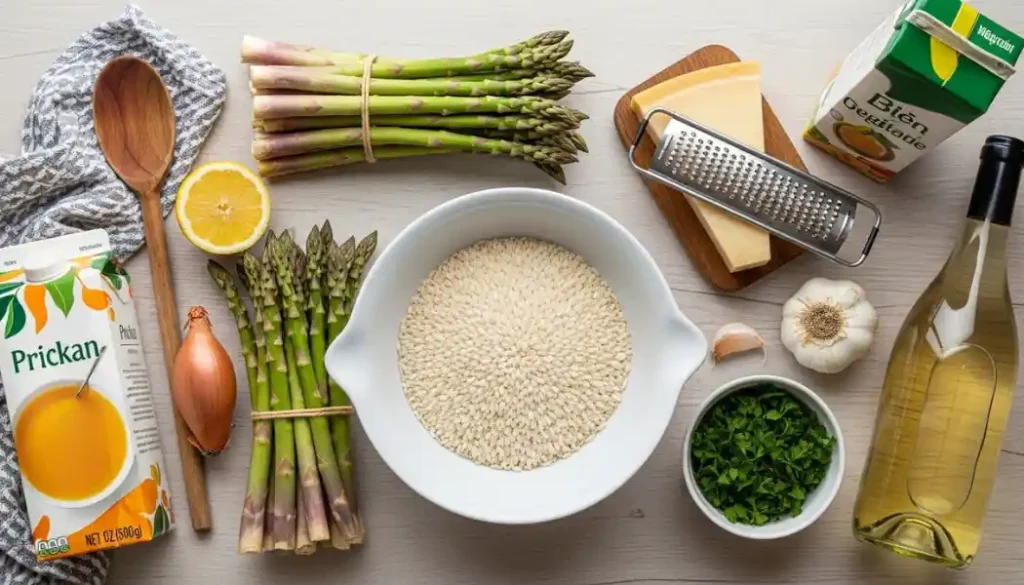
To make the perfect Spring Risotto With Asparagus, you only need a few simple but high-quality ingredients. Each one plays an important role in building the creamy texture and fresh spring flavor.
- Arborio rice (core ingredient) – the key to a naturally creamy risotto
- Fresh asparagus – adds a fresh, earthy spring taste
- Green peas – bring sweetness and color to the dish
- Parmesan cheese – gives rich, savory depth
- Butter + olive oil – creates smooth richness and flavor base
- Onion / shallots – build a gentle aromatic foundation
- Vegetable or chicken stock – slowly absorbed for creamy texture
- Lemon zest + juice – adds bright, fresh citrus flavor
- White wine (optional) – adds subtle depth and complexity
Best Rice for Risotto
The secret to a perfect asparagus risotto recipe starts with choosing the right rice. Arborio rice is the most commonly used because it has a high starch content. As it cooks, it releases starch slowly, which creates the signature creamy risotto texture without using cream.
Another great option is Carnaroli rice, which is often preferred by chefs because it holds its shape better and produces an even silkier result compared to arborio.
What makes risotto naturally creamy is not just the rice, but the slow cooking and constant stirring process. This helps release starch gradually, creating a rich and smooth consistency that defines every great spring risotto recipe.
Step-by-Step Spring Risotto With Asparagus Recipe
Follow these simple steps to create a perfect easy creamy asparagus risotto recipe at home.
Step 1: Prepare all ingredients (mise en place)
Chop asparagus, measure rice, warm your stock, and keep everything ready before cooking begins.
Step 2: Sauté onion/shallots in butter & olive oil
Cook gently until soft and fragrant to build a flavorful base for your vegetarian risotto recipe.
Step 3: Toast the rice properly (key flavor step)
Add Arborio rice and stir for a few minutes until slightly translucent. This enhances flavor and texture.
Step 4: Gradually add warm stock (absorption method)
Add stock one ladle at a time, stirring continuously. This slow process is what creates a creamy risotto recipe.
Step 5: Add asparagus at correct timing (texture control)
Add asparagus halfway through cooking so it stays tender but slightly firm.
Step 6: Add peas for final freshness
Stir in green peas near the end for sweetness and a fresh spring touch.
Step 7: Final butter + parmesan emulsification (mantecatura)
Turn off the heat and mix in butter and parmesan. This step creates the signature silky, restaurant-style risotto texture.
Step 8: Resting stage (important but often missed)
Let the risotto rest for 1–2 minutes before serving so flavors settle and texture becomes perfectly creamy.
The Secret to Creamy Risotto
The true magic behind a creamy risotto comes from simple cooking science. When Arborio rice is slowly cooked, it releases starch into the broth. This starch thickens the liquid and creates that smooth, velvety texture that defines a perfect spring risotto recipe.
Stirring also plays an important role. You don’t need to stir constantly, but gentle and regular stirring helps the rice grains rub together. This releases starch evenly and prevents sticking. Too little stirring can make risotto uneven, while too much can turn it gluey.
Heat control is just as important. Risotto should cook at a steady, gentle simmer, not a boil. High heat can dry it out too fast. Finally, the classic butter and parmesan finish creates emulsification. This step blends fat and liquid together, giving your asparagus risotto its rich, restaurant-style creaminess.
Flavor Science – Why This Risotto Tastes So Good
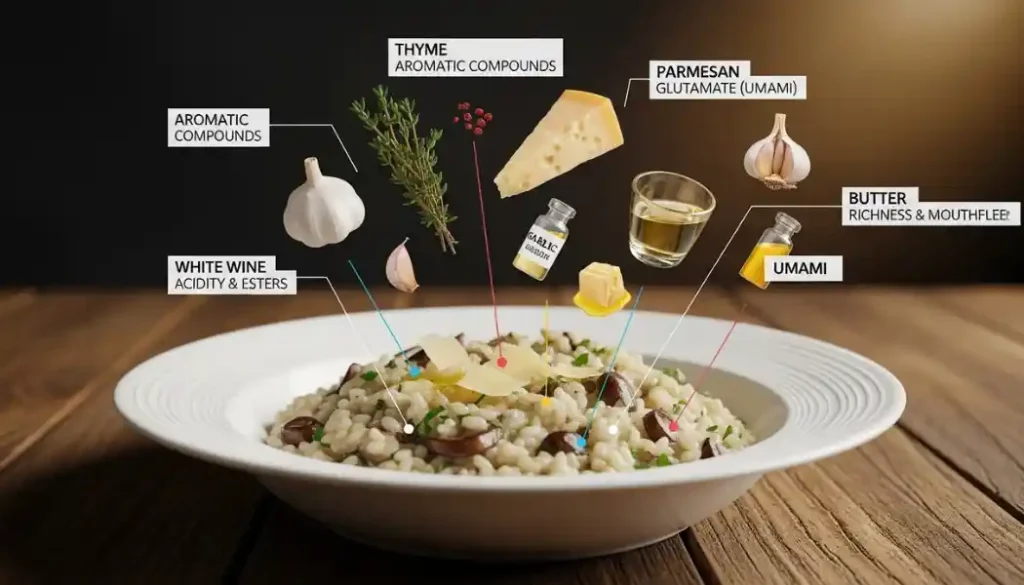
This Spring Risotto With Asparagus tastes balanced because each ingredient plays a specific role. Butter and olive oil provide richness, while lemon juice and zest add brightness that keeps the dish from feeling heavy. This fat and acid balance is key in any great lemon asparagus risotto.
Parmesan cheese adds umami, a deep savory flavor that makes the risotto taste fuller and more satisfying. Meanwhile, green peas and asparagus bring natural sweetness and freshness, which highlight the seasonal appeal of this spring vegetable risotto.
As the rice absorbs warm stock layer by layer, flavors build slowly. This gradual broth absorption is what gives the dish depth and complexity without overpowering the delicate spring ingredients.
Common Mistakes to Avoid
One of the most common mistakes is adding stock too fast. Risotto needs time to absorb liquid slowly. Pouring it in all at once prevents proper starch release and ruins the creamy texture.
Another mistake is overcooking asparagus. Adding it too early makes it mushy and dull in color. Always add it midway through cooking for the best texture.
Using the wrong rice type is also a problem. Long-grain rice will never create a true creamy risotto recipe. Stick to Arborio or Carnaroli.
Finally, avoid over-stirring or under-stirring. Gentle, regular stirring is ideal. If your risotto turns dry or sticky, don’t panic—adding a little warm stock and stirring gently can often fix it quickly.
How to Fix Risotto If It Goes Wrong
Even the best cooks face issues sometimes, but the good news is that risotto is easy to fix if you know how.
If your risotto is too dry, simply add a small amount of warm stock and stir gently over low heat. This helps restore moisture and brings back the creamy risotto texture.
If the risotto feels too thick or heavy, loosen it with a splash of warm broth or hot water. Stir slowly until it becomes smooth and flowing again. A perfect spring risotto should spread slightly on the plate, not sit in a stiff mound.
For undercooked rice, add a little more warm stock and continue cooking gently for a few more minutes. Stir and taste until the rice is tender but still slightly firm in the center, which is ideal for a classic asparagus risotto recipe.
Variations of Spring Risotto
This recipe is flexible, making it easy to customize while keeping the creamy base intact.
A lemon asparagus risotto adds extra lemon zest and juice for a brighter, fresher flavor.
A mushroom spring risotto brings earthy depth by adding sautéed mushrooms.
For a plant-based option, a vegan risotto version uses olive oil instead of butter and nutritional yeast instead of parmesan.
If you want protein, a chicken or shrimp upgrade works well and turns this dish into a complete, filling meal.
These variations keep the core spring vegetable risotto fresh and exciting.
What to Serve With Spring Risotto
This Spring Risotto With Asparagus pairs beautifully with light sides and proteins. Grilled salmon adds richness without overpowering the dish, while roast chicken makes it more hearty and comforting.
A fresh green salad with a light vinaigrette balances the creaminess and adds crunch. For drinks, white wine pairings such as Pinot Grigio or Sauvignon Blanc complement the lemon and asparagus flavors perfectly.
Chef’s Plating & Presentation Guide
Presentation makes a big difference. For restaurant-style plating, spoon the risotto into the center of a warm plate and gently spread it outward. The texture should look smooth and slightly flowing.
Finish with lemon zest, fresh herbs, or parmesan shavings for color and aroma. A final touch of olive oil or butter adds shine and visual appeal.
Good plating highlights the creamy texture, making your spring risotto recipe look just as impressive as it tastes.
Storage & Reheating Tips
Proper storage helps you enjoy Spring Risotto With Asparagus even the next day. Let the risotto cool completely, then store it in an airtight container in the refrigerator. It stays fresh for up to 2–3 days without losing flavor.
For reheating, always use low heat. Add a small splash of warm stock or water and stir gently while heating. This prevents the rice from drying out and helps bring back the creamy risotto texture.
If the risotto feels stiff after refrigeration, don’t worry. Slowly adding liquid and stirring will help restore the smooth, silky consistency that makes this asparagus risotto recipe so enjoyable.
Nutritional Value of Spring Risotto
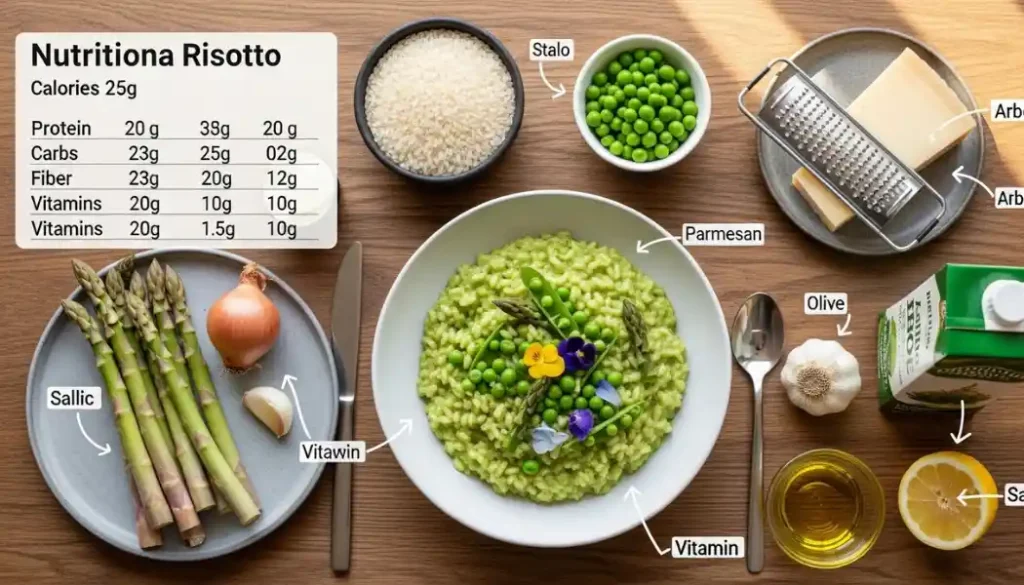
This spring vegetable risotto is both comforting and nourishing. A typical serving contains a moderate amount of calories, making it satisfying without being heavy.
Asparagus and green peas are rich in fiber, vitamins, and antioxidants, which support digestion and overall health. Parmesan adds calcium and protein, while olive oil provides healthy fats.
Because this dish is naturally meat-free, it works well as a vegetarian-friendly meal. With balanced ingredients and fresh vegetables, this easy spring risotto recipe fits well into a healthy lifestyle.
Advanced Chef Tips
One professional tip is the risotto resting technique. After cooking, let the risotto rest for one to two minutes. This allows flavors to settle and improves texture.
Another key technique is mantecatura, where butter and parmesan are stirred in off the heat. This step creates a rich, glossy finish and enhances creaminess.
Always keep your broth warm before adding it to the rice. Cold stock slows cooking and affects texture. Finally, control timing carefully—perfect risotto should be creamy, flowing, and never rushed.
Frequently Asked Questions
What makes risotto creamy?
Risotto becomes creamy because Arborio rice releases starch as it cooks slowly. Gentle stirring and gradual stock addition create a smooth texture without using cream.
How long does risotto take to cook?
A classic spring risotto recipe usually takes 25–30 minutes from start to finish, including stirring and resting time.
Is risotto hard to make for beginners?
No. This easy asparagus risotto recipe uses simple steps and basic ingredients. With patience and low heat, even first-time cooks can succeed.
Can risotto be made ahead of time?
Yes, risotto can be partially cooked ahead. Reheat it gently with warm stock to restore the creamy risotto texture.
What rice is best for risotto?
Arborio rice is the best choice because of its high starch content. Carnaroli is another excellent option for a more refined texture.
Why is my risotto not creamy?
Common reasons include using the wrong rice, adding stock too fast, or cooking at high heat. Slow cooking and proper stirring are key.
Final Thoughts
This Spring Risotto With Asparagus brings together simplicity and elegance in one comforting dish. Fresh spring vegetables, creamy texture, and balanced flavors make it a perfect meal for any occasion.
Whether you are new to risotto or an experienced home cook, this recipe proves that restaurant-quality risotto is possible at home. Take your time, follow the steps, and enjoy every bite of this classic spring vegetable risotto.