

Chicken stock is one of the most important basics in cooking, yet many people still rely on store-bought versions without knowing how simple it is to make at home. A good homemade chicken stock brings deep flavor, rich aroma, and a natural taste that instantly improves soups, sauces, and everyday meals.
Unlike plain broth, a proper chicken stock recipe uses bones, vegetables, and herbs to slowly build a rich base full of nutrients and natural gelatin. This is why chefs prefer it for making restaurant-style dishes.
In this guide, you will learn how to make chicken stock at home in an easy and clear way. You will also discover tips for a rich chicken stock, common mistakes to avoid, and smart storage methods. Whether you are a beginner or home cook, this simple recipe will help you create a flavorful kitchen essential from scratch.
What Is Chicken Stock?
Chicken stock is a simple liquid made by slowly cooking chicken bones, vegetables, and herbs in water. It is used as a base in many dishes like soups, sauces, and stews. The slow cooking helps bring out deep flavor and natural nutrients, making food taste richer and more balanced.
In cooking, chicken stock is very important because it adds body and taste to meals. Instead of using plain water, chefs use stock to improve flavor in almost every recipe.
Now let’s understand the difference between chicken stock, chicken broth, and bone broth. Stock is made mostly from bones and is thicker. Broth is lighter and made more from meat. Bone broth is cooked longer for extra nutrients.
| Type | Main Use | Texture | Cooking Time |
| Stock | Cooking base | Thick & rich | Medium |
| Broth | Drinking/soups | Light | Short |
| Bone broth | Health drink | Very rich | Long |
Use stock for cooking, broth for soups, and bone broth for health drinks.
Why Homemade Chicken Stock Is Better Than Store-Bought

You might also like: Crispy Fried Chicken Wings Recipe
Homemade chicken stock is much better than store-bought because it gives a deeper and richer flavor. When you cook it slowly at home, the taste becomes more natural and full. Store-bought stock often tastes flat and salty, while homemade stock has a real fresh chicken taste.
It is also healthier because you control everything. There are no additives, no preservatives, and no artificial flavors in homemade stock. You only use simple ingredients like bones, vegetables, and herbs.
Another big benefit is cost. You can make a large batch of homemade chicken stock using leftover bones, which saves money. It also gives a more restaurant-quality taste, making soups, sauces, and rice dishes much better.
Types of Chicken Stock
There are different types of chicken stock depending on how you prepare it and what flavor you want. Each type is useful in different cooking styles.
Light chicken stock is simple and mild in taste. It is cooked for a short time and is good for everyday soups.
Rich chicken stock is stronger in flavor. It is simmered longer, which gives it a deep and thick texture.
Roasted chicken stock is made by roasting the bones first. This gives a darker color and more intense taste.
Rotisserie chicken stock is made using leftover rotisserie chicken bones. It is very popular because it is easy, fast, and full of flavor.
Ingredients for Perfect Chicken Stock
A good chicken stock starts with simple but high-quality ingredients. The main base is chicken bones, which are very important because they release collagen while cooking. This collagen gives the stock a rich texture and natural body, making it more flavorful and slightly thick.
You can also add meat scraps if you want a deeper taste. This is optional but helps improve richness, especially when you want a stronger stock. A classic mix of vegetables called mirepoix is also used. It includes onion, carrot, and celery. These vegetables add natural sweetness and balance the flavor.
For extra aroma, use herbs and spices like bay leaf, thyme, and peppercorns. They make the stock smell and taste better. You can also add umami boosters like mushrooms or tomato paste. These are optional but help create a deeper, restaurant-style flavor.
Step-by-Step Chicken Stock Recipe
Making a perfect homemade chicken stock is simple if you follow each step carefully. This method helps you get a rich, clear, and flavorful stock every time.
Step 1: Preparing ingredients
Wash and cut vegetables like onion, carrot, and celery. Gather chicken bones and herbs.
Step 2: Roasting bones (optional but recommended)
Roast the bones in the oven to build a deeper and richer flavor.
Step 3: Cold water start method
Place all ingredients in a large pot and cover with cold water.
Step 4: Slow simmer process (never boil)
Cook on low heat. Do not boil, as it can make the stock cloudy.
Step 5: Skimming impurities
Remove foam and impurities from the top to keep the stock clean.
Step 6: Straining for clarity
Strain the liquid using a fine sieve to remove solids.
Step 7: Cooling & storage prep
Let it cool completely before storing or freezing for later use.
The Science of Chicken Stock
Understanding the science of chicken stock helps you make a better and richer result. When collagen from chicken bones is cooked slowly, it turns into gelatin. This is what gives stock its smooth, slightly thick texture and rich mouthfeel.
A slow simmer is better than boiling because it gently pulls flavor from bones and vegetables without breaking everything apart. Boiling makes the stock cloudy and can ruin the clean taste.
During cooking, flavor slowly moves from bones, meat, and vegetables into the water. This is called flavor extraction, and it works best with low heat and time.
Roasting bones before cooking adds deeper color and stronger umami taste. It creates a richer, more restaurant-style chicken stock.
Common Mistakes When Making Chicken Stock
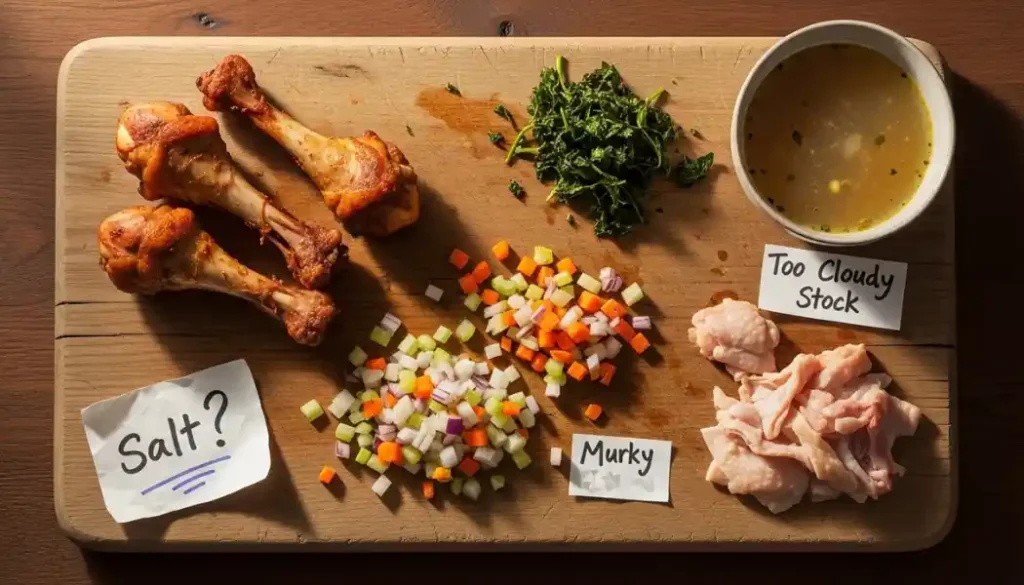
Many people make simple mistakes when preparing homemade chicken stock. One common mistake is boiling instead of simmering, which makes the stock cloudy and weak in flavor.
Another mistake is using the wrong bone-to-water ratio, which can make the stock too watery or too strong. Not skimming impurities during cooking can also affect the clarity and taste.
Adding salt too early is not recommended because it can make the stock too salty after reducing. Cloudy stock usually happens from high heat, over-stirring, or boiling too hard. Keeping heat low is very important.
How to Make Clear, Golden Chicken Stock
To make a clear and golden chicken stock, temperature control is very important. Always keep the heat low so the liquid stays at a gentle simmer.
Proper skimming is also needed. Remove foam and impurities from the top regularly to keep the stock clean. For better clarity, use a fine strainer or even a cheesecloth method to filter small particles.
After cooking, let the stock rest for some time. This helps solids settle at the bottom. Then carefully pour out the clear liquid on top. These steps help you create a smooth, clear, and professional-quality homemade chicken stock.
Variations of Chicken Stock
There are many ways to make chicken stock, and each method gives a slightly different flavor and texture. One popular option is the rotisserie chicken stock method, where you use leftover bones from a store-bought chicken. It is quick, easy, and very flavorful.
You can also use a slow cooker chicken stock method. This is great because it cooks slowly for hours without needing attention. The Instant Pot chicken stock is much faster and still gives strong flavor in less time.
Another choice is roasted vs unroasted stock. Roasted stock has a deeper color and stronger taste, while unroasted is lighter and more delicate. You can also make stock using leftover chicken bones, which is a great way to reduce waste and save money.
How to Store, Freeze & Reuse Chicken Stock
Proper storage helps keep your homemade chicken stock fresh for longer. In the refrigerator, it usually lasts about 3 to 4 days when stored in a sealed container.
For longer storage, freezing is the best option. You can freeze stock in small portions using an ice cube tray method, which makes it easy to use later. Always use freezer-safe jars or containers with space at the top because liquid expands when frozen.
When reheating, warm the stock slowly on low heat to keep the flavor balanced. A smart tip is to reuse chicken bones for a second stock. The second batch will be lighter but still useful for soups and cooking.
How to Use Chicken Stock in Cooking
Chicken stock is a very useful base in many dishes. It adds rich flavor and improves the taste of simple recipes. You can use it in soups and stews to make them more hearty and flavorful. It is also great for sauces and gravies, giving them a smooth and rich texture.
When cooking rice, risotto, or grains, replacing water with stock makes the dish more tasty. It is also used in braising liquids for meat and vegetables, helping them cook soft and juicy. You can even use it in pasta dishes to enhance the overall flavor naturally.
Nutrition & Health Benefits of Chicken Stock

Chicken stock is not only tasty but also full of natural benefits. One of the main benefits comes from collagen, which comes from chicken bones. When cooked slowly, it turns into gelatin that may support joints and skin health. It can also support gut health because warm stock is easy to digest and gentle on the stomach. Many people use it when they feel weak or sick.
The nutrients from bones slowly move into the liquid during cooking, giving you a natural nutrient-rich base. Another benefit is that it is a low-calorie cooking base, which makes it a good option for healthy meals without adding extra fats.
Expert Chef Tips for Best Chicken Stock
Professional chefs use simple tricks to make restaurant-quality chicken stock. First, choosing the right bones is important. Using a mix of joints and marrow bones gives better flavor and richness.
Flavor layering is another key tip. Adding vegetables and herbs at the right time builds deeper taste.
Timing is also very important. A long and slow simmer helps extract full flavor without rushing the process.
For clear stock, chefs always control heat carefully and avoid boiling. These small steps help create a clean, rich, and professional-style result.
Chicken Stock vs Broth vs Bone Broth
These three are often confused, but they are different in taste, texture, and use.
| Type | Main Ingredients | Texture | Cooking Time | Best Use |
| Chicken Stock | Bones, vegetables | Rich & slightly thick | Medium | Cooking base |
| Chicken Broth | Meat, vegetables | Light & clear | Short | Soups & drinking |
| Bone Broth | Bones (long cooked) | Very rich & thick | Long | Health drinks |
Chicken stock is best for cooking because it adds strong flavor. Broth is lighter and used for soups or drinking. Bone broth is cooked longer and is often used for health benefits. Choosing the right one depends on what you are cooking and the flavor you want.
Frequently Asked Questions
How long should chicken stock simmer?
A good chicken stock should simmer slowly for about 3 to 6 hours. This helps extract full flavor and nutrients from the bones without making the stock cloudy.
Can I freeze chicken stock?
Yes, you can easily freeze homemade chicken stock. The best method is to store it in small portions like ice cube trays for easy use later.
Why is my chicken stock cloudy?
Cloudy stock usually happens when it boils too hard or is stirred too much. Always keep it on a low slow simmer for a clear result.
Can I reuse chicken bones?
Yes, you can reuse bones for a second batch of stock. The second stock will be lighter but still useful for cooking.
Is chicken stock healthy?
Yes, it can be healthy. It contains collagen, minerals, and nutrients from bones and is also low in calories.
Can I use chicken stock instead of broth?
Yes, but keep in mind stock is richer and thicker, while broth is lighter. Stock works best for cooking, while broth is better for soups or drinking.
Final Thought
Making homemade chicken stock is simple, but the results are powerful. With just bones, vegetables, and time, you can create a rich base that improves almost every dish. Once you learn this basic recipe, you will rely less on store-bought versions and enjoy better flavor in your cooking. It is a small kitchen skill that brings a big difference in taste, health, and quality.