
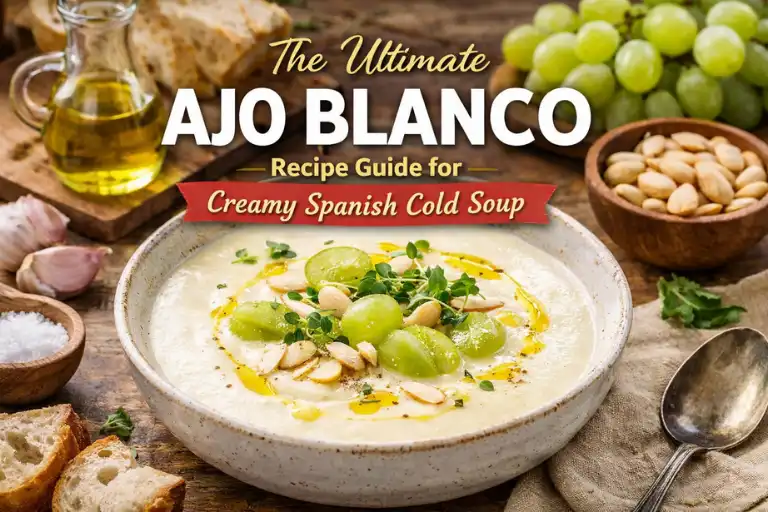
If you have never tried Ajo Blanco, you are in for something truly special. This traditional Andalusian cold soup is often called Spanish white gazpacho, but it is very different from tomato-based gazpacho. Instead of tomatoes, this creamy dish is made with almonds, garlic, olive oil, bread, and sherry vinegar, then served perfectly chilled. The result is a smooth and refreshing chilled almond soup that feels light yet satisfying.
Originating in southern Spain, especially Málaga and Granada, ajoblanco is deeply rooted in Spanish culinary history. It is simple, rustic, and beautifully balanced. Whether you are looking for an authentic ajo blanco recipe, a Mediterranean summer soup, or a tomato-free gazpacho alternative, this guide will walk you through everything step by step — with expert tips to help you make it perfectly creamy every time.
Quick Answer – What Is Ajo Blanco?
Ajo Blanco, sometimes spelled ajoblanco, is a traditional Andalusian cold soup from southern Spain. It is made with almonds, garlic, olive oil, bread, and vinegar, then blended until smooth and served cold. Often called Spanish white gazpacho, this creamy chilled almond soup is refreshing, nutty, and perfect for hot weather. It is one of the oldest classic Spanish soups, dating back to pre-tomato cuisine in Andalusia.
The Origins of Ajo Blanco (Before Tomatoes Reached Spain)

You might also like: Tangerine vs Clementine
Long before tomatoes arrived in Europe, Ajo Blanco was already part of Andalusian cuisine. This ancient Spanish cold soup reflects the strong Moorish influence in Andalusia, where almonds, garlic, and olive oil were common ingredients. The Moors introduced advanced farming techniques and nut-based dishes that shaped early southern Spanish cooking.
Because tomatoes came to Spain after Columbus, this pre-Columbian Spanish soup was originally made without them. That is why ajoblanco is completely tomato-free, unlike modern red gazpacho. It was considered simple peasant food, prepared by rural families using affordable staples like bread, almonds, and garlic.
The dish is especially important in Málaga and Granada, where it is still served during summer festivals. It is called “white gazpacho” because it shares the cold, refreshing nature of gazpacho — but uses almonds instead of tomatoes.
Why This Ajo Blanco Recipe Works Better Than Most
Many versions of ajo blanco recipe online miss small but important details. This version focuses on balance, texture, and consistency. First, the balanced garlic ratio ensures flavor without overpowering heat. Too much garlic can make the soup bitter or harsh. Second, we use a proper emulsification method, slowly streaming extra virgin olive oil while blending. This creates a smooth, creamy texture instead of a grainy one.
Third, choosing the ideal almond selection — preferably blanched or Marcona almonds — gives the soup a richer and more authentic taste. Finally, the measurements are carefully tested for consistent results, so your authentic Andalusian ajo blanco turns out silky and refreshing every time.
Traditional Ingredients Explained (And Why Each One Matters)
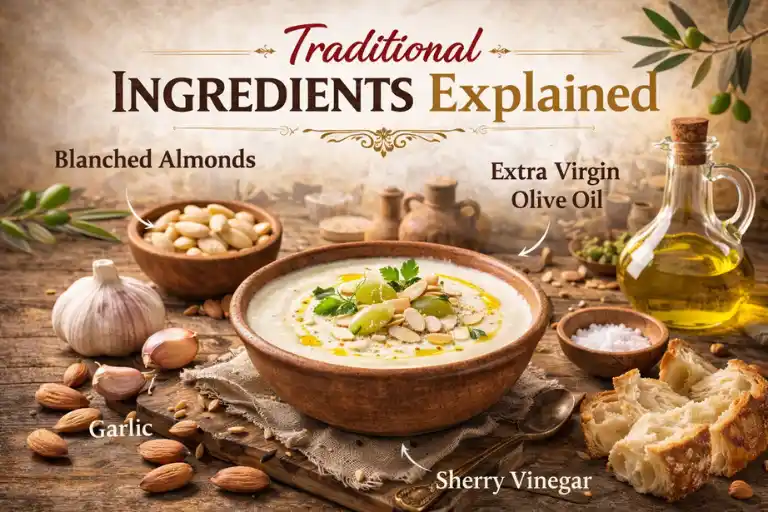
The beauty of an authentic ajo blanco recipe lies in its simplicity. Each ingredient in this Spanish cold soup has a specific role. When balanced correctly, they create a smooth, refreshing, and creamy chilled almond soup. Let’s break down why each one matters.
Almonds – Marcona vs Regular
Almonds are the heart of ajoblanco. They give the soup its nutty flavor and creamy body. Marcona almonds are traditional in Andalusia. They are softer, sweeter, and naturally buttery. Regular blanched almonds also work well, but the flavor is slightly milder.
From a food science perspective, almonds contain natural fats and proteins. When blended properly with olive oil and water, these fats help create a stable emulsion, which gives the soup its silky texture. Using raw almonds without blanching can make the texture slightly grainy.
Garlic – Flavor Control
Garlic gives ajo blanco its signature kick. But balance is everything. Too much garlic can overpower the delicate almond flavor and create bitterness.
To control intensity:
- Remove the inner green germ for a milder taste.
- Use fresh garlic cloves for clean flavor.
Garlic adds depth without heat when measured carefully.
Bread – Structure & Thickness
Day-old white bread may seem simple, but it plays a key role. It acts as a natural thickener, helping bind the almonds and liquid together. When soaked and blended, bread releases starch. This starch supports the emulsification process and prevents the soup from separating. Without bread, the texture may feel thinner.
Olive Oil – Emulsion Science
High-quality extra virgin olive oil is essential in a traditional Andalusian cold soup.
Here’s where food science matters: when olive oil is slowly streamed into the blended almonds and bread, it combines with the water and almond fats to form an emulsion. This is similar to how mayonnaise forms. If you pour the oil too quickly, the soup may not emulsify properly and can turn grainy. Slow blending creates a smooth, creamy consistency.
Sherry Vinegar – Authentic Acidity
A small amount of sherry vinegar brightens the entire dish. It adds gentle acidity that balances the richness of almonds and olive oil. Traditional recipes from Málaga prefer sherry vinegar because it has a deeper, more complex flavor compared to plain white vinegar.
Cold Water – Temperature Matters
Cold water may sound basic, but it is important. Using very cold water keeps the soup refreshing and prevents the olive oil from separating during blending. Serving ajo blanco properly chilled enhances its flavor and makes it perfect as a summer Spanish soup. Temperature directly affects texture, taste, and mouthfeel.
How to Make Authentic Ajo Blanco (Blender Method)
This easy ajo blanco recipe uses a modern blender, making it simple while still keeping the flavor of a traditional Andalusian cold soup. Follow these steps carefully for a smooth and creamy chilled almond soup.
1. Soak the Bread
Place day-old white bread in a bowl and cover it with water. Let it soak for about 5–10 minutes. This softens the bread and helps create structure in your Spanish white gazpacho. Squeeze out excess water before blending.
2. Blend Almonds + Garlic
Add blanched almonds and garlic cloves to a blender. Blend until finely ground. This step is important because smaller almond particles create a smoother final texture.
3. Stream Olive Oil Slowly
With the blender running, slowly drizzle in extra virgin olive oil. This step creates the emulsion that makes authentic ajoblanco creamy. Pouring too fast can cause separation.
4. Adjust Texture
Add cold water gradually until the soup reaches a smooth, pourable consistency. Blend again until silky. Taste and adjust salt or sherry vinegar if needed.
5. Chill Properly
Transfer the soup to the refrigerator and chill for at least 2 hours. Serving it fully cold enhances the refreshing flavor of this Spanish cold soup.
Traditional Mortar & Pestle Method (Historical Technique)
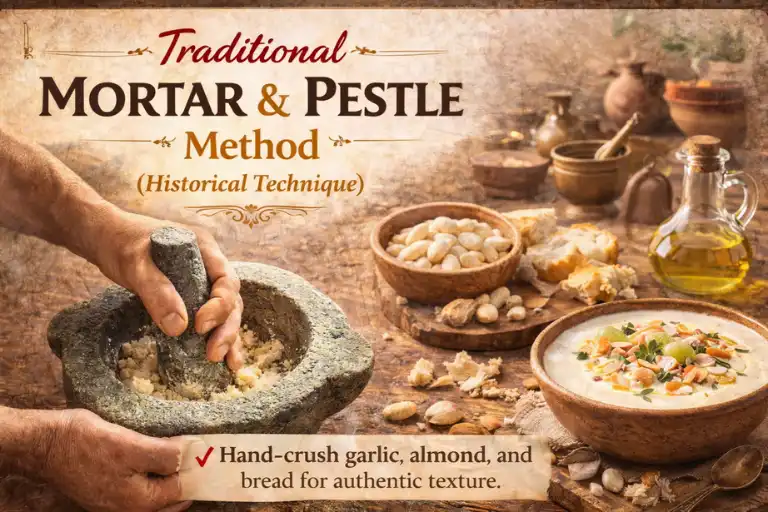
Before blenders existed, families in Málaga and Granada prepared ajo blanco using a mortar and pestle. This slow method reflects true cultural authenticity.
Flavor Difference
Hand-grinding almonds and garlic releases oils gently, producing a deeper and slightly richer flavor compared to the blender method.
Texture Difference
The texture is often thicker and more rustic. It may not be as ultra-smooth, but it feels more traditional and hearty.
Cultural Authenticity
Using a mortar and pestle connects this dish to its pre-Columbian Spanish cuisine roots. It honors the simple, rural origins of this classic Andalusian almond garlic soup.
How to Make It Ultra Creamy (Expert Emulsification Guide)
A perfect ajo blanco should be smooth, silky, and lightly thick — never gritty. If your Spanish white gazpacho feels grainy or separated, small technique changes can fix it.
Why It Turns Grainy
Graininess usually happens when:
- Almonds are not blended long enough
- Olive oil is added too quickly
- Raw almonds still have skins
Almond particles must be finely broken down to create a stable emulsion. Large pieces prevent smooth texture.
Fixing Separated Soup
If your chilled almond soup separates, blend it again while slowly streaming a little more extra virgin olive oil. This helps rebuild the emulsion. Make sure the soup is cold but not icy during blending.
How Long to Blend
Blend almonds and garlic for at least 1–2 full minutes before adding oil. After adding oil and water, blend another minute until completely smooth. High-speed blending improves creaminess.
Straining for Silkiness
For restaurant-quality texture, strain the soup through a fine mesh sieve. This removes tiny almond bits and gives your authentic Andalusian ajo blanco a refined finish.
What Does Ajo Blanco Taste Like?
Many recipes explain how to make ajo blanco, but few describe its true flavor. This traditional Spanish cold soup is surprisingly balanced.
- Creamy yet refreshing – It feels rich but still light and cooling.
- Nutty almond notes – Almonds provide a soft, buttery base flavor.
- Garlic intensity – Present but gentle when balanced properly.
- Light acidity – A touch of sherry vinegar brightens the soup without overpowering it.
If you enjoy Mediterranean flavors, olive oil–based dishes, or unique tomato-free gazpacho alternatives, you will likely love ajoblanco. It is perfect for those who want something elegant, simple, and refreshing during warm weather.
How to Serve Ajo Blanco Traditionally
Serving ajo blanco the right way makes a big difference in flavor and experience. This Andalusian cold soup is always enjoyed fully chilled.
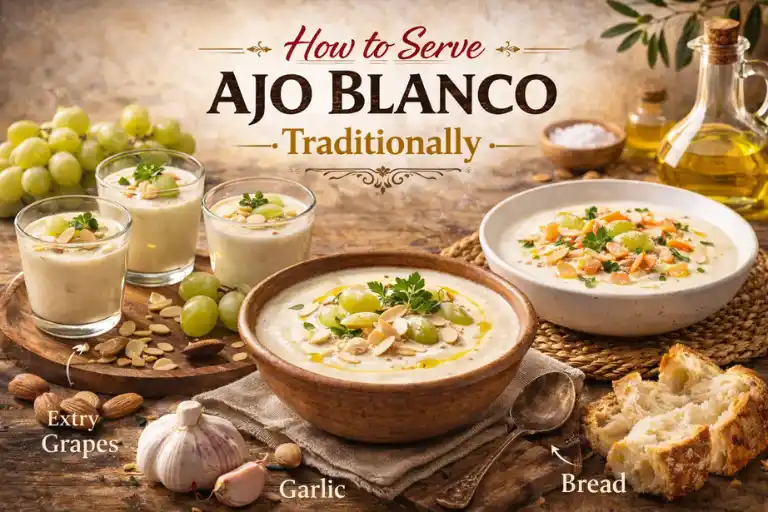
- Very cold – Authentic Spanish white gazpacho is served straight from the refrigerator. The cold temperature enhances its refreshing and nutty flavor.
- Grapes garnish – Fresh green grapes are the most traditional topping. Their natural sweetness balances the garlic and almonds beautifully.
- Olive oil drizzle – A light drizzle of extra virgin olive oil on top adds richness and shine.
- Tapas portion size – In southern Spain, ajoblanco is often served in small bowls or glasses as part of a tapas spread, especially during hot summer months.
Restaurant-Style Plating Guide
If you want your authentic ajo blanco recipe to look elegant and refined, presentation matters.
Bowl Choice
Use shallow white bowls to highlight the soup’s creamy, pale color. For a modern look, small glass cups also work beautifully for tapas-style servings.
Garnish Placement
Place halved grapes neatly in the center or slightly off to one side. Sprinkle a few sliced almonds for texture. Finish with a thin, circular drizzle of olive oil.
Elegant Presentation Tips
- Add microgreens for a modern touch.
- Chill the serving bowls beforehand.
- Keep garnishes minimal for a clean look.
These small details turn a simple chilled almond soup into a restaurant-worthy dish.
Regional Variations Across Andalusia
Although ajoblanco is rooted in Andalusia, small regional differences exist.
Málaga Version
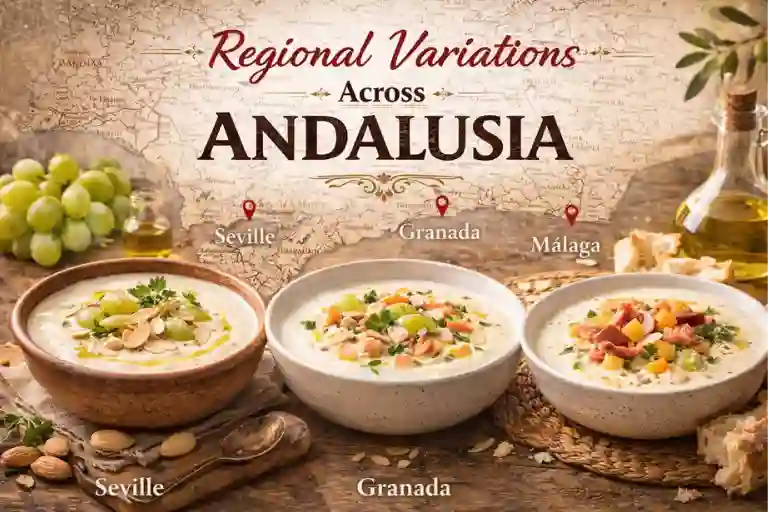
The Málaga version is the most traditional. It is slightly thinner and almost always served with fresh grapes. This region celebrates Ajo Blanco during summer festivals.
Granada Version
In Granada, the soup can be thicker and sometimes served with diced melon instead of grapes. The flavor may also be slightly stronger in garlic. These regional touches show how this Spanish cold soup evolved across southern Spain.
Modern Chef Twists
Today, chefs have reimagined ajo blanco while respecting its classic base.
With Melon
Blending or topping with fresh melon adds sweetness and enhances the refreshing nature of this summer Spanish soup.
With Cucumber
Cucumber introduces extra freshness and makes it closer to a light Mediterranean cold soup.
With Seafood
Some modern restaurants serve ajoblanco with shrimp or scallops, adding a savory contrast to the nutty base.
Smoked Garlic Version
Roasting or lightly smoking garlic creates a deeper, softer flavor profile while maintaining the creamy almond base. These creative variations keep Spanish white gazpacho exciting while honoring its authentic Andalusian roots.
Ajo Blanco vs Gazpacho o Salmorejo
These three classic Spanish cold soups are often confused, but each has its own unique flavor and texture. Here’s a clear comparison:
| Feature | Ajo Blanco | Gazpacho | Salmorejo |
| Main Base | Almonds, bread, garlic, olive oil | Tomatoes, bread, cucumber, peppers | Tomatoes, bread, olive oil |
| Tomato-Free | ✅ Completely tomato-free | ❌ Contains tomatoes | ❌ Contains tomatoes |
| Texture | Smooth, creamy, light | Thin, slightly chunky | Thick, creamy, dense |
| Flavor | Nutty, slightly garlicky, refreshing | Fresh, tangy, vegetal | Rich, savory, slightly sweet |
| Serving Style | Chilled with grapes or melon | Chilled with vegetables | Chilled with hard-boiled eggs or ham |
Key Points:
- Ajo Blanco is perfect for nut lovers and those wanting a tomato-free Spanish white gazpacho.
- Gazpacho is lighter and vegetable-forward.
- Salmorejo is denser and richer, often served as a hearty starter.
Is Ajo Blanco Healthy?
Ajo Blanco isn’t just delicious — it’s a nutrient-packed Mediterranean soup.

- Mediterranean diet alignment – Made with almonds, olive oil, and fresh ingredients, it fits perfectly into a heart-healthy diet.
- Healthy fats from almonds – Provides monounsaturated fats that support heart health.
- Vegan – Completely plant-based, with no animal products.
- Dairy-free – No cream or milk, making it light and suitable for lactose-intolerant diets.
- Gluten-free substitution – Traditional recipes use bread, but you can replace it with gluten-free bread to keep the creamy texture intact.
This combination makes ajo blanco a refreshing, guilt-free choice for summer and a nutritious addition to any meal plan.
How to Store, Freeze & Make Ahead
One of the best things about ajo blanco is that it can be prepared ahead of time, making it perfect for summer parties or busy days.
- Fridge Life – Store in an airtight container in the refrigerator for up to 3–4 days. Chilling helps the flavors meld beautifully.
- Flavor Improvement Overnight – Many chefs recommend letting the soup sit overnight. The almonds, garlic, and vinegar combine, enhancing the nutty and refreshing flavor.
- Freezing Impact on Texture – Freezing is possible, but it can slightly change the texture, making the soup less creamy. If frozen, thaw slowly in the fridge and re-blend gently before serving.
- Travel-Friendly Tips – For picnics or trips, keep the soup chilled in a thermos or insulated container. Garnishes like grapes or melon should be added just before serving.
Best Wine Pairings for Ajo Blanco
Pairing ajo blanco with the right drinks elevates the dining experience. Here are excellent choices:
- Dry Sherry – A classic Spanish pairing that complements the nutty, garlicky flavors.
- Albariño – Light, crisp, and slightly fruity, balancing the creamy soup.
- Spanish Rosé – Refreshing and versatile, perfect for warm weather meals.
- Sparkling Water Option – Non-alcoholic alternative that keeps the soup light and clean on the palate.
These pairings add sophistication and make Spanish white gazpacho a standout starter or appetizer at any meal.
Best Almonds & Olive Oil to Use
Choosing the right ingredients is key to making authentic ajo blanco taste exceptional.

- What to Look For – Use blanched almonds or Marcona almonds for a smooth, nutty flavor. Select extra virgin olive oil with a mild, fruity taste to complement the almonds without overpowering them.
- Quality Indicators – Almonds should be fresh, plump, and free from brown spots. Olive oil should be cold-pressed and labeled extra virgin for maximum flavor and healthy fats.
- Budget vs Premium Options – While Marcona almonds are premium, regular blanched almonds work well for everyday cooking. Mid-range extra virgin olive oil often delivers great flavor without a high price.
💡 Monetization Opportunity: Linking to premium almond brands or quality olive oils can create affiliate revenue while guiding readers toward authentic ingredients.
FAQs About Ajo Blanco Recipe
Can you make ajo blanco without bread?
Yes! Bread adds thickness, but you can replace it with soaked gluten-free bread or extra almonds to maintain creamy texture.
Why is my ajo blanco bitter?
Bitter taste often comes from over-blended garlic, almond skins, or poor-quality olive oil. Adjust ingredient ratios and strain the soup for a smoother flavor.
Can I use almond milk?
Almond milk can be used as a substitute for water in vegan or gluten-free versions, but it slightly changes the flavor and texture.
How long does it last?
Stored in the fridge in an airtight container, ajo blanco stays fresh for 3–4 days. Flavors improve slightly overnight.
Is it served as an appetizer or main dish?
Traditionally, it’s a starter or tapas portion, but it can be served in larger bowls as a light main dish in summer.
Can kids eat it?
Yes! The nutty, creamy, and mild flavor is usually well-received by children, but reduce garlic slightly for younger palates.
Pro Tips from Spanish Kitchens
To make ajo blanco like a true Andalusian chef, small details can elevate your soup from good to exceptional.
- Garlic Moderation – Use the right amount of garlic for a balanced flavor. Too much can overpower the almonds and make the soup bitter. Removing the inner green germ helps reduce harshness.
- Proper Chilling Time – Chill the soup for at least 2 hours before serving. Cold temperature enhances its refreshing nature and helps flavors meld beautifully.
- Oil Streaming Speed – When emulsifying, pour olive oil slowly into the blender. This prevents separation and creates a smooth, creamy consistency.
- Salt Timing – Add salt gradually. Over-salting early can affect flavor balance. Adjust toward the end after tasting the fully blended soup.
Following these chef-approved tips ensures your authentic Andalusian ajo blanco is silky, flavorful, and perfectly balanced every time.
Ajo Blanco Recipe Card
Prep Time: 15 minutes
Chill Time: 2 hours
Total Time: 2 hours 15 minutes
Servings: 4
Calories: ~180 kcal per serving
Ingredients
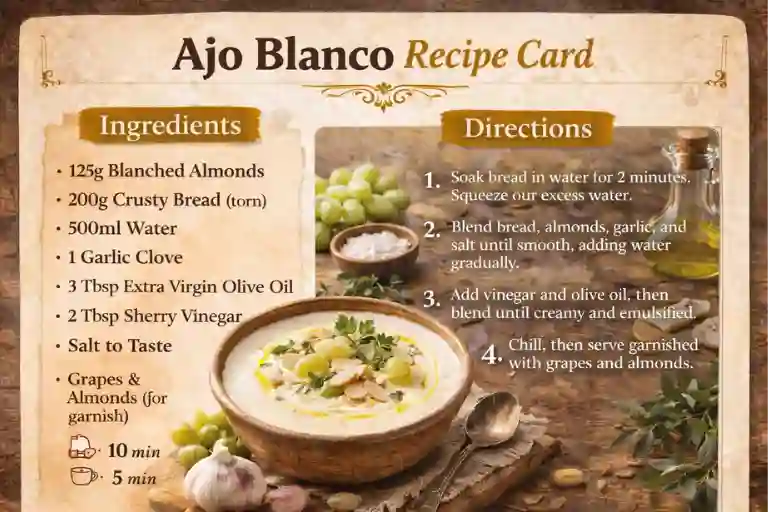
- 1 cup blanched almonds (or Marcona almonds)
- 2–3 garlic cloves (adjust to taste)
- 2 slices day-old white bread, crust removed
- 3/4 cup cold water
- 1/2 cup extra virgin olive oil
- 2 tsp sherry vinegar (or white wine vinegar)
- 1/2 tsp salt, adjust to taste
- 1/4 cup seedless green grapes for garnish
- Optional: sliced almonds or diced melon for topping
Instructions
- Soak bread in water for 5–10 minutes until soft. Squeeze out excess water.
- Blend almonds and garlic in a blender until finely ground.
- Add soaked bread and cold water. Blend until smooth.
- Slowly stream in olive oil while blending to form a creamy emulsion.
- Add sherry vinegar and salt, blend briefly, and taste. Adjust if needed.
- Chill the soup in the refrigerator for at least 2 hours.
- Serve in bowls or glasses, garnished with grapes, sliced almonds, or melon. Drizzle with a little olive oil if desired.
Notes
- For a smoother texture, strain the soup through a fine mesh sieve before chilling.
- Can be made vegan and gluten-free by replacing bread with gluten-free bread.
- Soup improves in flavor if prepared a few hours in advance.
Nutrition (Per Serving)
- Calories: ~180 kcal
- Fat: 14 g (mostly healthy monounsaturated fats)
- Carbohydrates: 10 g
- Protein: 5 g
- Fiber: 3 g
- Sugar: 2 g
This authentic Andalusian ajo blanco recipe is creamy, refreshing, and perfect for summer, giving a true taste of southern Spain.
Final Thoughts
Ajo Blanco is more than just a Spanish cold soup — it’s a culinary tradition of Andalusia that combines simplicity, flavor, and history in every creamy, chilled spoonful. By focusing on fresh, high-quality ingredients like blanched almonds, extra virgin olive oil, and sherry vinegar, and mastering the emulsification process, you can create a smooth, nutty, and perfectly balanced Spanish white gazpacho that stands out from typical recipes.
From its Moorish roots to modern chef twists with melon or seafood, ajo blanco offers endless versatility while remaining authentic. Serve it well-chilled, garnished thoughtfully, and pair with the right wine or sparkling water to elevate your meal. Whether for a summer appetizer, tapas party, or elegant dinner, this traditional Andalusian soup is a refreshing, healthy, and impressive dish that’s sure to delight everyone at the table.