

There’s something deeply comforting about a bowl of Italian stewed lentils, known in Italy as lenticchie in umido. This hearty Italian lentil stew is simple, rustic, and full of flavor. Made with everyday pantry ingredients like olive oil, garlic, tomatoes, and herbs, it turns humble lentils into a warm and satisfying dish. In many Italian homes, this traditional recipe is especially popular on New Year’s Eve, when lentils are served as a symbol of luck and prosperity.
Whether you call it Italian lentil stew, stewed lentils, or even a rustic lentil ragout, the heart of the dish remains the same—slow-cooked comfort with Mediterranean roots. In this guide, you’ll learn how to make authentic Italian stewed lentils, choose the best lentils, avoid common mistakes, and serve them in the most delicious way possible. Let’s bring a taste of Italy to your kitchen.
Quick Answer:
Italian stewed lentils (lenticchie in umido) are a traditional Italian lentil stew made by slowly cooking green or brown lentils with a base of soffritto (onion, carrot, celery), garlic, olive oil, tomatoes, and herbs like rosemary and bay leaf. This hearty, rustic dish is especially popular on New Year’s Eve in Italy, where lentils symbolize luck and prosperity. It can be served as a main vegetarian meal, a side dish with sausage, or alongside polenta or crusty bread.
What Are Italian Stewed Lentils (Lenticchie in Umido)?
Definition
Italian stewed lentils, known as lenticchie in umido, are a traditional Italian lentil stew made by slowly simmering lentils with a base of soffritto (onion, carrot, and celery), olive oil, tomatoes, and simple herbs like rosemary and bay leaf. This hearty Italian lentil recipe is rustic, comforting, and deeply rooted in Mediterranean home cooking.
Unlike creamy soups, this dish has a thick, rich texture where the lentils stay tender but hold their shape. It’s often served as a main vegetarian meal or as a side dish with sausage.
Difference: Stew vs Soup vs Ragout
Many people confuse Italian lentil stew, Italian lentil soup, and lentil ragout, but they are slightly different:
- Stew: Thicker, with less liquid and a rich tomato base.
- Soup: More broth-based and lighter in texture.
- Ragout: Slowly cooked and sometimes served over pasta or polenta.
Lenticchie in umido falls firmly in the stew category, with bold, concentrated flavor.
Regional Variations
Across Italy, this dish changes slightly:
- In Central Italy, it’s often served with cotechino sausage on New Year’s Eve.
- In Tuscany, it may include extra garlic and herbs.
- In Southern regions, a touch of chili adds warmth.
No matter the region, the heart of Italian stewed lentils remains simple, wholesome, and deeply traditional.
Why Italians Eat Lentils on New Year’s Eve

You might also like: How to Make the Easy Vegan Pasta Brands Recipe
In Italy, serving Italian stewed lentils (lenticchie in umido) on New Year’s Eve is more than just a food tradition — it’s a symbol of hope and prosperity. This special night, known as Capodanno, is celebrated with family, festive meals, and meaningful dishes that carry deep cultural value.
The Capodanno Tradition
On the evening of December 31st, Italian families gather for a long dinner filled with traditional foods. Among the most important dishes is a plate of traditional Italian lentils, served right after midnight. Eating lentils at the start of the year is believed to bring financial success and good fortune in the months ahead.
This tradition has been passed down for generations and remains strong across Italy.
Lentils Symbolize Coins & Prosperity
The reason behind this custom is simple and symbolic. Lentils are small and round, and when cooked, they resemble tiny coins. Because of this shape, they represent wealth, abundance, and prosperity.
The more lentils you eat, the more “wealth” you invite into the new year — at least according to tradition. This belief makes Italian lentil stew not just a comforting meal, but a lucky one too.
Served with Cotechino Sausage
Traditionally, lenticchie in umido are served with cotechino sausage, a rich and slow-cooked Italian pork sausage. The hearty sausage pairs perfectly with the soft, tomato-based lentils, creating a balanced and festive dish.
While the lentils symbolize prosperity, the sausage represents abundance and celebration, making this combination a powerful cultural meal.
A True Taste of Italian Heritage
Including this tradition in your recipe adds cultural authenticity and connects your kitchen to centuries of Italian history. Whether you serve these Italian stewed lentils on New Year’s Eve or enjoy them as a simple weeknight meal, you’re cooking a dish filled with meaning, warmth, and Mediterranean tradition.
Ingredients You’ll Need (With Substitutions & Variations)
A truly authentic Italian stewed lentils recipe keeps things simple. The beauty of lenticchie in umido is that it transforms humble pantry staples into a hearty, rustic Italian lentil stew. Below is a breakdown of each key ingredient — plus smart substitutions and variations.

The Soffritto Base (Onion, Carrot, Celery)
The heart of every great Italian lentil stew starts with soffritto — a slow-cooked mix of onion, carrot, and celery sautéed in extra virgin olive oil.
This trio builds flavor through gentle cooking. As the vegetables soften, their natural sugars release and create a sweet, rich base. This process gives stewed lentils depth and balance without needing heavy spices.
Pro Tip: Cook the soffritto slowly over medium heat. Rushing it weakens the flavor foundation.
Choosing the Right Lentils
Not all lentils behave the same in a traditional Italian lentil recipe.
Green vs Brown vs French Lentils
- Green lentils: Hold their shape well and are ideal for Italian stewed lentils.
- Brown lentils: Softer texture, slightly earthier flavor.
- French (Puy) lentils: Firmer and more refined, great for a thicker texture.
For the most authentic lenticchie in umido, green or brown lentils work best.
Canned vs Dried
- Dried lentils: More traditional and absorb flavor better.
- Canned lentils: Faster option for a quick Italian lentil stew, but slightly softer.
If using canned lentils, reduce cooking time since they are already tender.
Cooking Differences
Dried lentils usually cook in 25–35 minutes, depending on type. They don’t require soaking like beans, which makes them perfect for a simple one-pot meal.
Tomato Base Options
The tomato element gives Italian stewed lentils their signature warmth and color.
- Tomato passata: Smooth and traditional, perfect for a classic texture.
- Tomato paste: Concentrated flavor — always sauté it briefly to deepen taste.
- Crushed tomatoes: Chunkier and slightly lighter in body.
For a richer stew, combine tomato paste + passata.
Optional Add-Ins
While the base recipe is vegetarian, many regional versions add extra ingredients:
- Pancetta: Adds smoky depth.
- Italian sausage (like cotechino): Traditional for New Year’s Eve.
- Spinach: Boosts nutrition and color.
- Calabrian chili: Adds gentle heat for a Southern Italian twist.
These variations allow you to adapt your Italian lentil stew to your taste.
Substitutions & Dietary Options
Vegan Version
Simply skip pancetta or sausage. The base recipe of lentils, soffritto, olive oil, and tomatoes is naturally plant-based and fits perfectly into a Mediterranean diet.
Gluten-Free Note
This recipe is naturally gluten-free. Just be mindful of sausage labels if adding meat.
Low-Sodium Swaps
- Use low-sodium vegetable broth.
- Rinse canned lentils thoroughly.
- Add salt gradually at the end.
With these smart adjustments, your Italian stewed lentils (lenticchie in umido) remain authentic, flexible, and perfect for any kitchen.
How to Make Italian Stewed Lentils (Step-by-Step)
Follow these simple steps to make authentic Italian stewed lentils (lenticchie in umido) with perfect texture and flavor.

1. Sauté the Soffritto (5–7 minutes)
Heat extra virgin olive oil in a large pot over medium heat.
Add chopped onion, carrot, and celery.
Cook slowly until soft and lightly golden.
Texture checkpoint: Vegetables should be tender, not browned.
2. Add Garlic & Tomato Paste (1–2 minutes)
Stir in minced garlic and tomato paste.
Cook briefly to deepen flavor.
Texture checkpoint: Tomato paste should darken slightly and smell rich.
3. Add Lentils & Liquid (25–35 minutes)
Add green or brown lentils, tomato passata or crushed tomatoes, herbs (rosemary, bay leaf), and vegetable broth.
Bring to a gentle boil, then reduce to low and simmer uncovered.
Time cue: Simmer 25–35 minutes until lentils are tender.
Texture checkpoint: Lentils should be soft but still hold their shape.
4. Adjust Consistency (5 minutes)
If too thick, add a splash of broth.
If too thin, simmer uncovered a few extra minutes.
The final texture should be thick like a stew, not watery like soup.
5. Rest Before Serving (10 minutes)
Turn off heat and let the Italian lentil stew rest.
This allows flavors to settle and deepen naturally.
Chef Tips for Maximum Flavor
These small details elevate your traditional Italian lentils from good to exceptional.
1. Bloom the Tomato Paste
Cooking tomato paste in oil before adding liquid removes raw acidity and builds deeper flavor. This is essential for a rich Italian stewed lentils recipe.
2. Salt at the Right Time
Avoid adding too much salt early.
Salt after the lentils are almost tender to prevent tough skins and uneven seasoning.
3. Let It Rest for 10 Minutes
Resting allows starches to thicken the stew naturally. The flavor becomes smoother and more balanced.
4. Add Olive Oil at the End
A drizzle of extra virgin olive oil just before serving adds freshness and authentic Mediterranean aroma.
5. Balance Acidity with Balsamic
If the tomatoes taste sharp, add a small splash of balsamic vinegar. It enhances sweetness and rounds out the flavor beautifully.
What to Serve With Italian Stewed Lentils
One of the best things about Italian stewed lentils (lenticchie in umido) is how versatile they are. This hearty Italian lentil stew can be served as a main dish or a flavorful side.

With Creamy Polenta
Soft polenta is a classic pairing. The smooth texture balances the thick lentils and absorbs the rich tomato sauce beautifully. This combination feels rustic and very traditional.
With Rustic Bread
Serve with warm crusty Italian bread. It’s perfect for soaking up every bit of the flavorful sauce.
With Roasted Vegetables
Add roasted zucchini, eggplant, or carrots for a complete Mediterranean lentil meal that’s both healthy and satisfying.
Over Pasta
Spoon the lentils over short pasta like rigatoni for a comforting twist on a lentil ragout.
With Grilled Sausage
For a traditional New Year’s version, serve alongside grilled Italian sausage or cotechino. The richness of the sausage pairs beautifully with the earthy lentils.
Best Wine Pairings for Lentil Stew
Choosing the right wine makes your Italian lentil stew feel even more authentic.
Chianti
A classic Tuscan Chianti works perfectly. Its bright acidity cuts through the richness of the tomatoes and olive oil.
Montepulciano
Montepulciano d’Abruzzo offers deeper fruit notes that match well with lentils and sausage.
Light Red vs Dry White
A light red wine is usually best for lentil stew. However, a dry white with good acidity can also work if you prefer something lighter.
Why Acidity Matters
Lentils are earthy and mild. Wine with natural acidity balances the tomato base and keeps the dish from feeling too heavy. The result is a more refreshing and balanced meal.
Make-Ahead & Meal Prep Guide
One reason Italian stewed lentils are so popular is that they taste even better the next day.
Batch Cooking
You can easily double the recipe. Lentils store well and develop deeper flavor over time.
Portion Storage
Divide the stew into airtight containers. Store in the refrigerator for up to 4–5 days.
Weekly Meal Prep Use
Use leftovers:
- As a quick lunch bowl
- Served over rice or pasta
- Paired with roasted vegetables
- As a protein-rich vegetarian side
This makes lenticchie in umido perfect for busy weeks while staying healthy and comforting.
How to Store, Freeze & Reheat Lentils Properly
Proper storage keeps your Italian stewed lentils (lenticchie in umido) fresh, flavorful, and safe to eat. The good news? This hearty Italian lentil stew stores beautifully.
Fridge Lifespan
Allow the lentils to cool completely before storing.
Place them in an airtight container and refrigerate for 4–5 days.
In fact, Italian lentil stew often tastes better the next day because the flavors continue to develop.
Freezing Instructions
Yes, you can freeze stewed lentils.
- Let them cool fully.
- Divide into portion-sized containers.
- Freeze for up to 3 months.
For best results, leave a little space in the container since the stew expands when frozen.
How to Prevent Mushiness
To keep lentils from turning too soft:
- Slightly undercook them by 1–2 minutes if planning to freeze.
- Avoid adding too much liquid before storing.
- Do not overheat repeatedly.
Green or French lentils hold their shape better than brown ones.
Best Reheating Method (Stovetop Is Better)
The best way to reheat Italian stewed lentils is on the stovetop.
- Place lentils in a saucepan.
- Add a splash of water or vegetable broth.
- Heat gently over medium-low, stirring occasionally.
Microwaving works in a pinch, but stovetop reheating keeps the texture smooth and prevents uneven drying.
Common Mistakes to Avoid
Even a simple traditional Italian lentil recipe can go wrong without attention to detail.

1. Overcooking
Cooking lentils too long makes them mushy.
They should be tender but still hold their shape.
2. Too Watery
Adding too much broth turns the stew into Italian lentil soup instead of a thick stew.
Simmer uncovered at the end to reduce excess liquid.
3. Under-Seasoning
Lentils are mild and need proper seasoning.
Salt gradually and adjust at the end for balanced flavor.
4. Skipping the Soffritto
Never skip the soffritto base (onion, carrot, celery).
It builds the foundation of authentic lenticchie in umido flavor.
Troubleshooting Guide
If something feels off, here’s how to fix your Italian lentil stew quickly.
Lentils Too Hard?
They may need more cooking time.
Add a little extra broth and simmer gently for another 5–10 minutes.
Too Thick?
Stir in a small splash of warm broth or water and simmer briefly.
Too Bland?
Add:
- A pinch of salt
- Fresh cracked black pepper
- A drizzle of extra virgin olive oil
- A small splash of balsamic vinegar
These brighten the flavor instantly.
Too Acidic?
If the tomato flavor tastes sharp, balance it with:
- A tiny pinch of sugar
- A splash of balsamic
- Or a drizzle of olive oil
These simple fixes will bring your Italian stewed lentils (lenticchie in umido) back into perfect harmony.
Are Italian Lentils Healthy?
Yes — Italian stewed lentils (lenticchie in umido) are naturally nutritious and fit perfectly into a balanced diet. This hearty Italian lentil stew is rich in plant-based nutrients while staying simple and wholesome.

Protein Per Serving
Lentils are an excellent source of plant-based protein.
One serving (about 1 cup cooked) provides roughly 15–18 grams of protein, making this dish satisfying and ideal for vegetarians.
Iron Content
Lentils are rich in iron, which supports healthy blood flow and energy levels. Pairing lentils with tomatoes (which contain vitamin C) helps your body absorb iron more effectively.
Fiber Benefits
This traditional Italian lentil recipe is high in dietary fiber, which supports digestion and helps you feel full longer. A single serving can provide around 12–15 grams of fiber.
Mediterranean Diet Friendly
Because it uses olive oil, vegetables, legumes, and simple herbs, this dish fits naturally into the Mediterranean diet — known for supporting heart health and longevity.
A Balanced Plant-Based Meal
When served with polenta, bread, or vegetables, Italian lentil stew becomes a complete and nourishing plant-based meal with protein, fiber, and healthy fats.
Quick Nutrition Overview (Per 1 Cup Serving)
| Nutrient | Approximate Amount |
| Calories | 230–260 kcal |
| Protein | 15–18 g |
| Fiber | 12–15 g |
| Iron | 3–4 mg |
| Fat | 5–7 g |
| Carbohydrates | 35–40 g |
Values may vary depending on ingredients and portion size.
FAQs About Italian Stewed Lentils
Do you soak lentils before cooking?
No, lentils do not require soaking like dried beans. Simply rinse them under water before cooking. Green and brown lentils cook directly in broth or water and become tender in about 25–35 minutes.
Can I use canned lentils?
Yes, canned lentils work well for a quicker version of Italian stewed lentils. Rinse and drain them first, then reduce cooking time since they are already tender.
How long do lentils take to cook?
Dried green or brown lentils usually cook in 25–35 minutes when simmered gently. Cooking time may vary slightly depending on the variety and freshness.
Can I freeze lentil stew?
Yes, Italian lentil stew freezes very well. Store in airtight containers for up to three months. Thaw overnight in the fridge and reheat gently on the stovetop.
Is this recipe vegan?
The base recipe of lenticchie in umido is naturally vegan, made with lentils, vegetables, olive oil, and tomatoes. Just skip any added sausage or pancetta.
What type of lentils are best?
Green or brown lentils are best for Italian stewed lentils because they hold their shape well. French (Puy) lentils are also a good option for a firmer texture.
Can I cook lentils in Instant Pot?
Yes. Cook lentils in the Instant Pot on high pressure for about 8–10 minutes, followed by a natural release. This method speeds up the cooking process while keeping the texture tender.
Recipe Card – Traditional Italian Stewed Lentils (Lenticchie in Umido)
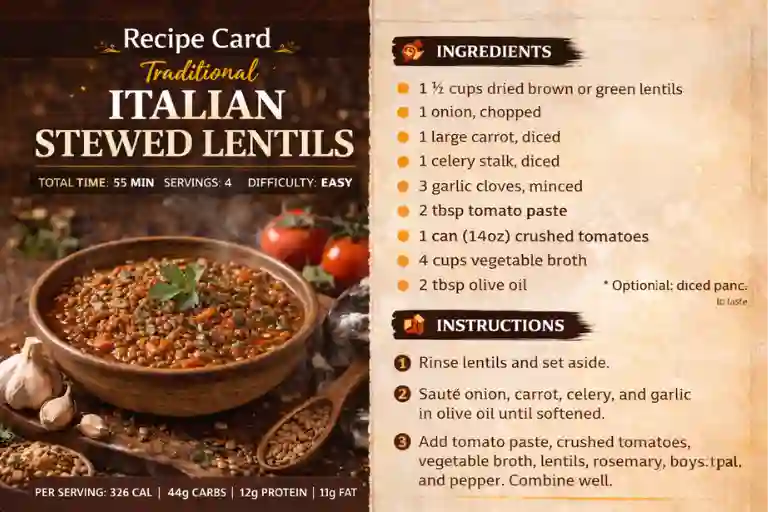
- Prep Time:
- 10 minutes
- Cook Time:
- 35 minutes
- Total Time:
- 45 minutes
- Servings:
- 4 servings
- Calories:
- Approximately 240–260 kcal per serving
Ingredients
- 1 cup dried green or brown lentils, rinsed
- 2 tablespoons extra virgin olive oil, plus extra for finishing
- 1 small onion, finely chopped
- 1 small carrot, finely chopped
- 1 celery stalk, finely chopped
- 2 cloves garlic, minced
- 2 tablespoons tomato paste
- 1 cup tomato passata (or crushed tomatoes)
- 3 cups low-sodium vegetable broth
- 1 bay leaf
- 1 small sprig fresh rosemary (or ½ tsp dried)
- Salt and black pepper to taste
- Optional: pancetta, Italian sausage, spinach, or Calabrian chili
Instructions
- Sauté the Soffritto:
Heat olive oil in a large pot over medium heat. Add onion, carrot, and celery. Cook for 5–7 minutes until soft. - Bloom the Tomato Paste:
Stir in garlic and tomato paste. Cook for 1–2 minutes until fragrant and slightly darkened. - Simmer the Lentils:
Add lentils, passata, broth, bay leaf, and rosemary. Bring to a boil, then reduce heat and simmer uncovered for 25–35 minutes, until lentils are tender but still hold shape. - Adjust & Rest:
Season with salt and pepper. If needed, adjust thickness with broth. Let the stew rest for 10 minutes before serving. - Finish & Serve:
Drizzle with fresh olive oil and serve warm.
Notes
- For a vegan version, skip pancetta or sausage.
- For New Year’s Eve tradition, serve with cotechino sausage.
- If using canned lentils, reduce simmering time to 10–15 minutes.
- For deeper flavor, add a small splash of balsamic vinegar before serving.
Nutrition (Per Serving – Approximate)
- Calories: 240–260 kcal
- Protein: 15–18 g
- Carbohydrates: 35–40 g
- Fiber: 12–15 g
- Fat: 5–7 g
- Iron: 3–4 mg
Lentil Stew vs Lentil Soup – What’s the Difference?
Many people search for Italian lentil soup, lentil stew, or even lentil ragout and assume they are the same. While they share similar ingredients, the texture, cooking style, and final consistency are slightly different.
Understanding this difference helps you choose the right dish — and keeps your expectations clear when making Italian stewed lentils (lenticchie in umido).
Italian Lentil Stew
A lentil stew is thick, hearty, and rich. It uses less liquid and cooks slowly so the flavors concentrate. The texture should be spoonable but not watery.
In Italian stewed lentils, the goal is tender lentils that hold their shape in a rich tomato base. This is the classic lenticchie in umido style.
Thick, rustic, and comforting.
Italian Lentil Soup
Italian lentil soup contains more broth and has a lighter texture. It is more fluid and often served in a bowl with extra liquid.
While the ingredients may be similar — lentils, soffritto, tomatoes, and herbs — the higher liquid ratio makes it feel lighter and less concentrated.
Brothier and more delicate.
Lentil Ragout
A lentil ragout is thicker than soup and sometimes even thicker than stew. It is often served over pasta, polenta, or grains rather than eaten alone.
The cooking style is slow and focused on deep flavor, similar to a traditional meat ragout but made with lentils.
Rich, thick, and often used as a topping.
Quick Comparison
| Dish | Texture | Liquid Level | How It’s Served |
| Lentil Stew | Thick | Moderate | Main dish or side |
| Lentil Soup | Brothy | High | Bowl with spoon |
| Lentil Ragout | Very thick | Low | Over pasta or polenta |
Final Thoughts
Italian stewed lentils (lenticchie in umido) prove that simple ingredients can create something deeply comforting and meaningful. With just lentils, soffritto, olive oil, tomatoes, and herbs, you can prepare a hearty Italian lentil stew that feels both rustic and nourishing.
Whether you enjoy it as a cozy weeknight meal, serve it over polenta, pair it with grilled sausage, or cook it for New Year’s Eve prosperity, this traditional dish carries warmth and history in every bite. It fits beautifully into the Mediterranean diet, offers plant-based protein and fiber, and stores well for meal prep.
Most importantly, this recipe is flexible. You can adjust the texture, experiment with variations, and make it your own while keeping its authentic roots intact. Now it’s your turn — bring this classic Italian lentil recipe into your kitchen and enjoy a true taste of Italy.