
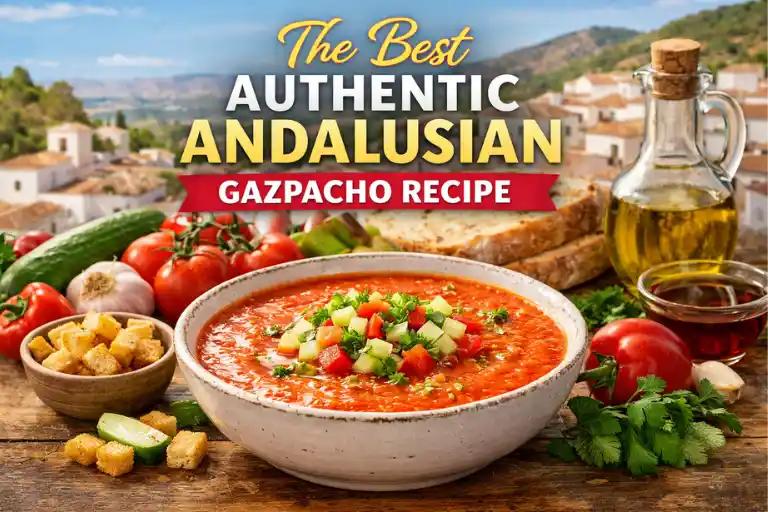
Authentic Andalusian gazpacho is a traditional Spanish cold tomato drink made from fresh raw vegetables, olive oil, vinegar, and bread. It comes from southern Spain, especially the region of Andalusia, where it is enjoyed during hot summers. Unlike hot soups, this cold tomato soup is blended and served chilled. In many homes, it is even poured into a glass and enjoyed like a drink.
A true gazpacho recipe includes ripe tomatoes, cucumber, green bell pepper, garlic, extra virgin olive oil, sherry vinegar, and stale bread. The bread helps create a smooth texture and makes it more filling. What makes it authentic gazpacho is its simple ingredients, raw preparation, and refreshing taste. It is healthy, light, and a perfect example of the Mediterranean diet in action.
The Origins of Gazpacho in Southern Spain
The story of authentic Andalusian gazpacho begins long before tomatoes were part of Spanish cooking. Early versions of this dish were simple Roman bread soups made with stale bread, garlic, olive oil, vinegar, and water. These humble ingredients created a nourishing meal for farmers and workers in southern Spain.
Before tomatoes arrived, there was a version known as white gazpacho, or ajo blanco. This pre-tomato gazpacho was made with bread, garlic, almonds, olive oil, and vinegar. It shows that the heart of a traditional gazpacho recipe has always been about bread and oil emulsified together.
Tomatoes only became part of Andalusian cuisine after their arrival from the Americas in the 16th century. Over time, the red tomato version became the famous Spanish cold tomato soup we know today.
The dish also reflects Moorish culinary influence, especially in its use of garlic, vinegar, and almonds. Through centuries, gazpacho evolved in Andalusia, becoming the refreshing traditional Spanish cold drink enjoyed across Spain today.
What Makes Gazpacho Truly Authentic?
Not every gazpacho recipe is truly traditional. To make authentic Andalusian gazpacho, certain elements are essential. First, bread is essential. Traditional gazpacho Andaluz always includes stale bread. It thickens the soup and helps create the smooth body that defines real authentic gazpacho. Versions made without bread may taste fresh, but they are modern adaptations, not the original style from southern Spain.
Second, the choice of vinegar matters. Sherry vinegar is the classic option in Andalusia. It gives depth and balance to the cold tomato soup. Substitutes like balsamic or plain white vinegar change the flavor and move away from tradition.
Another key factor is olive oil emulsification. Slowly blending extra virgin olive oil with tomatoes and bread creates a creamy texture without cream. This emulsion is what makes a traditional Spanish cold drink silky and rich. Finally, texture standards in Andalusia matter. Authentic gazpacho should be smooth but not watery, thick yet drinkable — a perfect balance achieved through proper technique.
You might also like: How To Convert Grams To Cups
Traditional Ingredients Explained (And Why Each One Matters)
A truly authentic Andalusian gazpacho recipe depends on simple ingredients — but each one plays an important role. This is not just a cold tomato soup; it is a carefully balanced Spanish cold tomato drink built on quality produce and technique.
Best Tomatoes for Authentic Gazpacho
The heart of any traditional Spanish gazpacho is the tomato. Roma tomatoes are popular because they are meaty, less watery, and naturally sweet. They help create a thicker texture for your gazpacho Andaluz.
Heirloom tomatoes, on the other hand, offer deeper flavor and natural sweetness. If they are perfectly ripe, they can make your authentic gazpacho taste richer and more vibrant. Ripeness is critical. Overripe tomatoes bring natural sweetness and reduce the need for extra salt. Under-ripe tomatoes will make the soup acidic and flat.
The Role of Stale Bread
In a true traditional gazpacho with bread, stale bread is essential. It thickens the mixture and helps with olive oil emulsification, giving the soup its creamy texture. Without bread, the dish becomes thinner and less authentic.
Why Extra Virgin Olive Oil Is Non-Negotiable
High-quality extra virgin olive oil is not just added for flavor. It creates the smooth body of the authentic Andalusian gazpacho recipe. The oil blends with water and vegetables to form a natural emulsion, giving richness without dairy.
Sherry Vinegar vs Red Wine Vinegar
Sherry vinegar is traditional in Andalusia. It adds a mild, nutty acidity that complements ripe tomatoes. Red wine vinegar can work, but it produces a sharper taste and slightly changes the character of the dish.
Garlic, Cucumber & Green Pepper Balance
These vegetables give freshness and depth to the gazpacho recipe. Garlic adds boldness, cucumber brings cooling notes, and green bell pepper provides slight bitterness. The key is balance — none should overpower the natural sweetness of the tomatoes. When each ingredient is respected, the result is a perfectly balanced authentic gazpacho that reflects true Andalusian cuisine.
How to Make Authentic Andalusian Gazpacho
Making authentic Andalusian gazpacho is simple when you follow the traditional method. This traditional Spanish cold drink requires no cooking — just fresh ingredients and proper technique.
Prep Time: 15 minutes
Chill Time: 2 hours (minimum)
Servings: 4–6
Storage: Keeps fresh in the refrigerator for up to 3 days
Preparation
Start with ripe tomatoes, cucumber, green bell pepper, and garlic. Wash and roughly chop the vegetables. Soak stale bread in a little water until soft. Drain it gently — this bread will help create the thick texture of your traditional gazpacho with bread.
Place all vegetables and bread into a blender.
Blending & Emulsification
Blend until smooth. Slowly drizzle in extra virgin olive oil while blending. This step creates proper olive oil emulsification, giving your authentic gazpacho recipe its creamy body. Add sherry vinegar and salt, then blend again until silky.
Chilling Process
Transfer the mixture to a bowl or pitcher. Cover and refrigerate for at least 2 hours. Authentic gazpacho Andaluz must be served very cold. Chilling also helps the flavors combine fully.
Adjusting Flavor
Before serving, taste and adjust. Add a little more salt or sherry vinegar if needed. If too thick, add a splash of cold water. Serve your Spanish cold tomato drink in bowls or glasses, topped with diced vegetables for texture.
Rustic vs Smooth – Should You Strain Gazpacho?
Texture plays a big role in an authentic Andalusian gazpacho recipe. While many people focus only on ingredients, the way the cold tomato soup feels in your mouth is just as important.
Traditional Farmhouse Texture
In rural southern Spain, especially in small Andalusian villages, gazpacho Andaluz was often served slightly rustic. It was blended or even crushed by hand using a mortar and pestle. The result was a thicker, more textured traditional Spanish gazpacho. Tiny pieces of vegetables remained, giving the dish a natural and hearty feel. This style reflects the humble origins of authentic gazpacho.
Restaurant Strained Version
In modern kitchens and restaurants, gazpacho is often strained after blending. This creates a very smooth, silky Spanish cold tomato drink. The straining removes skins and seeds, producing a refined texture that feels elegant and light.
Which Is More Authentic?
Both styles are traditional in different contexts. However, the slightly rustic farmhouse version is closer to the original traditional gazpacho with bread served in Andalusia. The smooth version is a modern refinement, but still rooted in authentic technique.
Is Gazpacho a Drink or a Soup?
Authentic Andalusian gazpacho is technically a cold tomato soup, but in Spain, it is often enjoyed like a drink. The answer depends on tradition, region, and how it is served.
Cultural Explanation
In Andalusia, especially during hot summers, this traditional Spanish cold drink was created to refresh and hydrate workers in the fields. Because it is blended smooth and served chilled, many people drink it from a glass instead of eating it with a spoon. This is why gazpacho Andaluz is sometimes called a drink.
When Served in a Glass
When the texture is smooth and slightly thinner, authentic gazpacho is poured into glasses. It becomes a refreshing Spanish cold tomato drink, similar to juice but savory.
When Served in a Bowl
If the gazpacho recipe is thicker and topped with diced vegetables, it is served in a bowl as a soup or light appetizer.
Regional Differences
Across Spain, serving style varies. In southern regions, it is more commonly enjoyed as a drink, while in other areas it is presented as a chilled starter. Both ways remain true to Andalusian cuisine.
Traditional Variations Across Spain
While authentic Andalusian gazpacho is the most famous version, Spain has several traditional and modern variations. Each one reflects regional taste and history, yet all belong to the family of cold vegetable soups from Andalusian cuisine.
Salmorejo (Córdoba)
Salmorejo comes from the city of Córdoba in southern Spain. It is thicker and creamier than a classic gazpacho Andaluz. The main difference is the higher amount of stale bread and olive oil, which creates a rich texture. Salmorejo usually contains tomatoes, bread, garlic, olive oil, and vinegar — but no cucumber or green pepper. It is served in a bowl and topped with chopped egg and ham. Compared to a traditional Spanish cold drink, salmorejo is more like a spreadable soup.
Ajo Blanco (White Gazpacho)
Before tomatoes arrived from the Americas, there was Ajo Blanco, also known as white gazpacho. This pre-tomato version uses bread, garlic, almonds, olive oil, and vinegar. It is smooth, pale in color, and often served with grapes or melon. It shows the early roots of the authentic gazpacho recipe before tomatoes became central.
Modern Fruit Gazpacho Versions
Today, chefs experiment with watermelon, strawberries, or mango. These versions are creative and refreshing, but they are modern interpretations — not traditional Andalusian gazpacho.
Is Authentic Gazpacho Healthy?
Yes, authentic Andalusian gazpacho is considered a very healthy dish. This traditional Spanish cold drink is made from fresh vegetables, olive oil, and simple natural ingredients.
Calorie Estimate
A standard serving of traditional gazpacho with bread contains about 120–180 calories, depending on the amount of olive oil used. It is light, filling, and perfect as a summer meal or appetizer.
Heart-Healthy Fats
The main fat in an authentic gazpacho recipe comes from extra virgin olive oil. This oil is rich in healthy monounsaturated fats, which support heart health and are a key part of the Mediterranean diet.
Antioxidants
Ripe tomatoes are packed with antioxidants like lycopene. These compounds help protect the body from cell damage. Garlic and peppers also add extra nutrients to this Spanish cold tomato soup.
Vegan & Gluten-Free Clarification
Classic gazpacho Andaluz is naturally vegan. However, it is not gluten-free because it contains bread. You can make it gluten-free by using gluten-free bread.
Hydration Benefits
Because it is served cold and contains water-rich vegetables like cucumber and tomatoes, authentic gazpacho helps keep the body hydrated during hot weather.
Gazpacho vs Salmorejo – What’s the Difference?
Both authentic Andalusian gazpacho and salmorejo come from southern Spain, but they are not the same dish. Understanding the difference helps you appreciate the depth of Andalusian cuisine.
Thickness
The biggest difference is texture. Traditional Spanish gazpacho is thinner and more refreshing, often enjoyed as a Spanish cold tomato drink. Salmorejo, on the other hand, is much thicker and creamier because it uses more bread and olive oil.
Ingredients
A classic gazpacho recipe includes tomatoes, cucumber, green bell pepper, garlic, extra virgin olive oil, sherry vinegar, and stale bread. Salmorejo keeps it simpler — usually just tomatoes, bread, garlic, olive oil, and vinegar. It does not contain cucumber or green pepper.
Regional Identity
Gazpacho Andaluz is popular across Andalusia, especially in hot summer months. Salmorejo is strongly linked to the city of Córdoba, where it is a local specialty.
Serving Style
Authentic gazpacho is served cold in glasses or bowls. Salmorejo is always served in a bowl and topped with chopped egg and cured ham.
Common Mistakes That Ruin Authentic Gazpacho
Even a simple authentic Andalusian gazpacho recipe can go wrong if small details are ignored. Because this traditional Spanish cold drink depends on fresh ingredients and balance, mistakes quickly affect the flavor and texture.
Poor Tomatoes
The heart of any gazpacho recipe is the tomato. If you use pale or under-ripe tomatoes, the cold tomato soup will taste flat and sour. Always choose fully ripe, sweet tomatoes for the best flavor.
Not Chilling Long Enough
Authentic gazpacho Andaluz must be served very cold. If you skip the chilling time, the flavors will not blend properly. Refrigerate for at least two hours.
Overpowering Garlic
Garlic adds depth, but too much can dominate the dish. Start with a small clove and adjust carefully.
Too Watery
Adding too much water or using watery tomatoes can thin the soup. The proper olive oil emulsification and the use of stale bread create the correct texture.
Too Acidic
Too much vinegar can make the soup sharp. Use sherry vinegar in moderation and taste as you go.
Skipping Emulsification
If you pour extra virgin olive oil too quickly, it won’t blend smoothly. Slowly drizzle while blending to achieve a creamy, authentic finish.
How to Fix Gazpacho That’s Too Thin, Thick, or Sour
Even when you follow a traditional authentic Andalusian gazpacho recipe, small texture or flavor issues can happen. The good news is that most problems are easy to fix without starting over.
If Your Gazpacho Is Too Thin
A watery cold tomato soup usually happens when tomatoes release too much juice or when extra water is added. To fix it, blend in a small piece of stale bread and drizzle a little more extra virgin olive oil. This improves thickness and strengthens the natural emulsion of your gazpacho Andaluz.
If It’s Too Thick
If your traditional Spanish gazpacho feels heavy, add a few tablespoons of cold water and blend briefly. Adjust slowly until you reach a smooth, drinkable texture.
If It Tastes Too Sour
Too much sherry vinegar can overpower the balance. Add a small piece of ripe tomato or a pinch of salt to soften the acidity.
If It Lacks Flavor
Let it chill longer. Authentic gazpacho develops deeper flavor after resting in the refrigerator.
How to Store, Chill, and Serve Gazpacho Properly
Proper storage is important to keep your authentic Andalusian gazpacho fresh and flavorful. Because this traditional Spanish cold drink is made from raw vegetables, it should always be handled with care.
Refrigeration Time
Store your gazpacho recipe in an airtight container in the refrigerator. It stays fresh for up to 3 days. Always keep it well chilled to maintain its bright taste and smooth texture.
Does Flavor Improve Overnight?
Yes. In fact, gazpacho Andaluz often tastes better the next day. As it rests, the flavors of ripe tomatoes, extra virgin olive oil, and sherry vinegar blend together. This makes the cold tomato soup deeper and more balanced.
Can You Freeze Gazpacho?
Freezing is possible but not ideal. The texture of an authentic gazpacho recipe may separate after thawing because of the olive oil emulsion. If frozen, blend again before serving.
Best Serving Temperature
Serve gazpacho very cold, around 7–10°C (45–50°F). This temperature highlights its refreshing nature and keeps it true to traditional Andalusian cuisine.
The Science Behind Gazpacho’s Emulsion
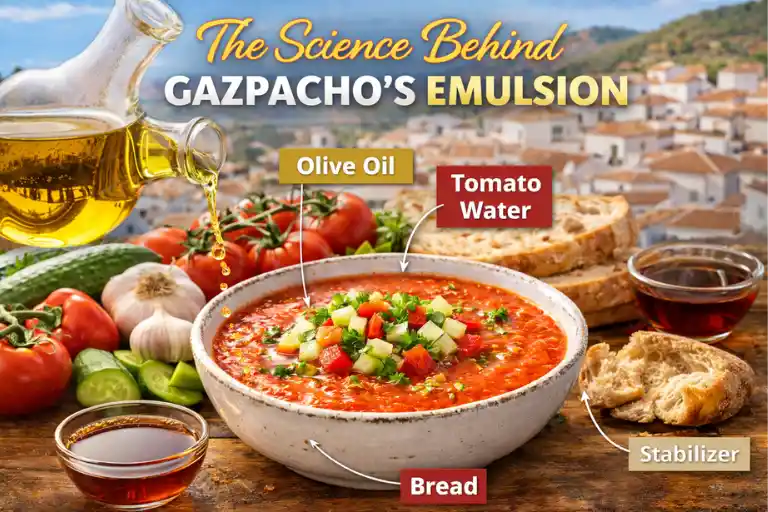
A truly authentic Andalusian gazpacho recipe is not just blended vegetables — it is a natural emulsion. Understanding this science explains why traditional Spanish gazpacho has a smooth, creamy texture without using cream.
Oil + Water Stabilization
In any gazpacho Andaluz, water from tomatoes mixes with extra virgin olive oil. Normally, oil and water separate. But when blended properly with bread and vegetables, they form a stable mixture. The soaked stale bread acts like a binder, helping hold the oil and liquid together. This is what gives authentic gazpacho its silky body.
Why Blending Slowly Matters
Slowly drizzling olive oil while blending allows the droplets to break into tiny particles. This creates better olive oil emulsification and prevents separation.
Texture Chemistry
The fibers from tomatoes and cucumber, combined with bread starch, build structure. That is why a proper cold tomato soup feels smooth but not watery.
Flavor Layering
Blending also spreads garlic, sherry vinegar, and salt evenly. As the soup chills, flavors merge and deepen — making the final dish balanced and refreshing.
FAQs About Andalusian Gazpacho
Can gazpacho be made without bread?
Yes, you can make gazpacho without bread, but it will not be fully authentic Andalusian gazpacho. Traditional gazpacho Andaluz includes stale bread to thicken the soup and support olive oil emulsification. Without bread, the texture becomes thinner and more like a simple cold tomato drink.
Why is gazpacho served cold?
Authentic gazpacho is served cold because it was created to refresh people during hot summers in southern Spain. Chilling enhances the flavor balance of tomatoes, extra virgin olive oil, and sherry vinegar, making this traditional Spanish cold drink more refreshing and hydrating.
Is gazpacho vegan?
Yes, classic authentic gazpacho recipe is naturally vegan. It contains vegetables, bread, olive oil, vinegar, and salt — no meat or dairy. This makes traditional Spanish gazpacho a plant-based dish aligned with the Mediterranean diet.
Is gazpacho gluten-free?
Traditional gazpacho Andaluz is not gluten-free because it contains bread. However, you can easily adapt the recipe by using gluten-free bread while keeping the flavor and texture close to the original authentic gazpacho.
How long should gazpacho chill?
For best results, chill your cold tomato soup for at least 2 hours. Many people prefer leaving it overnight because the flavors deepen and blend better, improving the overall taste of your authentic Andalusian gazpacho.
Can I make gazpacho without vinegar?
Vinegar, especially sherry vinegar, adds brightness and balance to a traditional gazpacho recipe. You can reduce it slightly, but removing it completely may make the soup taste flat. A small amount helps highlight the sweetness of ripe tomatoes.
Why Authentic Andalusian Gazpacho Remains Spain’s Ultimate Summer Drink
Authentic Andalusian gazpacho is more than just a cold tomato soup — it is a symbol of cultural identity in southern Spain. For generations, families in Andalusia have prepared this simple yet powerful dish using fresh garden vegetables, olive oil, vinegar, and bread. It represents tradition, community, and the rhythm of summer life.
At its heart, traditional Spanish gazpacho reflects true Mediterranean simplicity. There are no complex techniques or heavy ingredients. Just ripe tomatoes, extra virgin olive oil, and careful balance. This honesty in flavor is what makes the dish timeless.
The taste of gazpacho Andaluz has remained unchanged for centuries because it works. It refreshes, nourishes, and brings people together during hot days. By preserving its authentic ingredients and preparation methods, this Spanish cold tomato drink continues to honor tradition while staying relevant today — proving why it remains Spain’s ultimate summer classic.