

If you’re looking for a quick list of fruits that start with C, here’s an easy reference guide. This section gives you a fast overview of the most common and unique fruits beginning with C in simple alphabetical order.
Cherry, Coconut, Cranberry, Clementine, Cantaloupe, Currant, Custard Apple, Calamansi, Camu Camu, Cacao, Canistel, Cempedak, Cupuaçu, Cloudberry, Crabapple, Cactus Pear, Cape Gooseberry, Chayote, Chili Pepper, Cucumber, Ceylon Gooseberry, Cudrania.
This list of fruits starting with C includes popular supermarket picks and rare tropical varieties from around the world. Whether you need fruit names that start with C for a school project, word game, or simple curiosity, this guide covers both common and exotic choices.
Most Popular Fruits That Start with C
Below are the most loved and widely recognized fruits that start with C. These are common in supermarkets and often appear in any list of fruits starting with C.
Cherry
Cherries are small, round fruits known for their bright red color and sweet-tart flavor. They are enjoyed fresh, dried, or in desserts like pies and jams.
Nutrition highlight: Cherries are rich in antioxidants and contain vitamin C, which supports immune health.
Fun fact: Some cherry trees can live for over 100 years and still produce fruit.
Coconut
Coconut grows on tall palm trees in tropical regions and is used for water, milk, oil, and fresh flesh. It is one of the most versatile fruits beginning with C.
Nutrition highlight: Coconut provides healthy fats and small amounts of fiber.
Fun fact: Botanically, a coconut is actually a drupe, not a true nut.
Cranberry
Cranberries are small red berries with a sharp, tangy taste. They are popular in juices, sauces, and dried snacks.
Nutrition highlight: Cranberries are packed with antioxidants that support urinary tract health.
Fun fact: Fresh cranberries can bounce because they contain tiny air pockets inside.
Clementine
Clementines are small, seedless citrus fruits that are easy to peel and naturally sweet. They are perfect for lunchboxes and quick snacks.
Nutrition highlight: Clementines are high in vitamin C, helping boost immunity.
Fun fact: They are often called “Christmas oranges” because they are popular in winter.
Cantaloupe
Cantaloupe is a juicy melon with soft orange flesh and a refreshing sweetness. It is commonly eaten fresh or in fruit salads.
Nutrition highlight: Cantaloupe is rich in vitamin A and vitamin C.
Fun fact: Over 90% of a cantaloupe’s weight is water, making it very hydrating.
Currant
Currants are small berries that grow in clusters and come in red, black, or white varieties. They are often used in jams and baked goods.
Nutrition highlight: Currants are a good source of fiber and vitamin C.
Fun fact: Black currants were once banned in parts of the United States due to farming concerns.
Custard Apple
Custard apple has creamy, soft flesh with a sweet flavor similar to vanilla custard. It grows in tropical climates.
Nutrition highlight: Custard apples provide vitamin C and potassium.
Fun fact: In some countries, it is also known as sugar apple because of its natural sweetness.
Tropical Fruits Beginning with C and Where They Grow
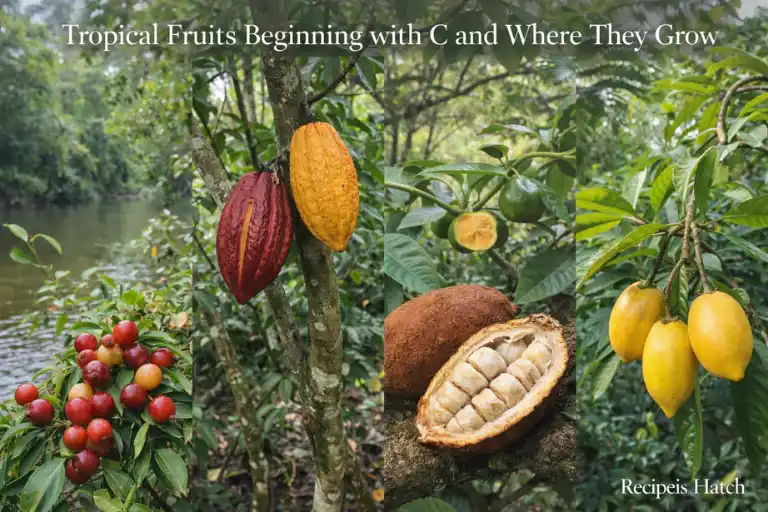
Many fruits beginning with C grow in warm, humid climates around the world. Adding their origin helps you understand their flavor, culture, and global importance. Below are tropical fruits that start with C and where they naturally grow.
You might also like: Best 10 Mexican Chicken Salad Recipe
Camu Camu – Amazon Rainforest
Camu Camu grows near rivers in the Amazon rainforest of Peru and Brazil. It is a small red-purple berry with a very sour taste.
Nutrition highlight: It is one of the richest natural sources of vitamin C in the world.
Fun fact: Because of its sour flavor, it is often used in juices and powders instead of eaten fresh.
Cempedak – Southeast Asia
Cempedak is native to countries like Malaysia, Indonesia, and Thailand. It looks similar to jackfruit but is softer and sweeter.
Nutrition highlight: It contains fiber and vitamin A.
Fun fact: In Southeast Asia, cempedak is sometimes fried and eaten as a snack.
Cupuaçu – Brazil
Cupuaçu grows in the Brazilian Amazon and is closely related to cacao. It has creamy white pulp with a sweet-tart flavor.
Nutrition highlight: It contains antioxidants and healthy plant compounds.
Fun fact: Cupuaçu is often used to make desserts and smoothies in Brazil.
Calamansi – Philippines
Calamansi is a small citrus fruit widely grown in the Philippines and parts of Southeast Asia. It tastes like a mix of lime and orange.
Nutrition highlight: It is rich in vitamin C and commonly used to boost flavor in dishes.
Fun fact: Calamansi juice is a popular refreshing drink in Filipino homes.
Canistel – Central America
Canistel, also called eggfruit, grows in Mexico and Central America. Its bright yellow flesh has a sweet, pumpkin-like taste.
Nutrition highlight: It provides beta-carotene and fiber.
Fun fact: The texture of canistel becomes soft and creamy when fully ripe.
Cacao – Central and South America
Cacao originated in Central and South America and grows in tropical regions worldwide. It produces the pods used to make chocolate.
Nutrition highlight: Cacao is rich in flavanols, powerful plant antioxidants.
Fun fact: Ancient civilizations like the Maya valued cacao so much that it was used as currency.
Rare and Unusual Fruits That Start with C
Beyond the common supermarket picks, there are many rare and unusual fruits that start with C. These unique varieties often grow in specific climates and are not widely known outside their regions.
Chempedak
Chempedak is a tropical fruit from Southeast Asia and is closely related to cempedak and jackfruit. It has soft, sweet flesh with a strong aroma.
Fun fact: In Malaysia, chempedak is sometimes deep-fried as a street snack.
Cloudberry
Cloudberry grows in cold northern regions like Scandinavia and Canada. It has a golden color and a tart, slightly sweet flavor.
Fun fact: Cloudberries are rare and highly valued, often called “Arctic gold.”
Cactus Pear
Also known as prickly pear, cactus pear grows on certain cactus plants in dry regions. It has bright pink or yellow flesh with tiny edible seeds.
Fun fact: Despite growing on a cactus, the fruit is juicy and refreshing.
Ceylon Gooseberry
Ceylon gooseberry is native to Sri Lanka and parts of India. It produces small, bright red fruits with a sweet and slightly tangy taste.
Fun fact: The fruit is often used to make jams and preserves.
Crabapple
Crabapple trees produce small apples that are usually more sour than regular apples. They grow in many temperate regions.
Fun fact: Crabapples are often used to make jelly because they contain natural pectin.
Cudrania
Cudrania, also known as Chinese mulberry, grows in East Asia. It has red, berry-like fruits with a mild sweet taste.
Fun fact: Cudrania trees are also grown as ornamental plants because of their bright fruit.
Fruits That Start with C Commonly Mistaken for Vegetables
Many people are surprised to learn that some foods we call vegetables are actually fruits beginning with C. From a botanical classification, a fruit develops from the flower of a plant and contains seeds. That simple rule changes how we see several common foods.
Cucumber
Most people treat cucumber as a vegetable in salads. However, it grows from a flower and contains seeds inside.
Botanical truth: Because it develops from the flowering part of the plant, cucumber is technically a fruit.
Chili Pepper
Chili peppers are used in savory dishes, so they feel like vegetables. But they grow from flowers and hold seeds inside the pod.
Botanical truth: This makes chili pepper a true fruit, even if it tastes spicy.
Chayote
Chayote is commonly cooked like a vegetable in soups and stir-fries. It has one large seed in the center.
Botanical truth: Since it forms from a flower and contains a seed, chayote is classified as a fruit.
Cape Gooseberry
Cape gooseberry, also known as ground cherry, grows inside a papery husk. It looks like a small tomato.
Botanical truth: It is clearly a fruit because it develops from the plant’s flower and carries seeds.
Nutrient-Rich and Vitamin C Packed Fruits Starting with C
Some fruits beginning with C are known not just for their flavor, but also for their strong nutritional value. While this is still a list of fruits that start with C, it’s helpful to know which ones stand out for their health benefits.
Camu Camu – Extremely High in Vitamin C
Camu Camu is one of the most powerful natural sources of vitamin C in the world. Even a small amount delivers a strong immune boost. Because of its sour taste, it’s usually consumed as juice or powder.
Cranberry – Rich in Antioxidants
Cranberries are packed with antioxidants that help protect the body from damage caused by free radicals. They are especially known for supporting urinary tract health.
Cacao – High in Flavanols
Raw cacao contains natural plant compounds called flavanols, which are powerful antioxidants. Dark chocolate made from cacao can provide some of these benefits when consumed in moderation.
Clementine – Immune Support
Clementines are sweet citrus fruits loaded with vitamin C. They are easy to peel, refreshing, and a simple way to support daily immune health.
Botanical Classification of Fruits Beginning with C
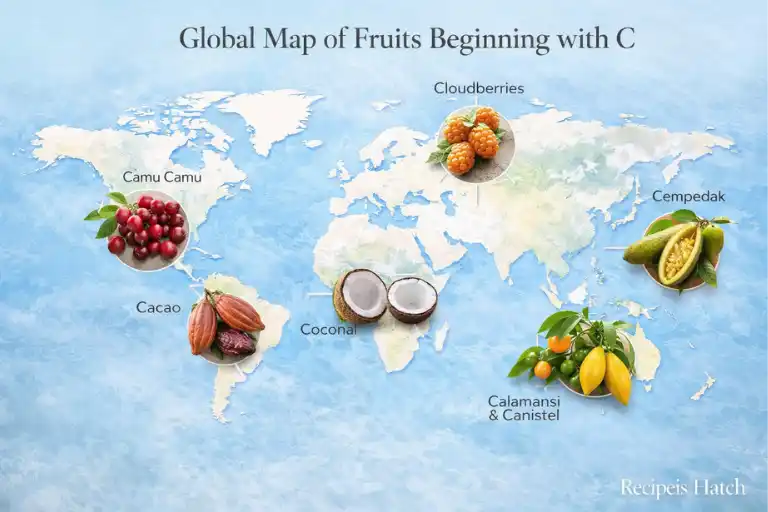
To truly understand fruits beginning with C, it helps to know how they are classified in plant science. Botanically, a fruit is the part of a plant that develops from a flower and contains seeds. This scientific definition explains why some foods we don’t expect are actually fruits.
Berry vs Drupe vs Pod
A berry forms from a single flower with one ovary and usually has multiple seeds. Examples include cranberry and even chili pepper. A drupe has a hard inner stone that protects the seed. Coconut is classified as a drupe because it has a tough outer layer and a hard shell around the seed.
A pod develops from one flower and splits open when mature. Cacao grows in large pods that contain many seeds, which are used to make chocolate. Understanding these categories adds depth to any list of fruits that start with C and builds stronger botanical knowledge.
Fruits Beginning with C for Kids, Word Games, and School Projects
Many people search for fruits beginning with C for homework, classroom activities, or word games. This section makes it easy to find simple and unusual options from our complete list of fruits that start with C.
Easy Fruits for Kids
These fruits are common, easy to spell, and easy to recognize:
- Cherry – Small, bright red, and sweet. A simple fruit name that children quickly remember.
- Coconut – Large and round, often seen in tropical pictures and cartoons.
- Clementine – Small orange citrus fruit that is easy to peel and naturally sweet.
These choices are perfect for preschool learning or alphabet practice.
Fruits for Crossword & Word Games
If you need unique fruit names that start with C for quizzes or puzzles, try these:
- Cempedak – A tropical fruit from Southeast Asia.
- Camu Camu – A small Amazon berry known for high vitamin C.
- Canistel – A sweet yellow fruit also called eggfruit.
These less common names help in crossword puzzles and word challenges.
Alphabetical Table of Fruits That Start with C
Below is a clean and organized alphabetical table of fruits that start with C. This quick-reference chart makes it easy to skim the complete list of fruits beginning with C, compare types, and understand where they grow.
| Fruit | Type | Origin | Notes |
| Cacao | Tropical | Central & South America | Used to make chocolate |
| Cactus Pear | Desert Fruit | Mexico | Also called prickly pear |
| Calamansi | Citrus | Philippines | Tangy lime-like flavor |
| Camu Camu | Berry | Amazon Rainforest | Extremely high in vitamin C |
| Canistel | Tropical | Central America | Also known as eggfruit |
| Cantaloupe | Melon | Persia (Iran region) | Hydrating orange flesh |
| Cape Gooseberry | Berry | South America | Grows inside papery husk |
| Cempedak | Tropical | Southeast Asia | Related to jackfruit |
| Cherimoya | Tropical | South America | Creamy custard-like texture |
| Cherry | Stone Fruit | Europe & Asia | Sweet or tart varieties |
| Clementine | Citrus | Mediterranean | Easy to peel and seedless |
| Cloudberry | Berry | Northern Europe | Rare “Arctic gold” fruit |
| Coconut | Drupe | Tropical regions | Technically not a nut |
| Cranberry | Berry | North America | Tart and antioxidant-rich |
| Cucumber | Botanical Fruit | South Asia | Often mistaken as vegetable |
| Currant | Berry | Europe | Red, black, or white varieties |
| Custard Apple | Tropical | India & Caribbean | Sweet creamy pulp |
| Cupuaçu | Tropical | Brazil | Related to cacao |
Explore More Alphabetical Fruit Lists
If you enjoyed this complete guide to fruits beginning with C, you can continue exploring other alphabetical lists to expand your knowledge. Creating and linking related articles helps build a strong topical authority cluster, which also improves SEO performance.
Here are some helpful next reads:
- Fruits That Start with A – Discover popular and rare fruit names starting with the letter A.
- Fruits That Start with B – Explore common berries, tropical fruits, and lesser-known options.
- Fruits That Start with D – Learn about delicious fruits like dates and dragon fruit.
- Vegetables That Start with C – See which foods are true vegetables and which are botanically fruits.
FAQs About Fruits Beginning With C
How many fruits start with C?
There are 30 to 50+ fruits that start with C, depending on how many rare and tropical varieties you include. A complete list of fruits beginning with C includes common fruits, berries, melons, and exotic tropical options.
What is the most popular fruit beginning with C?
The most popular fruit that starts with C is cherry. Other common favorites include coconut, cranberry, clementine, and cantaloupe.
Is coconut technically a fruit?
Yes, coconut is technically a fruit. Botanically, it is classified as a drupe, not a nut, because it develops from a flower and contains a seed.
What tropical fruits start with C?
Some well-known tropical fruits starting with C include camu camu, cempedak, cupuaçu, calamansi, canistel, and cacao.
What fruit starting with C has the most vitamin C?
Camu camu contains one of the highest natural levels of vitamin C among all fruits.
Are cucumbers fruits or vegetables?
Botanically, cucumbers are fruits because they grow from flowers and contain seeds. However, they are used as vegetables in cooking.
What are rare fruits that begin with C?
Rare fruits that begin with C include chempedak, cloudberry, cactus pear, cudrania, and ceylon gooseberry.
Final Thoughts
Exploring fruits beginning with C shows just how diverse and fascinating the fruit world really is. From everyday favorites like cherry, coconut, and clementine to rare discoveries such as cempedak and cloudberry, this complete list of fruits that start with C highlights both common and exotic varieties.
We’ve covered not only popular choices but also tropical fruits, nutrient-rich superfruits, and even foods like cucumber and chili pepper that are botanically fruits. Whether you needed fruit names that start with C for a school project, crossword puzzle, or simple curiosity, this guide brings everything together in one organized place.
Alphabetical fruit lists are more than just fun—they help build knowledge, improve vocabulary, and even strengthen SEO authority. Keep exploring other letters to expand your understanding of fruits from around the world.