
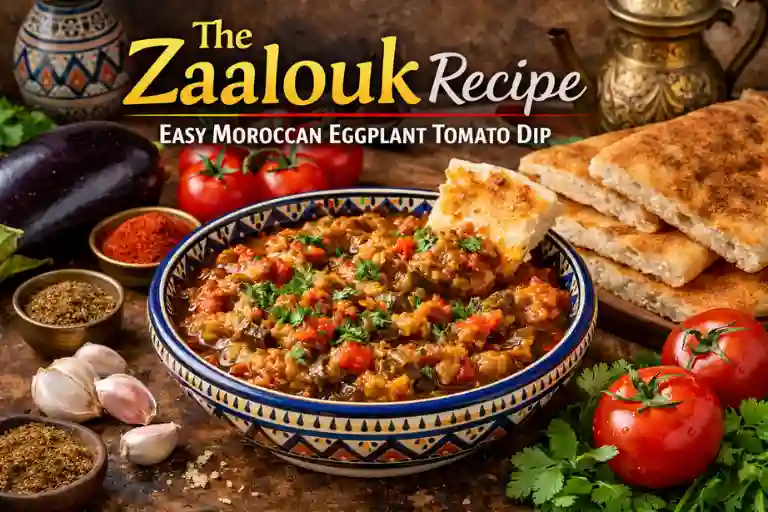
Zaalouk is a traditional Moroccan eggplant and tomato dip that is loved for its rich flavor and simple ingredients. This classic dish from Moroccan cuisine is often served as a Moroccan eggplant salad or appetizer alongside warm bread. Made with eggplant (aubergine), tomatoes, garlic, olive oil, cumin, and paprika, this dish turns basic ingredients into a flavorful Moroccan eggplant dip that is both comforting and healthy.
An authentic Zaalouk recipe is known for its soft texture and smoky taste, especially when the eggplant is roasted. Many people also call it a Moroccan eggplant and tomato dip because it can be enjoyed as a spread or a side dish. Whether served warm or cold, this easy Moroccan Zaalouk recipe is a perfect example of how simple cooking techniques create bold flavors. Once you try this traditional Moroccan eggplant dip, it quickly becomes a favorite in any Mediterranean-inspired meal.
Quick Answer
Zaalouk is a traditional Moroccan eggplant and tomato dip that is popular in Moroccan cuisine and across North African kitchens. It is often described as a Moroccan eggplant salad or a warm Moroccan eggplant dip made by cooking eggplant (aubergine) with tomatoes, garlic, olive oil, and aromatic spices such as cumin and paprika. The ingredients are slowly cooked together until they form a soft, flavorful mixture with a rich and slightly smoky taste.
In Morocco, this authentic Zaalouk recipe is usually served as a starter or side dish. It is commonly placed in a small dish and topped with a drizzle of olive oil, fresh parsley or cilantro, and sometimes a pinch of paprika. People traditionally enjoy this Moroccan eggplant and tomato dip with khobz (Moroccan bread), using the bread to scoop up the dip. Because of its simple ingredients and bold flavor, Zaalouk is considered one of the most loved Moroccan vegetarian dishes and a staple in many homes.
What Is Zaalouk?
Zaalouk is a traditional Moroccan cooked salad or dip made mainly from eggplant (aubergine) and tomatoes. In Moroccan cuisine, it is one of the most popular vegetable dishes and is often served as a flavorful appetizer or side dish. The ingredients are slowly cooked together with garlic, olive oil, cumin, paprika, and fresh herbs until they become soft and rich in flavor. The result is a smooth or slightly chunky mixture that many people enjoy as a Moroccan eggplant dip.
Because of its texture and ingredients, Zaalouk is also known as a Moroccan eggplant salad. Unlike fresh salads, this dish is cooked and gently mashed, giving it a warm and comforting feel. The eggplant provides a soft, creamy base, while the tomatoes add a light tangy taste that balances the spices.
This dish is an important part of North African cuisine, especially in Morocco where it is served in homes and restaurants alike. Many families prepare authentic Zaalouk recipes as a starter before the main meal, often enjoyed with traditional Moroccan bread. Its simple ingredients and rich taste make Zaalouk one of the most loved Moroccan eggplant dishes.
The Cultural Origins of Zaalouk in Moroccan Cuisine
You might also like: The Best Sugo Finto Recipe
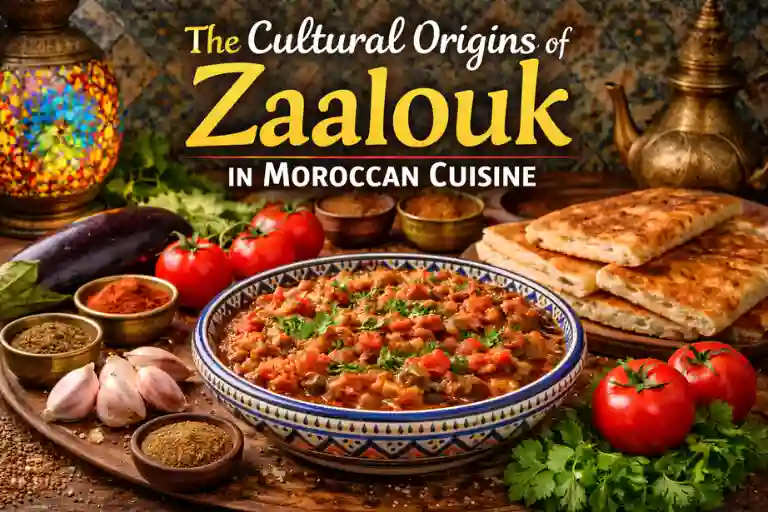
Zaalouk has deep roots in Moroccan cuisine and has been prepared in Moroccan kitchens for generations. This simple yet flavorful dish reflects the traditional way Moroccan families cook with fresh vegetables, olive oil, and aromatic spices. Because eggplant and tomatoes grow well in the region, they became the perfect base for creating this famous Moroccan eggplant salad. Over time, the dish evolved into what we now know as the authentic Zaalouk recipe, a comforting Moroccan eggplant dip enjoyed in homes and restaurants alike.
In Morocco, Zaalouk is often served as part of a mezze-style meal, where several small dishes are placed on the table before the main course. These small plates allow people to enjoy a variety of flavors together. Within this traditional Moroccan mezze culture, dishes like Zaalouk, fresh salads, olives, and breads are shared among family and guests. The Moroccan eggplant and tomato dip is especially popular because its rich taste pairs perfectly with warm khobz (Moroccan bread).
Like many dishes in North African cuisine, Zaalouk also has regional variations across Morocco. Some regions prefer a smoother texture, while others leave the eggplant slightly chunky. In certain areas, cooks add extra spices or roast the eggplant to give the dish a deeper smoky flavor. These small differences show how Moroccan home cooking traditions continue to shape the way Zaalouk is prepared today.
Why Zaalouk Is One of Morocco’s Most Loved Dishes
Zaalouk is considered one of the most loved dishes in Moroccan cuisine because it is simple, flavorful, and easy to prepare. In many Moroccan homes, this authentic Zaalouk recipe is part of the everyday Moroccan table. Families often cook it using fresh vegetables like eggplant (aubergine) and tomatoes, along with garlic, olive oil, cumin, and paprika. These ingredients create a rich and comforting Moroccan eggplant salad that pairs well with many traditional meals.
Another reason for its popularity is that Zaalouk can be served in different ways. It is commonly enjoyed as a Moroccan eggplant dip at the beginning of a meal, where guests use Moroccan bread to scoop it up. At the same time, it also works perfectly as a side dish next to main courses like grilled meat, tagines, or couscous. This flexibility makes it a favorite dish for both casual family meals and special gatherings.
Although Zaalouk is deeply connected to Morocco, its popularity goes beyond one country. Similar dishes appear throughout North African cuisine and across Mediterranean food traditions. The combination of eggplant and tomato cooked with spices creates a taste that many cultures appreciate. Because of this, the Moroccan eggplant and tomato dip has become well known among people who enjoy Mediterranean and Middle Eastern dishes around the world.
Ingredients for Authentic Moroccan Zaalouk
To make a flavorful Zaalouk recipe, you only need a few simple ingredients. This traditional Moroccan eggplant and tomato dip is known for using fresh vegetables, fragrant spices, and healthy olive oil. The combination of these ingredients creates the rich taste that makes Moroccan eggplant salad so popular in Moroccan cuisine and across North African cuisine.
Main Ingredients
The base of any authentic Zaalouk recipe starts with a few key vegetables that give the dish its texture and flavor.
Eggplant (Aubergine)
Eggplant is the star ingredient in this Moroccan eggplant dip. When cooked, it becomes soft and creamy, which gives the dish its smooth texture. Roasting or cooking eggplant properly also adds a mild smoky flavor to the Moroccan eggplant and tomato dip.
Tomatoes
Fresh tomatoes provide a natural sweetness and slight acidity that balances the richness of eggplant. They help create the thick sauce that forms the base of this Moroccan eggplant salad.
Garlic
Garlic adds a strong and aromatic flavor that enhances the overall taste of Zaalouk. It blends perfectly with the spices and vegetables during cooking.
Olive Oil
High-quality olive oil is essential in Moroccan cooking. It gives the dish a silky texture and deep flavor while also adding healthy fats.
Moroccan Spices
Spices are what give Zaalouk its signature North African flavor.
Paprika
Paprika adds a warm color and mild sweetness to the dish.
Cumin
Cumin provides an earthy and slightly smoky taste that is very common in Moroccan cuisine.
Chili Flakes
A small amount of chili flakes can add a gentle heat, making the Moroccan eggplant dip more flavorful without overpowering the other ingredients.
Fresh Herbs
Fresh herbs bring brightness and freshness to the dish.
Cilantro
Cilantro adds a fresh herbal flavor that balances the richness of the eggplant and tomatoes.
Parsley
Parsley is often used as a garnish and mixed into the dish to add color and freshness to the authentic Zaalouk recipe.
Choosing the Best Eggplants for Zaalouk

The quality of the eggplant (aubergine) plays a big role in the taste and texture of a good Zaalouk recipe. Since eggplant is the main ingredient in this Moroccan eggplant dip, choosing the right type and freshness can make a big difference. The right eggplant will give your Moroccan eggplant and tomato dip a soft, creamy texture and a balanced flavor.
Globe Eggplant vs Italian Eggplant
Two common types of eggplant work well for making authentic Zaalouk.
Globe Eggplant
This is the large, round eggplant most commonly found in grocery stores. It has a thick skin and a meaty interior, which makes it perfect for roasting or cooking slowly. When cooked properly, globe eggplant becomes very soft and works well in a Moroccan eggplant salad.
Italian Eggplant
Italian eggplants are slightly smaller and have a thinner skin. They tend to have fewer seeds and a slightly sweeter flavor. Many cooks prefer them for Moroccan eggplant dip because they cook faster and produce a smoother texture.
Both varieties work well, but if you want a softer texture in your Moroccan eggplant and tomato dip, Italian eggplants can be a great choice.
How to Select Fresh Eggplants
Choosing fresh eggplants ensures better flavor in your Zaalouk recipe. Here are a few simple tips:
- Look for smooth, shiny skin without wrinkles or dark spots.
- The eggplant should feel firm and heavy for its size.
- When you gently press the skin, it should spring back slightly.
- A green and fresh stem is a good sign that the eggplant is recently harvested.
Fresh eggplants cook more evenly and give your Moroccan eggplant salad a better texture.
Bitterness Removal Tips
Sometimes eggplants can have a slightly bitter taste. Luckily, there are simple ways to reduce this bitterness before cooking your Moroccan eggplant dip.
- Salt the eggplant slices and let them sit for about 20–30 minutes. This draws out excess moisture and bitterness.
- Rinse and pat them dry before cooking.
- Choosing younger eggplants with fewer seeds can also reduce bitterness.
These small steps help create a smoother and more flavorful authentic Zaalouk recipe, making your dish taste closer to the traditional versions served in Moroccan cuisine.
The Secret to Perfect Zaalouk Texture
The texture of Zaalouk is one of the most important parts of this authentic Moroccan eggplant and tomato dip. A well-made Zaalouk recipe should be soft, rich, and slightly thick, allowing the flavors of eggplant, tomatoes, garlic, olive oil, and spices to blend together perfectly. In Moroccan cuisine, the texture can vary slightly depending on family traditions, but the goal is always a smooth and flavorful Moroccan eggplant salad that is easy to scoop with bread.
Chunky vs Mashed Style
Different Moroccan cooks prefer different textures when preparing Moroccan eggplant dip. Some people enjoy a chunky style, where small pieces of eggplant remain visible in the dish. This version gives a more rustic and homemade feel.
Others prefer a mashed style, where the eggplant is gently crushed with a fork or spoon during cooking. This creates a smoother and creamier Moroccan eggplant and tomato dip that spreads easily on bread. Both styles are common in North African cuisine, and the choice usually depends on personal preference.
Cooking Time Balance
Getting the cooking time right is essential for a good Zaalouk recipe. The eggplant must be cooked long enough to become very soft, but not so long that the dish loses its texture.
If the eggplant is undercooked, it can taste slightly bitter and firm. If it is overcooked, the mixture can become too mushy. The best approach is to cook the eggplant and tomatoes slowly until they blend into a soft and flavorful mixture, creating the perfect Moroccan eggplant salad texture.
Moisture Reduction Techniques
Another secret to perfect Zaalouk is controlling the moisture. Eggplant and tomatoes naturally release a lot of water during cooking. If the liquid is not reduced properly, the Moroccan eggplant dip can become watery.
To avoid this, Moroccan cooks often:
- Cook the mixture uncovered so excess water evaporates.
- Stir the dish regularly to help the ingredients combine.
- Let the mixture simmer slowly until it thickens.
These simple techniques help create a rich and thick Moroccan eggplant and tomato dip, giving the dish the perfect texture that makes Zaalouk so popular in Moroccan cuisine.
Roasted vs Boiled Eggplant Method
One of the most important steps in preparing an authentic Zaalouk recipe is deciding how to cook the eggplant (aubergine). The cooking method affects both the flavor and texture of this Moroccan eggplant and tomato dip. In Moroccan cuisine, two common methods are used: roasting and boiling. Each method creates a slightly different version of this popular Moroccan eggplant salad.
Roasting for Smoky Flavor
Roasting the eggplant is a favorite method for many cooks because it gives the dish a deep smoky flavor. When eggplant is roasted in the oven or over an open flame, the inside becomes soft and creamy while the outside develops a slightly charred taste. This smoky flavor blends beautifully with tomatoes, garlic, olive oil, cumin, and paprika, making the Moroccan eggplant dip richer and more aromatic.
Roasted eggplant is often used in restaurants and modern recipes because it creates a stronger flavor profile in the Moroccan eggplant and tomato dip.
Boiling for Softer Texture
Another traditional method is boiling the eggplant. In this technique, eggplant pieces are cooked in water until they become soft. After boiling, the eggplant is drained and then cooked with tomatoes, garlic, spices, and olive oil.
This method creates a lighter and softer texture for the Zaalouk recipe. The flavor is still delicious, but it tends to be milder compared to roasted eggplant. Some home cooks prefer boiling because it is quicker and easier to prepare.
Which Method Moroccan Cooks Prefer
Both methods are used in Moroccan kitchens, and the choice often depends on personal taste and cooking style. However, many traditional Moroccan cooks prefer roasting the eggplant because it adds a richer flavor and a slightly smoky depth to the Moroccan eggplant dip.
Whether roasted or boiled, the key is to cook the eggplant until it becomes soft and easy to mash. When combined with tomatoes, garlic, olive oil, and spices, it transforms into the flavorful Moroccan eggplant salad known as Zaalouk, a beloved dish in North African cuisine.
How to Make Zaalouk (Step-by-Step)
Making an authentic Zaalouk recipe is simple and requires only a few fresh ingredients. This Moroccan eggplant and tomato dip comes together by slowly cooking eggplant, tomatoes, garlic, olive oil, and spices until the mixture becomes soft and flavorful. Follow these easy steps to prepare a traditional Moroccan eggplant salad at home.
Roast or Cook the Eggplant
Start by preparing the eggplant (aubergine), which is the main ingredient in this Moroccan eggplant dip. You can roast the eggplant in the oven or cook it on the stovetop. Roasting is often preferred because it adds a slightly smoky flavor to the dish.
To roast, place whole or sliced eggplants in the oven until the inside becomes soft and tender. Once cooked, remove the skin and gently chop or mash the eggplant. This step creates the creamy base for the Moroccan eggplant and tomato dip.
Prepare the Tomato and Spice Base
In a large pan, heat olive oil and add minced garlic. Let it cook briefly until fragrant. Then add chopped tomatoes, along with traditional Moroccan spices such as paprika, cumin, and chili flakes.
Allow the tomatoes to cook slowly until they soften and release their juices. This flavorful mixture becomes the rich sauce that gives the Zaalouk recipe its signature taste.
Combine Eggplant and Tomatoes
Once the tomato mixture is ready, add the cooked eggplant to the pan. Stir everything together so the eggplant absorbs the flavor of the tomatoes, garlic, olive oil, and spices.
At this stage, the dish starts to look like a thick Moroccan eggplant salad, with the vegetables blending into a smooth mixture.
Simmer Until Thick and Flavorful
Let the mixture simmer on low heat for several minutes. This allows the flavors to combine while excess moisture slowly evaporates.
Stir occasionally so the Moroccan eggplant dip does not stick to the pan. As the mixture cooks, it becomes thicker and richer, creating the perfect texture for authentic Zaalouk.
Mash and Garnish with Herbs
When the mixture reaches the desired consistency, gently mash the eggplant and tomatoes using a fork or spoon. Some cooks prefer a smoother texture, while others keep it slightly chunky.
Finally, add fresh cilantro and parsley for brightness and flavor. A small drizzle of olive oil on top can enhance the taste even more. Your homemade Moroccan eggplant and tomato dip is now ready to serve and enjoy as a delicious part of North African cuisine.
Cooking Methods Used in Traditional Moroccan Kitchens
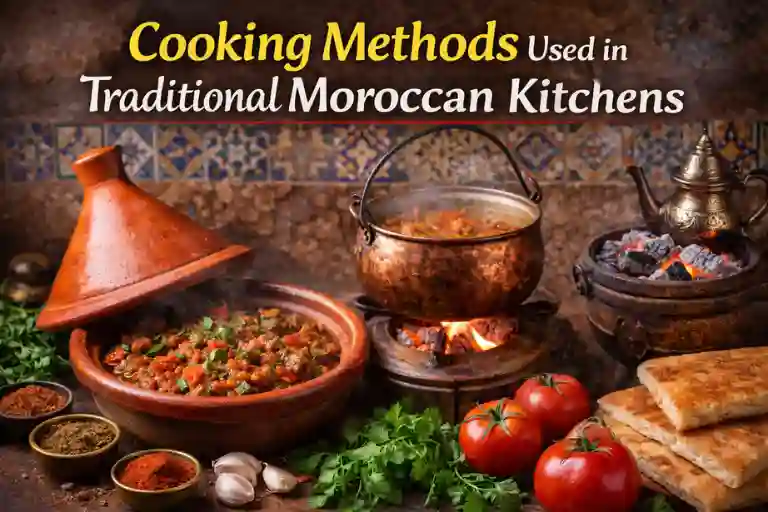
In traditional Moroccan cuisine, the way ingredients are cooked plays an important role in developing flavor. When preparing an authentic Zaalouk recipe, Moroccan cooks use different cooking methods depending on the tools available in their kitchens. These methods help create the rich texture and deep taste that make Zaalouk, the famous Moroccan eggplant and tomato dip, so popular.
Charcoal Roasting
One of the most traditional techniques in Moroccan kitchens is charcoal roasting. In this method, whole eggplants (aubergines) are placed directly over hot charcoal or an open flame. The skin becomes slightly charred while the inside turns soft and smoky.
This method adds a deep smoky flavor that many people love in a Moroccan eggplant dip. Once the eggplant is roasted, the skin is removed and the soft interior is mixed with tomatoes, garlic, olive oil, cumin, and paprika to create a flavorful Moroccan eggplant salad.
Stovetop Preparation
Another common method used in many homes is stovetop cooking. In this technique, chopped eggplant and tomatoes are cooked together in a pan with olive oil, garlic, and spices.
The mixture is slowly simmered and stirred until the vegetables become soft and blend together. This method is simple and practical, which is why it is widely used for everyday cooking of Zaalouk in many Moroccan households.
Oven Roasting Methods
Modern kitchens often use the oven roasting method to prepare eggplant for a Zaalouk recipe. The eggplants are roasted in the oven until they become tender and slightly caramelized.
Oven roasting helps bring out the natural sweetness of the eggplant while creating a mild smoky taste. After roasting, the eggplant is combined with tomatoes, olive oil, garlic, and Moroccan spices, forming a rich Moroccan eggplant and tomato dip that is enjoyed across North African cuisine.
Each of these cooking techniques produces slightly different flavors, but all of them lead to the same comforting dish—Zaalouk, a beloved Moroccan eggplant salad served in homes and restaurants throughout Morocco.
What Does Zaalouk Taste Like?
The flavor of Zaalouk is rich, balanced, and comforting, which is why this Moroccan eggplant and tomato dip is loved in Moroccan cuisine and throughout North African cuisine. The combination of eggplant, tomatoes, garlic, olive oil, and warm spices creates a dish with layers of flavor that feel both simple and satisfying. When prepared using an authentic Zaalouk recipe, each ingredient adds something unique to the overall taste.
Smoky
One of the most noticeable flavors in a good Moroccan eggplant dip is a gentle smoky taste. This usually comes from roasting the eggplant (aubergine) before mixing it with the tomato sauce. Roasting brings out the natural richness of the eggplant and gives the Moroccan eggplant salad a deeper flavor that makes the dish more satisfying.
Garlicky
Garlic plays an important role in the flavor of Zaalouk. When garlic is cooked in olive oil, it releases a warm and aromatic taste that spreads throughout the dish. This garlicky flavor blends perfectly with the eggplant and tomatoes, making the Moroccan eggplant and tomato dip both bold and comforting.
Tangy
The tomatoes in this dish add a light tangy flavor that balances the richness of the eggplant and olive oil. As the tomatoes cook down with spices like paprika and cumin, they create a thick sauce that gives the Zaalouk recipe its bright and slightly acidic taste.
Slightly Spicy
Although Zaalouk is not usually very spicy, a small amount of chili flakes or paprika can add a mild heat. This gentle spice enhances the overall flavor without overpowering the dish. The result is a well-balanced Moroccan eggplant dip that feels warm, savory, and full of character.
Together, these flavors create the unique taste that makes Zaalouk one of the most loved Moroccan eggplant dishes, often enjoyed with fresh bread as part of a traditional meal.
How Zaalouk Compares to Other Eggplant Dips
Many cultures have dishes made with eggplant, but Zaalouk stands out because of its unique combination of tomatoes, garlic, olive oil, and Moroccan spices. This authentic Zaalouk recipe is often compared to other famous eggplant dips and salads from the Mediterranean and Middle East. While they share similar ingredients, each dish has its own flavor, texture, and cooking style.
Zaalouk vs Baba Ganoush
Both Zaalouk and Baba Ganoush are popular eggplant dips, but they are quite different in taste and preparation. Baba Ganoush, a dish from Middle Eastern cuisine, is usually made with roasted eggplant, tahini, lemon juice, and garlic. It has a creamy texture and a strong nutty flavor from the tahini.
In contrast, Zaalouk is a Moroccan eggplant and tomato dip that does not use tahini. Instead, it combines eggplant with tomatoes, olive oil, garlic, cumin, and paprika, creating a richer and slightly tangy flavor. The texture of Moroccan eggplant salad is often thicker and more rustic compared to the smooth texture of Baba Ganoush.
Zaalouk vs Taktouka
Another dish often compared to Zaalouk is Taktouka, which is also a traditional dish in Moroccan cuisine. The main difference is that Taktouka is made primarily with tomatoes and roasted peppers, while Zaalouk uses eggplant as the main ingredient.
Both dishes include garlic, olive oil, and spices, but the flavor of Zaalouk is deeper and slightly smoky because of the eggplant. Meanwhile, Taktouka has a lighter and sweeter taste from the peppers and tomatoes.
Zaalouk vs Mediterranean Eggplant Dip
Across the Mediterranean region, many countries prepare their own versions of eggplant dip. These dishes often include olive oil, garlic, and herbs, similar to what is used in Moroccan eggplant dip.
However, the Moroccan eggplant and tomato dip is unique because it combines both eggplant and tomatoes cooked together with spices like cumin and paprika. This gives Zaalouk a thicker texture and a more complex flavor compared to many other Mediterranean eggplant dips.
Because of these differences, Zaalouk remains one of the most distinctive dishes in North African cuisine, offering a rich blend of smoky eggplant, tangy tomatoes, and warm Moroccan spices.
Best Ways to Serve Zaalouk

Zaalouk is a versatile dish that can be enjoyed in many ways. This Moroccan eggplant and tomato dip is commonly served as a starter, side dish, or light appetizer in Moroccan cuisine. Because of its rich flavor and soft texture, it pairs well with different types of meals and traditional foods. Whether served warm or at room temperature, authentic Zaalouk fits perfectly into many North African and Mediterranean-style meals.
Moroccan Bread (Khobz)
The most traditional way to enjoy Zaalouk is with khobz, which is a round Moroccan bread. Instead of using a spoon, people often tear pieces of bread and scoop up the Moroccan eggplant dip directly from the dish. The soft texture of the Moroccan eggplant salad and the warm bread create a simple yet delicious combination that is common in Moroccan households.
Mezze Platters
Zaalouk is also a great addition to a mezze platter, where several small dishes are served together before the main meal. In this setting, the Moroccan eggplant and tomato dip is placed alongside olives, fresh salads, cheeses, and other dips. This style of serving is popular in Mediterranean and North African cuisine, where guests enjoy a variety of flavors in one meal.
Grilled Meats
Another delicious way to serve Zaalouk is as a side dish with grilled meats. The rich and slightly tangy flavor of the Moroccan eggplant dip complements dishes like grilled chicken, lamb, or beef. The smoky taste of grilled foods pairs especially well with the soft texture of authentic Zaalouk.
Couscous Dishes
In many Moroccan homes, Zaalouk is also served next to couscous dishes. Couscous is one of the most traditional foods in Moroccan cuisine, and the addition of a Moroccan eggplant salad brings extra flavor and variety to the meal. The mixture of eggplant, tomatoes, garlic, olive oil, and spices creates a delicious contrast to the mild taste of couscous.
No matter how it is served, Zaalouk remains a comforting and flavorful dish that reflects the richness of Moroccan cooking traditions.
Traditional Moroccan Meal Pairings
In Moroccan cuisine, meals are often served with several dishes placed together on the table. Zaalouk, the famous Moroccan eggplant and tomato dip, is commonly enjoyed alongside other traditional foods. Its rich flavor and soft texture make it a perfect companion to many classic dishes in North African cuisine. When served with the right foods, an authentic Zaalouk recipe becomes an even more satisfying part of a complete Moroccan meal.
Tagines
One of the most popular dishes to pair with Zaalouk is a Moroccan tagine. Tagine is a slow-cooked dish made with meat, vegetables, and spices, usually prepared in a clay pot. When served with tagines like chicken tagine, lamb tagine, or vegetable tagine, the Moroccan eggplant dip adds extra depth and variety to the meal. The soft texture of the Moroccan eggplant salad balances the rich and aromatic flavors of the tagine sauce.
Grilled Lamb or Chicken
Grilled meats are another perfect match for Zaalouk. In many Moroccan meals, grilled lamb or chicken is served with small vegetable dishes on the side. The smoky flavor of grilled meat pairs beautifully with the savory taste of the Moroccan eggplant and tomato dip. The blend of eggplant, tomatoes, garlic, olive oil, cumin, and paprika complements the grilled flavors and creates a balanced plate.
Moroccan Salads
Moroccan meals often include a variety of Moroccan salads, and Zaalouk is usually served alongside them. These salads may include dishes made with tomatoes, cucumbers, carrots, or roasted peppers. When combined with other vegetable dishes, the Zaalouk recipe adds a warm and hearty element to the table. Together, these dishes reflect the diversity of flavors found in traditional Moroccan cooking.
Serving Zaalouk with tagines, grilled meats, and fresh salads creates a complete and authentic Moroccan dining experience that highlights the rich traditions of North African cuisine.
How Restaurants Plate Zaalouk

In many restaurants that specialize in Moroccan cuisine, presentation plays an important role in making dishes look inviting and appetizing. When chefs serve Zaalouk, the popular Moroccan eggplant and tomato dip, they often use simple but elegant plating techniques that highlight the dish’s rich color and texture. These small presentation details can make a homemade Zaalouk recipe feel like a restaurant-quality dish.
Olive Oil Drizzle
One of the most common finishing touches is a light drizzle of olive oil on top of the Moroccan eggplant dip. High-quality olive oil adds shine and enhances the natural flavor of the eggplant, tomatoes, garlic, and spices. The oil also creates a smooth surface and Health Benefits of Zaalouk
One of the reasons Zaalouk is so popular in Moroccan cuisine is that it is not only delicious but also nutritious. This Moroccan eggplant and tomato dip is made with fresh vegetables, healthy oils, and natural spices. Because of these simple ingredients, an authentic Zaalouk recipe provides several health benefits while still delivering rich flavor.
Eggplant Antioxidants
The main ingredient in Zaalouk, eggplant (aubergine), is packed with important nutrients and antioxidants. Eggplant contains compounds that help protect the body from harmful free radicals. These antioxidants support overall health and may help reduce inflammation. When eggplant is cooked slowly with tomatoes, garlic, and spices, it creates a nourishing base for this flavorful Moroccan eggplant salad.
Olive Oil and Heart Health
Another key ingredient in Moroccan eggplant dip is olive oil, which is widely used in North African and Mediterranean cuisine. Olive oil contains healthy fats that are known to support heart health. It may help lower bad cholesterol and improve overall cardiovascular wellness. Adding olive oil to a Zaalouk recipe not only improves the taste but also makes the dish more nutritious.
Vegan Plant-Based Nutrition
Zaalouk is naturally a vegan and plant-based dish, which makes it suitable for many diets. It contains vegetables, herbs, and spices without any animal products. This means the Moroccan eggplant and tomato dip provides fiber, vitamins, and minerals while remaining light and healthy. For people who enjoy plant-based meals, Zaalouk is a great way to experience the flavors of Moroccan cuisine while maintaining a balanced diet.
Zaalouk Variations Across Morocco
Although the authentic Zaalouk recipe follows a similar base of eggplant, tomatoes, garlic, olive oil, and spices, different regions in Morocco prepare this Moroccan eggplant and tomato dip in slightly different ways. These variations reflect local cooking styles and personal preferences in Moroccan cuisine. While the main ingredients remain the same, small changes in spices, cooking methods, and texture create unique versions of this beloved Moroccan eggplant salad.
Spicy Version
Some regions in Morocco prefer a spicier version of Zaalouk. In this variation, cooks add extra chili flakes or hot peppers along with traditional spices like cumin and paprika. This gives the Moroccan eggplant dip a stronger and more vibrant flavor. The added heat complements the richness of the eggplant and the tanginess of the tomatoes, creating a bold version of this North African dish.
Roasted Eggplant Version
Another popular variation uses roasted eggplant instead of boiled or sautéed eggplant. Roasting the eggplant over an open flame or in the oven adds a smoky flavor to the Moroccan eggplant and tomato dip. This version is especially loved because the roasting process enhances the natural sweetness of the eggplant while deepening the overall flavor of the dish.
Chunky vs Smooth Texture
Texture is another area where Zaalouk can vary. Some cooks prefer a chunky Moroccan eggplant salad, where small pieces of eggplant remain visible. This style gives the dish a rustic and homemade feel.
Other cooks mash the ingredients more thoroughly, creating a smooth and creamy Moroccan eggplant dip that spreads easily on bread. Both textures are common in Moroccan kitchens, and each family often has its own preferred way of preparing Zaalouk.
Pro Tips From Moroccan Home Cooks
Many Moroccan home cooks have small techniques that make a big difference when preparing an authentic Zaalouk recipe. These simple tips help improve the flavor, texture, and balance of this classic Moroccan eggplant and tomato dip. By following these traditional cooking habits, you can make your **
gives the Moroccan eggplant salad a rich and appetizing look.
Herb Garnish
Fresh herbs are another important element of restaurant plating. Chefs usually sprinkle chopped cilantro or parsley over the dish. This herb garnish adds a bright green color that contrasts beautifully with the deep red and brown tones of the Moroccan eggplant and tomato dip. Besides improving appearance, the herbs also add a fresh flavor that balances the warm spices like cumin and paprika used in authentic Zaalouk.
Bread Serving Style
In traditional Moroccan restaurants, Zaalouk is rarely served alone. It is almost always presented with slices of khobz (Moroccan bread) placed around the dish or on a separate plate. Guests use the bread to scoop up the Moroccan eggplant dip, which is the traditional way of eating it in North African cuisine. This simple serving style makes the dish interactive and perfect for sharing at the table.
These presentation techniques show how even a humble Moroccan eggplant salad like Zaalouk can be served beautifully, making it both delicious and visually appealing.
Common Mistakes When Making Zaalouk

Even though Zaalouk is a simple dish, a few small mistakes can affect the flavor and texture of this Moroccan eggplant and tomato dip. When preparing an authentic Zaalouk recipe, paying attention to cooking time, moisture balance, and seasoning can help you achieve the rich taste that makes this Moroccan eggplant salad so popular in Moroccan cuisine.
Undercooking Eggplant
One common mistake is undercooking the eggplant (aubergine). If the eggplant is not cooked long enough, it can remain slightly firm and may taste bitter. Properly cooked eggplant should be soft, tender, and easy to mash. This allows it to blend smoothly with tomatoes, garlic, olive oil, cumin, and paprika, creating the creamy base for the Moroccan eggplant dip.
Watery Texture
Another issue that can happen when making Zaalouk is a watery texture. Both eggplant and tomatoes release natural moisture during cooking. If the mixture is not simmered long enough, the Moroccan eggplant and tomato dip may become too thin.
To avoid this, cook the mixture uncovered on low heat and allow the extra liquid to evaporate. Stir occasionally so the ingredients cook evenly and the Zaalouk recipe thickens into a rich and flavorful dish.
Weak Seasoning
A third mistake is not adding enough seasoning. The flavor of Zaalouk depends on the balance of garlic, olive oil, cumin, paprika, and fresh herbs. If these ingredients are used in very small amounts, the Moroccan eggplant salad can taste bland.
The best approach is to season gradually while cooking and taste the dish as it simmers. This helps you adjust the spices and create a well-balanced Moroccan eggplant dip with the warm and aromatic flavor that defines North African cuisine.
Storage and Make-Ahead Tips
One of the great things about Zaalouk is that it stores very well and can even taste better the next day. This Moroccan eggplant and tomato dip is often prepared ahead of time in many Moroccan kitchens because the flavors of eggplant, tomatoes, garlic, olive oil, and spices continue to blend as the dish rests. Proper storage helps maintain the rich taste and smooth texture of this authentic Zaalouk recipe.
Refrigerator Storage
If you have leftover Moroccan eggplant dip, you can store it in an airtight container in the refrigerator. Properly stored Zaalouk usually stays fresh for about 3 to 4 days. Before refrigerating, allow the Moroccan eggplant salad to cool completely. This prevents excess moisture from forming and helps preserve the texture.
When ready to eat, you can serve it cold, at room temperature, or gently warmed, depending on your preference.
Freezing Options
Although Zaalouk is usually enjoyed fresh, it can also be frozen for longer storage. Place the Moroccan eggplant and tomato dip in a freezer-safe container and freeze it for up to 2 months. Freezing may slightly change the texture, but the flavor of the Zaalouk recipe usually remains delicious.
When you want to use it again, simply transfer the dish to the refrigerator and let it thaw overnight.
Reheating Methods
Reheating Zaalouk is easy and can be done in a few different ways. The most common method is to warm it gently in a pan over low heat while stirring occasionally. If the mixture becomes too thick, you can add a small drizzle of olive oil to restore its smooth texture.
You can also reheat the Moroccan eggplant dip in the microwave using short heating intervals. Whether served warm or at room temperature, Zaalouk remains a comforting dish that reflects the rich traditions of Moroccan cuisine.
Is Zaalouk Vegan and Gluten-Free?
Yes, Zaalouk is naturally both vegan and gluten-free, which makes it a great dish for many different diets. This Moroccan eggplant and tomato dip is made entirely from plant-based ingredients, including eggplant (aubergine), tomatoes, garlic, olive oil, and Moroccan spices like cumin and paprika. Because the authentic Zaalouk recipe does not include any animal products, it fits perfectly into a vegan or vegetarian diet.
Another advantage of this Moroccan eggplant salad is that it is also naturally gluten-free. The ingredients used in Zaalouk are vegetables, herbs, and spices, which do not contain gluten. However, in traditional Moroccan cuisine, the dish is often served with khobz (Moroccan bread), which does contain gluten. For those following a gluten-free diet, Zaalouk can be enjoyed with gluten-free bread, rice, or vegetable sides instead.
Because it is both vegan and gluten-free, Zaalouk has become popular among people who follow plant-based and healthy eating lifestyles. Its simple ingredients, rich flavor, and nutritious vegetables make this Moroccan eggplant dip a wholesome addition to many Mediterranean and North African meals.
FAQs About Zaalouk Recipe
What Is Moroccan Zaalouk?
Moroccan Zaalouk is a traditional Moroccan eggplant and tomato dip made with eggplant (aubergine), tomatoes, garlic, olive oil, and spices such as cumin and paprika. The ingredients are slowly cooked together until they form a soft and flavorful mixture. This dish is often described as a Moroccan eggplant salad or Moroccan eggplant dip and is a popular appetizer in Moroccan cuisine and across North African cuisine.
Is Zaalouk Served Hot or Cold?
Zaalouk can be served warm, at room temperature, or cold, depending on personal preference. In many Moroccan homes, this authentic Zaalouk recipe is served slightly warm or at room temperature with khobz (Moroccan bread). However, the Moroccan eggplant and tomato dip still tastes delicious when chilled, which is why leftovers are often enjoyed the next day as part of a light meal or appetizer.
How Long Does Zaalouk Last?
When stored properly, Zaalouk can last about 3 to 4 days in the refrigerator. To keep the Moroccan eggplant and tomato dip fresh, place it in an airtight container after it has completely cooled. In many cases, the flavor of this authentic Zaalouk recipe actually becomes richer the next day because the eggplant, tomatoes, garlic, olive oil, and spices have more time to blend together.
If you need to store it for a longer time, Zaalouk can also be frozen for up to 2 months. Just thaw it in the refrigerator overnight before reheating or serving.
What Bread Is Served With Zaalouk?
The most traditional bread served with Zaalouk is khobz, a round and slightly crusty Moroccan bread. In Moroccan cuisine, people usually tear pieces of khobz and use them to scoop up the Moroccan eggplant dip directly from the dish.
If khobz is not available, you can also serve this Moroccan eggplant and tomato dip with other breads such as pita bread, flatbread, or toasted rustic bread. The soft texture of the bread pairs perfectly with the rich and flavorful Moroccan eggplant salad, making it a satisfying appetizer or side dish.
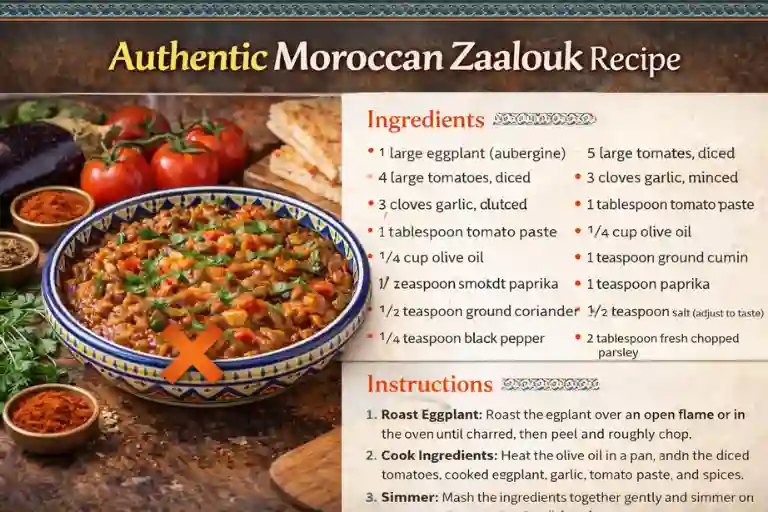
Recipe Card – Authentic Moroccan Zaalouk Recipe
Course: Side DishCuisine: MoroccanDifficulty: Very Easy4
servings15
minutes30
minutes300
kcalIngredients
2 medium eggplants (aubergines)
2 large tomatoes, finely chopped
3 cloves garlic, minced
3 tablespoons olive oil
1 teaspoon paprika
1 teaspoon cumin
½ teaspoon chili flakes (optional)
2 tablespoons fresh cilantro, chopped
2 tablespoons fresh parsley, chopped
Salt and black pepper, to taste
1 tablespoon lemon juice (optional)
Directions
- 1. Prepare the Eggplant
Roast or cook the eggplant until it becomes soft. Remove the skin and gently mash the flesh with a fork. - 2. Cook the Tomato Base
Heat olive oil in a pan over medium heat. Add garlic and cook briefly until fragrant. Stir in the chopped tomatoes, paprika, cumin, and chili flakes. - 3. Combine the Ingredients
Add the mashed eggplant to the tomato mixture. Stir well so the flavors blend together. - 4. Simmer the Zaalouk
Let the mixture simmer for 10–15 minutes until it thickens and the vegetables become soft. - 5. Finish and Garnish
Gently mash the mixture to your preferred texture. Add fresh cilantro and parsley, adjust seasoning, and drizzle a little olive oil on top before serving. - Serve this Moroccan eggplant dip warm or at room temperature with Moroccan bread (khobz).
- Nutrition Facts (Per Serving – Approximate)
Calories: 140 kcal
Carbohydrates: 10 g
Protein: 2 g
Fat: 9 g
Fiber: 4 g
Sodium: 180 mg
This Moroccan eggplant and tomato dip is naturally vegan, gluten-free, and rich in plant-based nutrients, making it a healthy addition to any Mediterranean or North African meal.
Recipe Video
Notes
- 1. Roast the Eggplant for Better Flavor
For the best Zaalouk recipe, roasting the eggplant (aubergine) adds a deeper smoky flavor to the Moroccan eggplant and tomato dip. It also creates a softer texture. - 2. Adjust the Texture to Your Preference
Some people prefer a chunky Moroccan eggplant salad, while others like a smoother Moroccan eggplant dip. Gently mash the mixture to reach your desired texture. - 3. Let the Flavors Develop
Zaalouk often tastes even better the next day. Let the Moroccan eggplant and tomato dip rest for a few hours in the refrigerator so the garlic, olive oil, and spices blend together.
Final Thoughts
Zaalouk is more than just a simple dip—it is a beautiful example of the rich traditions found in Moroccan cuisine. This authentic Zaalouk recipe shows how everyday ingredients like eggplant, tomatoes, garlic, olive oil, and spices can be transformed into a flavorful and comforting dish. Whether served as a Moroccan eggplant dip, a Moroccan eggplant salad, or a side dish, it brings warm and vibrant flavors to the table.
One of the best things about this Moroccan eggplant and tomato dip is how easy it is to prepare. With just a few ingredients and simple cooking steps, you can create a dish that reflects the heart of North African cuisine. It can be enjoyed with Moroccan bread, grilled meats, couscous dishes, or mezze platters, making it a versatile addition to many meals.
If you enjoy exploring global flavors, trying Zaalouk is a wonderful way to discover the beauty of Moroccan cooking. Once you taste this delicious and healthy dish, it may quickly become one of your favorite Mediterranean-style recipes to make at home.