
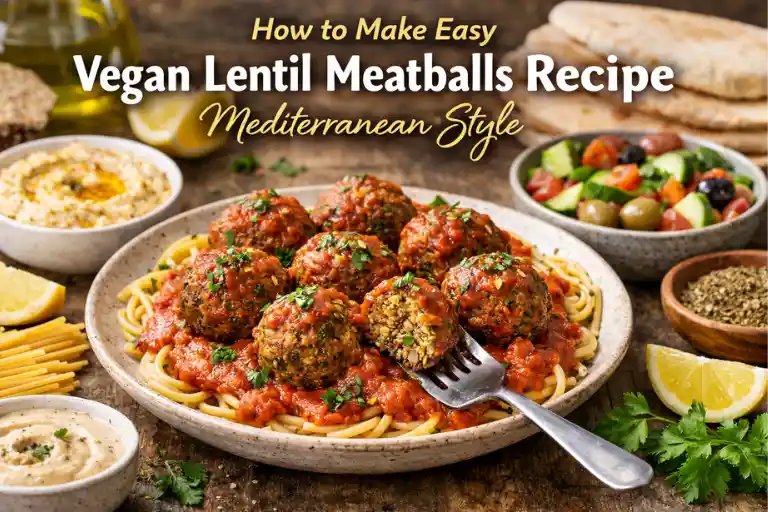
If you’re looking for a healthy, plant-based alternative to traditional meatballs, these vegan lentil meatballs are a perfect choice. Made with protein-rich lentils, herbs, and simple pantry ingredients, this recipe creates flavorful Mediterranean lentil meatballs that are both satisfying and nutritious. Many people love lentil meatballs vegan recipes because they are easy to prepare, budget-friendly, and packed with natural plant protein.
These easy vegan lentil meatballs have a soft yet firm texture and can be baked, pan-fried, or even cooked in an air fryer. They pair wonderfully with pasta, rice bowls, wraps, or marinara sauce, making them a versatile meal option. Whether you’re following a vegan diet, trying more plant-based meals, or simply searching for a healthy lentil meatballs recipe, this guide will show you how to make the best vegan lentil meatballs step by step with helpful tips for perfect results.
Quick Overview of This Vegan Lentil Meatball Recipe
Before we begin cooking, here is a quick summary of this vegan lentil meatball recipe so you can understand how simple and practical it is. These Mediterranean lentil meatballs are designed to be easy, nutritious, and perfect for everyday meals. Whether you are preparing vegan meatballs for pasta, wraps, or meal prep bowls, this recipe is beginner-friendly and packed with flavor.
Preparation Time: 15 minutes
Cooking Time: 25–30 minutes
Total Time: About 40–45 minutes
Servings: 4 servings (around 16–18 lentil meatballs)
Difficulty Level: Easy – great for beginners learning how to make homemade vegan lentil meatballs
Key Benefits of This Recipe
- Healthy plant-based meal made with natural ingredients
- High in plant protein and fiber, thanks to lentils
- A great meatless meatball alternative for vegan diets
- Perfect for pasta, rice bowls, sandwiches, or Mediterranean platters
- Can be made as baked lentil meatballs, pan-fried lentil meatballs, or air fryer lentil meatballs
These easy vegan lentil meatballs are not only delicious but also a budget-friendly plant-based dinner that fits perfectly into a balanced and healthy lifestyle.
What Are Vegan Lentil Meatballs?
Vegan lentil meatballs are a plant-based meatball alternative made primarily from lentils, herbs, spices, and simple binders like breadcrumbs or oats. Instead of using ground meat, this recipe uses protein-rich lentils to create a flavorful and satisfying meatless meatball that works well in many dishes.
Lentils are perfect for making vegan meatballs because they naturally have a soft but hearty texture when cooked. They also contain plant protein, fiber, and important nutrients, which makes lentil meatballs vegan recipes both filling and nutritious. When mashed and mixed with herbs and seasonings, lentils easily form a mixture that can be shaped into homemade lentil meatballs.
This recipe is inspired by Mediterranean flavors, which means it often includes ingredients like garlic, parsley, olive oil, oregano, and warm spices. These ingredients give Mediterranean lentil meatballs a rich aroma and balanced taste that pairs perfectly with marinara sauce, tahini sauce, pasta, or wraps.
In terms of texture, the best vegan lentil meatballs are tender on the inside with a slightly firm outer layer. When baked or pan-fried properly, they hold their shape well and create a satisfying bite similar to traditional meatballs.
Why You’ll Love These Mediterranean Lentil Meatballs
There are many reasons why easy vegan lentil meatballs have become a favorite in plant-based cooking. They are simple to make, nutritious, and extremely versatile.

You might also like: The Ultimate Ajo Blanco Recipe
Healthy and High in Plant Protein
One of the biggest benefits of lentil meatballs is their nutrition. Lentils are naturally high in plant-based protein, fiber, and minerals, making these healthy lentil meatballs a great option for balanced meals.
Budget-Friendly Meal
Lentils are one of the most affordable plant proteins, which makes this recipe a budget-friendly vegan dinner. You can make a large batch of vegan lentil meatballs using simple pantry ingredients.
Easy to Make
This easy vegan lentil meatball recipe requires only a few steps. Once the lentils are cooked, you simply mix the ingredients, shape the mixture, and cook the lentil meatballs in the oven, pan, or air fryer.
Perfect for Meal Prep
These vegan meatballs store very well, making them ideal for meal prep. You can cook a batch ahead of time and use it throughout the week for pasta, wraps, bowls, or sandwiches.
A Great Meat Substitute
For people trying to eat more plant-based meals, vegan lentil meatballs are an excellent substitute for traditional meatballs. They deliver a similar shape and satisfying texture while offering a healthier, plant-based alternative.
Why Lentils Are Perfect for Vegan Meatballs
Lentils are one of the best ingredients for making vegan lentil meatballs because they provide the right balance of nutrition, texture, and flavor. They are widely used in plant-based meatball recipes since they are affordable, easy to cook, and naturally rich in nutrients.
High in Plant Protein
One major reason lentils work so well is their high plant-based protein content. A single serving of lentils provides a good amount of protein, making vegan lentil meatballs a satisfying and filling meal. This is why many people choose lentil meatballs vegan recipes as a healthy alternative to traditional meatballs.
Rich in Fiber and Nutrients
Lentils are also packed with dietary fiber, iron, potassium, and essential vitamins. This makes healthy lentil meatballs not only delicious but also beneficial for digestion and overall health. Compared to many processed plant-based foods, lentils provide natural nutrition with minimal processing.
Great Texture When Cooked
Another reason lentils are perfect for vegan meatballs is their texture. When cooked, lentils become soft yet slightly firm, which allows them to bind well with ingredients like breadcrumbs or oats. This creates the perfect base for homemade lentil meatballs that hold their shape and develop a nice outer layer when baked or pan-fried.
Sustainable and Eco-Friendly
Lentils are also known for being a sustainable food choice. They require less water and fewer resources compared to meat production, making vegan lentil meatballs a more environmentally friendly meal. Choosing plant-based lentil recipes is a small but meaningful way to support a more sustainable food system.
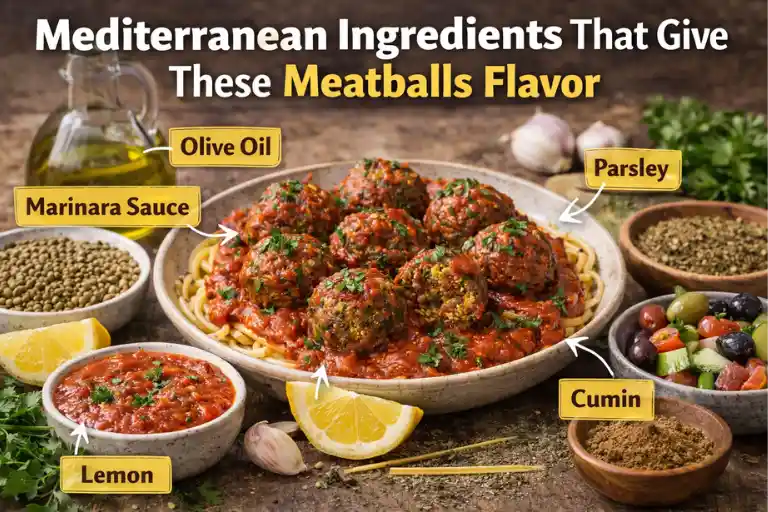
Mediterranean Ingredients That Give These Meatballs Flavor
One of the reasons Mediterranean lentil meatballs taste so rich and satisfying is the combination of aromatic herbs, spices, and fresh ingredients. These ingredients create a balanced flavor that makes vegan meatballs both comforting and vibrant.
Garlic
Garlic is a key ingredient that adds depth and savory flavor to lentil meatballs. It enhances the natural taste of lentils and pairs perfectly with Mediterranean herbs.
Parsley
Fresh parsley adds a bright and slightly fresh taste. It also brings a pop of color and helps balance the richness of the other ingredients in vegan lentil meatballs.
Oregano
Oregano is a classic Mediterranean herb that adds a warm and earthy flavor. It gives Mediterranean lentil meatballs their traditional herb aroma, especially when combined with tomato-based sauces.
Cumin
A small amount of cumin adds a gentle, smoky and warm spice flavor. This spice enhances the overall taste and helps create a deeper flavor profile for homemade vegan lentil meatballs.
Olive Oil
Olive oil is an essential Mediterranean ingredient that adds richness and moisture. It also helps the lentil meatballs develop a slightly crispy outer texture when baked or pan-fried.
Tomato Sauce
Finally, tomato sauce or marinara sauce pairs perfectly with vegan lentil meatballs. The tangy flavor of tomatoes complements the herbs and spices, making these plant-based meatballs ideal for serving with pasta, grain bowls, or Mediterranean platters.
Ingredients You Need for Vegan Lentil Meatballs
Making vegan lentil meatballs requires simple pantry ingredients that work together to create the right flavor, texture, and structure. Each ingredient plays an important role in helping the lentil meatballs hold their shape while delivering a rich Mediterranean taste.
Lentils (The Base Ingredient)
Lentils are the main ingredient in this vegan lentil meatballs recipe. They provide the protein, texture, and structure needed for a good plant-based meatball. Cooked lentils become soft but still slightly firm, which helps create homemade lentil meatballs that are tender inside while holding their shape.
Breadcrumbs or Oats (The Binder)
To keep the lentil meatballs vegan mixture from falling apart, you need a binder. Breadcrumbs or rolled oats help absorb moisture and bind the ingredients together. This step is important for making baked lentil meatballs that stay firm during cooking.
Onion and Garlic (Flavor Base)
Onion and garlic build the flavor foundation of the recipe. When finely chopped or sautéed, they add natural sweetness and depth to the vegan meatball mixture, making the final dish more aromatic and flavorful.
Herbs and Spices
Mediterranean herbs like parsley, oregano, and cumin give Mediterranean lentil meatballs their signature taste. These seasonings bring balance and warmth to the dish while enhancing the natural flavor of lentils.
Olive Oil
A small amount of olive oil helps keep the mixture moist and adds richness. It also helps the lentil meatballs develop a lightly crisp exterior when baked or pan-fried.
Best Lentils to Use for Lentil Meatballs
Choosing the right type of lentils is important for achieving the best texture in vegan lentil meatballs. Different lentils cook differently, and some hold their shape better than others.
Brown Lentils
Brown lentils are the most common choice for vegan lentil meatball recipes. They hold their shape well after cooking and provide the perfect balance of softness and firmness. This makes them ideal for forming vegan meatballs that don’t fall apart.
Green Lentils
Green lentils are another great option. They are slightly firmer than brown lentils and create a slightly denser texture in homemade vegan lentil meatballs. Many people prefer them because they help the meatballs stay firm during cooking.
Red Lentils (Why They May Not Work)
While red lentils are nutritious, they break down quickly when cooked and become very soft. This can make the lentil meatball mixture too mushy, which makes it harder to shape vegan lentil meatballs properly.
Canned vs Dried Lentils
Both canned lentils and dried lentils can work in this recipe.
- Dried lentils are often preferred because they allow better control over texture when cooked.
- Canned lentils are convenient and save time, but they should be rinsed and drained well to remove excess moisture before making vegan lentil meatballs.
How to Make Vegan Lentil Meatballs (Step-by-Step)
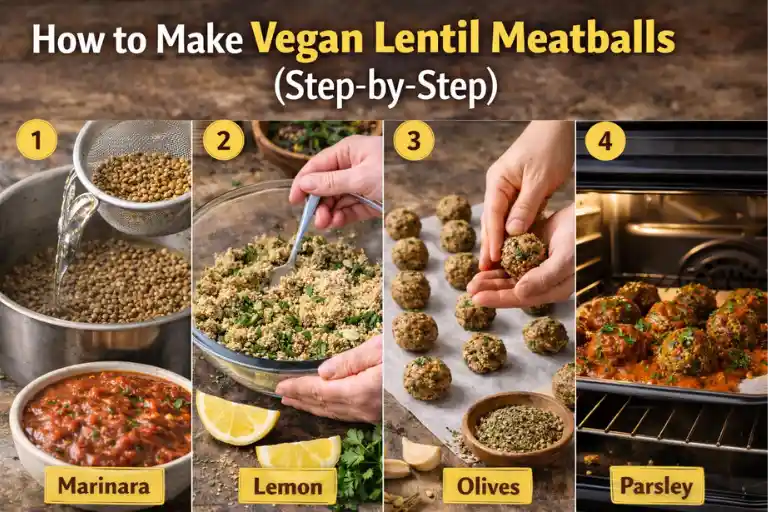
Making vegan lentil meatballs at home is simple and requires only a few steps. This easy vegan lentil meatballs recipe creates flavorful Mediterranean lentil meatballs that are perfect for pasta, wraps, or grain bowls.
Cook the Lentils
Start by cooking the lentils, which form the base of the lentil meatballs vegan recipe. Rinse about one cup of brown or green lentils, then cook them in water until they are tender but not mushy. This usually takes about 15–20 minutes. After cooking, drain any excess water and allow the lentils to cool slightly. Properly cooked lentils help create firm vegan lentil meatballs that hold their shape.
Prepare the Mixture
Place the cooked lentils in a bowl and lightly mash them with a fork or potato masher. Add breadcrumbs or oats, chopped onion, garlic, olive oil, and Mediterranean herbs like parsley and oregano. Mix everything until the ingredients form a thick mixture. This step is important for making homemade vegan lentil meatballs that stay together during cooking.
Shape the Meatballs
Using your hands or a spoon, roll the mixture into small balls about 1 to 1½ inches in diameter. Place the shaped lentil meatballs on a baking tray lined with parchment paper. Make sure the balls are evenly sized so they cook evenly.
Bake or Pan Fry
You can cook vegan lentil meatballs in different ways. For a healthier option, bake them in the oven. If you prefer a slightly crisp exterior, pan-frying works very well. Both methods help the plant-based meatballs develop a flavorful outer layer.
Serve with Sauce
Once the vegan meatballs are cooked, serve them with marinara sauce, tomato sauce, or garlic tahini sauce. These Mediterranean lentil meatballs pair perfectly with pasta, rice bowls, pita wraps, or sandwiches.
Cooking Methods for Lentil Meatballs
One great thing about vegan lentil meatballs is that they can be cooked in several ways, depending on your preference. Whether you choose baked lentil meatballs, pan-fried lentil meatballs, or air fryer lentil meatballs, each method creates a delicious result.
Baked Lentil Meatballs
Baking is one of the most popular methods for making vegan lentil meatballs. Preheat the oven to 375°F (190°C) and place the meatballs on a lined baking sheet. Bake for about 20–25 minutes, turning them halfway through cooking. This method creates healthy baked lentil meatballs with a lightly crisp exterior.
Pan-Fried Lentil Meatballs
For a slightly crisp texture, pan-frying lentil meatballs works well. Heat a small amount of olive oil in a skillet over medium heat. Cook the vegan meatballs for about 3–4 minutes per side until they develop a golden crust. This method enhances the flavor and creates a satisfying texture.
Air Fryer Lentil Meatballs
If you prefer a quicker cooking method, you can make air fryer lentil meatballs. Place the shaped meatballs in the air fryer basket and cook at 375°F (190°C) for about 12–15 minutes. The air fryer creates a crispy outside while keeping the inside tender, making it a great option for easy vegan lentil meatballs.
How to Get the Perfect Meatball Texture
One of the most common challenges when making vegan lentil meatballs is getting the right texture. The goal is to create lentil meatballs that are firm on the outside but tender inside. With the right technique, your homemade vegan lentil meatballs will hold their shape and cook evenly.
Maintain the Right Moisture Balance
Moisture control is very important for making perfect lentil meatballs. If the mixture contains too much liquid, the vegan meatballs may fall apart during cooking. If the mixture is too dry, the meatballs can become crumbly. To balance moisture, make sure the cooked lentils are well drained and add binders like breadcrumbs or oats gradually.
Use the Right Binder Ratio
Binders help hold the lentil meatball mixture together. Common binders include breadcrumbs, oats, or ground flaxseed. For most vegan lentil meatballs recipes, about ½ cup of binder per 1 cup of cooked lentils works well. This ratio helps create firm, baked lentil meatballs without making them too dense.
Chill the Mixture Before Shaping
A helpful trick for making easy vegan lentil meatballs is chilling the mixture before shaping. Let the mixture rest in the refrigerator for 20–30 minutes. This allows the ingredients to bind together better, making it easier to shape plant-based meatballs that keep their form during cooking.
Use the Correct Lentil Consistency
The texture of the lentils also matters. Lentils should be soft but not mushy. Overcooked lentils can make the mixture too soft, which may cause vegan lentil meatballs to lose their shape. Lightly mashing the lentils instead of blending them completely helps maintain the ideal texture.
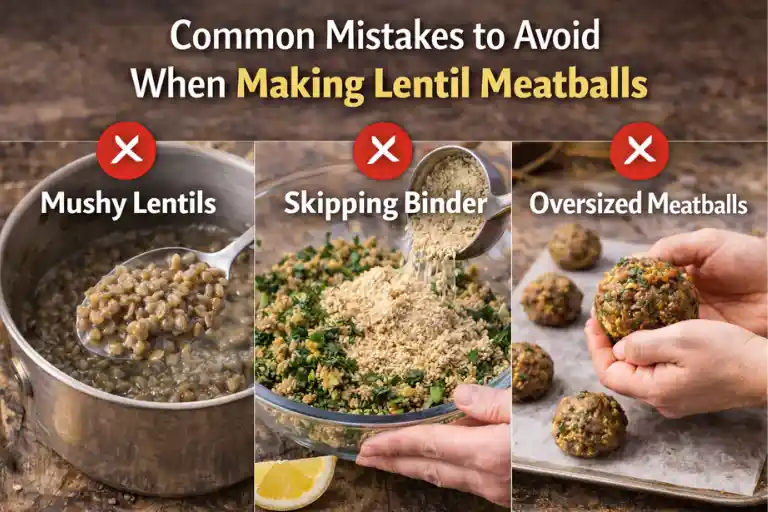
Common Mistakes to Avoid When Making Lentil Meatballs
Even a simple lentil meatballs vegan recipe can have small mistakes that affect the final result. Avoiding these common problems will help you make the best vegan lentil meatballs every time.
Mixture Too Wet
If the lentil meatball mixture is too wet, the meatballs may collapse while cooking. This usually happens when lentils are not drained properly or too many wet ingredients are added. Adding a little more breadcrumbs or oats can help absorb extra moisture.
Over-Blending Lentils
Blending lentils too much can turn the mixture into a paste. This makes the vegan meatballs dense and sticky instead of tender. For the best texture, lightly mash the lentils instead of fully pureeing them.
Skipping the Binder
Binders such as breadcrumbs, oats, or flaxseed are essential for making homemade lentil meatballs. Without a binder, the mixture will not hold together properly, and the plant-based meatballs may break apart during cooking.
Overcrowding the Pan
When pan-frying vegan lentil meatballs, avoid placing too many in the pan at once. Overcrowding reduces heat circulation and prevents the meatballs from forming a golden crust. Cooking them in small batches helps achieve a crisp and evenly cooked exterior.
Troubleshooting Lentil Meatballs
Even with a good vegan lentil meatball recipe, small issues can sometimes happen during cooking. The good news is that most problems are easy to fix. Understanding these solutions will help you make perfect homemade vegan lentil meatballs every time.
Meatballs Falling Apart
If your lentil meatballs fall apart while cooking, the mixture may not have enough binding ingredients. Adding more breadcrumbs, oats, or ground flaxseed can help hold the vegan meatball mixture together. Chilling the mixture for 20–30 minutes before shaping can also improve stability and help the plant-based meatballs keep their shape.
Mixture Too Dry
Sometimes the lentil meatball mixture may feel too dry and crumbly. This usually happens if too many dry ingredients are added. To fix this, mix in a small amount of olive oil, vegetable broth, or a spoon of tomato sauce. These ingredients add moisture and improve the texture of vegan lentil meatballs.
Meatballs Too Soft
If the lentil meatballs turn out too soft, it usually means the lentils were overcooked or the mixture contains too much moisture. Adding extra breadcrumbs or oats can absorb the liquid and create firmer baked lentil meatballs. Cooking them a few minutes longer can also help them firm up.
Lack of Flavor
If your Mediterranean lentil meatballs taste bland, the seasoning may need adjustment. Adding more garlic, herbs, spices, or salt can improve the overall flavor. Ingredients like parsley, oregano, cumin, and olive oil enhance the taste and give vegan meatballs a richer Mediterranean profile.
Best Sauces for Vegan Lentil Meatballs
One of the best ways to enjoy vegan lentil meatballs is by serving them with flavorful sauces. The right sauce can elevate the dish and complement the herbs and spices used in Mediterranean lentil meatballs.
Marinara Sauce
Marinara sauce is the most classic pairing for vegan meatballs. The rich tomato flavor balances the earthy taste of lentils and creates a comforting dish when served with pasta or spaghetti.
Garlic Tahini Sauce
For a Mediterranean twist, garlic tahini sauce works beautifully with lentil meatballs vegan recipes. This creamy sauce made from tahini, lemon juice, garlic, and olive oil adds a nutty and tangy flavor that pairs well with wraps or grain bowls.
Vegan Yogurt Sauce
A light vegan yogurt sauce made with plant-based yogurt, garlic, and herbs adds a refreshing flavor. This sauce is perfect when serving vegan lentil meatballs in pita wraps or Mediterranean platters.
Spicy Tomato Sauce
If you enjoy a little heat, a spicy tomato sauce can add extra depth to homemade lentil meatballs. Adding chili flakes, smoked paprika, or cayenne pepper to tomato sauce creates a bold and flavorful topping for plant-based meatballs.
What to Serve With Lentil Meatballs
One of the best things about vegan lentil meatballs is how versatile they are. These plant-based meatballs can be served in many different ways, making them perfect for lunch, dinner, or meal prep. Whether you prefer a classic pasta dish or a Mediterranean-style meal, lentil meatballs pair well with many sides.
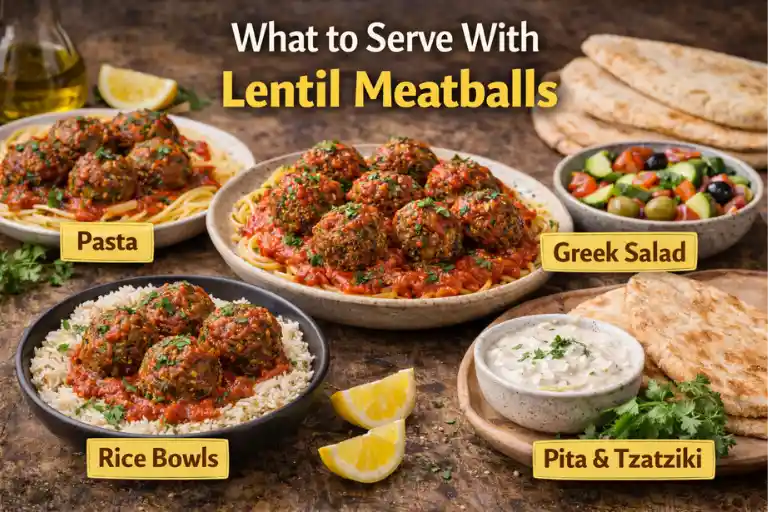
Pasta
A classic way to enjoy vegan lentil meatballs is with pasta and marinara sauce. The rich tomato sauce complements the herbs and spices used in Mediterranean lentil meatballs, creating a comforting and satisfying meal.
Rice Bowls
Another great option is serving lentil meatballs in rice bowls. Combine them with brown rice, roasted vegetables, and a light tahini sauce for a balanced and nutritious plant-based dinner.
Pita Wraps
Pita wraps are a popular Mediterranean serving style. Place the vegan meatballs inside warm pita bread and add lettuce, tomatoes, cucumbers, and garlic sauce for a delicious wrap.
Mediterranean Platters
For a flavorful platter, serve vegan lentil meatballs with hummus, olives, roasted vegetables, and fresh salad. This style creates a colorful Mediterranean-inspired meal that is both healthy and satisfying.
Sandwiches
You can also use homemade lentil meatballs to make vegan meatball sandwiches. Place them inside a toasted bun with tomato sauce and fresh herbs for a hearty and filling meal.
Flavor Variations You Can Try
One of the great things about vegan lentil meatballs recipes is that they can easily be customized with different herbs and spices. By adjusting the seasoning, you can create a variety of flavorful plant-based meatballs.
Italian Herb Lentil Meatballs
For a classic Italian flavor, add basil, oregano, and parsley to the lentil meatball mixture. These herbs pair perfectly with marinara sauce and pasta, creating a comforting vegan Italian-style meal.
Spicy Lentil Meatballs
If you enjoy a little heat, try adding chili flakes, cayenne pepper, or hot paprika to your vegan lentil meatballs. This creates a bold and slightly spicy flavor that works well with spicy tomato sauce.
Mediterranean Garlic Version
A Mediterranean garlic version focuses on strong aromatic flavors. Adding extra garlic, lemon zest, and parsley gives the lentil meatballs a bright and fresh Mediterranean taste.
Smoky Paprika Variation
For a deeper flavor profile, add smoked paprika to the mixture. This creates a subtle smoky taste that makes baked lentil meatballs even richer and more satisfying.
Nutrition and Health Benefits
One of the biggest advantages of vegan lentil meatballs is their impressive nutritional value. Lentils are naturally rich in protein, fiber, and essential nutrients, making them a great ingredient for a healthy plant-based meal.
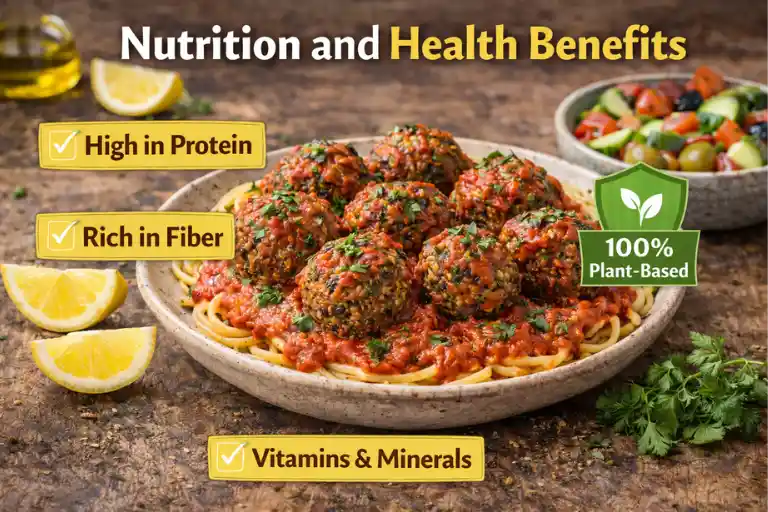
Calories
A serving of vegan lentil meatballs typically contains around 180–220 calories, depending on the cooking method and ingredients used. Baking the meatballs instead of frying can help keep the calorie count lower.
Protein
Lentils are an excellent source of plant-based protein. A serving of lentil meatballs can provide about 10–12 grams of protein, making them a satisfying meat alternative for vegan diets.
Fiber
Lentils are naturally high in dietary fiber, which supports healthy digestion and helps keep you full longer. This makes healthy lentil meatballs a great option for balanced meals.
Plant-Based Nutrition Benefits
In addition to protein and fiber, lentils contain iron, potassium, folate, and antioxidants. Choosing vegan lentil meatballs instead of traditional meatballs can support a heart-healthy and environmentally friendly diet, while still providing delicious flavor and satisfying texture.
Cost Per Serving & Budget Analysis
One of the biggest advantages of making vegan lentil meatballs is how affordable they are. Lentils are one of the most budget-friendly plant-based proteins, making this recipe perfect for families or anyone looking to cook healthy meals without spending too much.
Lentils Are Very Affordable
Lentils are widely known as a low-cost and nutritious ingredient. A single cup of dried lentils can produce enough mixture to make many homemade lentil meatballs. Because lentils are filling and rich in nutrients, they help create satisfying meals at a very low cost.
Cost Compared to Traditional Meat
Traditional meatballs made with beef or pork are usually much more expensive than vegan lentil meatballs. Meat prices are often significantly higher, while lentils remain inexpensive and easy to store. Choosing plant-based lentil meatballs can reduce grocery costs while still providing plenty of protein and flavor.
Budget-Friendly Meal Benefits
This lentil meatballs vegan recipe uses simple pantry ingredients like lentils, breadcrumbs, herbs, and spices, which are commonly available and affordable. A full batch of easy vegan lentil meatballs can serve several people, making it a practical option for budget-friendly family meals or weekly meal planning.
Meal Prep Strategy for the Week
Another reason people love vegan lentil meatballs is that they are excellent for meal prep. Preparing them ahead of time can save effort during busy weekdays while ensuring you always have a healthy meal ready.
Batch Cooking
You can easily make a large batch of lentil meatballs at once. Cooking extra vegan meatballs and storing them properly allows you to use them throughout the week for different meals such as pasta, grain bowls, wraps, or sandwiches.
Freezer-Friendly Meals
Vegan lentil meatballs freeze very well. After cooking, let the meatballs cool completely and place them in an airtight container or freezer bag. They can be stored in the freezer for up to 2–3 months, making them a convenient plant-based freezer meal.
Quick Lunch Ideas
Having homemade lentil meatballs ready in the refrigerator makes quick lunches easy. You can add them to salads, rice bowls, or pita wraps, or reheat them with marinara sauce and pasta for a simple and satisfying meal. This makes vegan lentil meatball recipes perfect for busy schedules and healthy weekly meal planning.
How to Store and Reheat Lentil Meatballs
One of the great benefits of vegan lentil meatballs is that they store very well. This makes them perfect for meal prep, quick lunches, or future dinners. Proper storage helps maintain the texture and flavor of your homemade lentil meatballs.
Refrigerator Storage
If you plan to eat the lentil meatballs within a few days, store them in the refrigerator. Place the cooled vegan lentil meatballs in an airtight container and keep them in the fridge for up to 4–5 days. When stored properly, the plant-based meatballs will maintain their flavor and texture.
Freezer Storage
For longer storage, vegan lentil meatballs can be frozen. Allow the baked lentil meatballs to cool completely, then place them in a freezer-safe container or bag. They can be stored for 2–3 months in the freezer. Freezing is a great option if you want to prepare easy vegan lentil meatballs in advance for future meals.
Best Reheating Methods
There are several ways to reheat vegan meatballs while keeping them tender:
- Oven: Reheat at 350°F (175°C) for about 10–12 minutes.
- Stovetop: Warm them in a pan with marinara or tomato sauce.
- Microwave: Heat for 1–2 minutes for quick meals.
Reheating the lentil meatballs in the sauce helps keep them moist and flavorful.
Beginner’s Guide to Cooking Lentils
If you are new to cooking lentils, understanding a few basics can help you prepare the perfect base for vegan lentil meatballs. Lentils are simple to cook and require minimal preparation.
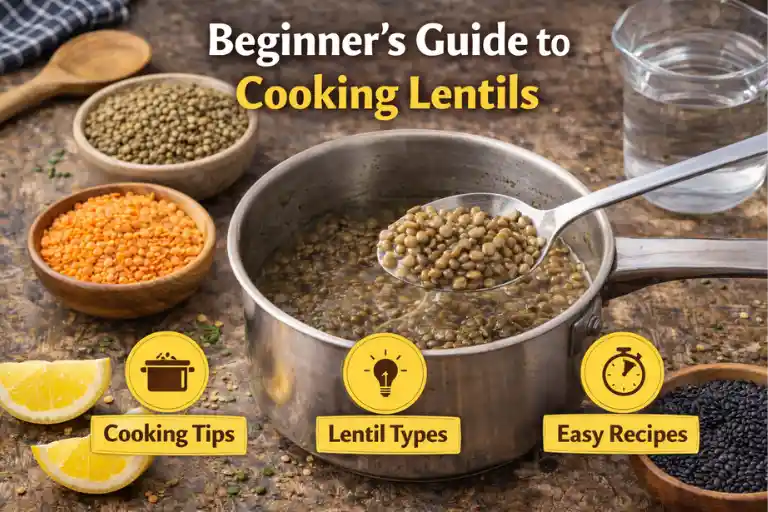
Soaking vs Not Soaking
Unlike many beans, lentils usually do not require soaking before cooking. You can cook them directly after rinsing them under water. However, soaking lentils for 1–2 hours can sometimes reduce cooking time slightly.
Cooking Times
Different lentils cook at different speeds. For vegan lentil meatball recipes, brown or green lentils usually work best.
Typical cooking times:
- Brown lentils: about 20 minutes
- Green lentils: about 25 minutes
- Red lentils: about 10–15 minutes (they become very soft)
To make perfect lentil meatballs, cook the lentils until tender but not mushy.
Seasoning Lentils
Cooking lentils with garlic, onion, bay leaves, or herbs can add extra flavor. Well-seasoned lentils create more flavorful Mediterranean lentil meatballs and improve the overall taste of the vegan meatball mixture.
Lentil Meatballs vs Traditional Meatballs
Many people choose vegan lentil meatballs as a plant-based alternative to traditional meatballs. While both can be delicious, they differ in nutrition, calories, protein sources, and environmental impact.
Nutrition
Lentil meatballs contain fiber, plant-based protein, and essential nutrients such as iron and folate. Traditional meatballs mainly provide protein and fat but often contain less fiber.
Calories
Because they contain less fat, vegan lentil meatballs are usually lower in calories than beef or pork meatballs. Baking them instead of frying makes them an even healthier option.
Protein
Traditional meatballs contain animal protein, while vegan lentil meatball recipes provide plant-based protein. Although lentils may have slightly less protein per serving than meat, they offer additional fiber and nutrients that support overall health.
Environmental Impact
Producing lentils requires fewer natural resources compared to raising livestock. Choosing plant-based meatballs made from lentils can help reduce environmental impact, making vegan lentil meatballs a more sustainable and eco-friendly meal choice.
FAQs About Vegan Lentil Meatballs
Many people have questions when making vegan lentil meatballs for the first time. Below are some common questions and helpful answers to make sure your lentil meatballs recipe turns out perfectly.
Why Do Lentil Meatballs Fall Apart?
Lentil meatballs may fall apart if the mixture does not contain enough binding ingredients. Adding breadcrumbs, oats, or ground flaxseed helps hold the mixture together. Another helpful tip is to chill the mixture for 20–30 minutes before shaping the vegan lentil meatballs. This helps the ingredients bind better and improves the texture.
Can Lentil Meatballs Be Baked Instead of Fried?
Yes, baked lentil meatballs are a popular and healthy option. Baking them in the oven at 375°F (190°C) for about 20–25 minutes helps them develop a firm exterior while keeping the inside tender. Baking also uses less oil, making vegan lentil meatballs a healthier alternative to frying.
Can Lentil Meatballs Be Frozen?
Yes, vegan lentil meatballs freeze very well. After cooking, allow the lentil meatballs to cool completely and store them in an airtight container or freezer bag. They can be frozen for up to 2–3 months, making them perfect for meal prep and quick plant-based meals.
Are Lentil Meatballs Gluten Free?
Lentil meatballs can easily be made gluten-free by replacing traditional breadcrumbs with gluten-free breadcrumbs or rolled oats. This simple change allows you to enjoy gluten-free vegan lentil meatballs without affecting the flavor or texture.
What Sauce Goes Best With Lentil Meatballs?
Several sauces pair well with vegan lentil meatballs. The most common option is marinara or tomato sauce, especially when serving them with pasta. Other great choices include garlic tahini sauce, vegan yogurt sauce, or spicy tomato sauce, which add extra flavor to Mediterranean lentil meatballs.
Can Lentil Meatballs Be Air Fried?
Yes, air fryer lentil meatballs are a quick and convenient option. Cook them in the air fryer at 375°F (190°C) for about 12–15 minutes until they are slightly crisp on the outside. This method creates easy vegan lentil meatballs with a delicious texture while using very little oil.
Recipe Card – Vegan Lentil Meatballs (Mediterranean Style)
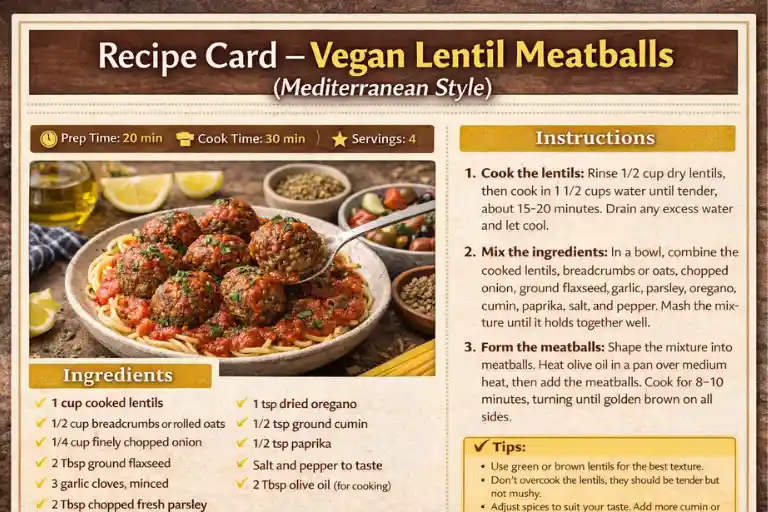
Here is a simple recipe card summarizing everything you need to make the best vegan lentil meatballs at home. This Mediterranean lentil meatball recipe is healthy, flavorful, and perfect for pasta, wraps, or plant-based bowls.
Recipe Details
- Recipe Name: Vegan Lentil Meatballs
- Cuisine: Mediterranean / Plant-Based
- Recipe Type: Main Dish / Vegan Meatball Recipe
- Difficulty Level: Easy
- Prep Time: 15 minutes
- Cook Time: 25 minutes
- Total Time: 40 minutes
- Servings: 4 servings (16–18 lentil meatballs)
Ingredients
- 1 cup cooked brown or green lentils
- ½ cup breadcrumbs or rolled oats (binder)
- ¼ cup finely chopped onion
- 2 cloves garlic, minced
- 2 tablespoons olive oil
- 2 tablespoons fresh parsley, chopped
- 1 teaspoon oregano
- ½ teaspoon cumin
- ½ teaspoon salt
- ¼ teaspoon black pepper
- 2–3 tablespoons tomato sauce or marinara (optional for extra flavor)
Instructions
- Cook the lentils until tender but not mushy. Drain well and allow them to cool.
- In a bowl, lightly mash the lentils with a fork.
- Add breadcrumbs, onion, garlic, olive oil, parsley, oregano, cumin, salt, and pepper.
- Mix everything until a thick vegan lentil meatball mixture forms.
- Shape the mixture into small meatballs about 1–1½ inches wide.
- Place them on a lined baking tray and bake at 375°F (190°C) for 20–25 minutes, turning halfway through.
- Serve the vegan meatballs with marinara sauce, pasta, rice bowls, or pita wraps.
Nutrition (Approximate Per Serving)
- Calories: 200–220
- Protein: 10–12 g
- Carbohydrates: 25 g
- Fiber: 8–10 g
- Fat: 6–8 g
Recipe Tips
- Use brown or green lentils for the best texture.
- Chill the mixture for 20 minutes if the lentil meatballs feel too soft.
- You can cook these as baked lentil meatballs, pan-fried lentil meatballs, or air fryer lentil meatballs.
Final Thoughts on Vegan Lentil Meatballs
Vegan lentil meatballs are a simple and delicious way to enjoy a plant-based meal that is both satisfying and nutritious. This easy vegan lentil meatballs recipe uses wholesome ingredients like lentils, herbs, and spices to create a flavorful dish that can easily replace traditional meatballs in many recipes.
Because lentils are naturally rich in plant-based protein, fiber, and essential nutrients, these healthy lentil meatballs are a great option for anyone looking to eat more balanced meals. They are also budget-friendly and easy to prepare, making them perfect for both beginners and experienced home cooks.
Another great advantage is how versatile this dish can be. You can serve vegan lentil meatballs with pasta, rice bowls, pita wraps, sandwiches, or Mediterranean platters. They can also be baked, pan-fried, or cooked in an air fryer depending on your preference.
Overall, Mediterranean lentil meatballs are a flavorful, nutritious, and flexible meal option that fits perfectly into a healthy plant-based lifestyle.