

If you love sushi but do not enjoy rolling each piece by hand, this easy sushi bake recipe gives you a much simpler option. It combines seasoned sushi rice, creamy crab, cooked salmon, spicy mayo, furikake, and crisp nori in one warm and comforting dish. Many people also call it a sushi casserole, baked sushi recipe, or deconstructed California roll because it delivers familiar sushi flavors without complicated steps.
This homemade sushi bake works well for family dinners, parties, and potlucks. You can prepare it with imitation crab, salmon, shrimp, tuna, or even a vegetarian filling. The creamy seafood layer stays rich and flavorful, while cucumber, avocado, sesame seeds, and green onions add freshness.
This recipe also includes simple substitutions, storage tips, reheating advice, and clear steps for beginners. You only need to layer, bake, scoop, and enjoy it with roasted seaweed.
Quick Answer
A sushi bake recipe is a warm, layered dish made with seasoned sushi rice, a creamy seafood mixture, and flavorful toppings baked in one casserole dish. Instead of rolling sushi, you simply layer the ingredients, bake them until hot, and scoop portions onto nori sheets.
This easy sushi bake recipe usually includes imitation crab, cooked salmon, Kewpie mayonnaise, cream cheese, furikake, and spicy mayo. It is beginner-friendly, easy to customize, and perfect for family dinners, parties, or meal prep.
TL:DR
- Sushi bake is a warm, creamy deconstructed sushi casserole that’s much easier to make than traditional sushi rolls.
- This easy sushi bake recipe combines seasoned sushi rice, cooked salmon, imitation crab, Kewpie mayonnaise, cream cheese, and furikake.
- Layer the rice and seafood mixture, bake until hot, then top with avocado, cucumber, sesame seeds, and green onions.
- Serve warm with roasted nori sheets for the best flavor and texture.
- Short-grain sushi rice creates the best base, while Kewpie mayonnaise adds a rich, authentic taste.
- You can customize the recipe with shrimp, tuna, real crab, or a vegetarian filling.
- Prepare it ahead of time, refrigerate leftovers for up to 3 days, and reheat in the oven, microwave, or air fryer.
- Perfect for family dinners, meal prep, potlucks, and party gatherings because it is easy to make, simple to serve, and always crowd-pleasing.
Sushi Bake Recipe at a Glance
| Detail | Information |
| Prep Time | 20 minutes |
| Cook Time | 20 minutes |
| Total Time | 40 minutes |
| Servings | 6–8 |
| Difficulty | Easy |
| Main Protein | Salmon and imitation crab |
| Pan Size | 9×9-inch baking dish |
| Best Served | Warm with nori sheets |
| Spice Level | Mild to medium |
This homemade sushi bake is creamy, satisfying, and easy to adjust. You can make it spicier, milder, or switch the seafood to match your preference.
What Is Sushi Bake?
A sushi bake is a baked version of popular sushi rolls. Instead of wrapping each roll by hand, you layer seasoned sushi rice, creamy seafood, sauces, and seasonings into one baking dish. After baking, everyone scoops a portion onto roasted nori and enjoys it like a hand roll.
Many people compare it to a California roll sushi bake because it uses similar ingredients like crab, avocado, cucumber, and Japanese mayonnaise. The recipe offers the same delicious flavors with far less work, making it a favorite for busy weeknights and gatherings.
Why You Will Love This Sushi Bake Recipe

There are many reasons to make this easy baked sushi recipe. It uses simple ingredients, requires no special rolling skills, and comes together quickly. The creamy seafood filling pairs perfectly with sticky rice, while fresh toppings add color and crunch.
Another reason people love this sushi casserole is its flexibility. You can use salmon, shrimp, tuna, or imitation crab, adjust the spice level, and even prepare it ahead of time. It is perfect for beginners and equally impressive when served at parties or family dinners.
Choosing the Right Sushi Bake Style
Different versions of homemade sushi bake create different flavors and textures. Choosing the right one depends on your taste and the ingredients you have available.
Crab-Only Sushi Bake
This version uses imitation crab or real crab and delivers a mild, creamy flavor similar to a California roll. It is affordable, simple, and great for beginners.
Crab and Salmon Sushi Bake
This recipe combines cooked salmon with imitation crab for a richer seafood flavor. The salmon adds a buttery texture while the crab keeps the filling light and creamy.
Crab and Shrimp Sushi Bake
Shrimp creates a slightly firmer texture and works well with spicy mayo and cream cheese. It is an excellent option if you enjoy shrimp tempura rolls.
Spicy Tuna Sushi Bake
Cooked or canned tuna mixed with spicy mayo creates a bold, savory filling. Add extra sriracha if you enjoy a little more heat.
Ingredients You Need
This sushi bake recipe uses simple ingredients that come together to create a creamy, savory, and satisfying dish. Each ingredient has an important role, from the sticky seasoned sushi rice that forms the base to the rich seafood filling and fresh toppings that add flavor and texture.
For the Seasoned Sushi Rice
- 3 cups cooked sushi rice (or short-grain rice)
- 3 tablespoons rice vinegar
- 1 tablespoon sugar
- 1 teaspoon salt
The seasoned rice creates the perfect foundation for this easy sushi bake recipe. Sushi rice has the ideal sticky texture that holds the layers together while still staying light and fluffy.
For the Creamy Seafood Filling
- 1½ cups cooked salmon, flaked
- 1½ cups imitation crab (kani), shredded
- 4 ounces cream cheese, softened
- ½ cup Kewpie mayonnaise (or Japanese mayonnaise)
- 1 tablespoon sriracha (adjust to taste)
- 1 teaspoon low-sodium soy sauce
- 1 teaspoon sesame oil
- 2 green onions, finely chopped
This creamy mixture gives the homemade sushi bake its rich flavor. The combination of salmon and imitation crab creates a delicious balance, while cream cheese and Kewpie mayonnaise keep the filling smooth and creamy.

For the Toppings
- 2–3 tablespoons furikake seasoning
- 1 avocado, diced
- 1 small cucumber, diced
- 2 tablespoons spicy mayo
- 1 tablespoon toasted sesame seeds
- Extra chopped green onions
- Roasted nori sheets, for serving
- Eel sauce (optional)
- Masago or tobiko (optional)
These toppings add freshness, crunch, and extra flavor. Furikake, avocado, cucumber, and roasted nori complete the classic California roll sushi bake experience, while optional eel sauce or fish roe gives the dish a restaurant-style finish.
Best Rice for Sushi Bake
The best choice for any baked sushi recipe is short-grain sushi rice because it becomes sticky enough to hold together while remaining soft. Calrose rice is another excellent option if sushi rice is unavailable.
Although some people use jasmine rice, it creates a lighter texture and does not stick as well. Always rinse the rice before cooking to remove extra starch. After cooking, gently fold in the vinegar seasoning while the rice is still warm. Avoid overmixing because it can make the rice mushy instead of fluffy.
How to Make Sushi Bake
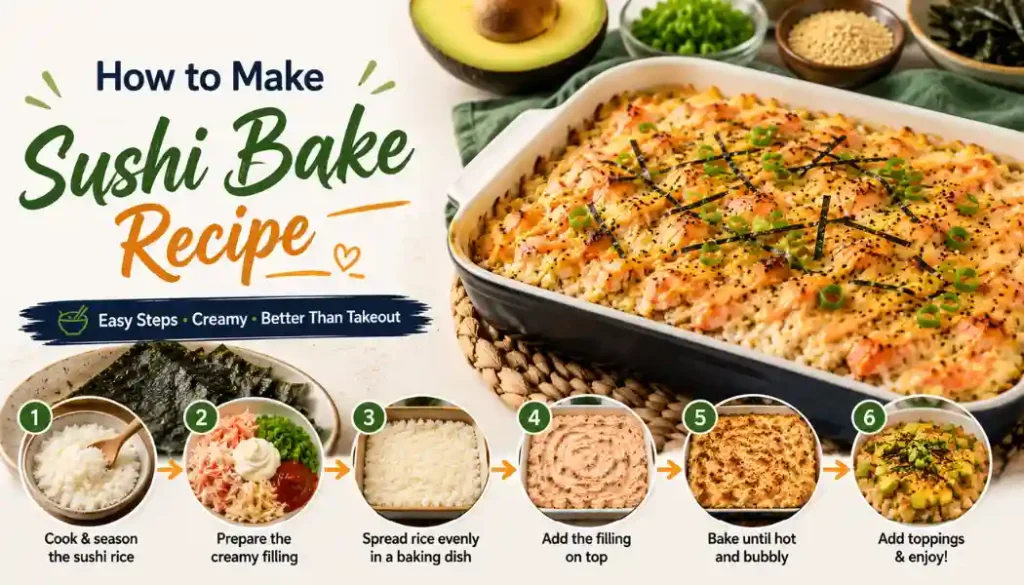
Step 1: Cook and Season the Sushi Rice
Cook the sushi rice according to the package instructions. Mix rice vinegar, sugar, and salt until dissolved, then gently fold the seasoning into the warm rice. Let it cool slightly before assembling.
Step 2: Prepare the Salmon
Cook the salmon until fully done, remove the skin and bones, and flake it into bite-sized pieces. Allow it to cool for a few minutes before mixing it with the creamy ingredients.
Step 3: Make the Creamy Crab and Salmon Filling
Combine imitation crab, cooked salmon, cream cheese, Kewpie mayonnaise, sriracha, soy sauce, sesame oil, and chopped green onions. Stir until everything is evenly coated and creamy. Taste the mixture and adjust the seasoning if needed.
Step 4: Assemble the Sushi Bake
Spread the seasoned sushi rice evenly into a lightly greased baking dish. Sprinkle a generous layer of furikake over the rice, then spread the seafood mixture evenly across the top. Finish with a drizzle of spicy mayo.
Step 5: Bake Until Hot and Lightly Golden
Bake until the filling is hot and the top begins to turn lightly golden. If you prefer extra color, broil it for one or two minutes while watching carefully to prevent burning.
Step 6: Add Fresh Toppings and Serve
Remove the bake from the oven and let it rest briefly. Top with avocado, cucumber, sesame seeds, green onions, and more furikake. Serve warm with roasted nori sheets, allowing everyone to scoop their own portion and enjoy fresh, crispy bites.
The Texture Formula for a Perfect Sushi Bake
The best sushi bake recipe should have soft, sticky rice, a creamy seafood layer, and fresh toppings that add crunch. Every bite should feel balanced instead of heavy. The rice should stay moist without becoming mushy, while the seafood mixture should remain creamy without turning watery.
To get the perfect texture, avoid adding too much mayonnaise or cream cheese. Pat seafood dry before mixing it with the sauce, and do not overbake the casserole. Always add avocado, cucumber, and extra furikake after baking. Serve the bake with crisp nori sheets so every bite has a fresh crunch.
How to Choose the Correct Baking Dish
The baking dish affects both the cooking time and the final texture. An 8×8-inch dish creates thicker layers, while a 9×9-inch pan gives a balanced texture. For parties, a 9×13-inch casserole dish works best because it spreads the layers evenly.
Glass and ceramic dishes hold heat longer, making them great for serving. Metal pans heat faster and can slightly brown the edges. Whatever pan you use, spread the rice and seafood evenly so every serving cooks at the same rate.
Expert Tips for the Best Sushi Bake
Making a delicious sushi bake recipe is simple, but a few small techniques can make a big difference. These tips will help you achieve fluffy rice, a creamy seafood filling, and perfectly balanced flavors every time.
- Use short-grain sushi rice for the best texture. It holds together better than long-grain rice.
- Rinse the rice well before cooking to remove excess starch and prevent mushy rice.
- Season the rice while it’s still warm so it absorbs the rice vinegar mixture evenly.
- Use room-temperature cream cheese to create a smooth, lump-free seafood filling.
- Pat cooked seafood dry before mixing it with the sauce to prevent a watery casserole.
- Choose Kewpie mayonnaise if possible. It gives the filling a richer, creamier flavor than regular mayonnaise.
- Taste the filling before baking and adjust the spice level with more or less sriracha.
- Spread the layers evenly so every serving has the perfect balance of rice and seafood.
- Do not overbake the casserole. Bake only until heated through to keep the seafood moist and creamy.
- Broil for 1–2 minutes at the end if you want a lightly golden top, but watch it carefully to avoid burning.
- Add fresh toppings after baking. Avocado, cucumber, green onions, and extra furikake stay fresher and more colorful this way.
- Serve with crispy roasted nori sheets instead of baking them. They provide the best texture and make each bite taste like freshly made sushi.
- Let the sushi bake rest for 5 minutes before serving. This helps the layers set and makes scooping easier.
- Store nori separately from leftovers to keep it crisp and prevent it from becoming soggy.
Common Sushi Bake Mistakes and How to Fix Them
The Rice Is Mushy
Too much water, skipping the rice rinse, or stirring the rice too much can make it sticky and soft. Measure the water carefully and gently fold in the seasoning instead of stirring aggressively.
The Filling Is Dry
Overcooked seafood or too little mayonnaise can make the filling dry. Mix enough Kewpie mayonnaise and cream cheese into the seafood, then bake only until heated through.
The Filling Is Watery
Wet seafood or watery vegetables often cause this problem. Drain canned seafood well and avoid adding cucumber or avocado before baking.
The Bake Is Too Salty
Soy sauce, imitation crab, and furikake all contain salt. Use low-sodium soy sauce and taste the filling before adding extra seasoning.
The Layers Fall Apart
Use short-grain sushi rice instead of long-grain rice. Spread the rice evenly and press it gently into the baking dish so it stays together when scooped.
Ingredient Substitutions
You can easily customize this homemade sushi bake with simple ingredient swaps. Replace Kewpie mayonnaise with regular mayonnaise mixed with a little rice vinegar. If you cannot find furikake, combine crushed nori, sesame seeds, and a pinch of salt for a similar flavor.
Swap imitation crab with cooked shrimp, canned tuna, real crab, or cooked salmon. If you prefer a lighter version, replace cream cheese with thick Greek yogurt. Tamari works well instead of soy sauce for a gluten-free option, while lettuce cups can replace nori sheets for a fresh twist.
Sushi Bake Variations
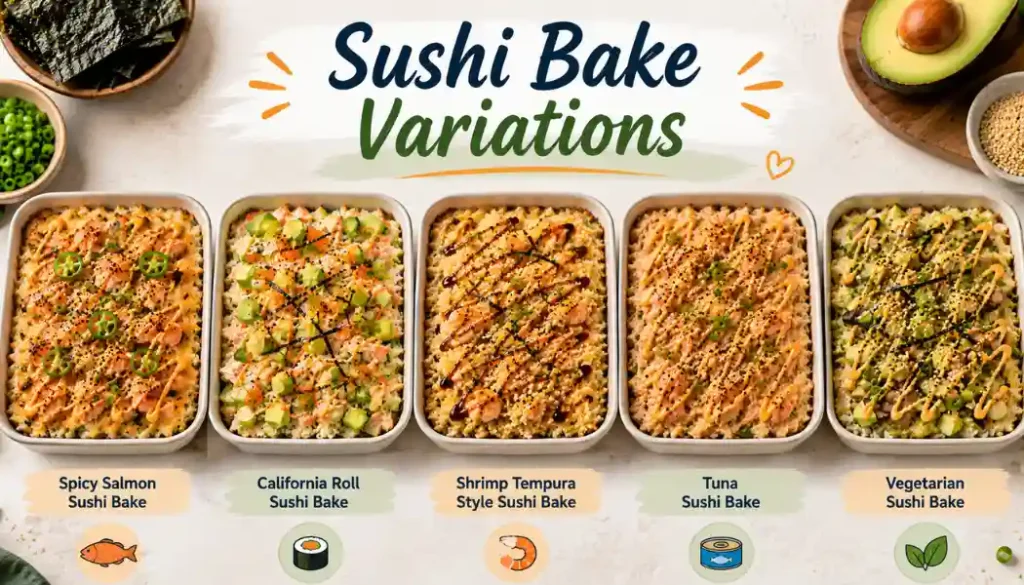
Spicy Salmon Sushi Bake
Use extra cooked salmon, spicy mayo, and chopped jalapeños for a richer seafood flavor with more heat.
California Roll Sushi Bake
Combine imitation crab, avocado, cucumber, and furikake to recreate the classic California roll in casserole form.
Shrimp Tempura-Style Sushi Bake
Mix cooked shrimp into the filling and sprinkle panko breadcrumbs or tempura flakes over the top before serving for extra crunch.
Tuna Sushi Bake
Use canned or cooked tuna mixed with spicy mayo and cream cheese for a quick and budget-friendly version.
Vegetarian Sushi Bake
Replace seafood with seasoned tofu, mushrooms, or extra vegetables. Vegan mayonnaise and dairy-free cream cheese also work well.
Mild Sushi Bake for Kids
Reduce the sriracha and serve spicy mayo on the side. The creamy filling still delivers plenty of flavor without becoming too spicy.
How to Scale Sushi Bake for a Crowd
This party sushi bake recipe is easy to double when serving a larger group. A 9×13-inch baking dish usually serves about 10 to 12 people as a main dish or even more as an appetizer. For very large gatherings, prepare two pans instead of one deep casserole so everything cooks evenly.
Set out bowls of avocado, cucumber, sesame seeds, spicy mayo, eel sauce, and roasted nori so guests can build their own perfect bite. This serving style keeps the toppings fresh and allows everyone to customize their portion.
How to Serve Sushi Bake
The traditional way to enjoy sushi bake is with roasted nori sheets. Scoop a spoonful of the warm bake onto a piece of nori, then add fresh avocado, cucumber, or extra spicy mayo. Fold the nori like a small taco and eat it immediately while it is still crisp.
You can also serve homemade sushi bake in lettuce cups, over steamed rice, or in small appetizer bowls. For parties, arrange the toppings in separate bowls so everyone can build their own bite. This keeps the vegetables fresh and lets each guest adjust the flavors to their liking.
What to Serve with Sushi Bake
Although this baked sushi recipe is filling on its own, a few light side dishes make the meal even better. A bowl of miso soup, seaweed salad, or steamed edamame pairs well with the creamy seafood filling. Pickled ginger also helps refresh the palate between bites.
If you want a larger meal, serve the sushi bake with an Asian cucumber salad, lightly steamed vegetables, or tempura vegetables. Keep the side dishes simple so they do not overpower the rich flavors of the casserole.

Make-Ahead Instructions
This easy sushi bake recipe is perfect for meal prep because you can prepare several parts ahead of time. Cook and season the sushi rice earlier in the day, then store it in the refrigerator. You can also prepare the creamy seafood filling separately and keep it chilled until you are ready to assemble the dish.
When it is time to cook, simply layer the rice and filling into the baking dish and bake until hot. Add fresh avocado, cucumber, sesame seeds, and furikake only after baking to keep the toppings fresh and crisp.
How to Store and Reheat Sushi Bake
Allow the sushi bake to cool before transferring leftovers to an airtight container. Store it in the refrigerator for up to 3 days. If possible, remove fresh avocado before storing because it browns quickly. Keep nori sheets separate so they stay crisp.
To reheat, place the bake in a preheated oven until warmed through. You can also heat individual servings in the microwave using short intervals. An air fryer works well for small portions and helps keep the top slightly crisp. Although freezing is possible, the texture of the rice and creamy filling may change after thawing.
Sushi Bake Food Safety Guide
Always use fully cooked seafood in this recipe unless you have experience preparing sushi-grade fish safely. Keep cooked seafood refrigerated until you are ready to assemble the casserole, and never leave the finished dish at room temperature for long periods.
Store leftovers promptly and reheat them thoroughly before serving again. Use clean utensils when handling cooked seafood, and check that the salmon is completely cooked before mixing it into the filling. Following these simple steps helps keep your sushi casserole safe and enjoyable.
Frequently Asked Questions
Is sushi bake eaten hot or cold?
Most people enjoy sushi bake warm because the seafood filling stays creamy and the rice remains soft. Fresh toppings and crispy nori create the best contrast when served immediately.
Can I use regular rice for sushi bake?
Yes, but short-grain sushi rice gives the best texture. Regular long-grain rice does not stick together as well and creates a looser casserole.
Is Kewpie mayonnaise necessary?
No. Regular mayonnaise works well, although Kewpie mayonnaise provides a richer flavor. You can also mix regular mayonnaise with a little rice vinegar and sugar for a similar taste.
Can I make sushi bake without cream cheese?
Absolutely. You can replace cream cheese with extra Japanese mayonnaise or thick Greek yogurt if you prefer a lighter filling.
Can I use canned salmon or tuna?
Yes. Well-drained canned salmon or tuna makes this easy sushi bake recipe more affordable while still adding plenty of flavor.
What can I use instead of furikake?
Mix toasted sesame seeds with crushed roasted nori and a pinch of salt to create a simple homemade substitute.
Can I prepare sushi bake the night before?
Yes. Assemble the casserole, cover it, and refrigerate it overnight. Bake it just before serving, then add the fresh toppings.
How do I stop sushi bake from drying out?
Do not overbake the casserole. Use enough mayonnaise and cream cheese to keep the seafood filling creamy, and cover leftovers tightly before refrigerating.
Can sushi bake be frozen?
Yes, but the texture of the rice and creamy filling may become softer after thawing. Fresh toppings should always be added after reheating.
What is the best seaweed for serving sushi bake?
Roasted nori sheets are the most popular choice because they stay crisp and make it easy to scoop and wrap the warm filling
Final Thoughts
This sushi bake recipe proves that you do not need special sushi-making skills to enjoy delicious Japanese-inspired flavors at home. With seasoned sushi rice, creamy crab and salmon, spicy mayo, and fresh toppings, every bite delivers the perfect balance of savory, creamy, and crunchy textures.
The recipe is simple enough for beginners yet flexible enough for experienced home cooks. Try different seafood, adjust the spice level, or experiment with new toppings to create your own version. Whether you make it for a family dinner, meal prep, or a party, this homemade sushi bake is sure to become a favorite that everyone will ask you to make again.