
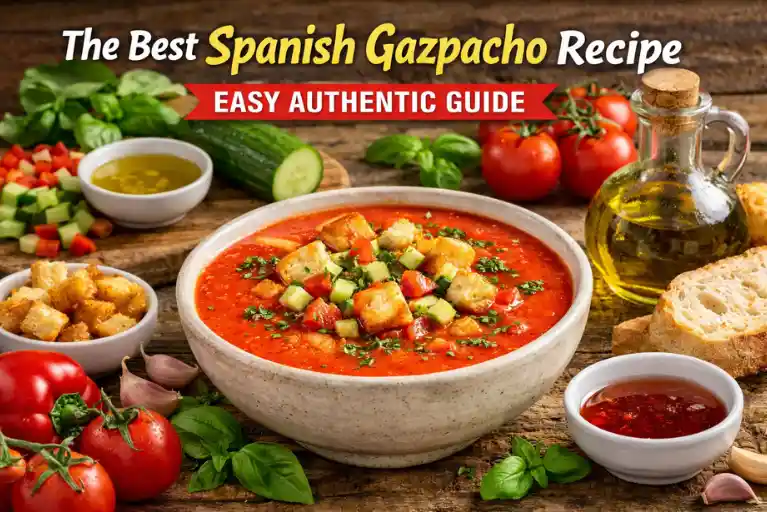
If you’re looking for the best Spanish gazpacho, you’re in the right place. This refreshing cold tomato soup is one of Spain’s most loved dishes, especially during warm days. Made with fresh vegetables, olive oil, and vinegar, this authentic Spanish gazpacho recipe is simple, healthy, and full of flavor.
In this guide, you’ll learn how to make Spanish gazpacho at home using easy steps, whether you want a traditional Andalusian gazpacho or a quick blender gazpacho recipe. We’ll also cover ingredients, texture tips, and common mistakes, so your soup turns out perfect every time.
Whether you’re a beginner or just want a better homemade gazpacho, this easy recipe will help you create a smooth, delicious, and perfectly balanced cold soup that tastes just like Spain.
Quick Answer: What Is Spanish Gazpacho?
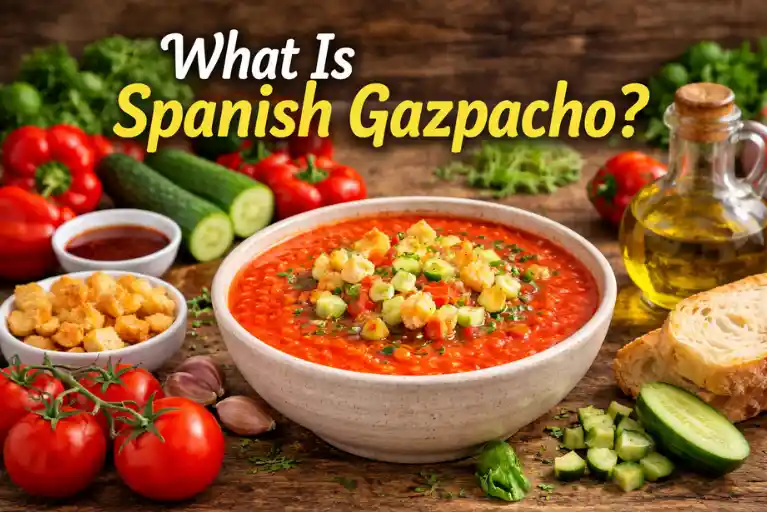
Spanish gazpacho is a cold tomato-based soup from Spain made with fresh tomatoes, cucumber, garlic, olive oil, and vinegar, blended into a smooth, refreshing dish. It is served cold to enhance flavor and provide a cooling, hydrating meal, especially popular during hot weather.
Why Everyone Loves Spanish Gazpacho
There’s a reason Spanish gazpacho is loved around the world—it’s refreshing, healthy, and incredibly easy to make. This cold tomato soup is perfect for hot days when you want something light but still full of flavor.
Refreshing Summer Dish
Authentic gazpacho is served chilled, making it one of the most cooling summer recipes you can enjoy. The blend of fresh tomatoes, cucumber, and vinegar creates a crisp, refreshing taste that helps you stay cool.
Healthy & Light
This healthy gazpacho recipe is packed with fresh vegetables, making it naturally low in calories and rich in nutrients. It’s also a great option for vegan and gluten-free diets, especially when made without bread.
Quick No-Cook Recipe
One of the best things about this easy gazpacho recipe is that it requires no cooking at all. Simply chop, blend, and chill. Whether you’re making a quick blender gazpacho or a traditional version, it’s ready in minutes with minimal effort.
What Is Spanish Gazpacho?
You might also like: Best Italian Chickpea Flatbread Recipe
Spanish gazpacho is a traditional cold tomato soup that comes from the southern region of Andalusia, Spain. It was originally made by farmers using simple ingredients like bread, olive oil, garlic, and vinegar to create a refreshing, energy-boosting meal during hot days.
Andalusian Roots
The authentic Andalusian gazpacho we know today evolved after tomatoes were introduced to Spain. It quickly became a staple because it was easy, affordable, and cooling in the intense summer heat.
Traditional vs Modern Gazpacho
A traditional gazpacho recipe uses basic, fresh ingredients blended into a smooth soup. Modern versions may skip bread, add fruits like watermelon, or adjust flavors for different diets, but the core idea of a fresh, chilled vegetable soup remains the same.
Cultural Importance in Spain
In Spain, gazpacho is more than just a dish—it’s part of daily life in summer. It’s often served as a starter or light meal, and every region or family may have its own variation of this classic Spanish cold soup.
What Makes Authentic Spanish Gazpacho Different?
Not all gazpacho is the same. A true authentic Spanish gazpacho stands out because of its simple ingredients, balanced flavor, and traditional preparation methods.
Traditional Ingredients vs Shortcuts
Authentic recipes rely on fresh tomatoes, cucumber, olive oil, garlic, bread, and vinegar. Shortcuts like canned ingredients or skipping key elements can reduce the depth and freshness of the flavor.
Bread vs No Bread Debate
In a traditional Andalusian gazpacho, bread is used to create a slightly thicker and smoother texture. However, many modern recipes remove bread to make a lighter or gluten-free gazpacho, which changes both texture and richness.
Restaurant vs Homemade Differences
Restaurant-style gazpacho is usually smoother, more refined, and carefully balanced. Homemade gazpacho can be more rustic and customizable, allowing you to adjust texture, thickness, and flavor based on your preference.
Why This Recipe Works (Flavor Science Explained)
This authentic gazpacho recipe works because it balances key elements that create a perfectly smooth, fresh, and flavorful cold soup.
Acid Balance (Vinegar + Tomatoes)
The combination of ripe tomatoes and vinegar creates a bright, tangy flavor. Too much acid can make the soup sharp, while too little can make it taste flat. The key is balance.
Olive Oil Emulsification (Creaminess Effect)
When you slowly blend in olive oil, it emulsifies with the vegetables, giving the gazpacho a silky, creamy texture without using dairy. This is what makes Spanish gazpacho feel rich yet light.
Ingredient Blending Science
Proper blending breaks down vegetables evenly, helping flavors combine smoothly. A well-blended gazpacho soup recipe ensures that every spoonful tastes balanced, not separated or watery.
Ingredients Breakdown (With Roles + Pro Tips + Substitutes)
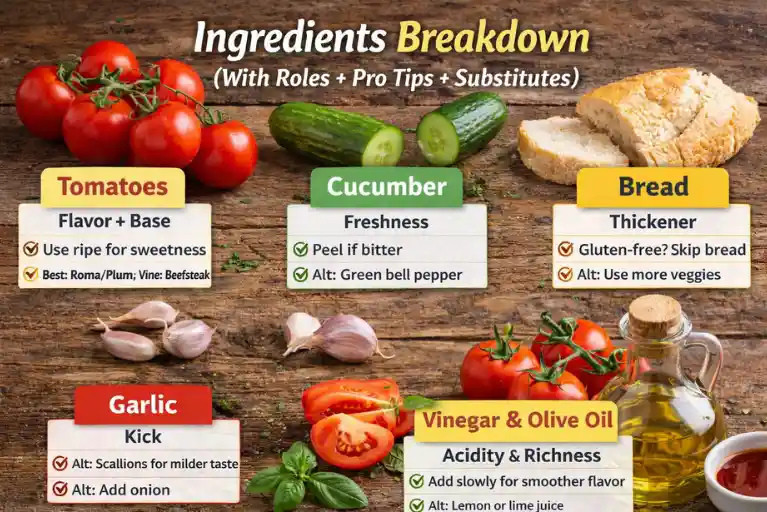
Understanding each ingredient helps you create a perfect homemade gazpacho every time.
Tomatoes (Flavor Base + Best Types)
Tomatoes are the heart of any Spanish gazpacho recipe. Use ripe, juicy tomatoes like Roma or vine tomatoes for the best flavor. They provide natural sweetness and acidity.
Cucumber (Freshness & Hydration)
Cucumber adds a cooling, refreshing element and helps lighten the texture. It balances the richness of olive oil and enhances the overall freshness.
Garlic (Intensity Control)
Garlic gives gazpacho its signature kick. Use it carefully—too much can overpower the dish. A small amount adds depth and bold flavor.
Olive Oil (Texture + Richness)
High-quality extra virgin olive oil creates a smooth, rich texture and enhances the flavor. It’s essential for achieving that authentic creamy consistency.
Bread (Thickness + Body)
Bread helps thicken the soup and gives it a slightly creamy body. It’s key in traditional gazpacho, but optional if you prefer a lighter version.
Vinegar (Acidity Balance)
Vinegar adds brightness and sharpness. It lifts the flavors and balances the sweetness of tomatoes and cucumber.
Smart Substitutes (Vegan, Gluten-Free, Low-Calorie)
- Skip bread for a gluten-free gazpacho
- Use less olive oil for a low-calorie version
- Add extra vegetables for more nutrients
- Adjust vinegar and salt to control flavor intensity
These small changes allow you to customize your easy gazpacho recipe without losing its authentic taste.
Step-by-Step Spanish Gazpacho Recipe (Foolproof Method)
Follow this easy Spanish gazpacho recipe to make a smooth, authentic gazpacho at home with perfect flavor and texture.
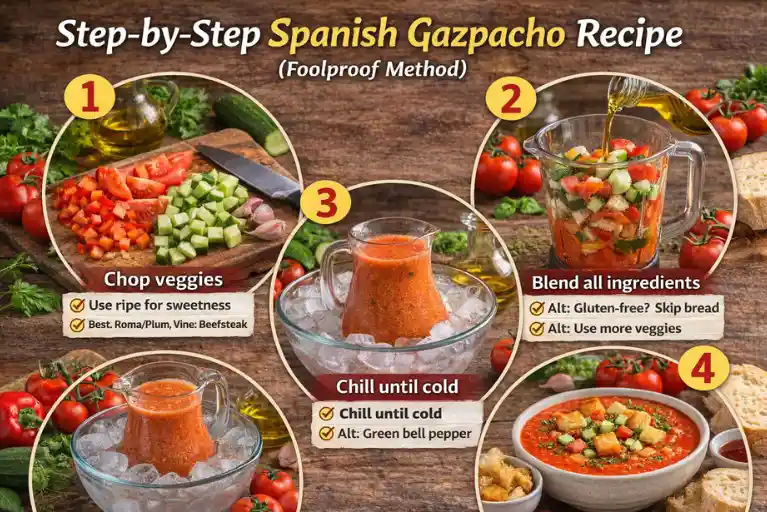
Step 1: Prep Vegetables Properly
Wash and roughly chop fresh tomatoes, cucumber, and garlic. Use ripe tomatoes for the best flavor. If you’re making a traditional gazpacho recipe, soak a small amount of bread in water to soften it.
Step 2: Blend for Smooth Texture
Add all ingredients to a blender and process until smooth. For a blender gazpacho recipe, blend in stages to avoid chunks. Slowly drizzle in olive oil while blending to create a creamy texture.
Step 3: Taste & Adjust Seasoning
Taste your homemade gazpacho and adjust salt, vinegar, and garlic. This step is key to achieving a balanced cold tomato soup.
Step 4: Chill for Best Flavor
Refrigerate for at least 2–4 hours. Chilling allows flavors to blend, making your authentic Spanish gazpacho more refreshing and flavorful.
Pro Tips for the Best Gazpacho
These expert tips will help you take your gazpacho recipe from good to perfect.
Use Ripe Tomatoes
Always use fully ripe, juicy tomatoes. They give your Spanish gazpacho natural sweetness and rich flavor.
Chill Time Improves Flavor
Gazpacho tastes better after resting. Proper chilling helps develop a deeper, more balanced taste.
Add Olive Oil Slowly for Emulsification
Slowly adding olive oil while blending creates a smooth, creamy consistency without cream.
Blend Twice for Smoothness
For a restaurant-quality finish, blend your gazpacho soup recipe twice. This removes any grainy texture and makes it silky.
Texture Control Guide (Smooth vs Rustic vs Thick)
Getting the right texture is what separates an average dish from a perfect Spanish gazpacho.
How to Make It Silky Smooth
Blend thoroughly and strain if needed. This creates a fine, restaurant-style gazpacho.
How to Keep It Slightly Chunky
Blend lightly or pulse instead of fully blending. This gives a more rustic, traditional gazpacho texture.
How to Thicken or Thin Gazpacho
- Add more bread or less water to make it thicker
- Add cold water or tomato juice to thin it out
Adjusting texture helps you customize your homemade gazpacho recipe.
Flavor Balance Guide (Acid vs Oil vs Salt Ratio)
A perfect, authentic gazpacho recipe depends on balancing flavors correctly.
Fix Overly Acidic Gazpacho
If your gazpacho tastes too sharp, add a little more olive oil or a small piece of bread to soften the acidity.
Fix Bland Taste
If it tastes flat, increase salt or vinegar slightly. This boosts the overall flavor of your cold tomato soup.
Perfect Flavor Ratio Formula
- Tomatoes (base)
- Olive oil (richness)
- Vinegar (acidity)
- Salt (flavor enhancer)
Keeping this balance ensures a well-rounded Spanish gazpacho every time.
Common Mistakes That Ruin Gazpacho (And Fixes)
Avoid these common errors to make the best easy gazpacho recipe.
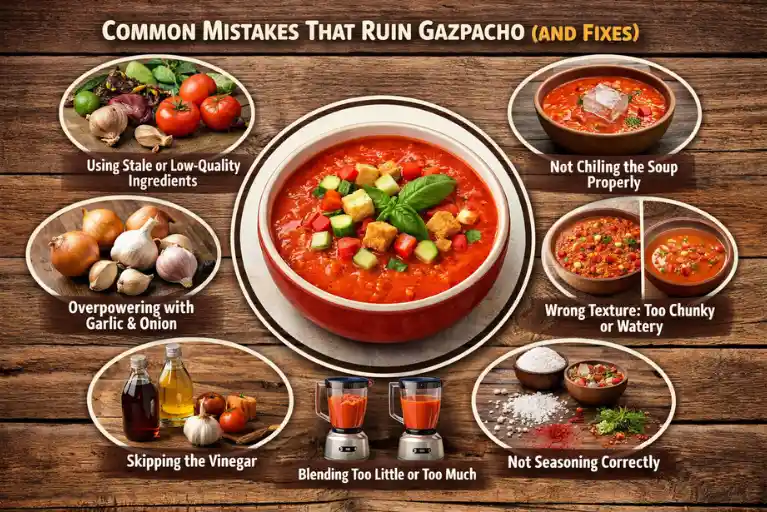
Too Watery → Fix
Use less water and add bread or more vegetables to improve thickness.
Too Bitter or Garlicky → Fix
Reduce garlic or balance it with extra tomatoes or olive oil.
Not Chilled Properly → Fix
Always chill your gazpacho before serving. Warm gazpacho loses its refreshing taste and texture.
Easy Variations You Must Try
One of the best things about Spanish gazpacho is how easy it is to customize. These popular variations let you enjoy this cold tomato soup in different flavors and styles.
Andalusian Gazpacho (Classic)
This is the authentic gazpacho recipe made with tomatoes, cucumber, garlic, olive oil, vinegar, and bread. It’s smooth, balanced, and represents the true taste of traditional Spanish gazpacho.
Green Gazpacho
A fresh twist using green vegetables like cucumber, herbs, and sometimes green grapes. It’s lighter in color but still delivers a refreshing and vibrant flavor.
Watermelon Gazpacho
This modern version adds watermelon for a slightly sweet and fruity taste. It’s perfect if you want a unique summer gazpacho recipe.
Spicy or Modern Variations
You can add chili, herbs, or creative ingredients to make a spicy gazpacho or a modern fusion version while still keeping the base of a classic gazpacho recipe.
How to Customize Taste (Sweet, Tangy, Rich)
This is where your homemade gazpacho becomes truly perfect. Adjusting flavor helps you match your personal taste.
Make It Sweeter
Add more ripe tomatoes or a small amount of sweet vegetables like red bell pepper. This balances acidity and creates a smoother taste.
Make It Tangier
Increase the amount of vinegar slightly to boost the sharp, refreshing flavor of your Spanish gazpacho recipe.
Make It Richer & Creamy
Slowly add more olive oil while blending. This enhances the texture and gives your gazpacho soup a creamy, restaurant-style finish.
How to Serve Gazpacho (Best Pairings + Toppings)
Serving gazpacho the right way enhances both flavor and experience.
Classic Toppings
Top your authentic Spanish gazpacho with:
- Croutons
- Fresh herbs
- Finely diced vegetables (tomatoes, cucumber, peppers)
These add texture and make your cold tomato soup more enjoyable.
What to Serve With Gazpacho
Gazpacho pairs well with:
- Crusty bread
- Light salads
- Tapas or grilled vegetables
These combinations turn your easy gazpacho recipe into a complete meal.
Light Meal Pairing Ideas
Serve gazpacho as a starter or light lunch with simple sides. It works perfectly in summer when you want something cool, light, and satisfying.
Storage, Shelf Life & Make-Ahead Tips
Proper storage keeps your homemade gazpacho fresh and flavorful.
How Long Gazpacho Lasts in Fridge
Store in an airtight container in the refrigerator for up to 3–4 days. The flavor often improves after resting.
Can You Freeze Gazpacho
Yes, but freezing may slightly change the texture. Stir well after thawing to restore consistency.
Best Time to Serve After Chilling
Gazpacho tastes best after at least a few hours of chilling. This allows flavors to fully blend, giving you a more balanced and refreshing dish.
Is Gazpacho Healthy? (Nutrition + Benefits)
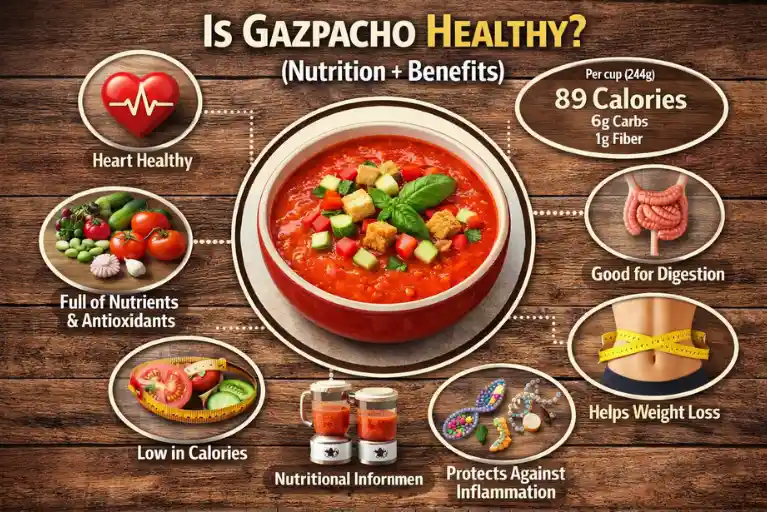
Spanish gazpacho is not just delicious—it’s also a nutrient-rich and healthy meal option.
Calories
A typical gazpacho recipe is low in calories, especially when made with fresh vegetables and minimal oil.
Hydration Benefits
Because it’s made with water-rich vegetables like tomatoes and cucumber, gazpacho helps keep your body hydrated, especially in hot weather.
Diet-Friendly Options
Gazpacho fits into many diets:
- Vegan (naturally plant-based)
- Low-calorie (when using less oil)
- Gluten-free (when made without bread)
This makes Spanish gazpacho a perfect choice for anyone looking for a healthy, light, and refreshing cold soup.
Frequently Asked Questions About the Best Spanish Gazpacho Recipe
Why is gazpacho served cold?
Spanish gazpacho is served cold because it is designed to be a refreshing summer dish. Chilling enhances the flavor, balances acidity, and makes this cold tomato soup more cooling and enjoyable in hot weather.
Can you freeze gazpacho?
Yes, you can freeze gazpacho, but the texture may slightly change after thawing. For best results, stir well or blend again before serving to restore the smooth consistency of your homemade gazpacho.
How long does gazpacho last?
Gazpacho lasts about 3 to 4 days in the refrigerator when stored in an airtight container. In fact, the flavor often improves after a few hours as the ingredients fully blend together.
Can you make gazpacho without bread?
Yes, you can make gazpacho without bread. Skipping bread creates a lighter, gluten-free gazpacho recipe, though the texture will be slightly thinner compared to a traditional Andalusian gazpacho.
Can I make gazpacho without a blender?
Yes, but it requires more effort. You can finely chop or mash the ingredients for a rustic gazpacho texture, but using a blender is the easiest way to achieve a smooth and creamy Spanish gazpacho.
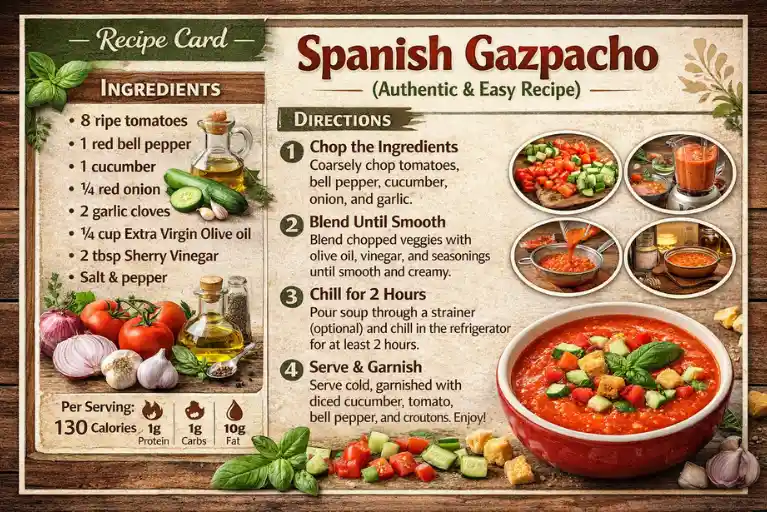
Recipe Card – Spanish Gazpacho (Authentic & Easy Recipe)
Course: Appetizer, SoupsCuisine: SpanishDifficulty: Easy4
servings15
minutes2
hours150
kcalThis Spanish gazpacho recipe is a refreshing cold tomato soup made with fresh vegetables, olive oil, and vinegar. It’s easy to prepare, healthy, and perfect for a light summer meal with authentic Spanish flavor.
Ingredients
6 ripe tomatoes (chopped)
1 medium cucumber (peeled & chopped)
1 small garlic clove
3 tbsp extra virgin olive oil
1–2 tbsp vinegar (adjust to taste)
1 slice bread (optional, for thickness)
Salt (to taste)
Cold water (as needed for consistency)
Instructions
- Prepare Ingredients
Chop tomatoes, cucumber, and garlic. Soak bread in water if using. - Blend Everything
Add all ingredients to a blender. Blend until smooth while slowly adding olive oil. - Adjust Flavor
Taste and adjust salt, vinegar, and texture as needed. - Chill Properly
Refrigerate for at least 2–4 hours for best flavor. - Serve Cold
Stir well and serve chilled with your favorite toppings. - Nutrition (Per Serving – Approximate)
Calories: 120–150 kcal
Fat: 8–10g
Carbohydrates: 10–12g
Fiber: 2–3g
Protein: 2g
Recipe Video
Notes
- Use ripe tomatoes for the best flavor
- Chill longer for a more balanced taste
- Blend twice for extra smooth texture
- Adjust thickness with water or bread
Conclusion
Spanish gazpacho is the perfect mix of fresh, healthy, and easy cooking. It’s a refreshing cold tomato soup that requires no cooking, uses simple ingredients, and delivers bold, authentic flavor every time. Whether you prefer a traditional Andalusian gazpacho or a modern variation, this recipe is quick, customizable, and beginner-friendly.
Now that you know how to make Spanish gazpacho, it’s time to try it yourself. Follow the steps, adjust the flavor to your taste, and enjoy a homemade gazpacho that’s smooth, balanced, and truly satisfying.