
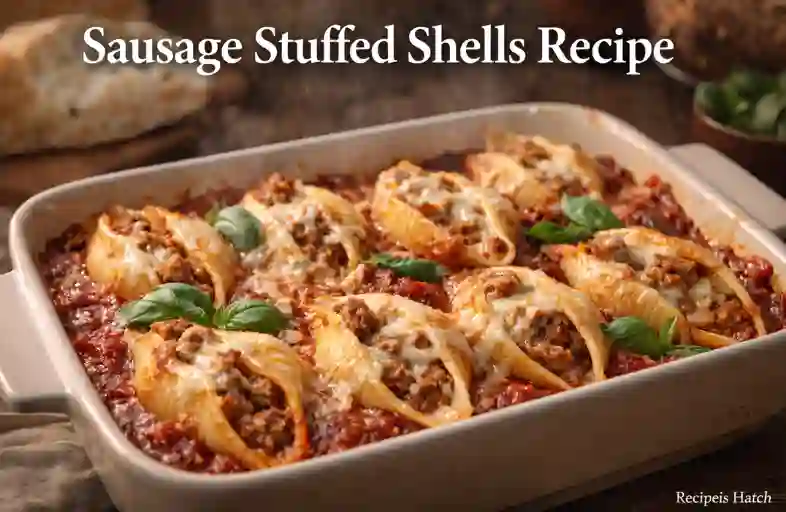
There are few dishes more comforting than a pan of sausage stuffed shells bubbling with sauce and melted cheese. It’s warm. It’s filling. And when done right, it’s unforgettable. But here’s the truth: a lot of stuffed shells recipes look good and eat okay—yet fall short. They turn watery.
The shells break. The filling tastes flat. Or the whole thing dries out in the oven. This playbook fixes all of that. By the end of this guide, you’ll know why this recipe works, how to customize it for any occasion, and how to make sausage stuffed shells that come out perfect every single time—even if it’s your first try.
Why This Recipe Works (And Others Don’t)
Great sausage stuffed shells aren’t about luck. They’re about balance and technique.
The Balance of Fat, Acid, and Cheese
This recipe works because it balances:
- Fat from sausage and cheese (for richness)
- Acid from tomato sauce (to cut heaviness)
- Creaminess from ricotta (for texture)
Many recipes overload cheese without enough acid, making the dish heavy. Others rely on bland ricotta alone. Sausage brings seasoned fat and flavor, so every bite tastes complete.
Why Sausage Changes Everything
Plain ricotta fillings can taste soft and mild. Adding sausage:
- Boosts flavor without extra seasoning
- Adds protein and texture
- Makes the dish satisfying, not mushy
Italian sausage is already seasoned with fennel, garlic, and herbs—so it does half the work for you.
Texture Science: Tender Shells, Never Watery
Watery stuffed shells usually come from:
- Overcooked pasta
- Wet ricotta
- Too much sauce inside the shells
This method avoids all three. You cook shells just until flexible, drain the ricotta if needed, and layer sauce around, not inside, the shells. Result: tender pasta with a creamy, stable filling.
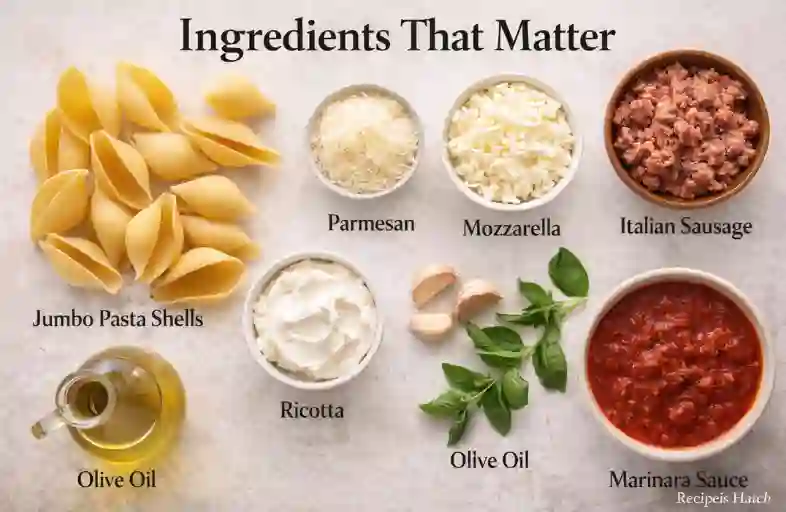
Ingredients That Matter (And What You Can Swap)
You might also like: Loaded Potato Soup Recipe
You don’t need fancy ingredients—but the right ones make a difference.
Best Sausage Types
- Italian Sweet Sausage
Classic choice. Mild, rich, family-friendly. - Italian Spicy Sausage
Adds heat and depth. Perfect for bold flavors. - Chicken or Turkey Sausage
Lighter option. Choose well-seasoned brands.
Tip: Remove sausage from casings and brown it well. Browning = flavor.
The Cheese Matrix (Ratios That Work)
A winning filling uses three cheeses, each with a job:
- Ricotta (base): Creamy, mild
- Mozzarella (melt): Stretchy and gooey
- Parmesan (flavor): Salty, sharp finish
Ideal ratio:
- 1½ cups ricotta
- 1 cup shredded mozzarella
- ½ cup grated parmesan
Too much mozzarella = greasy. Too much ricotta = bland. This mix hits the sweet spot.
Sauce Choices (And When to Use Them)
- Marinara: Classic, bright, weeknight-friendly
- Tomato-Cream Sauce: Richer, smoother, great for guests
- Vodka Sauce: Slightly sweet, restaurant-style upgrade
No matter what you choose, use a sauce you’d happily eat on its own.
Step-by-Step: Foolproof Sausage Stuffed Shells
This is the heart of the playbook.
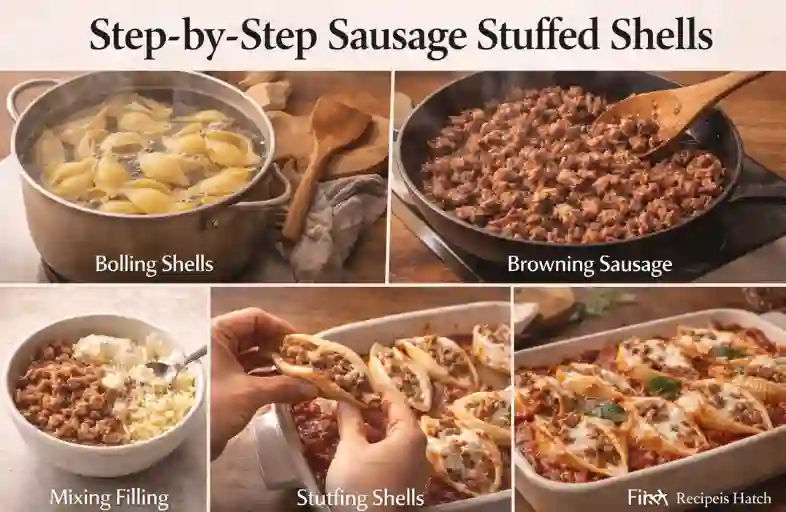
Prep Timeline (What to Do First)
- Boil water and cook shells
- Brown sausage
- Mix filling
- Assemble
- Bake
Doing it in this order keeps everything warm and stress-free.
Step 1: Cook the Shells
Cook jumbo pasta shells in well-salted water 2 minutes less than package instructions. They should be soft but firm.
Drain and lay them on a tray so they don’t stick.
Step 2: Brown the Sausage
Cook sausage over medium heat until fully browned. Break it into small pieces. Let it cool slightly before mixing—hot sausage can melt the cheese too early.
Step 3: Make the Filling
In a large bowl, mix:
- Ricotta
- Mozzarella
- Parmesan
- Cooked sausage
- Salt, pepper, and a pinch of garlic powder
The mixture should be thick but scoopable.
Step 4: Assemble
- Spread a thin layer of sauce in the baking dish
- Fill each shell generously (don’t pack it tight)
- Arrange shells open-side up
- Spoon sauce around the shells
- Sprinkle extra mozzarella on top
Step 5: Bake
Cover loosely with foil and bake at 375°F / 190°C for 25 minutes.
Uncover and bake another 10–15 minutes until bubbly.
Rest for 5 minutes before serving.
Common Mistakes (And How to Fix Them Fast)
Watery Filling
- Drain ricotta if it looks wet
- Don’t over-sauce the shells
Broken Shells
- Undercook pasta slightly
- Handle gently with a spoon, not fingers
Dry Baked Pasta
- Always sauce the bottom of the dish
- Cover with foil for the first half of baking
Overpowering Sausage Flavor
- Use sweet sausage
- Balance with extra sauce or ricotta
Variations for Every Occasion
Spicy Baked Shells
Use hot Italian sausage + red pepper flakes.
White Sauce Sausage Shells
Swap marinara for béchamel or Alfredo-style sauce.
Spinach-Packed Version
Fold in sautéed spinach for color and nutrients.
Extra-Cheesy Crowd Pleaser
Add provolone or fontina for ultra-melty layers.
Make-Ahead, Freezer & Reheat Guide
Assemble Now, Bake Later
Assemble, cover, and refrigerate up to 24 hours. Add 10 minutes to bake time.
Freezing Before vs After Baking
- Before baking: Best texture
- After baking: Best convenience
Freeze tightly wrapped for up to 3 months.
Best Reheating Method
- Oven: Best texture (covered, 350°F)
- Microwave: Faster, but add a spoon of sauce
What to Serve with Sausage Stuffed Shells
Light Sides
- Green salad with vinaigrette
- Roasted broccoli or zucchini
Wine Pairings
- Red: Chianti, Sangiovese
- White: Pinot Grigio, Chardonnay
Weeknight vs Dinner Party
- Weeknight: Garlic bread + salad
- Dinner party: Antipasto platter + wine
Nutrition Breakdown (And How to Lighten It)
Sausage stuffed shells are rich—but flexible.
Protein-Forward Tweaks
- Add extra sausage
- Use high-protein ricotta
Lower-Fat Swaps
- Part-skim ricotta
- Reduced-fat mozzarella
Portion Control Tips
- Serve 3–4 shells with sides
- Pair with vegetables to balance the plate
FAQs
Can I use no-boil shells?
No. Jumbo shells need pre-boiling to avoid cracking.
Can I make this without ricotta?
Yes. Use cottage cheese (blended smooth) or mascarpone.
Can I use leftover sausage?
Absolutely. Just chop it finely and warm it before mixing.
Final Thoughts
Sausage stuffed shells don’t need to be complicated—but they do need intention. When you balance flavors, respect textures, and follow a smart method, the result is a dish that feels cozy, generous, and unforgettable.
This isn’t just a recipe.
It’s a comfort-food playbook—and now it’s yours.