
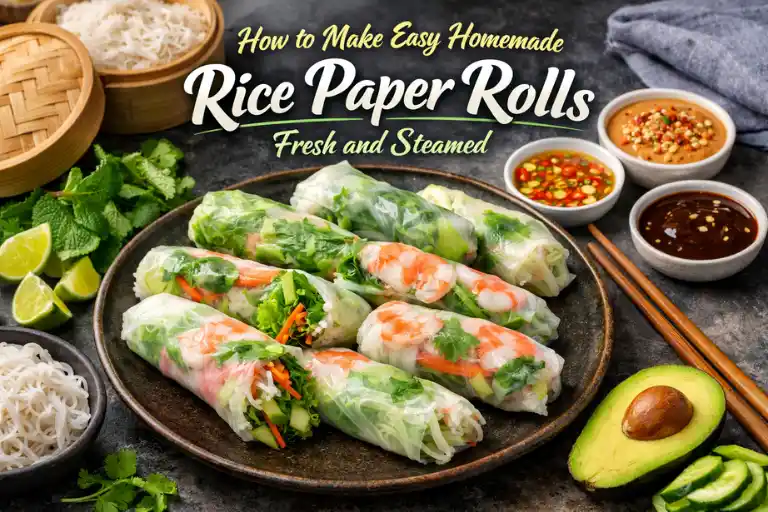
Rice paper rolls are one of the most loved dishes in Vietnamese cuisine, known for their fresh flavors, light texture, and colorful fillings. These delicate rolls are made using thin rice paper wrappers filled with crisp vegetables, herbs, vermicelli noodles, and proteins like shrimp, chicken, or tofu. Many people enjoy them as fresh rice paper rolls (also called Vietnamese spring rolls), while others love the soft texture of steamed rice paper rolls.
Learning how to make rice paper rolls at home is easier than you might think. With the right ingredients and a simple rolling technique, you can create a healthy meal or appetizer in minutes. This guide will show you step-by-step how to make rice paper rolls, share the best fillings for rice paper rolls, and explain the difference between fresh spring rolls and steamed rice rolls. By the end, you’ll be ready to make your own homemade rice paper rolls recipe with confidence.
Why You Will Love This Rice Paper Rolls Recipe

You might also like: Best Prebranac Recipe
This rice paper rolls recipe is loved by many because it is fresh, healthy, and incredibly versatile. Whether you are preparing a quick lunch, a light dinner, or a party appetizer, homemade rice paper rolls are a delicious option that everyone enjoys.
One of the best things about rice paper rolls is how fresh and nutritious they are. Made with rice paper wrappers, crisp vegetables, fragrant herbs, and soft vermicelli noodles, these rolls are naturally light yet satisfying. Unlike fried snacks, fresh rice paper rolls are not deep-fried, which makes them a healthier choice for people looking for low-calorie and wholesome meals.
Another reason to love this recipe is how easy it is to customize the fillings. You can make Vietnamese rice paper rolls with shrimp or chicken, or create vegetarian rice paper rolls using tofu and fresh vegetables. This flexibility allows you to experiment with different rice paper roll filling ideas depending on your taste.
These rolls are also perfect for meal prep or gatherings. Since they are served cold or at room temperature, rice paper rolls for parties make an attractive platter when paired with flavorful dipping sauce for rice paper rolls, such as peanut sauce or hoisin sauce. Finally, rice paper rolls are naturally gluten-free and light, making them ideal for anyone who wants a healthy rice paper rolls recipe that feels fresh and satisfying.
What Are Rice Paper Rolls?
Rice paper rolls are a fresh and healthy dish made using thin rice paper wrappers filled with vegetables, herbs, vermicelli noodles, and protein such as shrimp, chicken, or tofu. These rolls are usually served cold with a flavorful dipping sauce for rice paper rolls, like peanut sauce or Vietnamese fish sauce. Because they are light, colorful, and full of fresh ingredients, Vietnamese rice paper rolls are often enjoyed as appetizers, snacks, or light meals.
Unlike fried snacks, fresh rice paper rolls are not cooked after rolling. Instead, the rice paper is softened in water, filled with ingredients, and rolled tightly. This simple method keeps the ingredients crisp and flavorful while making the dish feel refreshing and healthy.
Origin of Vietnamese Rice Paper Rolls
The dish comes from Vietnamese cuisine, where it is commonly known as Gỏi Cuốn. In Vietnam, these Vietnamese rice paper rolls are a popular street food and family meal. Traditionally, they are filled with shrimp, pork, fresh herbs, lettuce, and vermicelli noodles, then served with a rich peanut or fish sauce. Over time, the recipe has spread worldwide, inspiring many creative rice paper rolls recipe variations.
Why They Are Called Fresh Spring Rolls
Many people call rice paper rolls fresh spring rolls because they are made with fresh ingredients and are not fried. Unlike crispy spring rolls that are deep-fried, fresh spring rolls keep their soft texture and vibrant flavors. The thin rice paper wrappers hold everything together while allowing the colorful fillings to be seen through the wrapper.
Why Rice Paper Rolls Are Popular Worldwide
Today, rice paper rolls are loved in many countries because they are healthy, customizable, and easy to make. People enjoy experimenting with different rice paper roll filling ideas, such as vegetarian vegetables, grilled chicken, tofu, or seafood. They also work well for modern diets since healthy rice paper rolls can be gluten-free, low in calories, and packed with fresh vegetables. Their bright appearance and refreshing taste make homemade rice paper rolls a favorite for both everyday meals and party platters.
Fresh vs Steamed Rice Paper Rolls
When people talk about rice paper rolls, they usually mean the well-known fresh rice paper rolls from Vietnamese cuisine. However, there is another delicious variation called steamed rice paper rolls. Both dishes use rice-based wrappers, but the texture, preparation method, and taste are quite different.
Understanding the difference helps you choose which rice paper rolls recipe you want to make at home.
Fresh Rice Paper Rolls (Vietnamese Spring Rolls)
Fresh rice paper rolls, often called Vietnamese spring rolls or summer rolls, are the most popular version. These rolls are made by softening rice paper wrappers in warm water and filling them with fresh ingredients.
Typical fillings include:
- vermicelli noodles
- lettuce and herbs
- carrots and cucumber
- shrimp, chicken, or tofu
Once the fillings are arranged, the wrapper is rolled tightly to create homemade rice paper rolls. These rolls are usually served cold with a flavorful dipping sauce for rice paper rolls, such as peanut sauce or hoisin sauce.
Because they contain many fresh vegetables and herbs, fresh rice paper rolls are often considered a healthy rice paper rolls recipe.
Steamed Rice Paper Rolls
Steamed rice paper rolls are another delicious dish found in many Asian cuisines. Instead of using dry rice paper wrappers, these rolls are made by steaming thin rice batter or rice sheets.
The filling is usually placed inside the soft steamed wrapper and then rolled gently. Popular fillings include:
- minced pork
- shrimp
- mushrooms
- tofu
These steamed rice rolls are often served warm with savory sauces. The texture is soft, silky, and slightly chewy, which makes them very different from fresh spring rolls.
Key Differences in Texture, Taste, and Preparation
Although both dishes use rice-based wrappers, fresh rice paper rolls and steamed rice paper rolls are quite different.
Fresh rice paper rolls
- made with softened rice paper wrappers
- filled with fresh vegetables and herbs
- served cold or at room temperature
- light, refreshing texture
Steamed rice paper rolls
- made by steaming rice batter or rice sheets
- usually served warm
- soft, silky texture
- often filled with cooked ingredients
Because of these differences, both versions offer unique flavors. Many people enjoy fresh rice paper rolls recipe ideas for healthy meals, while others love the comforting texture of steamed rice paper rolls.
Ingredients for Rice Paper Rolls
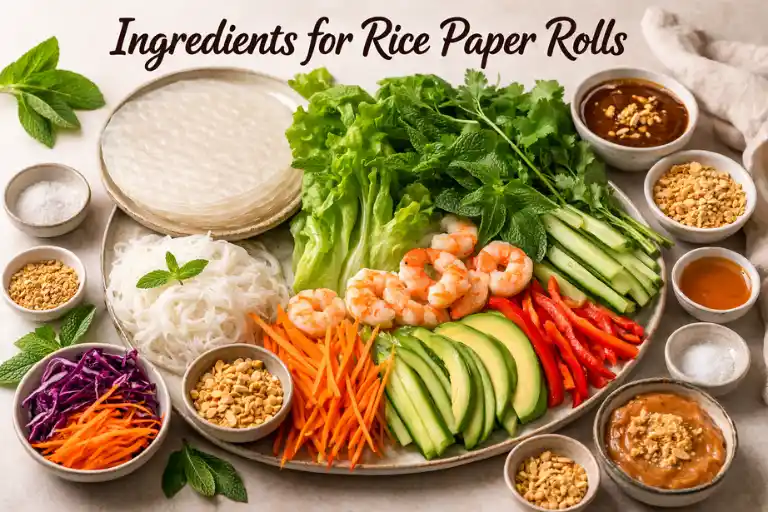
The ingredients for rice paper rolls are simple, fresh, and easy to find. A classic rice paper rolls recipe usually combines crisp vegetables, fragrant herbs, soft noodles, and protein wrapped in delicate rice paper wrappers.
These ingredients create the perfect balance of texture and flavor in homemade rice paper rolls.
Rice Paper Wrappers
Rice paper wrappers are the most important ingredient. They are thin sheets made from rice flour and water. When soaked briefly in warm water, they become soft and flexible, making them easy to roll.
These wrappers hold all the ingredients together while keeping the rolls light and delicate. Choosing good-quality rice paper wrappers helps prevent tearing and makes rolling easier.
Fresh Vegetables and Herbs
Fresh vegetables add color, crunch, and nutrition to fresh rice paper rolls. Common vegetables include:
- lettuce
- carrots
- cucumber
- bell peppers
Herbs are also essential in Vietnamese rice paper rolls. Popular choices include mint, cilantro, and Thai basil, which add bright flavors and fragrance.
Protein Options (Shrimp, Chicken, Tofu)
Protein makes rice paper rolls more filling and satisfying. Some popular protein choices include:
- shrimp rice paper rolls
- grilled chicken
- sliced pork
- tofu for vegetarian rice paper rolls
These options allow you to customize your rice paper roll filling ideas based on your taste or dietary needs.
Vermicelli Noodles
Soft vermicelli noodles are commonly used in Vietnamese rice paper rolls. These thin rice noodles add a soft texture and help balance the crisp vegetables.
They are quick to prepare—simply cook them in hot water, drain, and they are ready to use in your homemade rice paper rolls recipe.
Best Rice Paper Brands to Use
Choosing the right brand of rice paper wrappers can make a big difference when making rice paper rolls.
Some popular brands known for quality include:
- Three Ladies Rice Paper
- Blue Dragon Rice Paper
- Banh Trang Rice Paper
These brands produce strong and flexible wrappers that soften easily without tearing, which makes them ideal for how to make rice paper rolls at home.
Kitchen Tools Needed
Making rice paper rolls does not require complicated equipment. Most of the tools you need are already in your kitchen.
Here are the basic tools used for preparing fresh rice paper rolls and steamed rice paper rolls.
Shallow bowl for soaking wrappers
A large shallow bowl filled with warm water is used to soften the rice paper wrappers before rolling.
Cutting board
A clean cutting board provides a flat surface for slicing vegetables and preparing fillings for rice paper rolls.
Sharp knife
A sharp knife helps you cut vegetables and protein ingredients neatly, which makes rolling easier and improves the appearance of homemade rice paper rolls.
Rolling surface
A smooth surface such as a plate, wooden board, or damp towel helps prevent the wrappers from sticking while rolling fresh rice paper rolls.
Steamer (for steamed rice rolls)
If you plan to make steamed rice paper rolls, a steamer is needed to cook the rice sheets or batter gently. Steaming gives the rolls their soft and silky texture.
Best Fillings for Rice Paper Rolls
One of the best things about rice paper rolls is how easy they are to customize. You can use a wide variety of fresh vegetables, herbs, noodles, and proteins to create your perfect rice paper rolls recipe. The combination of textures—from crunchy vegetables to soft vermicelli noodles—makes fresh rice paper rolls both satisfying and refreshing.
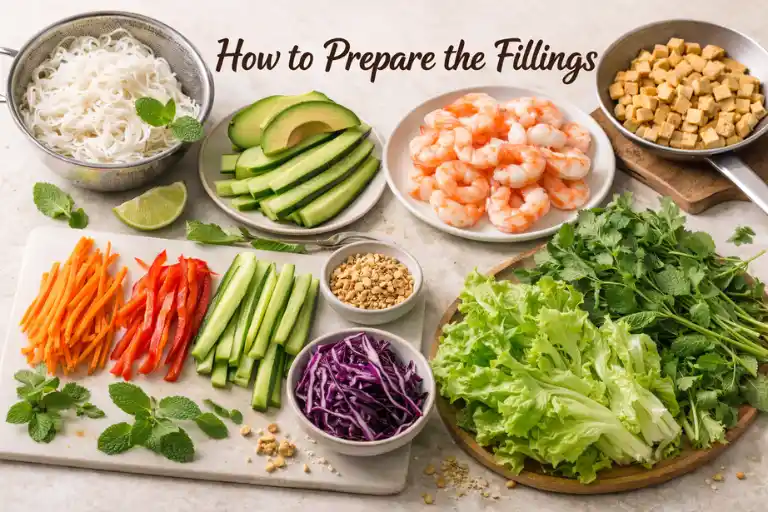
Choosing the right rice paper roll filling ideas will help you create delicious homemade rice paper rolls that taste balanced and flavorful.
Traditional Vietnamese Fillings
Classic Vietnamese rice paper rolls often include a mix of fresh herbs, vegetables, noodles, and seafood or meat. These traditional ingredients create the authentic taste found in many fresh spring rolls.
Common traditional fillings include:
- shrimp
- sliced pork
- vermicelli noodles
- lettuce
- fresh herbs like mint, cilantro, and Thai basil
- carrots or cucumber
These ingredients are layered inside rice paper wrappers and served with a flavorful dipping sauce for rice paper rolls, usually peanut sauce or fish sauce.
Vegetarian and Vegan Fillings
For people who prefer plant-based meals, vegetarian rice paper rolls and vegan rice paper rolls are a great option. Fresh vegetables and tofu provide plenty of flavor and texture without using meat.
Popular vegetarian fillings include:
- tofu
- avocado
- shredded carrots
- cucumber
- lettuce
- bell peppers
- fresh herbs
These ingredients work perfectly for a healthy rice paper rolls recipe because they are fresh, light, and full of nutrients.
Protein Fillings (Shrimp, Chicken, Pork, Tofu)
Protein fillings help make rice paper rolls more filling and satisfying. You can easily customize the rolls depending on your preference.
Popular protein options include:
- shrimp rice paper rolls
- grilled chicken
- sliced pork
- tofu for vegetarian rice paper rolls
Adding protein creates a balanced meal while still keeping the rolls light and refreshing. Many people enjoy combining protein with fresh herbs and vermicelli noodles to create flavorful Vietnamese spring rolls.
How to Prepare the Fillings
Before assembling rice paper rolls, it is important to prepare all the ingredients. Proper preparation makes the rolling process much easier and helps create neat, well-balanced homemade rice paper rolls.
Cooking Vermicelli Noodles
Vermicelli noodles are commonly used in Vietnamese rice paper rolls. They add a soft texture that balances the crunchy vegetables.
To prepare them:
- Bring a pot of water to a boil.
- Add the vermicelli noodles and cook for a few minutes until soft.
- Drain and rinse with cold water.
Once cooled, the noodles are ready to use in your rice paper rolls recipe.
Preparing Fresh Vegetables
Fresh vegetables are an important part of fresh rice paper rolls. They add color, crunch, and natural flavor.
Common vegetables used in rice paper roll filling ideas include:
- lettuce
- carrots
- cucumber
- bell peppers
Wash the vegetables well and slice them into thin strips so they are easier to roll inside the rice paper wrappers.
Cooking Protein Fillings
Protein ingredients should be fully cooked before assembling the rolls.
Some popular options include:
- boiling or sautéing shrimp
- grilling or pan-cooking chicken
- slicing cooked pork
- pan-frying or baking tofu
Once cooked, slice the protein into thin pieces so it fits neatly into the rice paper rolls.
How to Make Rice Paper Rolls (Step-by-Step)
Learning how to make rice paper rolls is simple once your ingredients are ready. The process involves softening the wrappers, adding fillings, and rolling them tightly.
Step 1 – Soften the Rice Paper Wrapper
Fill a shallow bowl with warm water. Dip one rice paper wrapper into the water for a few seconds until it becomes soft and flexible.
Place the softened wrapper on a clean rolling surface.
Step 2 – Arrange the Fillings
Add your ingredients in the center of the wrapper. A typical rice paper rolls recipe includes:
- lettuce or herbs
- vermicelli noodles
- vegetables
- protein such as shrimp, chicken, or tofu
Arrange the ingredients neatly so the roll stays balanced.
Step 3 – Roll the Rice Paper Tightly
Fold the bottom of the wrapper over the fillings. Then fold in the sides and roll forward tightly, similar to wrapping a burrito.
Once rolled, you will have a beautiful fresh rice paper roll ready to serve with your favorite dipping sauce for rice paper rolls.
How to Roll Rice Paper Without Tearing (Important SEO Gap)
Many beginners worry about tearing the delicate rice paper wrappers when learning how to make rice paper rolls. The good news is that with a few simple techniques, you can roll fresh rice paper rolls smoothly without breaking the wrapper.
First, always soak the rice paper briefly. Dip the wrapper in warm water for about 3–5 seconds. If you soak it too long, the wrapper becomes too soft and fragile, which can cause tearing.
Second, place the softened wrapper on a slightly damp rolling surface. This prevents the wrapper from sticking while you assemble your rice paper rolls recipe.
Another important tip is to avoid overfilling the roll. Using too many ingredients like vermicelli noodles, vegetables, and protein can stretch the wrapper and cause it to break. Instead, keep the fillings balanced so the roll stays neat.
Finally, roll the wrapper gently but tightly. Fold the bottom over the fillings, tuck in the sides, and continue rolling forward. With a little practice, you will be able to make perfect homemade rice paper rolls every time.
How to Make Steamed Rice Paper Rolls
While fresh rice paper rolls are the most common version, steamed rice paper rolls are another delicious dish found in many Asian cuisines. These rolls have a soft, silky texture and are usually served warm with savory sauces.
Learning how to make steamed rice paper rolls is slightly different from making fresh rolls, but the process is still simple.
Preparing the Filling
The filling for steamed rice paper rolls is usually cooked before steaming. Common ingredients include:
- minced pork
- shrimp
- mushrooms
- tofu
- finely chopped vegetables
These ingredients are lightly cooked and seasoned to create a flavorful filling for the steamed rice rolls recipe.
Steaming the Rice Rolls
To make steamed rice paper rolls, thin rice batter or soft rice sheets are steamed until tender. Once the wrapper is ready, the filling is placed in the center and gently rolled.
Steaming creates a smooth and slightly chewy texture, which is very different from the crisp freshness of Vietnamese rice paper rolls.
Serving with Traditional Sauce
After steaming, the rolls are typically served warm with a savory sauce. Many people enjoy them with soy-based sauces or garlic oil, which enhances the flavor of the delicate rice wrapper.
These steamed rice paper rolls are often enjoyed as a comforting dish or appetizer.
Best Dipping Sauces for Rice Paper Rolls
A great dipping sauce for rice paper rolls can make the dish even more delicious. The combination of fresh rice paper rolls and flavorful sauce creates the perfect balance of taste.
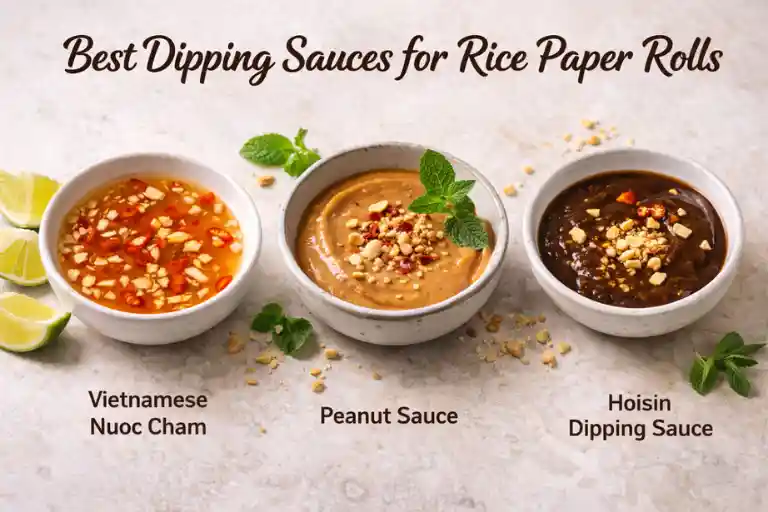
Here are some of the most popular sauces served with Vietnamese rice paper rolls.
Classic Peanut Sauce
Peanut sauce is one of the most loved sauces for rice paper rolls. It has a creamy texture and a slightly sweet and savory flavor.
This sauce is typically made with:
- peanut butter
- hoisin sauce
- garlic
- lime juice
- water or coconut milk
It pairs perfectly with shrimp rice paper rolls and vegetarian rice paper rolls.
Vietnamese Fish Sauce
Traditional Vietnamese rice paper rolls are often served with fish sauce dipping sauce, also known as Nuoc Cham.
This sauce is made using:
- fish sauce
- lime juice
- sugar
- garlic
- chili
It has a bright, salty, and slightly sweet flavor that complements fresh spring rolls beautifully.
Sweet Chili Sauce
Sweet chili sauce is another popular option for homemade rice paper rolls. It offers a balance of sweetness and mild spice, making it a great dipping sauce for both fresh rice paper rolls and steamed rice paper rolls.
Hoisin Sauce
Hoisin sauce is thick, sweet, and slightly smoky. It is often served as a quick dipping sauce for rice paper rolls recipe variations, especially those filled with chicken or tofu.
Rice Paper Rolls vs Spring Rolls
Many people confuse rice paper rolls with spring rolls, but they are actually quite different dishes. Understanding the difference helps you appreciate each recipe and cooking method.
Cooking Method Differences
The biggest difference between rice paper rolls and spring rolls is the cooking method.
Rice paper rolls
- made with soft rice paper wrappers
- not fried
- served fresh or steamed
Spring rolls
- usually wrapped in wheat-based wrappers
- deep-fried until crispy
- served hot
Because of this difference, fresh rice paper rolls are usually lighter and healthier compared to fried spring rolls.
Texture and Flavor Differences
The texture of the two dishes is also very different.
Rice paper rolls
- soft and delicate texture
- filled with fresh vegetables and herbs
- light and refreshing taste
Spring rolls
- crispy outer shell
- rich, fried flavor
- often filled with cooked ingredients
Both dishes are delicious, but many people prefer Vietnamese rice paper rolls when they want a healthy and refreshing appetizer.
Healthy Benefits of Rice Paper Rolls
One reason rice paper rolls are so popular is that they are light, fresh, and packed with nutritious ingredients. Unlike fried snacks, fresh rice paper rolls are usually made with vegetables, herbs, and lean protein wrapped in delicate rice paper wrappers. This makes them a great option for anyone looking for a healthy rice paper rolls recipe that still feels satisfying.
Because they use natural ingredients like vermicelli noodles, vegetables, and herbs, Vietnamese rice paper rolls can easily fit into many healthy diets.
Calories in Rice Paper Rolls
The number of calories in rice paper rolls depends on the fillings you choose. A simple fresh rice paper roll with vegetables, noodles, and shrimp usually contains about 90–120 calories per roll.
The ingredients that affect calories the most include:
- protein choices like shrimp, chicken, or pork
- sauces such as peanut sauce or hoisin sauce
- the amount of vermicelli noodles used
If you keep the fillings balanced, homemade rice paper rolls can be a low-calorie and refreshing meal or appetizer.
Nutritional Benefits
A well-balanced rice paper rolls recipe offers several nutritional benefits. These rolls are often filled with fresh vegetables and herbs, which provide vitamins, fiber, and antioxidants.
Some key benefits include:
- high in fresh vegetables like lettuce, carrots, and cucumber
- lean protein options such as shrimp, chicken, or tofu
- naturally gluten-free because they use rice-based wrappers
- low in fat since they are not deep-fried
Because of these benefits, fresh spring rolls are often considered one of the healthiest dishes in Vietnamese cuisine.
How to Make Low-Calorie Rice Paper Rolls
Making low-calorie rice paper rolls is very simple. You just need to focus on lighter ingredients and balanced portions.
Here are some helpful tips:
- use plenty of fresh vegetables and herbs
- choose lean protein like shrimp or tofu
- reduce the amount of vermicelli noodles
- serve with light dipping sauces instead of heavy peanut sauces
With these small adjustments, you can enjoy a healthy rice paper rolls recipe that is both delicious and nutritious.
Pro Tips for Perfect Rice Paper Rolls
Making beautiful rice paper rolls becomes easier once you know a few simple techniques. These tips will help you create smooth, well-shaped homemade rice paper rolls every time.
Don’t oversoak the wrappers
When preparing rice paper wrappers, dip them in warm water for just a few seconds. Oversoaking makes the wrapper too soft and difficult to roll.
Keep fillings balanced
A good rice paper rolls recipe uses a balanced amount of ingredients. Too many vegetables, noodles, or protein can make the wrapper tear while rolling.
Roll tightly but gently
When rolling fresh rice paper rolls, fold the wrapper carefully around the fillings. Roll firmly enough to keep the ingredients secure, but gently so the wrapper doesn’t break.
Following these simple tips will make how to make rice paper rolls much easier, especially for beginners.
Creative Rice Paper Roll Variations
One of the best things about rice paper rolls is that they are incredibly versatile. You can experiment with different rice paper roll filling ideas to create unique flavors and textures.
Here are some popular variations you can try.
Lemongrass Chicken Rice Paper Rolls
This variation combines grilled lemongrass chicken with fresh vegetables and vermicelli noodles. The fragrant lemongrass flavor pairs beautifully with herbs and makes a delicious Vietnamese rice paper rolls recipe.
Vegetarian Rice Paper Rolls
Vegetarian rice paper rolls are filled with colorful vegetables, tofu, and herbs. Ingredients like cucumber, carrots, lettuce, and avocado create a refreshing and healthy meal.
These rolls are perfect for people looking for a plant-based rice paper rolls recipe.
Vegan Rice Paper Rolls
Vegan rice paper rolls are similar to vegetarian versions but avoid any animal products completely. They often include tofu, mushrooms, or marinated vegetables.
Because they use fresh ingredients, vegan rice paper rolls are a great choice for a healthy rice paper rolls recipe.
Mango Avocado Rice Paper Rolls
This creative variation adds sweet mango and creamy avocado to the filling. The combination of fruit, herbs, and vegetables creates a unique flavor that works beautifully in fresh rice paper rolls.
This modern twist is becoming popular because it adds a fresh and slightly sweet taste to homemade rice paper rolls.
Common Mistakes When Making Rice Paper Rolls
Even though rice paper rolls are simple to prepare, beginners sometimes make small mistakes that affect the final result. Avoiding these common issues will help you make perfect fresh rice paper rolls every time.
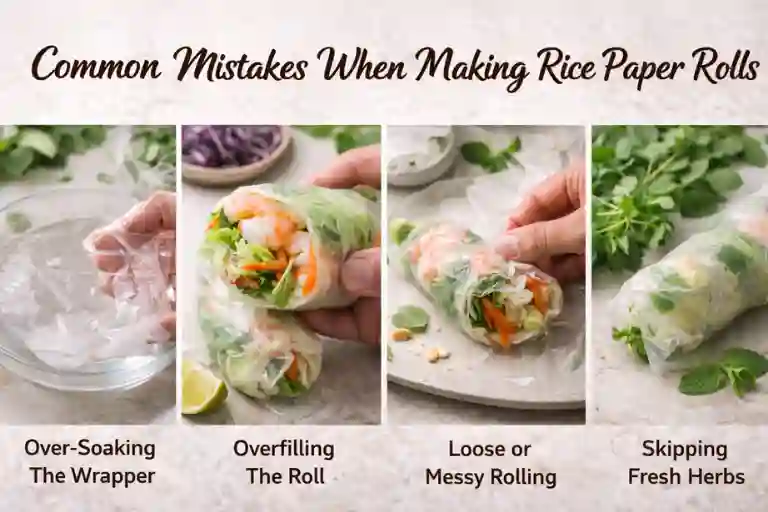
Soaking wrappers too long
If you leave rice paper wrappers in water for too long, they become too soft and sticky. This can make them difficult to handle and more likely to tear.
Using too many fillings
Adding too many ingredients may seem tempting, but overfilling can make rice paper rolls hard to roll properly. Keeping the fillings balanced helps maintain the shape of the roll.
Rolling too loosely
Loose rolling can cause the ingredients to fall out of the wrapper. When making homemade rice paper rolls, roll the wrapper tightly enough to keep everything secure while still handling it gently. By avoiding these mistakes, you can easily master how to make rice paper rolls and enjoy perfectly shaped rolls every time.
How to Store Rice Paper Rolls
Proper storage is important if you want your rice paper rolls to stay fresh and delicious. Since fresh rice paper rolls are made with delicate rice paper wrappers, vegetables, and herbs, they can dry out or stick together if stored incorrectly. With the right method, you can keep homemade rice paper rolls fresh for several hours or even overnight.
Storing in the Refrigerator
If you plan to store rice paper rolls for later, place them in an airtight container in the refrigerator. Before storing, wrap each roll loosely in plastic wrap or place a slightly damp paper towel between the rolls. This helps prevent the rice paper wrappers from drying out or sticking together.
Refrigeration works best for fresh rice paper rolls that contain vegetables, vermicelli noodles, and cooked protein like shrimp or chicken. Keeping them sealed helps maintain their soft texture and fresh flavor.
Meal Prep Tips
One great advantage of rice paper rolls is that they can be prepared ahead of time for meal planning. When making rice paper rolls for meal prep, keep the fillings ready and roll them shortly before serving for the best texture.
Here are a few helpful meal prep tips:
- prepare vegetables and vermicelli noodles in advance
- store fillings separately in containers
- roll the rice paper rolls recipe just before serving
This method keeps the wrappers soft and prevents the rolls from becoming too sticky.
How Long Rice Paper Rolls Last
When stored properly in the refrigerator, homemade rice paper rolls usually stay fresh for about 24 hours. After this time, the rice paper wrappers may start to harden or lose their soft texture.
For the best taste and freshness, it is recommended to eat fresh rice paper rolls on the same day they are made.
Can Rice Paper Rolls Be Frozen?
Many people ask if rice paper rolls can be frozen. In most cases, freezing fresh rice paper rolls is not recommended because the delicate rice paper wrappers can become tough or rubbery after thawing.
However, there are some situations where freezing can work.
When freezing works
Freezing may work for steamed rice paper rolls or rolls with cooked fillings. These rolls can sometimes be frozen and reheated later because the wrapper is thicker and more stable.
When freezing does not work
Freezing usually does not work well for fresh rice paper rolls filled with vegetables and herbs. After thawing, the vegetables can become watery and the rice paper wrappers may lose their soft texture.
For the best results, it is always better to enjoy homemade rice paper rolls fresh.
Rice Paper Rolls Serving Ideas
One reason rice paper rolls are so popular is that they can be served in many different ways. Their colorful appearance and fresh flavors make them perfect for both casual meals and special occasions.
Party Appetizer Platter
A platter of fresh rice paper rolls makes an impressive appetizer for gatherings. Arrange several rice paper rolls recipe variations on a large plate and serve them with different dipping sauces for rice paper rolls, such as peanut sauce, hoisin sauce, or fish sauce.
Healthy Lunch
Because they are light and nutritious, rice paper rolls make an excellent healthy lunch option. A few rolls filled with vegetables, herbs, vermicelli noodles, and lean protein can create a balanced meal that feels refreshing and satisfying.
Picnic Food
Homemade rice paper rolls are also perfect for picnics or outdoor meals. Their portable size and fresh ingredients make them easy to pack and enjoy on the go.
With so many serving possibilities, rice paper rolls are a versatile dish that works well for everyday meals, gatherings, or special occasions.
FAQs About Rice Paper Rolls
Here are some common questions people ask when learning how to make rice paper rolls at home.
What are rice paper rolls made of?
Rice paper rolls are made using thin rice paper wrappers filled with fresh ingredients. A classic Vietnamese rice paper rolls recipe usually includes vermicelli noodles, lettuce, herbs like mint or cilantro, vegetables such as carrots or cucumber, and protein like shrimp, chicken, pork, or tofu. The rolls are typically served with a flavorful dipping sauce for rice paper rolls, such as peanut sauce or Vietnamese fish sauce.
How do you keep rice paper rolls from sticking?
To prevent rice paper rolls from sticking together, place them slightly apart on a plate or tray. You can also separate the rolls with a damp paper towel or wrap each roll lightly in plastic wrap. This helps keep the rice paper wrappers soft while preventing them from sticking.
What sauce goes with rice paper rolls?
Several sauces pair perfectly with fresh rice paper rolls. The most popular options include peanut sauce, Vietnamese fish sauce (Nuoc Cham), sweet chili sauce, and hoisin sauce. These sauces add sweet, salty, or spicy flavors that complement the fresh ingredients in Vietnamese spring rolls.
Can you make rice paper rolls ahead of time?
Yes, homemade rice paper rolls can be prepared a few hours ahead of time. For best results, store them in an airtight container in the refrigerator and keep a damp paper towel over them to maintain moisture. However, fresh rice paper rolls taste best when eaten within the same day.
Are rice paper rolls healthy?
Yes, rice paper rolls are often considered a healthy rice paper rolls recipe. They are usually filled with fresh vegetables, herbs, and lean protein while using light rice paper wrappers instead of fried dough. Because they are not deep-fried, fresh rice paper rolls are typically lower in fat and calories than many fried appetizers.
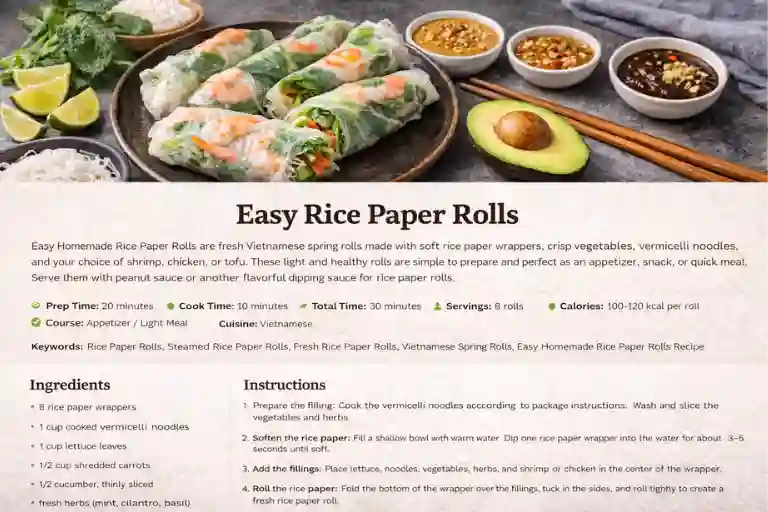
Recipe Card – Easy Rice Paper Rolls
Course: Appetizer / Light MealCuisine: VietnameseDifficulty: Easy8
servings20
minutes10
minutes120
kcalEasy Homemade Rice Paper Rolls are fresh Vietnamese spring rolls made with soft rice paper wrappers, crisp vegetables, vermicelli noodles, and your choice of shrimp, chicken, or tofu. These light and healthy rolls are simple to prepare and perfect as an appetizer, snack, or quick meal. Serve them with peanut sauce or another flavorful dipping sauce for rice paper rolls for a refreshing and delicious dish.
Ingredients
8 rice paper wrappers
1 cup cooked vermicelli noodles
1 cup lettuce leaves
½ cup shredded carrots
½ cucumber, sliced thin
fresh herbs (mint, cilantro, or basil)
8 cooked shrimp or sliced grilled chicken
peanut sauce or dipping sauce for rice paper rolls
Directions
- Prepare the fillings. Cook the vermicelli noodles, wash the vegetables, and slice the protein ingredients.
- Soften the rice paper. Dip one rice paper wrapper in warm water for a few seconds until soft.
- Add the fillings. Place lettuce, noodles, vegetables, herbs, and shrimp or chicken in the center of the wrapper.
- Roll the rice paper. Fold the bottom over the filling, tuck in the sides, and roll tightly to form a fresh rice paper roll.
- Serve immediately with peanut sauce or another dipping sauce for rice paper rolls.
- Nutrition (Per Roll – Approximate)
Calories: 100–120 kcal
Protein: 6 g
Carbohydrates: 15 g
Fat: 2 g
This simple homemade rice paper rolls recipe is fresh, light, and perfect as an appetizer, snack, or healthy meal.
Final Thoughts
Rice paper rolls are a perfect example of how simple ingredients can create a fresh, healthy, and flavorful dish. With delicate rice paper wrappers, crisp vegetables, fragrant herbs, soft vermicelli noodles, and your choice of protein, these rolls offer a balanced meal that feels light yet satisfying.
One of the best things about homemade rice paper rolls is how easy they are to customize. You can prepare Vietnamese rice paper rolls with shrimp or chicken, make vegetarian rice paper rolls with tofu and fresh vegetables, or experiment with creative fillings like mango and avocado. Pair them with a delicious dipping sauce for rice paper rolls, such as peanut sauce or Vietnamese fish sauce, to enhance the flavor even more.
Whether you are serving them as a party appetizer, a healthy lunch, or a refreshing snack, fresh rice paper rolls are always a great choice. With a little practice, you will quickly master how to make rice paper rolls and enjoy this vibrant dish anytime at home.