
If you’ve ever started a recipe and realized you’re out of rice flour, don’t worry—you have plenty of easy substitutes right in your kitchen. Whether you’re baking, frying, or thickening a sauce, choosing the right rice flour substitute can save your dish without compromising texture or flavor. The key is knowing what can I use instead of rice flour based on your recipe needs.
Some options like cornstarch and potato starch create a crispy coating, while others like all-purpose flour or almond flour work better for baking. In this guide, you’ll discover the best rice flour substitutes, including exact ratios, use-cases, and tips to get perfect results every time. Whether you need a gluten-free rice flour alternative or a quick fix, this article will help you choose the right option with confidence.
Quick Answer: Best Rice Flour Substitutes You Can Use Instantly
The best rice flour substitutes are cornstarch, potato starch, tapioca flour, all-purpose flour, and almond flour. For most recipes, you can use a 1:1 ratio, but the texture may vary depending on whether you’re baking, frying, or thickening.
If you need a crispy coating, go with cornstarch or potato starch, while all-purpose flour or almond flour works better for baking.
What Is Rice Flour and Why It’s Used in Cooking
Rice flour is a fine powder made by grinding raw rice into a soft, smooth texture. It is widely used in both traditional Asian recipes and modern gluten-free cooking because of its light consistency and versatility. If you’re searching for a rice flour substitute, understanding how it works helps you choose the right alternative.
Types of Rice Flour (White vs Brown Rice Flour)
- White rice flour
Made from polished white rice, it has a mild flavor and smooth texture, making it ideal for baking and frying. - Brown rice flour
Made from whole grain rice, it contains more fiber and has a slightly nutty taste. It’s often used in gluten-free baking for added nutrition.
Why Rice Flour Is So Popular
- Gluten-free: Perfect for people avoiding gluten or following a special diet
- Light texture: Creates soft baked goods and delicate coatings
- Crispy results: Works well in frying, especially for tempura-style dishes
- Easy to digest: Often preferred in light and clean recipes
This is why finding the best rice flour substitute depends on matching these qualities—especially texture and crispiness.
What Makes Rice Flour Unique (Texture & Cooking Science)

You might also like: How to Make Korean Style Fried Rice
To choose the right rice flour alternative, you need to understand what makes rice flour behave differently from other flours.
No Gluten Structure
Unlike wheat flour, rice flour contains no gluten, which means it doesn’t stretch or trap air the same way. This is why many gluten-free rice flour substitutes must be carefully selected to avoid dense or crumbly results.
Fine Grain Texture
Rice flour has a very fine, powdery consistency, which helps create smooth batters and light coatings. Some substitutes may feel heavier, affecting the final texture.
Crispiness in Frying
One of the biggest advantages of rice flour is its ability to create a crispy, light coating. That’s why it’s often used in frying recipes. Substitutes like cornstarch or potato starch work best when you want similar crispiness.
Binding in Recipes
Rice flour also helps with binding ingredients together, especially in gluten-free cooking. However, it binds differently than wheat flour, so not every substitute will give the same structure.
Understanding these factors makes it easier to pick the right substitute for rice flour based on your recipe—whether you’re baking, frying, or thickening.
Best Rice Flour Substitutes (Quick List)
If you need a quick rice flour substitute, these are the best options you can use right now. Each works differently depending on your recipe, but all are reliable alternatives.
- Cornstarch – Best for crispy frying and light coatings
- Potato starch – Great for extra crunch in fried foods
- Tapioca flour – Ideal for chewy or elastic textures
- All-purpose flour – Easy everyday option for baking and thickening
- Almond flour – Best gluten-free rice flour alternative for baking
These are the most common answers to what can I use instead of rice flour, especially when you need a fast solution.
Best Rice Flour Substitutes Ranked (Top to Worst)
Not all substitutes perform the same. Here’s a ranked list based on versatility, texture, and ease of use.

1. Cornstarch (Best Overall)
- Works for frying, thickening, and light coatings
- Creates a crispy texture similar to rice flour
- Easy 1:1 rice flour substitute ratio
2. Potato Starch (Best for Crispy Frying)
- Delivers extra crunch and lightness
- Perfect for tempura-style recipes
- Slightly more delicate than cornstarch
3. Tapioca Flour (Best for Elastic Texture)
- Adds chewiness and stretch
- Great for gluten-free baking and sauces
- Works well when mixed with other flours
4. All-Purpose Flour (Easy Option)
- Most accessible substitute for rice flour
- Best for baking, but less crispy for frying
- Contains gluten, so not suitable for gluten-free diets
5. Almond Flour (Best for Gluten-Free Baking)
- Nutty flavor with soft texture
- Ideal for cakes and cookies
- Not suitable for crispy frying
Choosing the best rice flour substitute depends on your recipe—especially whether you need crispiness, softness, or structure.
Rice Flour Substitute Comparison Table
Use this table to quickly choose the right rice flour alternative based on your needs.
| Substitute | Best Use | Ratio | Texture Result | Gluten-Free |
| Cornstarch | Frying, thickening | 1:1 | Light, crispy | Yes |
| Potato Starch | Frying (extra crisp) | 1:1 | Very crispy, airy | Yes |
| Tapioca Flour | Baking, sauces | 1:1 | Chewy, slightly stretchy | Yes |
| All-Purpose Flour | Baking, general use | 1:1 | Soft, slightly dense | No |
| Almond Flour | Gluten-free baking | 1:1* | Moist, soft, nutty | Yes |
* Almond flour may need slight adjustment in liquid for best results.
Best Rice Flour Substitute by Use-Case
Choosing the best rice flour substitute depends on how you’re using it. Below is a simple breakdown so you can pick the right substitute for rice flour based on your recipe.
For Baking
If you’re baking, you need a substitute that gives structure and softness.
- Almond flour – Best gluten-free rice flour substitute for cakes and cookies; gives a soft, moist texture
- Oat flour – Mild flavor, works well in muffins and pancakes
- All-purpose flour – Easy option for most baking recipes (not gluten-free)
Best for: cakes, cookies, pancakes, muffins
For Frying (Crispy Texture Guide)
For frying, the goal is a light, crispy coating, similar to rice flour.
- Cornstarch – Best overall for crispy coating
- Potato starch – Creates an even crunchier texture
- Tapioca flour – Slight crispiness with a light chew
Best for: tempura, fried chicken, crispy snacks
These are the top answers for rice flour substitute for frying
For Thickening Sauces
When used as a thickener, rice flour provides a smooth finish—these substitutes work best:
- Cornstarch – Strong thickening power, quick results
- Arrowroot powder – Smooth, glossy texture and gluten-free
Best for: soups, gravies, sauces
For Gluten-Free Cooking
If you need a gluten-free rice flour alternative, these are your best options:
- Almond flour – Best for baking
- Tapioca flour – Adds elasticity in gluten-free recipes
- Potato starch – Improves texture and crispiness
Best for: gluten-free baking and cooking
Rice Flour Substitute Ratio Guide
Getting the rice flour substitute ratio right is key to avoiding texture issues. Use this simple guide for accurate results.
| Rice Flour | Substitute | Exact Ratio |
| 1 cup | Cornstarch | 1 cup |
| 1 cup | Potato starch | 1 cup |
| 1 cup | Tapioca flour | 1 cup |
| 1 cup | All-purpose flour | 1 cup |
| 1 cup | Almond flour | 1 cup* |
* Almond flour may require slightly less liquid adjustment for best results.
Important Adjustments
- For Baking:
You may need to adjust liquid or binding agents (like eggs) for better structure - For Frying:
Stick to 1:1 ratio for best crispiness - For Thickening:
Use slightly less cornstarch if you want a lighter texture
Rice Flour vs Other Flours
Understanding these differences helps you choose the closest substitute for rice flour.
Rice Flour vs Cornstarch
- Rice flour – Slightly heavier, adds light crispiness
- Cornstarch – More refined, creates extra crispy coating
Best choice: Use cornstarch for frying when you want maximum crunch
Rice Flour vs All-Purpose Flour
- Rice flour – Gluten-free, light texture
- All-purpose flour – Contains gluten, creates denser structure
Best choice: Use all-purpose flour for baking when gluten is not an issue
Rice Flour vs Tapioca Flour
- Rice flour – Dry, light, slightly grainy
- Tapioca flour – Smooth, stretchy, slightly chewy
Best choice: Use tapioca flour when you need elasticity in gluten-free recipes
When NOT to Substitute Rice Flour
While many rice flour substitutes work well, there are some recipes where replacing rice flour can ruin the texture completely. Knowing when not to substitute is just as important as choosing the right option.
Mochi (Sticky Rice Desserts)
- Rice flour (especially glutinous rice flour) gives mochi its signature chewy and stretchy texture
- Substitutes like cornstarch or all-purpose flour will NOT work
Best advice: Do not substitute rice flour in mochi recipes
Dumplings & Traditional Asian Recipes
- Many dumplings rely on rice flour for a soft yet slightly firm bite
- Using the wrong substitute can make them too dense or too soft
If you must substitute, choose tapioca flour, but results may still vary
Texture-Sensitive Recipes
- Delicate recipes that depend on lightness or crispiness
- Example: tempura batter or thin coatings
Wrong substitute = loss of crispiness or uneven texture
Key takeaway: If texture is critical, always choose the closest rice flour alternative or avoid substituting completely.
How to Choose the Right Substitute
Choosing the best rice flour substitute becomes easy when you follow this simple logic:
- If baking → use almond flour, oat flour, or all-purpose flour
- If frying → use cornstarch or potato starch for crispiness
- If thickening → use cornstarch or arrowroot powder
- If gluten-free → use almond flour, tapioca flour, or potato starch
Quick Tip
Always match the substitute based on:
- Texture needed (crispy, soft, chewy)
- Type of recipe (baking, frying, sauces)
This is the easiest way to find the best substitute for rice flour in any recipe.
Health & Nutrition Comparison (Rice Flour vs Substitutes)
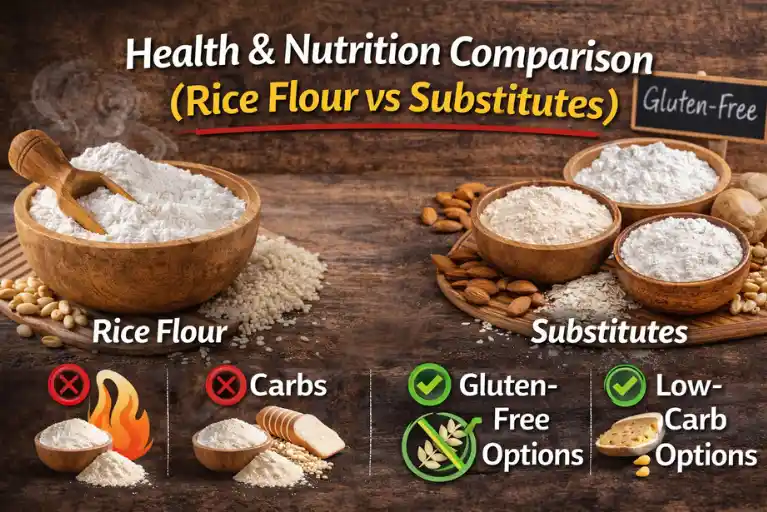
If you’re choosing a healthy rice flour substitute, here’s a quick comparison to help you decide:
| Flour Type | Calories | Carbs | Gluten-Free | Best For |
| Rice Flour | Medium | High | Yes | General use |
| Cornstarch | Low | High | Yes | Thickening, frying |
| Potato Starch | Medium | High | Yes | Frying |
| Tapioca Flour | Medium | High | Yes | Baking, elasticity |
| All-Purpose Flour | Medium | Medium | No | Baking |
| Almond Flour | High | Low | Yes | Low-carb baking |
Key Insights
- Almond flour is the best low-carb rice flour substitute
- Cornstarch & potato starch are lighter but still high in carbs
- All-purpose flour is not suitable for gluten-free diets
Common Mistakes When Using Rice Flour Substitutes
Even the best rice flour substitute can fail if used incorrectly. Avoid these common mistakes:
Using the Wrong Ratio
- Not all substitutes behave the same
- Too much = thick or dense texture
Always follow a proper rice flour substitute ratio (usually 1:1)
Ignoring Texture Differences
- Some substitutes are too heavy or too soft
- Example: all-purpose flour won’t give crispy results
Match the substitute to your recipe type
Over-Thickening Sauces
- Cornstarch and arrowroot are more powerful than rice flour
- Using too much can make sauces too thick or gummy
Start with small amounts and adjust gradually
Pro Tips for Best Results (Chef-Level Insights)
To get the most out of any rice flour substitute, follow these simple but powerful tips. These will help you achieve the right texture, flavor, and consistency every time.
Mixing Flours for Better Texture
- Instead of using one substitute, try combining flours
- Example: tapioca flour + almond flour for gluten-free baking
- This improves structure, softness, and balance
Pro tip: Mixing flours gives results closer to real rice flour texture
Adjusting Liquid Ratios
- Some substitutes absorb more or less liquid than rice flour
- Almond flour may need less liquid
- All-purpose flour may need slightly more
Always adjust slowly to avoid dry or overly wet batter
Choosing Based on Recipe Type
- Baking → almond flour, oat flour, all-purpose flour
- Frying → cornstarch, potato starch
- Thickening → cornstarch, arrowroot
The key to finding the best substitute for rice flour is matching it to your recipe purpose
These tips will help you use any rice flour alternative like a pro and avoid common texture problems.
FAQs About Rice Flour Substitutes
Can I use all-purpose flour instead of rice flour?
Yes, you can use all-purpose flour as a rice flour substitute in baking. However, it contains gluten and creates a denser texture, so it’s not ideal for crispy frying.
Can cornstarch replace rice flour?
Yes, cornstarch is one of the best rice flour substitutes, especially for frying and thickening. It creates a light, crispy coating and works well in a 1:1 ratio.
What is the closest substitute for rice flour?
The closest substitutes are cornstarch and potato starch because they provide a similar light and crispy texture, especially in frying recipes.
Is rice flour gluten-free?
Yes, rice flour is naturally gluten-free, making it a popular choice for people with gluten intolerance or those following a gluten-free diet.
Can almond flour replace rice flour?
Yes, almond flour can be used as a gluten-free rice flour alternative, especially in baking. However, it gives a softer and slightly moist texture, not a crispy one.
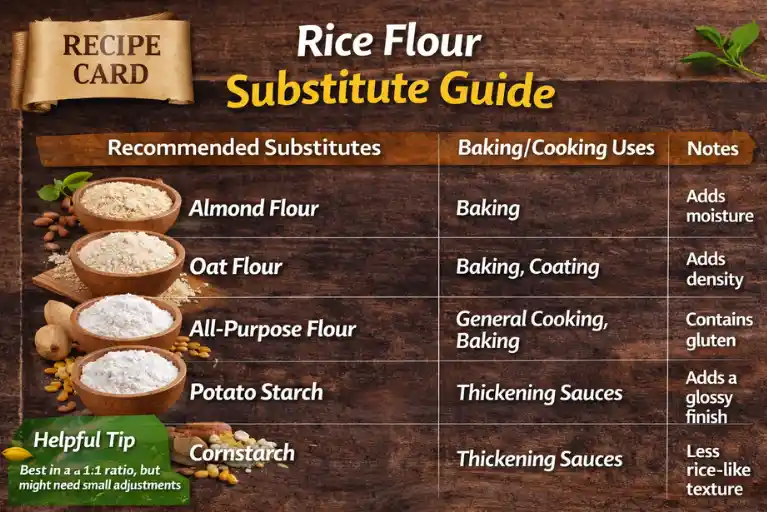
Recipe Card – Rice Flour Substitute Guide
Course: Ingredient Substitute GuideCuisine: GlobalDifficulty: Easy1
servings5
minutes160
kcalIngredients
Cornstarch (best for frying & thickening)
Potato starch (extra crispy texture)
Tapioca flour (chewy & elastic texture)
All-purpose flour (baking & general use)
Almond flour (gluten-free baking)
Instructions
- Identify your recipe type
Baking, frying, or thickening - Choose the right substitute
Match based on texture (crispy, soft, chewy) - Measure correctly
Use a 1:1 ratio (1 cup rice flour = 1 cup substitute) - Adjust if needed
Modify liquids slightly for baking - Cook as usual
Follow your original recipe instructions - Nutrition (Approximate per 1 cup substitute)
Calories: Varies (medium to high)
Carbs: High (except almond flour – low carb)
Gluten-Free: Depends on substitute
Best Healthy Option: Almond flour (low-carb alternative)
Recipe Video
Notes
- For crispy results, use cornstarch or potato starch
- For gluten-free baking, use almond or tapioca flour
- For thickening sauces, use slightly less cornstarch for better control
- Mixing flours can improve texture and balance
Conclusion
Finding the right rice flour substitute is simple once you understand your recipe needs. For frying, go with cornstarch or potato starch to get that perfect crispy texture. For baking, all-purpose flour or almond flour works best depending on whether you need a gluten-free option. If you’re thickening sauces, cornstarch is the easiest and most reliable choice.
The key is to match the substitute with the texture and purpose of your recipe. Don’t be afraid to experiment with different options or even mix flours to get the best results. With the right approach, you can easily replace rice flour without compromising taste or texture.