
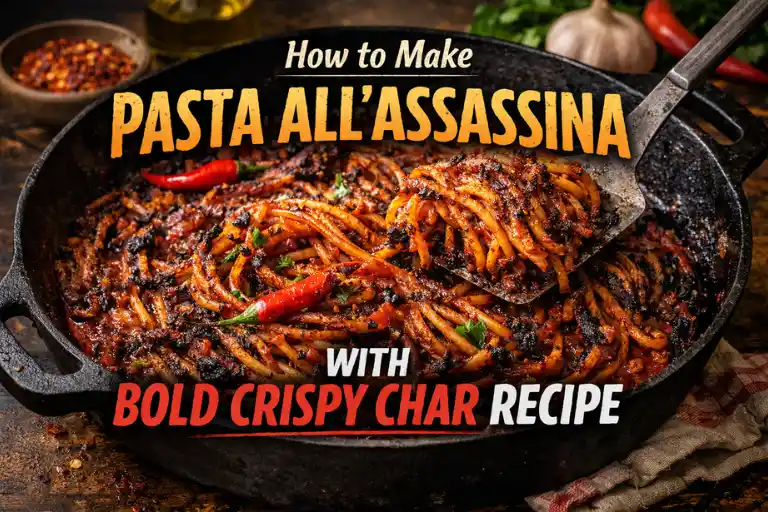
If you’ve seen Pasta All’Assassina on social media, you already know it looks different. This is not soft, saucy spaghetti. This is crispy, spicy, charred spaghetti cooked directly in a pan until the tomato sauce caramelizes around every strand. Known as Spaghetti all’Assassina or Assassin’s Spaghetti, this bold dish comes from Bari, Italy, and it breaks the traditional pasta rules in the best way possible.
There’s no boiling first. Instead, the pasta cooks slowly in a rich tomato base, creating those famous burnt, crispy edges and deep flavor. That’s what makes this authentic Bari-style pasta recipe so unique.
In this guide, you’ll learn how to make Pasta All’Assassina crispy, understand its origin, and master the technique that turns simple ingredients into something unforgettable. Let’s start from the beginning.
What Is Pasta All’Assassina?
Definition
Pasta All’Assassina, also called Spaghetti all’Assassina or Assassin’s Spaghetti, is a bold and spicy pasta dish from Bari. Unlike most Italian pasta recipes, this dish is known for its crispy, charred texture and intense tomato flavor. The spaghetti is cooked until parts of it become slightly burnt and caramelized, which gives it its famous “killer” personality.
It’s not meant to be soft and silky. It’s meant to have crunch, heat, and deep flavor.
Why It’s Not a Typical Pasta Dish
Most traditional pasta dishes follow a simple rule:
Boil the pasta in salted water
Drain it
Toss it with sauce
But Pasta All’Assassina breaks that rule completely.
There is no pre-boiling step. Instead, the spaghetti cooks directly in the tomato sauce. This creates a stronger flavor because the pasta absorbs the sauce as it cooks. The result is a rich, concentrated taste that feels very different from something like Arrabbiata.
This is why many people search for:
“What makes Pasta All’Assassina different?”
The Direct Pan-Cooking Method
The magic of this authentic Bari-style spaghetti recipe lies in its method. The dry spaghetti is placed directly into a pan with olive oil, garlic, chili, and tomato sauce. As liquid is gradually added, the pasta cooks slowly while touching the hot surface of the pan.
This one-pan pasta technique allows:
- Sauce absorption
- Controlled caramelization
- Gradual sauce reduction
- Deep flavor development
This is also why many people look up:
“How to cook spaghetti directly in tomato sauce.”
What Makes It Dangerously Crispy
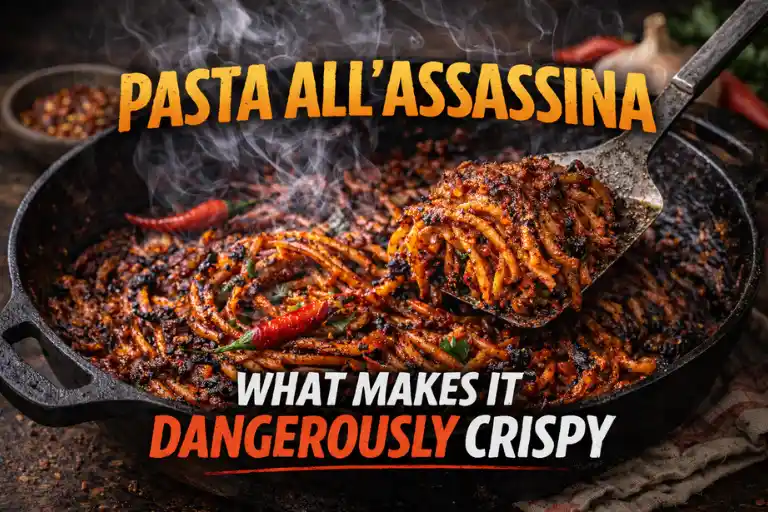
The signature of Spaghetti all’Assassina is its crispy edges. As the sauce reduces, the pasta makes direct contact with the hot pan. This creates caramelization and light charring. The sugars in the tomato react with heat, forming that deep, smoky crust.
This controlled “burn” is not a mistake. It’s the goal. That balance between soft center and crispy outside is what makes this dish unforgettable — and why so many people search for “how to make Pasta All’Assassina crispy.”
You might also like: Best Leftover Rice Pudding Vegan Recipe
The Origin Story in Bari
Pasta All’Assassina was born in the early 1960s in the southern Italian city of Bari. Unlike many classic Italian pasta dishes that date back centuries, this one is relatively modern. It was created inside a small local trattoria, where cooks experimented with cooking spaghetti directly in a spicy tomato sauce instead of boiling it first.
Local Trattoria Roots
The story most often told connects the dish to a Bari restaurant kitchen where a chef accidentally let the pasta stick and burn slightly in the pan. Instead of throwing it away, it was served — and guests loved the bold, smoky flavor.
From there, Spaghetti all’Assassina became a local favorite. It wasn’t refined or delicate. It was loud, spicy, and full of personality — just like the coastal city where it was born.
Cultural Significance in Apulia
In Apulian cuisine, simplicity matters. Most dishes use humble ingredients like tomatoes, olive oil, garlic, and chili. Pasta All’Assassina follows that rule but transforms it through technique.
It reflects the southern Italian style of cooking:
- Bold flavors
- Minimal ingredients
- Maximum character
Over time, this authentic Bari pasta recipe became a symbol of local pride. Many chefs in Bari now treat it as a culinary identity dish.
Why It Represents Rebellious Cooking
This dish breaks traditional Italian pasta rules:
- No boiling first
- Intentional charring
- Aggressive heat
- Deep caramelization
In a country where pasta texture is taken very seriously, cooking spaghetti until it becomes crispy and slightly burnt feels rebellious. That’s part of its charm.
It challenges the idea that pasta must always be soft and perfectly al dente. Instead, it embraces controlled imperfection — and turns it into something unforgettable.
Why Is It Called Assassin’s Pasta?
The name “Assassin’s Pasta” may sound dramatic, but it connects directly to the dish’s bold character.
The Spice Level Explanation
Traditionally, Pasta All’Assassina is made with a generous amount of red chili flakes. The heat can be strong, especially in authentic Bari versions. That fiery spice is one reason it earned the nickname “killer spaghetti.”
It’s not just mildly spicy — it’s meant to have impact.
The Aggressive Cooking Method
The cooking process itself is intense. The spaghetti is:
- Placed directly in a hot pan
- Pressed against the surface
- Left undisturbed to char
Unlike gentle simmering, this method uses high heat and patience. The pasta is allowed to develop a crust before being turned. That forceful approach adds to the “assassin” identity.
The Intentional Burning
The slight burning is not an accident. It’s part of the technique.
The tomato sauce reduces and caramelizes, creating dark, crispy edges. This controlled burn builds flavor through caramelization and deep roasting. Many first-time cooks think they’ve ruined it — but in reality, that crisp layer is the goal.
That’s why so many people search for:
“Why is Pasta All’Assassina burned?”
Myth vs Historical Reality
Some stories say the name came from customers calling the chef an “assassin” because the dish was so spicy. Others believe it refers to the “murder” of traditional pasta rules.
There isn’t one confirmed origin for the name. But what is clear is this:
The title reflects the dish’s bold heat, strong flavor, and fearless cooking style.
What Makes It Different From Arrabbiata?
Many people confuse Pasta All’Assassina with Arrabbiata because both are spicy tomato-based pasta dishes. But the cooking method, texture, and overall experience are completely different.
The biggest difference?
Technique and texture.
Here’s a simple comparison:
| Feature | All’Assassina | Arrabbiata |
| Cooking Method | Cooked directly in pan with sauce | Boiled first, then mixed with sauce |
| Texture | Charred & crispy edges with soft center | Soft and fully sauced |
| Sauce Style | Sauce reduces and caramelizes in pan | Sauce is simmered separately |
| Heat Level | Bold and intense | Moderate spice |
Key Difference in Simple Words
- Spaghetti all’Assassina is cooked like a risotto — slowly absorbing sauce while touching the hot pan.
- Arrabbiata follows the classic Italian method: boil pasta, then toss it in spicy tomato sauce.
If you’re searching for:
“Difference between Arrabbiata and Pasta All’Assassina”The answer is clear — All’Assassina is about crispy texture and aggressive caramelization, while Arrabbiata focuses on smooth sauce and balanced spice.
Ingredients Breakdown (With Substitutions & Heat Control Guide)
The beauty of authentic Pasta All’Assassina is its simplicity. It uses basic ingredients, but technique transforms them.
Authentic Ingredient List
- Spaghetti (thick, high-quality)
- Tomato passata or crushed tomatoes
- Tomato paste
- Garlic
- Red chili flakes
- Extra virgin olive oil
- Salt
- Water (or light vegetable broth)
These simple ingredients create that signature spicy charred pasta flavor.
Acceptable Substitutions
| Ingredient | Best Substitute | Notes |
| Tomato passata | Crushed San Marzano tomatoes | Avoid overly sweet sauces |
| Chili flakes | Fresh red chili | Adjust carefully |
| Spaghetti | Thick linguine | Must be sturdy pasta |
| Water | Light vegetable broth | Adds deeper flavor |
What NOT to Substitute
To protect the authenticity of this Bari-style spaghetti recipe, avoid:
- Thin angel hair pasta (burns too quickly)
- Cream or cheese mixed into sauce
- Pre-sweetened jarred pasta sauce
- Nonstick pans (reduces proper charring)
These changes can remove the bold character that defines Assassin’s Spaghetti.
Chili Heat Scale Adjustment
Because many people ask, “Is Pasta All’Assassina very spicy?”, here’s a simple heat guide:
| Heat Level | Chili Flakes Amount | Flavor Impact |
| Mild | ½ teaspoon | Warm but balanced |
| Medium | 1 teaspoon | Noticeable kick |
| Bold (Traditional) | 1½–2 teaspoons | Strong, fiery finish |
Authentic versions from Bari usually lean toward the bold side. Remember:
The spice should support the caramelized tomato flavor, not overpower it.
The Science Behind the Crispy Texture
This is where Pasta All’Assassina becomes more than just a recipe.
The famous crispy, charred edges are not random. They happen because of real cooking science.
Understanding this is your key to mastering Spaghetti all’Assassina.
1️⃣ The Maillard Reaction Explained
The Maillard reaction happens when heat transforms proteins and sugars into deep, brown flavors. It’s the same reaction that makes grilled meat or toasted bread taste amazing.
In Assassin’s Spaghetti, this reaction occurs when:
- The pasta touches the hot pan
- The tomato sauce reduces
- Natural sugars start to brown
That golden-brown crust is not just “burning.”
It’s controlled flavor development.
2️⃣ Tomato Caramelization Chemistry
Tomatoes naturally contain sugar. As the sauce cooks down, water evaporates and the sugar becomes concentrated.
When the reduced tomato sauce makes direct contact with high heat:
- Sugars caramelize
- Acidity softens
- Flavor intensifies
- A smoky crust forms
This is why people search for:
“How to make Pasta All’Assassina crispy.”
It’s not about burning — it’s about caramelizing correctly.
3️⃣ Starch Gelatinization
As the dry spaghetti cooks directly in the sauce, starch is released slowly into the liquid. This process is called starch gelatinization.
It helps:
- Thicken the sauce naturally
- Create better sauce absorption
- Bind flavor directly into the pasta
Unlike boiled pasta, this method allows the spaghetti to fully integrate with the sauce.
That’s why this Bari-style spaghetti recipe tastes deeper than traditional pasta dishes.
4️⃣ Why Direct Pan Contact Matters
The crispy texture only forms because the pasta sits directly on a hot surface.
When spaghetti presses against the pan:
- Heat transfers quickly
- Sauce reduces faster
- A crust forms underneath
If the pasta floats in too much liquid, it will steam instead of crisp.
Less liquid = more surface contact = better caramelization.
5️⃣ Why Over-Stirring Ruins the Crisp
This is the mistake most beginners make.
When you stir constantly:
- The pasta never stays still long enough to brown
- The crust breaks before forming
- You lose the charred layer
In authentic Pasta All’Assassina, there are moments when you must let it sit untouched.
That “don’t stir” window is what creates the signature crispy base.
This science is what separates a soft tomato pasta from a true Spaghetti all’Assassina with bold crispy edges.
Now let’s talk about something equally important — the right pan.
Choosing the Right Pan (Equipment Guide)
Your pan can make or break this dish.
If you want authentic charred spaghetti, you need the right surface.
Carbon Steel vs Cast Iron
Both are excellent options.
| Pan Type | Why It Works |
| Carbon Steel | Heats quickly, strong surface contact, excellent browning |
| Cast Iron | Holds heat longer, deep caramelization, stable temperature |
Both allow strong direct heat, which is essential for Pasta All’Assassina.
Why Nonstick Limits Char
Nonstick pans are designed to prevent sticking.
But in this dish, slight sticking is part of the process.
With nonstick:
- You get less crust formation
- Surface temperature is usually lower
- Caramelization is weaker
That means less authentic texture.
For true Spaghetti all’Assassina, traditional metal pans perform better.
Heat Control Techniques
Heat management is critical.
- Start with medium-high heat
- Reduce slightly when sauce thickens
- Increase briefly for final crisp stage
If the heat is too low, the pasta steams.
If it’s too high, it burns too fast.
Balance is everything.
Surface Contact Importance
A wide pan works best.
Why?
- More spaghetti touches the surface
- More areas can caramelize
- Crisp-to-soft ratio improves
Crowded pans trap moisture, which reduces crisp.
For best results:
Use a wide, heavy-bottom pan
Avoid deep pots
Step-By-Step Authentic Bari Method (With Crisp Markers)
This is the heart of authentic Pasta All’Assassina. Follow these stages carefully, and you’ll control the crispy, charred texture like a chef in Bari.
1️⃣ Build the Tomato Base
Heat extra virgin olive oil in a wide carbon steel or cast-iron pan. Add garlic and red chili flakes. Let them gently bloom.
Stir in tomato paste, then add tomato passata or crushed tomatoes.
Visual cue: Sauce should thicken slightly and darken in color.
Smell cue: You’ll notice a deep, roasted tomato aroma.
Sound cue: A steady, active simmer — not loud popping.
This base creates the bold flavor foundation for Spaghetti all’Assassina.
2️⃣ Add Spaghetti (Dry)
Place dry spaghetti directly into the pan. Do not boil first.
Press the pasta gently into the sauce so it begins absorbing flavor.
Visual cue: Pasta starts softening at the edges.
Sound cue: The sizzle becomes stronger as liquid reduces.
This direct pan contact is what separates Assassin’s Spaghetti from traditional pasta.
3️⃣ Gradually Add Sauce or Water
Add small amounts of hot water (or light vegetable broth) as needed. Think of it like cooking risotto — gradual and controlled.
The goal is to:
- Keep the pasta cooking
- Avoid flooding the pan
- Encourage slow caramelization
Too much liquid will steam the pasta instead of crisping it.
4️⃣ Controlled Caramelization
Now comes the key stage.
Let the pasta sit untouched for short periods. This allows the bottom layer to develop deep caramelized crust.
Visual cue: Edges begin turning golden brown.
Smell cue: Slight smoky sweetness — not harsh burning.
Sound cue: Stronger sizzling with sharper crackling tones.
If it smells bitter or blackens too quickly, reduce heat slightly.
This is where how to make Pasta All’Assassina crispy becomes real technique, not guesswork.
5️⃣ Final Crisp Stage
When the liquid has mostly reduced, increase heat slightly for the last 1–2 minutes.
Press the pasta gently against the pan to maximize contact.
You are aiming for:
- Crispy underside
- Soft center
- Bold charred edges
Let it rest for a minute before serving. This helps the crust stabilize.
The result? True Bari-style spaghetti with crispy edges.
The Viral Crispy Trick Most Recipes Don’t Explain
This is the part that most online recipes skip.
If you want restaurant-level charred spaghetti, pay attention here.
The “Don’t Stir” Window
After adding liquid and letting it reduce, stop stirring completely for 60–90 seconds.
This stillness allows:
- Crust formation
- Tomato caramelization
- Proper Maillard browning
Stirring too soon breaks the crisp layer before it forms. Patience creates texture.
The Sauce Layering Technique
Instead of adding all liquid at once, add it in small layers. Each time liquid reduces, it leaves behind concentrated tomato sugars. When new liquid is added, the process repeats. Layering = deeper flavor + stronger caramelization. This technique gives Spaghetti all’Assassina its signature intensity.
The Flip-and-Press Method
Once the bottom is crispy, carefully flip sections of pasta. Then gently press them back down. This creates multiple crisp layers instead of just one. It’s how chefs in Apulia build that dramatic texture contrast.
Timing the Burn Stage
The final minute is crucial.
You want controlled browning — not black bitterness.
Perfect burn stage signs:
- Deep red-brown edges
- Smoky but sweet aroma
- Strong crackling sound
If the smell turns sharp or bitter, you’ve gone too far.
Master this stage, and you won’t just make tomato pasta. You’ll create true Pasta All’Assassina with bold, crispy perfection.
Texture Control: Customize Your Crisp Level
One of the best parts of Pasta All’Assassina is that you can control how crispy it becomes. Some people love a light golden crust. Others want bold, almost smoky deep caramelization.
Here’s how to adjust it like a pro.
1️⃣ Light Crisp (Beginner-Friendly)
If you prefer a softer texture with just a hint of crunch:
- Keep heat at medium
- Stir slightly more often
- Add a little extra liquid
- Limit final crisp stage to 30–45 seconds
Result:
Golden edges with mostly tender spaghetti.
Great if you’re new to Spaghetti all’Assassina.
2️⃣ Medium Char (Traditional Bari Style)
This is the classic balance found in Bari.
- Use medium-high heat
- Allow 60–90 seconds of “don’t stir” time
- Let sauce fully reduce before flipping
- Press pasta gently into pan
Result:
Crispy edges + soft center.
Deep tomato flavor with noticeable caramelization.
This is what most people mean when they search for
“How to make Pasta All’Assassina crispy.”
3️⃣ Deep Caramelization (Bold & Intense)
For those who love strong smoky flavor:
- Slightly increase heat during final stage
- Extend “don’t stir” window
- Reduce liquid further before flipping
- Use a heavy cast-iron pan for stronger heat retention
Result:
Dark red-brown crust
Crackly texture
Smoky, bold finish
Be careful — go too far and it turns bitter.
How to Adjust Heat and Timing
Crisp level depends on two things:
| Adjustment Tool | Effect on Texture |
| Higher heat | Faster browning, stronger char |
| Lower heat | Slower caramelization, lighter crust |
| Longer resting in pan | More surface crisp |
| More stirring | Softer texture |
Remember:
Less movement = more crisp.
More liquid = less crust.
Controlling these small details transforms basic pasta into authentic Assassin’s Spaghetti.
Restaurant vs Home Version
Many people notice that restaurant versions of Pasta All’Assassina often have a stronger char and deeper flavor.
There are real reasons for this.
Why Restaurants Get Stronger Char
Restaurants in Apulia often use:
- High-BTU gas burners
- Professional carbon steel pans
- Extremely wide cooking surfaces
These allow:
- Faster sauce reduction
- Higher surface heat
- Stronger Maillard reaction
That intense heat creates a more dramatic crust.
Industrial Burner Differences
Home stoves usually produce less heat than professional burners.
This means:
- Slower caramelization
- Less aggressive browning
- More need for patience
Professional kitchens can reach higher pan temperatures quickly, which helps develop that bold charred spaghetti texture.
How to Replicate Restaurant-Level Char at Home
You can still achieve strong crisp at home by:
- Preheating your pan properly
- Using carbon steel or cast iron
- Cooking in smaller batches
- Avoiding overcrowding
- Letting the pasta sit untouched during crisp stages
Also, avoid adding too much liquid at once. Gradual reduction builds intensity. With the right technique, your home version of Spaghetti all’Assassina can rival many trattorias in Bari.
Common Mistakes That Ruin Pasta All’Assassina
Even though Pasta All’Assassina uses simple ingredients, small mistakes can completely change the texture and flavor. Here are the most common errors to avoid.
1️⃣ Stirring Too Much
This is the biggest mistake.
If you constantly stir the spaghetti, it never stays still long enough to form that crispy, charred crust.
Let it sit during the “don’t stir” window.
Give the bottom time to caramelize.
Less movement = more crisp.
2️⃣ Adding Too Much Liquid
Unlike traditional pasta, Spaghetti all’Assassina should not be swimming in sauce.
Too much liquid causes:
- Steaming instead of browning
- Weak caramelization
- Softer texture
Add liquid gradually and let it reduce fully before adding more.
3️⃣ Using Thin Pasta
Avoid angel hair or very thin spaghetti.
Thin pasta:
- Burns too fast
- Breaks easily
- Lacks structure for crisp layers
Always choose thick, high-quality spaghetti for authentic Bari-style Pasta All’Assassina.
4️⃣ Using Sweet Tomatoes
Sweet jarred sauces reduce poorly and can taste sugary when caramelized.
Use:
- Tomato passata
- Crushed San Marzano tomatoes
- Tomato paste for depth
Balanced acidity helps create that bold, smoky flavor.
5️⃣ Fear of Burning
This dish requires confidence.
If you remove the pasta too early, you miss the signature texture. Controlled charring is intentional.
The goal is:
- Deep red-brown edges
- Smoky aroma
- Slight crisp at the base
Not black bitterness.
Remember:
Pasta All’Assassina is supposed to be bold.
Is It Vegan? Gluten-Free? Make-Ahead Friendly?
Many readers ask practical questions before cooking Assassin’s Spaghetti. Here’s what you need to know.

Is It Vegan?
Yes — the traditional recipe from Bari is naturally vegan.
It contains:
- Pasta
- Tomatoes
- Olive oil
- Garlic
- Chili
No cream, no butter, no cheese mixed into the sauce. Some modern versions add burrata on top, but that’s optional.
Is It Gluten-Free?
Traditional spaghetti contains gluten.
However, you can use gluten-free spaghetti, but choose a sturdy brand.
Keep in mind:
- Some gluten-free pasta breaks easily
- It may require gentler stirring
- Crisp level may vary slightly
Can You Make It Ahead?
This dish is best enjoyed fresh because the crispy texture softens over time.
If needed:
- Store leftovers in an airtight container
- Refrigerate up to 2 days
Reheating Strategy
To restore crisp:
- Use a skillet (not microwave)
- Reheat on medium heat
- Add a tiny splash of water
- Let it sit briefly to crisp again
Microwaving will make it soft and less authentic.
Serving It the Traditional Bari Way
In Apulia, Spaghetti all’Assassina is often served simply and confidently.
The focus is always on the pasta itself.
With or Without Cheese?
This is debated.
Traditional Bari purists say:
No cheese.
The bold tomato and chili flavor should stand alone. Some modern chefs add a light grating of pecorino or burrata on top — but it’s not traditional.
Wine Pairing Suggestion
Because this is a bold and spicy pasta, it pairs well with:
- A medium-bodied Italian red
- Primitivo from Apulia
- Light Chianti
The wine should balance the heat, not overpower it.
Simple Salad Pairing
A fresh green salad works perfectly.
Try:
- Arugula with lemon
- Light olive oil dressing
- Minimal seasoning
The freshness balances the rich, caramelized tomato base.
Why It’s Often Served Alone
In Bari, this dish is sometimes served without heavy sides because:
- It’s already rich and intense
- The texture contrast is the main experience
- The bold flavor doesn’t need competition
Pasta All’Assassina is not meant to be delicate. It’s meant to stand strong on its own — spicy, crispy, and unforgettable.
Modern Variations
While authentic Pasta All’Assassina from Bari keeps things simple, modern cooks love adding small twists. If you understand the original technique, you can experiment without losing the soul of the dish.
1️⃣ Burrata Topping
Adding fresh burrata on top creates a creamy contrast against the crispy, charred spaghetti.
Tear burrata gently over hot pasta
Let it melt slightly
Balance the spice with creaminess
This version is not traditional in Bari, but it’s popular in modern restaurants.
2️⃣ Extra Garlic Version
If you love bold flavor, double the garlic.
- Thinly slice instead of mincing
- Let it lightly brown before adding tomatoes
It adds depth without changing the core identity of Spaghetti all’Assassina.
3️⃣ Smokier Paprika Version
For a deeper smoky note:
- Add ½ teaspoon smoked paprika
- Mix into the tomato base
This enhances the caramelized flavor and complements the charred pasta edges beautifully.
4️⃣ Ultra-Spicy Version
To create a true “Assassin’s” heat level:
- Increase chili flakes
- Add fresh red chili
- Finish with chili oil drizzle
This version highlights why it’s called Assassin’s Spaghetti — bold, fiery, unforgettable.
FAQs About Pasta All’Assassina
Why is Pasta All’Assassina burned?
Pasta All’Assassina is intentionally charred to create crispy edges and deep caramelized flavor. The slight burning is part of the technique, not a mistake. The tomato sauce reduces and caramelizes against the hot pan, forming a bold crust that defines authentic Spaghetti all’Assassina.
Can I use penne instead?
Traditional Pasta All’Assassina uses thick spaghetti because it handles direct pan cooking best. You can experiment with penne, but it won’t create the same long, crispy strands. For authentic texture and caramelization, sturdy spaghetti works best.
Is it very spicy?
Authentic Bari-style Pasta All’Assassina is moderately to boldly spicy. The chili heat is noticeable but balanced by tomato sweetness. You can adjust the spice level by reducing or increasing chili flakes based on preference.
Can I make it ahead?
This dish is best served fresh because the crispy texture softens over time. If needed, store leftovers for up to two days and reheat in a skillet to restore some crispness. Avoid microwaving, as it makes the pasta soft.
Why is it cooked without boiling?
Spaghetti all’Assassina is cooked directly in tomato sauce to allow maximum flavor absorption and caramelization. Skipping the boiling step creates deeper taste, stronger sauce integration, and the signature crispy crust that makes this dish unique.
Final Expert Tips for Perfect Assassin Pasta
Before you serve your Pasta All’Assassina, run through this quick checklist. These small details make the difference between good pasta and truly authentic Bari-style Spaghetti all’Assassina.
Use Thick, High-Quality Spaghetti
Always choose sturdy spaghetti. Thin pasta burns too quickly and breaks apart.
Thick spaghetti:
- Handles direct pan cooking
- Holds sauce better
- Creates stronger crispy, charred edges
For real texture control, pasta quality matters.
Control the Liquid Carefully
Remember: this is not a saucy pasta.
Add liquid gradually and allow it to reduce fully before adding more. Too much liquid will steam the pasta instead of caramelizing it. Less liquid = more surface contact = deeper flavor.
Embrace the Controlled Burn
This dish is meant to be bold.
If you’re afraid of slight charring, you’ll never achieve true Assassin’s Spaghetti texture. The key is controlled caramelization — deep red-brown edges, not black bitterness.
Trust your senses:
- Smoky aroma
- Strong sizzle
- Golden-to-deep brown crust
That’s the sweet spot.
Let It Rest 1–2 Minutes Before Serving
After the final crisp stage, turn off the heat and let the pasta rest briefly.
This allows:
- The crust to stabilize
- Flavors to settle
- Texture to firm up slightly
Then serve immediately.
Master these final steps, and your Pasta All’Assassina will have:
- Bold spice
- Deep caramelized tomato flavor
- Perfect crispy edges
- Soft center contrast
Simple ingredients. Strong technique. That’s the true spirit of Spaghetti all’Assassina from Bari.