
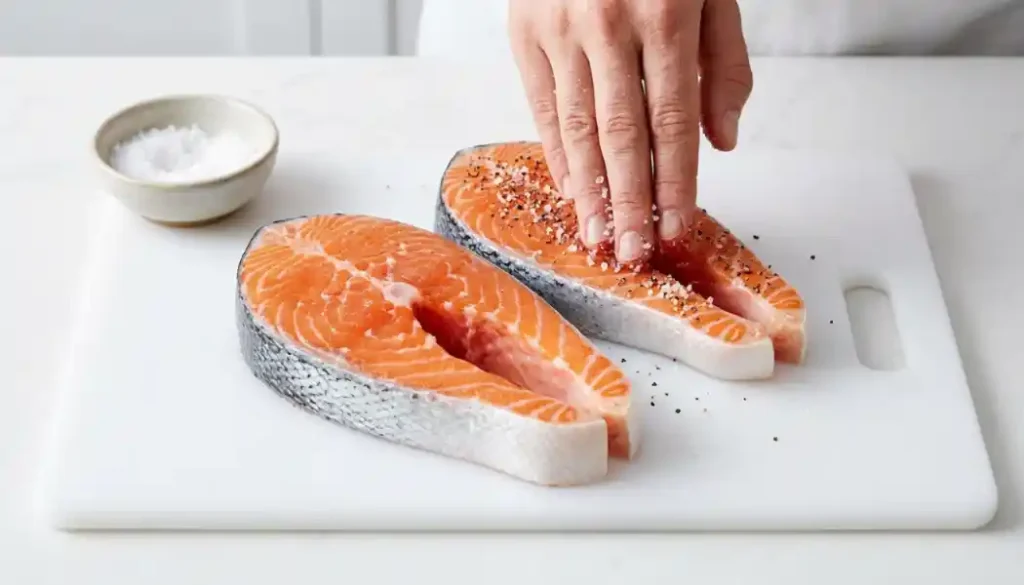
Making pan seared salmon at home is one of the easiest ways to enjoy a restaurant-quality salmon recipe without spending hours in the kitchen. This easy pan seared salmon comes together in just 15 minutes and gives you everything you want — crispy salmon skin, tender flakes, and rich buttery flavor. With a few simple ingredients and the right technique, you can create a healthy seafood dinner that tastes impressive every single time.
Whether you are learning how to pan sear salmon for the first time or looking for a foolproof method, this recipe keeps things simple and stress-free. The salmon cooks beautifully in a hot skillet with olive oil, butter, garlic, and fresh lemon for a flavorful finish. It is perfect for busy weeknights, quick family meals, or even a special dinner when you want juicy, flaky salmon with crispy edges.
Quick Answer
Pan seared salmon is a quick and easy stovetop recipe that creates crispy salmon skin and tender, flaky fish in about 15 minutes. The best method is to cook the salmon skin side down in a hot skillet with olive oil, then finish with butter, garlic, and lemon for extra flavor. Using dry salmon skin and medium-high heat helps create a golden crust while keeping the inside juicy.
This easy pan seared salmon recipe works well for busy weeknights because it uses simple ingredients and one pan. It is also packed with healthy protein and omega-3 fatty acids, making it a nutritious dinner option. Serve it with vegetables, rice, salad, or potatoes for a complete meal that tastes restaurant-quality but is easy enough for beginners.
Why You’ll Love This Pan Seared Salmon
This pan seared salmon recipe is perfect when you want a quick and satisfying dinner without a lot of work. Everything cooks in one pan, which means less cleanup and more time to enjoy your meal. The salmon develops a crispy texture on the outside while staying juicy and flaky inside. Even beginners can follow this foolproof method because the steps are simple and easy to understand.
Another reason people love this easy salmon recipe is the short ingredient list. You only need a few pantry staples like olive oil, butter, garlic, lemon, salt, and pepper to create bold flavor. It is also packed with healthy protein and omega-3 fats, making it a great option for busy weeknights or healthy meal prep. Whether you are cooking for family or guests, this salmon always feels special and comforting.
What Makes Pan Seared Salmon So Good?
The Secret Behind Crispy Salmon Skin
The magic of pan seared salmon comes from high heat and proper searing. When the salmon touches a hot skillet, a process called the Maillard reaction happens. This creates the golden brown crust and rich flavor that make restaurant-style salmon taste so good. The heat quickly cooks the outside while keeping the inside moist and tender.
Dry salmon skin is also very important. If the skin is wet, steam forms in the pan and prevents crispiness. Patting the fish dry helps the skin become crunchy and flavorful. Using medium-high heat locks moisture inside the fillet while creating crispy edges outside. This balance of crispy texture and juicy salmon is why skillet salmon recipes are so popular. With the right technique, you can make salmon that tastes better than many restaurant meals right at home.
Ingredients You’ll Need
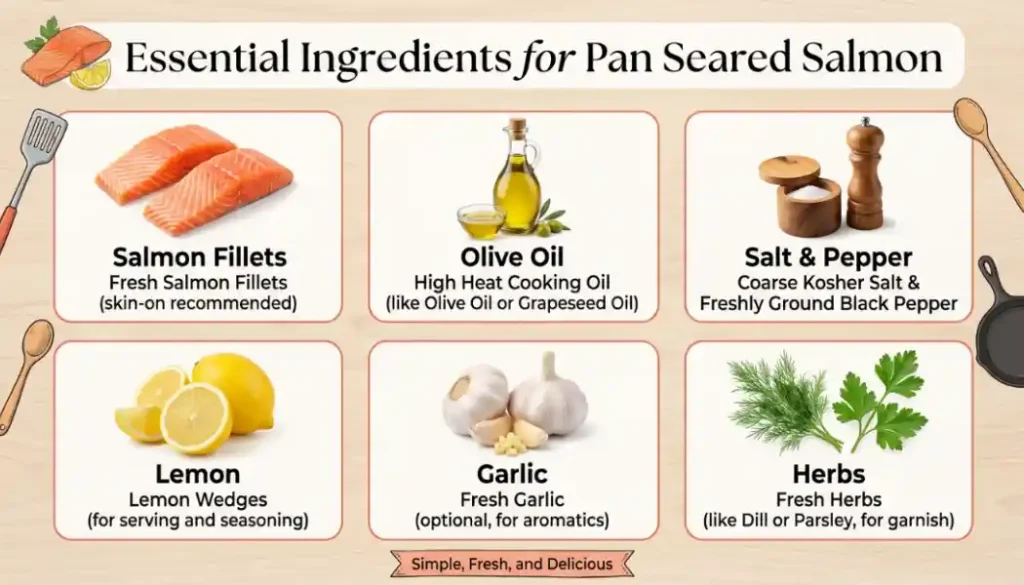
Main Ingredients
To make this crispy pan seared salmon, you only need a few fresh ingredients. Choose high-quality salmon fillets with the skin on for the best texture. You will also need olive oil, kosher salt, black pepper, butter, fresh garlic, and lemon. These simple ingredients create rich flavor without overpowering the salmon.
Optional Additions
You can also add extra seasonings for different flavors. Fresh herbs like parsley, thyme, or dill make the salmon taste fresh and bright. Paprika adds smoky flavor, while cayenne gives gentle heat. A light honey glaze creates a sweet and savory finish that works beautifully with crispy salmon skin.
This ingredient combination keeps the recipe simple, healthy, and beginner-friendly. It is one of the easiest ways to make a flavorful seafood dinner with minimal effort and maximum taste.
Best Type of Salmon for Pan Searing
Not all salmon cooks the same, so choosing the right type can improve your results. Atlantic salmon is rich, buttery, and easy to find in stores. Sockeye salmon has a deeper color and stronger flavor, while Coho salmon is lighter and more delicate. All three work well for a skillet salmon recipe.
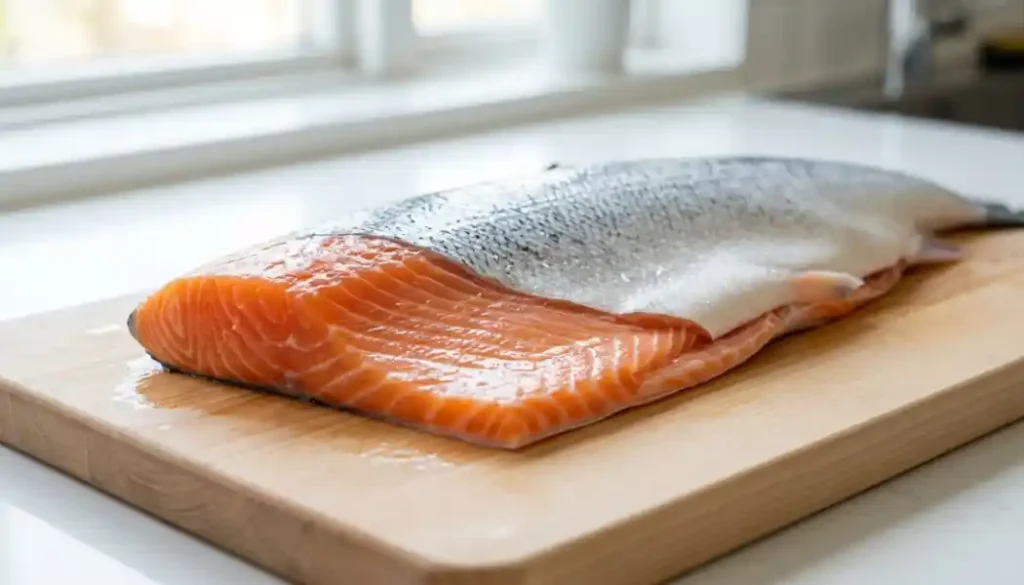
Skin-on salmon is usually best because the skin protects the fish and becomes deliciously crispy during cooking. Skinless salmon also works, but it cooks faster and may dry out more easily. Fresh salmon gives the best texture, but frozen salmon can also taste great if thawed properly before cooking.
Wild-caught salmon often has stronger flavor and firmer texture, while farm-raised salmon is usually milder and fattier. Both can make a delicious restaurant-style pan seared salmon when cooked correctly.
Equipment You Need
The right tools make cooking pan seared salmon much easier. A cast iron skillet is one of the best choices because it holds heat well and creates crispy salmon skin. A stainless steel pan also works great for getting a golden crust. Nonstick pans are fine for beginners but may not give the same texture.
A thin fish spatula helps flip the salmon without breaking it apart. This is especially useful when cooking delicate salmon fillets. An instant-read thermometer is another helpful tool because it tells you exactly when the salmon is done. This prevents dry or overcooked fish.
Using proper equipment improves texture, cooking control, and overall flavor. Even simple tools can help you create juicy salmon with crispy edges and restaurant-quality results right at home.
How to Prepare Salmon Before Cooking
Pat Dry and Remove Moisture
Before cooking, always pat the salmon dry with paper towels. Removing extra moisture helps the skin become crispy instead of soft. Dry salmon also sears better and develops more flavor in the skillet.
Bring Salmon to Room Temperature
Let the salmon sit at room temperature for about 15 minutes before cooking. Cold salmon placed directly into a hot pan can cook unevenly. Room-temperature fish cooks more evenly and stays tender inside.
Season at the Right Time
Season the salmon with kosher salt and black pepper right before cooking. If salt sits too long on raw salmon, it can pull out moisture and affect texture. Proper preparation is one of the easiest ways to make juicy and flaky salmon every time.
How to Pan Sear Salmon (Step-by-Step)
Step 1 — Dry the Salmon
Pat the salmon dry completely to help the skin crisp properly.
Step 2 — Heat the Pan Properly
Place a skillet over medium-high heat until hot but not smoking.
Step 3 — Add Oil
Add olive oil or avocado oil to coat the pan lightly.
Step 4 — Place Salmon Skin Side Down
Carefully place the salmon skin side down in the hot skillet.
Step 5 — Press Gently
Use a spatula to press the salmon lightly for even contact.
Step 6 — Flip Carefully
Once the skin is crispy, flip the salmon gently.
Step 7 — Add Butter + Garlic
Add butter, garlic, and lemon slices to the skillet.
Step 8 — Baste the Salmon
Spoon melted butter over the salmon for extra flavor.
Step 9 — Check Internal Temperature
Cook until the salmon reaches your preferred doneness.
Step 10 — Rest Before Serving
Let the salmon rest for a few minutes before serving.
How Long to Pan Sear Salmon
Cooking time depends on the thickness of the salmon fillets. Most fillets need about 4 to 5 minutes on the skin side and another 2 to 4 minutes after flipping. Thicker salmon may need slightly more time.
For the best texture, cook the salmon mostly on the skin side. This helps create crispy skin while keeping the center moist. Thin fillets cook faster, while thick cuts take longer to become flaky inside.
A simple timing guide works well:
- Thin salmon: 3–4 minutes per side
- Medium thickness: 4–5 minutes skin side, 2–3 minutes after flipping
- Thick salmon: 5–6 minutes skin side, 3–4 minutes after flipping
Using an instant thermometer is the safest way to avoid overcooking. Proper timing keeps the salmon juicy, tender, and flavorful.
Salmon Internal Temperature Guide
The FDA recommends cooking salmon to 145°F, but many people prefer slightly lower temperatures for softer texture. Medium-rare salmon is usually around 125°F to 130°F, while medium salmon reaches 135°F to 140°F.
Carryover cooking is also important. After removing the salmon from the skillet, the temperature continues rising slightly while it rests. This helps finish cooking without drying the fish out.
You can also check doneness by looking at the center. Perfectly cooked salmon should look slightly translucent in the middle while flaking easily with a fork. Overcooked salmon becomes dry and pale. Using a thermometer gives the most accurate results and helps beginners cook salmon with confidence every time.
How to Tell When Salmon Is Done
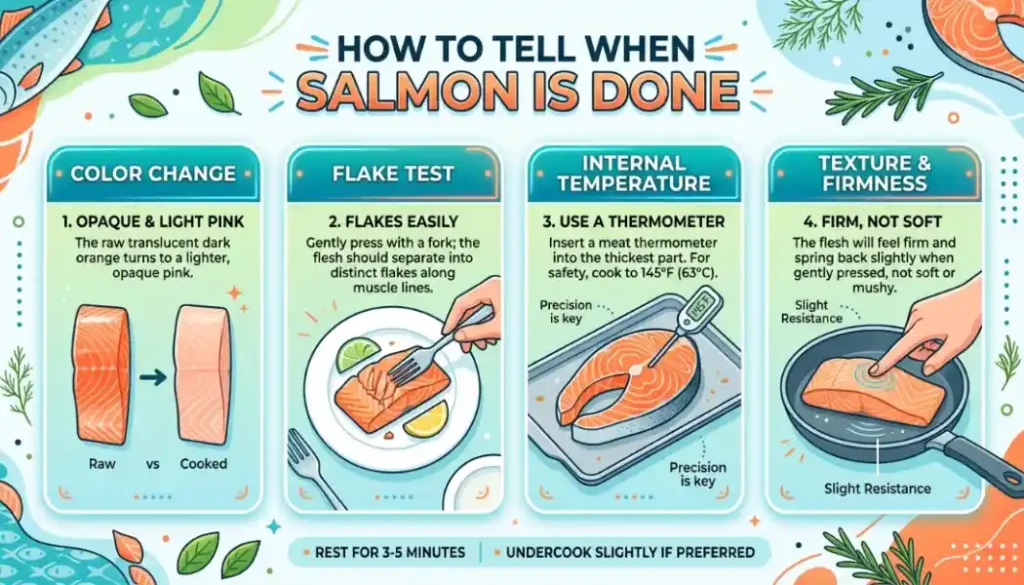
There are several easy ways to check if your pan seared salmon is ready. The first method is the flaking test. Gently press the salmon with a fork. If it flakes easily, it is done cooking.
You can also look at the color. Properly cooked salmon changes from deep translucent pink to a lighter pink shade. The center should still look slightly moist, not dry or chalky.
A thermometer gives the most accurate result. Depending on your preference, salmon is usually best between 125°F and 145°F. Texture is another good clue. Perfect salmon feels tender and juicy, while overcooked salmon becomes firm and dry. Learning these simple signs helps you cook flavorful salmon with the perfect flaky texture every time.
Common Mistakes When Pan Searing Salmon
One common mistake is using a pan that is not hot enough. A cool pan prevents crispy salmon skin and can make the fish stick. Another mistake is flipping the salmon too early before the crust forms properly.
Wet salmon skin is another major problem because moisture creates steam instead of crispiness. Always pat the salmon dry before cooking. Overcrowding the skillet also lowers the pan temperature and affects searing.
Using the wrong oil can create burnt flavor. Oils with low smoke points may burn quickly during high-heat cooking. Overcooking is another common issue that dries out the salmon and ruins the texture.
Avoiding these simple mistakes helps create juicy, flaky salmon with crispy edges and rich flavor. Small changes can make a huge difference in the final result.
How to Get Crispy Salmon Skin Every Time
The key to crispy salmon skin is removing moisture and using enough heat. Always pat the salmon dry before adding it to the skillet. Moisture prevents proper searing and keeps the skin soft.
Heat the pan well before adding oil and salmon. Once the salmon goes into the skillet, place it skin side down first. Press gently for the first 20 seconds to help the skin make full contact with the pan.
Avoid moving the salmon too early. Let the skin cook undisturbed until it naturally releases from the skillet. This creates the crispy golden crust people love in restaurant-style salmon recipes. Using a cast iron skillet also improves texture because it holds heat evenly. With patience and proper heat, you can create perfectly crispy salmon skin every time.
Why Salmon Sticks to the Pan
Salmon usually sticks when the pan is too cold or not properly heated. A hot skillet helps form a crust quickly, allowing the fish to release naturally. Moving the salmon too early is another common issue. Let the fish cook fully before trying to flip it.
Insufficient oil can also cause sticking. A thin layer of oil helps create a barrier between the salmon and the skillet. Moisture problems are another reason salmon sticks. Wet skin creates steam instead of a crisp crust.
Using stainless steel or cast iron correctly can prevent sticking and improve flavor. Once the crust forms, the salmon usually releases easily from the pan. Proper heat, dry skin, and patience are the secret to smooth flipping and crispy texture.
Best Oils for Pan Seared Salmon
Different oils affect flavor and cooking results. Avocado oil is one of the best choices because it has a high smoke point and mild flavor. It handles high heat well and helps create crispy salmon skin.
Olive oil is another popular option. It adds rich flavor but works best over medium heat instead of extremely high temperatures. Canola oil is affordable and neutral, making it a good choice for beginners.
Ghee gives the salmon a buttery flavor and rich golden crust. It also has a higher smoke point than regular butter. Choosing the right oil helps prevent burning and improves texture. High-heat oils work best for getting juicy salmon with crispy edges and restaurant-quality flavor.
Pan Seared Salmon Variations
There are many ways to customize this easy salmon recipe. Lemon butter salmon adds bright citrus flavor and rich buttery sauce. Garlic herb salmon uses fresh herbs and garlic for a fresh and savory finish.
For extra spice, try Cajun salmon with paprika, cayenne, and black pepper. Honey glazed salmon creates a sweet and salty balance with caramelized edges. If you enjoy fresh Mediterranean flavors, add olive oil, garlic, herbs, and lemon for a simple Mediterranean salmon variation.
These flavor combinations help keep salmon dinners exciting and versatile. You can easily adjust the seasonings based on your mood or what ingredients you already have at home.
What Sauce Goes with Pan Seared Salmon?
A good sauce can make pan seared salmon even more flavorful. Lemon butter sauce is one of the most popular options because it adds richness and brightness at the same time. Dill sauce gives a cool and fresh flavor that pairs perfectly with seafood.
For creamy texture, try a simple garlic cream sauce made with butter, garlic, and cream. Chimichurri adds bold herb flavor with parsley, garlic, and olive oil. If you want something lighter, a yogurt sauce with lemon and herbs works beautifully.
These sauces can completely change the flavor profile of your salmon dinner while keeping the recipe easy and satisfying.
What to Serve with Pan Seared Salmon
Vegetables
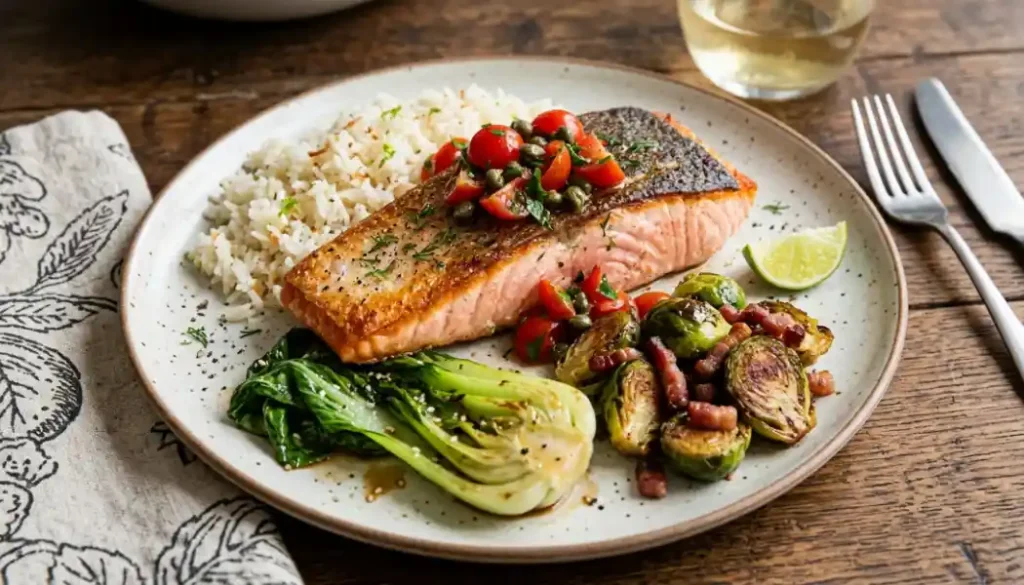
Fresh vegetables pair perfectly with crispy salmon. Roasted asparagus, green beans, broccoli, zucchini, or Brussels sprouts add color and healthy texture to your plate. Lemon and garlic vegetables also match the buttery salmon flavor beautifully.
Rice
Rice helps soak up the delicious butter sauce from the skillet. White rice, brown rice, garlic rice, or lemon herb rice all work well with salmon dinners.
Potatoes
Crispy roasted potatoes, mashed potatoes, or baby potatoes are comforting side dishes that balance the flaky salmon texture. Sweet potatoes also add a slightly sweet flavor that pairs nicely with seafood.
Salad
A fresh salad keeps the meal light and refreshing. Try cucumber salad, Caesar salad, Greek salad, or mixed greens with lemon vinaigrette for extra freshness.
Low-Carb Sides
For a low-carb or keto-friendly dinner, serve salmon with cauliflower rice, sautéed spinach, roasted cauliflower, or zucchini noodles. These lighter sides still feel filling and satisfying.
Is Pan Seared Salmon Healthy?
Yes, pan seared salmon is one of the healthiest seafood meals you can make at home. Salmon is packed with omega-3 fatty acids, which support heart health, brain function, and healthy skin. It is also an excellent source of high-quality protein, helping keep you full and energized.
This recipe is naturally low carb and works well for people following a keto-friendly lifestyle. When cooked with healthy oils like olive oil or avocado oil, salmon becomes a nutritious dinner filled with healthy fats and important nutrients.
Salmon also contains vitamins like B12, vitamin D, and selenium. Many people enjoy salmon because it may provide anti-inflammatory benefits that support overall wellness. Compared to heavily fried foods, this skillet salmon recipe is a cleaner and healthier option while still delivering rich flavor and crispy texture.
Can You Use Frozen Salmon?
Yes, frozen salmon works very well for this pan seared salmon recipe if it is thawed correctly first. The best method is to move the salmon to the refrigerator overnight so it can thaw slowly and evenly. If you need a quicker option, place the sealed salmon in cold water for about 30 minutes.
After thawing, pat the salmon dry very well with paper towels. Removing extra moisture is important because wet fish prevents crispy salmon skin from forming properly. Frozen salmon may release more moisture than fresh salmon, so drying it carefully makes a big difference.
Both fresh and frozen salmon can produce juicy and flaky results when cooked correctly. High-quality frozen salmon is convenient, affordable, and available year-round, making it a great option for quick seafood dinners and meal prep recipes.
Storage and Reheating Tips
Cooked salmon can stay fresh in the refrigerator for about 3 to 4 days when stored in an airtight container. Let the salmon cool slightly before placing it in the fridge to maintain the best texture and flavor.
To reheat salmon without drying it out, warm it gently in a skillet over low heat with a little butter or olive oil. You can also use the oven at a low temperature. Avoid overheating because salmon cooks quickly and can become dry.
If you want to freeze leftovers, wrap the salmon tightly and store it in a freezer-safe container for up to 2 months. Thaw overnight in the refrigerator before reheating. Proper storage helps keep the salmon moist, flavorful, and safe to eat later for easy lunches or quick dinners.
Meal Prep Tips
Pan seared salmon is excellent for meal prep because it cooks quickly and stays flavorful for several days. You can prepare multiple salmon fillets at once and store them in meal containers with vegetables, rice, or salad for easy lunches and dinners throughout the week.
For the best texture, slightly undercook the salmon during the first cooking session. This prevents it from becoming dry when reheated later. Add fresh lemon slices or herbs before serving to refresh the flavor.
Salmon meal prep works well for healthy eating plans because it is high in protein, low carb, and naturally keto-friendly. Pairing salmon with roasted vegetables or cauliflower rice creates balanced meals that feel light but filling. Properly stored salmon keeps its rich flavor and flaky texture very well for quick weekday meals.
Frequently Asked Questions
Do you flip salmon when pan searing?
Yes, most salmon fillets should be flipped once. Cook the salmon mostly on the skin side first, then flip briefly to finish cooking the top.
Should salmon be room temperature?
Yes, letting salmon sit at room temperature for 15 minutes helps it cook more evenly and prevents a cold center.
What pan is best?
A cast iron skillet or stainless steel pan works best because they hold heat well and create crispy salmon skin.
Can you use skinless salmon?
Yes, but skin-on salmon usually stays juicier and develops better texture during cooking.
How long should salmon cook?
Most salmon fillets need about 6 to 8 minutes total, depending on thickness.
What oil is best?
Avocado oil and olive oil are popular choices because they handle heat well and add good flavor.
Can salmon be pink in the middle?
Yes, slightly pink salmon is safe if it reaches the proper internal temperature.
Why is my salmon dry?
Dry salmon usually happens from overcooking or cooking at very high heat for too long.
How do restaurants make salmon crispy?
Restaurants use dry salmon skin, very hot pans, proper oil, and patience while searing.
Nutrition Information
The exact nutrition depends on the ingredients and portion size, but a typical serving of pan seared salmon is rich in protein, healthy fats, and important nutrients. One salmon fillet usually contains around 250–350 calories, depending on the size and amount of butter or oil used.
Salmon is naturally high in omega-3 fatty acids, vitamin D, vitamin B12, and selenium. It is also low in carbohydrates, making it ideal for low-carb and keto-friendly meal plans. Compared to many fried seafood dishes, skillet salmon is a healthier choice because it uses simple ingredients and healthy cooking oils.
Adding vegetables, salad, or roasted potatoes creates a balanced and satisfying meal filled with nutrients, flavor, and long-lasting energy.
Conclusion
This pan seared salmon recipe is one of the easiest ways to make a healthy and restaurant-quality seafood dinner at home. With crispy salmon skin, juicy texture, and rich buttery flavor, it delivers impressive results using only a few simple ingredients and one skillet.
Whether you are learning how to pan sear salmon for the first time or improving your cooking skills, this foolproof method makes the process simple and stress-free. From choosing the best salmon to mastering crispy skin and perfect doneness, every small step helps create flavorful and tender fish every time.
Serve it with vegetables, rice, salad, or low-carb sides for a complete meal that feels both comforting and fresh. Once you try this easy skillet salmon recipe, it may quickly become one of your favorite weeknight dinners.