
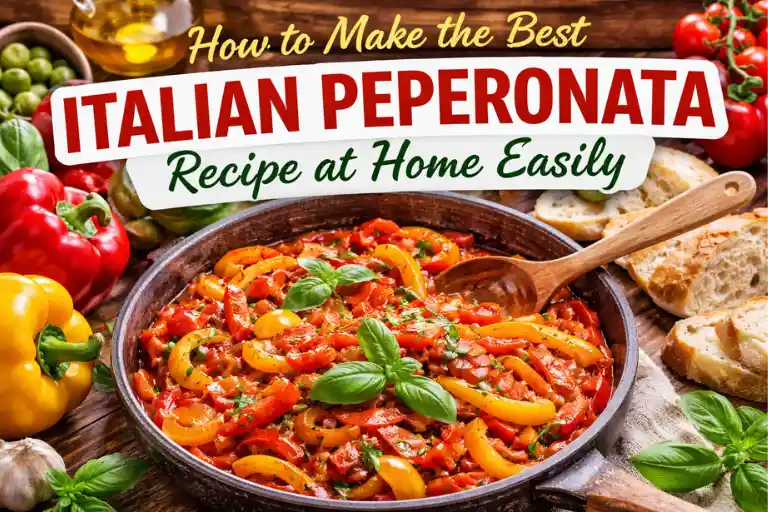
Italian Peperonata Recipe is a classic dish from Italian cuisine that celebrates the natural sweetness of bell peppers, tomatoes, and olive oil. This traditional Italian pepper stew is simple, colorful, and full of Mediterranean flavor. In many Italian homes, peperonata is cooked slowly so the peppers and onions become soft, sweet, and rich in taste. The dish is made with basic ingredients like bell peppers, tomatoes, garlic, and olive oil, yet the result feels comforting and satisfying.
This authentic peperonata recipe is perfect as a side dish, an antipasto, or even a topping for bread, pasta, or grilled meat. Many people love this easy Italian peperonata because it is healthy, budget-friendly, and naturally vegetarian. If you are wondering how to make peperonata at home, this guide will show you a simple Italian pepper stew recipe with step-by-step instructions and helpful cooking tips.
Quick Answer – What Is Italian Peperonata
Italian peperonata ek traditional Italian vegetable dish hai jo bell peppers, onions, tomatoes, garlic aur olive oil ko slow cooking karke banayi jati hai. Ye ek flavorful Italian pepper stew hai jisme peppers naturally sweet ho jate hain jab woh dheere dheere cook hote hain. Italian peperonata recipe ko aksar side dish, antipasto, pasta topping ya grilled meat ke sath serve kiya jata hai.
Quick Recipe Overview
Italian Peperonata Recipe – Quick Overview
- Prep Time: 10 minutes
- Cook Time: 25–30 minutes
- Main Ingredients: Bell peppers, onions, tomatoes, garlic, olive oil
- Cooking Method: Slow simmering
- Serving: Side dish, antipasto, pasta topping
Ye easy Italian peperonata recipe ek simple Mediterranean vegetable dish hai jisme sweet bell peppers aur tomatoes ko olive oil mein slow cook karke rich flavor banaya jata hai.
What Is Italian Peperonata
Italian peperonata is a traditional Italian vegetable stew made mainly with bell peppers, onions, tomatoes, garlic, and olive oil. This colorful dish is known for its sweet and slightly rich flavor that develops when the vegetables are cooked slowly. In a classic Italian peperonata recipe, the peppers and onions are gently sautéed and then simmered with tomatoes until they become soft, tender, and full of flavor.
The secret behind authentic peperonata is the slow cooking process. The bell peppers release their natural sweetness, while the tomatoes and olive oil create a light and savory sauce. This method turns simple vegetables into a comforting Italian pepper stew that is both healthy and delicious.
You will often find peperonata served as a side dish, part of an antipasto platter, or even as a topping for bread, pasta, or grilled meats. Because it uses fresh vegetables and simple ingredients, this Mediterranean vegetable dish is very popular in Italian cuisine and loved by home cooks who enjoy an easy peperonata recipe with rich flavor.
Origin and History of Peperonata
You might also like: The Best Beet Gazpacho Recipe
The origin of peperonata is closely connected to the food traditions of Southern Italy, where simple vegetable dishes are a central part of everyday cooking. Regions such as Sicily, Campania, and Calabria are known for preparing this classic Italian peperonata recipe using fresh local vegetables like bell peppers, tomatoes, onions, and olive oil. In these areas, farmers and home cooks created meals that were affordable, healthy, and full of flavor, which is why peperonata became a popular traditional Italian vegetable stew.
The dish also reflects the strong Mediterranean influence in Italian cuisine. Ingredients like olive oil, garlic, tomatoes, and sweet peppers are staples of the Mediterranean diet, known for its simple cooking methods and fresh seasonal produce. When these ingredients are slow cooked together, they create the rich and comforting flavor that defines authentic peperonata.
Over time, the peperonata recipe evolved across different Italian regions. Some versions include vinegar or fresh herbs for extra flavor, while others keep the dish simple with just peppers, onions, and tomatoes. Today, this Italian pepper stew is enjoyed not only in Italy but also around the world as a delicious Mediterranean vegetable dish that highlights the beauty of slow-cooked vegetables.
Italian Peperonata vs Ratatouille vs Caponata
Many people confuse Italian peperonata with other Mediterranean vegetable dishes like ratatouille and caponata. While they may look similar, each dish has its own ingredients, cooking style, and cultural origin. Understanding the differences helps you appreciate why the Italian peperonata recipe is unique.
Peperonata is a traditional Italian pepper stew where bell peppers, onions, and tomatoes are slowly cooked in olive oil until soft and sweet. The focus is on the natural flavor of the peppers.
Ratatouille comes from France and includes a wider mix of vegetables such as zucchini, eggplant, and tomatoes. It is usually cooked as a layered vegetable stew.
Caponata, from Sicily, is another Italian dish but has a sweet-and-sour flavor because it often includes eggplant, vinegar, and capers.
| Dish | Country | Main Ingredients | Cooking Style |
| Peperonata | Italy | Bell peppers, onions, tomatoes, olive oil | Slow cooked pepper stew |
| Ratatouille | France | Zucchini, eggplant, tomatoes, peppers | Stewed or layered vegetables |
| Caponata | Italy (Sicily) | Eggplant, tomatoes, capers, olives | Sweet and sour vegetable stew |
While all three dishes celebrate vegetables, authentic peperonata stands out because of its sweet slow-cooked peppers and simple Mediterranean ingredients.
Why You Will Love This Italian Peperonata Recipe
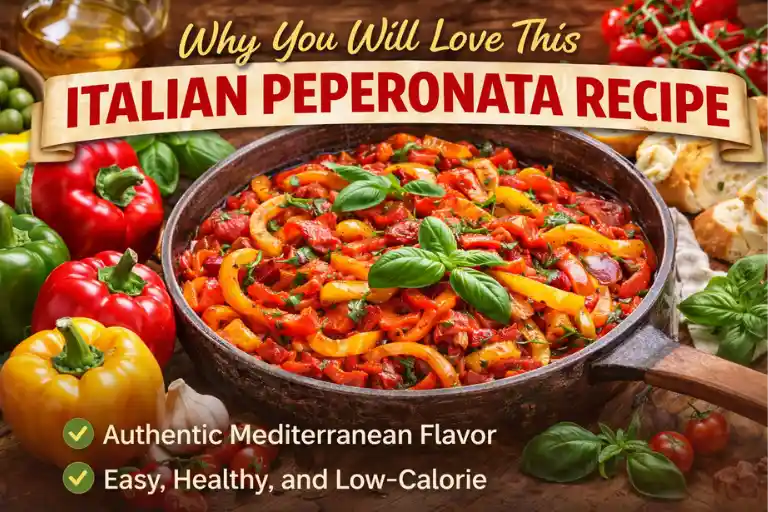
There are many reasons why this easy Italian peperonata recipe is loved by home cooks and food lovers.
- Simple ingredients – This peperonata recipe uses everyday ingredients like bell peppers, tomatoes, onions, garlic, and olive oil, making it easy to prepare at home.
- Healthy vegetable dish – Because it is packed with fresh Mediterranean vegetables, Italian peperonata is naturally rich in vitamins and fits well into a Mediterranean diet.
- Versatile side dish – This Italian pepper stew can be served with grilled meat, pasta, crusty bread, or seafood, or enjoyed as part of an antipasto platter.
- Rich Mediterranean flavor – The slow cooking process allows the bell peppers and tomatoes to release their natural sweetness, creating the comforting taste that makes authentic peperonata so delicious.
Step-by-Step Guide to Making Italian Peperonata
Making an Italian peperonata recipe at home is simple and rewarding. The secret to this traditional Italian pepper stew is cooking the vegetables slowly so the bell peppers, onions, and tomatoes develop a rich and naturally sweet flavor.
Prepare the Vegetables
Start by washing and slicing the bell peppers into thin strips. You can use a mix of red and yellow peppers for better flavor and color. Next, slice the onions and finely chop the garlic. If you are using fresh tomatoes, chop them into small pieces. Preparing the vegetables properly helps the peperonata recipe cook evenly and gives the dish its classic rustic texture.
Sauté Peppers and Onions
Heat a few tablespoons of extra virgin olive oil in a large pan over medium heat. Add the onions first and cook them until they become soft and slightly golden. Then add the sliced bell peppers and cook them gently for several minutes. This step begins the flavor base of the Italian pepper stew, allowing the vegetables to soften and release their natural sweetness.
Simmer with Tomatoes and Herbs
Add the tomatoes or tomato sauce, along with garlic, salt, pepper, and fresh basil. Lower the heat and allow everything to simmer slowly. Stir occasionally while the vegetables cook together. After about 20–30 minutes, the peppers and onions will become tender and the sauce will thicken slightly. At this point, your authentic Italian peperonata is ready to serve.
Cooking Techniques That Improve Flavor
A great authentic peperonata recipe depends on a few important cooking techniques. These simple methods help turn basic vegetables into a flavorful Mediterranean vegetable dish.
Slow Cooking
One of the most important steps in making Italian peperonata is cooking the vegetables slowly. When the bell peppers and onions simmer gently, they become soft and naturally sweet. This slow process gives the Italian pepper stew its rich and comforting flavor.
Caramelization
When the peppers and onions cook in olive oil, their natural sugars begin to caramelize. This creates a deeper flavor and slightly sweet taste that makes easy peperonata recipes so delicious.
Balancing Acidity and Sweetness
The tomatoes add acidity while the bell peppers bring sweetness. A good peperonata recipe balances these flavors carefully. If the dish tastes too acidic, cooking it longer helps soften the flavor.
Chef Tips for the Best Peperonata
Professional chefs often use small tricks to make an Italian peperonata recipe taste even better. These tips will help you create a truly authentic peperonata at home.
Use Good Olive Oil
High-quality extra virgin olive oil adds richness and depth to the dish. Since olive oil is a key ingredient in Mediterranean cooking, using a good one makes a big difference.
Cook Peppers Slowly
Do not rush the cooking process. Slow cooking allows the bell peppers, onions, and tomatoes to blend together perfectly, creating the classic flavor of this Italian vegetable stew.
Add Vinegar for Balance
Some traditional peperonata recipes include a small splash of vinegar at the end. This adds a gentle acidity that balances the sweetness of the peppers and makes the dish taste more vibrant.
How to Adjust the Texture of Peperonata
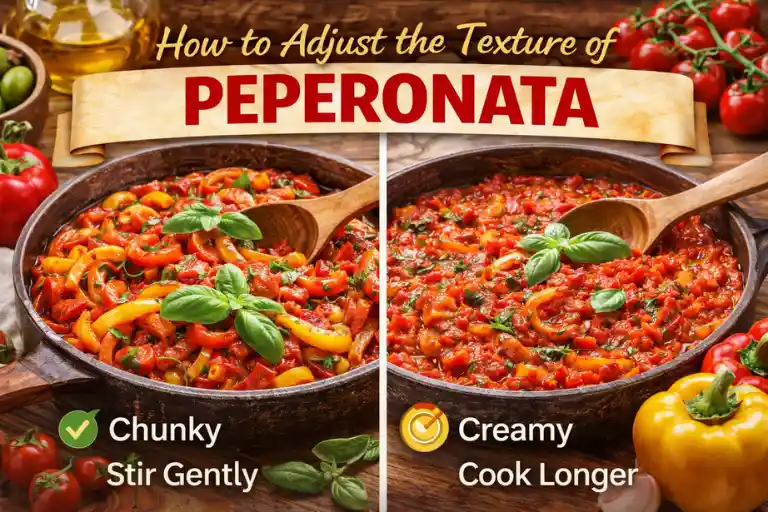
One of the great things about an Italian peperonata recipe is that you can easily adjust the texture depending on how you like it. Some people prefer a chunky Italian pepper stew, while others enjoy a softer and more blended version of authentic peperonata. Small changes in cooking time and preparation can make a big difference.
Chunky vs Soft Texture
If you prefer a chunky peperonata, cut the bell peppers and onions into slightly larger pieces and cook them for a shorter time. This keeps the vegetables tender but still firm. For a softer texture, slice the peppers thinner and allow the mixture to cook longer. As the vegetables slowly simmer, they become very soft and blend together into a smoother Mediterranean vegetable dish.
Adjusting the Sauce Thickness
The thickness of the sauce in your peperonata recipe also depends on cooking time. If you want a thicker Italian pepper stew, let the peppers and tomatoes cook uncovered so the extra liquid evaporates. If the sauce becomes too thick, you can add a small amount of water or tomato sauce while simmering. This helps maintain the rich but balanced texture of authentic Italian peperonata.
You may like it: Italian Spinach Ricotta Dumplings
Regional Italian Variations of Peperonata
Across Italy, different regions prepare peperonata in their own way. While the base ingredients of bell peppers, onions, tomatoes, and olive oil remain the same, each region adds its own twist to this traditional Italian vegetable stew.
Sicilian Peperonata
In Sicily, the peperonata recipe often includes ingredients like capers, olives, or vinegar. These additions create a slightly sweet and tangy flavor that reflects the island’s Mediterranean cooking style.
Roman Peperonata
The Roman version of Italian peperonata is usually simpler. It focuses on the natural flavor of slow cooked bell peppers and tomatoes with olive oil and garlic. The dish is often served as a side dish with bread or grilled meats.
Calabrian Peperonata
In Calabria, cooks sometimes add a bit of chili pepper to give the Italian pepper stew a mild spicy kick. This version highlights the bold flavors that are common in southern Italian cuisine.
Creative Ways to Serve Peperonata
Although Italian peperonata is traditionally served as a side dish, it is also very versatile. The sweet flavor of slow cooked peppers and tomatoes makes it perfect for many creative dishes.
Antipasto Platter
Serve authentic peperonata as part of a Mediterranean antipasto platter with olives, cheese, and crusty bread. This is a popular way to enjoy it before a meal.
Bruschetta Topping
Spoon the peperonata mixture over toasted bread to make a delicious bruschetta topping. The sweet peppers pair beautifully with crispy bread.
Pasta Sauce
You can also use peperonata as a light pasta sauce. Simply toss it with cooked pasta and a drizzle of olive oil for a quick Mediterranean meal.
Sandwich Filling
Add Italian peperonata to sandwiches with grilled chicken or mozzarella for extra flavor. The sweet peppers and onions make a rich filling.
Pizza Topping
Another creative idea is to use peperonata as a pizza topping. Spread it over pizza dough with cheese to create a flavorful Mediterranean-style pizza.
What to Serve With Peperonata
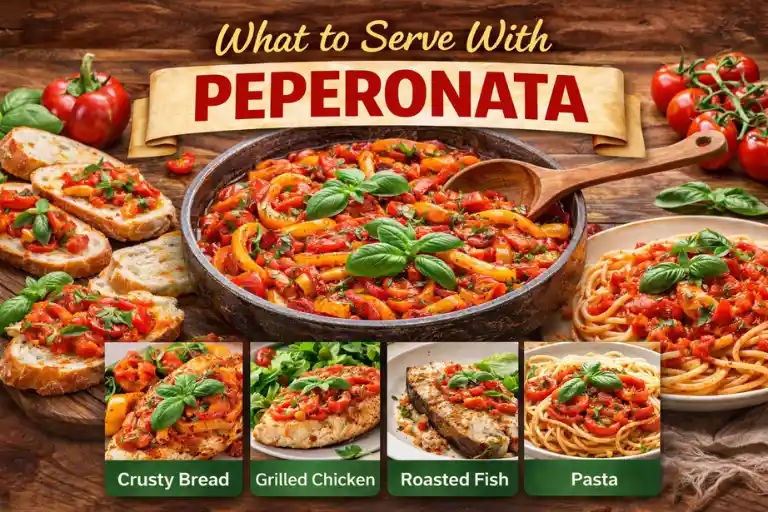
One reason people love an Italian peperonata recipe is its versatility. This traditional Italian pepper stew can be served in many different ways, either as a side dish, a topping, or even a light meal. The sweet flavor of bell peppers, tomatoes, and olive oil pairs well with many foods from Italian and Mediterranean cuisine.
Crusty Bread
One of the most classic ways to enjoy authentic peperonata is with fresh crusty bread. The bread soaks up the rich juices from the peppers and tomatoes, making every bite flavorful and satisfying.
Grilled Chicken
The mild sweetness of Italian peperonata goes perfectly with grilled chicken. The peppers add moisture and flavor, turning a simple grilled dish into a delicious Mediterranean meal.
Roasted Fish
Many Italian meals combine vegetables with seafood, and peperonata works beautifully with roasted fish such as sea bass or cod. The light tomato and pepper sauce complements the delicate flavor of the fish.
Pasta
Another simple option is to serve peperonata with pasta. The slow-cooked bell peppers and tomatoes create a natural sauce that coats the pasta and adds rich Mediterranean flavor.
How Restaurants Plate Peperonata
In many restaurants, chefs present Italian peperonata in creative ways to highlight its vibrant colors and rustic charm. Good presentation can make this Mediterranean vegetable dish look even more appealing.
Rustic Bowls
Many restaurants serve authentic peperonata in small rustic bowls or ceramic dishes. The colorful bell peppers and tomatoes stand out beautifully against simple plates, giving the dish a traditional homemade look.
Mediterranean Plating Style
Some chefs arrange the peperonata neatly on a plate with a drizzle of extra virgin olive oil and a few fresh basil leaves. This simple Mediterranean plating style keeps the focus on the natural colors of the vegetables.
Antipasto Boards
Another popular presentation is serving peperonata as part of a Mediterranean antipasto board. It is placed alongside olives, cheese, cured meats, and bread. This style allows guests to enjoy the Italian pepper stew as a flavorful starter before the main course.
Beginner’s Guide to Cooking Bell Peppers
Bell peppers are the heart of every Italian peperonata recipe, so understanding how they behave during cooking can help you make a better traditional Italian pepper stew. Peppers are naturally sweet, colorful, and full of nutrients, which is why they are widely used in Mediterranean cuisine.
Pepper Varieties
The most common peppers used in authentic peperonata are red, yellow, and orange bell peppers. Red peppers are the sweetest because they are fully ripe. Yellow and orange peppers also add sweetness and bright color to the dish. Green peppers are less sweet and slightly bitter, so they are usually used less often in an easy peperonata recipe.
Cooking Behavior
When bell peppers are cooked slowly in olive oil, they become soft and tender. In an Italian pepper stew, the peppers release their natural juices and blend with onions, garlic, and tomatoes to create a rich sauce. Slow cooking helps develop the classic flavor of Italian peperonata.
Sweetness Levels
The sweetness of peppers increases as they ripen. This is why many traditional peperonata recipes prefer red peppers, since they provide the best balance with the acidity of tomatoes. Using a mix of peppers can create a more complex flavor in your Mediterranean vegetable dish.
Common Mistakes to Avoid When Making Peperonata
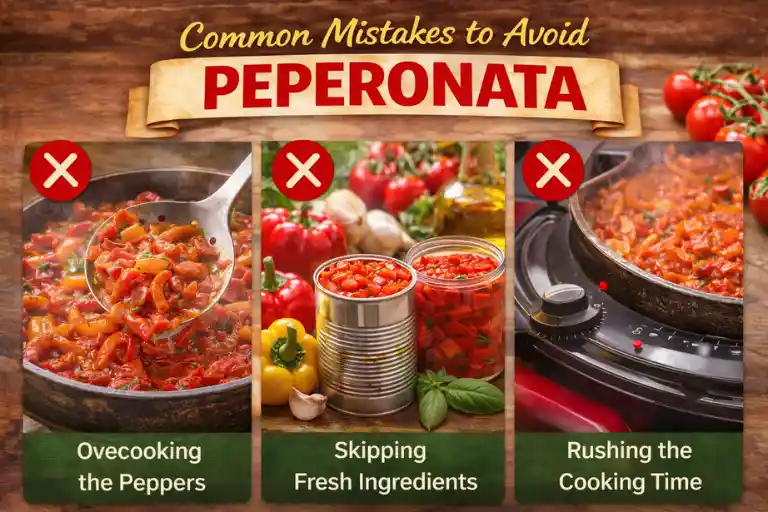
Even though an Italian peperonata recipe is simple, a few small mistakes can affect the final flavor and texture. Avoiding these common issues will help you prepare a delicious and authentic peperonata.
Cooking Peppers Too Fast
One of the biggest mistakes is cooking the bell peppers at very high heat. This can burn the vegetables instead of allowing them to soften. Italian peperonata should be cooked slowly so the peppers and onions become sweet and tender.
Adding Too Much Tomato
While tomatoes are an important part of the peperonata recipe, adding too much can overpower the flavor of the bell peppers. The peppers should remain the main ingredient in this Italian vegetable stew.
Under Seasoning
Another common mistake is not adding enough salt, pepper, or herbs. Proper seasoning helps balance the sweetness of the peppers and the acidity of the tomatoes, giving the dish its classic Mediterranean taste.
How to Store, Freeze, and Reheat Peperonata
One advantage of making Italian peperonata is that it stores very well. In fact, the flavors often become even better after a day, making it perfect for meal preparation.
Refrigeration
Allow the peperonata to cool completely before storing it. Place it in an airtight container and keep it in the refrigerator. Properly stored authentic peperonata can last for about 3–4 days.
Freezing Tips
If you want to keep your Italian pepper stew longer, you can freeze it. Place the cooled peperonata in freezer-safe containers or bags. It can usually be stored in the freezer for up to 2–3 months without losing its flavor.
Reheating Methods
To reheat peperonata, warm it slowly in a pan over low heat. You can add a small splash of water or olive oil if the sauce becomes too thick. It can also be reheated in the microwave for convenience. Slow reheating helps maintain the rich texture and flavor of the peppers and tomatoes.
Is Peperonata Healthy
Yes, Italian peperonata is considered a healthy Mediterranean vegetable dish because it is made mainly with fresh vegetables and olive oil. A traditional Italian peperonata recipe includes bell peppers, onions, tomatoes, garlic, and herbs, which provide many important nutrients for the body.
Vegetable Nutrients
The main ingredient in authentic peperonata is bell peppers, which are rich in vitamin C, vitamin A, and antioxidants. Tomatoes also provide nutrients like lycopene, which is known for its health benefits. Together, these vegetables make Italian pepper stew both flavorful and nutritious.
Mediterranean Diet Benefits
Because peperonata uses ingredients like olive oil, fresh vegetables, and herbs, it fits perfectly into the Mediterranean diet. This style of eating is known for supporting heart health, improving digestion, and promoting overall wellness.
Low Calorie Dish
Another reason people enjoy an easy Italian peperonata recipe is that it is naturally low in calories while still being satisfying. Since the dish is mostly vegetables, it can be enjoyed as a healthy side dish, a topping for whole-grain bread, or a light meal.
Italian Peperonata Nutrition Facts
The exact nutrition of Italian peperonata can vary depending on the ingredients used, but it is generally a light and nutritious Mediterranean vegetable dish. Below is an estimated nutrition breakdown for one serving of authentic peperonata.
| Nutrient | Approximate Amount |
| Calories | 120–150 calories |
| Fiber | 3–4 grams |
| Vitamin C | High (mainly from bell peppers) |
Calories
A serving of Italian peperonata recipe usually contains around 120–150 calories, depending on how much olive oil is used.
Fiber
The bell peppers and onions provide dietary fiber, which helps support digestion and keeps you feeling full.
Vitamin C
Bell peppers are one of the best natural sources of vitamin C, making peperonata a nutritious choice in Mediterranean cuisine.
Cost of Making Peperonata at Home
One great advantage of preparing an Italian peperonata recipe is that it is very budget-friendly. Since the dish is made mostly with vegetables, it is an affordable way to enjoy a flavorful Mediterranean vegetable stew at home.
Peppers
The main cost comes from the bell peppers, which are the key ingredient in authentic peperonata. Depending on the season and location, peppers are usually inexpensive and easy to find.
Tomatoes
Fresh tomatoes or tomato sauce are another important part of the peperonata recipe. These are generally affordable and widely available in grocery stores.
Olive Oil
While extra virgin olive oil may cost a little more than other oils, only a small amount is needed for this Italian pepper stew. Using good olive oil improves both the flavor and quality of the dish.
Overall, making Italian peperonata at home is an economical way to enjoy a classic Italian vegetable dish that is both delicious and healthy.
FAQs About Italian Peperonata
Here are some common questions people ask about Italian peperonata. These answers will help you understand this traditional Italian pepper stew and how to prepare and serve it properly.
What is peperonata made of?
A classic Italian peperonata recipe is made with simple Mediterranean ingredients such as bell peppers, onions, tomatoes, garlic, and olive oil. These vegetables are slowly cooked together until they become soft and flavorful. Many authentic peperonata recipes also include fresh herbs like basil and sometimes a small splash of vinegar for balance.
Can peperonata be frozen?
Yes, peperonata freezes very well. After cooking your Italian pepper stew, allow it to cool completely before placing it in an airtight container or freezer-safe bag. Properly stored authentic peperonata can last in the freezer for about 2–3 months. When ready to use, simply thaw and reheat slowly on the stove.
Is peperonata served hot or cold?
One of the great things about Italian peperonata is that it can be served both hot and cold. Many people enjoy it warm as a side dish with grilled meat or pasta, while others prefer it at room temperature as part of an antipasto platter. The flavors of this Mediterranean vegetable dish often become even better after resting.
What peppers are best for peperonata?
The best peppers for an easy Italian peperonata recipe are red and yellow bell peppers. These peppers are naturally sweet and create the rich flavor that makes authentic peperonata so delicious. Some cooks also add orange peppers for extra color, but green peppers are usually avoided because they can taste slightly bitter compared to ripe bell peppers.
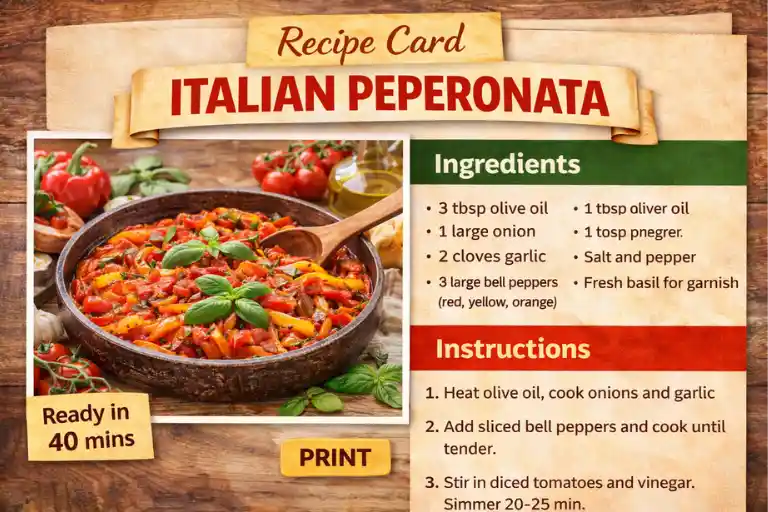
Recipe Card – Italian Peperonata
Course: Italian Peperonata RecipeCuisine: ItalianDifficulty: Easy / Beginner04
servings15
minutes25
minutes40
minutesIngredients
3 large bell peppers (red and yellow), sliced
1 large onion, thinly sliced
2 cloves garlic, minced
2 medium tomatoes or 1 cup tomato sauce
3 tablespoons extra virgin olive oil
1 tablespoon fresh basil, chopped
Salt and black pepper to taste
Optional: 1 teaspoon vinegar for extra flavor
Directions
- Prepare the vegetables
Wash and slice the bell peppers into thin strips. Slice the onion and mince the garlic. Chop the tomatoes if using fresh ones. - Cook the onions
Heat olive oil in a large pan over medium heat. Add the sliced onions and cook until they become soft and slightly golden. - Add the peppers
Add the sliced bell peppers to the pan and cook for several minutes, stirring gently until they begin to soften. - Add tomatoes and seasonings
Stir in the tomatoes or tomato sauce, garlic, salt, and black pepper. - Simmer slowly
Reduce the heat and allow the mixture to simmer for 20–30 minutes, stirring occasionally. The peppers and onions should become soft and the sauce slightly thick. - Finish with herbs
Add fresh basil and a small splash of vinegar if desired. Stir well and serve your authentic Italian peperonata warm or at room temperature.
Recipe Video
Final Tips for Making Perfect Italian Peperonata
To make the best Italian peperonata recipe, remember that slow cooking is the key to rich flavor. Allow the bell peppers, onions, and tomatoes to cook gently so they become soft and naturally sweet. Always use good-quality olive oil, since it plays an important role in the taste of this Mediterranean vegetable dish.
For serving ideas, Italian peperonata can be enjoyed with crusty bread, grilled chicken, roasted fish, or pasta. It also works beautifully as a topping for bruschetta or sandwiches. Whether served warm or at room temperature, this traditional Italian pepper stew is a simple and delicious way to enjoy fresh vegetables with classic Mediterranean flavor.