
Making crispy French fries at home sounds easy, but most people end up with fries that are soft, soggy, or greasy. The secret that restaurants use—and home cooks often miss—is double fried French fries. This simple technique changes everything. By frying the potatoes twice at different temperatures, you get fries that are crispy on the outside and fluffy on the inside every single time.
In this complete guide, you’ll learn what double fried French fries are, why frying fries twice works, and how to double fry French fries at home without stress. We’ll break down the science behind double frying, share a foolproof step-by-step method, and fix common mistakes like fries not getting crispy. If you want restaurant-style French fries that stay crunchy longer, this guide is exactly what you need.
Quick Answer – What Are Double Fried French Fries?
Double fried French fries are fries that are cooked in oil two times at different temperatures to create the perfect texture. The first fry cooks the potato inside at a lower heat, while the second fry makes the outside crispy and golden.
Unlike single frying, where potatoes are cooked only once, double frying separates the cooking process—first for softness, then for crunch. This is why crispy French fries from restaurants stay firm outside but fluffy inside.
Restaurants use this method because it delivers consistent results, reduces sogginess, and creates that classic restaurant-style French fries texture that customers love. It also helps control moisture evaporation and starch release, which are key for achieving extra crisp fries every time.
Why Are French Fries Fried Twice? (Simple Science That Matters)
The secret behind double fried French fries is not just cooking—it’s food science made simple. Frying potatoes twice helps control how heat, moisture, and starch behave inside the potato. This is what turns ordinary fries into crispy restaurant-style French fries with a fluffy center and golden crust.
Moisture Evaporation & Steam Release
When potatoes hit hot oil for the first time, their internal water turns into steam. This steam slowly escapes, drying the inside of the fry. The more moisture you remove in this stage, the better your fries will crisp later. This is why the first fry is done at a lower temperature—it gently cooks the inside without burning the outside.
Starch Gelatinization & Crust Formation
As heat breaks down starch inside the potato, it turns into a soft gel-like texture called gelatinization. During cooling and the second fry, this starch hardens on the outside, forming a crispy golden crust that locks in texture and flavor.
First Fry vs Second Fry (What Each Stage Does)
The first fry (low heat) cooks the potato through and softens the inside. The second fry (high heat) is where the magic happens—it creates the crispy outer layer. Together, they ensure fries are never raw inside or soggy outside.
Oil Absorption Myths (Why Fries Aren’t Greasy)
Many people think double frying makes fries oily, but the opposite is true. Proper oil temperature control actually reduces oil absorption. When fries are hot enough, they quickly seal on the outside, preventing excess oil from entering. That’s why well-made double fried fries feel light, not greasy.
Ingredients & Equipment (And Why Each One Matters)

You might also like: How to Make Cuban White Rice
To make perfect double fried French fries, every ingredient and tool plays an important role. Choosing the right setup helps you get crispy fries on the outside and fluffy inside, just like restaurants.
Best Potatoes for Double Fried Fries
Not all potatoes work the same. The type you choose directly affects texture.
- Russet Potatoes (Best Choice): High starch, low moisture. This creates the crispiest restaurant-style French fries.
- Yukon Gold: Slightly creamy texture, but less crispy than russets.
- Frozen Fries: Convenient, but they already contain partial processing, so the final crispness depends on frying technique.
For best results, always choose russet potatoes for homemade double fried fries.
Best Oils for Double Frying
Oil choice affects both flavor and crispiness.
- Peanut Oil: High smoke point, clean taste, very popular in restaurants.
- Canola Oil: Neutral flavor, budget-friendly, good for home cooking.
- Sunflower Oil: Light texture, works well for frying at high heat.
Always use oil with a high smoke point to avoid burning and maintain crisp fries.
Essential Tools
You don’t need fancy equipment, but the right tools make frying safer and easier:
- Thermometer: Helps control oil temperature for both frying stages
- Dutch Oven / Deep Pot: Keeps heat stable for even frying
- Spider Strainer or Slotted Spoon: For safely removing fries from hot oil
Foolproof Step-by-Step Double Fried French Fries Recipe
This is the core method for making crispy, golden, and fluffy fries every time.

Step 1 – Cut, Rinse & Soak (Remove Excess Starch)
Cut potatoes into even sticks. Rinse them in cold water until water runs clear. Then soak for at least 30 minutes. This removes extra starch, which helps prevent sticking and ensures crispy fries.
Step 2 – Drying Fries Properly (Often Skipped – NEW)
After soaking, dry the potatoes completely using a clean towel. Any moisture left behind can cause oil splatter and soggy fries. Drying is a small step, but very important for crisp results.
Step 3 – First Fry (Low Temperature Breakdown)
Heat oil to a lower temperature (around 140–160°C). Fry potatoes in small batches until soft but not browned. This stage cooks the inside and builds the base for double fried French fries texture.
Step 4 – Resting & Cooling Phase (CRITICAL & Underrated)
Remove fries and let them cool completely. This resting time allows moisture to escape and starch to set. Many people skip this step, but it is the secret behind ultra crispy fries.
Step 5 – Second Fry (High Heat for Maximum Crispiness)
Increase oil temperature to 180–190°C. Fry the potatoes again until golden and crispy. This step creates the signature crispy outer crust of restaurant-style fries.
Step 6 – Seasoning at the Right Time
Always season immediately after the second fry while fries are hot. This helps salt stick properly and enhances flavor without making fries soggy.
Exact Oil Temperature Guide (No Guesswork)
Getting the right oil temperature is one of the most important parts of making double fried French fries. Even a small mistake can turn crispy fries into soggy ones. Use this simple guide for perfect results every time.
| Fry Stage | Temperature | Purpose |
| First Fry | 140–160°C (285–320°F) | Cooks the inside gently without browning |
| Second Fry | 180–190°C (355–375°F) | Creates a crispy, golden outer crust |
Keeping steady heat is the secret behind crispy restaurant-style French fries. If oil is too cold, fries absorb oil. If too hot, they burn before cooking inside.
Why Your Fries Aren’t Crispy (And How to Fix Them)
If your fries are not turning out crispy, you’re probably making one of these common mistakes. Fixing them will instantly improve your double fried fries results.
- Fries turn soggy quickly: You didn’t remove enough moisture or skipped drying after soaking.
- Fries brown too fast but stay soft: Oil is too hot during the first fry.
- Fries absorb too much oil: Temperature is too low, causing excess oil penetration.
- Fries taste greasy: You may have overcrowded the fryer or reused old oil.
- Overcrowding the fryer: Too many fries at once lower the oil temperature and ruin crispiness.
The key is temperature control + small batches + proper resting for perfect fries every time.
Pro Restaurant Secrets for Ultra-Crispy Fries
Restaurants don’t just fry better—they follow smart systems that guarantee consistent crispy French fries every time. Here are their hidden tricks:
- Batch frying techniques: Fries are always cooked in small batches to maintain stable oil temperature.
- Why resting time matters: After the first fry, fries are cooled so moisture can escape, making the second fry extra crisp.
- Freezing between fries (restaurant trick): Some kitchens freeze par-fried fries to lock structure and improve crunch after the second fry.
- When to salt fries for best texture: Always salt immediately after the second fry while fries are hot so seasoning sticks properly.
These simple restaurant secrets are what make double fried French fries taste so addictive and perfectly crisp.
Double Fried Fries vs Other Frying Methods
Not all cooking methods give the same results. When it comes to crispy French fries, the difference between techniques is huge. Here’s how double fried French fries compare with other popular methods.
Single Fry vs Double Fry
- Single Fry: Fries are cooked once, which is faster but often leaves them soft or uneven inside.
- Double Fry: Fries are cooked in two stages, giving a crispy outer layer and fluffy inside every time.
Double frying clearly wins for restaurant-style French fries and long-lasting crispiness.
Frozen Fries vs Fresh Fries
- Frozen Fries: Convenient and pre-processed, but often less flavorful and slightly less crispy.
- Fresh Fries: Require prep but give better control over texture and crispness.
For best results, fresh potatoes + double frying is the winning combo.
Oven Fries vs Double Fried Fries
- Oven Fries: Healthier, but usually dry or less crispy.
- Double Fried Fries: Deep fried for maximum crunch and golden color.
If you want real crispy French fries, oven baking cannot match frying.
Air Fryer vs Deep Fryer Fries
- Air Fryer: Uses little oil, but texture is lighter and less crunchy.
- Deep Fryer: Delivers full crispiness and classic French fry texture.
For authentic taste, deep frying with double fry method is best.
Can You Double Fry Fries at Home Without a Deep Fryer?
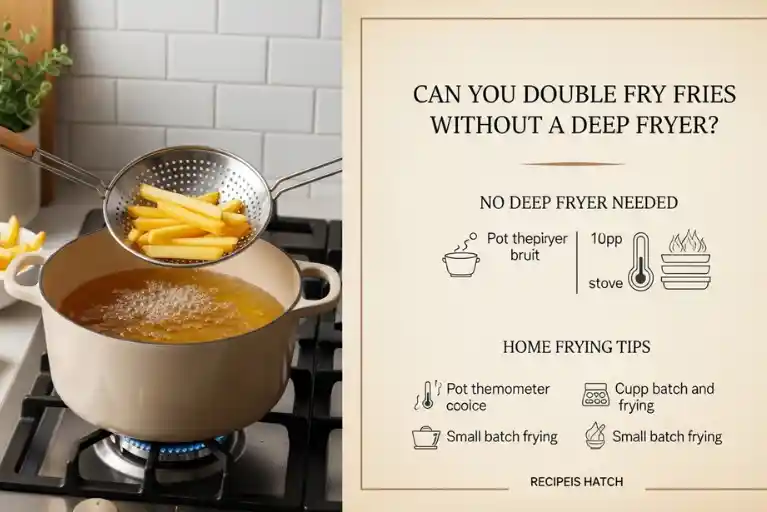
Yes, you can easily make double fried French fries at home without special restaurant equipment. The key is controlling heat and working in small batches.
Using a Dutch Oven
A heavy pot like a Dutch oven holds heat well and works just like a deep fryer. Fill it with enough oil to fully submerge the fries for even cooking.
Frying Without a Thermometer
If you don’t have a thermometer, you can test oil by dropping a small piece of potato:
- If it bubbles gently → first fry temperature
- If it bubbles rapidly → second fry temperature
Small-Batch Frying Tips
- Never overcrowd the pot
- Fry in small batches for even crisping
- Let oil recover temperature between batches
These simple steps help you achieve crispy fries at home without professional tools.
Make-Ahead, Storage & Reheating Tips
One advantage of double fried fries is that you can prepare them ahead of time and still keep them crispy when needed.
Can You Double Fry in Advance?
Yes. You can complete the first fry, let fries cool, and store them. The second fry can be done just before serving for fresh crispiness.
Best Way to Store Fries After First Fry
- Let fries cool completely
- Store in an airtight container
- Refrigerate for up to 2–3 days
This keeps the structure intact for the final fry.
How to Reheat Without Losing Crispiness
- Re-fry briefly at high heat for best results
- Avoid microwaving (it makes fries soft)
- Oven reheating works but won’t be as crispy as frying
The second fry is what brings back the crispy restaurant-style texture, even after storage.
FAQs About Double Fried French Fries Recipe
Can you double fry frozen fries?
Yes, you can use frozen fries for double frying. In fact, many restaurants do this. However, for best results, let them thaw slightly before the first fry so they cook evenly. Fresh potatoes still give a more crispy French fries texture, but frozen fries are a quick option.
How long should fries rest between fries?
After the first fry, fries should rest for about 20–30 minutes at room temperature. This cooling phase allows moisture to escape and helps the fries firm up. This step is very important for achieving crispy double fried French fries.
Why do fries lose crispiness over time?
Fries lose crispiness because of moisture absorption. As they sit, steam builds up inside and softens the outer crust. To avoid this, always serve fries immediately after the second fry and avoid covering them tightly.
Can you reuse frying oil?
Yes, frying oil can be reused 2–3 times if it is properly strained and stored. However, avoid reusing oil that smells burnt or looks dark, as it can affect the flavor and crispiness of your double fried fries.
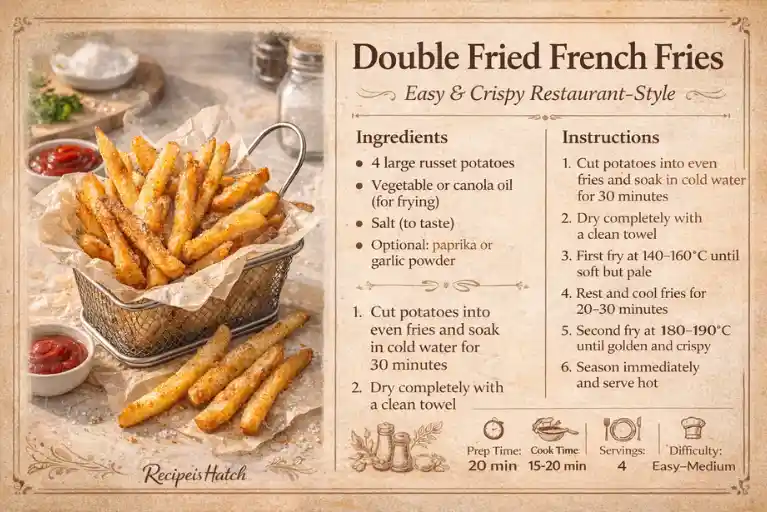
Recipe Card — Double Fried French Fries (Crispy Restaurant-Style Fries)
Course: Side Dish, SnackCuisine: American, French Bistro StyleDifficulty: Easy to Medium4
servings40
minutes15
minutes300
kcalMake perfect double fried French fries at home with this easy foolproof method. Learn the exact temperatures, resting time, and secret restaurant technique to get crispy golden fries with a fluffy inside every time. This guide covers step-by-step frying, common mistakes, and pro tips for restaurant-style results.
Ingredients
Russet potatoes (best for crispiness)
High smoke point oil (peanut, canola, or sunflower oil)
Salt (to taste)
- Equipment
Deep pot or Dutch oven
Thermometer (recommended)
Spider strainer or slotted spoon
Paper towels
Instructions
- Prepare Potatoes
Cut into even sticks. Rinse well and soak in cold water for 30 minutes to remove excess starch. - Dry Completely
Pat potatoes dry thoroughly to avoid oil splatter and soggy fries. - First Fry (Low Temperature)
Heat oil to 140–160°C. Fry until potatoes are soft but not browned. - Rest Fries
Let fries cool for 20–30 minutes. This step is key for crisp texture. - Second Fry (High Temperature)
Heat oil to 180–190°C. Fry again until golden and crispy. - Season & Serve
Salt immediately after frying and serve hot for best crunch.
Recipe Video
Notes
- Never overcrowd the pan
- Always maintain oil temperature
- Double fry gives better crispiness than single fry
- Serve immediately for best texture
- This double fried French fries recipe guarantees crispy outside, fluffy inside fries just like your favorite restaurant—simple, reliable, and foolproof.
Final Verdict – Is Double Frying Worth It?
Double frying is absolutely worth it if you want crispy, golden, restaurant-style French fries at home. It may take a little extra time, but the difference in texture is huge compared to single frying.
When Double Frying Is Best
- When you want extra crispy fries
- For serving guests or special meals
- When recreating restaurant-quality food at home
Who Should Use This Method
- Home cooks who struggle with soggy fries
- Food lovers who want perfect texture every time
- Anyone aiming for crispy French fries with fluffy inside
Final Expert Takeaway
The secret is simple: first fry cooks the inside, second fry creates the crunch. Once you master timing, temperature, and resting, you can make perfect double fried French fries every single time—just like your favorite restaurant.