
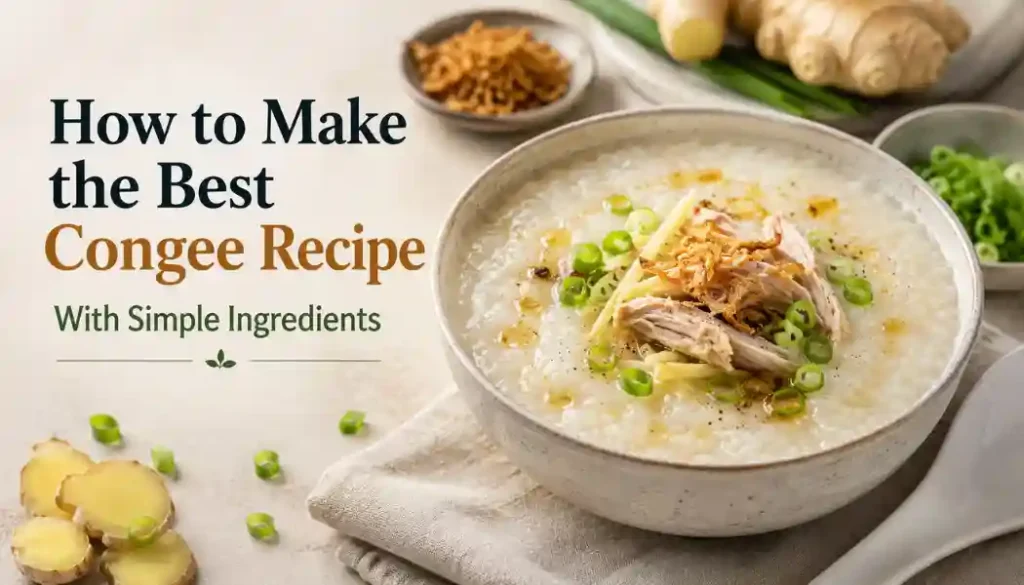
There’s a reason this congee recipe has been loved across Asia for generations. Also known as Chinese rice porridge, congee transforms simple pantry ingredients into a warm, creamy, and comforting meal that’s perfect for breakfast, lunch, dinner, or whenever you need something nourishing. Whether you’re making homemade congee for the first time or looking for an easy congee recipe with a silky texture, this guide will walk you through every step with confidence.
This authentic congee recipe uses white rice, fresh ginger, and a simple broth to create a smooth, flavorful bowl that’s easy to customize. You can enjoy it as a classic savory rice porridge, turn it into chicken congee, or add your favorite toppings for extra flavor. Along the way, you’ll learn the best rice for congee, the ideal rice-to-water ratio, expert cooking tips, and simple troubleshooting advice. By the end, you’ll know exactly how to make congee that’s creamy, comforting, and just as satisfying as your favorite restaurant version.
Quick Answer
Congee is a Chinese rice porridge made by simmering white rice with water or chicken broth until the grains break down into a smooth, creamy texture. It’s simple to make, easy to digest, and perfect for breakfast, a light dinner, or when you’re feeling under the weather.
This easy congee recipe takes basic ingredients and turns them into a comforting meal. You can enjoy it plain or customize it with shredded chicken, ground pork, vegetables, eggs, or your favorite toppings. Once you learn how to make congee, you’ll have a versatile recipe you’ll want to make again and again.
Why You’ll Love This Congee Recipe
- Easy to make with simple pantry ingredients.
- Creates a silky, creamy texture without cream.
- Perfect for breakfast, lunch, or dinner.
- Easy to customize with different proteins and vegetables.
- Great for meal prep because it stores well.
- Budget-friendly and made in one pot.
- Naturally comforting, nourishing, and filling.
- Beginner-friendly with easy-to-follow steps.
Whether you prefer a classic bowl or a hearty chicken congee, this recipe is flexible enough to suit your taste.
What Is Congee?
Congee is a traditional Chinese rice porridge made by cooking rice with plenty of liquid over low heat. As the rice slowly cooks, it releases starch, creating its signature creamy and silky consistency.
Many Asian countries have their own version of rice porridge, but Chinese congee is especially popular because it’s easy to customize. Some people enjoy it plain with simple seasonings, while others add chicken, pork, seafood, mushrooms, or vegetables. Its mild flavor makes it a comforting meal that’s easy to enjoy any time of day.
Congee vs Rice Porridge: Is There a Difference?
All congee is rice porridge, but not every rice porridge is traditional Chinese congee. The biggest difference is the cooking method and texture.
Congee cooks much longer with a higher rice-to-water ratio, allowing the grains to soften and almost melt into the broth. Other rice porridges may keep more texture and use different ingredients or seasonings. If you’re looking for a smooth, comforting bowl with a rich consistency, authentic congee is the perfect choice.
Ingredients You’ll Need

Main Ingredients
- White or jasmine rice
- Chicken broth or water
- Fresh ginger
- Garlic
- Salt
- White pepper
- Sesame oil
- Green onions or scallions
Optional Toppings
- Shredded chicken
- Crispy shallots
- Soft-boiled egg
- Cilantro
- Soy sauce
- Chili oil
- Cooked mushrooms
- Bok choy
These simple ingredients create a flavorful homemade congee that you can customize in many ways.
Best Rice for Congee
The best rice for congee is usually jasmine rice because it creates a fragrant and creamy bowl. Medium-grain rice also works well thanks to its higher starch content.
Long-grain white rice is another good option if that’s what you have at home. Avoid instant rice because it cooks too quickly and won’t develop the rich, silky texture that makes homemade congee so satisfying.
The Perfect Rice-to-Water Ratio
The right rice-to-water ratio for congee depends on how thick or thin you like it. A good starting point is 1 cup of rice to 8–10 cups of liquid.
Use more liquid if you enjoy a thinner consistency or slightly less if you prefer a thicker bowl. Remember that congee continues to thicken as it cools, so you can always stir in extra broth or hot water before serving.
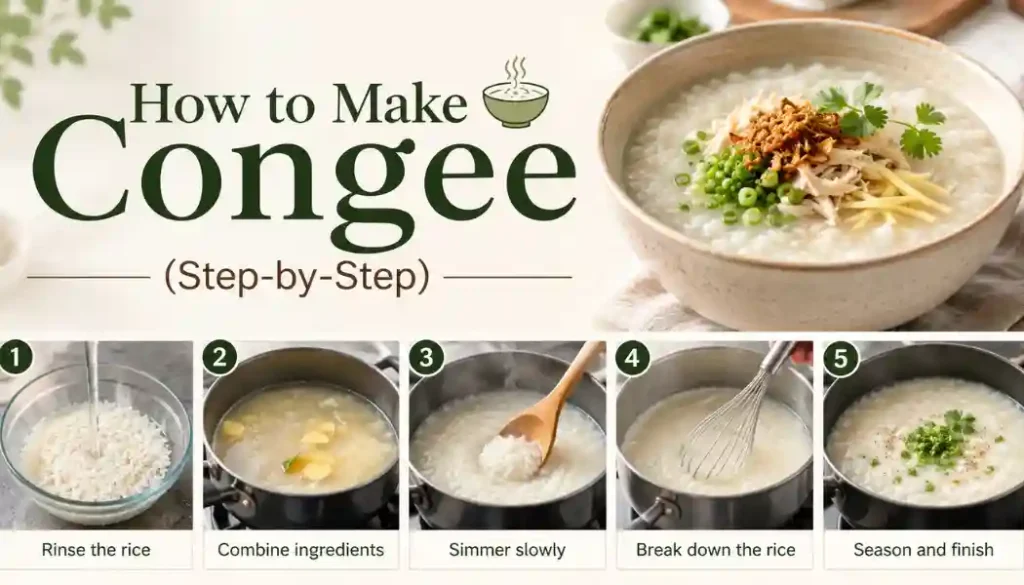
How to Make Congee (Step-by-Step)
Step 1: Rinse the Rice
Wash the rice under cold water until the water runs mostly clear. This removes excess starch from the surface while keeping enough inside for a creamy texture.
Step 2: Combine the Ingredients
Add the rice, chicken broth, ginger, garlic, and salt to a large pot. Bring everything to a gentle boil.
Step 3: Simmer Slowly
Reduce the heat to low and let the congee simmer gently for about 60 to 90 minutes. Stir every 10 to 15 minutes to keep the rice from sticking.
Step 4: Break Down the Rice
As the rice softens, stir or lightly whisk the mixture to help break the grains apart. This creates the signature silky congee texture.
Step 5: Season and Finish
Taste the congee and adjust with soy sauce, white pepper, or a little sesame oil. Add your favorite toppings and serve hot.
How to Know When Congee Is Done
The best congee should have a smooth, creamy consistency with very soft rice grains. Most of the rice should naturally break apart while stirring.
If the mixture still looks like cooked rice in broth, continue simmering for another 10 to 15 minutes. If it becomes too thick, simply add a little hot broth or water until you reach your preferred texture.
Best Toppings for Congee
Toppings add flavor, texture, and color to every bowl. Some of the most popular choices include green onions, crispy shallots, soy sauce, sesame oil, fresh cilantro, soft-boiled eggs, shredded chicken, cooked pork, mushrooms, or chili oil.
Mix and match toppings to create your favorite combination. Fresh herbs add brightness, while crispy toppings bring a satisfying crunch that pairs perfectly with the creamy rice porridge.
Easy Ways to Customize Your Congee
Chicken
Add cooked shredded chicken or poached chicken breasts for a classic chicken congee that’s hearty and comforting.
Pork
Stir in seasoned ground pork or thin pork slices during the final minutes of cooking for extra richness.
Seafood
Shrimp, fish, or scallops cook quickly and add a delicate seafood flavor that pairs well with ginger.
Vegetarian
Replace chicken broth with vegetable broth and add mushrooms, spinach, carrots, or bok choy for a delicious meat-free meal.
Vegan
Use vegetable broth and top the congee with tofu, sesame oil, roasted vegetables, and fresh herbs for a satisfying vegan version.
Expert Tips for Silky, Creamy Congee
Cook the rice slowly over low heat instead of rushing the process. Gentle simmering allows the starch to create the smooth texture that makes authentic congee so comforting.
Stir regularly, especially during the final stages of cooking, and don’t be afraid to add extra broth if the mixture becomes too thick. Fresh ginger, a splash of sesame oil, and quality broth also make a noticeable difference in flavor.
Common Mistakes to Avoid
Using too little liquid is one of the biggest mistakes when making congee. Without enough broth or water, the rice won’t fully break down into a creamy consistency.
Cooking over high heat, skipping regular stirring, or seasoning too early can also affect the final result. Instead, cook slowly, stir often, and adjust the seasoning once the congee reaches its ideal texture.
How to Fix Congee That’s Too Thick or Too Thin
If your congee becomes too thick, stir in hot water or warm broth a little at a time until it reaches the consistency you like.
If it’s too thin, continue simmering uncovered while stirring occasionally. The extra cooking time allows more liquid to evaporate and naturally thickens the rice porridge without changing its flavor.
What to Serve with Congee

Congee pairs well with many savory side dishes. Try serving it with dumplings, steamed vegetables, stir-fried greens, crispy tofu, roasted chicken, or simple pickled vegetables.
For breakfast, enjoy it with a soft-boiled egg and fresh scallions. These simple additions turn a humble bowl of Chinese rice porridge into a satisfying and complete meal.
How to Store and Reheat Congee
Allow leftover homemade congee to cool before transferring it to an airtight container. Store it in the refrigerator for up to four days.
To reheat, warm it gently on the stovetop or in the microwave while stirring in a little broth or water. This helps restore the smooth, creamy consistency that naturally thickens during storage.
Can You Freeze Congee?
Yes. Congee freezes very well, making it perfect for meal prep. Let it cool completely before placing it into freezer-safe containers or individual portions.
Freeze for up to three months. Thaw overnight in the refrigerator and reheat with extra broth or water until the congee becomes creamy again.
Frequently Asked Questions
Can I use leftover rice?
Yes. Leftover cooked rice cooks much faster and is a great shortcut for making easy homemade congee.
Can I make congee in an Instant Pot?
Absolutely. An Instant Pot speeds up the cooking process while still creating a smooth and creamy texture.
Can I make it in a slow cooker?
Yes. Combine the ingredients and cook on low for several hours until the rice becomes soft and creamy.
Is congee healthy?
Yes. Congee is made with simple ingredients and can be packed with lean protein and vegetables for a balanced meal.
Can I make it ahead?
Definitely. In fact, many people think homemade congee tastes even better the next day after the flavors have had more time to develop.
Final Thoughts
This congee recipe proves that a few simple ingredients can create a meal that’s both comforting and satisfying. Whether you enjoy it plain or turn it into a hearty chicken congee, this Chinese rice porridge is easy to customize with your favorite proteins, vegetables, and toppings. Once you learn the right rice-to-water ratio and a few simple techniques, you’ll be able to make homemade congee with a smooth, creamy texture every time.
Serve it for breakfast, lunch, or dinner, and don’t be afraid to make extra for easy meals throughout the week. We hope this easy congee recipe becomes one of your go-to comfort foods. If you try it, share your favorite toppings or cooking tips in the comments—we’d love to hear how you make this classic dish your own!