
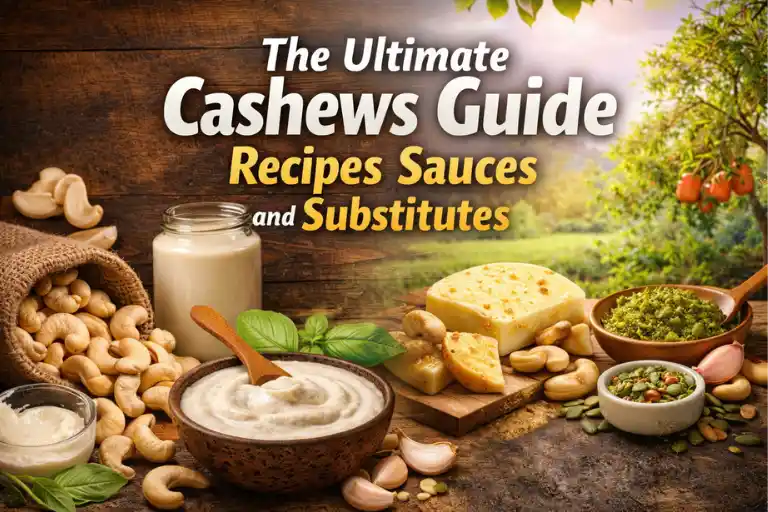
Cashews are more than just a tasty snack. These creamy cashew nuts come from the tropical cashew tree (Anacardium occidentale) and are enjoyed around the world for their rich flavor and smooth texture. Many people search for cashew nutrition, health benefits of cashews, and whether cashews are healthy for daily eating. Others look for cashew recipes, cashew cream, or the best cashew substitutes for sauces and vegan cheese.
In this complete guide, you’ll learn how cashews grow, their full nutrition facts, and how they support heart health and weight management. We’ll also explore smart buying tips, storage advice, and the best substitute for cashews in recipes, including nut-free options. Whether you want better health, smarter cooking, or practical alternatives, this guide gives you everything in one clear, easy-to-read place.
Are Cashews Healthy? (Quick Summary)
60-Second Answer
Yes, cashews are healthy when eaten in the right amount. They are rich in healthy fats, plant-based protein, and important minerals like magnesium, copper, and zinc. Many studies show that the health benefits of cashews include better heart health, improved cholesterol levels, and support for blood sugar control. If you’re wondering, “Are cashews good for you?” — the short answer is yes, especially when you choose raw or dry roasted cashews without added salt.
Main Benefits
- Support heart and cholesterol health
- Provide plant-based protein in cashews
- Rich in antioxidants and plant compounds
- Help with weight management when eaten in moderation
- Support bone strength due to magnesium
- May improve brain function and energy levels
Because of their healthy fat profile, many nutrition experts recommend adding cashew nuts to a balanced diet.
Potential Downsides
Even though cashew nutrition is impressive, there are a few things to consider:
- High in calories (can lead to weight gain if overeaten)
- Salted varieties increase sodium intake
- May trigger cashew allergies
- Contain oxalates (concern for kidney stone risk in some people)
Who Should Avoid Them
- People with tree nut allergies
- Those on very low-calorie diets
- Individuals sensitive to oxalates
Recommended Daily Intake
Most experts suggest about 1 ounce (18–20 cashews per day). This amount delivers the benefits of eating cashews daily without excess calories.
WHAT ARE CASHEWS REALLY?
You might also like: The Best Upside Down Caramelized Leek Tart Recipe
What Are Cashews?
The cashew tree, scientifically known as Anacardium occidentale, is a tropical evergreen tree native to Brazil. Today, it grows widely in Asia and Africa.
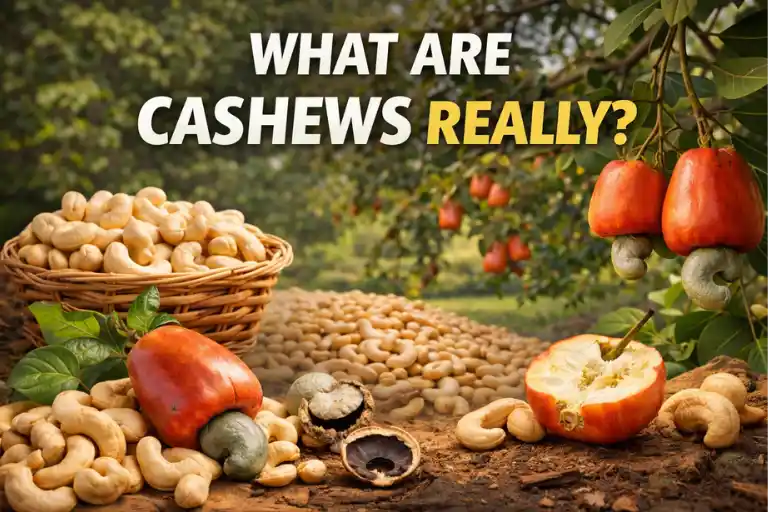
Cashew Apple vs Cashew Nut
Many people don’t realize that the cashew nut grows attached to a colorful fruit called the cashew apple. The apple is juicy and edible, while the nut hangs underneath it in a hard shell. The part we eat is actually the seed inside that shell.
Are Cashews Actually Nuts?
Technically, cashews are seeds, not true nuts. However, in cooking and nutrition discussions, they are grouped with other tree nuts like almonds and walnuts.
This is why you’ll often see comparisons like cashews vs almonds or discussions about whether cashews are keto-friendly.
Why “Raw” Cashews Aren’t Truly Raw (Major Gap)
Here’s something most websites don’t clearly explain:
Raw cashews are not really raw. In nature, cashew shells contain a toxic oil called urushiol (the same compound found in poison ivy).
Because of this, cashews must be steamed or roasted to remove the toxin before they are safe to eat. So when you buy “raw cashews,” they have actually been heat-processed — just not roasted for flavor.
How Cashews Grow (From Tree to Table)
Flower → Apple → Nut
The process begins with small pink flowers on the cashew tree. After pollination:
- The flower develops into a swollen fruit (the cashew apple).
- The actual nut forms outside the fruit.
- Each apple produces only one cashew nut.
Toxic Shell Oil (Urushiol)
The hard shell around the nut contains urushiol, which can cause skin irritation. Because of this:
- Workers must carefully handle cashews
- The shell must be removed through heating
- Proper processing is essential for safety
Processing Stages
The journey from farm to kitchen includes:
- Harvesting
- Drying
- Steaming or roasting
- Shell cracking
- Peeling
- Grading and packaging
This long process explains why cashews are expensive compared to peanuts.
Why Are Cashews Expensive?
There are several reasons:
- Each nut must be hand-processed
- Only one nut grows per fruit
- Labor-intensive shell removal
- Global transportation costs
- Careful grading and sorting
Because of this detailed process, cashew production countries like India and Vietnam invest significant labor into harvesting and processing.
Where Are Cashews Grown?
Cashews grow best in warm, tropical regions. The cashew tree (Anacardium occidentale) needs heat, sunlight, and well-drained soil to thrive.
Top Producing Countries
Today, major cashew production countries include:
- Vietnam
- India
- Côte d’Ivoire
- Nigeria
- Brazil
Vietnam and India are among the largest exporters of processed cashew nuts worldwide.
Climate Requirements
The cashew tree prefers:
- Temperatures between 20–35°C
- Dry seasons for harvesting
- Sandy or well-drained soil
- Tropical or subtropical climates
Because each tree produces only one nut per fruit, large plantations are needed to meet global demand.
Production Statistics
Millions of tons of cashews are produced every year. However, after shelling and processing, the usable edible portion is much smaller. This limited yield contributes to why cashews are expensive compared to other nuts like peanuts.
Environmental & Ethical Concerns
As demand for cashew nutrition and plant-based foods grows, sustainability has become more important.
Labor Conditions
Shelling cashews is labor-intensive. Workers must remove the shell carefully because it contains urushiol, a toxic oil. In some regions, labor practices have raised concerns about fair wages and safe working conditions.
Fair Trade
Buying fair trade cashews supports:
- Better wages
- Safer working environments
- Ethical sourcing
Look for certified labels when purchasing organic cashews or bulk cashews.
Environmental Impact
Large-scale farming can affect soil quality and water use. Sustainable farming practices help reduce environmental damage and improve long-term production.
How to Buy Responsibly
To make better choices:
- Choose fair trade or certified products
- Buy from transparent brands
- Consider organic cashews
- Avoid heavily processed or overly salted varieties
Responsible buying supports both health and sustainability.
Cashew Nutrition Facts
Understanding cashew nutrition facts helps answer the common question: “Are cashews healthy?” Here’s a simplified breakdown per 1 ounce (about 18–20 cashews):
Calories
- Around 155–160 calories
- Energy-dense but nutrient-rich
Protein
- About 5 grams of protein in cashews
- Good plant-based protein source
Fats (MUFA vs PUFA)
Cashews contain mostly healthy fats:
- Monounsaturated fats (MUFA) – support heart health
- Polyunsaturated fats (PUFA) – support brain function
They contain less fat than many other nuts, making them slightly lighter in texture.
Carbs
- About 9 grams of carbohydrates
- Lower in carbs compared to some nuts
- Naturally free from added sugars
Fiber
- Around 1 gram of fiber
- Supports digestion and gut balance
Key Minerals
Cashews are rich in:
- Magnesium – supports muscles and bones
- Copper – helps energy production
- Zinc – supports immunity
- Iron – supports oxygen transport
These nutrients contribute to the many health benefits of cashews.
Antioxidants & Plant Compounds
Cashews contain beneficial antioxidants and plant compounds that help reduce inflammation and protect cells from damage.
Cashews vs Other Nuts
Many people compare cashews vs almonds or other nuts before choosing.
Cashews vs Almonds
- Almonds have more fiber
- Cashews are creamier and better for sauces
- Almonds are slightly higher in vitamin E
- Cashews are richer in copper
Cashews vs Walnuts
- Walnuts are higher in omega-3 fats
- Cashews are lower in fat overall
- Walnuts have a stronger flavor
- Cashews are better for creamy recipes like cashew cream
Cashews vs Peanuts
- Peanuts are technically legumes
- Peanuts are cheaper
- Cashews are smoother and less bitter
- Cashews are often used in vegan cheese and sauces
Cost Comparison
- Peanuts → Most affordable
- Almonds → Moderate
- Cashews → Higher price (due to labor-intensive processing)
- Walnuts → Also premium priced
This explains why many people search for a best substitute for cashews in recipes.
Health Comparison
All nuts offer health benefits, but:
- Cashews are excellent for heart health
- Almonds are higher in fiber
- Walnuts are strong for omega-3
- Peanuts are budget-friendly but less creamy
Each nut serves a different purpose in both nutrition and cooking.
Heart & Cholesterol Support
One of the biggest health benefits of cashews is their impact on heart health. Cashews are rich in monounsaturated fats (MUFA), the same type of healthy fats found in olive oil. These fats may help lower LDL (bad cholesterol) while supporting healthy HDL levels.
Cashews also provide magnesium, which supports healthy blood pressure. When eaten in moderation, adding cashew nuts to your diet may support overall cardiovascular health. If you’re asking, “Are cashews good for you?” — heart support is one of the strongest reasons.
Blood Sugar & Metabolic Health
Cashews have a relatively low glycemic impact. They contain healthy fats, protein, and fiber, which help slow digestion and prevent sharp blood sugar spikes.
For people concerned about cashews and blood sugar, studies suggest moderate intake may support better glucose control. Their mix of nutrients makes them suitable for balanced meal plans focused on metabolic health.
Weight Management (Do Cashews Cause Weight Gain?)
Many people worry about the calories in cashews. Yes, they are energy-dense. However, research shows that eating nuts in moderation does not automatically cause weight gain. Because cashews contain protein and healthy fats, they help increase fullness.
This can reduce overeating later in the day. The key is portion control. The recommended amount — about 18–20 cashews per day — allows you to enjoy the benefits of eating cashews daily without excess calories.
Brain Function & Cognitive Support (Often Overlooked)
This is an area many competitors miss.
Cashews are rich in magnesium and healthy fats, both important for brain function. Healthy fats support nerve communication, while magnesium plays a role in mood regulation and stress balance.
Some research suggests that nutrient-rich nuts may help protect cognitive function over time. Adding cashews to your diet can contribute to better mental clarity and long-term brain health.
Bone & Mineral Density Support
Cashews are high in magnesium, copper, and phosphorus — minerals that support bone structure. Magnesium helps your body absorb calcium properly.
Copper supports collagen production, which strengthens connective tissue. This makes cashew nutrition valuable not only for heart health but also for long-term skeletal support.
Gut Microbiome & Digestive Benefits
Cashews contain small amounts of fiber and plant compounds that support digestion. While not as high in fiber as almonds, they still contribute to gut balance. Their healthy fats may also support nutrient absorption. Including a moderate amount of cashew nuts in your diet can help maintain a healthy digestive system.
RISKS, ALLERGIES & SIDE EFFECTS
Even though cashews are healthy, they are not perfect for everyone.
Cashew Allergies & Cross-Reactivity
Cashews are classified as tree nuts, and they are a common allergen. People with tree nut allergies should avoid them. There is also cross-reactivity with pistachios because they belong to the same botanical family. Anyone with a known allergy should consult a medical professional before consuming cashews.
Oxalates & Kidney Stone Risk
Cashews contain moderate levels of oxalates, natural compounds found in many plant foods. For most people, this is not a problem. However, individuals prone to kidney stones may need to limit high-oxalate foods, including cashews.
Sodium in Salted Varieties
Salted or flavored roasted cashews can contain high sodium levels. Excess sodium may increase blood pressure. To maximize the health benefits of cashews, choose unsalted or lightly roasted varieties.
Overconsumption Risks
Because cashews are calorie-dense, overeating them may lead to:
- Weight gain
- Digestive discomfort
- Excess calorie intake
Balance is key. Enjoying cashews in the recommended daily portion keeps their benefits without unwanted side effects.
How to Choose High-Quality Cashews
Buying the right cashew nuts makes a big difference in taste, texture, and nutrition.
Whole vs Pieces
- Whole cashews are premium grade and ideal for snacking.
- Cashew pieces are cheaper and perfect for cashew recipes, sauces, and baking.
If you’re making cashew cream or vegan cheese, pieces work just as well.
Organic vs Conventional
Organic cashews are grown without synthetic pesticides. While both types offer similar cashew nutrition, organic options may reduce chemical exposure.
If budget allows, organic is a good long-term choice.
Fair Trade Labels
Look for fair trade cashews. These labels support ethical labor practices and safer working conditions in major cashew production countries.
Responsible sourcing supports both people and sustainability.
Raw vs Roasted
- Raw cashews (lightly heat-processed for safety) are best for blending into sauces.
- Dry roasted cashews have deeper flavor.
- Avoid heavily salted versions if you want full health benefits of cashews.
How to Store Cashews Properly
Proper storage protects the healthy fats in cashews.
Shelf Life
At room temperature, cashews last about 1–2 months in a sealed container.
In the fridge, they can last up to 6 months.
In the freezer, up to 12 months.
Refrigeration vs Freezing
Because cashews contain healthy fats, they can go rancid if exposed to heat.
- Store in the refrigerator for regular use.
- Freeze if buying bulk cashews.
How to Prevent Rancidity
To protect flavor and nutrition:
- Use airtight containers
- Keep away from sunlight
- Avoid moisture
- Store in cool areas
If cashews smell sour or taste bitter, they may be spoiled.
Do Cashews Expire?
Yes. Like all nuts, cashews can expire due to fat oxidation. Proper storage keeps them fresh longer.
Budget & Smart Buying Tips
Cashews can be costly, but smart shopping helps.
Buying Bulk
Purchasing bulk cashews often lowers cost per pound. Just remember to store them properly to avoid waste.
Online vs Store Cost
Online retailers may offer better deals, especially for organic cashews or fair trade brands. Compare shipping costs before buying.
Seasonal Pricing
Prices may drop after harvest seasons in major producing countries. Watching seasonal trends can save money.
Avoiding Stale Stock
When buying in stores:
- Check packaging dates
- Avoid broken or overly dry nuts
- Choose sealed, airtight packaging
This ensures better taste and nutrition.
How to Soak Cashews Properly
Soaking improves texture and digestibility.
Why Soaking Improves Digestion
Soaking softens cashews and may reduce certain natural compounds like phytic acid, which can interfere with mineral absorption.
This makes them easier to blend into smooth cashew sauce recipes and vegan cashew cheese.
Quick Soak Method
- Place cashews in boiling water
- Let sit for 15–20 minutes
- Drain and rinse
Perfect for last-minute cooking.
Overnight Method
- Cover cashews with room-temperature water
- Soak for 6–8 hours
- Drain before blending
Best method for ultra-smooth cashew cream.
No-Soak Alternative
If using a high-speed blender, you can blend raw cashews directly with hot liquid. This works for some cashew substitutes in sauces, but texture may be slightly less smooth.
Common Mistakes When Using Cashews
Avoid these errors for better results.
Not Soaking Enough
Under-soaked cashews create grainy sauces.
Using Salted Nuts in Desserts
Salted cashews can ruin sweet cashew recipes like cheesecakes or energy balls.
Over-Blending
Overheating during blending can affect texture and flavor. Blend just until smooth.
Improper Storage
Old or rancid nuts weaken both taste and health benefits of cashews.
BEST CASHEW SUBSTITUTES (Conversion Section)
Many people search for the best substitute for cashews in recipes because of allergies, budget, or availability. Below is a ranked comparison to help you choose the right cashew alternative for sauces, baking, or snacking.
Best Cashew Substitutes (Ranked Comparison Chart)
| Substitute | Flavor | Texture | Best For | 1:1 Ratio | Nut-Free? | Budget Level |
| Almonds | Mild, slightly sweet | Firm, creamy when blended | Sauces, baking | Yes (1:1) | ❌ | Moderate |
| Macadamia nuts | Rich, buttery | Very creamy | Vegan cheese, sauces | Yes (1:1) | ❌ | Expensive |
| Sunflower seeds | Mild, slightly earthy | Smooth when soaked | Nut-free sauces | Yes (1:1) | ✅ | Budget-friendly |
| Pine nuts | Soft, buttery | Naturally creamy | Pesto | Yes (1:1) | ❌ | Expensive |
| Pumpkin seeds | Slightly nutty | Thicker texture | Savory dips | Yes (1:1) | ✅ | Budget-friendly |
| Hemp seeds | Mild, earthy | Soft, slightly grainy | Smooth sauces | Yes (1:1) | ✅ | Moderate |
| Tofu (silken) | Neutral | Very creamy | Cream sauces | Replace by volume | ✅ | Budget-friendly |
| Oats | Neutral | Thick, not nutty | Cream bases | Replace by volume | ✅ | Very affordable |
Flavor Comparison
- Macadamia nuts are the closest match in richness.
- Almonds are slightly firmer but still mild.
- Sunflower seeds are the best nut-free substitute for cashews.
- Oats and tofu work well when creaminess matters more than nut flavor.
Texture Comparison
For ultra-creamy results (like cashew cream):
- Best: Macadamia nuts, tofu
- Good: Sunflower seeds (after soaking)
- Moderate: Almonds
- Thick but less creamy: Oats
1:1 Ratio Guide
Most nuts and seeds can replace cashews in a 1:1 ratio by volume.
For tofu or oats, match thickness rather than exact volume.
Nut-Free Options
If you need a cashew allergy alternative:
- Sunflower seeds
- Pumpkin seeds
- Hemp seeds
- Tofu
- Oats
These are ideal for cashew substitutes in sauces and vegan dishes.
Budget Options
- Oats (most affordable)
- Tofu
- Sunflower seeds
These are excellent if you’re looking for a budget substitute for cashews.
Cashew Substitutes for Sauces & Vegan Cheese
Cashews are popular for creamy plant-based recipes. If you don’t have them, try these swaps.
Cream Sauce Swaps
Best option: Sunflower seeds or tofu
Mini Recipe:
- 1 cup soaked sunflower seeds
- ¾ cup water
- 1 tbsp lemon juice
- Pinch of salt
Blend until smooth for a creamy dairy-free sauce.
Alfredo Substitute
Best option: Silken tofu
Mini Recipe:
- 1 cup silken tofu
- 1 clove garlic
- 2 tbsp nutritional yeast
- ½ cup unsweetened plant milk
Blend until smooth and heat gently. This works as a creamy cashew substitute for cream sauce.
Dairy-Free Queso
Best option: Pumpkin seeds
Mini Recipe:
- 1 cup soaked pumpkin seeds
- ½ cup water
- 2 tbsp nutritional yeast
- 1 tsp chili powder
Blend and warm. This creates a rich, dairy-free queso alternative.
Vegan Cheese Alternatives
Best option: Macadamia nuts or almonds
Macadamia nuts provide a creamy texture similar to vegan cashew cheese. Use a 1:1 ratio and follow the same fermentation or blending steps.
Pesto Alternatives
Best option: Pine nuts or sunflower seeds
Traditional pesto already uses pine nuts. If avoiding nuts, sunflower seeds are a perfect cashew substitute for pesto.
Cashew Substitutes for Baking
Cashews add richness and softness to many desserts. If you need a substitute for cashews in baking, here are the best options.
Cookies
Best substitutes: Almonds or sunflower seeds
- Use a 1:1 ratio when replacing chopped cashews.
- Almonds give a slightly firmer bite.
- Sunflower seeds are perfect if you need a nut-free substitute for cashews.
For chewy cookies, finely grind the substitute for better texture.
Cheesecake Crust
Best substitutes: Almond flour, oats, or pumpkin seeds
Cashews are often blended for no-bake crusts. Instead:
- Use almond flour (1:1 ratio) for a classic nut base
- Use blended oats for a budget-friendly option.
- Pumpkin seeds work well for a mild, nut-free crust.
Muffins
Best substitutes: Chopped almonds or hemp seeds
If your muffin recipe includes chopped cashew nuts, replace them in equal amounts. Hemp seeds provide a softer texture and boost plant protein.
Energy Balls
Best substitutes: Sunflower seeds, oats, or peanut butter
Energy bites often rely on cashews for binding.
- Use sunflower seed butter for a nut-free option.
- Rolled oats help with structure.
- Peanut butter works well if allergies aren’t a concern.
These swaps keep flavor and texture balanced without sacrificing nutrition.
EASY CASHEW RECIPES
Now let’s explore practical cashew recipes you can make at home.
How to Make Cashew Cream (Step-by-Step)

Cashew cream is one of the most popular plant-based staples.
Ingredients:
- 1 cup raw cashews
- ¾–1 cup water
- Pinch of salt
Instructions:
- Soak cashews overnight (or quick soak 20 minutes).
- Drain and rinse.
- Blend with water until smooth.
- Adjust thickness as needed.
This creamy base works for soups, pasta sauces, and desserts.
Homemade Vegan Cashew Cheese
A smooth and rich vegan cashew cheese is easy to prepare.
Ingredients:
- 1 cup soaked cashews
- 2 tbsp nutritional yeast
- 1 tbsp lemon juice
- ½ tsp garlic powder
- Salt to taste
Blend until thick and creamy. Refrigerate for firmer texture. This recipe is perfect for sandwiches, wraps, or dairy-free dips.
Cashew Milk Recipe
Making cashew milk is simple and requires no straining.
Ingredients:
- 1 cup soaked cashews
- 3–4 cups water
- Optional: dates or vanilla
Blend for 1–2 minutes until smooth. Store in the fridge for up to 4 days. Cashew milk is naturally creamy and works well in smoothies and coffee.
Cashew Butter Guide
Homemade cashew butter has a naturally sweet flavor.
Steps:
- Roast cashews lightly (optional for deeper flavor).
- Blend in a food processor for 5–8 minutes.
- Scrape sides as needed.
- Add a pinch of salt if desired.
The oils release naturally, creating smooth butter without added oil.
Roasted Cashew Snack Variations
Roasting enhances flavor and crunch.
Simple Variations:
- Honey roasted cashews (sweet snack)
- Chili-lime roasted cashews
- Garlic herb roasted cashews
- Cinnamon spice roasted cashews
Roast at 175°C (350°F) for 8–10 minutes, stirring halfway.
FAQs About Cashews
Below are quick, clear answers to common questions about cashews, written in a simple and direct way for easy understanding.
Are cashews nuts or seeds?
Cashews are technically seeds, not true nuts. They grow from the bottom of the cashew apple, which comes from the cashew tree (Anacardium occidentale). However, in cooking and nutrition, they are grouped with tree nuts like almonds and walnuts.
Do cashews grow underground?
No, cashews do not grow underground. They grow on trees. Each cashew develops outside the fruit, attached to the bottom of the cashew apple. This makes them very different from peanuts, which grow underground.
Why are cashews expensive?
Cashews are expensive because they require labor-intensive processing. Each nut must be carefully removed from a hard shell that contains a toxic oil called urushiol. Only one cashew grows per fruit, and most of the shelling is done by hand. This long process increases cost.
How many cashews per day?
Most experts recommend about 1 ounce per day, which equals 18–20 cashews. This amount allows you to enjoy the health benefits of cashews without consuming too many calories.
Are raw cashews safe?
Yes, store-bought “raw” cashews are safe. However, they are not truly raw. They are lightly heat-processed to remove toxic shell oil. Truly raw cashews are not safe to eat because of urushiol.
Are cashews keto-friendly?
Cashews are moderately keto-friendly. They contain more carbohydrates than some nuts like macadamia nuts. In small portions, they can fit into a keto diet, but strict keto plans may limit them.
Can people with nut allergies eat cashews?
No. Cashews are classified as tree nuts, and they can trigger allergic reactions. People with tree nut allergies should avoid them and consider a nut-free substitute for cashews, such as sunflower seeds or pumpkin seeds.
What is the best substitute for cashews?
The best substitute depends on the recipe:
- For creamy sauces → Macadamia nuts or tofu
- For nut-free cooking → Sunflower seeds
- For baking → Almonds
- For budget options → Oats or sunflower seeds
Most substitutes work in a 1:1 ratio, especially when replacing chopped cashew nuts.
Final Thought
Cashews are more than just a snack — they are a powerful blend of nutrition, versatility, and smart cooking potential. From understanding cashew nutrition and health benefits to mastering cashew recipes and substitutes for sauces and vegan cheese, you now have a complete, practical guide in one place.
Unlike scattered resources that focus on only health or only recipes, this guide connects everything — production, sustainability, buying tips, storage, substitutes, and step-by-step cooking solutions. Whether you’re improving your diet, looking for the best substitute for cashews in recipes, or exploring plant-based alternatives, you’re fully equipped to make informed decisions. The key is balance — enjoy cashews in moderation, choose quality products, and use smart swaps when needed.