
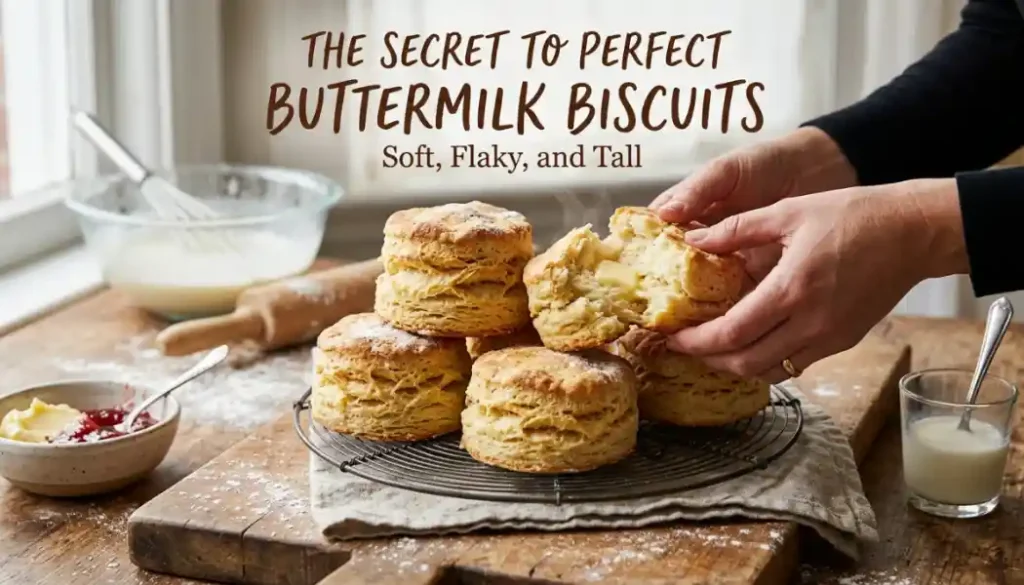
Making homemade buttermilk biscuits from scratch is easier than many people think. With a few simple pantry ingredients, you can create soft biscuits, buttery biscuits, and beautifully flaky buttermilk biscuits that taste far better than anything store-bought. Whether you’re serving them for breakfast, alongside dinner, or with a comforting bowl of soup, this easy buttermilk biscuits recipe delivers delicious results every time.
The secret to perfect Southern biscuits comes down to a few simple techniques. Using cold butter, cold buttermilk, and handling the dough gently helps create those irresistible flaky layers and a tender crumb. Even if you’ve never made homemade biscuits from scratch before, this recipe is beginner-friendly and easy to follow.
In this guide, you’ll learn exactly how to make buttermilk biscuits, avoid common mistakes, and get tall, golden, bakery-style biscuits that are crisp on the outside and soft on the inside.
Quick Answer: What Makes These Buttermilk Biscuits So Good?
These buttermilk biscuits are so good because they are made with cold butter, cold buttermilk, and simple pantry ingredients. The cold butter melts in the oven and creates steam, which helps form flaky layers. The buttermilk adds a light tangy flavor, keeps the biscuits moist, and helps them rise beautifully.
This easy buttermilk biscuits recipe gives you tall biscuits with golden tops, soft centers, crisp edges, and a rich buttery taste. You do not need yeast or fancy tools. With gentle mixing, a hot oven, and the right cutting method, you can make homemade biscuits from scratch that taste fresh, warm, and comforting every time.
What Are Buttermilk Biscuits?
Buttermilk biscuits are soft, flaky, Southern-style quick bread made without yeast. Instead of waiting for dough to rise, biscuits use baking powder and baking soda to become light and fluffy in the oven. This makes them faster and easier than traditional bread.
Classic Southern biscuits have a tender crumb, buttery flavor, and visible flaky layers. They are usually served warm with butter, honey, jam, eggs, gravy, soups, or fried chicken. The dough should be handled gently, not kneaded like bread dough. That gentle touch helps keep the biscuits soft instead of hard or dense.
Why You’ll Love This Recipe
You’ll love this recipe because it is simple, reliable, and beginner-friendly. These homemade buttermilk biscuits are ready in about 30 minutes, which makes them perfect for busy mornings, family dinners, holiday meals, or weekend baking.
You do not need special equipment. A bowl, fork or pastry cutter, baking sheet, and biscuit cutter are enough. This recipe also works well for make-ahead baking because you can freeze baked biscuits or freeze unbaked biscuit dough. The result is always warm, buttery, and comforting. These flaky biscuits are perfect with sweet toppings or savory meals.
Ingredients You Need
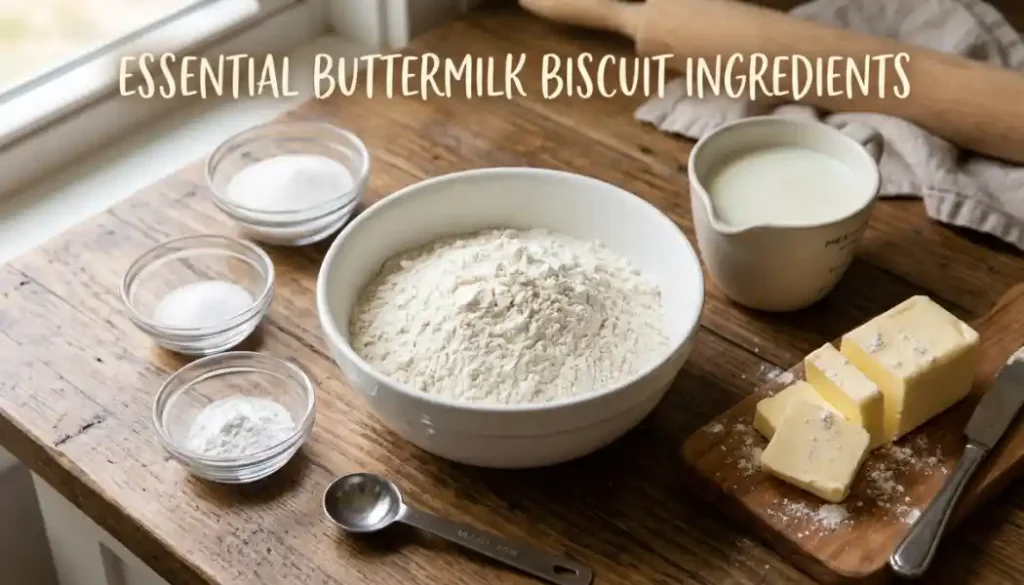
To make buttermilk biscuits, you need simple ingredients: all-purpose flour, baking powder, baking soda, salt, a little sugar or honey, cold butter, and cold buttermilk. Each ingredient has an important job.
Flour gives the biscuits structure. Baking powder and baking soda help them rise. Salt adds flavor. Sugar or honey helps with light sweetness and browning. Butter gives rich flavor and flaky layers. Buttermilk adds moisture, tang, and softness. For the best texture, keep the butter and buttermilk cold until the moment you use them.
What Does Buttermilk Do In Biscuits?
Buttermilk is one of the most important ingredients in a good biscuit recipe. It adds a gentle tangy flavor that makes the biscuits taste richer and more homemade. It also adds moisture, which helps create soft biscuits with a tender crumb.
Because buttermilk is slightly acidic, it works with baking soda to help the dough rise. This gives the biscuits a lighter texture. Real buttermilk usually gives the best flavor and softness, especially in a classic Southern buttermilk biscuits recipe. It helps turn a simple dough into tall, fluffy, golden biscuits.
Can I Use A Buttermilk Substitute?
Yes, you can use a buttermilk substitute if you do not have real buttermilk. Mix 1 cup of milk with 1 tablespoon of lemon juice or white vinegar. Let it sit for 5 to 10 minutes, then use it in the recipe.
This substitute works well for many homemade biscuits, especially when you need a quick option. However, real buttermilk gives a thicker texture, better tangy flavor, and often a more tender result. If you want the best flaky buttermilk biscuits, real buttermilk is the better choice.
Best Butter For Buttermilk Biscuits
The best butter for buttermilk biscuits is cold unsalted butter. Unsalted butter lets you control the salt in the recipe, while the cold temperature helps create flaky layers. When cold butter melts in the hot oven, it releases steam and lifts the dough.
You can use cubed butter, grated butter, or even frozen butter. Grated frozen butter is easy to mix into the flour and spreads evenly through the dough. Cubed butter works well too, but do not blend it completely. Small butter pieces should remain in the dough because they help make flaky biscuits.
How To Make Buttermilk Biscuits Step By Step
Start by mixing the dry ingredients in a large bowl: flour, baking powder, baking soda, salt, and sugar. Add the cold butter and cut it into the flour until the mixture looks crumbly with small butter pieces.
Pour in the cold buttermilk and stir gently until the dough just comes together. Do not overmix. Turn the dough onto a lightly floured surface, pat it together, and fold it a few times. Cut the biscuits straight down with a sharp cutter. Place them on a baking sheet, brush the tops with buttermilk or melted butter, and bake until golden.
The Folding Method For Flaky Layers
The folding method is the secret to beautiful flaky layers. It is a simple form of biscuit lamination. After the dough comes together, gently pat it into a rectangle. Fold it over itself, then pat it down again. Repeat this 2 to 4 times.
Each fold creates thin layers of dough and butter. When the biscuits bake, the butter melts and steam pushes those layers apart. This gives you tall, soft, flaky buttermilk biscuits. Be gentle while folding. The goal is to build layers, not overwork the dough. Too much handling can make biscuits tough.
How To Cut Biscuits The Right Way
To cut buttermilk biscuits the right way, use a sharp biscuit cutter and press straight down. Do not twist the cutter. Twisting can seal the edges of the dough, which stops the biscuits from rising properly.
If you do not have a round cutter, you can make square biscuits with a sharp knife. Square biscuits are a great option because they create less waste and you do not have to reroll scraps. If you do reroll scraps, handle them gently. Overworked scraps often bake up tougher than the first round of biscuits.
Best Oven Temperature For Tall Biscuits
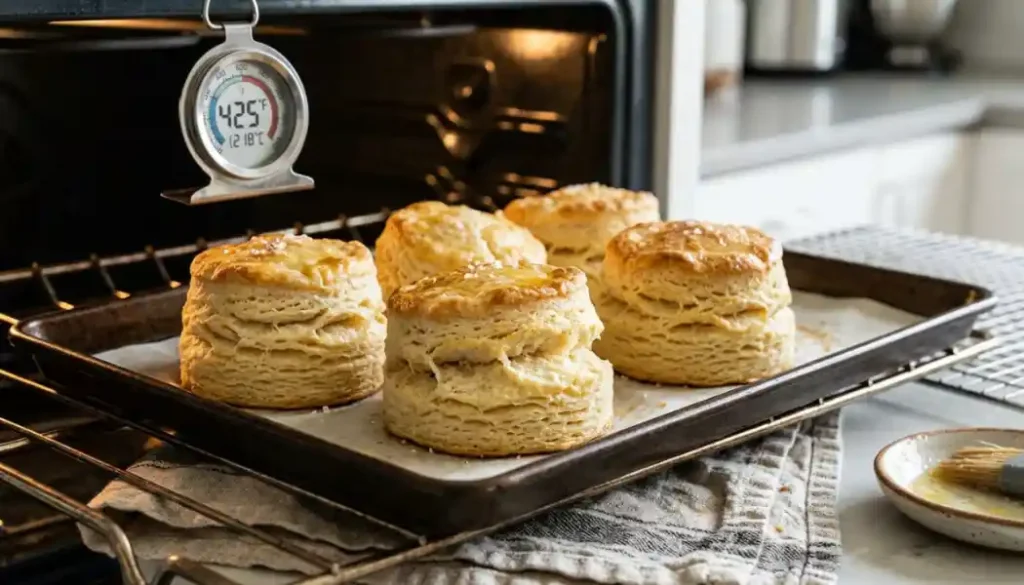
A hot oven is important for tall biscuits. Most buttermilk biscuit recipes bake well between 425°F and 450°F. This high heat helps the butter melt quickly, creates steam, and gives the biscuits a fast rise.
A hot oven also helps make golden tops and crisp edges while keeping the inside soft. Always preheat the oven fully before baking. If the oven is too cool, the butter may melt before the biscuits rise, which can make them flat. For best results, bake until the tops are golden and the centers are cooked through.
Pro Tips For Tall, Flaky, Soft Biscuits
For the best tall, flaky, soft biscuits, keep your ingredients cold. Cold butter and cold buttermilk are key. Mix the dough gently and stop as soon as it comes together. The dough should look a little rough, not smooth like bread dough.
Do not overwork the dough. Fold it a few times for layers, then cut it cleanly. Place biscuits close together if you want soft sides. Space them apart if you want crisp edges. For extra flavor, brush the tops with melted butter after baking. These small steps make a big difference.
Common Mistakes To Avoid
The most common biscuit mistake is using warm butter. Warm butter melts too soon and can make biscuits flat instead of flaky. Another mistake is overmixing the dough, which makes biscuits hard or dense.
Using too much flour can also make biscuits dry. Spoon and level your flour instead of packing it into the cup. Do not twist the biscuit cutter, because it can seal the edges. Also, check your baking powder. Old baking powder may not give enough rise. Finally, make sure the oven is fully hot before baking.
Troubleshooting Buttermilk Biscuits
If your biscuits are flat, the butter may have been too warm, the dough may have been overworked, or the baking powder may be old. If your biscuits are dry, you may have used too much flour or baked them too long.
Hard biscuits usually come from overmixing or too much kneading. If your biscuits are not flaky, the butter may have been blended too much into the flour. You need small butter pieces in the dough. If the biscuits are raw in the center, they may be too thick, too close together, or baked at too low a temperature.
Make-Ahead, Storage, And Freezing Instructions
You can store baked buttermilk biscuits at room temperature in an airtight container for about 2 days. To reheat, warm them in the oven until soft and fresh again. Avoid microwaving for too long because it can make them chewy.
For longer storage, freeze baked biscuits in a freezer bag. Reheat from frozen in the oven. You can also freeze unbaked biscuit dough. Cut the biscuits, freeze them on a tray, then store them in a freezer bag. Bake from frozen, adding a few extra minutes if needed.
Best Ways To Serve Buttermilk Biscuits
Buttermilk biscuits are delicious with both sweet and savory toppings. For a simple breakfast, serve them warm with butter, honey, or jam. They also taste wonderful with eggs, bacon, or sausage.
For a classic Southern meal, serve biscuits with sausage gravy or fried chicken. They also pair well with soups, chili, stew, barbecue, and roasted meats. You can split them open and use them for breakfast sandwiches with eggs and cheese. Because they are soft, buttery, and flaky, they fit almost any meal.
Recipe Variations
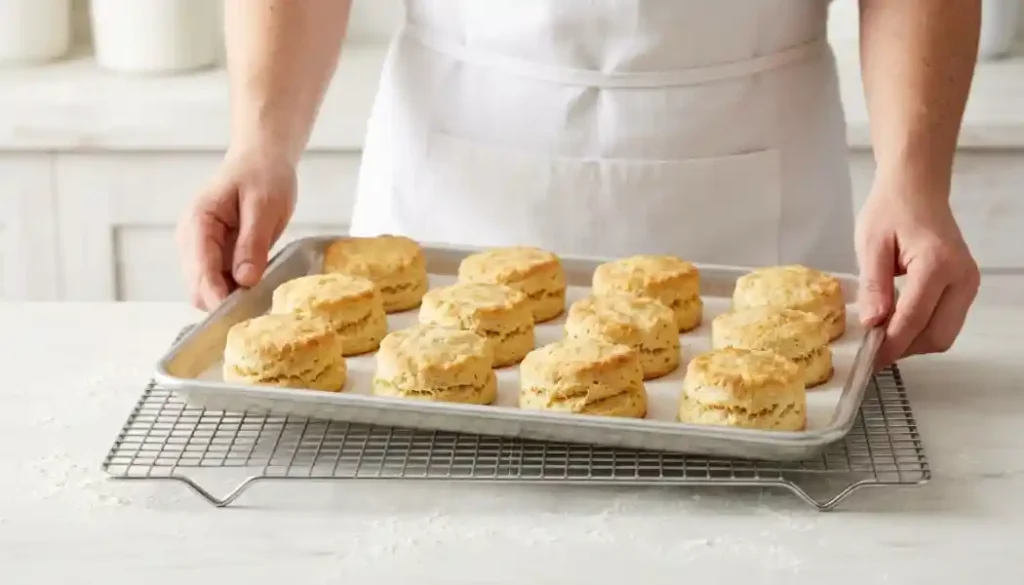
You can make many easy variations of this buttermilk biscuit recipe. For drop biscuits, skip rolling and cutting. Simply scoop the dough onto the baking sheet. For square biscuits, cut the dough with a knife to avoid scraps.
You can bake biscuits in a cast iron skillet for soft sides and a rustic look. You can also try self-rising flour biscuits, gluten-free buttermilk biscuits, or cheddar herb biscuits. For extra flavor, add shredded cheese, garlic powder, chives, black pepper, or fresh herbs. Keep the same gentle mixing method for the best texture.
FAQs About Buttermilk Biscuits
Can I make biscuits without buttermilk?
Yes. You can use milk with lemon juice or vinegar as a simple buttermilk substitute. Real buttermilk gives better flavor, but the substitute works in a pinch.
Can I refrigerate biscuit dough overnight?
Yes. Cut the biscuits first, cover them well, and refrigerate overnight. Bake them cold from the fridge for the best rise.
Can I use salted butter?
Yes, but reduce the salt in the recipe slightly so the biscuits do not taste too salty.
Can I make biscuits in a cast iron skillet?
Yes. A cast iron skillet helps create soft sides and golden bottoms.
Can I use self-rising flour?
Yes, but adjust the baking powder, baking soda, and salt because self-rising flour already contains leavening and salt.
Final Thought
Making homemade buttermilk biscuits is all about simple ingredients and the right technique. Keep the butter cold, handle the dough gently, fold for flaky layers, and bake in a hot oven. Once you learn these basic steps, you can make soft, tall, buttery biscuits anytime.
This recipe is perfect for breakfast, dinner, holidays, or cozy weekend meals. Serve them with honey, jam, gravy, soup, fried chicken, or eggs. With a little care, your easy buttermilk biscuits will turn out golden, tender, and delicious every time.