
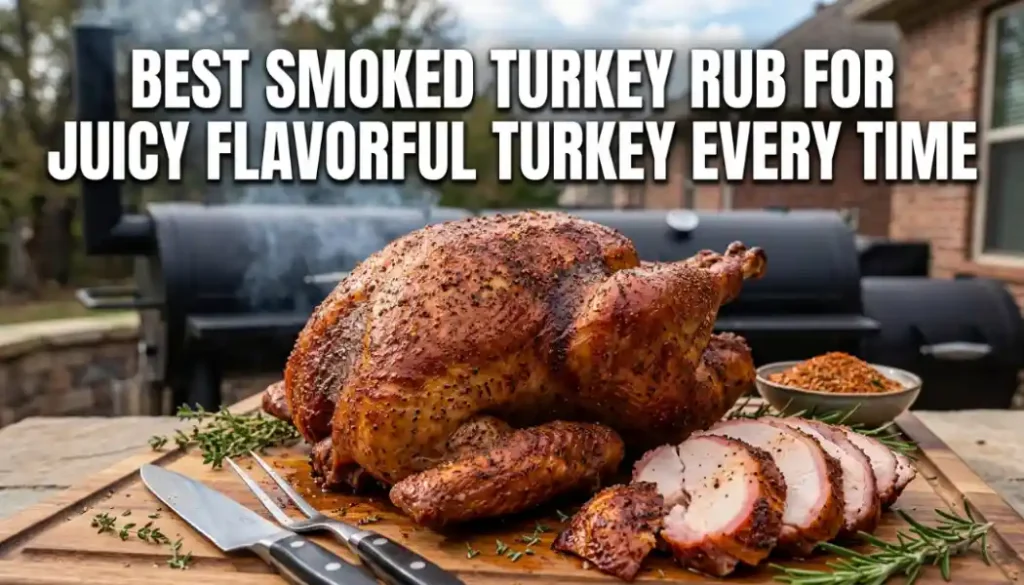
A great smoked turkey rub can completely change the flavor of your turkey. Instead of bland meat and soft skin, the right seasoning creates juicy turkey packed with smoky BBQ flavor and a crispy golden crust. Whether you are smoking a whole Thanksgiving turkey or a simple turkey breast for the weekend, this easy turkey rub recipe gives you balanced sweet, savory, and smoky flavor in every bite.
After testing this seasoning blend on pellet smokers, charcoal grills, and electric smokers, this combination consistently delivers rich flavor without overpowering the turkey. Ingredients like smoked paprika, garlic powder, rosemary, thyme, and brown sugar work together beautifully during smoking. Even beginners can make flavorful smoked turkey with this homemade smoked turkey seasoning.
Quick Answer
The best smoked turkey rub combines smoked paprika, brown sugar, kosher salt, garlic powder, onion powder, black pepper, rosemary, thyme, and sage to create juicy meat, crispy skin, and bold BBQ flavor. This homemade turkey seasoning rub works perfectly for pellet grills, charcoal smokers, electric smokers, and offset smokers. For the best flavor, apply the dry rub for smoked turkey at least 30 minutes before smoking or leave it overnight for deeper seasoning.
What Is a Smoked Turkey Rub?
A smoked turkey rub is a dry seasoning blend made with herbs, spices, salt, and sugar that adds flavor to turkey before smoking. Unlike a wet marinade, a turkey dry rub forms a flavorful outer crust called bark while helping the skin crisp up during cooking.
Turkey has a mild flavor compared to beef or pork, so seasoning is extremely important. A good smoked turkey seasoning helps the meat absorb smoky flavor while balancing sweet, savory, and herbal notes.
Difference Between a Rub and a Dry Brine
A dry brine mainly uses salt to keep turkey juicy by helping the meat hold moisture. A smoked turkey rub recipe focuses more on flavor and bark formation. Many pitmasters combine both methods for the best results.
Why Turkey Needs More Seasoning
Turkey is lean and large, which means seasoning needs to fully coat the outside and sometimes go under the skin. This helps every bite taste flavorful after hours in the smoker.
Why This Smoked Turkey Rub Works
This homemade BBQ turkey rub works because every ingredient serves a purpose. The sugar caramelizes lightly during smoking, the herbs bring classic turkey flavor, and the spices create a rich smoky crust.
Sweet and Smoky Flavor Balance
The combination of brown sugar and smoked paprika creates a balanced flavor that pairs perfectly with wood smoke. It gives the turkey a deep BBQ-style taste without becoming overly sweet.
Perfect for Crispy Skin
One common problem with smoked turkey is rubbery skin. This dry rub for smoked turkey helps the skin brown evenly while creating a flavorful outer texture.
Works on Any Smoker
This seasoning blend has been tested on:
- Pellet smokers
- Traeger grills
- Electric smokers
- Offset smokers
- Charcoal smokers
The flavor stays strong even during long smoking sessions.
Ingredients You Need
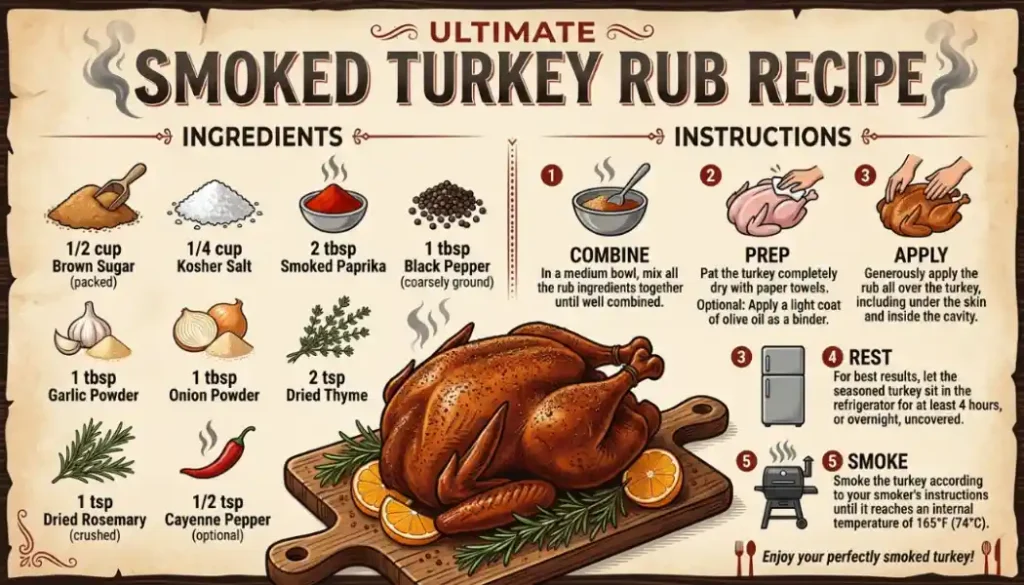
This easy smoked turkey rub recipe uses simple pantry spices that are easy to find and work well together.
Main Ingredients
- Smoked paprika for smoky BBQ flavor
- Brown sugar for sweetness and color
- Kosher salt to enhance flavor
- Garlic powder for savory depth
- Onion powder for balanced seasoning
- Black pepper for mild heat
- Rosemary, thyme, and sage for classic turkey flavor
Optional Flavor Additions
For more heat, add cayenne pepper or chipotle powder. If you prefer a sugar-free version, reduce or remove the brown sugar.
Why These Ingredients Matter
During testing, smoked paprika gave the turkey the strongest smoky flavor without overpowering the meat. Herbs like sage and rosemary added a traditional holiday flavor that worked especially well with apple wood and cherry wood smoke.
Exact Smoked Turkey Rub Recipe
Ingredients
- 2 tablespoons smoked paprika
- 2 tablespoons brown sugar
- 1 tablespoon kosher salt
- 1 tablespoon garlic powder
- 1 tablespoon onion powder
- 1 teaspoon black pepper
- 1 teaspoon dried thyme
- 1 teaspoon dried rosemary
- 1 teaspoon dried sage
Instructions
Mix all ingredients in a small bowl until evenly combined. Store the seasoning blend in an airtight container.
Recipe Details
| Detail | Information |
| Prep Time | 5 minutes |
| Yield | Enough for 12–15 lb turkey |
| Flavor Profile | Smoky, savory, slightly sweet |
| Best For | Whole turkey, turkey breast, turkey legs |
How Much Rub Per Pound
Use about 1 tablespoon of smoked turkey seasoning per pound of turkey for even flavor coverage.
How to Apply Rub to Turkey
Applying the best smoked turkey rub correctly makes a huge difference in flavor and texture.
Dry the Turkey
Pat the turkey dry with paper towels. Moisture prevents the seasoning from sticking and can lead to soft skin.
Add Oil or Butter
Rub a thin layer of olive oil or melted butter over the turkey. This helps the seasoning stick better and improves browning.
Season Under the Skin
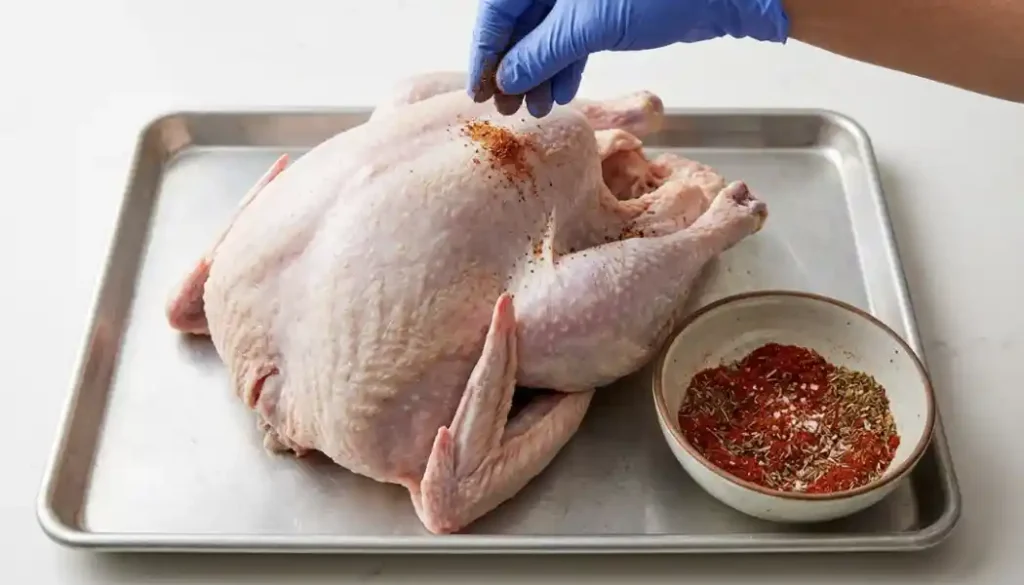
For deeper flavor, gently loosen the turkey skin and apply some seasoning directly onto the meat.
Let the Turkey Rest
Leave the rub on the turkey for at least 30 minutes. Overnight seasoning gives deeper flavor and acts like a mild dry brine.
Best Wood for Smoked Turkey
The right wood can improve your smoked turkey rub dramatically. Turkey absorbs smoke quickly, so mild woods work best.
Best Woods for Turkey
| Wood Type | Flavor |
| Apple Wood | Sweet and light |
| Cherry Wood | Mild and fruity |
| Pecan Wood | Rich and nutty |
| Hickory Wood | Strong BBQ flavor |
Best Flavor Pairings
Apple wood pairs perfectly with sweet rubs containing brown sugar, while hickory works better with spicy or herb-heavy seasoning blends.
Woods to Avoid
Mesquite can easily overpower turkey and create bitter flavor if used too heavily.
Smoker Temperature Guide
Cooking temperature is one of the biggest factors in making juicy smoked turkey.
Best Smoking Temperature
For crispy skin and juicy meat, smoke turkey between 275°F and 325°F.
Why Low Temperatures Cause Problems
Many beginners smoke turkey too low. Temperatures under 250°F often create rubbery skin and overly smoky flavor.
Internal Temperature Guide
| Turkey Part | Safe Temperature |
| Turkey Breast | 165°F |
| Turkey Thigh | 175°F |
Always use a meat thermometer instead of guessing.
Expert Tip
After several test cooks, smoking at around 300°F consistently gave the best balance of crispy skin and juicy meat.
Tips for Crispy Turkey Skin
One of the biggest complaints about smoked turkey is soft or rubbery skin. These simple tips help create crispy golden skin every time.
Dry the Skin Overnight
Leaving the turkey uncovered in the refrigerator overnight helps dry the skin naturally.
Use Moderate Heat
Higher smoking temperatures help the skin crisp better than low-and-slow cooking.
Don’t Use Too Much Sugar
Too much brown sugar in your BBQ turkey rub can burn quickly.
Finish at Higher Heat
During the final 20 minutes, slightly increase the smoker temperature to crisp the outer skin.
Why This Works
Turkey skin contains moisture and fat. Higher heat helps render the fat while drying the skin surface.

Dry Brine vs Dry Rub
Many people wonder whether they should use a dry brine or a smoked turkey rub. Both methods improve turkey, but they work differently.
What a Dry Brine Does
Salt slowly penetrates the meat and helps turkey retain moisture during smoking.
What a Rub Does
A turkey seasoning rub mainly builds flavor on the outside while helping create bark.
Best Method
For the best smoked turkey, use both:
- Dry brine with salt overnight
- Apply the spice rub before smoking
Expert Insight
During testing, overnight dry brining improved moisture noticeably, especially on turkey breast meat.
Flavor Variations
One of the best things about homemade smoked turkey seasoning is how easy it is to customize.
Cajun Turkey Rub
Add cayenne pepper, chili powder, and paprika for bold Southern heat.
Herb Garlic Turkey Rub
Increase rosemary, thyme, and garlic powder for stronger herb flavor.
Sugar-Free Turkey Rub
Remove brown sugar for a keto-friendly version that still creates smoky BBQ flavor.
Sweet BBQ Turkey Rub
Add extra brown sugar and smoked paprika for a sweeter backyard barbecue flavor.
Texas-Style Turkey Rub
Use more black pepper, garlic powder, and paprika for bold Texas BBQ flavor.
Common Smoked Turkey Mistakes
Even the best smoked turkey rub recipe can fail if common mistakes are ignored.
Smoking Too Low
Very low temperatures often create rubbery skin.
Using Too Much Smoke
Turkey absorbs smoke quickly, so too much wood can overpower the flavor.
Overseasoning the Turkey
Too much salt can make turkey unpleasantly salty.
Skipping a Meat Thermometer
Guessing the turkey temperature can easily lead to dry meat.
Not Resting the Turkey
Always let smoked turkey rest for at least 20 minutes before slicing. This helps the juices settle back into the meat.
Biggest Beginner Mistake
One of the most common issues is putting the rub on wet skin. Dry skin helps seasoning stick better and improves crispiness.
Turkey Smoking Time Chart
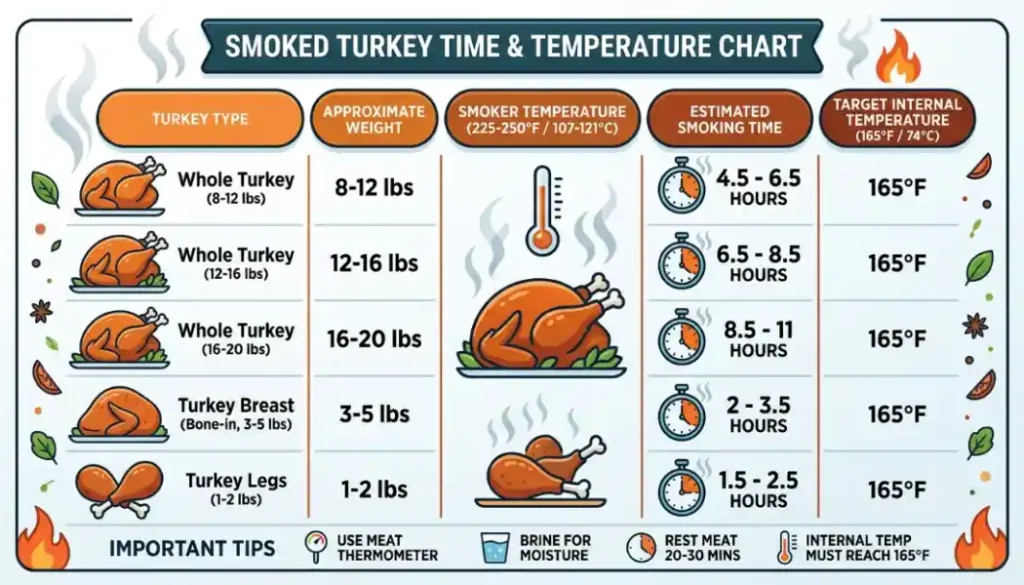
Cooking time depends on turkey size and smoker temperature.
| Turkey Size | Smoking Temp | Estimated Time |
| 10–12 lbs | 300°F | 3 to 3.5 hours |
| 12–14 lbs | 300°F | 3.5 to 4 hours |
| 14–16 lbs | 300°F | 4 to 4.5 hours |
| 16–18 lbs | 300°F | 4.5 to 5 hours |
Important Tip
Always cook by internal temperature, not just time.
Storage and Make-Ahead Tips
This homemade smoked turkey spice blend stores well and is perfect for meal prep.
How to Store the Rub
Keep the seasoning in an airtight container away from heat and sunlight.
Shelf Life
Most dried spices stay fresh for around 6 months.
Make-Ahead Tip
Mixing the rub a few days early allows the flavors to blend together better.
Batch Prep
Double the recipe and store extra seasoning for chicken, turkey breast, or pork.
FAQs
What is the best rub for smoked turkey?
The best smoked turkey rub combines smoked paprika, kosher salt, garlic powder, herbs, black pepper, and brown sugar for balanced BBQ flavor.
Can I use olive oil as a binder?
Yes. Olive oil helps the seasoning stick while improving browning and crispy skin.
Should I dry brine turkey before smoking?
Dry brining helps keep turkey juicy and flavorful during smoking.
What wood is best for smoked turkey?
Apple, cherry, and pecan woods are popular because they provide mild smoky flavor.
Can I use this rub on chicken?
Yes. This homemade turkey seasoning rub also works great on smoked chicken.
Can I inject and rub turkey together?
Absolutely. Many pitmasters inject butter or broth into the turkey before applying seasoning.
Final Thoughts
This easy smoked turkey rub recipe combines smoky spices, herbs, and balanced seasoning to create juicy flavorful turkey with crispy skin every time. Whether you are cooking on a pellet smoker, charcoal grill, electric smoker, or offset smoker, this homemade seasoning blend delivers reliable BBQ flavor with simple pantry ingredients.
By using proper smoking temperatures, the right wood pairings, and good seasoning techniques, even beginners can make restaurant-quality smoked turkey at home. This homemade dry rub for smoked turkey is easy to customize, beginner-friendly, and perfect for holidays, backyard BBQs, and family gatherings. Once you try this flavorful smoked turkey seasoning, it may become your go-to turkey rub recipe for every smoking season.