
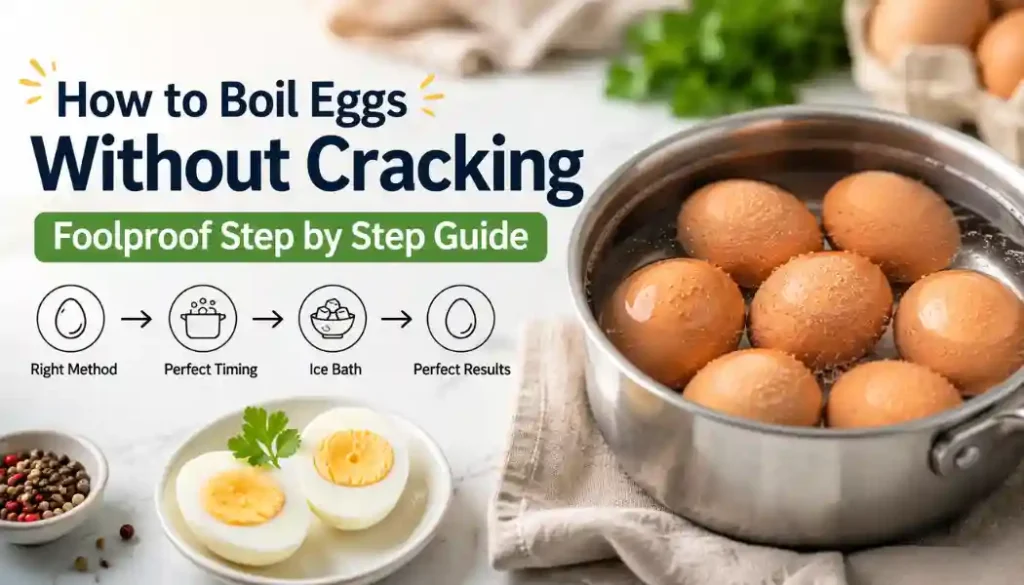
Boiling eggs looks simple, but getting the perfect boiled eggs every time is not always easy. Many people struggle with overcooked yolks, hard-to-peel shells, or uneven texture. If you want hard boiled eggs, soft boiled eggs, or medium boiled eggs, the secret is using the right egg boiling time and method.
In this guide, you will learn how to boil eggs perfectly every time using a simple and foolproof method. You will also understand how long to boil eggs, why an ice bath is important, and how to avoid common mistakes like cracked eggs or green yolks. This method works for beginners and gives consistent results for perfect hard boiled eggs and easy peel results.
Quick Answer (Perfect Boiling Times at a Glance)
If you are looking for a fast answer, here is the simplest guide for how long to boil eggs depending on texture. These timings help you get perfect boiled eggs every time without confusion.
- Soft boiled eggs: 6–7 minutes
- Medium boiled eggs: 8–9 minutes
- Hard boiled eggs: 10–12 minutes
After boiling, always place eggs into an ice bath for at least 5–10 minutes. This step stops cooking and makes peeling much easier. It also prevents overcooking, which can cause a green ring around the yolk.
This quick chart is the foundation for making easy peel hard boiled eggs and helps you control texture perfectly.
What You Need to Boil Eggs (Simple Kitchen Setup)
You do not need special tools to make perfect hard boiled eggs. Just a few basic kitchen items are enough for this simple process.
You will need fresh or slightly older eggs, a medium saucepan, and enough water to fully cover the eggs. A timer helps you control egg boiling time precisely. You also need a bowl filled with ice water to create an ice bath after cooking.
Egg size matters too. Large or extra-large eggs may need slightly more time, while smaller eggs cook faster. Keeping these basics in mind ensures better results for boiled eggs, whether soft, medium, or hard. This simple setup is what makes the process consistent, reliable, and beginner-friendly for anyone learning how to make hard boiled eggs at home.
The Best Method to Boil Eggs (Step-by-Step Foolproof Guide)
If you want perfect boiled eggs every time, follow this simple and reliable method. This process helps you control egg boiling time, avoid cracks, and get easy peel hard boiled eggs with smooth texture.
Step 1: Place eggs in a pot
Gently place your eggs in a single layer at the bottom of a saucepan or pot. Avoid stacking them, because overcrowding can cause uneven cooking and cracked shells.
Step 2: Add cold water
Pour cold water into the pot until the eggs are covered by about 1 inch. Starting with cold water helps the eggs heat slowly and reduces the risk of cracking.
Step 3: Heat the water
Place the pot on the stove and turn on medium-high heat. Let the water slowly come to a gentle boil. This gradual heating is key for consistent results.
Step 4: Turn off heat and set timer
Once the water reaches a boil, turn off the heat immediately. Cover the pot with a lid and start your timer based on your desired doneness:
- Soft boiled eggs: 6–7 minutes
- Medium boiled eggs: 8–9 minutes
- Hard boiled eggs: 10–12 minutes
Step 5: Prepare ice bath
While the eggs are cooking, prepare a bowl of ice water. This step is very important for stopping the cooking process quickly and ensuring easy peel eggs.
Step 6: Transfer eggs to ice bath
When the timer finishes, immediately move the eggs into the ice bath. Let them sit for 5–10 minutes. This prevents overcooking and keeps yolks bright and fresh.
Step 7: Peel and enjoy
Tap the eggs gently, roll them to crack the shell, and peel under running water if needed. You will get smooth, clean perfect hard boiled eggs ready to eat or store.
Egg Boiling Time Chart (Soft, Medium, Hard)
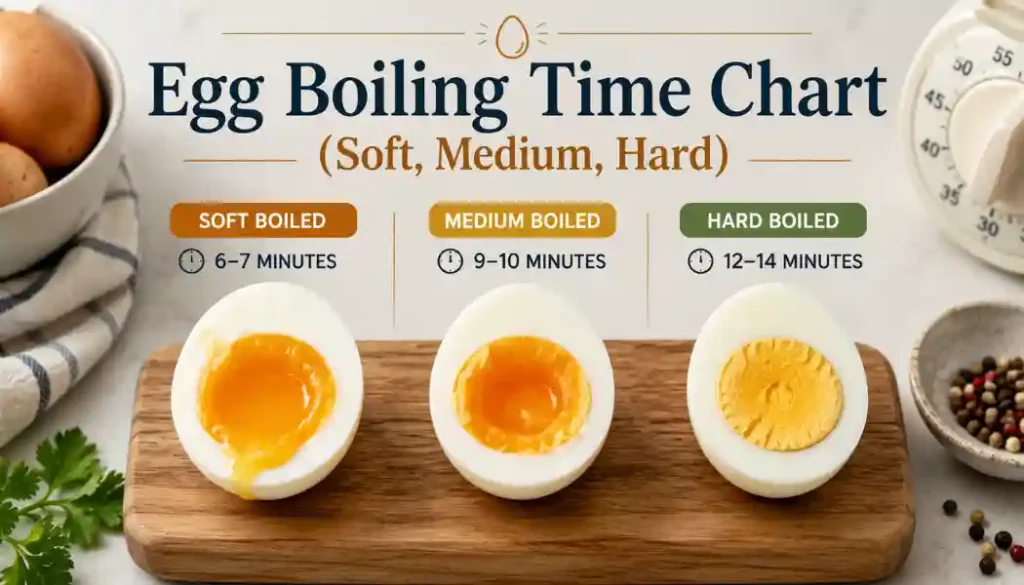
The correct egg boiling time is the most important part of making perfect eggs. Small changes in timing can completely change texture.
Here is a simple guide:
- Soft boiled eggs (runny yolk): 6–7 minutes
- Medium boiled eggs (slightly soft center): 8–9 minutes
- Hard boiled eggs (fully set yolk): 10–12 minutes
If you are using extra-large eggs, add 1 extra minute. If eggs are very fresh, they may need slightly longer cooking time.
Always finish with an ice bath to stop cooking instantly. This also improves peeling and keeps yolks bright yellow without turning green.
This chart is your base for making perfect hard boiled eggs every time without guessing.
Cold Water vs Hot Water Method (Which One Is Better?)
There are two common methods for boiling eggs, but the cold water method works best for beginners. In this method, eggs start in cold water and heat up slowly. This reduces the chance of cracking and gives more even cooking.
The hot water method places eggs directly into boiling water. While it is faster, it increases the risk of cracked shells and uneven texture. It also makes timing harder to control for perfect boiled eggs.
For most people, the cold water method is more reliable and produces easy peel eggs with better texture. It also helps beginners learn how to boil eggs without mistakes.
If you want consistent results every time, the cold water method is the safest and most beginner-friendly choice.
Why Ice Bath Is Important (The Secret to Easy Peeling)
An ice bath is one of the most important steps in making perfect boiled eggs, but many people skip it. After boiling, eggs continue to cook from leftover heat. This can lead to overcooking and green yolks.
When you place eggs into ice water, you stop the cooking process immediately. This keeps the yolk soft, smooth, and perfectly colored. It also helps separate the egg white from the shell membrane, which makes peeling much easier.
Let eggs sit in the ice bath for at least 5–10 minutes. This step is the key to making easy peel hard boiled eggs without frustration.
If you want clean, smooth eggs every time, never skip the ice bath step.
How to Peel Boiled Eggs Easily (No Mess Method)
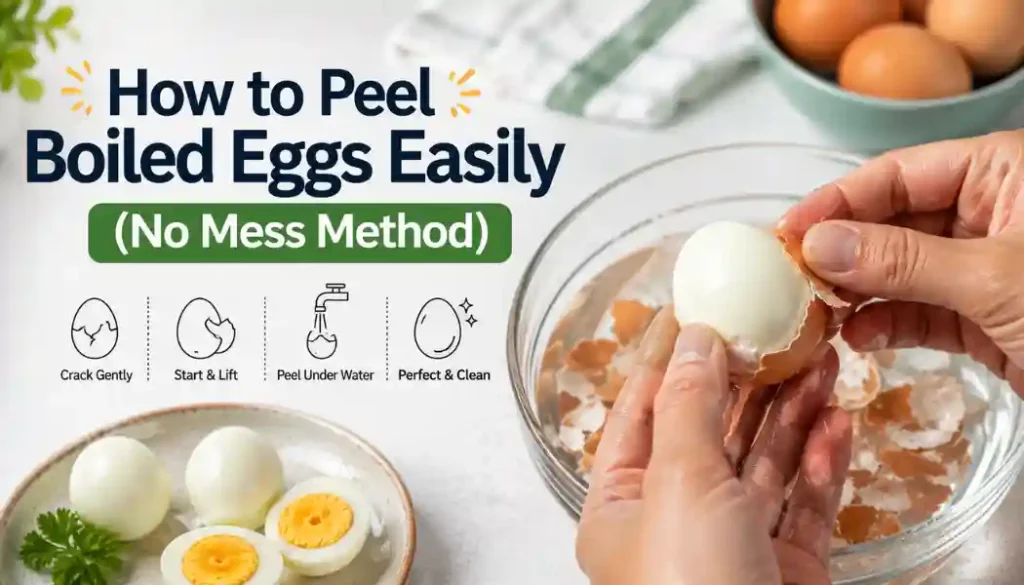
Peeling eggs can be frustrating, especially when shells stick. But there are simple tricks to get easy peel boiled eggs every time.
Start by gently tapping the egg on a hard surface and rolling it slightly to crack the shell. Then peel under running water or in a bowl of water. This helps loosen the shell from the egg white.
Older eggs usually peel more easily than very fresh ones because the inner membrane separates better. That is why some people prefer slightly older eggs for hard boiled eggs. You can also try the spoon method, where you slide a spoon under the shell to lift it off smoothly. Combined with an ice bath, this makes peeling quick and clean.
Common Mistakes When Boiling Eggs (And How to Fix Them)
Here are the most common mistakes people make when making boiled eggs, and simple fixes to help you get perfect boiled eggs every time.
- Overcooking the eggs
This happens when you exceed the correct egg boiling time. It leads to dry yolks and a green ring.
Fix: Always use a timer and follow exact timings for soft, medium, or hard boiled eggs. - Skipping the ice bath
Without cooling, eggs continue cooking and become rubbery or overdone.
Fix: Always place eggs in an ice bath for 5–10 minutes immediately after cooking. - Starting in boiling water
Dropping eggs into boiling water can cause cracking and uneven cooking.
Fix: Use the cold water method to heat eggs slowly for easy peel hard boiled eggs. - Using very fresh eggs
Fresh eggs stick to the shell, making peeling difficult.
Fix: Use eggs that are a few days old for smoother peeling. - Overcrowding the pot
Too many eggs at once can cause uneven heat distribution.
Fix: Keep eggs in a single layer for consistent results. - Not controlling heat properly
Rapid boiling can cause shells to crack.
Fix: Bring water to a gentle boil and avoid high heat spikes. - Not timing properly after boiling starts
Guessing instead of timing leads to inconsistent results.
Fix: Always use a timer for accurate hard boiled eggs every time.
Why Your Eggs Turn Green (And How to Avoid It)
A green ring around the yolk is a common problem when making hard boiled eggs. This happens when eggs are overcooked or left in hot water too long after boiling.
The green color comes from a reaction between sulfur in the egg white and iron in the yolk. While it is safe to eat, it affects texture and appearance.
To avoid this, always follow the correct egg boiling time and place eggs immediately into an ice bath after cooking. This stops the heat reaction quickly. By controlling time and cooling properly, you can easily make bright yellow, perfect boiled eggs every time.
Egg Size, Freshness & Their Impact on Boiling Time
Not all eggs behave the same when you boil them. One of the biggest factors that affects egg boiling time is size and freshness. If you understand this, you can make more consistent perfect boiled eggs every time.
Large eggs are the standard for most recipes, but extra-large eggs usually need about 1 extra minute to reach the same level of doneness. Smaller eggs cook faster, so you should slightly reduce the time to avoid overcooking.
Freshness also matters. Very fresh eggs are harder to peel because the inner membrane sticks tightly to the shell. Slightly older eggs (about 5–10 days old) are better for hard boiled eggs because they peel more easily and cleanly.
If you are aiming for easy peel hard boiled eggs, balancing egg size and freshness is important. This small adjustment helps you get smoother results, better texture, and more reliable outcomes every single time.
High-Altitude Egg Boiling Adjustments
If you live in a high-altitude area, your egg boiling time may not work the same as standard recipes. At higher altitudes, water boils at a lower temperature, which means eggs cook more slowly.
To get perfect hard boiled eggs, you usually need to increase the cooking time by 1–2 minutes. This small adjustment helps ensure the yolk fully sets without becoming undercooked in the center.
You should also keep the ice bath step the same. It is important because it quickly stops cooking and prevents overcooking even at altitude.
Many beginners ignore altitude changes, which leads to soft or uneven eggs. By slightly increasing timing, you can still make perfect boiled eggs every time, no matter where you live. This simple adjustment improves consistency and helps avoid guesswork in your cooking process.
How to Store Boiled Eggs Safely
Proper storage is important if you want to enjoy boiled eggs later without losing freshness. Once your eggs are fully cooled in an ice bath, you should store them correctly to maintain taste and texture.
If you keep eggs in their shell, you can store them in the refrigerator for up to one week. The shell helps protect them from moisture loss and odors. This is the best option for hard boiled eggs used in meal prep.
If you peel the eggs, store them in an airtight container with a little water to keep them moist. Peeled eggs usually last about 2–3 days in the fridge.
Always keep eggs refrigerated and avoid leaving them at room temperature for long periods. Proper storage ensures your perfect boiled eggs stay safe, fresh, and ready to eat whenever you need a quick snack or protein boost.
Can You Meal Prep Boiled Eggs?

Yes, boiled eggs are one of the best foods for meal prep because they are simple, healthy, and high in protein. If you prepare them correctly, you can enjoy perfect hard boiled eggs throughout the week.
You can boil a batch of eggs at once using the same egg boiling time method. After cooking, place them in an ice bath, cool them completely, and store them in the refrigerator.
For best results, keep the eggs unpeeled until you are ready to eat them. This helps maintain freshness and makes them last longer.
Meal-prepped eggs are great for breakfast, salads, or quick snacks. They save time and make healthy eating easier. With proper storage, you can always have easy peel boiled eggs ready for your daily routine without extra cooking.
Nutritional Value of Boiled Eggs
Boiled eggs are not just easy to make—they are also highly nutritious. One large egg contains high-quality protein, healthy fats, and essential vitamins that support overall health.
They are rich in protein, which helps build muscles and keeps you full for longer. This makes hard boiled eggs a great choice for weight management and healthy breakfasts.
Eggs also contain important nutrients like vitamin B12, vitamin D, and choline, which support brain function and energy production. Despite being simple food, they offer strong nutritional value.
When you prepare perfect boiled eggs, you get a clean, healthy snack without added oil or fat. This makes them ideal for meal plans, fitness diets, and quick protein boosts during the day.
Best Ways to Use Boiled Eggs in Meals
There are many simple and tasty ways to use boiled eggs in your daily meals. Because they are versatile, they fit easily into breakfast, lunch, or snacks.
You can slice hard boiled eggs over salads to add protein and texture. They also work well in sandwiches or wraps for a quick meal. Many people enjoy them as a simple snack with salt and pepper.
For breakfast, you can pair perfect boiled eggs with toast or avocado. You can also mash them to make egg salad or use them in deviled eggs for parties.
Meal prep becomes easier when you have easy peel boiled eggs ready in your fridge. They save time, support healthy eating, and can be used in many creative ways throughout the week.
Troubleshooting Guide (Advanced Problems & Fixes)
Sometimes things go wrong even when you follow the steps for how to boil eggs perfectly every time. The good news is that most problems are easy to fix.
If your eggs crack during boiling, it usually means the temperature changed too quickly. Starting with cold water helps prevent this. If eggs are overcooked or rubbery, reduce your egg boiling time slightly next time.
Sticky shells are often caused by very fresh eggs. Using slightly older eggs helps create easy peel boiled eggs. If yolks turn green, it means the eggs were cooked too long or not cooled fast enough.
Uneven cooking usually happens when eggs are crowded in the pot. Always give them space for even heat distribution. These simple fixes help you consistently make perfect hard boiled eggs without frustration.
FAQs About Boiling Eggs
How long should I boil eggs?
Soft eggs take 6–7 minutes, medium 8–9 minutes, and hard boiled eggs take 10–12 minutes.
Why are my boiled eggs hard to peel?
Very fresh eggs or skipping the ice bath usually causes this issue.
Should I put eggs in boiling water or cold water?
Cold water method is better for beginners and gives more consistent perfect boiled eggs.
How long do boiled eggs last?
In the fridge, unpeeled eggs last up to one week, peeled eggs last 2–3 days.
Can you overcook boiled eggs?
Yes, overcooking makes yolks dry and creates a green ring around them.
Are boiled eggs healthy?
Yes, they are high in protein, vitamins, and healthy fats, making them a great snack or meal option.
Final Thoughts
Learning how to boil eggs perfectly every time is simple once you understand the right egg boiling time, method, and small but important steps like using an ice bath. Whether you prefer soft boiled eggs, medium boiled eggs, or hard boiled eggs, consistency comes from following a clear process instead of guessing.
The key is to control heat, respect timing, and avoid common mistakes like overcooking or skipping cooling. Small details—such as egg size, freshness, and proper storage—can make a big difference in achieving perfect boiled eggs with easy peeling and smooth texture.
With this method, you can confidently make easy peel hard boiled eggs anytime for breakfast, meal prep, or snacks. Once you practice it a few times, it becomes a quick, reliable kitchen skill you’ll use again and again.