
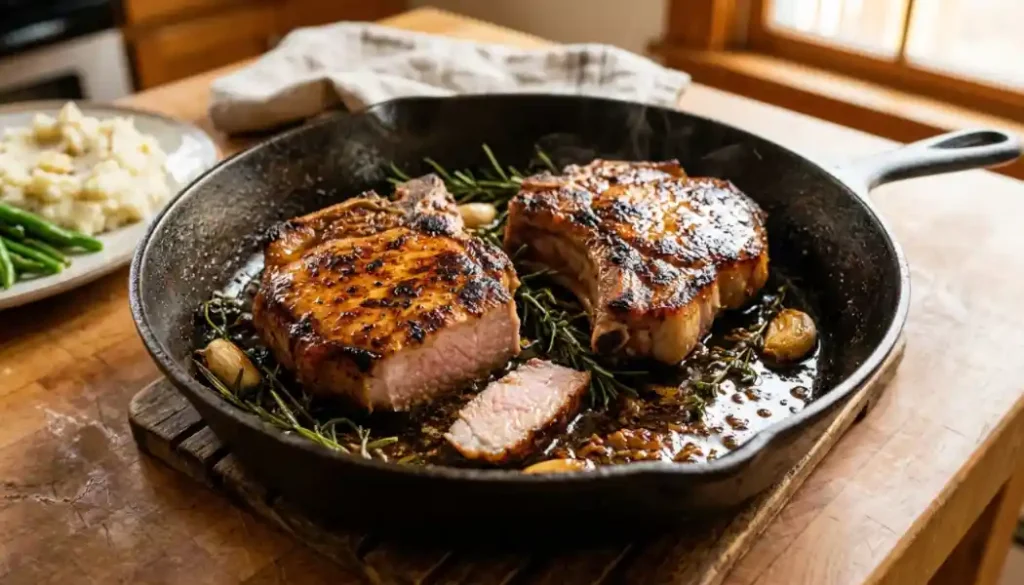
Making seared pork chops at home is easier than most people think. With the right heat, a good skillet, and a few simple ingredients, you can create juicy pork chops with a crispy golden crust in less than 30 minutes. This easy pan-seared pork chops recipe gives you tender meat, rich flavor, and a restaurant-style finish without complicated steps.
Whether you are cooking bone-in pork chops or boneless pork chops, the secret is using medium-high heat, proper seasoning, and the right cooking time. A cast iron skillet works best because it creates a deep sear while keeping the inside moist and tender. Add a little garlic butter and fresh herbs, and these skillet pork chops become a quick dinner that feels special any night of the week.
If you have struggled with dry pork before, this guide will show you exactly how to make juicy seared pork chops every time.
Why This Seared Pork Chop Recipe Works
Crispy crust with juicy center
The secret to perfect pan-seared pork chops is balancing heat and timing. A hot skillet creates a rich golden crust while keeping the inside tender and juicy. Using medium-high heat helps the pork develop deep flavor without drying out. Thick-cut pork chops work especially well because they stay moist during cooking.
Quick one-pan cooking method
This recipe uses one skillet, making cleanup simple and fast. A cast iron skillet gives the best sear because it holds heat evenly. You can cook everything in one pan, including the flavorful garlic butter sauce.
Beginner-friendly technique
Even if you are new to cooking, this easy method works well. With a few simple steps and an instant-read thermometer, you can make juicy skillet pork chops every time without stress.
Best Pork Chops for Searing
Bone-in vs boneless pork chops
Both cuts work for seared pork chops, but bone-in pork chops usually stay juicier because the bone helps protect the meat from overcooking. Boneless pork chops cook faster and are easier to handle in a skillet.
Thick-cut vs thin-cut pork chops
Thick-cut pork chops are best for achieving a crispy outside and tender center. Thin chops can dry out quickly because they cook too fast over high heat.
Best pork chop thickness
For the best results, choose pork chops around 1 to 1½ inches thick. This size gives enough time to build a golden crust without overcooking the inside.
Fresh vs frozen pork chops
Fresh pork chops give the best texture, but frozen chops work too. Just thaw them fully and pat them dry before searing to help create a crispy crust.
Ingredients You’ll Need
Best oil for searing pork chops
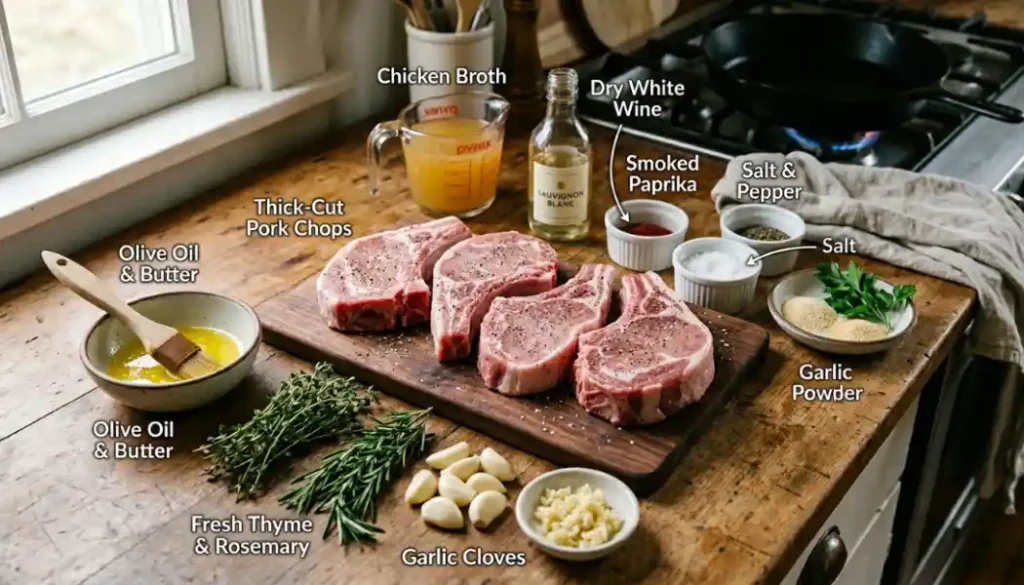
Choose oils with a high smoke point like avocado oil or olive oil. These oils help create a deep sear without burning.
Why butter improves flavor
Butter adds rich flavor and helps brown the pork chops beautifully. During the last few minutes of cooking, spoon melted butter over the chops for extra moisture and flavor.
Fresh herbs and aromatics
Fresh garlic, thyme, and rosemary pair perfectly with skillet pork chops. These ingredients give the pork a fresh and savory taste. Simple seasonings like kosher salt and black pepper also help bring out the natural flavor of the meat.
Together, these ingredients create tender garlic butter pork chops with a crispy outside and juicy center that tastes like a restaurant-quality dinner at home.
Kitchen Tools Recommended
Why cast iron works best
A cast iron skillet is one of the best tools for cooking pan-seared pork chops. It holds heat evenly and creates a crispy golden crust on the outside of the meat.
Do you need a meat thermometer?
A meat thermometer is very helpful because it prevents overcooking. Pork chops should reach an internal temperature of 145°F for the best texture and flavor.
Alternative skillets you can use
If you do not have cast iron, you can use a heavy stainless steel skillet. Nonstick pans also work, but they may not create the same deep crust.
Using the right kitchen tools makes cooking easier and helps you make perfect pan-seared pork chops every time.
How to Make Seared Pork Chops
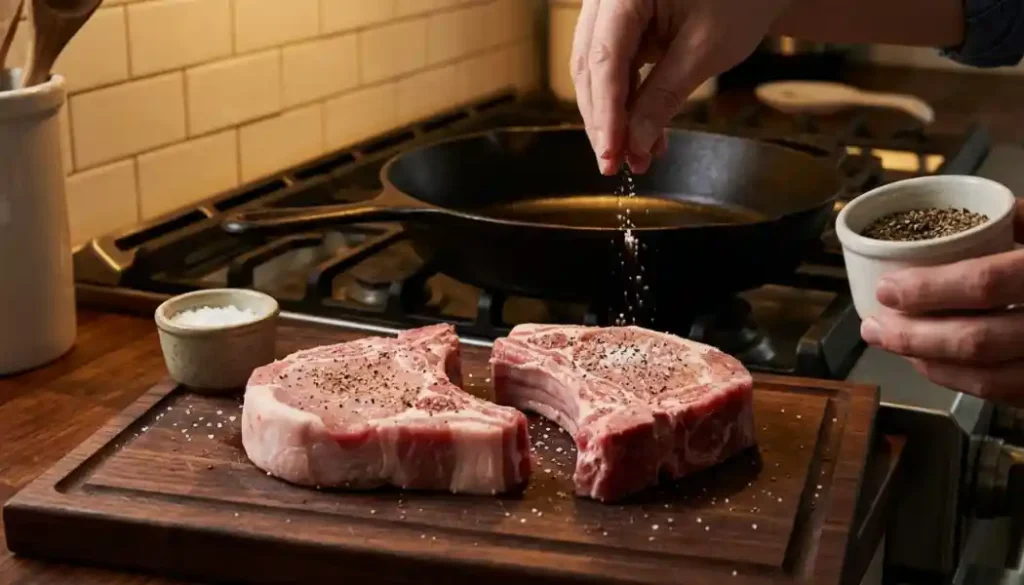
Step 1: Prepare and season the pork chops
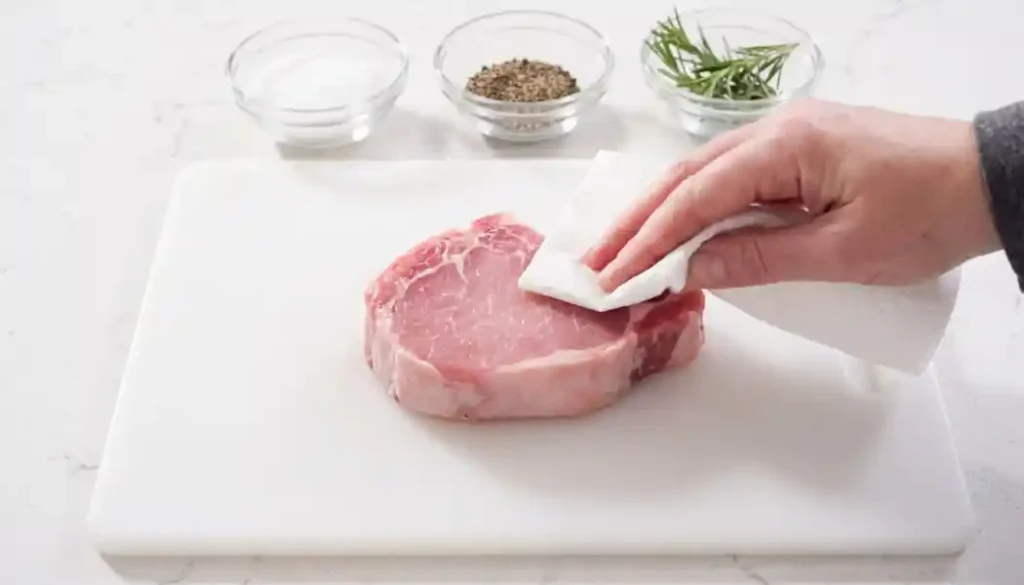
Pat the pork chops dry with paper towels. Season both sides with salt, pepper, and your favorite pork chop seasoning.
Step 2: Heat the skillet properly
Place the skillet over medium-high heat and add oil. Let the pan get hot before adding the pork chops.
Step 3: Sear each side evenly
Cook the pork chops for about 3–5 minutes per side, depending on thickness. Avoid moving them too much so a crust can form.
Step 4: Butter baste for flavor
Add butter, garlic, and herbs during the final minutes. Spoon the melted butter over the pork chops for extra flavor.
Step 5: Rest before serving
Let the pork chops rest for a few minutes before slicing to keep the juices inside.
Internal Temperature Guide for Pork Chops
Safe USDA pork temperature
According to USDA guidelines, pork chops are safe to eat at 145°F followed by a short resting period.
How to check doneness accurately
Insert an instant-read thermometer into the thickest part of the pork chop. Avoid touching the bone because it can give a false reading.
Can pork chops be slightly pink?
Yes, pork chops can have a slight pink center and still be safe when cooked properly. Overcooking is one of the biggest reasons pork chops become dry and tough.
Monitoring temperature carefully helps create juicy pork chops with the perfect texture. This small step makes a huge difference in achieving tender and flavorful results every time.
How Long to Sear Pork Chops
Cooking times by thickness
Cooking time depends on the thickness of the pork chops. Thin chops cook faster, while thick-cut pork chops need more time.
Bone-in cooking time chart
Bone-in pork chops usually need about 4–5 minutes per side in a hot skillet. Thicker cuts may need extra time.
Boneless cooking time chart
Boneless pork chops often cook in 3–4 minutes per side. Always check the internal temperature instead of relying only on timing.
Proper cooking time helps you avoid dry pork chops while still getting a crispy crust. A hot skillet and careful timing are the keys to making perfect juicy pork chops.

Common Mistakes That Dry Out Pork Chops
Overcooking
Overcooking is the biggest mistake people make when cooking pork chops. Even a few extra minutes can dry out the meat.
Using low heat
Low heat prevents the pork chops from developing a crispy crust. Instead, the meat slowly dries out in the pan.
Skipping resting time
Resting allows the juices to settle inside the meat. Cutting too early causes the juices to run out quickly.
Crowding the pan
Too many pork chops in one skillet lower the temperature and prevent proper searing.
Avoiding these common mistakes helps you make tender pork chops with a flavorful crust and juicy center every time.
Pro Tips for Juicy Pork Chops
Dry brining method
Sprinkling salt on pork chops before cooking improves flavor and moisture. Let them sit for 30 minutes before searing.
Bringing pork to room temperature
Allowing pork chops to rest at room temperature before cooking helps them cook more evenly.
Proper pan temperature
A properly heated skillet creates fast caramelization and locks in juices. You should hear a strong sizzle when the pork hits the pan.
Resting meat after cooking
Resting pork chops for 5 minutes keeps them juicy and tender.
These simple tips make a huge difference when learning how to make juicy seared pork chops at home.
Best Sauces for Seared Pork Chops
Garlic butter sauce
Garlic butter sauce is rich, simple, and perfect for pork chops. The buttery flavor pairs beautifully with the crispy crust.
Dijon mustard cream sauce
A creamy Dijon mustard sauce adds a slightly tangy and savory flavor that feels restaurant-quality.
Pan sauce from skillet drippings
The browned bits left in the skillet create incredible flavor. Adding broth, butter, and herbs creates an easy homemade pan sauce.
These sauces help turn basic skillet pork chops into a flavorful and comforting dinner that works for both family meals and special occasions.
What to Serve with Seared Pork Chops
Vegetables
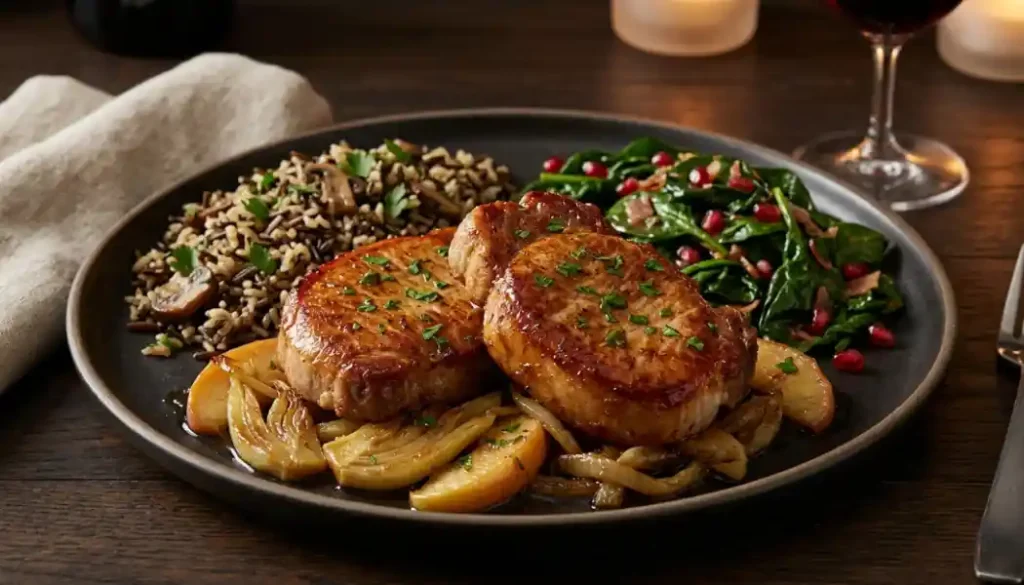
Roasted green beans, asparagus, or carrots pair well with pork chops because they add freshness and balance.
Potatoes
Mashed potatoes, roasted potatoes, or garlic potatoes work perfectly with rich pork flavors.
Low-carb side dishes
Cauliflower mash or sautéed vegetables are great low-carb options for a lighter meal.
Salad pairings
Fresh salads with lemon dressing or vinaigrette help balance the richness of garlic butter pork chops.
These simple side dishes complete the meal and make pan-seared pork chops perfect for easy weeknight dinners or weekend family meals.
Variations You Can Try
Garlic herb pork chops
Fresh thyme, rosemary, and garlic create classic herb flavors that pair beautifully with pork.
Spicy Cajun pork chops
Cajun seasoning adds heat and smoky flavor for a bold variation.
Keto seared pork chops
Serve pork chops with low-carb vegetables and butter sauce for a keto-friendly dinner.
Honey garlic pork chops
Honey adds a touch of sweetness that balances the savory flavors of the pork.
Trying different seasonings and sauces keeps this recipe exciting while still using the same simple cooking method.
Storage, Freezing, and Reheating
Refrigerator storage
Store leftover pork chops in an airtight container in the refrigerator for up to 3 days.
Freezing tips
Wrap cooked pork chops tightly before freezing to help maintain flavor and texture.
Best reheating methods
Reheat pork chops slowly in a skillet with a little butter or broth to keep them moist. Avoid overheating because it can dry out the meat.
Proper storage helps maintain the flavor and texture of your juicy pork chops so leftovers taste just as good the next day.
Meal Prep Tips
Make-ahead seasoning
Season pork chops ahead of time to save cooking time during busy evenings.
Batch cooking pork chops
Cook several pork chops at once and store them for easy lunches or dinners during the week.
Lunch prep ideas
Slice leftover pork chops and add them to salads, rice bowls, or wraps for quick meals.
Meal prepping pan-seared pork chops makes weeknight cooking easier while still giving you a delicious homemade meal with plenty of protein.
Frequently Asked Questions
Why are my pork chops dry?
Pork chops usually become dry from overcooking or using low heat for too long.
What oil is best for searing?
High smoke point oils like avocado oil or olive oil work best.
Can I use boneless pork chops?
Yes, boneless pork chops work very well for skillet cooking.
How do I get a golden crust?
Pat the pork chops dry and use a hot skillet without overcrowding the pan.
Should pork chops rest before slicing?
Yes, resting keeps the juices inside the meat.
Can I make these without cast iron?
Yes, a stainless steel skillet also works well for searing pork chops.
Final Thoughts
These seared pork chops are simple, flavorful, and perfect for both beginners and experienced home cooks. With the right skillet, proper heat, and a few easy techniques, you can make juicy pork chops with a crispy golden crust every single time.
Whether you choose bone-in pork chops, boneless pork chops, or a rich garlic butter sauce, this easy recipe is flexible enough for any dinner table. Once you learn the basics of how to pan-sear pork chops perfectly, you can experiment with different herbs, seasonings, and side dishes to create your own favorite version.