
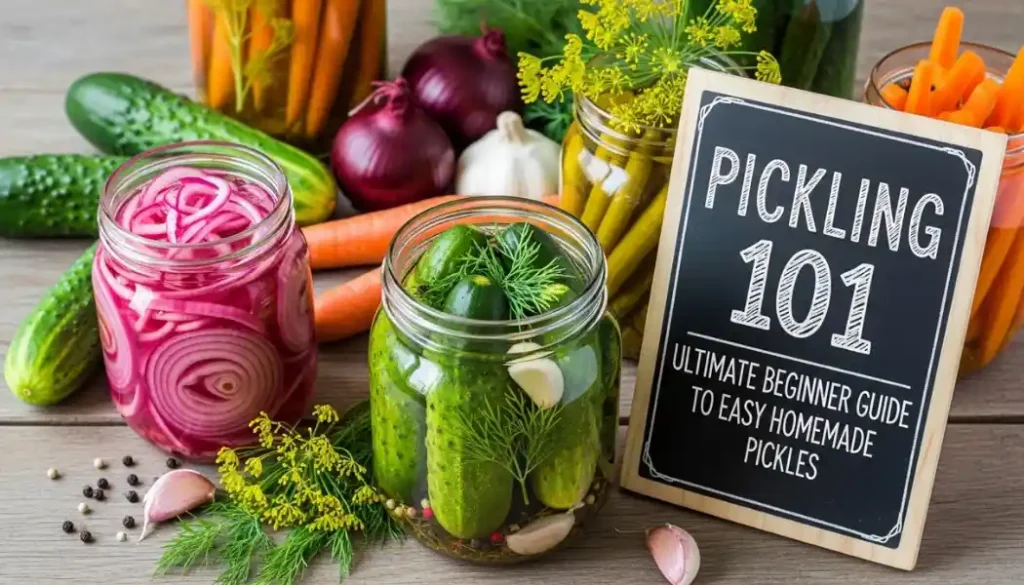
Pickling 101 is your simple starting point to learn how to make delicious, long-lasting homemade pickles at home. If you have ever wondered how to pickle vegetables, this guide will make everything easy to understand, even if you are a complete beginner. Pickling is one of the oldest food preservation methods, where fresh vegetables are stored in a mixture of vinegar, salt, water, and spices to create a tangy, flavorful snack.
Today, both quick pickling and traditional fermented pickles are popular, especially for people who enjoy healthy, homemade foods. From crunchy cucumbers to carrots and onions, almost any vegetable can be turned into tasty pickled vegetables.
In this beginner-friendly guide, you will learn the basics of pickling process, ingredients, brine ratio, and storage tips, so you can confidently start making your own easy refrigerator pickles at home.
What is Pickling?
Pickling is a simple food preservation method where vegetables are kept in a vinegar-based brine or salty liquid to extend their shelf life and enhance flavor. In basic terms, it means soaking foods in a mixture that prevents spoilage while adding a tangy, slightly sour taste that many people enjoy.
People have been pickling vegetables for centuries because it is an easy way to preserve food without refrigeration, especially when fresh produce is abundant. It also helps reduce food waste and makes vegetables more flavorful and exciting to eat.
Unlike regular cooking or short-term storage methods, pickling changes both the taste and texture of food through acidity. This is what makes it different from simple preservation techniques like freezing or refrigerating.
Pickling is trending again today because people are looking for healthy, homemade, and natural foods. It also fits modern diets that focus on simple ingredients, gut-friendly foods, and easy kitchen methods anyone can try at home.
Pickling Methods Explained
There are two main ways to start pickling at home: quick pickling and fermented pickling. Both methods are popular, but they work in very different ways and give different results in taste, texture, and health benefits.
Quick Pickling (Refrigerator Method)
Quick pickling is the easiest method for beginners. It uses a vinegar-based brine to preserve vegetables in a short time, usually within a few hours to a couple of days. This method does not require fermentation, so the process is fast and simple.
- Fast process (hours to days)
- Uses vinegar, water, salt, and spices
- Very beginner-friendly
- Stored in the refrigerator
Quick pickles taste bright, tangy, and slightly sharp because of the vinegar. The texture stays crisp, especially when eaten fresh within a few days.
Fermented Pickling (Traditional Method)
Fermented pickling is a natural process where vegetables sit in a saltwater brine and develop flavor over time using good bacteria (natural fermentation). This method takes longer but is known for its health benefits and deep flavor.
- Natural fermentation process
- Takes several days to weeks
- Rich in probiotic benefits
- No vinegar required
Fermented pickles have a more complex taste—slightly sour, earthy, and rich. The texture becomes softer compared to quick pickles, but the flavor is deeper and more traditional.
Quick vs Fermented Pickling Comparison
| Feature | Quick Pickling | Fermented Pickling |
| Time | Hours to days | Days to weeks |
| Main liquid | Vinegar brine | Saltwater brine |
| Taste | Sharp, tangy | Sour, complex |
| Texture | Crisp | Softer |
| Difficulty | Easy | Moderate |
| Health benefits | Basic preservation | Probiotic-rich |
Flavor & Texture Differences
The biggest difference between the two methods is flavor depth and texture. Quick pickles are crisp and tangy with a clean vinegar taste, while fermented pickles develop a deeper, more complex flavor over time. If you prefer fast results, quick pickling is ideal. If you want traditional taste and gut-friendly benefits, fermentation is the better choice.
Best Vegetables for Pickling
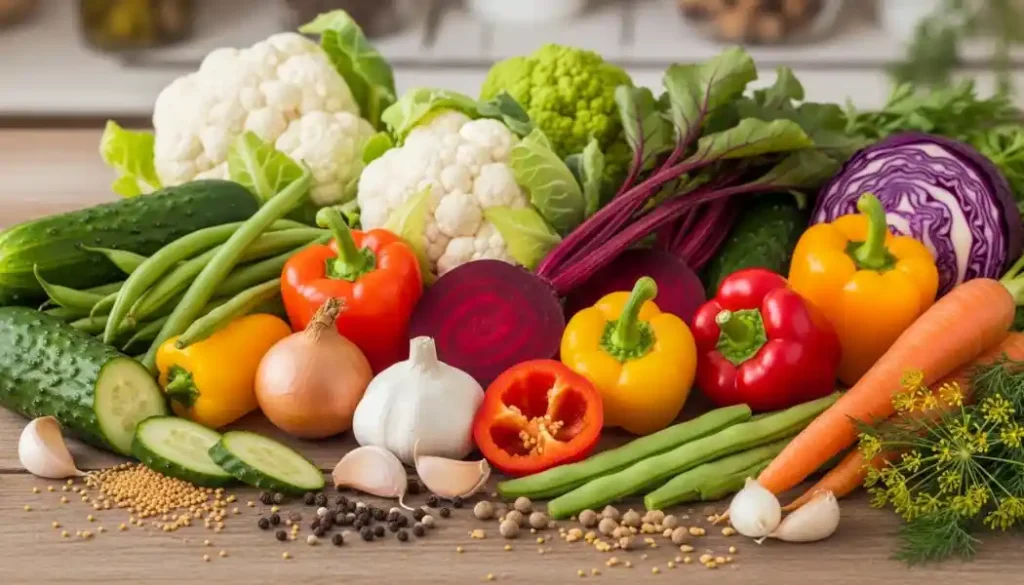
Choosing the right vegetables is important for successful pickling, especially if you want the best flavor and texture. Some vegetables absorb brine better and stay crisp longer, making them perfect for beginners.
You might also like: Vegan Cabbage Rolls With Tomato Sauce
Best Vegetables to Start With
- Cucumbers – classic choice, stay crunchy and absorb flavor well
- Carrots – naturally sweet and firm, great for long-lasting crunch
- Onions – turn slightly sweet and tangy after pickling
- Radishes – give a peppery crunch and bright color
- Cabbage – commonly used in fermented pickles like sauerkraut
- Peppers – add mild heat and strong flavor
These are considered the best vegetables for crunch retention, especially cucumbers, carrots, and radishes, because they stay firm even after soaking in brine.
Vegetables That Don’t Work Well for Pickling
Not all vegetables are ideal for pickling. Some become too soft or lose structure quickly.
- Lettuce (turns soggy)
- Cooked vegetables (lose crunch)
- Very watery vegetables like zucchini (can become mushy)
Pro Tip for Beginners
For the best results, always choose fresh, firm vegetables. The fresher the produce, the better your pickles will stay crunchy and flavorful over time.
Essential Pickling Ingredients & Tools
To make successful homemade pickles, you only need a few simple ingredients and basic kitchen tools. The quality and balance of these ingredients directly affect the taste, crunch, and shelf life of your pickles.
Core Ingredients
- Vinegar – The main preserving liquid. Common choices include white vinegar for strong acidity and apple cider vinegar for a slightly milder, fruity flavor.
- Salt – Essential for flavor and preservation. Kosher salt is preferred because it dissolves easily, while table salt can sometimes make the brine cloudy.
- Water – Used to dilute vinegar for a balanced brine.
- Sugar (optional) – Adds a mild sweetness to balance the sour taste. Common in sweet or bread-and-butter style pickles.
- Spices – These enhance flavor. Popular choices include mustard seeds, garlic, chili flakes, dill, and peppercorns.
Essential Tools
Having the right tools makes pickling easier and safer, especially for beginners.
- Glass jars vs plastic containers – Glass jars are strongly recommended because they are non-reactive and preserve flavor better.
- Sterilization tools – Clean jars are important to prevent contamination and ensure safe storage.
- Funnel & lids – A funnel helps pour brine without spills, while tight lids keep the pickles sealed properly.
- Measuring cups – Accurate measurements are important for consistent brine balance.
The Perfect Pickling Brine Ratio
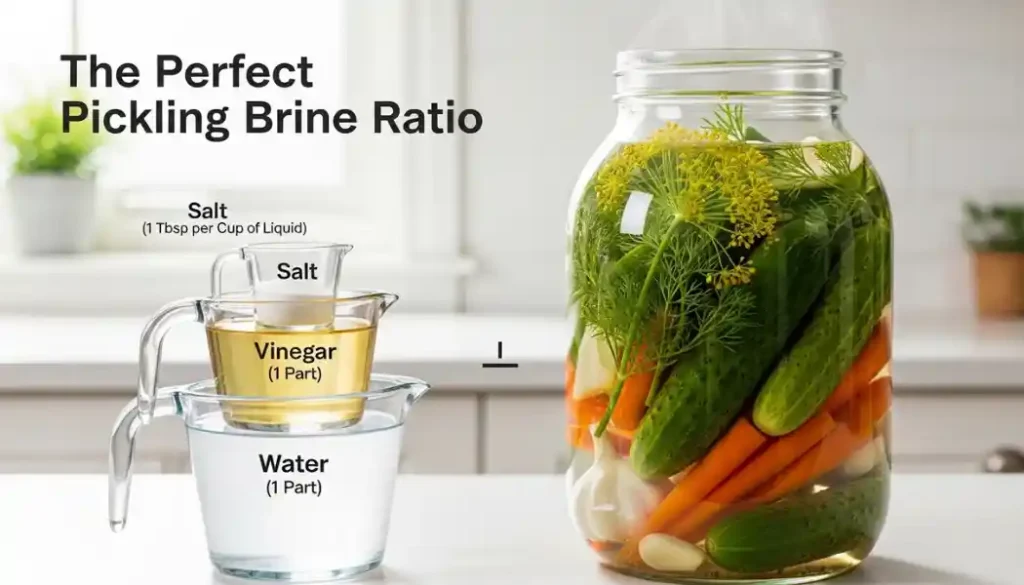
A good brine ratio is the foundation of every successful pickle. If the balance is wrong, the flavor, texture, and preservation can be affected.
Standard Vinegar-to-Water Ratio
The most common beginner-friendly formula is a 1:1 vinegar-to-water ratio. This creates a balanced acidity that is strong enough to preserve vegetables while still tasting smooth and enjoyable.
Salt Measurement Guide
Salt is essential for both flavor and preservation. A simple guideline is:
- About 1 to 2 tablespoons of salt per cup of liquid (adjust based on taste preference)
This helps maintain crunch while enhancing overall flavor.
Sugar Adjustment
Sugar is not required but can be added to create a balanced sweet-sour taste, especially in quick pickles. Even a small amount can soften the sharpness of vinegar.
Fail-Proof Brine Chart
| Taste Style | Vinegar | Water | Salt | Sugar |
| Classic Tangy | 1 cup | 1 cup | 1 tbsp | Optional |
| Mild Flavor | 1 cup | 1.5 cups | 1 tbsp | Optional |
| Sweet Pickles | 1 cup | 1 cup | 1 tbsp | 1–2 tbsp |
How to Adjust Brine for Taste
One of the best parts of pickling is customization. If your brine tastes too strong, add more water. If it feels too mild, increase vinegar slightly. For more flavor depth, adjust salt and spices slowly until you reach the perfect balance.
A well-balanced brine ensures your pickles stay crispy, flavorful, and long-lasting every time.
Step-by-Step Pickling Process
Making homemade pickles is simple when you follow the right steps. This step-by-step pickling process helps beginners create crisp and flavorful pickled vegetables without confusion.
Start by washing and cutting your vegetables properly. Fresh and clean produce is important for safe and tasty pickles. Cut them into even sizes so they absorb the brine evenly.
Next, prepare the brine using your vinegar, water, salt, and optional sugar. Make sure everything is fully dissolved for a balanced flavor.
Now pack the jars properly. This step is very important for keeping your pickles crunchy. Always pack vegetables tightly but not crushed, leaving small gaps so the brine can flow through.
Add your spices like garlic, mustard seeds, or chili flakes before pouring the liquid. This ensures even flavor distribution.
Then pour the hot or cold brine over the vegetables until they are fully covered.
Seal the jars tightly and store them correctly in the refrigerator or cool place, depending on the method you are using.
Jar Packing Technique for Crunchiness
A key secret to crispy pickles is how you pack the jar. Always:
- Keep vegetables firm, not mashed
- Leave small space for liquid movement
- Layer spices evenly between vegetables
- Avoid overfilling the jar
This helps maintain texture and crunch retention during storage.
Quick Pickling Timeline
The time needed for pickling depends on the method and flavor intensity you want.
- 1 hour: Light flavor starts to develop
- 24–48 hours: Best balance of taste and crunch
- 3–7 days: Full flavor absorption for deep-tasting pickles
Quick pickling is great because it doesn’t take long, and you can enjoy fresh, tangy vegetables in just a short time. However, letting them sit longer improves the overall taste and texture balance.
How to Store Pickled Vegetables
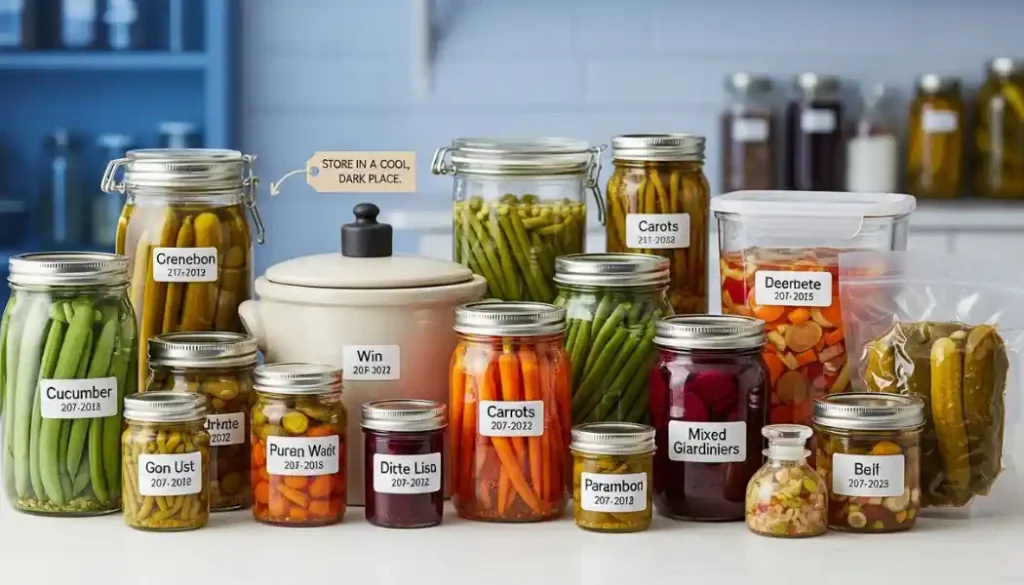
Proper storage is very important to keep your pickles safe, fresh, and flavorful.
Refrigerator Storage Rules
For quick pickles, always store them in the refrigerator. Keep jars tightly sealed and avoid opening them too often, as air exposure can affect quality.
Shelf-Stable vs Fridge Pickles
- Refrigerator pickles: Made for short-term use, easy and fast
- Shelf-stable pickles: Properly processed and sealed for long-term storage
Beginners usually start with fridge pickles because they are safer and easier.
Shelf Life Duration
- Refrigerator pickles: 2–4 weeks (best taste in first 1–2 weeks)
- Fermented pickles: several months if stored properly
Signs of Spoilage
Always check your pickles before eating. Discard them if you notice:
- Bad or sour smell (different from normal vinegar smell)
- Mold growth
- Slimy texture
- Strange color changes
Proper storage ensures your homemade pickles stay safe, crunchy, and delicious for longer.
Common Pickling Mistakes
Even simple homemade pickling can go wrong if small details are ignored. Most beginners face similar issues, and understanding these common pickling mistakes can help you avoid failed batches and improve flavor, texture, and safety.
One of the biggest mistakes is using the wrong vinegar acidity. If the vinegar is too weak, it cannot properly preserve vegetables, which affects both taste and shelf life.
Another common issue is mushy vegetables. This usually happens when overripe produce is used or vegetables are cut too small, causing them to lose their natural crunch.
Many beginners also notice cloudy brine, which can happen due to using table salt instead of kosher salt or natural starch release from vegetables.
Poor sealing of jars is another major problem. If air enters the jar, it can affect fermentation and reduce freshness.
Finally, using an incorrect salt ratio can completely change the flavor and preservation quality, making pickles either too salty or too bland.
Troubleshooting Pickling Problems
Even when you follow the steps correctly, small issues can still appear. This pickling troubleshooting guide helps you quickly fix the most common problems at home.
Why are my pickles soft?
Soft pickles usually happen when:
- Vegetables are overripe or not fresh
- Pickling time is too long before refrigeration
- Incorrect salt or vinegar balance is used
To fix this, always use fresh, firm vegetables and maintain the correct brine ratio.
Why is brine cloudy?
Cloudy brine is common in homemade pickles and may occur due to:
- Natural vegetable starch release
- Using table salt instead of pickling salt
- Overheating the brine
In most cases, cloudy brine is harmless, but using kosher salt and clean jars can reduce it.
Why do pickles taste bland?
If your pickles lack flavor, it may be because:
- Not enough salt or vinegar was used
- Spices were not added properly
- Vegetables were not fully submerged
Improve flavor by adjusting your brine seasoning and spice mix.
How to fix overly salty pickles
If pickles taste too salty:
- Add a little fresh vinegar and water mixture
- Let them sit longer to balance flavor
- Reduce salt in the next batch
A proper brine balance is key to avoiding this issue.
Why jars are leaking or bubbling
Leaking or bubbling usually happens when:
- Jars are overfilled
- Fermentation gases build up
- Lids are not sealed tightly
Always leave a small space at the top and ensure jars are properly sealed to maintain safety and freshness.
Pro Tips for Crunchy & Flavorful Pickles
Getting the perfect crunchy and flavorful pickles is not just about the recipe — small details make a big difference. These simple pro tips for pickling will help you improve texture, taste, and overall quality.
One useful trick is the ice bath method, where fresh vegetables are soaked in ice water before pickling. This helps them stay firm and crisp even after soaking in brine.
Always choose fresh produce selection. The fresher the vegetables, the better the final taste and crunch. Older or soft vegetables often lead to mushy pickles.
Pay attention to proper slicing thickness. Cutting vegetables evenly ensures they absorb brine at the same rate and stay consistent in texture.
The quality of vinegar also matters a lot. Using good-quality vinegar improves both flavor and preservation.
Finally, timing control is important. Leaving pickles too long or too short in brine can affect both taste and crunch, so always follow the recommended pickling time.
Health Benefits of Pickled Vegetables
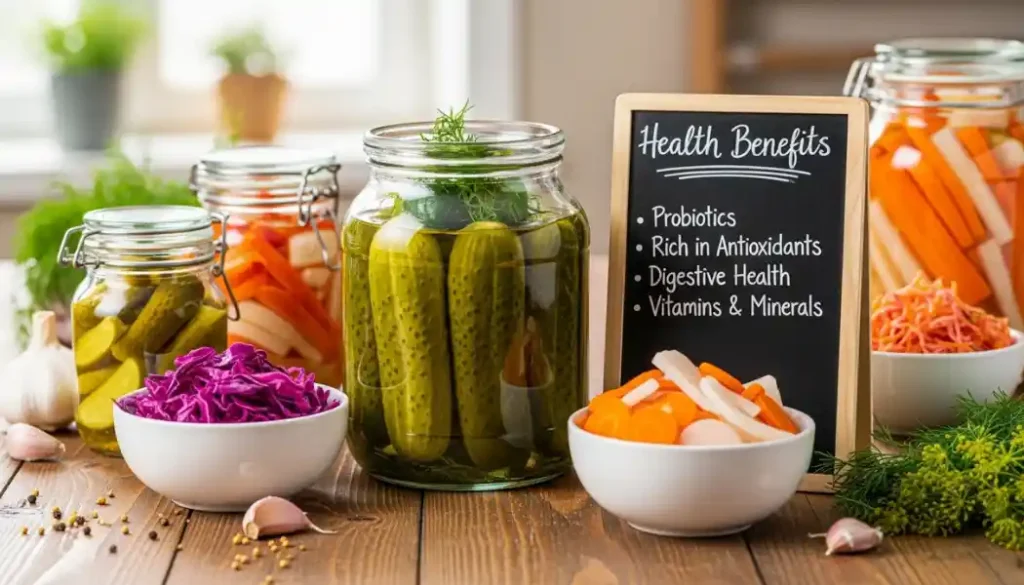
Pickled vegetables are not just tasty — they also offer several health benefits, especially when made at home with simple ingredients.
One of the biggest benefits comes from gut health, especially in fermented pickles, which contain natural probiotics that support digestion and healthy gut bacteria.
They are also a low-calorie snack, making them a great option for people who want something flavorful without adding too many calories to their diet.
Pickled vegetables also contain antioxidants, depending on the type of vegetables used, which help support overall wellness.
However, it is important to be mindful of sodium awareness, as pickles can contain high salt levels. Balancing salt in your brine helps make them healthier for regular consumption.
Global Pickling Styles
Pickling is not just one method — it is used in many cultures around the world, each with its own unique flavors and techniques.
Korean Pickled Vegetables
Korean pickles, often called “jangajji”, are made using soy sauce, vinegar, and spices. They are known for their bold, savory, and slightly sweet flavor profiles.
Indian Achar Basics
In India, pickles (called achar) are usually made with strong spices, mustard oil, salt, and sun-drying methods. They are bold, spicy, and very aromatic.
Mediterranean Pickles
Mediterranean pickling focuses on olive oil, vinegar, herbs, and garlic, creating lighter and more balanced flavors often served with meals or appetizers.
European Sour Pickles
In Europe, especially Eastern regions, pickles are often naturally fermented using salt brine, resulting in a strong, sour, and traditional taste.
These global pickling styles show how versatile and universal pickling is across different cuisines and cultures.
Creative Ways to Use Pickles
Once you’ve made your homemade pickles, there are many simple and tasty ways to enjoy them in everyday meals. Their tangy flavor can instantly improve basic dishes and add a fresh, crunchy bite.
- Sandwiches: Add sliced pickles for extra crunch and a tangy flavor boost
- Burgers: Classic pairing that balances rich and savory tastes
- Rice bowls: Adds freshness and acidity to heavy meals
- Salads: Enhances flavor with a sharp, zesty touch
- Charcuterie boards: Works well with cheese, meats, and crackers for a balanced snack plate
Pickles are versatile, and even a small amount can completely change the taste of a dish.
FAQs About Pickling 101 Recipe
What is quick pickling 101 Recipe?
Quick pickling is a fast method of preserving vegetables using a vinegar-based brine. It does not require fermentation and usually takes a few hours to a couple of days.
Can any vegetable be pickled?
Most firm vegetables like cucumbers, carrots, onions, and peppers work well. However, very soft or watery vegetables may not hold texture properly.
How long do homemade pickles last?
Refrigerator pickles usually last 2 to 4 weeks, while fermented pickles can last much longer if stored correctly.
What vinegar is best for pickling?
White vinegar is the most common because of its strong acidity, but apple cider vinegar is also popular for a milder, slightly sweet flavor.
Do pickles need sugar?
Sugar is optional. It is mainly used to balance sourness, especially in quick pickling recipes.
Are pickled vegetables healthy?
Yes, pickled vegetables can be healthy. They are low in calories, and fermented pickles may support gut health, but they should be eaten in moderation due to salt content.
Final Tips for Perfect Homemade Pickles
To make consistently good homemade pickles, a few simple habits can make a big difference.
Beginner Reminders
Always start with fresh vegetables, clean jars, and accurate measurements. These basics ensure better flavor and safety.
Safety Summary
Use the correct vinegar acidity, proper sealing, and clean equipment to prevent spoilage and maintain quality.
Flavor Improvement Tips
Adjust your brine slowly by balancing salt, vinegar, and optional sugar. Adding fresh spices like garlic, dill, or chili flakes can also improve taste naturally. With the right balance and technique, you can easily create crispy, flavorful, and long-lasting pickles at home every time.