
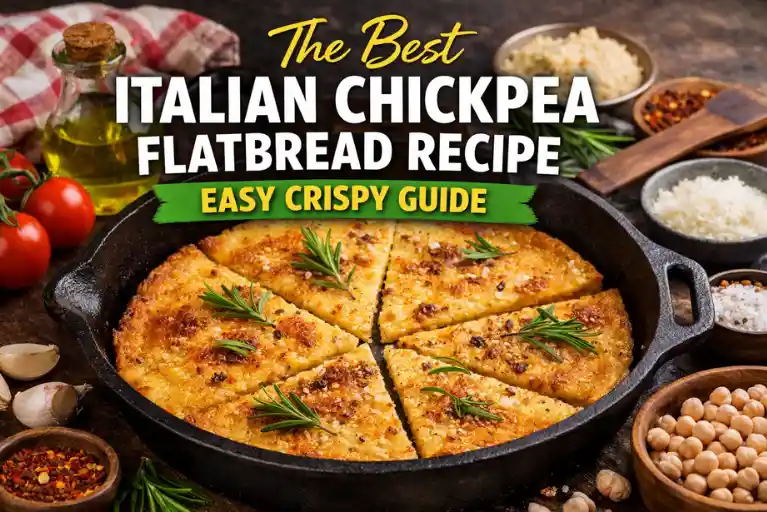
Italian Chickpea Flatbread—also known as farinata—is a simple, traditional Italian street food made with just a few ingredients, yet it delivers incredible flavor and texture. This chickpea flatbread recipe is naturally gluten-free, requires no yeast, and is perfect for anyone looking for a quick and healthy option. With the right method, you can achieve a crispy, golden flatbread on the outside and a soft, tender center inside.
Many people struggle with making farinata crispy, but once you understand the basics—like the correct chickpea flour ratio, proper batter resting time, and high heat baking—it becomes easy. In this guide, you’ll learn how to make authentic Italian chickpea flatbread at home, along with pro tips, variations, and solutions to common mistakes so your farinata turns out perfect every time.
Quick Answer: What Is Italian Chickpea Flatbread?
Italian chickpea flatbread, also known as Farinata, is a traditional gluten-free flatbread made with chickpea flour, water, olive oil, and salt. It is baked at high heat until golden, creating a crispy outer layer with a soft, tender center and a rich, nutty flavor.
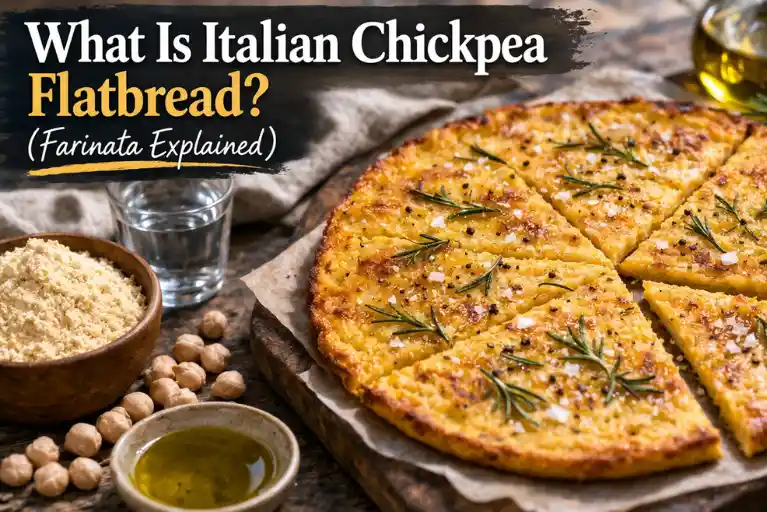
What Is Italian Chickpea Flatbread? (Farinata Explained)
Italian chickpea flatbread, commonly known as Farinata, is a traditional Italian street food flatbread made from chickpea flour, water, olive oil, and salt. It has a thin, slightly crispy texture with a soft center and a rich, nutty flavor that makes it both simple and satisfying.
You might also like: Best Sweet Potato Fritters Easy Crispy Recipe
Origin: Liguria, Italy
This authentic farinata recipe comes from the coastal region of Liguria, especially the city of Genoa. Historically, it was considered a poor man’s food, made with affordable ingredients, but today it is loved as a classic Ligurian flatbread across Italy and beyond.
Street Food History
Farinata has been sold for centuries by street vendors in Italy. It is traditionally baked in large, round pans inside wood-fired ovens and served fresh, hot, and sliced into portions—making it one of the most iconic Italian street food dishes.
Other Names You Should Know
Depending on the region, this chickpea flatbread recipe is known by different names:
- Cecina – popular in Tuscany
- Socca – found in southern France
While the base ingredients are the same, the texture and cooking style can vary slightly.
Why It’s Globally Popular
Today, Italian chickpea flatbread is popular worldwide because it is:
- Naturally gluten-free and healthy
- High in plant-based protein
- Easy to make with no yeast required
- Extremely versatile with different toppings and variations
Its combination of simple ingredients, rich flavor, and crispy texture makes farinata a favorite for both home cooks and professional chefs.
The Secret Behind Perfect Farinata (What Most Recipes Miss)
Making perfect Italian chickpea flatbread isn’t just about mixing ingredients—it’s about understanding a few hidden techniques that most recipes don’t explain. If you want that crispy, golden farinata with the right texture, these secrets make all the difference.
Batter Resting Science (Why It Matters)
One of the biggest mistakes people make is skipping the batter resting time. After mixing chickpea flour and water, the batter needs at least 30–60 minutes to rest. This allows the flour to fully hydrate, resulting in a smoother texture and preventing a grainy or uneven flatbread. Proper resting also helps achieve a crispy exterior when baked.
Pan Heat Importance
The pan must be very hot before adding the batter. Whether you use a cast iron skillet or baking tray, preheating ensures the batter starts cooking instantly. This is the key to avoiding a soggy chickpea flatbread and getting that signature crispy base.
Oil Layering Technique
Olive oil is not just for flavor—it’s essential for texture. A generous layer of oil in the pan creates a slight frying effect while baking. This helps develop crispy edges and prevents sticking, which is a common issue in many farinata recipes.
Ingredient Science (Why Each Ingredient Matters)

To master an authentic farinata recipe, you need to understand how each ingredient works. Even though this chickpea flatbread recipe uses only a few ingredients, each one plays a crucial role in the final result.
Chickpea Flour (Protein + Structure)
Chickpea flour is the base of this gluten-free flatbread. It is rich in protein, which helps create structure without the need for gluten. This is what gives Italian chickpea flatbread its slightly firm yet tender texture.
Water (Hydration + Consistency)
Water controls the batter consistency. The right ratio ensures the batter is thin enough to spread evenly, which is essential for achieving a thin, crispy farinata instead of a thick, heavy one.
Olive Oil (Crispiness + Flavor)
Olive oil adds both rich flavor and crispiness. It enhances the nutty taste of chickpeas and helps create that golden, slightly fried surface that defines a perfect baked chickpea flatbread.
Salt + Optional Toppings
Salt brings out the natural flavor of the chickpeas, while toppings like rosemary, onions, or garlic add depth and variety. These simple additions can transform a basic Italian farinata into a more flavorful and customized dish.
Exact Batter Ratio Guide (Foolproof Formula)
Getting the perfect Italian chickpea flatbread starts with the right chickpea flour ratio. This is one of the biggest reasons why many people struggle with texture.
Ideal Ratio (1 Cup Flour : Water : Oil)
For a classic farinata recipe, use:
- 1 cup chickpea flour
- 1.5 to 2 cups water
- 2–3 tablespoons olive oil
This creates a smooth, pourable batter that spreads easily and bakes into a thin, crispy chickpea flatbread.
Thin vs Thick Batter Difference
- Thin batter → results in crispy, traditional farinata (BEST)
- Thick batter → leads to a dense, soft, pancake-like texture
Authentic Italian farinata is always thin and slightly crispy, not thick.
Adjusting Consistency
- If batter is too thick → add a little water
- If too watery → let it rest longer (it thickens naturally)
The goal is a silky, lump-free batter that coats the pan evenly.
Ingredients Breakdown (With Roles + Smart Substitutes)
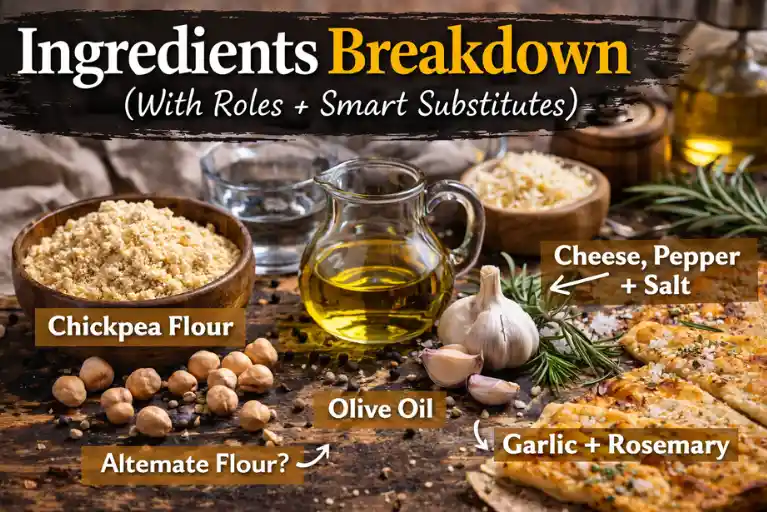
Even though this chickpea flatbread recipe uses simple ingredients, understanding them helps you improve flavor and texture.
Gluten-Free Advantage
This Italian chickpea flatbread is naturally gluten-free, making it a great option for people avoiding wheat. The chickpea flour provides structure without needing yeast or gluten.
Substitute Oils
While olive oil is traditional, you can also use:
- Avocado oil (neutral + healthy)
- Sunflower oil (light taste)
However, olive oil gives the best authentic flavor in a true farinata recipe.
Flavor Add-Ons
You can enhance your chickpea flour flatbread with:
- Fresh rosemary
- Sliced onions
- Garlic
- Black pepper
These small additions can turn a basic recipe into a restaurant-style Italian street food dish.
Step-by-Step Italian Chickpea Flatbread Recipe (Foolproof Method)
Follow this method carefully to make a perfect, crispy Italian chickpea flatbread at home.
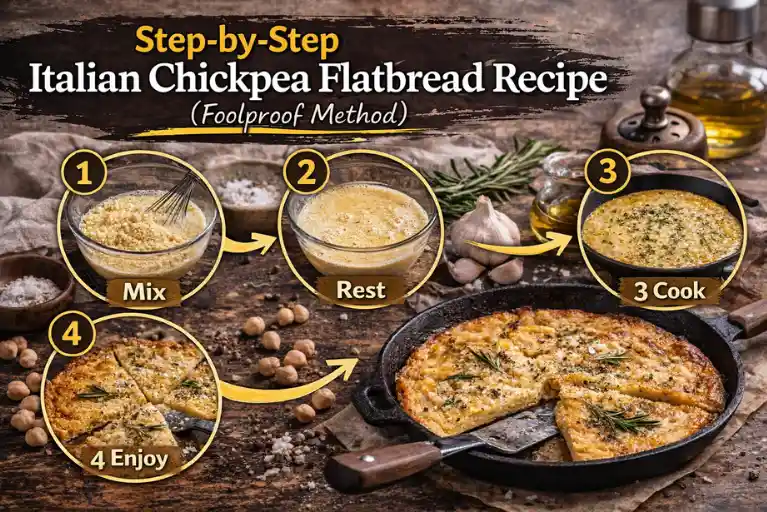
1. Mix Batter
In a bowl, whisk together chickpea flour and water until smooth and lump-free. Add salt and a little olive oil.
2. Rest Batter (IMPORTANT)
Let the batter rest for 30–60 minutes. This step improves texture and helps create a crispy farinata instead of a grainy one.
3. Preheat Pan
Place your pan in the oven and heat it well. A hot pan is essential to avoid a soggy chickpea flatbread.
4. Bake at High Heat
Pour the batter into the hot, oiled pan and bake at 220–250°C (425–480°F) until golden and slightly crisp on the edges.
5. Check Doneness
Your Italian farinata is ready when:
- The top is golden brown
- Edges are crispy
- Center is set but slightly soft
Best Pan & Equipment Guide (Cast Iron vs Tray)
Choosing the right pan is critical for achieving a crispy chickpea flatbread.
Why Cast Iron Is Best
A cast iron skillet holds heat extremely well, which helps create a crispy bottom and evenly cooked farinata. It also gives a more authentic Italian street food texture.
Baking Tray Alternative
If you don’t have cast iron, you can use a regular oven baking tray. Just make sure to:
- Preheat it properly
- Use enough oil to prevent sticking
Results will still be good, but slightly less crispy.
Oven Positioning Tips
- Place the pan in the middle or upper rack
- For extra crispiness, finish under the broiler for 1–2 minutes
Proper positioning helps achieve that perfect golden, crispy Italian chickpea flatbread every time.
Crispiness Blueprint (How to Make Perfect Crispy Farinata)
If you want perfect Italian chickpea flatbread, the goal is simple: crispy edges + golden surface + soft center. Follow this proven blueprint to avoid a soggy chickpea flatbread and get that authentic result every time.
High Temperature Strategy
Always bake at very high heat (220–250°C / 425–480°F). High heat helps the batter cook quickly and creates that signature crispy farinata texture.
Thin Spreading Technique
Pour the batter into the pan and keep it thin and even. A thin layer ensures better heat distribution and prevents a dense or undercooked flatbread.
Oil Distribution Hack
Add enough olive oil to coat the pan evenly. The oil should lightly surround the batter—this creates a slight frying effect, giving you crispy edges and a golden base.
Timing Secrets
Bake until the top is golden, then finish with 1–2 minutes under the broiler for extra crispiness. Don’t overbake, or it can dry out instead of staying soft inside.
Why Your Farinata Fails (Common Mistakes + Fixes)
Many people struggle with how to make farinata crispy, but most problems come from a few simple mistakes. Here’s how to fix them.
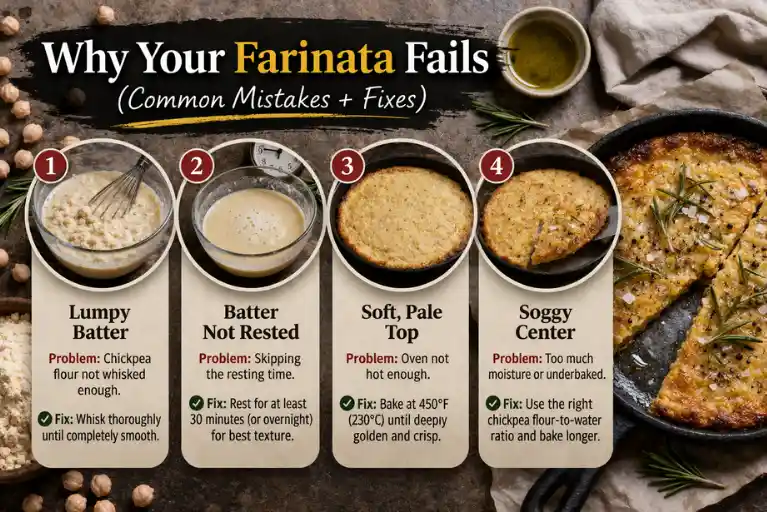
Soggy Texture → Causes + Fixes
- Cause: Low oven temperature or thick batter
- Fix: Use high heat and keep batter thin
Not Crispy → What Went Wrong
- Cause: Pan not hot enough or not enough oil
- Fix: Preheat the pan well and use proper oil layering technique
Sticking to Pan
- Cause: Not enough oil or cold pan
- Fix: Always preheat and coat the pan generously
Too Thick or Undercooked
- Cause: Incorrect chickpea flour ratio or uneven spreading
- Fix: Adjust water ratio and spread batter evenly
Texture Guide (Thin vs Thick Farinata Explained)
Understanding texture is key to mastering Italian chickpea flatbread. This section is often ignored, but it makes a huge difference.
Traditional Thin Version
The authentic farinata recipe Italy style is thin, slightly crispy, and flexible. It cooks quickly and delivers the best balance of crispiness and softness.
Modern Thick Variation
Some modern recipes use thicker batter, resulting in a soft, cake-like texture. While still tasty, it lacks the classic crispy edges.
Which Is Better for Crispiness?
The thin version is always better if your goal is crispy chickpea flatbread.
Thick farinata is softer but less traditional.
Farinata vs Socca vs Cecina
Many people confuse these dishes, but they are all versions of chickpea flour flatbread with slight differences.
Ingredients
All three use similar ingredients: chickpea flour, water, olive oil, and salt. Some variations may include herbs or toppings.
Texture
- Farinata → thin, slightly crispy, soft inside
- Socca → often crispier and sometimes thicker
- Cecina → similar to farinata but can vary in thickness
Cooking Style
- Farinata → baked in large pans, often in wood-fired ovens
- Socca → cooked at very high heat, sometimes in open ovens
- Cecina → baked or sometimes pan-cooked
Region Comparison
- Farinata → Liguria, Italy
- Socca → Nice, France
- Cecina → Tuscany, Italy
While the base is the same, small differences in technique and heat create unique textures and flavors.
Variations You Must Try (Flavor Upgrades)
One of the best things about Italian chickpea flatbread is how versatile it is. You can easily upgrade a basic farinata recipe into something unique and flavorful.
Vegetable Farinata
Add sliced onions, zucchini, or tomatoes on top before baking. This creates a healthy chickpea flatbread with vegetables that adds texture and freshness.
Cheese Version
Sprinkle parmesan or mozzarella for a richer taste. This gives your chickpea flatbread recipe a slightly creamy and savory twist.
Garlic + Rosemary
Classic Italian flavors like garlic and rosemary enhance the natural nuttiness of the chickpea flour flatbread and make it more aromatic.
Street Food Style
Keep it simple with salt, pepper, and olive oil—just like authentic Italian street food farinata served fresh and hot in Italy.
Is Italian Chickpea Flatbread Healthy? (Nutrition Guide)
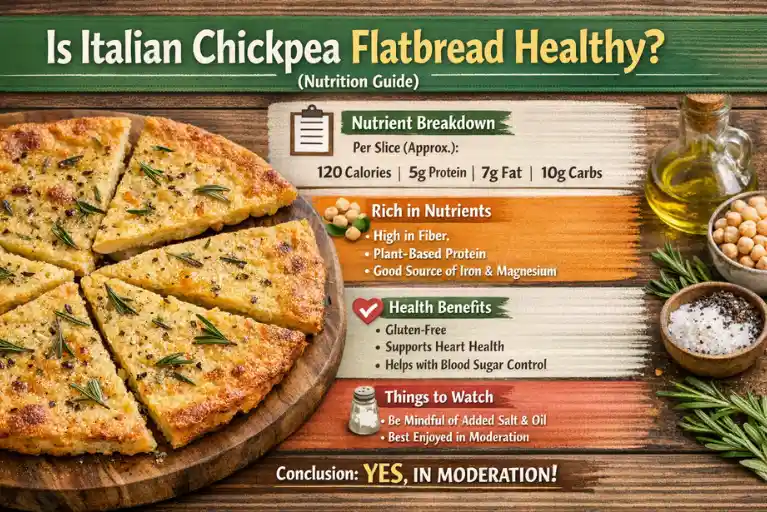
Yes, Italian chickpea flatbread is considered a healthy and nutritious option, especially compared to traditional bread.
High Protein Benefits
Chickpea flour is rich in plant-based protein, making this a great high protein flatbread recipe for vegetarians and fitness-focused diets.
Gluten-Free Advantages
This gluten-free flatbread is perfect for people with gluten intolerance or those following a clean diet. It requires no wheat and no yeast.
Calories Overview
- Moderate calories depending on oil used
- Rich in fiber and nutrients
Overall, it’s a balanced and satisfying dish when eaten in moderation.
What to Serve With Italian Chickpea Flatbread
This chickpea flatbread recipe pairs well with many dishes, making it perfect for meals or snacks.
Salads
Serve with fresh salads like arugula or tomato salad to balance the richness.
Soups
Pair with soups like tomato or vegetable soup for a comforting meal.
Dips & Sauces
Enjoy with hummus, yogurt dips, or simple olive oil and herbs for added flavor.
Storage, Reheating & Meal Prep Tips
Knowing how to store and reheat your Italian farinata properly helps maintain its crispy texture.
How to Store
- Keep in an airtight container
- Store in the fridge for up to 2–3 days
Best Reheating Method (Keep Crispy)
- Reheat in oven or pan (NOT microwave)
- Use high heat for a few minutes to restore crispiness
This prevents a soggy chickpea flatbread after storage.
Can You Freeze It?
Yes, you can freeze it, but texture may slightly change. Reheat directly in the oven for best results.
Expert Tips for Perfect Results Every Time
Want your Italian chickpea flatbread recipe to turn out perfect every time? Follow these expert tips.
Pro Chef Tricks
- Always use a hot pan before pouring batter
- Use high-quality olive oil for better flavor
Timing Secrets
- Don’t rush the batter resting time
- Bake until edges are golden and crisp, not pale
Flavor Enhancement Tips
- Add herbs like rosemary or thyme
- Finish with a drizzle of olive oil after baking
These small details make a big difference in achieving a perfect, crispy farinata every time.
FAQs About Best Italian Chickpea Flatbread Recipe
Can You Make Farinata Without Cast Iron?
Yes, you can make Italian chickpea flatbread without cast iron by using a regular oven baking tray. Just make sure to preheat the tray well and add enough oil. While cast iron gives better crispy results, a hot tray can still produce a good baked chickpea flatbread.
Why Should You Rest the Batter?
Resting the batter is essential in any authentic farinata recipe. It allows the chickpea flour to fully absorb water, resulting in a smoother texture and better cooking. Skipping this step can lead to a grainy or uneven flatbread.
Can You Make It in an Air Fryer?
Yes, you can try making chickpea flatbread in an air fryer, but results may vary. Use a small pan that fits inside and cook at high heat. However, the texture may not be as authentic or crispy as traditional oven-baked farinata.
Why Is My Farinata Bitter?
Bitterness usually happens when the batter is not mixed well or when it’s overcooked. Make sure to skim off foam from the batter before baking and avoid burning the edges. Using fresh chickpea flour also helps prevent bitterness.
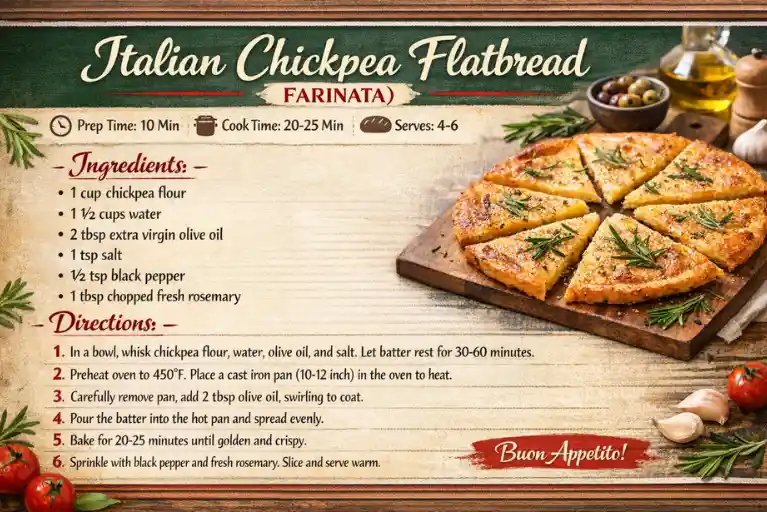
Recipe Card – Italian Chickpea Flatbread (Farinata Recipe)
Course: AppetizerCuisine: ItalianDifficulty: Easy4
servings10
minutes25
minutes220
kcalThis Italian Chickpea Flatbread (Farinata) is a simple, gluten-free recipe made with chickpea flour, olive oil, and water. It bakes into a crispy, golden flatbread with a soft center—perfect for a quick, healthy, and flavorful dish at home.
Ingredients
1 cup chickpea flour
1.5 to 2 cups water (adjust for thin batter)
2–3 tablespoons olive oil (plus extra for pan)
½ teaspoon salt
- Optional toppings:
Fresh rosemary
Sliced onions
Garlic
Black pepper
Instructions
- Mix Batter
In a bowl, whisk together chickpea flour and water until smooth and lump-free. Add salt and 1 tablespoon olive oil. - Rest Batter (IMPORTANT)
Let the batter rest for 30–60 minutes. This improves texture and helps create a crispy farinata. - Preheat Pan
Place a cast iron skillet or baking tray in the oven and preheat at 220–250°C (425–480°F). - Add Oil & Pour Batter
Carefully remove the hot pan, add olive oil, and pour in the batter. Swirl slightly to spread evenly. - Bake at High Heat
Bake for 20–25 minutes until the top is golden and edges are crispy. - Finish for Crispiness (Optional)
Broil for 1–2 minutes for extra crispy edges. - Serve Hot
Slice and serve your Italian chickpea flatbread warm for best flavor and texture. - Nutrition (Approximate per Serving)
Calories: 180–220 kcal
Protein: 6–8g
Carbohydrates: 20–25g
Fat: 7–10g
Recipe Video
Notes
- Use a thin batter for authentic crispy results
- Always preheat the pan to avoid sticking
- Don’t skip the batter resting time
- Use enough olive oil for crispiness
Final Thoughts
Italian chickpea flatbread (farinata) is a perfect example of how simple ingredients can create something truly delicious. With the right chickpea flour ratio, proper batter resting time, and high heat baking, you can easily achieve a crispy, golden flatbread at home.
Whether you keep it traditional or try different variations, this gluten-free, high-protein flatbread is both healthy and versatile. Once you understand the technique, making perfect farinata every time becomes simple—and incredibly rewarding.