
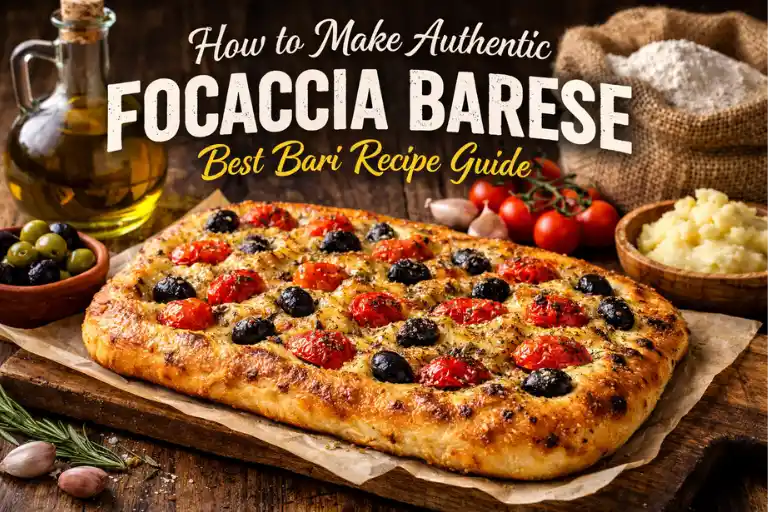
Focaccia Barese is one of the most loved traditional breads from Bari in the Puglia region of southern Italy. This famous Italian focaccia bread is known for its crispy golden crust, soft potato-based dough, and flavorful topping of cherry tomatoes, olives, and extra virgin olive oil. Unlike other types of focaccia, authentic Focaccia Barese often uses semolina flour and mashed potatoes, which give the bread a tender interior and rich taste.
Many people search for a Focaccia Barese recipe because it represents true Bari street food culture and traditional Puglia baking traditions. In this guide, you will learn how to make Focaccia Barese at home using simple ingredients and easy steps. From the authentic Bari-style focaccia dough to helpful baking tips, this article will show you how to create a traditional Focaccia Barese recipe that is crispy, soft, and full of Italian flavor.
Quick Answer: What Is Focaccia Barese
Focaccia Barese is a traditional Italian focaccia bread from Bari in the Puglia region of southern Italy. This famous Bari-style focaccia is known for its crispy bottom crust, soft potato-based dough, and rich topping of cherry tomatoes, olives, oregano, and extra virgin olive oil. Unlike many other focaccia varieties, the authentic Focaccia Barese recipe often includes semolina flour and mashed potatoes, which give the bread its light texture and golden crust.
The origins of Focaccia Barese come from the historic bakeries of Bari, Italy, where it became a popular street food in Puglia. Bakers traditionally prepared the dough using durum wheat semolina, allowing it to ferment slowly for better flavor and texture.
What makes Focaccia Barese different from other focaccia breads is its unique combination of semolina flour, potatoes, and tomato topping. While other focaccia types may focus mainly on olive oil and herbs, traditional focaccia from Bari is topped with fresh tomatoes and olives, creating a more rustic and flavorful bread that reflects the authentic taste of southern Italian cuisine.
What Makes Focaccia Barese Unique
You might also like: Best Fave e Cicoria Recipe
Focaccia Barese stands out from other types of Italian focaccia bread because of its special ingredients and traditional baking method. This authentic focaccia from Bari is famous for its crispy crust, soft interior, and rich Mediterranean flavors. Several key elements make the traditional Focaccia Barese recipe truly unique.
Potato-Based Dough
One of the most distinctive features of Focaccia Barese is its potato-based dough. Many Bari focaccia recipes include mashed potatoes mixed into the dough. This technique helps create a soft and moist crumb while keeping the bread light and airy. The potatoes also improve the dough’s texture, which is why traditional focaccia Barese with potatoes has such a tender interior.
Use of Semolina Flour
Another important ingredient in authentic Focaccia Barese is semolina flour, which comes from durum wheat. This flour gives the bread its slightly nutty flavor and golden color. Many focaccia from Puglia recipes combine semolina flour with 00 flour to achieve the perfect balance between softness and structure.
Tomato and Olive Topping
Unlike some other focaccia styles, Focaccia Barese is topped with cherry tomatoes, olives, oregano, and extra virgin olive oil. The tomatoes release juice during baking, which adds natural sweetness and flavor to the bread. This classic topping is one reason why Bari-style focaccia is so recognizable.
High Olive Oil Content
Extra virgin olive oil plays a major role in the traditional focaccia Barese recipe. Olive oil is added to the dough, brushed on the pan, and drizzled on top before baking. This generous use of oil helps create the rich flavor and crispy texture that people love in Italian focaccia bread.
Crispy Bottom Texture
A signature feature of authentic Focaccia Barese is its crispy golden bottom. Bakers achieve this by using olive oil in the baking pan and baking the bread at a high temperature. The result is a crunchy crust on the bottom with a soft, fluffy interior, which makes homemade Focaccia Barese both satisfying and delicious.
The History and Origin of Focaccia Barese
Focaccia Barese has deep roots in the culinary traditions of Bari, Italy, a coastal city in the Puglia region of southern Italy. This famous Bari-style focaccia is more than just bread—it is an important part of local street food culture and everyday life in the region. Over time, the traditional focaccia from Bari became a symbol of Puglian cuisine, enjoyed by locals and visitors alike.
Bari Street Food Culture
In Bari, bakeries often prepare fresh Focaccia Barese early in the morning and display it in large trays. Locals commonly buy a warm slice as a quick snack while walking through the city. Because of its simple ingredients and delicious flavor, focaccia from Bari has long been considered a popular Italian street food. The bread’s crispy crust, soft interior, and tomato topping make it perfect for eating on the go.
Puglia Baking Traditions
The region of Puglia is known for its strong baking traditions. Many classic recipes from this area rely on local grains, olive oil, and simple ingredients. The authentic Focaccia Barese recipe reflects these traditions by combining semolina flour, potatoes, and olive oil to create a bread that is both flavorful and satisfying. These methods have been passed down through generations of Italian bakers.
Role of Durum Wheat
A key reason Focaccia Barese tastes unique is the use of durum wheat semolina flour. Puglia produces some of the best durum wheat in Italy, which gives the bread its golden color and slightly nutty flavor. Using semolina flour also helps create the crispy bottom crust that makes traditional Bari focaccia so distinctive.
Bakery Heritage
Many bakeries in Bari and across Puglia still follow traditional methods when making authentic Focaccia Barese. The dough is often allowed to ferment slowly, which improves the flavor and texture of the bread. This strong bakery heritage ensures that the classic focaccia Barese recipe continues to be enjoyed today as a cherished part of southern Italian food culture.
Authentic Ingredients for Focaccia Barese
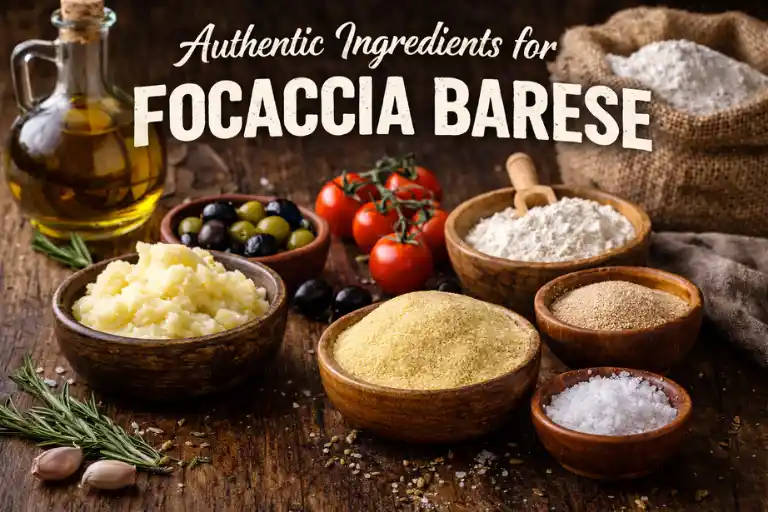
To make a truly authentic Focaccia Barese recipe, it is important to use the right ingredients. The combination of semolina flour, mashed potatoes, olive oil, and fresh toppings creates the signature flavor and texture that defines this traditional Italian focaccia bread. Below are the essential components used in Bari-style focaccia.
Essential Dough Ingredients
The dough for traditional Focaccia Barese is simple but carefully balanced to create the perfect texture.
- Semolina flour – A key ingredient made from durum wheat, giving the bread its golden color and slightly nutty flavor.
- 00 flour – Often mixed with semolina to create a soft and elastic focaccia dough.
- Mashed potatoes – An important element in many focaccia Barese with potatoes recipes, helping keep the bread soft and moist.
- Yeast – Allows the dough to rise and develop a light structure.
- Olive oil – Adds flavor and helps create the crispy crust typical of authentic focaccia from Bari.
- Salt – Enhances the natural flavor of the bread.
- Water – Combines all ingredients and helps form the dough.
Traditional Toppings
One of the most recognizable features of Focaccia Barese is its flavorful topping.
- Cherry tomatoes – Provide sweetness and moisture during baking.
- Olives – Usually black olives, adding a rich Mediterranean taste.
- Oregano – A classic Italian herb that gives the bread its aromatic flavor.
- Sea salt – Sprinkled on top to enhance the overall taste.
- Extra virgin olive oil – Drizzled over the dough before baking for authentic Italian flavor and crispiness.
These simple yet high-quality ingredients are what make homemade Focaccia Barese such a beloved traditional bread from Puglia.
Best Flour for Focaccia Barese
Choosing the right flour is essential for making an authentic Focaccia Barese recipe. The traditional bread from Bari in Puglia gets its unique flavor and texture from a combination of semolina flour and 00 flour. Understanding how these flours work will help you create the perfect Bari-style focaccia with a crispy crust and soft interior.
Semolina vs 00 Flour
Semolina flour is made from durum wheat, which is widely grown in southern Italy. It gives Focaccia Barese its golden color, slightly nutty flavor, and crisp base.
00 flour, on the other hand, is finely milled and helps create a soft and elastic focaccia dough. Many traditional focaccia Barese recipes use a mix of semolina flour and 00 flour to balance structure and softness.
Traditional Apulian Flour
In the Puglia region, bakers often rely on local durum wheat flour for bread making. This flour is known for its strong structure and rich flavor. Using Apulian semolina flour helps maintain the authenticity of focaccia from Bari and reflects the region’s long bread-baking tradition.
Flour Protein Levels
Protein levels in flour affect how well the dough develops gluten. Semolina flour typically has higher protein, which helps create a stronger dough structure. When combined with 00 flour, the result is a dough that is both stable and tender, perfect for homemade Focaccia Barese.
Texture Differences
The combination of these flours produces the classic texture of traditional Focaccia Barese. Semolina flour contributes to the crispy golden bottom, while 00 flour ensures a soft, airy crumb inside. This balance is what makes Italian focaccia bread from Bari so satisfying and flavorful.
Dough Hydration Explained
One important factor in making great Focaccia Barese is dough hydration, which refers to the amount of water compared to flour in the dough. Proper hydration helps create the soft interior and crispy crust that define an authentic focaccia Barese recipe.
Ideal Hydration Percentage
Most focaccia doughs use a hydration level of about 70–80%. This means the dough contains a relatively high amount of water. For Bari-style focaccia, higher hydration helps produce a light and airy texture while allowing the dough to spread easily in the baking pan.
How Hydration Affects Crust and Crumb
Hydration plays a big role in the final texture of traditional focaccia Barese. A well-hydrated dough creates a soft crumb inside and helps the bread develop its crispy golden crust when baked with olive oil. If the dough is too dry, the focaccia may turn out dense instead of fluffy.
Tips for Achieving Soft Focaccia
To get the best results when making homemade focaccia Barese, follow a few simple tips:
- Use enough water to create a soft and slightly sticky dough.
- Allow the dough to ferment slowly, which improves flavor and texture.
- Add extra virgin olive oil to the pan before baking to help create the crispy bottom crust.
- Avoid adding too much flour during kneading so the dough stays light and airy.
These techniques help produce the perfect texture for authentic focaccia from Bari.
Step-by-Step Guide: How to Make Focaccia Barese
Learning how to make Focaccia Barese at home is easier than many people think. With the right ingredients and a few traditional techniques, you can create a delicious homemade Bari focaccia that tastes just like the bread found in Italian bakeries.
Preparing the Potato Dough
Start by mixing semolina flour, 00 flour, mashed potatoes, yeast, salt, water, and olive oil in a large bowl. The mashed potatoes help keep the dough soft and moist, which is one reason why traditional focaccia Barese with potatoes has such a tender texture.
Kneading the Dough
Knead the dough until it becomes smooth and elastic. Proper kneading helps develop the gluten, which gives the bread its light and airy structure. You can knead the dough by hand or with a stand mixer.
First Fermentation
Place the dough in a lightly oiled bowl and allow it to ferment for about 1–2 hours, or until it doubles in size. This fermentation stage helps develop the rich flavor typical of authentic focaccia Barese.
Shaping the Dough in the Pan
After fermentation, transfer the dough into a well-oiled baking pan. Gently spread the dough using your hands so it fills the pan evenly. The olive oil in the pan helps create the crispy crust that defines Bari-style focaccia.
Adding Tomatoes and Olives
Press cherry tomatoes and olives into the surface of the dough. Sprinkle oregano, sea salt, and extra virgin olive oil over the top. These toppings give focaccia Barese its classic Mediterranean flavor.
Final Proof
Let the dough rest again for 30–40 minutes. This final proof allows the bread to become light and fluffy before baking.
Baking the Focaccia
Bake the focaccia in a preheated oven at around 220°C (425°F) until the top turns golden and the bottom becomes crispy. Once baked, allow the traditional Focaccia Barese to cool slightly before slicing and serving.
Traditional Bari Bakery Method
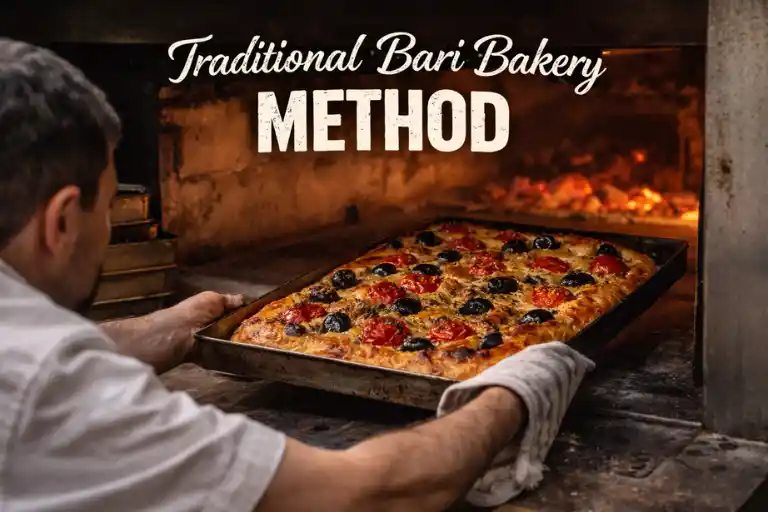
The authentic taste of Focaccia Barese comes from traditional baking techniques used in Bari bakeries for generations. In the Puglia region of southern Italy, many bakers still follow classic methods to produce the perfect Bari-style focaccia with a crispy crust and soft interior. These techniques are an important part of the heritage behind traditional focaccia from Bari.
Wood-Fired Oven Baking
One of the most traditional ways to bake authentic Focaccia Barese is in a wood-fired oven. These ovens reach very high temperatures and distribute heat evenly. The intense heat helps create the signature crispy bottom crust while keeping the inside of the bread light and fluffy. This method also gives Italian focaccia bread a slightly smoky flavor that many people love.
Bakery Trays
In many bakeries across Bari and Puglia, focaccia is baked in large rectangular metal trays. These trays are generously coated with extra virgin olive oil, which prevents sticking and helps produce the golden, crispy base that defines homemade focaccia Barese.
Fermentation Secrets
Traditional bakers often allow the dough to ferment slowly. A longer fermentation helps the dough develop deeper flavor and better texture. This technique is one reason why authentic focaccia Barese recipes from local bakeries have such a rich and satisfying taste.
Bakery Techniques
Experienced bakers also rely on simple but effective techniques when preparing Bari focaccia. They handle the dough gently, use high-quality semolina flour, and add plenty of olive oil during baking. These methods ensure the bread has the perfect balance of crispiness and softness that makes traditional focaccia Barese so special.
Why Potatoes Are Used in Focaccia Barese
One unique feature of the traditional Focaccia Barese recipe is the use of mashed potatoes in the dough. While many types of Italian focaccia bread rely only on flour and water, focaccia Barese with potatoes uses this extra ingredient to improve both texture and flavor.
Moisture Retention
Mashed potatoes help the dough retain moisture during baking. This prevents the bread from becoming dry and keeps the interior soft and tender. Because of this, authentic focaccia from Bari stays fresh longer than many other breads.
Softer Crumb
Adding potatoes also creates a lighter and softer crumb structure. The starch from the potatoes blends with the flour and helps produce the fluffy interior that people expect from Bari-style focaccia.
Traditional Bari Technique
Using potatoes in the dough is a traditional technique in Puglia baking. Bakers in Bari developed this method many years ago to improve the texture of their bread while using locally available ingredients. Today, this method remains an essential part of many authentic focaccia Barese recipes.
Flavor Enhancement
Potatoes also contribute a mild, natural sweetness that enhances the overall flavor of the bread. When combined with olive oil, tomatoes, and olives, the result is a rich and balanced taste that makes homemade Focaccia Barese truly delicious.
Baking Techniques for Perfect Focaccia Barese
To achieve the classic texture of authentic Focaccia Barese, the baking method is just as important as the ingredients. Traditional Bari-style focaccia is known for its crispy golden crust and soft, airy interior. Using the right techniques will help you recreate the flavor and texture of traditional focaccia from Bari at home.
Pan Baking
The most common method for baking Focaccia Barese is pan baking. The dough is spread in a well-oiled baking pan, which allows the bottom to cook in extra virgin olive oil. This creates the crispy base that makes Italian focaccia bread from Puglia so distinctive. The oil also adds rich flavor and prevents the dough from sticking.
Baking Stone Method
Another option is using a baking stone. This method mimics the heat of a traditional bakery oven. The stone holds high heat and helps cook the bread evenly, producing a crispy crust and well-baked interior. While not as traditional as pan baking, the baking stone method can produce excellent homemade focaccia Barese.
Olive Oil Technique
One of the secrets behind authentic focaccia Barese is the generous use of extra virgin olive oil. Olive oil is used in the dough, brushed in the pan, and drizzled on top before baking. This technique enhances the Mediterranean flavor and helps create the golden, crispy bottom crust typical of Bari focaccia.
Temperature Control
Proper oven temperature is essential when baking traditional focaccia Barese. Most recipes bake the bread at around 220°C (425°F). A high temperature allows the dough to rise quickly while developing the crispy exterior and soft crumb inside.
Expert Tips for Perfect Focaccia Barese
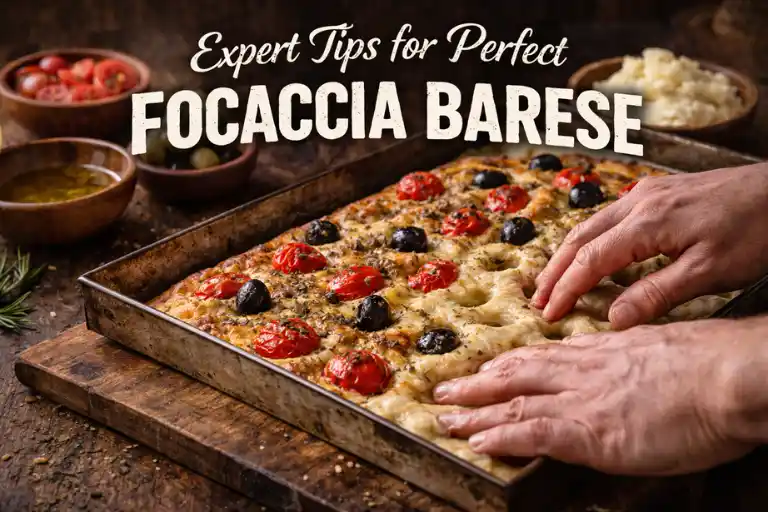
Making perfect Focaccia Barese at home becomes much easier when you follow a few expert tips used by Italian bakers. These simple techniques will help ensure your homemade focaccia Barese recipe turns out flavorful and well-textured every time.
Use High-Quality Olive Oil
Since olive oil plays a major role in Bari-style focaccia, using high-quality extra virgin olive oil will greatly improve the flavor. Good olive oil adds richness and enhances the taste of the tomato and olive topping.
Proper Fermentation Time
Allowing the dough enough fermentation time is important for flavor development. Slow fermentation helps the dough develop better texture and deeper flavor, which is essential for an authentic focaccia Barese recipe.
Dough Hydration
A slightly hydrated dough is ideal for making traditional focaccia from Bari. Higher hydration helps produce a soft and airy interior, while still allowing the bread to form a crispy crust during baking.
Tomato Placement
When preparing focaccia Barese with tomatoes, press the cherry tomatoes gently into the dough before baking. This allows their juices to blend into the bread while cooking, adding natural sweetness and flavor.
Baking Temperature
Maintaining the right baking temperature is key to achieving the perfect texture. Baking Focaccia Barese at a high oven temperature helps create the signature crispy bottom and golden top that make this traditional Italian focaccia bread so delicious.
Common Mistakes When Making Focaccia Barese
Even though Focaccia Barese is a simple Italian focaccia bread, a few small mistakes can affect the final result. Understanding these common problems will help you create a perfect homemade Focaccia Barese recipe with a crispy crust and soft interior. Below are some typical issues and easy solutions used by experienced Italian bakers.
| Mistake | Solution |
| Dense dough | Increase dough hydration by adding a little more water to create a softer dough. |
| Dry focaccia | Use more extra virgin olive oil in the pan and drizzle some on top before baking. |
| Weak flavor | Allow longer fermentation time so the dough develops deeper flavor. |
| Soggy topping | Drain the cherry tomatoes before placing them on the dough to prevent excess moisture. |
By avoiding these mistakes, you can easily achieve the traditional texture and flavor of authentic focaccia from Bari.
Focaccia Barese vs Genovese Focaccia
Many people wonder how Focaccia Barese differs from Genoese focaccia, another popular Italian focaccia bread. While both breads are delicious, they come from different regions of Italy and use different ingredients. Traditional focaccia from Bari is known for its tomato and olive topping, while Genoese focaccia focuses more on olive oil and salt.
Below is a simple comparison to understand the difference between Bari-style focaccia and Genoese focaccia.
| Feature | Focaccia Barese | Genoese Focaccia |
| Flour | Semolina flour often mixed with 00 flour | Mostly wheat flour |
| Toppings | Cherry tomatoes, olives, oregano | Olive oil and coarse salt |
| Texture | Crispy bottom with soft interior | Soft and fluffy bread |
| Origin | Bari, Puglia (Southern Italy) | Genoa, Liguria (Northern Italy) |
This comparison highlights why authentic Focaccia Barese stands out among other Italian focaccia recipes. Its use of semolina flour, mashed potatoes, tomatoes, and olives gives the bread a distinct flavor and texture that reflects the culinary traditions of Puglia.
Variations of Focaccia Barese
While the authentic Focaccia Barese recipe follows a traditional method from Bari in the Puglia region, many bakers enjoy experimenting with small variations. These variations still keep the spirit of Bari-style focaccia but may adjust ingredients or toppings to suit different tastes.
Traditional Bakery Version
The traditional bakery version is the most common form of Focaccia Barese found in Bari bakeries. It uses a dough made with semolina flour, mashed potatoes, yeast, and olive oil, topped with cherry tomatoes, olives, oregano, and sea salt. This classic version delivers the crispy bottom crust and soft interior that make traditional focaccia from Bari so famous.
No-Potato Variation
Some modern recipes prepare focaccia Barese without potatoes. In this variation, the dough uses only semolina flour or a mix of semolina and 00 flour. While it may be slightly less soft than the original, it still creates a delicious Italian focaccia bread with a crisp texture.
Whole Wheat Focaccia
For a healthier option, some bakers replace part of the flour with whole wheat flour. This creates a more nutty flavor and denser texture while still maintaining the character of homemade focaccia Barese.
Modern Toppings
Although traditional focaccia Barese usually features tomatoes and olives, modern variations sometimes include additional toppings such as:
- Caramelized onions
- Fresh herbs
- Cheese
- Roasted vegetables
These toppings create creative twists while still honoring the Mediterranean flavor of focaccia from Puglia.
Traditional Bari Street Food Culture
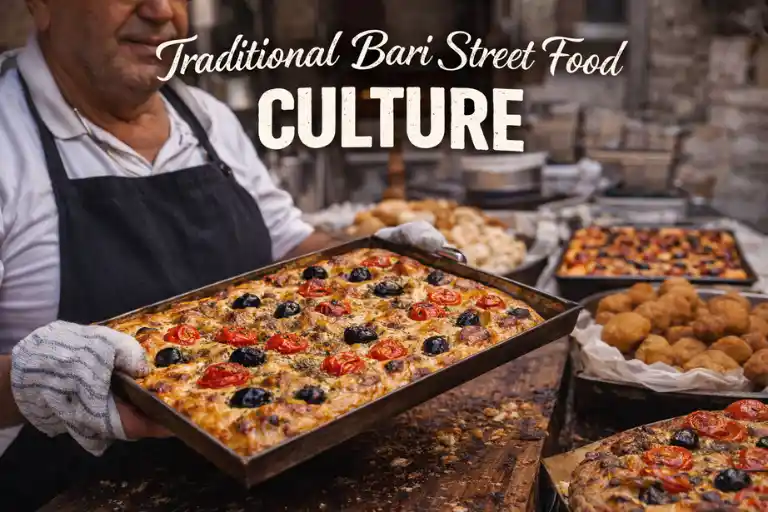
Focaccia Barese is more than just bread—it is an important part of Bari street food culture. In the city of Bari, locals have enjoyed this crispy Italian focaccia bread for generations. The bread reflects the everyday life and food traditions of the Puglia region.
Focaccia in Bari Bakeries
Walking through the streets of Bari, it is common to see bakeries displaying large trays of freshly baked focaccia Barese. The bread is usually cut into square slices and sold warm. Many bakeries prepare this traditional Bari focaccia several times a day because it is always in high demand.
Everyday Snack in Puglia
In Puglia, Focaccia Barese is often eaten as a quick snack, light lunch, or afternoon treat. Locals enjoy it with coffee in the morning or as a simple street food while exploring the city. Because of its simple ingredients and rich flavor, it has become one of the most beloved foods in the region.
Cultural Importance
The popularity of focaccia from Bari shows how deeply bread is connected to Italian food culture. The recipe has been passed down through generations of Puglian bakers, making authentic Focaccia Barese an important symbol of the region’s culinary heritage.
Best Olive Oil for Focaccia Barese
One of the most important ingredients in authentic Focaccia Barese is olive oil. High-quality oil not only improves flavor but also helps create the crispy crust and golden color that define Bari-style focaccia.
Extra Virgin Olive Oil
The best choice for making traditional focaccia Barese is extra virgin olive oil. This oil is less processed and has a stronger, more natural flavor. It is used in the dough, brushed onto the baking pan, and drizzled over the top before baking. This generous use of oil is what gives Italian focaccia bread its rich taste and crispy texture.
Italian Olive Oil Varieties
Italy produces many types of olive oil, and some varieties from southern Italy and Puglia are especially well suited for baking bread. Oils from regions such as Puglia, Sicily, and Tuscany are known for their fruity aroma and balanced flavor, making them ideal for homemade focaccia Barese.
Flavor Impact
The quality of olive oil greatly affects the taste of Focaccia Barese. A good oil enhances the tomato and olive topping while adding a smooth Mediterranean flavor to the bread. Because olive oil is used generously in this recipe, choosing a high-quality extra virgin olive oil can make a noticeable difference in the final result.
Nutrition and Health Benefits
Focaccia Barese is not only a delicious Italian focaccia bread, but it can also fit well into a balanced Mediterranean-style diet when enjoyed in moderation. Because the traditional focaccia Barese recipe uses simple ingredients like semolina flour, olive oil, tomatoes, and olives, it offers both flavor and nutritional value.
Mediterranean Diet
The ingredients used in authentic focaccia Barese reflect the principles of the Mediterranean diet, which is known for its focus on whole grains, olive oil, vegetables, and natural ingredients. Foods from this diet are often associated with heart health and balanced nutrition.
Olive Oil Benefits
One of the key ingredients in Bari-style focaccia is extra virgin olive oil. Olive oil contains healthy monounsaturated fats and antioxidants that support overall health. When used in traditional focaccia from Bari, it not only adds flavor but also contributes beneficial nutrients.
Calories and Carbs
Like most breads, Focaccia Barese contains carbohydrates, which provide energy for the body. The combination of semolina flour and potatoes gives the bread its satisfying texture. Enjoying homemade focaccia Barese in moderate portions can easily fit into a balanced diet.
Balanced Nutrition
Because Focaccia Barese often includes tomatoes, olives, and olive oil, it provides a mix of carbohydrates, healthy fats, and small amounts of vitamins from vegetables. When paired with other foods such as salads or soups, it can be part of a well-rounded meal.
What to Serve With Focaccia Barese
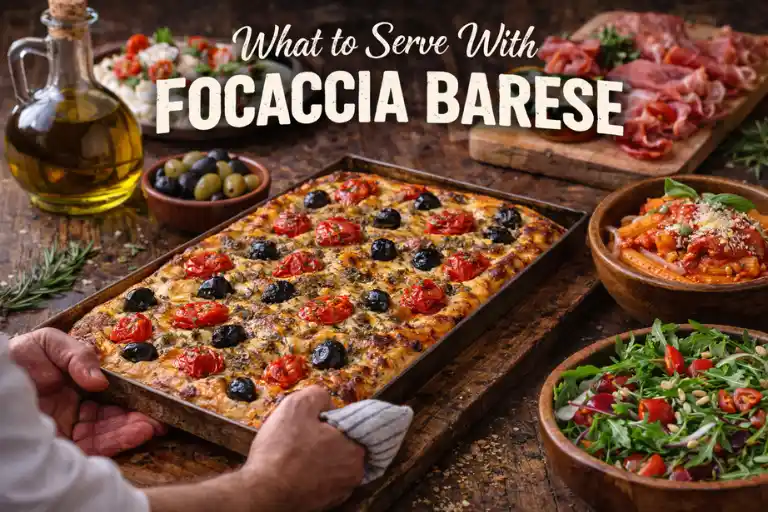
Focaccia Barese is incredibly versatile and pairs well with many Italian dishes. Whether served as a snack, appetizer, or meal accompaniment, this traditional focaccia from Bari complements a variety of foods.
Italian Antipasti
One of the most popular ways to serve authentic focaccia Barese is with Italian antipasti. Plates of cured meats, roasted vegetables, and marinated olives pair perfectly with the crispy and flavorful bread.
Soups
Focaccia Barese also works well with warm Italian soups such as vegetable soup or tomato soup. The bread’s soft interior and crispy crust make it ideal for dipping.
Cheeses
Many people enjoy serving Bari-style focaccia alongside Italian cheeses such as mozzarella, ricotta, or pecorino. The creamy texture of the cheese balances the rich olive oil flavor of the bread.
Olives
Since olives are already a classic topping in traditional focaccia Barese, serving extra olives on the side enhances the Mediterranean flavor profile of the meal.
Sandwiches
Another popular option is using homemade focaccia Barese to make sandwiches. The bread’s sturdy texture makes it perfect for filling with grilled vegetables, cheese, or cured meats.
How to Store and Reheat Focaccia Barese
If you have leftover Focaccia Barese, proper storage will help maintain its texture and flavor. With the right method, you can enjoy homemade Bari focaccia even after it has been baked.
Room Temperature Storage
Fresh focaccia from Bari can be stored at room temperature for about 1–2 days. Wrap the bread in parchment paper or foil and keep it in an airtight container to prevent it from drying out.
Freezing Tips
For longer storage, Focaccia Barese can be frozen. Slice the bread into portions and wrap each piece tightly in plastic wrap or foil. Place the slices in a freezer-safe bag. This allows you to enjoy traditional focaccia Barese later without losing its flavor.
Reheating Methods
To restore the crispy crust of Italian focaccia bread, reheat it in an oven at around 180°C (350°F) for 8–10 minutes. Avoid using the microwave if possible, since it can make the bread soft instead of crispy. Reheating in the oven helps bring back the fresh bakery-style texture of authentic focaccia Barese.
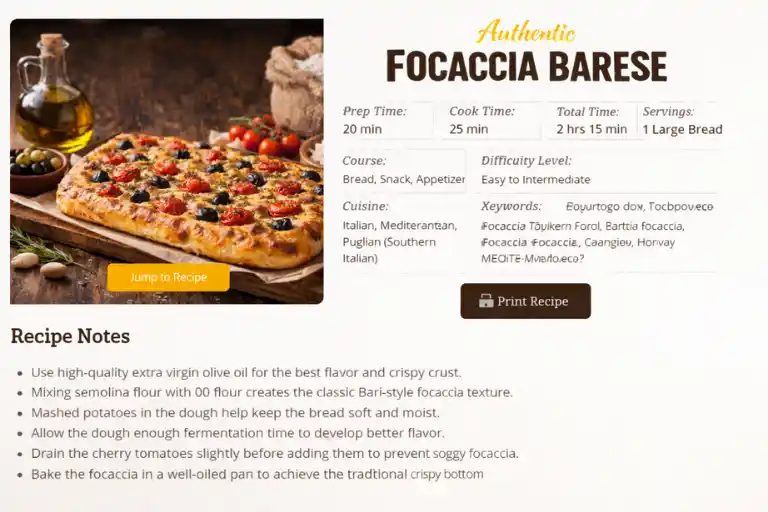
Recipe Card – Authentic Focaccia Barese
Course: AppetizersCuisine: Italian, Mediterranean, Puglian (Southern Italian)Difficulty: Easy to Intermediate8
servings20
minutes25
minutes230
kcalBelow is a simple recipe card for authentic Focaccia Barese, making it easy to prepare this traditional Bari-style Italian bread at home. This recipe combines semolina flour, mashed potatoes, olive oil, cherry tomatoes, and olives to create the classic crispy crust and soft interior that defines focaccia from Bari.
Ingredients
- For the Dough
2 cups semolina flour
1 cup 00 flour
1 medium mashed potato
1 teaspoon active dry yeast
1 teaspoon salt
¾ to 1 cup warm water
3 tablespoons extra virgin olive oil
- Traditional Toppings
1 cup cherry tomatoes (halved)
½ cup olives (black or green)
1 teaspoon dried oregano
1 teaspoon sea salt
2 tablespoons extra virgin olive oil
Instructions
- Prepare the Dough
In a large bowl, mix semolina flour, 00 flour, mashed potatoes, yeast, salt, water, and olive oil until a soft dough forms. - Knead the Dough
Knead the dough for about 8–10 minutes until it becomes smooth and elastic. - First Fermentation
Place the dough in a lightly oiled bowl and let it rise for 1–2 hours, or until it doubles in size. - Shape the Dough
Transfer the dough to a well-oiled baking pan and gently spread it out using your hands. - Add Toppings
Press cherry tomatoes and olives into the dough. Sprinkle oregano, sea salt, and olive oil over the top. - Final Proof
Let the dough rest for 30–40 minutes before baking. - Bake the Focaccia
Bake in a preheated oven at 220°C (425°F) for about 20–25 minutes, until the top is golden and the bottom becomes crispy. - Nutrition Facts (Approximate per Serving)
Calories: 230 kcal
Carbohydrates: 35 g
Protein: 6 g
Fat: 8 g
Fiber: 2 g
Recipe Video
Notes
- Use high-quality extra virgin olive oil for the best flavor and crispy crust.
- Mixing semolina flour with 00 flour creates the classic Bari-style focaccia texture.
- Mashed potatoes in the dough help keep the bread soft and moist.
- Allow the dough enough fermentation time to develop better flavor.
- Drain the cherry tomatoes slightly before adding them to prevent soggy focaccia.
- Bake the focaccia in a well-oiled pan to achieve the traditional crispy bottom crust.
FAQs About Focaccia Barese
What makes Focaccia Barese different?
Focaccia Barese is different from other Italian focaccia breads because it often uses semolina flour and mashed potatoes in the dough and is topped with cherry tomatoes, olives, oregano, and olive oil. These ingredients give Bari-style focaccia its crispy bottom crust and soft interior.
Can you make Focaccia Barese without potatoes?
Yes, it is possible to make focaccia Barese without potatoes, but the potatoes help create the soft texture and moist crumb that are typical of the traditional recipe from Bari.
What flour is best for Focaccia Barese?
The best flour for authentic focaccia Barese is semolina flour made from durum wheat, often combined with 00 flour. This combination helps create the crispy crust and airy interior that define focaccia from Puglia.
Is Focaccia Barese vegan?
Yes, most traditional focaccia Barese recipes are naturally vegan, since they use simple ingredients such as flour, potatoes, olive oil, tomatoes, olives, and yeast.
How long does focaccia last?
Fresh Focaccia Barese usually stays good for 1–2 days at room temperature when stored properly. It can also be frozen for longer storage and reheated in the oven to restore its crispy texture.
Conclusion
Focaccia Barese is a beautiful example of traditional Italian baking from Bari in the Puglia region. With its crispy golden crust, soft potato-based dough, and flavorful topping of tomatoes, olives, and olive oil, this bread captures the heart of Mediterranean cuisine.
By following this authentic Focaccia Barese recipe, you can recreate the taste of Bari street food culture right in your own kitchen. The simple ingredients and traditional techniques make this bread both easy to prepare and deeply satisfying. If you enjoy Italian focaccia bread, trying homemade focaccia Barese is a wonderful way to experience the authentic flavors and baking traditions of southern Italy.