
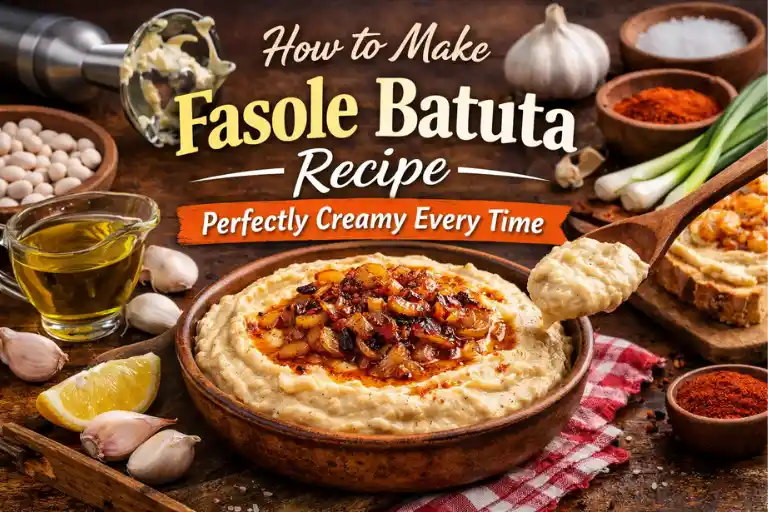
Fasole Bătută, also known as fasole batuta, is a classic Romanian white bean dip that has been loved for generations. At first glance, it may look like a simple white bean puree, but in Romania, it carries deep tradition and comfort. This creamy white bean garlic dip is often served during Orthodox fasting periods, making it a popular vegan Romanian recipe and a traditional mancare de post romaneasca.
Made with tender white beans, fresh garlic, and smooth oil, fasole batuta cu ceapa calita (with caramelized onions) delivers rich flavor using humble ingredients. Some regions call it fasole frecata, fasole făcăluită, or fasole sleită, but the heart of the dish stays the same — simple, hearty, and satisfying.
Fasole Bătută at a Glance (Quick Answer)
What is fasole batuta?
Fasole Bătută is a traditional Romanian white bean dip made from cooked white beans blended with garlic and oil until smooth. It is also called fasole frecata, fasole făcăluită, or fasole sleită in different regions of Romania. This creamy white bean garlic dip is commonly served with caramelized onions on top.
Key ingredients
- White beans (cannellini or navy beans)
- Fresh garlic
- Sunflower oil (traditional)
- Salz
- Caramelized onions (for topping)
Prep time & cook time
- Prep time: 10–15 minutes (if using cooked beans)
- Cook time: 60–90 minutes (for dried beans)
- Total time: About 1.5 hours
Texture description
The texture should be smooth, creamy, and spreadable. A properly blended white bean puree feels light and fluffy, not grainy or oily.
Is it vegan?
Yes. Fasole batuta is naturally vegan, gluten-free, and often served as a traditional Romanian fasting dish during Lent.
Short Summary
Fasole Bătută is a traditional Romanian white bean dip made with white beans, garlic, and oil, topped with caramelized onions. Also known as fasole batuta or fasole frecata, it is a creamy, vegan spread commonly enjoyed during Orthodox fasting periods. The dish has a smooth, fluffy texture and is served with bread, pickles, or as a rustic appetizer in Romanian cuisine.
What Is Fasole Bătută?
Fasole Bătută, also written as fasole batuta, is a traditional Romanian white bean dip made by blending cooked white beans with garlic and oil until smooth. The name itself explains the method:
- Bătută means “beaten” or “whipped.”
- Frecata means “rubbed” or “ground.”
- Făcăluită refers to beans mashed with a wooden tool.
- Sleită describes a finely blended, smooth texture.
All these words highlight the same idea — beans that are crushed and emulsified into a creamy white bean puree.
Why It’s Different From Hummus
Many people compare fasole batuta to hummus, but they are not the same. Hummus uses chickpeas, tahini, and lemon juice. In contrast, Romanian white bean dip uses white beans, garlic, and sunflower oil, without tahini. The flavor is milder, more rustic, and often topped with caramelized onions. It reflects Romanian cuisine, not Middle Eastern tradition.
Traditional Serving Style
Traditionally, fasole batuta cu ceapa calita is spread on fresh bread and topped with sweet caramelized onions. It is served cold or at room temperature, often as an appetizer or as part of a mancare de post romaneasca during fasting periods.
The History and Cultural Roots of Fasole Batuta
Romanian Peasant Food Origins
Fasole Bătută began as simple countryside food. White beans were affordable, filling, and easy to store. Romanian farmers relied on beans for protein, especially during colder months. Over time, this humble white bean garlic dip became a national comfort dish.
Orthodox Fasting Traditions
In Romania, many people follow Orthodox fasting traditions. During Lent and other fasting periods, meat and dairy are avoided. Because fasole batuta is naturally vegan, it became a popular reteta de post. It provides plant-based protein while staying true to religious rules.
Lent Significance
During Lent, families prepare large batches of this traditional Romanian fasting dish. It is filling, affordable, and easy to share. For many Romanians, the taste of creamy beans with onions brings back memories of family meals.
Regional Differences
Different regions prepare it slightly differently:
- Transylvania may add more garlic for a stronger flavor.
- Moldova often makes it extra creamy and smooth.
- Wallachia prefers generous caramelized onions on top.
Despite these variations, the heart of fasole frecata remains the same — simple ingredients transformed into something comforting and deeply traditional.
Traditional Romanian Ingredients Explained
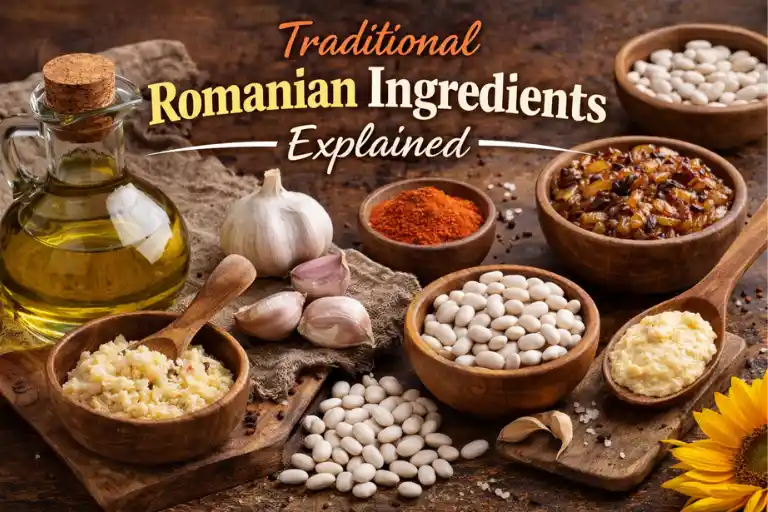
To make an authentic Fasole Bătută – Romanian white bean dip, the ingredients may look simple, but each one plays an important role. The quality of your beans, garlic, and oil directly affects the final creamy white bean puree.
You might also like: How To Make Smashed Peas On Toast Better
Best White Beans to Use
Choosing the right beans is the foundation of a perfect fasole batuta recipe.
Cannellini vs Navy Beans
- Cannellini beans are larger and slightly creamier. They create a soft and smooth white bean garlic dip.
- Navy beans are smaller and traditional in many Romanian homes. They offer a slightly firmer texture and classic flavor.
Both work well. For the most authentic reteta fasole batuta traditionala romaneasca, navy beans are commonly used, but cannellini beans are a great substitute.
Dried vs Canned
- Dried beans give better flavor and texture. They are ideal if you want a truly traditional Romanian white bean dip recipe.
- Canned beans save time and are perfect for a quick version. If using canned, rinse them well to reduce excess salt.
If you are wondering, can you use canned beans for fasole batuta? — yes, but dried beans provide deeper flavor.
Garlic Preparation Methods
Garlic gives fasole frecata its bold and rustic taste.
Raw Garlic vs Sautéed
- Raw garlic gives a strong, sharp flavor — very traditional.
- Lightly sautéed garlic offers a softer, milder taste.
If your dip tastes too strong, sautéing the garlic briefly can balance the flavor.
Garlic Paste Technique
For the smoothest fasole batuta cu usturoi, crush garlic into a fine paste with a pinch of salt before mixing. This prevents harsh chunks and helps it blend evenly into the white bean puree.
Why Sunflower Oil Is Traditionally Used
Oil is essential for texture and flavor.
Flavor Neutrality
In Romania, sunflower oil is preferred because it has a neutral taste. It allows the flavor of beans and garlic to shine without overpowering them.
Emulsification Role
Oil also helps create the creamy texture. When blended gradually, it forms a smooth emulsion with the beans. This is why adding oil slowly is important to avoid a grainy or oily result.
The Role of Caramelized Onions
No fasole batuta cu ceapa calita is complete without onions. Sweet, golden caramelized onions balance the garlic and add depth. They are spooned on top of the dip, giving both texture and traditional presentation. In many Romanian homes, the onions are considered just as important as the beans.
How to Make Fasole Batuta Step by Step
Follow this clean, simple method for a smooth and authentic Romanian bean spread.
1. Soak and Cook Beans
If using dried beans, soak them overnight. The next day, boil until soft and fully tender. Proper cooking is key to avoiding a grainy texture.
2. Drain and Reserve Liquid
Drain the beans but keep some of the cooking liquid. This liquid helps adjust the texture later if needed.
3. Blend Gradually With Oil
While the beans are still slightly warm, blend them with crushed garlic. Add sunflower oil slowly, little by little, until the mixture becomes smooth and creamy. This step creates the classic fasole batuta fina si cremoasa texture.
4. Adjust Seasoning
Add salt to taste. If the dip is too thick, add a small spoon of reserved bean liquid and blend again.
5. Prepare Onion Topping
Slice onions thinly and cook them slowly in oil until golden brown and sweet. Spoon them generously over the dip before serving.
The Science Behind the Perfect Creamy Texture
One of the biggest differences between average and outstanding Fasole Bătută is texture. A perfect Romanian white bean dip should be smooth, fluffy, and spreadable — never grainy or greasy. Let’s understand why.
Oil Emulsification Explained
When you slowly add sunflower oil while blending, the oil mixes with the starch from the beans. This process is called emulsification.
If you pour the oil too quickly, it will separate and sit on top. But if you add it gradually, it blends into the beans and creates a light, creamy white bean puree. This is the secret to fasole batuta fina si cremoasa.
Why Beans Become Grainy
Grainy fasole batuta usually happens because:
- Beans were not cooked until fully soft
- Oil was added too quickly
- Beans were blended while cold
- Skins were not removed
Undercooked beans cannot break down properly, which results in a rough texture.
Removing Bean Skins Technique
For extra smooth fasole frecata, some traditional cooks remove the thin outer skins after boiling.
Once cooked, rub the beans gently between your hands in water. The skins will float to the top and can be removed. This step is optional, but it gives a very fine, restaurant-quality finish.
Warm Blending Tip
Always blend beans while they are slightly warm, not cold. Warm beans help the oil combine better and create a smoother emulsion. Cold beans can cause separation and uneven texture.
Immersion Blender vs Food Processor
- Immersion blender gives a lighter, fluffier result.
- Food processor creates a thicker and denser texture.
Both work well, but for traditional fasole batuta cu usturoi, many prefer immersion blending for a smoother finish.
How to Fix Texture Mistakes
- Too thick? Add a spoon of reserved bean liquid.
- Too oily? Blend longer to help emulsify.
- Too grainy? Warm slightly and re-blend slowly with a small amount of oil.
With these tips, your traditional Romanian white bean dip recipe will have the perfect creamy consistency every time.
Common Mistakes and How to Fix Them
Even simple recipes like fasole batuta can go wrong. Here’s how to fix common problems quickly.
Too Thick
If your white bean garlic dip feels heavy or dry, add 1–2 tablespoons of reserved bean cooking liquid. Blend again until smooth.
Too Watery
If it becomes too soft, blend in a few extra cooked beans or let it rest in the fridge for 30 minutes to firm up.
Bitter Garlic
Raw garlic can taste strong. If the flavor is too sharp, sauté the garlic briefly in oil before blending. This softens the taste while keeping the classic flavor of Romanian bean spread.
Oily Texture
If oil pools on top, it means it was added too fast. Blend longer to re-emulsify. Adding oil slowly next time will prevent this.
Bland Flavor
If your fasole batuta cu ceapa calita tastes flat, check the salt level first. A pinch of salt can transform the flavor. You can also add a small squeeze of lemon for brightness (optional modern twist).
Fasole Batuta vs Hummus – Key Differences
Many people think Fasole Bătută is just a Romanian version of hummus. While both are creamy bean spreads, they are quite different in flavor, culture, and preparation. Understanding these differences helps you appreciate the identity of this traditional Romanian white bean dip.
Ingredient Comparison
Fasole batuta uses:
- White beans (navy or cannellini)
- Garlic
- Sunflower oil
- Salt
- Caramelized onions (topping)
Hummus uses:
- Chickpeas
- Tahini (sesame paste)
- Lemon juice
- Olive oil
- Garlic
There is no tahini in authentic fasole frecata, which makes the flavor cleaner and more bean-forward.
Cultural Origins
Fasole Bătută comes from Romanian cuisine, especially rural and Orthodox fasting traditions. It is a classic reteta de post and part of many family meals during Lent.
Hummus belongs to Middle Eastern cuisine and has a long history across countries like Lebanon, Israel, and Syria.
Texture Differences
A well-made white bean puree is smooth and fluffy but slightly lighter than hummus. Hummus tends to be denser and creamier because of tahini.
Also, fasole batuta cu ceapa calita is usually topped with sweet caramelized onions, which adds texture contrast.
Nutritional Comparison
Both are plant-based spreads, but there are small differences:
- Fasole batuta is high in fiber and plant protein from white beans.
- Hummus contains healthy fats from tahini and olive oil.
- Both are naturally vegan and often gluten-free.
Because Romanian white bean dip does not use sesame paste, it may be lighter in fat depending on oil quantity.
Comparison Table
| Feature | Fasole Bătută | Hummus |
| Main Ingredient | White beans | Chickpeas |
| Fat Source | Sunflower oil | Olive oil + tahini |
| Flavor Profile | Mild, garlic-forward | Nutty, tangy |
| Cultural Origin | Romania | Middle East |
| Traditional Topping | Caramelized onions | Olive oil & paprika |
| Fasting Dish | Yes (Orthodox Lent) | Not religiously specific |
Authentic vs Modern Variations
Over time, cooks have created small twists on the classic fasole batuta recipe, while keeping the heart of the dish intact.
With Smoked Paprika
Adding smoked paprika on top gives a deeper flavor and slight smokiness. This is a modern touch, not traditional, but very popular today.
With Roasted Garlic
Instead of raw garlic, some prefer roasted garlic. It gives a sweeter, softer flavor and reduces sharpness in the white bean garlic dip.
Oil-Light Version
For a lighter version, reduce the amount of oil and add more bean cooking liquid. The texture remains creamy but slightly less rich. This works well for a healthier vegan Romanian recipe.
With Fried Onions
While caramelized onions are traditional, some regions prefer crispy fried onions on top for extra crunch and contrast.
Moldavian vs Transylvanian Style
Regional differences add personality to this dish:
- Moldavian style tends to be very smooth and creamy, sometimes blended longer for a fine texture.
- Transylvanian style often includes more garlic and a slightly thicker consistency.
Despite these small changes, the core of fasole sleită remains simple — white beans, garlic, oil, and tradition.
Is Fasole Batuta Healthy?
One of the best things about Fasole Bătută is that it is not only delicious but also nutritious. This traditional Romanian white bean dip is simple, natural, and full of plant-based goodness.
High Protein Vegan Spread
White beans are rich in plant protein, making fasole batuta a satisfying option for vegetarians and vegans. During Lent, it serves as a filling vegan Romanian recipe that provides energy without meat or dairy. Because it is made only from beans, garlic, and oil, it fits perfectly into a plant-based diet.
Fiber Benefits
White beans are naturally high in dietary fiber. Fiber supports digestion, helps you feel full longer, and contributes to heart health. A serving of this creamy white bean puree offers both comfort and nutrition at the same time.
Gluten-Free Properties
Authentic fasole frecata contains no wheat or flour. That means it is naturally gluten-free. Just be sure to serve it with gluten-free bread if needed.
Plant-Based Nutrition Value
As a simple Romanian bean spread, it contains:
- Complex carbohydrates for energy
- Plant protein for muscle support
- Fiber for digestion
- Healthy fats (depending on oil amount)
When prepared in moderation with oil, fasole batuta cu ceapa calita can be part of a balanced and wholesome diet.
What to Serve With Fasole Bătută
This creamy traditional Romanian white bean dip recipe is very versatile. It can be enjoyed in classic ways or served in modern styles.
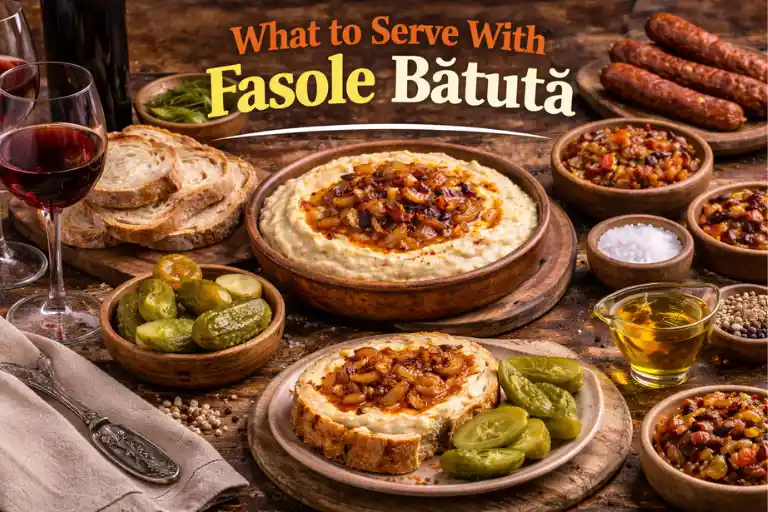
Traditional Pairings
Rustic Bread
Thick slices of fresh country bread are the most traditional way to enjoy fasole batuta.
Pickles
Romanian pickled cucumbers or cabbage add acidity that balances the creamy beans.
Zacuscă
This roasted vegetable spread pairs beautifully with the mild flavor of white bean garlic dip.
Smoked Sausages (Non-Fasting Version)
Outside of fasting periods, some families serve it alongside smoked sausages for a hearty meal.
Modern Serving Ideas
Toast Spread
Spread fasole sleită on toasted sourdough for a simple lunch.
Party Appetizer Dip
Serve it in a bowl with fresh vegetables and crackers as a healthy dip alternative.
Sandwich Filling
Use it instead of mayonnaise for a protein-rich sandwich spread.
Mezze Platter
Add it to a Mediterranean-style platter with olives, roasted vegetables, and flatbread.
Storage, Freezing & Meal Prep Guide
Because fasole batuta is easy to prepare in large batches, proper storage helps maintain flavor and texture.
Fridge Lifespan
Store your Romanian white bean dip in an airtight container in the refrigerator. It stays fresh for 3 to 4 days.
Freezer Instructions
You can freeze fasole batuta for up to 2 months. Place it in a freezer-safe container, leaving a little space at the top for expansion.
Best Containers
Use airtight glass or BPA-free plastic containers. Smaller portions are helpful for easy thawing.
Reheating Method
Traditionally, this dip is served cold or at room temperature. If it thickens after refrigeration, stir in a small spoon of warm water or reserved bean liquid and mix gently to restore its creamy texture. With proper storage, your traditional Romanian white bean dip recipe will stay smooth and delicious for days.
FAQs About Fasole Bătută
Is fasole batuta vegan?
Yes, fasole batuta is naturally vegan. The traditional Romanian white bean dip is made with white beans, garlic, and sunflower oil, without meat or dairy. It is commonly prepared as a reteta de post during Orthodox fasting periods, making it a popular plant-based Romanian dish.
Can I use canned beans?
Yes, you can use canned beans for fasole batuta recipe. Rinse and drain them well before blending. While dried beans offer deeper flavor and better texture, canned beans are convenient and still produce a creamy white bean puree if blended properly.
Why is my fasole batuta grainy?
Grainy fasole frecata usually happens when beans are undercooked, blended while cold, or when oil is added too quickly. For a smooth Romanian bean spread, cook beans until very soft and add oil gradually while blending warm.
How long does it last?
Stored in an airtight container in the refrigerator, fasole batuta cu ceapa calita stays fresh for about 3 to 4 days. Stir before serving to restore its creamy texture.
Can I freeze fasole batuta?
Yes, you can freeze fasole batuta for up to 2 months. Use a freezer-safe container and leave space for expansion. Thaw in the fridge overnight and stir well before serving.
Can I make it without oil?
Yes, but the texture will be slightly less creamy. Oil helps emulsify the beans and creates the classic smooth consistency of traditional Romanian white bean dip recipe. You can replace some oil with bean cooking liquid for a lighter version.
Why Fasole Bătută Remains a Romanian Classic
Fasole Bătută has remained popular for generations because of its beautiful simplicity. With just beans, garlic, and oil, it transforms humble ingredients into something comforting and satisfying.
It represents tradition — passed down from grandparents to grandchildren. It connects families during Orthodox fasting periods and brings people together around the table. For many, this creamy white bean garlic dip is more than food. It is a memory of home, of countryside kitchens, of simple meals shared with loved ones.
Final Thought
Fasole Bătută is more than a simple Romanian white bean dip — it is a dish that carries history, faith, and family tradition in every spoonful. From its roots as humble peasant food to its place on modern tables, fasole batuta continues to prove that simple ingredients can create deep flavor and lasting memories.
Whether you prepare it as a traditional Romanian fasting dish, a creamy white bean garlic dip for guests, or a healthy plant-based spread for everyday meals, its charm never fades.
The smooth texture, the sweet caramelized onions, and the bold garlic flavor come together in perfect balance. In the end, fasole frecata reminds us that comfort food does not need to be complicated — it just needs to be made with care.