
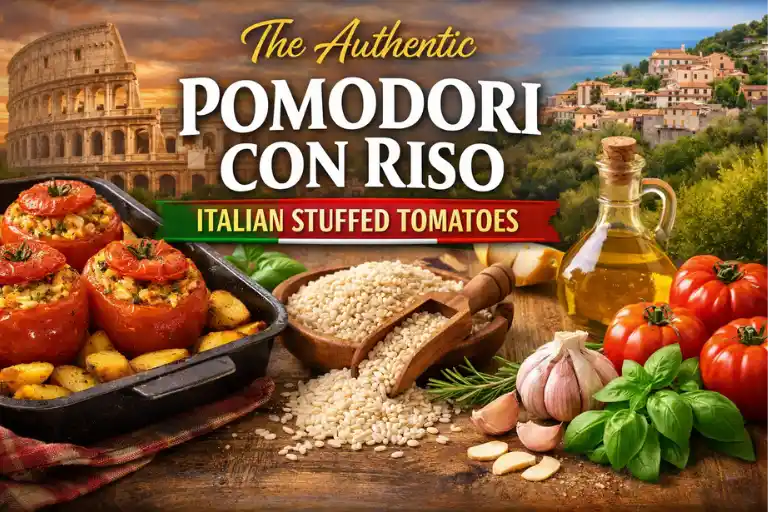
There is something truly special about Pomodori Con Riso, the classic Roman rice stuffed tomatoes that taste like pure Italian summer. This traditional dish from Lazio turns simple ingredients into something deeply comforting and full of flavor. Unlike other Italian stuffed tomatoes, the rice is added uncooked, allowing it to slowly absorb the sweet tomato pulp, olive oil, garlic, and fresh basil as it bakes. The result? Tender baked stuffed tomatoes with perfectly seasoned rice inside — never watery, never mushy.
Many people struggle with undercooked rice or soggy tomatoes, but this guide will show you exactly how to prevent that. You’ll learn the authentic method, the best rice to use, and why potatoes are traditionally baked alongside. By the end, you’ll know how to make Pomodori al Riso the Roman way — simple, rustic, and absolutely delicious.
What Is Pomodori Con Riso?
Pomodori Con Riso literally means “tomatoes with rice” in Italian. In Rome and the wider Lazio region, this dish is a beloved example of simple, seasonal cooking. Large ripe tomatoes are hollowed out and filled with a mixture of uncooked rice, fresh tomato pulp, extra virgin olive oil, garlic, and herbs like basil and parsley. The tomatoes are then oven baked until tender, creating the classic Roman rice stuffed tomatoes known for their soft texture and rich flavor.
Pomodori al Riso e Pomodori Ripieni di Riso
You may see different names:
- Pomodori al Riso – Tomatoes “with” rice (more traditional Roman wording)
- Pomodori Ripieni di Riso – Tomatoes “stuffed with” rice
- In English: Italian stuffed tomatoes with rice or baked stuffed tomatoes
They all describe the same rustic dish, but in Rome, Pomodori al Riso is the most common term.
Why It’s a Roman Summer Classic
This is a true Italian summer recipe. It’s made when tomatoes are at their peak — juicy, sweet, and full of flavor. Because it uses simple pantry ingredients and no heavy sauces, it perfectly fits the light, fresh style of Mediterranean cuisine. Many Roman families prepare it alongside potatoes baked in the same tray, making it a complete vegetarian meal.
Why It’s Traditionally Eaten at Room Temperature
One unique detail: Pomodori Con Riso is often served at room temperature, not piping hot. As it rests, the rice continues to absorb flavor, and the texture becomes even better. This makes it ideal for warm weather, picnics, or make-ahead meals. In fact, many say it tastes even more authentic after sitting for a while — just like it’s done in Rome.
The Roman Origins & Cultural Significance
Lazio Countryside Roots
Pomodori Con Riso comes from the rural kitchens of Lazio, the region around Rome. It was created as a simple way to use fresh summer tomatoes, leftover rice, and garden herbs. Farmers relied on what they had — ripe tomatoes, extra virgin olive oil, garlic, and basil. This is why the dish feels rustic, honest, and deeply tied to Roman home cooking. It’s not fancy food. It’s seasonal food made with care.
Why Potatoes Are Baked in the Same Tray

You might also like: 10 Best Substitutes for Honey You Need Try Today
One traditional detail that defines Roman rice stuffed tomatoes is the addition of sliced potatoes baked alongside the tomatoes. As everything roasts together, the potatoes absorb the flavorful tomato juices and olive oil. This creates a complete meal in one tray. Many people searching for Roman stuffed tomatoes with potatoes don’t realize this step is part of the authentic method.
Why It’s a Summer Tomato Dish
This dish is meant for peak tomato season. Sweet, ripe tomatoes give the best flavor and prevent watery results. That’s why it’s known as a true Italian summer recipe — light, vegetable-focused, and perfect for warm evenings.
Mediterranean Diet Connection
Because it uses vegetables, olive oil, herbs, and rice, Pomodori al Riso fits naturally into the Mediterranean diet. It’s vegetarian, balanced, and made from whole ingredients — simple food with real flavor.
What Makes This Different from Other Stuffed Tomatoes?
Many people think all Italian stuffed tomatoes with rice are the same — but the Roman version is very different.
Rice Is Added Uncooked
Unlike other recipes where rice is boiled first, authentic Pomodori Con Riso uses uncooked rice. This allows the grains to slowly absorb the tomato juices during baking. If you’re wondering, “Do you cook rice before stuffing tomatoes?” — the traditional answer is no.
Tomato Pulp Becomes the Cooking Liquid
The scooped tomato pulp is not wasted. It is mixed with the rice and becomes the natural cooking liquid. This is why the rice becomes flavorful without broth.
No Pre-Cooking the Filling
There is no sautéing or pre-cooking of the mixture. Everything cooks together inside the tomato. This keeps the texture light and prevents mushy rice.
The Long Marination Step
After mixing rice with tomato pulp, it rests for about 30–60 minutes. This soaking time helps prevent undercooked rice and ensures even cooking.
Rustic Tray-Baked Method
Everything is baked in one tray — tomatoes and potatoes together. This old-fashioned method creates the classic baked stuffed tomatoes that taste truly Roman.
Ingredients Breakdown (With Purpose Behind Each One)
Great Pomodori Con Riso starts with simple ingredients — but each one has a clear purpose. Understanding this is the secret to perfect Italian stuffed tomatoes with rice.
Best Tomato Varieties (Beefsteak vs Vine vs Heirloom)
- Beefsteak tomatoes – The most traditional choice. They are large, easy to hollow, and hold their shape while baking.
- Vine-ripened tomatoes – Slightly smaller but very sweet and flavorful.
- Heirloom tomatoes – Beautiful and rich in taste, but sometimes softer and more watery.
For authentic Roman rice stuffed tomatoes, choose firm, ripe tomatoes that are not overly juicy. This helps prevent watery stuffed tomatoes.
Why Arborio or Carnaroli Rice
Arborio rice and Carnaroli rice are ideal because they absorb liquid slowly and evenly. This is important since the rice cooks inside the tomato using the tomato pulp as its main liquid. These risotto-style rices create tender but slightly creamy grains without turning mushy.
Can You Use Long-Grain Rice?
Yes — but it’s not traditional. Long-grain rice absorbs less liquid and may cook unevenly. If you use it, increase soaking time slightly to avoid undercooked rice.
Role of Olive Oil (Moisture + Richness)
Extra virgin olive oil is essential. It keeps the rice moist, adds richness, and prevents dryness during baking. Too little oil can lead to dry filling.
Fresh Herbs Function
Fresh basil, parsley, and sometimes oregano add brightness and balance. Since this is a Mediterranean stuffed tomatoes recipe, herbs give the dish its signature aroma.
Garlic Method (Crushed vs Minced)
Traditionally, garlic is lightly crushed, not heavily minced. Crushed garlic releases flavor gently without overpowering the tomatoes.
Best Rice for Pomodori Con Riso
Choosing the right rice is key for authentic Pomodori al Riso.
| Rice Type | Texture Result | Authentic Level | Notes |
| Arborio | Soft, slightly creamy | ⭐⭐⭐⭐ | Easy to find, works very well |
| Carnaroli | Firm, defined grains | ⭐⭐⭐⭐⭐ | Most traditional choice |
| Vialone Nano | Light, delicate | ⭐⭐⭐⭐ | Absorbs flavor beautifully |
| Long Grain | Fluffy, less creamy | ⭐⭐ | Not traditional, needs longer soak |
| Brown Rice | Chewy, nutty | ⭐⭐ | Requires longer soaking and baking time |
For the best Italian rice stuffed tomatoes, Carnaroli or Arborio give the most reliable results.
Ingredient Ratios for Perfect Balance
Many recipes skip this — but ratios matter.
Rice-to-Tomato Pulp Ratio
A good rule:
1 tablespoon of rice per medium tomato, plus enough pulp to fully coat the grains. The rice should look moist but not swimming in liquid.
Oil Measurement Precision
Use about 1 to 1½ tablespoons of olive oil per 4 tomatoes. This prevents dry rice without making the filling greasy.
Herb Balance
Use herbs lightly. Too many herbs can overpower the natural sweetness of the tomato. The goal is freshness, not dominance.
Salt Control Strategy
Salt the hollowed tomatoes first and let them drain. Then season the rice mixture gently. Remember, as liquid reduces during baking, salt flavor becomes stronger. Balanced ingredients are the foundation of perfect baked stuffed tomatoes — not too wet, not too dry, just beautifully Roman.
THE TRADITIONAL METHOD (Step-by-Step)
Step 1 — Preparing & Draining the Tomatoes Properly
This step decides whether your Pomodori Con Riso turns out perfect or watery.
Hollowing Technique
Slice off the top of each tomato and gently scoop out the inside using a spoon. Keep the tomato pulp — this will flavor the rice. Be careful not to break the outer walls. Thick, firm walls help the tomatoes hold their shape while baking.
Salting to Draw Moisture
Lightly salt the inside of each hollowed tomato and turn them upside down on a rack or tray. Let them drain for at least 20–30 minutes. This removes excess water and prevents soggy stuffed tomatoes.
Why Draining Is Critical
If you skip draining, the tomatoes release too much liquid during baking. This leads to watery filling and uneven rice texture. Proper draining is one of the most important secrets in authentic Roman rice stuffed tomatoes.
Step 2 — Mixing the Rice Filling (Why Soaking Matters)
Now we build the heart of the dish — the rice mixture.
Rice Absorbing Tomato Pulp
Mix the uncooked Arborio or Carnaroli rice with the reserved tomato pulp, olive oil, crushed garlic, and fresh herbs. The rice should look fully coated and moist. This is where the magic happens — the rice begins absorbing flavor even before baking.
Resting 30–60 Minutes
Let the mixture rest for 30 to 60 minutes. This soaking step allows the rice to start softening. It also helps prevent undercooked rice, one of the most common problems in Italian stuffed tomatoes with rice.
Why Skipping This Ruins Texture
If you skip soaking, the rice may remain hard inside while the tomato becomes overcooked. The resting time ensures balanced cooking and fluffy grains.
Step 3 — Stuffing Without Overfilling
Stuff each tomato gently with the rice mixture.
Leave Expansion Space
Do not pack the rice tightly. Leave a little space at the top because the rice expands while baking. Overfilling leads to cracked tomatoes and uneven texture.
Proper Layering in Tray
Place the tomatoes upright in a baking tray. If following the traditional method, add sliced potatoes around the tomatoes. The potatoes absorb extra juices and enhance the flavor — a true Roman stuffed tomatoes with potatoes technique.
Step 4 — Baking the Roman Way (With Potatoes)
This is where everything transforms into classic baked stuffed tomatoes.
Tray Positioning
Use a wide tray so the tomatoes are not overcrowded. Space allows even roasting.
Temperature Precision
Bake at around 375°F (190°C). Too low and the rice won’t cook properly. Too high and the tomatoes collapse.
How Long to Bake
Bake for about 60–75 minutes, depending on tomato size. Larger tomatoes may need slightly more time.
Visual Doneness Signs
- Rice looks swollen and tender
- Tops are lightly golden
- Tomatoes are soft but still holding shape
- Potatoes are crisp on edges
These signs tell you your Pomodori al Riso is ready.
Resting Time After Baking (Often Ignored)
This step is rarely explained, but it makes a big difference.
Why Resting Improves Texture
After removing from the oven, let the tomatoes rest for at least 20–30 minutes. During this time, the rice finishes absorbing any remaining juices. This prevents a watery bottom and improves structure.
Why Flavor Improves at Room Temperature
Authentic Pomodori Con Riso is often served at room temperature. As it cools slightly, flavors settle and deepen. The olive oil, garlic, and herbs blend beautifully. Many Italians say it tastes even better later — making it perfect for summer dinners or make-ahead meals.
Why Stuffed Tomatoes Turn Watery (And How to Prevent It)
One of the most common problems with Pomodori Con Riso is watery filling. If your Italian stuffed tomatoes with rice feel soggy at the bottom, here’s why it happens — and how to fix it.
Tomato Variety Choice
Not all tomatoes are equal. Very juicy or thin-skinned tomatoes release too much liquid while baking. Choose firm beefsteak or vine-ripened tomatoes that are ripe but not overly soft. This small choice makes a big difference in preventing watery stuffed tomatoes.
Insufficient Draining
If you skip salting and draining the hollowed tomatoes, excess water stays inside. Always salt and turn them upside down for at least 20–30 minutes. Proper draining is critical for authentic Roman rice stuffed tomatoes.
Too Much Tomato Pulp
The pulp should coat the rice, not drown it. If the mixture looks like soup, it’s too wet. The rice must absorb moisture slowly during baking.
Oven Temperature Mistakes
If the oven temperature is too low, liquid doesn’t evaporate properly. Bake at around 375°F (190°C) so the tomatoes roast instead of steam.
How to Prevent Undercooked or Mushy Rice
Perfect Pomodori al Riso means rice that is tender but not sticky or hard.
Rice Type Problem
Using the wrong rice can ruin the texture. Arborio or Carnaroli rice works best because it absorbs liquid evenly. Long-grain rice may cook unevenly.
Insufficient Resting
The rice mixture must rest for 30–60 minutes before stuffing. This soaking step prevents undercooked rice in the center.
Overcrowded Tray
If tomatoes are packed too tightly, steam builds up. This can cause mushy rice. Leave space between each tomato so heat circulates properly.
Fix Solutions
- If rice feels slightly firm after baking, cover loosely with foil and bake 10–15 more minutes.
- If rice is too soft, reduce pulp next time and check oven temperature.
Small adjustments create perfect baked stuffed tomatoes.
Troubleshooting Decision Tree
Here’s a quick guide to fix problems instantly.
If Rice Is Hard → Do This
Bake 10–15 more minutes and lightly cover with foil. Next time, soak the rice longer and ensure enough tomato pulp is mixed in.
If Filling Is Too Wet → Do This
Return to oven uncovered for 10 minutes to evaporate excess liquid. Next time, drain tomatoes longer and reduce pulp quantity.
If Tomatoes Collapse → Do This
Your oven may be too hot, or tomatoes were too ripe. Choose firmer tomatoes and avoid overfilling.
If Rice Is Dry → Do This
Drizzle a small amount of warm olive oil before serving. Next time, increase pulp slightly and check oil measurement. This simple system helps you master authentic Pomodori Con Riso every time — balanced, flavorful, and never soggy.
Pomodori Con Riso vs Other Mediterranean Stuffed Vegetables
Many Mediterranean cultures have their own version of stuffed vegetables, but Pomodori Con Riso has a very unique identity. Understanding these differences helps you appreciate why Roman rice stuffed tomatoes stand out.
Greek Gemista
Greek Gemista usually includes tomatoes or peppers stuffed with rice, herbs, and sometimes ground meat. The rice is often partially cooked before stuffing. In contrast, authentic Pomodori al Riso uses uncooked rice that slowly absorbs tomato pulp while baking. The Roman version is lighter and more tomato-forward.
Stuffed Peppers
Classic stuffed peppers are common across Europe and often contain meat and rice. They are usually served hot. Italian stuffed tomatoes with rice are fully vegetarian and traditionally enjoyed at room temperature, especially in summer.
Risotto-Stuffed Tomatoes
Some modern recipes cook risotto first and then fill the tomatoes. This is not traditional. In authentic baked stuffed tomatoes, the rice cooks inside the tomato from raw, creating a different texture and deeper flavor.
French Farcis
French farcis (stuffed vegetables) often include breadcrumbs and meat. They focus more on stuffing variety, while Pomodori Con Riso focuses on the natural sweetness of tomatoes and olive oil.
This comparison expands the cultural depth of the dish and shows why the Roman method is special — simple, seasonal, and ingredient-driven.
What to Serve With Pomodori Con Riso
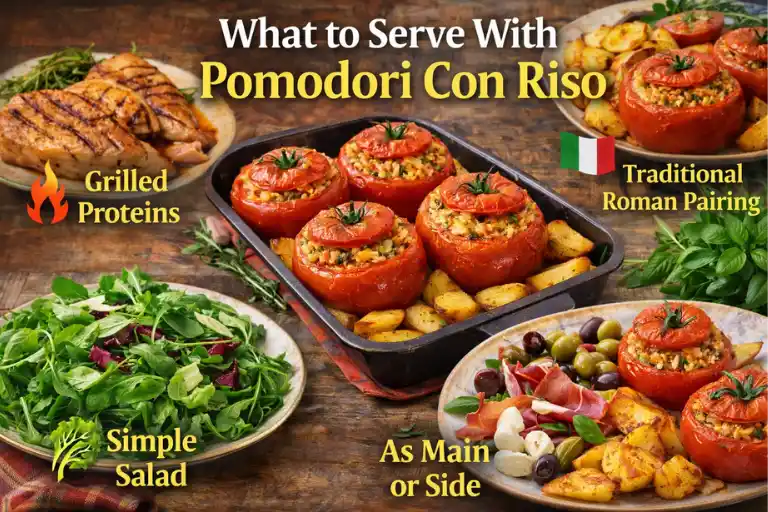
One reason Pomodori Con Riso is loved in Rome is its versatility.
Traditional Roman Pairing
The most traditional option is baking potatoes in the same tray. The potatoes absorb tomato juices and olive oil, making the meal complete.
Simple Salad
A light green salad with arugula, lemon, and olive oil pairs beautifully. The freshness balances the rich tomato flavor.
Grilled Proteins
If serving as a side, pair with grilled chicken, fish, or even lamb. The dish works well alongside simple Mediterranean proteins.
As Main vs Side
Because it is filling and vegetarian, Italian rice stuffed tomatoes can easily be served as a main dish. When paired with protein, it becomes a perfect side for a larger meal.
When to Serve It (Occasions & Seasonal Angle)
This dish shines in warm weather.
Summer Dinners
Since it’s often served at room temperature, it’s ideal for relaxed summer dinners. The flavors deepen as it rests.
Picnics
Because it holds its texture well, Pomodori al Riso is perfect for outdoor meals and picnics.
Vegetarian Gatherings
It’s naturally vegetarian and fits beautifully into Mediterranean-style spreads.
Make-Ahead Meal
One of its biggest strengths is that it can be prepared ahead of time. In fact, many say Pomodori Con Riso tastes even better the next day, making it ideal for entertaining or meal prep.
Can You Make Pomodori Con Riso Ahead of Time?
Yes — and this is one of the best things about authentic Pomodori Con Riso. In fact, many Romans believe it tastes even better the next day.
24-Hour Flavor Development
After baking, the rice continues to absorb the tomato pulp, olive oil, and herbs. Within 24 hours, the flavors become deeper and more balanced. This is why Italian stuffed tomatoes with rice are often served at room temperature the next day.
Fridge Storage
Store your Roman rice stuffed tomatoes in an airtight container in the refrigerator for up to 3 days. Keep the potatoes in the same container if you baked them together. The texture stays stable if they were properly drained before cooking.
Reheating Method
You can enjoy them cold, at room temperature, or gently reheated.
To reheat:
- Place in oven at 325°F (160°C) for about 15 minutes.
Avoid microwaving if possible, as it may soften the tomatoes too much.
Freezing Advice (Clear Answer)
Freezing is not recommended. Tomatoes release too much water after thawing, which can make the rice mushy. For best texture, enjoy fresh or within a few days.
NUTRITION & DIET ANGLE
Is Pomodori Con Riso Healthy?
Yes — when prepared traditionally, Pomodori al Riso fits beautifully into a balanced lifestyle.
Mediterranean Diet Alignment
This dish follows the core principles of the Mediterranean diet:
- Fresh vegetables
- Extra virgin olive oil
- Whole grains (rice)
- Fresh herbs
There are no heavy creams or processed ingredients — just simple, natural food.
Vegetarian
Authentic Italian rice stuffed tomatoes are completely vegetarian. They rely on flavor from tomatoes, garlic, olive oil, and herbs — not meat.
Naturally Gluten-Free
Since the recipe uses rice instead of wheat or breadcrumbs, it is naturally gluten-free, making it suitable for many dietary needs.
Fiber Content
Tomatoes and rice provide a moderate amount of fiber, especially if you use brown rice (with adjusted cooking time). Combined with olive oil, this creates a satisfying yet light meal. Overall, baked stuffed tomatoes are a wholesome summer dish — simple, nourishing, and deeply rooted in traditional Roman cooking.
FAQs About Pomodori Con Riso
Do you cook rice before stuffing tomatoes?
No. In authentic Pomodori Con Riso, the rice is added uncooked. It slowly absorbs the tomato pulp, olive oil, and herbs while baking. Pre-cooking the rice changes the texture and removes the traditional Roman method that gives the dish its unique flavor.
Why soak rice first?
Soaking the rice in the tomato pulp for 30–60 minutes allows it to begin absorbing moisture before baking. This step helps prevent undercooked rice and ensures even cooking inside the tomatoes. Skipping this resting time often leads to a hard center.
What’s the best rice to use?
Carnaroli rice is the most traditional choice, followed by Arborio rice. Both absorb liquid evenly and stay tender without turning mushy. Long-grain rice works, but it’s less authentic and may cook unevenly in Italian stuffed tomatoes with rice.
Can stuffed tomatoes be eaten cold?
Yes. In Rome, Pomodori al Riso is often served at room temperature, especially during summer. As it rests, the flavors deepen and blend beautifully. Many people say it tastes even better the next day.
Why are potatoes added to the tray?
Adding potatoes is a traditional Roman technique. The sliced potatoes bake alongside the tomatoes and absorb flavorful juices. This creates a complete, rustic meal and enhances the overall taste of the Roman rice stuffed tomatoes.
How long do leftovers last?
Stored in an airtight container, baked stuffed tomatoes last up to 3 days in the refrigerator. They can be enjoyed cold, at room temperature, or gently reheated in the oven for best texture.
Can I use cherry tomatoes?
Yes, but they cook faster and require less filling. Cherry tomatoes create smaller appetizer-style portions. Reduce baking time and monitor carefully to avoid overcooking the rice.
FINAL Thought
Before serving your Pomodori Con Riso, review this quick guide to ensure true Roman results:
Correct rice — Carnaroli or Arborio for proper absorption
Resting time — Soak rice before baking and rest after baking
Proper draining — Salt and drain tomatoes to prevent sogginess
Expansion space — Do not overfill; rice expands while cooking
Traditional bake method — Bake in one tray, ideally with potatoes
Follow these principles, and your Italian stuffed tomatoes with rice will taste rustic, balanced, and beautifully authentic — just like in Rome.