
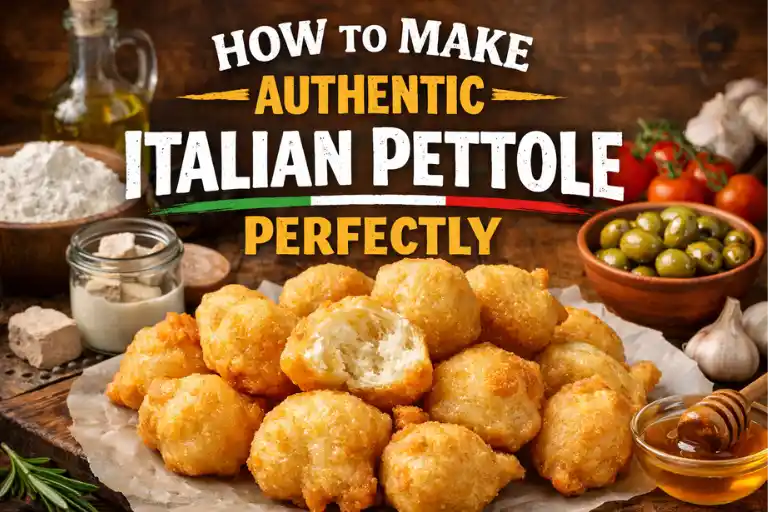
Italian Pettole are one of the most loved treats from Puglia, a beautiful region in southern Italy. These authentic Italian fried dough balls are crispy on the outside, soft and airy inside, and deeply connected to Italian holiday traditions. In many homes, especially during Christmas Eve (La Vigilia) and St. Martin’s Day, families gather to prepare this simple yet comforting dish.
If you’ve ever searched for an Italian Pettole recipe or wondered how to make authentic Italian Pettole at home, you’re in the right place. This guide will walk you through the traditional Puglia method, explain the simple flour, yeast, and water dough, and show you how to fry them perfectly golden. You’ll also learn about sweet and savory Pettole variations, helpful tips, and the small details that make these classic fritters truly authentic.
Quick Answer – What Are Italian Pettole?
Italian Pettole are traditional Italian fried dough balls from Puglia, in southern Italy. Made from a simple dough of flour, yeast, water, and salt, they are deep-fried until golden and airy. Pettole are especially popular during Christmas Eve (La Vigilia) and can be served in both sweet and savory versions, such as with honey or olives.
The Origin of Pettole in Puglia
The roots of authentic Italian Pettole go back to Puglia (Apulia), a region known for its simple and honest cuisine. These fritters are deeply tied to local celebrations like St. Martin’s Day (November 11) and La Vigilia, the traditional Christmas Eve feast in Italy.
In the past, Pettole were part of peasant cuisine. Families used basic pantry ingredients—flour, yeast, water, and olive oil—to create something filling and comforting. Fried dough became symbolic because it was affordable, easy to prepare, and perfect for feeding large gatherings during holidays.
Over time, this humble dish became a proud symbol of Apulian Christmas tradition. Today, whether served sweet with honey or savory with olives or anchovies, Pettole continue to represent warmth, family, and celebration in southern Italy.
Why This Recipe Is Truly Authentic
Many modern versions of an Italian Pettole recipe add extra ingredients, but the authentic Italian Pettole from Puglia stay beautifully simple. The traditional base contains no eggs, no milk, and no butter. True Apulian Pettole rely only on flour, yeast, water, salt, and a little olive oil.
You might also like: The Best Bok Choy Substitutes
This simple structure is what gives Pettole their light, airy crumb and crisp outer shell. The key is proper fermentation. Allowing the dough to rise fully helps develop flavor and create the soft interior that defines real Italian fried dough balls.
This method reflects the roots of Puglian peasant cuisine, where families used basic pantry ingredients to create something comforting for Christmas Eve (La Vigilia) and other celebrations. By respecting these traditional steps, this recipe stays true to its regional heritage.
Authentic Ingredients Breakdown
Understanding the ingredients is essential if you want to know how to make authentic Italian Pettole correctly.
Flour – 00 vs All-Purpose
Traditionally, many homes in Puglia use standard soft wheat flour. Today, you can use:
- 500g all-purpose flour (about 4 cups)
- or 500g Italian 00 flour
Both work well, but 00 flour gives a slightly softer interior.
Yeast – Fresh vs Dry
- 10g fresh yeast
- or 3g active dry yeast (1 teaspoon)
Fresh yeast gives a slightly deeper flavor, but dry yeast is perfectly fine for homemade Pettole.
Water Temperature
Use 350–400ml warm water (95–105°F / 35–40°C).
Water that is too hot can kill the yeast. Too cold can slow fermentation.
Olive Oil
Add 1 tablespoon extra virgin olive oil to the dough.
It improves texture and adds subtle Mediterranean flavor.
Salt Balance
Use 8–10g salt (about 1½ teaspoons).
Salt controls fermentation and enhances flavor without making the dough heavy.
Hydration Percentage Formula (The Science Edge)
For perfect crispy yet airy Pettole, aim for about 70–75% hydration.
Hydration formula:
Water ÷ Flour × 100
Example:
375g water ÷ 500g flour × 100 = 75% hydration
This higher hydration is what creates the signature airy interior.
Why Sticky Dough Is Correct
Many people think the dough is wrong because it feels wet and sticky. In reality, that stickiness is essential. A slightly loose dough traps more air during fermentation, leading to light, fluffy Italian fried dough balls once fried.
If the dough feels firm and dry, the Pettole may turn dense. A soft, slightly sticky texture is exactly what traditional Puglia Pettole require.
The Science Behind Perfect Pettole
If you truly want to master authentic Italian Pettole, understanding the science makes a big difference. Traditional cooks may not use technical terms, but their methods follow smart baking principles.
Dough Hydration Explained
Pettole dough usually sits around 70–75% hydration. This means the dough contains a higher amount of water compared to flour. A well-hydrated dough creates light and airy Italian fried dough balls instead of dense fritters.
Gluten Development
When flour and water mix, gluten forms naturally. Gluten gives structure. Even without heavy kneading, a soft rise allows the dough to strengthen gently, helping Pettole puff beautifully when fried.
Fermentation Timing
Proper fermentation (usually 1½–2 hours) allows yeast to produce gas. Rushing this step results in flat or heavy Pettole. Slow, steady rising builds both flavor and softness.
Gas Retention & Airy Crumb Formation
As yeast releases carbon dioxide, small air pockets form. A sticky dough traps these gases. When dropped into hot oil, those pockets expand quickly, creating the classic airy interior of Puglia Pettole.
Oil Absorption Science
If oil is too cool, dough absorbs excess oil, making fritters greasy. Proper heat quickly seals the exterior, reducing oil absorption and keeping the inside soft.
Why Oil Temperature Matters Chemically
At 350–375°F (175–190°C), rapid steam forms inside the dough. This steam pushes outward, expanding the structure. At the same time, the outer layer undergoes the Maillard reaction, creating that golden, crisp surface. Too low, and they soak oil. Too high, and they brown before cooking inside.
This balance is what turns simple dough into perfect traditional Pettole.
Step-by-Step Authentic Pettole Recipe
Now that you understand the science, here’s how to make authentic Italian Pettole at home using traditional ratios.
Ingredients
- 500g flour (4 cups all-purpose or 00 flour)
- 375g warm water (1½ cups, 95–105°F)
- 3g active dry yeast (1 teaspoon) or 10g fresh yeast
- 8–10g salt (1½ teaspoons)
- 1 tablespoon olive oil
- Oil for frying
Mixing Method
In a large bowl, dissolve the yeast in warm water. Add flour gradually, mixing with a spoon. Stir in salt and olive oil. The dough should feel soft and sticky, not dry. This is correct.
Proofing Time
Cover the bowl with a towel. Let it rise in a warm place for 1½ to 2 hours, or until doubled in size. You should see bubbles on the surface—a sign of active fermentation.
Frying Instructions
Heat oil in a deep pot to 350–375°F (175–190°C).
Using a spoon or slightly wet hands, scoop small portions of dough and gently drop into the oil. Fry in small batches for about 2–3 minutes, turning occasionally until golden brown.
Look for:
- Even golden color
- Puffing within seconds
- Light feel when lifted
Draining Technique
Remove Pettole with a slotted spoon. Place them on paper towels or a wire rack.
Properly fried Pettole should:
- Feel light
- Sound slightly hollow when tapped
- Have a crisp outer shell and airy center
Serve immediately for the best texture. Whether enjoyed sweet with honey or savory with olives, these Italian fried dough balls from Puglia are best fresh and warm.
Texture Guide – What Perfect Pettole Should Look Like
Most Italian Pettole recipes explain the steps, but very few describe what perfect Pettole should actually look and feel like. This visual understanding is key when learning how to make authentic Italian Pettole.
Exterior Color
The outside should be deep golden brown, not pale and not dark brown. A rich golden color means the oil temperature was correct and the Maillard reaction developed properly.
If they are too light → oil was too cool.
If they are too dark → oil was too hot.
Interior Crumb Structure
When you break one open, the inside should look airy and soft, not doughy. You should see a slightly irregular crumb with small open spaces.
The center should never feel wet or heavy.
Air Pocket Size
Traditional Puglia Pettole have medium-sized air pockets. They should feel light when lifted, almost hollow inside. These pockets form because of proper hydration and fermentation.
Tiny tight crumb = underproofed.
Large collapsed gaps = overproofed.
Proper Chew vs Density
Authentic Italian fried dough balls should have:
- A light crisp outside
- A soft interior
- A gentle chew, not rubbery
- No oily residue
If they feel dense or greasy, the dough or frying temperature needs adjustment. Understanding these visual and texture cues gives you real cooking confidence.
Oil Temperature & Frying Mastery
Perfect frying is what separates average fritters from crispy, airy Italian Pettole.
Ideal Temperature: 350–375°F (175–190°C)
This range allows the dough to expand quickly while sealing the exterior. At this temperature, steam forms inside, creating the classic puffed shape.
Best Oils for Frying
Choose neutral oils with a high smoke point:
- Sunflower oil
- Peanut oil
- Canola oil
- Light vegetable oil
Avoid extra virgin olive oil for deep frying, as it can burn quickly.
How to Test Oil Without a Thermometer
Drop a small piece of dough into the oil:
- If it rises within 2–3 seconds and gently bubbles → oil is ready.
- If it sinks and barely bubbles → oil is too cold.
- If it browns instantly → oil is too hot.
Spoon Shaping Technique
Traditional cooks often use two spoons:
- Scoop dough with one spoon.
- Push it into oil using the second spoon.
This creates the classic irregular shape of authentic Pettole.
Double Fry Method (Optional)
For extra crispiness:
- Fry briefly until light golden.
- Remove and rest for 5 minutes.
- Fry again for 1–2 minutes.
This method improves texture but is optional for traditional recipes.
Sweet vs Savory Pettole (Traditional Variations)
One reason Italian Pettole remain popular is their flexibility. They can be served sweet or savory, depending on the occasion.
Sweet Pettole
Often prepared during Christmas Eve (La Vigilia):
- Drizzled with warm honey
- Rolled in granulated sugar
- Lightly dusted with powdered sugar
The sweetness pairs beautifully with the airy texture.
Savory Pettole
Popular in many Apulian homes:
- Mixed with olive pieces
- Filled with anchovies
- Lightly salted and served plain
Savory versions highlight the simple dough flavor.
Stuffed Versions
Some regional variations include:
- Soft cheese inside
- Anchovy center
- Olive paste filling
These are less common but still traditional in certain areas of southern Italy.
Flavor Balance Explained
The key to both sweet and savory versions is balance.
In sweet Pettole, the honey or sugar should enhance—not overpower—the dough. The fritter itself remains mildly salty, creating contrast.
In savory versions, olives or anchovies add depth and umami, while the dough stays light and neutral. This balance is what makes traditional Puglia Pettole so comforting and versatile.
Pettole vs Zeppole – What’s the Difference?
Many people confuse Italian Pettole with Zeppole, but they are not exactly the same. Understanding the difference helps you appreciate the true identity of authentic Italian fried dough balls from Puglia.
Dough Thickness
The dough for Pettole is usually softer and more hydrated (around 70–75%). This creates a light, airy interior.
Zeppole dough is often slightly thicker and sometimes includes eggs, depending on the region. Pettole feel lighter and more rustic. Zeppole can be more structured.
Holiday Context Differences
Pettole are strongly linked to Christmas Eve (La Vigilia) and St. Martin’s Day in Puglia. They are part of the Apulian holiday table.
Zeppole, especially in Naples, are commonly associated with St. Joseph’s Day (March 19) and can also appear year-round as street food.
Regional Variations
Pettole belong mainly to Puglia (Apulia) in southern Italy.
Zeppole are more common in Naples and Campania.
While both are deep-fried dough treats, their cultural roots are different.
Texture Comparison
Perfect Puglia Pettole are:
- Light
- Airy
- Slightly irregular
- Crisp outside, soft inside
Zeppole can be:
- More uniform in shape
- Sometimes filled with custard
- Slightly denser depending on the recipe
This comparison expands the keyword universe and helps readers clearly understand the difference between Pettole vs Zeppole.
Regional Variations Across Southern Italy
Although authentic Italian Pettole come from Puglia, small variations exist across southern Italy.
Salento
In Salento (southern Puglia), Pettole are often served plain or lightly salted before adding honey or sugar. The dough is very soft, creating extra airy fritters.
Bari
In Bari, savory versions are common. Small pieces of olives or anchovies may be mixed directly into the dough before frying.
Calabria Comparison
In Calabria, fried dough snacks are also popular, but they may include slightly thicker dough and different flavor additions. While similar in style, they are not exactly traditional Pettole.
Naples Comparison
Naples is known for Zeppole, not Pettole. However, the idea of Italian fried dough balls connects both regions. The key difference lies in dough hydration and holiday tradition.
Street Food vs Home Style
In many parts of southern Italy, fried dough is sold as street food, especially during festivals. These versions are often larger and more casual.
At home, especially during Christmas Eve in Puglia, Pettole are smaller, lighter, and prepared with care as part of family tradition. This regional understanding adds depth and authority to the story of traditional Apulian Pettole.
Common Mistakes That Ruin Pettole
Even a simple Italian Pettole recipe can go wrong if small details are ignored. Here are the most common mistakes when learning how to make authentic Italian Pettole.
Dough Too Dry
If you add too little water, the dough becomes stiff.
Result: Dense and heavy Italian fried dough balls instead of airy ones. Remember, traditional Puglia Pettole use a soft, sticky dough. Do not be afraid of moisture.
Underproofing
If the dough does not rise long enough, it will lack air pockets.
Signs:
- Tight crumb
- Flat shape
- Heavy texture
Proper fermentation (1½–2 hours) is key.
Overproofing
If the dough rises too long, it can collapse when frying.
Signs:
- Large uneven holes
- Weak structure
- Oily texture
The dough should double in size—not triple.
Oil Too Cold
If oil is below 350°F (175°C):
- Dough absorbs excess oil
- Pettole become greasy
- Pale exterior
Correct temperature seals the surface quickly.
Oil Too Hot
If oil exceeds 375°F (190°C):
- Outside browns too fast
- Inside remains undercooked
Golden, not dark brown, is the goal.
Overcrowding the Pan
Adding too many pieces at once lowers oil temperature. Always fry in small batches to maintain proper heat and crisp texture.
Troubleshooting Chart
| Problem | Cause | Fix |
| Pettole are dense | Dough too dry or underproofed | Increase hydration to 70–75% and allow full rise |
| Pettole are greasy | Oil too cold | Heat oil to 350–375°F |
| Pettole brown too fast | Oil too hot | Lower heat slightly |
| Flat fritters | Underdeveloped gluten | Mix thoroughly and allow proper fermentation |
| Large collapsed holes | Overproofed dough | Reduce rising time |
| Oily surface | Overcrowding pan | Fry in small batches |
This simple chart makes mastering authentic Italian Pettole from Puglia easier and more consistent.
Can You Make Pettole Healthier?
Traditional Italian fried dough balls are deep-fried, but there are lighter options if you prefer.
Air Fryer Method
You can place small spoonfuls of dough on parchment and lightly brush with oil. Air fry at 375°F for about 8–10 minutes. Texture will be softer and less crispy, but it reduces oil significantly.
Baked Version
Bake at 400°F (200°C) for 15–18 minutes until golden. These will resemble soft rolls more than classic Pettole but are lower in fat.
Whole Wheat Version
Replace up to 30% of the flour with whole wheat flour. This adds fiber but keeps the dough light enough for good rise. Do not replace 100%, or the texture may become dense.
Lower Oil Absorption Tricks
If frying traditionally, try these tips:
- Maintain correct oil temperature
- Avoid overcrowding
- Drain on a wire rack (not just paper towels)
- Fry at proper hydration levels
Correct frying technique naturally reduces excess oil, keeping your authentic Italian Pettole recipe lighter while preserving traditional flavor. Even with healthier variations, nothing truly replaces the comfort of warm, freshly fried Puglia Pettole shared with family.
Nutritional Overview
While authentic Italian Pettole are a holiday treat, it helps to understand their basic nutrition. Keep in mind that exact values may vary depending on size and frying method.
Calories Per Serving
One small Pettole (about 30–35g) contains roughly 90–120 calories. Most of the calories come from flour and the oil used for frying.
Macronutrient Estimate (Per Piece)
Approximate values:
- Carbohydrates: 12–15g
- Fat: 4–6g
- Protein: 2–3g
Since this is a simple flour, yeast, and water dough, carbohydrates are the main component.
Frying Impact
Deep frying increases fat content. However, when oil temperature is kept at 350–375°F, proper sealing reduces excess oil absorption. Well-fried Italian fried dough balls should feel light, not greasy.
Portion Control Advice
Because Pettole are traditionally served during Christmas Eve (La Vigilia) and festive gatherings, moderation is key. Enjoy 2–4 pieces as part of a balanced meal. Pair them with protein-rich dishes to feel satisfied without overeating. Pettole are meant to be shared and enjoyed—not eaten daily.
How to Serve Pettole Traditionally
In Puglia, serving Pettole is about family and celebration. These simple fritters have a strong place at the holiday table.

Christmas Eve Seafood Table
During La Vigilia, many Italian families avoid meat and serve seafood dishes. Warm Puglia Pettole are often placed on the table alongside fish, shrimp, and vegetables. They act as comforting bites between courses.
As an Appetizer
Savory versions with olives or anchovies work beautifully as a starter. Serve them warm with a small pinch of sea salt.
As a Dessert
Sweet Pettole drizzled with honey or rolled in sugar are served at the end of the meal. Their light texture makes them perfect after dinner.
Wine Pairings
- For savory Pettole → Try a crisp white wine like Pinot Grigio.
- For sweet Pettole → A light dessert wine works well.
Wine enhances the traditional southern Italian experience.
Modern Serving Ideas
Today, some people:
- Add chocolate drizzle
- Serve with dipping sauces
- Pair with coffee
- Create mini Pettole platters for parties
While modern ideas are fun, the heart of authentic Italian Pettole remains simple and rustic.
Storage, Reheating & Freezing Guide
One major gap in most Italian Pettole recipes is storage advice. Here is what works best.
Can You Freeze the Dough?
Yes. After the first rise, place dough in an airtight container and freeze for up to 1 month. Thaw overnight in the refrigerator, then let it come to room temperature before frying.
Best Reheating Method
For already fried Pettole:
- Preheat oven to 350°F (175°C)
- Heat for 5–7 minutes
Avoid microwaving, as it makes them soft and rubbery.
Crispiness Restoration
For extra crisp texture:
- Reheat in oven or air fryer
- Avoid covering with foil
- Place on wire rack for airflow
This helps restore the outer crisp shell.
Shelf Life
- Room temperature: Up to 1 day
- Refrigerator: 2–3 days
- Frozen dough: Up to 1 month
For best flavor and texture, authentic Puglia Pettole are always best enjoyed fresh and warm. This complete storage and reheating guide ensures your Italian fried dough balls stay delicious even after the celebration ends.
FAQs About Italian Pettole
Can you bake Pettole instead of frying?
Yes, you can bake Pettole at 400°F (200°C) for about 15–18 minutes, but the texture will be different. Baked versions are softer and more bread-like. Traditional authentic Italian Pettole from Puglia are deep-fried to achieve the classic crispy outside and airy inside texture.
Why are my Pettole greasy?
Greasy Pettole usually happen when the oil temperature is too low. If oil is below 350°F (175°C), the dough absorbs excess oil before sealing. Always maintain proper frying temperature and avoid overcrowding the pan for light, non-greasy Italian fried dough balls.
How long should the dough rise?
The dough should rise for 1½ to 2 hours, or until it doubles in size. Proper fermentation allows gas to form, creating the soft and airy texture of traditional Puglia Pettole. Rushing this step can result in dense fritters.
Can I make Pettole without yeast?
Traditional Italian Pettole recipe relies on yeast for proper fermentation and airy crumb. While baking powder versions exist, they lack the authentic flavor and texture. For true authentic Italian Pettole, yeast is strongly recommended.
What flour is best for Pettole?
Both all-purpose flour and Italian 00 flour work well. 00 flour produces a slightly softer interior, while all-purpose flour gives a slightly more rustic texture. The key factor is maintaining proper hydration (70–75%) for light and airy results.
Are Pettole vegan?
Yes, traditional authentic Pettole from Puglia are naturally vegan. The classic dough contains only flour, yeast, water, salt, and olive oil. Just ensure that toppings, such as honey, are replaced if you prefer a fully plant-based version.
Final Thoughts – Why This Is the Most Authentic Pettole Recipe
Italian Pettole are more than just fried dough. They represent Puglia’s culinary heritage, family gatherings, and the warmth of Christmas Eve traditions. By respecting the simple flour, yeast, and water foundation, this recipe stays true to its roots. At the same time, understanding the science behind hydration, fermentation, and oil temperature ensures consistent, light, and crispy results every time.
This guide combines tradition, technique, and clear step-by-step instructions, making it easy for anyone to master authentic Italian fried dough balls at home. If you try this recipe, share your experience, experiment with sweet and savory variations, and keep the beautiful tradition of Puglia Pettole alive in your own kitchen.