
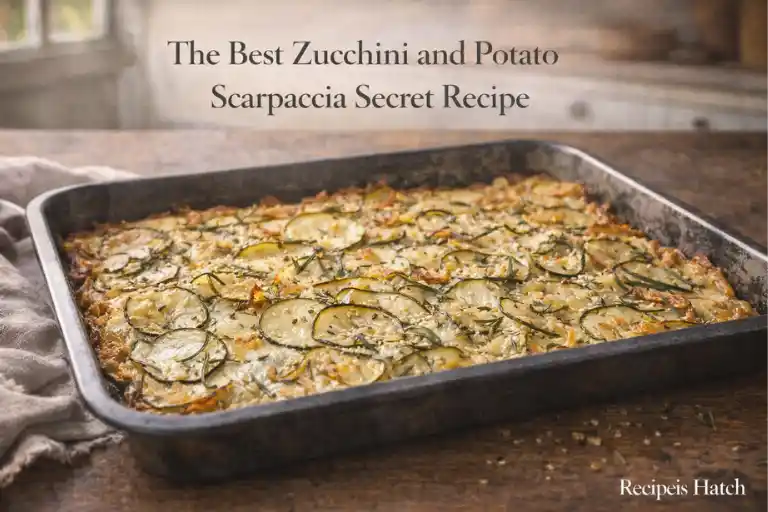
If you love rustic Italian food, this zucchini and potato scarpaccia recipe will quickly become your favorite. Originally from Tuscany, traditional Tuscan scarpaccia was made with only zucchini, flour, olive oil, and simple seasonings. Over time, many home cooks began adding potatoes to create a slightly softer center while keeping those beautiful thin crispy edges. The result is a delicious cross between an Italian zucchini flatbread and a savory vegetable tart.
In this guide, you’ll learn how to make zucchini and potato scarpaccia the authentic way — with exact ratios, moisture control tips, and texture secrets that prevent a soggy bake. Whether you want a vegan scarpaccia, a cornmeal version, or a perfectly crisp finish, this complete recipe will help you master it with confidence.
What Is Zucchini and Potato Scarpaccia? (Quick Answer)
Zucchini and potato scarpaccia is a thin, savory Tuscan vegetable flatbread made with sliced zucchini, potatoes, flour, olive oil, and simple seasonings. It comes from the coastal town of Viareggio in Tuscany, where traditional Tuscan scarpaccia was originally prepared with only zucchini. Unlike a frittata, it does not rely on eggs as the main base, and unlike a thick tart, it is spread very thin to create a lightly crisp, rustic texture. The result is closer to an Italian zucchini flatbread than a pie — golden on the edges, tender in the center, and deeply flavorful.
Is Potato Traditional in Scarpaccia?
The original traditional scarpaccia recipe from Viareggio was made using only zucchini, flour, olive oil, and sometimes cornmeal. Potatoes were not part of the earliest versions of this Tuscan peasant dish. Over time, home cooks began adding thinly sliced potatoes as a modern adaptation.
Why add potatoes? Mainly for texture and balance. Zucchini releases a lot of water while baking. Potatoes contain natural starch, which helps bind moisture and create a slightly softer center without losing that important thin crispy scarpaccia edge. This variation keeps the rustic character while offering a more structured slice.
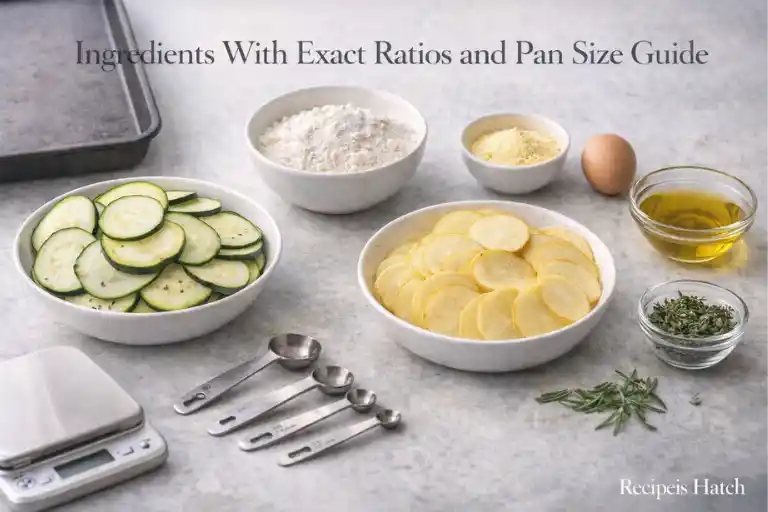
Ingredients (With Exact Ratios & Pan Size Guide)
Getting the zucchini-to-potato ratio right is the key to a perfectly balanced zucchini and potato scarpaccia recipe. Too much zucchini makes it watery. Too much potato makes it dense.
You might also like: How To Convert 120 C to F
Recommended Ratio (Authentic Balance)
For a standard 30 x 40 cm (10 x 15 inch) baking pan:
- 500g zucchini (thinly sliced)
- 250g potato (very thin slices)
- 120g all-purpose flour or 100g flour + 20g cornmeal
- 60ml extra virgin olive oil (plus extra for pan)
- 1 large egg (optional)
- 8g salt
- Fresh herbs (rosemary or thyme)
✔ This 2:1 zucchini-to-potato ratio keeps the structure firm while preserving the classic thin crispy scarpaccia texture.
Flour vs Cornmeal Comparison (in Ingredients Stage)
- All-purpose flour → softer center, smoother texture
- Cornmeal → slightly grainy texture, more crisp edges
- Hybrid mix → best balance for a Tuscan-style scarpaccia
Oil Measurement Matters
Use about 60ml olive oil in the batter and brush the pan generously. Oil helps create that golden, crispy base that defines an authentic Italian zucchini flatbread.
Egg or Egg-Free Option
- With egg → better binding, slightly richer texture
- Without egg → more traditional flatbread feel
For a vegan scarpaccia, simply skip the egg and slightly reduce flour by 10g if needed.
Pan Size & Thickness Conversion
For proper scarpaccia thickness, spread the mixture to about 5–7 mm thin before baking.
If using a smaller pan (20 x 30 cm):
- Reduce ingredients by 25%
If using a larger pan:
- Increase ingredients by 20–30%
Thin spreading is what turns this into a true Tuscan vegetable flatbread, not a tart.
Cornmeal vs Flour – Which Is More Authentic?
The debate between cornmeal scarpaccia and flour-only versions is an old one in Tuscany.
Traditional Perspective
Early Viareggio scarpaccia recipes often used a mix of flour and cornmeal because corn was affordable in coastal Tuscany. However, many modern versions use only flour.
So which is more authentic? Both are accepted — but cornmeal leans closer to rustic roots.
Texture Differences
- Flour-only → smoother bite, softer center
- Cornmeal-added → slightly crispier edges, subtle crunch
- Heavy cornmeal → more crumbly, less flexible
Crispness Impact
Cornmeal absorbs moisture better, which helps prevent a soggy zucchini bake. If crispness is your priority, a small amount of cornmeal improves structure without overpowering the flavor.
Best Hybrid Approach
For the best zucchini and potato scarpaccia, use:
- 80% flour
- 20% fine cornmeal
This keeps the rustic identity of traditional Tuscan scarpaccia while ensuring modern crispness and slice stability.
The Science Behind Perfect Scarpaccia Texture
Making truly crispy zucchini and potato scarpaccia is not just about baking — it’s about understanding moisture and structure. Most recipes skip this part, but this is where texture is decided.
Why Zucchini Releases Water
Zucchini is made up of more than 90% water. When heated, its cell walls break down and release that moisture. If you don’t manage this properly, your Tuscan scarpaccia can turn soft and soggy instead of crisp.
That’s why draining zucchini is essential in any serious zucchini scarpaccia recipe.
Salt & Osmosis (Simple Explanation)
When you sprinkle salt over sliced zucchini, something important happens. Through osmosis, salt pulls water out of the vegetable. Letting it rest for 20–30 minutes reduces excess moisture before baking.
Less water = better crispness.
This single step helps prevent a soggy zucchini bake.
Potato Starch Binding Science
Potatoes contain natural starch, which acts like a binder. When heated, starch absorbs liquid and thickens the mixture. In a zucchini and potato scarpaccia, this helps:
- Stabilize structure
- Reduce watery texture
- Create a sliceable flatbread feel
This is one reason why adding potato is a smart modern adaptation.
Batter Hydration Balance
Your batter should lightly coat the vegetables — not drown them. Too much liquid creates steam instead of crispness.
A proper scarpaccia batter thickness should look:
- Lightly sticky
- Not runny
- Spreadable but not pourable
Balanced hydration creates that signature thin crispy scarpaccia edge.
Why Thickness Determines Crispness
Crispness depends on surface exposure. A thinner layer means:
- More contact with hot air
- Faster moisture evaporation
- Better browning
If the mixture is thick, the inside steams instead of roasts — and the result feels more like a soft tart than an Italian zucchini flatbread.
How Thin Should Scarpaccia Be?
This is one of the most important questions — and almost no one explains it clearly.
Exact Thickness Guide
For authentic Tuscan-style scarpaccia, spread the mixture to:
5–7 millimeters thick (about ¼ inch)
This thin layer is what gives it that traditional flatbread character.
What Happens If It’s Too Thick?
If your zucchini and potato scarpaccia recipe is thicker than 1 cm:
- The center stays soft
- Moisture gets trapped
- Edges won’t fully crisp
- It feels more like a vegetable cake
Too thick = less crisp.
Edge Crisp Comparison
At 5–7 mm thickness:
- Edges turn golden brown
- Base becomes lightly crunchy
- Slices hold shape
At 10–12 mm thickness:
- Center becomes dense
- Base softens
- Texture resembles a savory tart
Visual Description
A properly baked thin scarpaccia should:
- Have slightly curled, crisp edges
- Show light golden spots on top
- Feel firm underneath when lifted
- Bend slightly but not break
When you cut it, the slice should look thin, structured, and rustic — like a true Tuscan vegetable flatbread, not a pie.
Step-by-Step Instructions
This is where your zucchini and potato scarpaccia recipe comes together. Follow each step carefully and pay attention to how it should look, feel, and what could go wrong. These small details are what separate a soft bake from a perfectly thin crispy scarpaccia.
Prepping & Draining Zucchini
What to do:
Slice zucchini very thin (about 2–3 mm). Sprinkle with salt and let it rest for 20–30 minutes. Then squeeze out excess water using your hands or a clean towel.
What it should look like:
Zucchini slices will look softer and slightly wilted.
What it should feel like:
Moist but not dripping wet.
What can go wrong:
If you skip draining, excess water will cause a soggy zucchini bake and prevent crisp edges in your Tuscan scarpaccia.
Mixing the Batter Correctly
In a large bowl, combine drained zucchini, thinly sliced potatoes, flour (or flour + cornmeal), olive oil, and egg (if using).
What it should look like:
Vegetables should be lightly coated — not swimming in batter.
What it should feel like:
Sticky but spreadable. Not runny.
What can go wrong:
If it looks watery, add 1–2 tablespoons flour. If too dry, drizzle a little olive oil. Proper batter hydration balance is key for an authentic Italian zucchini flatbread texture.
Spreading Thinly
Line and oil your baking pan. Spread the mixture evenly to about 5–7 mm thick.
What it should look like:
A thin, even layer with visible vegetable slices throughout.
What it should feel like:
Flat and level when gently pressed with a spoon.
What can go wrong:
If spread too thick, your zucchini and potato scarpaccia will bake unevenly and feel dense instead of crisp.
Baking Temperature Strategy
Bake at 200°C (400°F) in a preheated oven for 35–45 minutes.
What it should look like:
Edges turning golden brown first.
What it should feel like:
Firm around the sides when lightly pressed.
What can go wrong:
Low temperature traps moisture. High heat without enough oil may burn the top before the base crisps. Consistent heat helps create that classic Tuscan vegetable flatbread finish.
When It’s Done (Color & Texture Cues)
Your zucchini and potato scarpaccia is ready when:
Edges are deep golden
Bottom feels crisp when lifted
Top has light brown spots
Center feels set, not wet
Let it cool slightly before slicing. Cooling helps the starch set and improves slice stability. Follow these texture cues carefully, and you’ll achieve a perfectly structured, crispy zucchini scarpaccia every time.
How to Make It Extra Crispy (Pro Techniques)
If your goal is ultra-crispy zucchini and potato scarpaccia, these small professional techniques make a big difference. This is where most recipes stop — but this is where texture becomes exceptional.
Preheat the Pan Method
Place your empty baking tray in the oven while it preheats. Once hot, remove carefully, brush with olive oil, then spread the mixture.
Why it works:
The hot surface immediately starts crisping the base of your Tuscan scarpaccia, reducing steam buildup.
Oil Layering Technique
Use oil in two stages:
- Mix olive oil into the batter.
- Generously oil the pan before spreading.
This dual-layer oil method creates better browning and a golden bottom — essential for authentic Italian zucchini flatbread texture.
High-Heat Finish
During the last 5 minutes, increase the oven temperature slightly (about 10–15°C higher).
This final blast helps:
- Evaporate remaining moisture
- Deepen golden color
- Enhance crisp edges
Perfect for a truly thin crispy scarpaccia.
Broiler Method
For extra browning, switch on the broiler for 1–2 minutes at the end.
Watch carefully.
The top should develop:
- Light charred spots
- Slight edge curling
- Deep golden finish
This step gives your zucchini and potato scarpaccia recipe a rustic, authentic look.
Wire Rack Cooling
After baking, transfer the scarpaccia to a wire rack.
Why?
If it cools in the pan, steam collects underneath and softens the base. Air circulation keeps the bottom crisp.
Common Mistakes That Make Scarpaccia Soggy or Dense
If you’ve ever asked, “Why is my scarpaccia soggy?” — this section explains exactly why.
Too Much Moisture
Zucchini not drained properly is the biggest problem. Excess water creates steam instead of crispness.
Fix: Always salt and squeeze zucchini before mixing.
Overcrowding the Pan
If the layer is thick or uneven, moisture gets trapped.
Fix: Spread to 5–7 mm thickness for authentic Tuscan scarpaccia results.
Incorrect Flour Ratio
Too little flour = weak structure.
Too much flour = dense texture.
Balanced flour helps maintain proper batter hydration balance in your zucchini scarpaccia recipe.
Not Baking Long Enough
Removing it too early leaves the center soft.
Look for:
- Deep golden edges
- Firm center
- Crisp underside
Color is your signal — not just time.
Too Thick Batter
If the mixture is more than 1 cm thick, it behaves like a vegetable cake instead of a Tuscan vegetable flatbread. Thinness controls crispness.
Variations (Vegan, Gluten-Free & Creative Twists)
One reason zucchini and potato scarpaccia is so popular is its flexibility. You can easily adapt this Tuscan scarpaccia recipe to fit different diets and flavor preferences.
Vegan Version
To make a vegan zucchini scarpaccia, simply skip the egg and use a slightly firmer batter. You can add 1 tablespoon of extra olive oil or a small spoon of plant-based yogurt for moisture.
The result is still a thin, rustic Italian zucchini flatbread with crispy edges and a tender center.
Gluten-Free Flour Blend
For a gluten-free scarpaccia, replace all-purpose flour with:
- 70% gluten-free all-purpose blend
- 30% rice flour or fine cornmeal
This keeps structure while preventing a crumbly texture. Because gluten-free flours absorb differently, adjust hydration slightly to maintain proper batter balance.
Cheese-Enhanced Version
Although traditional Viareggio scarpaccia was simple, adding grated Parmesan or Pecorino gives:
- Deeper savory flavor
- Extra browning
- Slight crisp boost
Just 30–40g mixed into the batter is enough to enhance your zucchini and potato scarpaccia recipe without overpowering it.
Herb Variations
Fresh herbs can change the personality of the dish:
- Rosemary → earthy and classic Tuscan
- Thyme → light and aromatic
- Oregano → Mediterranean touch
- Basil → fresh summer flavor
Herbs complement the mild sweetness of zucchini beautifully.
Onion Addition
Thinly sliced red or white onion adds natural sweetness and improves caramelization. If using onion, slice very thin to avoid extra moisture in your thin crispy scarpaccia.
Can You Make It Without Eggs or Cheese?
Yes — and many traditional versions were simpler than modern adaptations.
Binding Alternatives
If skipping egg, rely on:
- Potato starch
- Slightly increased flour (10–15g more)
- Cornmeal for structure
These help maintain a sliceable Tuscan vegetable flatbread texture.
Texture Differences
Without egg:
- Slightly firmer bite
- More flatbread-like
- Less tender center
Without cheese:
- Lighter flavor
- More focus on zucchini sweetness
Both versions still produce a delicious zucchini scarpaccia recipe.
Flavor Compensation
To enhance flavor without cheese:
- Increase herbs
- Add cracked black pepper
- Drizzle high-quality olive oil after baking
Simple adjustments maintain balance in your zucchini and potato scarpaccia.
How to Serve Zucchini and Potato Scarpaccia
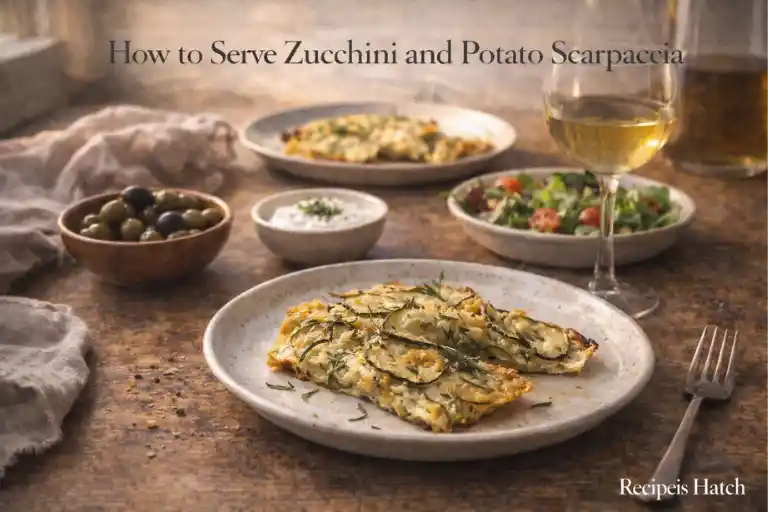
As an Antipasto Platter Item
Cut into squares and serve alongside olives, roasted peppers, and cured vegetables. Its thin, crisp texture makes it perfect for sharing.
As a Side Dish
Pair with grilled vegetables, roasted chicken, or a fresh salad. It works beautifully as a Mediterranean-style side.
As a Brunch Item
Serve warm with a light yogurt dip or soft cheese. The savory flavor makes it a unique brunch alternative.
Wine Pairing
A light white wine like Pinot Grigio complements the mild zucchini flavor and crisp edges of your Tuscan scarpaccia.
Dips
Try serving with:
- Garlic yogurt sauce
- Lemon tahini
- Simple tomato relish
These pair well with the structure of an Italian zucchini flatbread.
Make-Ahead & Meal Prep Strategy
Unlike many vegetable dishes, zucchini and potato scarpaccia stores well when handled properly.
Batch Baking
You can double the recipe and bake on two trays. Because it is thin, it reheats easily without losing texture.
Lunchbox Storage
Cut into squares and refrigerate for up to 3 days. Reheat briefly in the oven or air fryer to restore crispness.
Picnic-Friendly
Serve at room temperature. Its firm structure makes it easy to transport — perfect for outdoor meals.
Freezer Cubes
Slice and freeze individually with parchment between layers. Reheat directly in a hot oven to revive the thin crispy scarpaccia texture.
Storage, Freezing & Reheating Guide
Proper storage keeps your zucchini and potato scarpaccia crisp and flavorful. Because this dish is thin, handling moisture correctly is very important.
Refrigerator Method
Let the Tuscan scarpaccia cool completely. Store slices in an airtight container with parchment between layers. Keep in the refrigerator for up to 3 days.
Avoid sealing while warm — trapped steam softens the base of your Italian zucchini flatbread.
Freezing & Texture Changes
Yes, you can freeze zucchini and potato scarpaccia. Wrap slices individually and store for up to 2 months.
Keep in mind:
- Texture may become slightly softer after thawing.
- Crispness can be restored during reheating.
Because potato starch helps structure, this version freezes better than zucchini-only scarpaccia.
Reheating for Crispness
To restore the original thin crispy scarpaccia texture:
- Preheat oven to 200°C (400°F).
- Bake for 8–10 minutes.
- Place directly on rack for better airflow.
Avoid microwaving — it creates steam and makes the base soft.
Air Fryer vs Oven Reheating
Air fryer:
- 180°C (350°F) for 4–6 minutes
- Very effective for crisp edges
Oven:
- More even heating
- Better for larger portions
Both methods work, but the air fryer is faster for reviving a single slice of your zucchini scarpaccia recipe.
FAQs About Zucchini and Potato Scarpaccia
Why is my scarpaccia soggy?
Your zucchini and potato scarpaccia becomes soggy if excess moisture isn’t removed from the zucchini, the batter is too thick, or the oven temperature is too low. Always salt and drain zucchini first, spread the mixture thin (5–7 mm), and bake until deeply golden to ensure crisp edges.
How thin should scarpaccia be?
Authentic Tuscan scarpaccia should be about 5–7 millimeters (¼ inch) thick. This thin layer allows moisture to evaporate quickly and creates crisp edges. If it’s thicker than 1 cm, the center may stay soft and resemble a vegetable tart instead of a flatbread.
Can I skip potatoes?
Yes. Traditional Viareggio scarpaccia was made with only zucchini. However, potatoes add natural starch that improves structure and slice stability. If skipping potatoes, reduce moisture carefully and slightly increase flour to maintain proper texture in your zucchini scarpaccia recipe.
Can I freeze scarpaccia?
Yes, you can freeze zucchini and potato scarpaccia for up to two months. Wrap slices individually and reheat in a hot oven or air fryer to restore crispness. The potato starch helps it hold structure better after thawing compared to zucchini-only versions.
Is it supposed to be crispy?
Yes. A proper Tuscan vegetable flatbread should have golden, slightly crisp edges and a firm base. The center should be tender but not wet. If it feels soft all over, it may need longer baking or better moisture control.
Can I make it ahead?
Absolutely. Zucchini and potato scarpaccia can be made a day in advance and reheated before serving. Because it is thin, it reheats quickly without losing flavor. Store properly to avoid moisture buildup.
Can I air fry scarpaccia?
Yes, you can air fry slices at 180°C (350°F) for 4–6 minutes to restore crisp edges. The air fryer works well for reheating small portions of your Italian zucchini flatbread, especially if you want quick, even browning.
Chef-Level Tips for Perfect Tuscan Scarpaccia
If you want your zucchini and potato scarpaccia to taste like it came from a small kitchen in Viareggio, these final details matter. Small improvements in preparation create big changes in texture and flavor.
Best Zucchini Type
Choose small to medium zucchini with firm skin and fewer seeds. Younger zucchini contain less water, which helps prevent a soggy zucchini bake. Avoid very large zucchini because they hold more moisture and can weaken the structure of your Tuscan scarpaccia.
Ideal Slicing Thickness
Slice zucchini about 2–3 mm thin. Potatoes should be sliced even thinner if possible. Thin slices cook evenly and blend smoothly into the batter, helping create a proper thin crispy scarpaccia instead of a heavy vegetable tart.
Salt Timing Precision
Salt zucchini immediately after slicing and let it rest for 20–30 minutes. Do not mix salt directly into the batter without draining first. Proper salt timing improves moisture control and strengthens the texture of your zucchini scarpaccia recipe.
Oil Quality Impact
Use high-quality extra virgin olive oil. It enhances flavor, improves browning, and helps form a golden base. Cheap oil can reduce crispness and affect the overall taste of your Italian zucchini flatbread.
Resting Time Before Slicing
After baking, let your zucchini and potato scarpaccia rest for at least 10–15 minutes. This allows starch to set and moisture to stabilize. Cutting too early can cause the center to feel soft and break apart.