

The best substitute for coconut oil depends on how you plan to use it. If you’re cooking at high heat, avocado oil is one of the best coconut oil alternatives because it has a high smoke point and a mild flavor. For baking, butter or shortening works well since they provide a similar texture and can often be used in a 1:1 coconut oil replacement ratio.
If you need a vegan coconut oil substitute, try vegetable oil or applesauce for moisture in cakes and muffins. For beauty uses, jojoba oil is a gentle coconut oil substitute for skin, while argan oil is great for hair. In short, the right coconut oil substitute depends on your recipe, diet, and whether you’re cooking, baking, or using it for skincare.
Why People Look for Coconut Oil Substitutes
There are many reasons people search for what to use instead of coconut oil. Sometimes, it’s simple — you may have just run out of coconut oil in the middle of cooking or baking. Instead of stopping your recipe, you look for quick and easy coconut oil alternatives already in your kitchen.
Another common reason is the strong coconut flavor. While some love it, others prefer a more neutral taste, especially in savory dishes. Allergies can also be a concern. Some people need safe and allergy-friendly healthy oil swaps.
Health is another big factor. Coconut oil is high in saturated fat, so many people look for options that are lighter and heart-friendly. Others need vegan swaps or oils with a higher smoke point for frying. In short, choosing the right substitute depends on your health goals, taste preference, and cooking method.

You might also like: How Many Tsp in 1 Tbsp
Before You Substitute: 5 Things You Must Know
Before choosing a coconut oil substitute, it’s important to understand a few basics. Many people search for what to use instead of coconut oil, but not all coconut oil alternatives work the same way. Here are five key things you should know to avoid ruining your recipe.
Solid vs Liquid Fats
Coconut oil is solid at room temperature. This makes it perfect for baked goods like cookies and pie crusts. If you replace it with a liquid oil, the texture may change. For baking, choose solid fats like butter or shortening for a better 1:1 coconut oil replacement ratio.
Smoke Point Matters
The smoke point is the temperature at which oil starts to burn. For frying or sautéing, use oils with a high smoke point, like avocado oil. This makes it one of the best coconut oil alternatives for high-heat cooking.
Flavor Impact
Some oils have a strong taste. Coconut oil has a mild sweetness, while olive oil has a bold flavor. If you want a neutral dish, choose mild healthy oil swaps like vegetable or grapeseed oil.
Health & Saturated Fat Content
Coconut oil is high in saturated fat. If you’re looking for a heart-friendly option, consider oils lower in saturated fat, such as olive or sunflower oil.
Recipe Type (Baking vs Frying vs Beauty)
The right substitute depends on how you’re using it. Baking needs structure, frying needs heat stability, and skincare needs gentle, nourishing oils. Always match the substitute to the purpose.
The 10 Best Coconut Oil Substitutes
Here’s a detailed list of the best coconut oil substitutes, including their uses, smoke points, and ratios. These are perfect for cooking, baking, and even vegan swaps.
Avocado Oil
Best for: Frying, sautéing, high-heat cooking
Smoke point: 520°F (271°C) – very high, perfect for frying
Ratio: 1:1 coconut oil replacement ratio
Flavor impact: Mild and neutral
Pros & Cons:
- Pros: Heart-healthy, high smoke point, neutral flavor
– Cons: Slightly expensive
Olive Oil
Best for: Low to medium-heat cooking, salad dressings
Smoke point: 375–410°F (190–210°C)
Ratio: ¾ cup olive oil = 1 cup coconut oil
Flavor impact: Fruity, slightly strong
Pros & Cons:
- Pros: Heart-healthy, widely available
– Cons: Flavor may overpower some baked goods
Vegetable Oil
Best for: Baking, general cooking, vegan recipes
Smoke point: 400–450°F (204–232°C)
Ratio: 1:1 coconut oil replacement ratio
Flavor impact: Neutral
Pros & Cons:
- Pros: Cheap, neutral, versatile
– Cons: Highly processed, lower nutritional value
Butter
Best for: Baking, sautéing
Smoke point: 350°F (177°C)
Ratio: 1:1 coconut oil replacement ratio
Flavor impact: Rich, creamy
Pros & Cons:
- Pros: Excellent for flavor and texture in baked goods
– Cons: Not vegan, lower smoke point
Shortening
Best for: Baking, especially cookies and pie crusts
Smoke point: 360°F (182°C)
Ratio: 1:1 coconut oil replacement ratio
Flavor impact: Neutral
Pros & Cons:
- Pros: Great structure for baked goods, vegan option available
– Cons: Highly processed, less healthy
Grapeseed Oil
Best for: Baking, stir-frying, salad dressings
Smoke point: 420°F (216°C)
Ratio: 1:1 coconut oil replacement ratio
Flavor impact: Light and neutral
Pros & Cons:
- Pros: Mild flavor, good for high heat
– Cons: Expensive, low in nutrients
Sunflower Oil
Best for: Baking, cooking, frying
Smoke point: 440°F (227°C)
Ratio: 1:1 coconut oil replacement ratio
Flavor impact: Neutral
Pros & Cons:
- Pros: Affordable, mild taste
– Cons: Highly processed, not flavorful
Applesauce (Non-Oil Baking Substitute)
Best for: Cakes, muffins, vegan baking
Smoke point: N/A (baking use only)
Ratio: ¾ cup applesauce = 1 cup coconut oil
Flavor impact: Sweet, fruity
Pros & Cons:
- Pros: Reduces fat, adds moisture, vegan
– Cons: Can change texture, not for frying
Mashed Banana (Non-Oil Baking Substitute)
Best for: Cakes, muffins, healthy baking
Smoke point: N/A
Ratio: ¾ cup mashed banana = 1 cup coconut oil
Flavor impact: Sweet, banana flavor
Pros & Cons:
- Pros: Natural sweetness, healthy, vegan
– Cons: Adds banana taste, best for specific recipes
Almond Oil
Best for: Baking, dressings, hair & skin uses
Smoke point: 420°F (216°C)
Ratio: 1:1 coconut oil replacement ratio
Flavor impact: Nutty, mild
Pros & Cons:
- Pros: Nutrient-rich, versatile for beauty and cooking
– Cons: Expensive, may not suit nut-allergic people
These substitutes cover baking, frying, vegan swaps, and beauty uses. Using the right option ensures your recipe or skincare routine works perfectly while keeping the 1:1 coconut oil replacement ratio or adjusting slightly for non-oil alternatives like applesauce or banana.
Substitutes by Use Case
Choosing the right coconut oil substitute depends on how you plan to use it. Here’s a breakdown for cooking, baking, health, vegan, and beauty purposes so you can pick the best option without guessing.
Best Substitutes for High-Heat Cooking
When frying or sautéing, smoke point is the most important factor. Oils with a high smoke point are ideal because they don’t burn or create bitter flavors.
Top options:
- Avocado Oil – smoke point 520°F, neutral flavor, best overall for frying
- Sunflower Oil – smoke point 440°F, mild taste, affordable
- Grapeseed Oil – smoke point 420°F, light and healthy
These are the best coconut oil substitutes for frying, keeping your dishes safe and flavorful.
…
Baking needs structure, moisture, and texture. Solid fats like butter or shortening work best for cookies, cakes, and pie crusts. For liquid oil substitutes, use vegetable oil or grapeseed oil carefully, as they may slightly alter the texture.
Non-oil baking substitutes:
- Applesauce – adds moisture, reduces fat, vegan-friendly
- Mashed Banana – naturally sweet, healthy, best in muffins and cakes
These options cover the 1:1 coconut oil replacement ratio or adjusted amounts for non-oil swaps.
Best Healthy / Low-Saturated Fat Alternatives
If you want heart-friendly and lower saturated fat options, these are ideal:
- Olive Oil – healthy fats, versatile, moderate smoke point
- Avocado Oil – high smoke point, nutrient-rich
- Vegetable Oil – neutral, widely available
These healthy oil swaps keep your meals light without compromising flavor or performance.
Best Vegan Coconut Oil Substitutes
For plant-based recipes, you need alternatives that maintain moisture and texture.
Top vegan swaps:
- Vegetable Oil – neutral, 1:1 ratio for most recipes
- Applesauce – perfect for cakes and muffins
- Mashed Banana – sweetens naturally and adds structure
These options ensure your baking stays moist and fluffy without animal products.
Best Coconut Oil Substitutes for Skin
For skincare, pick non-comedogenic oils that moisturize without clogging pores:
- Jojoba Oil – closest to skin’s natural oils
- Almond Oil – light, nourishing
- Argan Oil – rich in vitamin E, good for hydration
These are excellent coconut oil alternatives for skin, keeping it soft and healthy.
Best Coconut Oil Substitutes for Hair
For hair, you want oils that nourish, hydrate, and remain lightweight:
- Argan Oil – smooths frizz, adds shine
- Jojoba Oil – lightweight, reduces scalp dryness
- Almond Oil – strengthens strands, adds softness
Using the right coconut oil substitute for hair protects your hair while giving it shine and manageability.
Coconut Oil vs Substitutes
A comparison table helps you quickly see which coconut oil alternative works best for your cooking, baking, or beauty needs. This table also helps target featured snippets and search queries like “best coconut oil substitute for frying” or “1:1 coconut oil replacement ratio.”
| Feature | Coconut Oil | Avocado Oil | Butter | Olive Oil |
| Smoke Point | 350°F (177°C) | 520°F (271°C) | 350°F (177°C) | 375–410°F (190–210°C) |
| Solid at Room Temp | Yes | No | Yes | No |
| Saturated Fat | High | Low | High | Low–Moderate |
| Best For | Baking, sautéing, skin & hair | Frying, high-heat cooking, healthy swaps | Baking, sautéing | Low-heat cooking, salad dressings, heart-healthy dishes |
This simple chart makes it easy to compare coconut oil alternatives at a glance.
- Use Avocado Oil for frying because of its high smoke point.
- Use Butter or Coconut Oil in baked goods for texture and structure.
- Use Olive Oil for low-heat cooking or as a heart-healthy alternative.
This table positions your content as practical, easy to read, and actionable, giving you an edge over competitors who don’t provide such a clear side-by-side comparison.
Nutrition & Health Breakdown
When choosing a coconut oil substitute, it’s important to consider nutrition and health benefits. Coconut oil is high in saturated fat, so swapping it for a healthier option can improve heart health and fit specific diets.
Saturated Fat Comparison
Coconut oil contains about 82% saturated fat, which is higher than most other oils. Avocado oil, olive oil, and vegetable oil have much lower saturated fat, making them the healthiest coconut oil alternatives for everyday use. Butter and shortening are also high in saturated fat, so use them in moderation.
Heart Health Discussion
Oils like olive oil and avocado oil contain monounsaturated fats that support heart health. Replacing coconut oil with these can lower cholesterol and promote better cardiovascular wellness.
Keto Compatibility
If you follow a keto diet, coconut oil can still be used, but other keto oil substitutes like avocado oil are great for frying and sautéing while providing healthy fats without overdoing saturated fat.
Paleo Suitability
For paleo diets, coconut oil, avocado oil, and olive oil are all acceptable. Avoid highly processed vegetable oils if you want to stay strict paleo.
Allergy Considerations
Nut oils like almond oil are not suitable for people with nut allergies. For allergy-friendly swaps, use avocado oil, sunflower oil, or vegetable oil, which are neutral and safe for most people. Using these guidelines ensures your low fat substitute for coconut oil is not only functional in recipes but also supports your health and dietary needs.
Common Mistakes When Replacing Coconut Oil
Many people search for what to use instead of coconut oil, but even with the right substitute, mistakes can ruin a recipe or skincare routine. Here are the most common errors and how to avoid them.
Using the Wrong Ratio
Not all substitutes work 1:1. For example, liquid oils like olive oil or vegetable oil may require slightly less than coconut oil in baking, while applesauce or mashed banana may need a ¾ cup replacement for 1 cup of coconut oil.
Ignoring Texture
Coconut oil is solid at room temperature, so swapping it with liquid oils without adjusting the recipe can make baked goods too soft or greasy. Always consider solid vs liquid fat when substituting.
Overpowering Flavor
Some oils, like olive oil, have a strong taste that can dominate baked goods or desserts. For a neutral flavor, use vegetable oil or grapeseed oil.
Using Low Smoke Point Oil for Frying
Using oils like butter or unrefined olive oil for high-heat frying can burn the oil, creating bitter flavors and unhealthy compounds. Always choose a high smoke point substitute like avocado oil.
Skipping Moisture Adjustments in Baking
Non-oil substitutes like applesauce or mashed banana add extra moisture. If you don’t adjust other liquids in your recipe, the texture can become too wet or dense. By avoiding these mistakes, your coconut oil substitutes will perform perfectly whether you’re cooking, baking, or using them for skin and hair care.
Can You Mix Oils as a Substitute?
Sometimes, a single coconut oil substitute isn’t perfect for your recipe. Mixing oils can help you achieve the right flavor, texture, and nutritional profile, but it needs to be done carefully.
When Mixing Works
Mixing works well when you want both high smoke point and neutral flavor. For example, combining avocado oil (high heat) with a little grapeseed oil (neutral flavor) can make frying safer and tastier.
Flavor Balancing Tips
Some oils have strong tastes. Mixing strong-flavored oils like olive oil with neutral oils such as sunflower or grapeseed can prevent overpowering your dish. Always taste-test if using oils in baked goods or salad dressings.
Texture Improvement Hacks
For baking, combining solid fats (like butter) with liquid oils can maintain moisture while improving texture. For example, ½ butter + ½ applesauce keeps cakes soft and fluffy without being greasy.
Professional Baking Tip
Chefs often mix oils to balance health and performance. For instance, half coconut oil + half avocado oil maintains coconut’s aroma but reduces saturated fat for healthier frying or roasting.
Replacement Ratio Guide
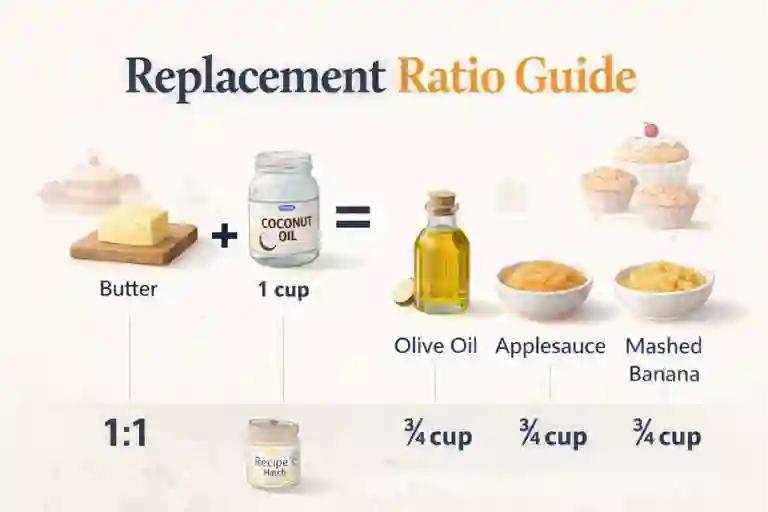
Using the right coconut oil substitute ratio is key to keeping your recipes perfect. Whether you’re baking, frying, or making vegan treats, this simple guide helps you swap oils without ruining texture or flavor.
| Coconut Oil | Substitute | Recommended Ratio |
| 1 cup | Butter | 1:1 |
| 1 cup | Olive Oil | ¾ cup |
| 1 cup | Applesauce | ¾ cup |
| 1 cup | Mashed Banana | ¾ cup |
Tips for Using the Chart:
- Solid fats like butter can usually replace coconut oil 1:1 in baking.
- Liquid oils like olive oil are slightly less dense, so use ¾ cup per 1 cup coconut oil.
- Non-oil substitutes like applesauce or banana add moisture; reduce other liquids slightly to keep texture balanced.
This practical conversion guide makes your article extremely useful, increasing dwell time and giving readers actionable advice.
Regional Cooking Swaps
Certain recipes require specific coconut oil substitutes to maintain flavor, texture, and authenticity. Many competitors overlook this, but including it gives your article a unique edge.
🇮🇳 Indian Cooking
Coconut oil is common in Indian dishes like curries and stir-fries. Avocado oil or sunflower oil are excellent substitutes because they can handle high heat without affecting flavor. For a hint of coconut aroma, mix a small amount of coconut oil with the substitute.
Mediterranean Recipes
Mediterranean dishes often need olive oil for its rich taste and heart-healthy benefits. For baking or roasting Mediterranean vegetables, olive oil or grapeseed oil works perfectly.
Baking Brownies
For rich, moist brownies, butter or a blend of butter and applesauce can replace coconut oil while keeping texture soft and fudgy.
Chocolate Melting
Coconut oil helps chocolate melt smoothly. Substitute with butter or vegetable oil for even melting, but avoid oils with strong flavors that can overpower chocolate.
Granola
Use sunflower oil, grapeseed oil, or avocado oil instead of coconut oil when roasting granola to prevent burning while keeping it crunchy and golden.
Protein Balls & Energy Bites
For no-bake snacks, nut oils like almond oil or sunflower oil can replace coconut oil for binding while adding a light nutty flavor. These regional and recipe-specific swaps make your content actionable, practical, and SEO-friendly, targeting queries competitors often miss.
FAQs About 10 Best Coconut Oil Substitutes
Here are the most common questions about coconut oil substitutes, answered clearly for readers and optimized for People Also Ask (PAA) search results.
What is the healthiest substitute for coconut oil?
Avocado oil and olive oil are the healthiest options. They are low in saturated fat, high in heart-healthy monounsaturated fats, and work well in cooking, baking, and salad dressings.
Can I use olive oil instead of coconut oil in baking?
Yes, but use ¾ cup olive oil for every 1 cup of coconut oil. Olive oil works best in cakes, muffins, and breads where a slightly fruity flavor complements the recipe.
What is the best substitute for coconut oil in cookies?
Butter or shortening are ideal because they maintain structure and texture. For a vegan option, applesauce or mashed banana can be used, though they may slightly change flavor.
Is there a nut-free coconut oil alternative?
Yes. Sunflower oil, vegetable oil, and avocado oil are safe, allergy-friendly swaps suitable for cooking, baking, and even some skincare uses.
Can I replace coconut oil with butter 1:1?
Yes, butter is a solid fat like coconut oil and works perfectly 1:1 in baking. Keep in mind butter has a lower smoke point for frying.
What is the best oil for frying instead of coconut oil?
Choose oils with a high smoke point, like avocado oil, sunflower oil, or grapeseed oil. These prevent burning and keep food flavorful and safe.
Which substitute works for hair and skin?
For beauty uses, jojoba oil, argan oil, and almond oil are excellent coconut oil alternatives. They moisturize, are lightweight, and safe for most skin and hair types.
Final Verdict – Best Overall Substitute
After exploring all coconut oil substitutes, here’s a clear guide to help you choose the perfect alternative for every need:
Best Overall
Avocado oil is the most versatile coconut oil substitute. It works for high-heat cooking, baking, and even some salad dressings, thanks to its high smoke point and neutral flavor.
Best for Baking
Butter provides excellent structure, moisture, and flavor in baked goods. For vegan baking, applesauce or mashed banana are perfect alternatives.
Best for Frying
Avocado oil and sunflower oil handle high heat without burning, making them the top choices for frying and sautéing.
Best for Beauty (Skin & Hair)
Jojoba oil, argan oil, and almond oil are lightweight, nourishing, and non-comedogenic, making them ideal for skincare and haircare.
Healthiest Option
Olive oil and avocado oil are heart-healthy, low in saturated fat, and suitable for keto and paleo diets.