
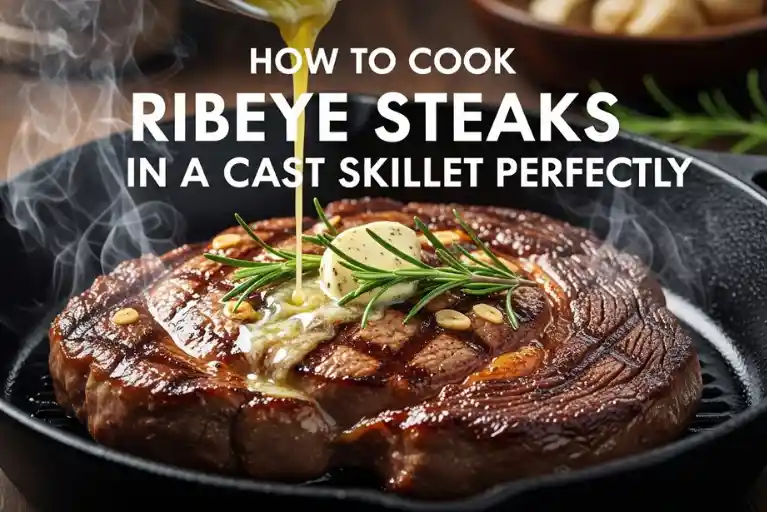
If you want a juicy, tender, and crispy Ribeye Steaks in a Cast Iron Skillet, you are in the right place. This recipe shows you exactly how to cook a ribeye steak in a cast iron skillet so it tastes like a real steakhouse meal at home. The secret is simple: high heat, proper seasoning, and the right cooking time.
Many people struggle with dry or tough steak, but that happens because of small mistakes like not preheating the pan or overcooking. In this guide, you will learn a foolproof method for pan-seared ribeye steak with a perfect golden crust and buttery flavor.
We will also cover steak doneness, cooking time, and beginner-friendly tips so you can get perfect results every time. Whether you are new or experienced, this cast iron ribeye steak recipe will make your cooking easy, fast, and delicious.
Quick Answer
To cook a perfect ribeye steak in a cast iron skillet, season the steak with salt and pepper, then sear it in a very hot cast iron pan with a little oil for 2–4 minutes per side until a brown crust forms. Add butter, garlic, and herbs, then baste the steak for extra flavor. Finish cooking to your preferred doneness (medium-rare is ideal at 130–135°F / 54–57°C) and let it rest for 5–10 minutes before slicing.
Why Cast Iron is the BEST Way to Cook Ribeye Steak
A cast iron skillet is the best tool for cooking ribeye steak because it holds heat extremely well. This strong heat retention helps create an even sear without cold spots, which is important for a perfect crust. Unlike stainless steel pans, cast iron gives a more stable and consistent heat surface, so your steak cooks evenly from edge to edge.
This even heat is what creates that rich steakhouse-style crust. When the steak hits the hot surface, it instantly starts browning, locking in flavor and juices. That’s why cast iron is both beginner-friendly and professional-level at the same time—you don’t need advanced skills to get great results.
Understanding Ribeye Steak (Choosing the Right Cut)
To cook the best cast iron ribeye steak, you must start with the right cut. The ideal thickness is 1 to 1.5 inches, which gives you enough time to build a crust without overcooking the inside.
You can choose between bone-in or boneless ribeye. Bone-in usually has slightly more flavor, while boneless is easier to handle and cooks more evenly.
Another key factor is marbling, which means the white fat running through the meat. More marbling = more flavor and juiciness. Always look for a well-marbled steak if possible.
Fresh steak works great, but dry-aged ribeye has a deeper, richer flavor if you want a more premium result.
Steak Science Explained (What Most Blogs Miss)
Great steak is not just cooking—it’s science. The golden crust you see on a pan-seared ribeye steak comes from something called the Maillard reaction, where high heat turns the surface brown and flavorful.
One important secret is a dry surface. If your steak is wet, it will steam instead of sear, which means you won’t get that crispy crust. Always pat your steak dry before cooking.
Another key idea is carryover cooking. Even after you remove the steak from heat, the inside keeps cooking for a few minutes. That’s why you should take it off the pan slightly before your target doneness.
Finally, don’t rely only on time. Temperature control matters more than cooking time, because every steak is different in thickness and fat content.
Ingredients for Perfect Cast Iron Ribeye
You might also like: Best Southern Pimento Cheese Recipe
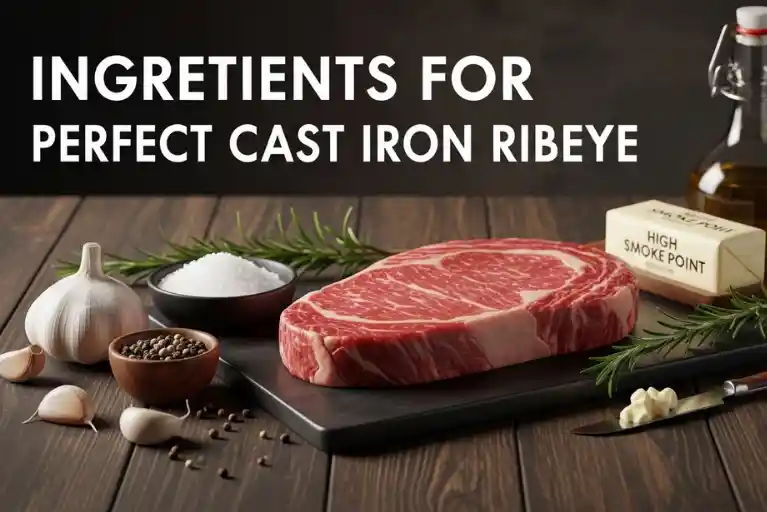
To make a perfect cast iron ribeye steak recipe, you only need a few simple ingredients. The key is using quality basics that enhance the natural flavor of the beef.
- Ribeye steak
- Kosher salt
- Black pepper
- High smoke point oil (like canola or avocado oil)
- Butter (for finishing)
- Garlic and rosemary (for extra flavor)
- Optional: compound butter for a richer, steakhouse-style taste
Each ingredient plays an important role. The salt and pepper build the base flavor, while the butter, garlic, and herbs create that rich, restaurant-style finish.
Before You Cook (Critical Beginner Rules)
Before you start cooking your ribeye steak in cast iron skillet, a few simple steps can completely change your result.
First, always bring the steak to room temperature. This helps it cook evenly instead of staying cold in the center.
Next, make sure to pat the steak completely dry. This is very important because moisture stops the crust from forming.
Seasoning is another key step. Some cooks season just before cooking, while others prefer a short resting time after seasoning. Both methods work, but early salting (dry brine) gives deeper flavor.
Finally, avoid common beginner mistakes like using low heat, overcrowding the pan, or flipping too often. These small errors can ruin a perfect pan seared ribeye steak.
Step-by-Step Cast Iron Ribeye Steak Recipe
Step 1 — Dry Brine (Pro Level but Simple)
Sprinkle kosher salt evenly on the steak and let it rest for at least 30 minutes or up to overnight. This process is called dry brining and helps the steak hold more moisture and flavor.
Step 2 — Preheat Cast Iron Properly
Your cast iron pan must be very hot before cooking. This is the secret to getting a strong crust.
If the pan is not hot enough, the steak will release water and steam instead of searing. That’s one of the most common mistakes when cooking a cast iron ribeye steak.
Step 3 — Sear the First Side (Don’t Move It)
Place the steak in the hot pan and do not move it. Let it sear properly so a deep brown crust can form.
Depending on thickness, this usually takes a few minutes. Moving the steak too early prevents a proper steak crust from forming.
Step 4 — Flip Strategy (Important Gap Topic)
Flip the steak only once for a classic sear, or multiple times if you prefer a more modern cooking method.
Frequent flipping can actually help cook the steak more evenly, while a single flip builds a stronger crust. Both methods work depending on your goal.
Step 5 — Add Butter, Garlic & Herbs
Once the steak is nearly done, add butter, garlic, and rosemary to the pan.
Tilt the pan slightly and use a spoon to baste the steak with melted butter. This step adds rich flavor and creates a glossy, restaurant-style finish for your juicy ribeye steak.
Step 6 — Finish Cooking (Stove vs Oven Method)
For thin steaks, you can finish cooking directly on the stove.
For thicker cuts, it is better to transfer the pan to the oven to finish cooking evenly. This prevents the outside from burning while the inside reaches the correct doneness for a medium rare ribeye steak.
Step 7 — Rest the Steak (Most Important Step)
After cooking, let the steak rest for 5 to 10 minutes.
This allows the juices to redistribute inside the meat. If you cut it too early, all the juices will spill out, making the steak dry.
Resting is one of the most important steps for a perfect cast iron ribeye steak recipe and should never be skipped.
Steak Doneness Guide (With Temperature Concept)
Knowing the right steak doneness is very important when cooking a cast iron ribeye steak. The same steak can taste completely different depending on how long you cook it.
Here is a simple guide:
- Rare: cool red center, very soft texture
- Medium rare (best for ribeye): warm red center, juicy and tender
- Medium: pink center, slightly firmer
- Well done (not recommended for ribeye): little or no pink, dry texture
For best results, a medium rare ribeye steak (130–135°F / 54–57°C) gives the perfect balance of juiciness and flavor.
Using a meat thermometer improves accuracy because every steak is different in thickness and fat content. It removes guesswork and helps you avoid overcooking.
How to Tell If Steak is Done (No Thermometer Method)
If you don’t have a thermometer, you can still cook a great pan-seared ribeye steak using simple methods.
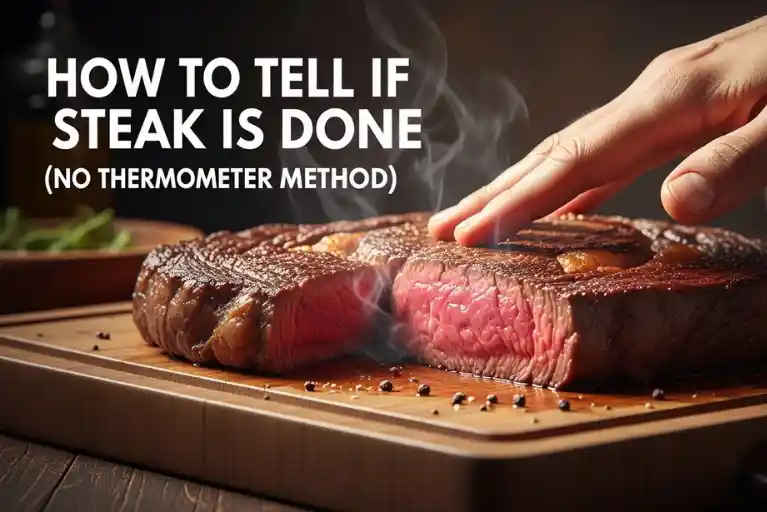
The finger test is one of the most common ways. Press the center of the steak:
- Soft like your cheek = rare
- Slight bounce = medium rare
- Firmer feel = medium
You can also use visual cues. A rare steak looks very red inside, while a medium steak has more pink. The crust should be deep brown and crispy.
Juices also help—clear juices usually mean the steak is closer to well done.
Cooking Time Guide (Thickness-Based Idea)
Cooking time for a ribeye steak in cast iron skillet depends on thickness.
Thin ribeye (about 1 inch):
- 2–3 minutes per side for medium rare
Thick ribeye (1.5 inches or more):
- 3–5 minutes per side, plus oven finish if needed
If using an oven finish:
- 3–6 minutes in the oven at medium heat for thicker steaks
Always remember that time is only a guide. Heat level and steak thickness can change results.
How to Get the Perfect Steak Crust
A perfect steak crust is what makes a cast iron ribeye taste like a steakhouse meal.
Start with a completely dry surface. Moisture is the enemy of browning and will stop crust formation.
Next, use a high smoke point oil like avocado or canola oil. This allows high heat without burning too quickly.
Keep your pan very hot. High heat discipline is the key—don’t lower the heat too early.
Finally, flipping matters. Not moving the steak too early helps build a strong crust, while proper flipping ensures even cooking and better texture.
Common Mistakes (and How to Fix Them)
Many people struggle with cast iron ribeye steak recipe results because of small but important mistakes.
If your steak turns tough, it is usually overcooked. Ribeye needs careful timing, especially for medium rare.
If there is no crust, the steak was likely wet or the pan was not hot enough.
If the outside burns but the inside is raw, the heat was too high without control or the steak was too thick for stovetop only cooking.
If the steak sticks to the pan, it was not properly preheated or not ready to flip yet.
If you cut the steak too early, all the juices will escape and the steak will become dry. Always let it rest before slicing.
Pro Chef Secrets for Restaurant-Style Steak
If you want your cast iron ribeye steak to taste like a real steakhouse, these small pro techniques make a big difference.
One secret is using beef tallow or clarified butter instead of regular butter during cooking. These fats handle high heat better and give a deeper, richer flavor.
Another important tip is understanding when NOT to press the steak. Many beginners press it down while cooking, but this actually squeezes out juices and makes the steak dry. Let it sear naturally for the best pan-seared ribeye steak texture.
Resting also matters more than most people think. A steak resting on a wire rack keeps the crust crisp, while resting on a plate can trap steam and soften it.
Finally, finishing with a small piece of compound butter right after cooking melts into the steak and creates a rich, restaurant-style glaze.
Easy Flavor Variations
You can easily change the flavor of your ribeye steak in cast iron skillet with a few simple variations.
- Garlic butter ribeye: classic, rich, and aromatic
- Herb butter ribeye: fresh rosemary, thyme, and parsley for a light flavor
- Black pepper crust steak: extra cracked pepper for a bold, spicy bite
- Spicy steak rub variation: chili flakes or paprika for heat and depth
These variations keep the same cooking method but give you completely different taste experiences.
How to Slice Ribeye Steak Properly
Slicing your steak correctly is just as important as cooking it.
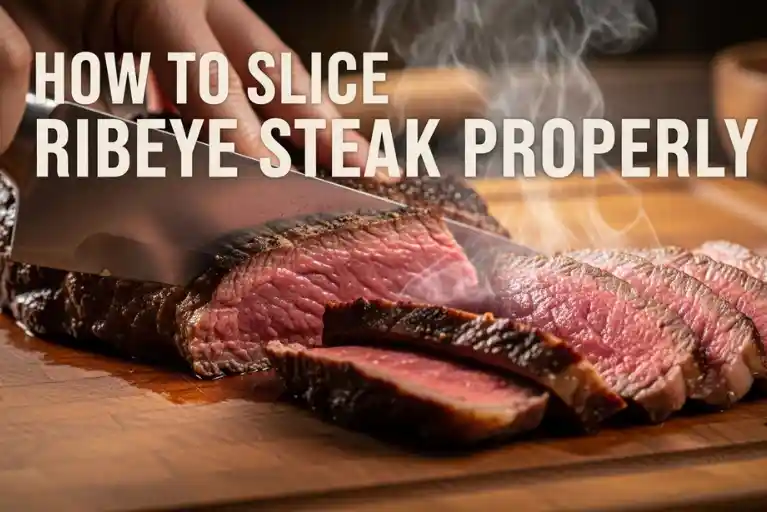
Always cut against the grain, meaning across the direction of the muscle fibers. This makes the steak more tender and easier to chew.
If you cut with the grain, the steak will feel tougher even if it is cooked perfectly.
Proper slicing also improves presentation, giving your juicy ribeye steak clean, steakhouse-style slices that look more professional on the plate.
Serving Ideas
A great cast iron ribeye steak recipe becomes even better when served with the right sides.
Classic options include mashed potatoes, which pair perfectly with the rich butter flavor of the steak.
You can also add roasted vegetables like carrots, asparagus, or broccoli for a balanced meal.
A fresh salad pairing helps cut through the richness of the steak and keeps the meal light.
For extra flavor, serve with steak sauces like peppercorn sauce, garlic butter, or mushroom sauce to complete the restaurant-style experience.
Troubleshooting
If your cast iron ribeye steak does not turn out perfect, don’t worry. Most problems come from a few simple mistakes.
If your steak is tough, it is usually overcooked or cooked at too high a temperature for too long. Ribeye is best when cooked to medium rare so it stays juicy and tender.
If there is no crust, the steak surface was likely wet or the pan was not hot enough. A dry surface and high heat are essential for a good steak crust.
If your steak is dry, it was probably cooked beyond the ideal doneness or not rested properly. Resting helps keep the juices inside the meat.
If you are cooking a frozen ribeye, it is possible, but it is harder to get an even crust. It is always better to thaw the steak first for the best pan-seared ribeye steak results.
FAQs About Ribeye Steaks in a Cast Iron Skillet
How long to cook ribeye in cast iron skillet?
Cooking time depends on thickness, but most ribeye steaks take about 2–5 minutes per side for medium rare, plus resting time.
Should I use butter or oil first?
Use oil first for searing because it handles high heat better. Add butter later for flavor and basting.
What is the best oil for steak?
High smoke point oils like avocado oil, canola oil, or grapeseed oil are best for a cast iron ribeye steak recipe.
Do I need to marinate ribeye?
No, ribeye does not need marination because it already has strong natural flavor from marbling. Simple salt and pepper are enough.
Can I cook steak without cast iron?
Yes, but cast iron gives the best crust and heat control compared to most pans, making it ideal for pan-seared ribeye steak.
Recipe Card: Cast Iron Ribeye Steak (Restaurant-Style at Home)
Course: Main DishesCuisine: American SteakhouseDifficulty: Easy2
servings15
minutes12
minutes300
kcalIngredients
1 ribeye steak (1–1.5 inch thick, well-marbled)
1–2 tsp kosher salt
1 tsp black pepper
1–2 tbsp high smoke point oil (avocado, canola, or grapeseed oil)
2–3 tbsp butter (for finishing)
2–3 garlic cloves (crushed)
1–2 sprigs rosemary (or thyme)
Optional: compound butter (for extra richness)
Instructions
- Dry Brine (Optional but Recommended)
Season steak with kosher salt
Rest for 30 minutes to overnight for better flavor and juiciness - Prepare the Steak
Bring steak to room temperature
Pat completely dry for best crust
Season with salt and black pepper - Heat Cast Iron Skillet
Preheat skillet on high heat until very hot (smoking slightly)
Add a small amount of high smoke point oil - Sear the Steak
Place steak in hot pan
Do not move it for 2–4 minutes
Let a deep brown steak crust form - Flip & Cook
Flip steak once or multiple times (depending on method)
Cook another 2–4 minutes - Add Butter & Aromatics
Add butter, garlic, and rosemary
Tilt pan and baste steak continuously for rich flavor - Finish Cooking
For thick steaks: finish in oven if needed
For thin steaks: finish on stovetop - Rest the Steak
Rest for 5–10 minutes
This locks in juices and improves tenderness - Slice & Serve
Slice against the grain
Serve immediately
Recipe Video
Notes
- Always use a very hot cast iron skillet
- Dry surface = better crust
- Don’t skip resting time
- Butter basting adds steakhouse flavor
- Medium rare gives best juiciness and tenderness
Final Summary
Making the perfect cast iron ribeye steak is all about three simple things: high heat, a dry surface, and proper resting. When you control these steps, you get a juicy inside with a crispy, steakhouse-style crust every time.
Follow the method step by step: choose a good cut, sear it properly, baste with butter, and always let it rest before slicing. These small details make a big difference in flavor and texture.
With a little practice, you can easily master this ribeye steak recipe at home and enjoy restaurant-quality results anytime you want.