

Cuban white rice may look simple, but getting it perfectly fluffy, light, and separated is where most people struggle. This classic Cuban rice recipe, also known as arroz blanco, is a daily staple in Cuban homes and the base of many traditional meals. The secret isn’t complicated ingredients—it’s using the right rice-to-water ratio, a little oil, and the proper stovetop method.
In this guide, you’ll learn how to make Cuban white rice step by step, even if you’re a beginner. We’ll cover everything from the authentic Cuban rice method to fixing common problems like sticky or mushy rice. Whether you want a quick side dish or a traditional pairing for beans and meat, this easy Cuban white rice recipe will help you cook perfect rice every time with confidence.
Quick Answer: What Is Cuban White Rice?
Cuban white rice (arroz blanco) is a simple, fluffy rice dish made with white rice, water, oil, and salt. It’s cooked using the absorption method, where rice simmers until the water is fully absorbed, then steams to finish. This Cuban rice recipe creates light, separated grains perfect for everyday meals.
What Is Cuban White Rice (Arroz Blanco)?
Cuban white rice, also known as arroz blanco, is a simple and essential dish in Cuban cuisine made with just a few ingredients: white rice, water, oil, and salt. Unlike many flavored rice dishes, this Cuban rice recipe focuses on clean taste and perfect texture, making it the ideal base for everyday meals.
In Cuban homes, rice is not just a side dish—it’s a daily staple served with beans, meats, and vegetables. The goal is always the same: light, fluffy rice with separate grains, not sticky or clumped. This is why learning how to make Cuban white rice properly is an important skill in traditional cooking.
What Makes Cuban White Rice Different?
What sets Cuban white rice apart from regular rice is its cooking technique and texture focus. Even though the ingredients are simple, the method creates a very specific result.

You might also like: Best Vegan Scallion Pancakes
1. Oil Usage (Key Detail)
A small amount of oil is added during cooking. This helps coat the grains and prevents sticking, giving you that signature fluffy Cuban rice texture.
2. Absorption Cooking Method
This Cuban rice method uses the absorption technique, where rice cooks until all the water is fully absorbed, then rests to steam. This step is critical for achieving perfect Cuban white rice.
3. Texture vs Plain White Rice
Regular white rice can be soft or sticky, but Cuban white rice is always light, dry, and separated. Each grain should be visible and fluffy—not clumped together.
4. Difference from Spanish Rice
Unlike Spanish rice, which includes tomatoes, spices, and color, Cuban white rice (arroz blanco) is plain and neutral. It’s designed to pair with flavorful dishes like beans, chicken, or pork, making it a versatile base in many meals.
The Role of Rice in Cuban Cuisine
In Cuban cuisine, rice is more than just a side dish—it’s a daily essential found in almost every meal. In many Cuban homes, cooking a pot of Cuban white rice (arroz blanco) is as routine as making coffee. It provides a simple, filling base that balances rich and flavorful dishes.
Daily Meals in Cuban Homes
Most traditional meals include Cuban rice served alongside beans, meats, or vegetables. It’s valued for being affordable, easy to prepare, and satisfying, making it a staple across generations.
Rice + Beans Tradition
One of the most iconic combinations is white rice with beans (like black beans). This pairing is not just delicious—it’s also nutritionally balanced, providing both carbohydrates and protein.
Cultural Importance
Arroz blanco represents comfort, tradition, and family cooking. Learning how to make Cuban white rice properly is often passed down through generations, making it an important part of Cuban food culture.
Ingredients Breakdown (With Roles + Smart Substitutes)
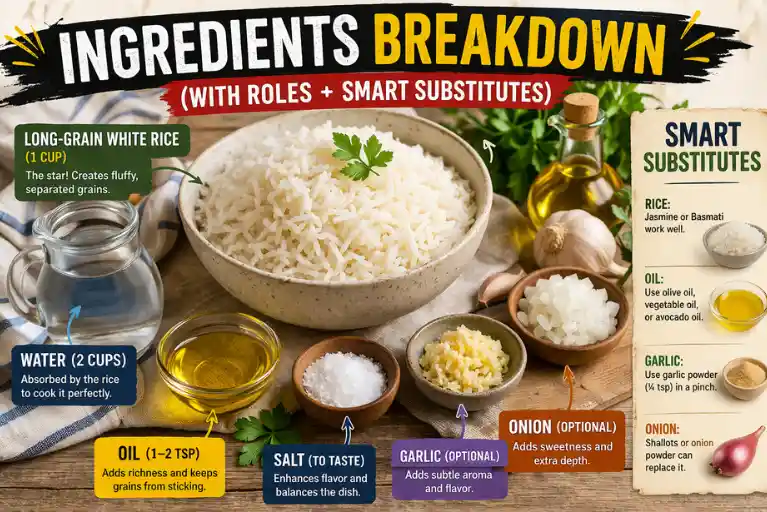
Making perfect Cuban white rice starts with understanding each ingredient and its role. Even though this Cuban rice recipe is simple, every element matters.
1. Rice (Type Matters)
Use long-grain white rice for best results. It produces light, fluffy, and separated grains, which is essential for authentic texture.
Substitute:
- Basmati (lighter texture)
- Jasmine (slightly softer, more fragrant)
2. Water
Water controls how the rice cooks and expands. The correct amount ensures the rice is fully cooked without becoming mushy.
Tip: Always measure carefully for consistent results.
3. Oil (Why It’s Essential)
A small amount of oil is a key part of the Cuban rice method. It coats the grains, helping prevent sticking and creating that signature fluffy texture.
Substitute:
- Olive oil
- Neutral oil (like vegetable or canola)
4. Salt
Salt enhances the natural flavor of the rice, making it taste balanced instead of bland.
5. Optional: Garlic or Onion
Some variations of Cuban white rice include garlic or onion for a subtle flavor boost. This is optional but adds depth without overpowering the dish.
Perfect Rice-to-Water Ratio (With Table)
Getting the Cuban rice water ratio right is the most important step for achieving perfect Cuban white rice. Too much water leads to mushy rice, while too little results in undercooked grains.
Standard Ratio
1 cup white rice : 2 cups water
This ratio works best for most Cuban white rice recipes using the stovetop method.
Rice-to-Water Ratio Table (Scaling Guide)
| Rice (Cups) | Water (Cups) | Servings |
| 1 cup | 2 cups | 2–3 servings |
| 2 cups | 4 cups | 4–6 servings |
| 3 cups | 6 cups | 6–8 servings |
| 4 cups | 8 cups | 8–10 servings |
| 5 cups | 10 cups | 10–12 servings |
Adjustments for Different Rice Types
- Basmati Rice: Use slightly less water (1.75 cups per cup of rice)
- Jasmine Rice: Similar ratio, but slightly softer texture
- Short-Grain Rice: Needs less water but becomes stickier (not ideal for Cuban style)
Step-by-Step Cuban White Rice (Foolproof Method)
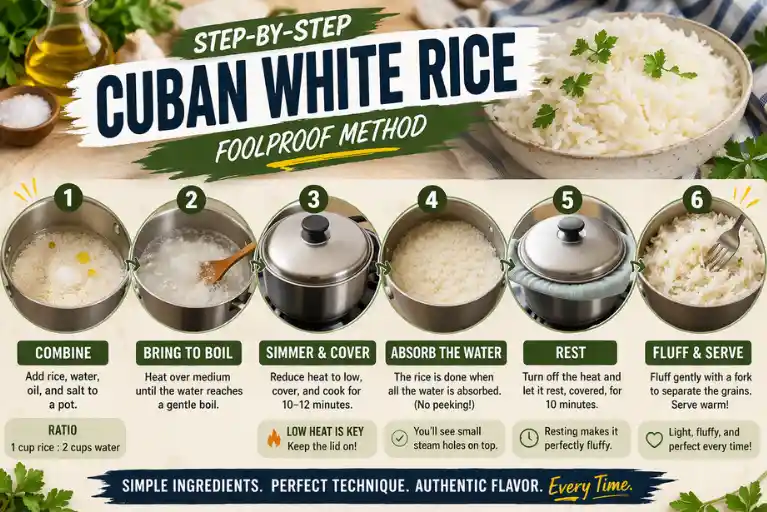
Follow this Cuban white rice recipe step by step to get perfect, fluffy, and separated grains every time. The key is timing + heat control.
Step 1: Prep (2–3 minutes)
- Measure 1 cup long-grain white rice and 2 cups water (correct Cuban rice water ratio)
- Optionally rinse lightly (not required in traditional Cuban rice method)
- Add 1–2 teaspoons oil and salt to taste
Step 2: Cooking Phase (8–10 minutes)
- Place rice, water, oil, and salt in a pot
- Bring to a gentle boil on medium heat
- Once boiling, reduce heat to low and cover with a lid
Do NOT stir too much—this can make the rice sticky
Step 3: Steam/Rest Phase (10–15 minutes)
- Let the rice cook covered on low heat until water is fully absorbed
- Turn off heat and let it rest (still covered)
This step allows steam to finish cooking and creates fluffy Cuban white rice
Step 4: Fluffing (1–2 minutes)
- Use a fork to gently fluff the rice
- Separate the grains without pressing or mashing
You now have perfect Cuban white rice with light, airy texture
How the Rice Should Feel (Texture Guide)
Understanding texture is the secret to mastering how to make Cuban white rice correctly.
Fluffy vs Sticky
- Fluffy rice: Light, airy, not clumped
- Sticky rice: Wet, heavy, clumped together
Cuban white rice should always be fluffy, never sticky
Separated Grains
Each grain should be distinct and separate, not stuck together. This is the hallmark of an authentic Cuban rice recipe.
Visual + Touch Cues
- Looks dry but soft
- Feels light when fluffed
- No excess moisture at the bottom
- Steam smell without sogginess
If your rice meets these signs, you’ve achieved perfect Cuban rice texture
Why Rice Fails (Science Explained Simply)
Most people struggle because they don’t understand how rice cooks. Here’s a simple breakdown.
Starch Behavior
Rice releases starch during cooking, which can make it sticky. Too much stirring or water increases starch buildup.
Water Absorption
Rice absorbs water until fully cooked.
- Too much water → mushy rice
- Too little water → undercooked rice
This is why the Cuban rice water ratio is critical
Role of Oil
Oil coats the grains and helps reduce sticking. This is a key part of the Cuban white rice method that many people skip.
Heat Control Impact
- High heat too long → burns bottom
- Low heat at the right time → even cooking
Proper heat control = fluffy Cuban white rice every time
Common Mistakes (And How to Fix Them)
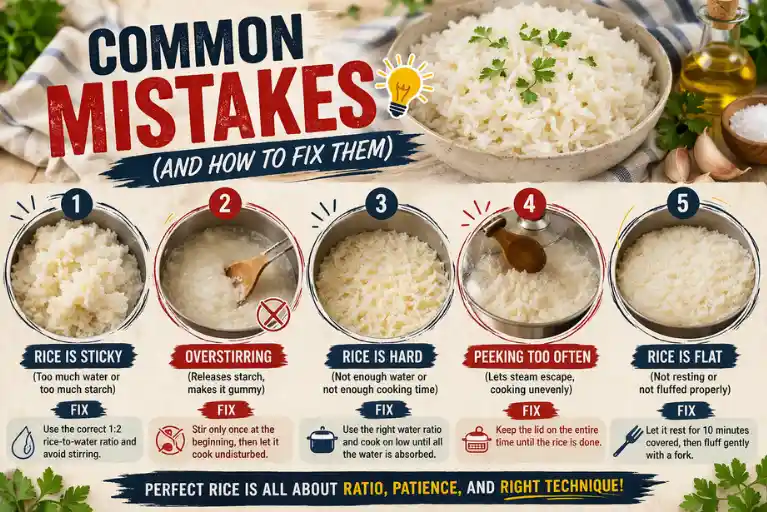
Even a simple Cuban rice recipe can go wrong. Here’s how to fix the most common problems.
1. Mushy Rice
Cause: Too much water or overcooking
Fix:
- Use correct rice-to-water ratio
- Reduce cooking time
- Let rice rest uncovered for a few minutes
2. Sticky Rice
Cause: Too much starch or stirring
Fix:
- Avoid over-stirring
- Add a little oil
- Rinse rice lightly if needed
3. Undercooked Rice
Cause: Not enough water or time
Fix:
- Add 2–3 tablespoons water
- Cover and cook on low heat for a few more minutes
4. Burnt Rice Bottom
Cause: Heat too high or no monitoring
Fix:
- Lower heat after boiling
- Use a heavy-bottom pot
- Avoid cooking too long
Authentic Cuban Cooking Tips (Insider Secrets)
To truly master Cuban white rice (arroz blanco), it’s not just about the ingredients—it’s about the small traditional techniques that make a big difference.
Traditional Stovetop Method
In Cuban kitchens, rice is almost always cooked on the stovetop using the absorption method. The key is to bring it to a boil, then immediately reduce to low heat and cover. This slow cooking allows the rice to absorb water evenly and develop that signature fluffy texture.
Cuban Home-Style Techniques
- Add a small amount of oil at the beginning to keep grains separated
- Avoid constant stirring—this releases starch and causes sticking
- Keep the lid closed during cooking to trap steam
These simple habits define an authentic Cuban rice recipe
Small Details That Change Texture
- Let the rice rest after cooking (very important)
- Use a fork to fluff, not a spoon
- Maintain low, steady heat after boiling
These details are what turn basic rice into perfect Cuban white rice
Flavor Variations (Classic + Creative)
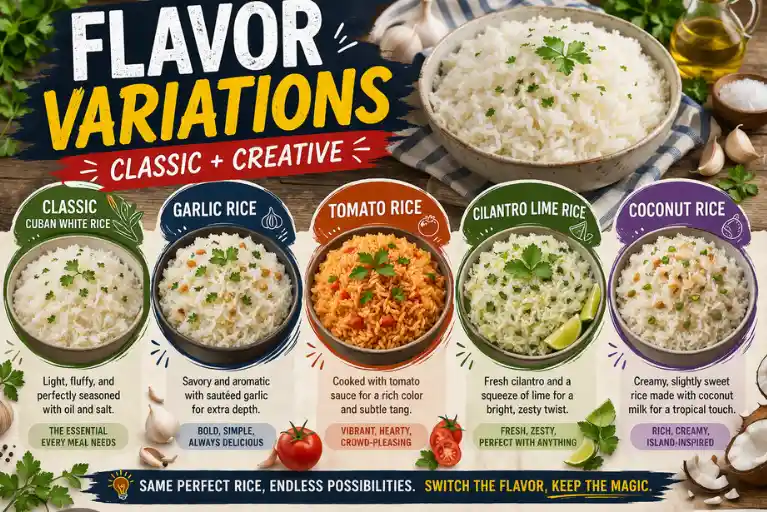
While Cuban white rice is traditionally simple, there are a few popular variations that add subtle flavor without changing its identity.
Garlic Rice (Most Popular Variation)
Add minced garlic at the start of cooking for a mild, savory flavor. This is one of the most loved Cuban rice variations.
Onion Variation
Finely chopped onions can be sautéed lightly in oil before adding water and rice. This adds a slightly sweet and rich taste.
Light Seasoning Versions
Some people add small touches like:
- A pinch of cumin
- A splash of broth instead of water
These variations keep the dish simple while enhancing flavor in a balanced way
How to Scale This Recipe (Small to Large Batches)
Whether you’re cooking for one person or a full family, scaling a Cuban white rice recipe correctly ensures consistent results.
Cooking for 1 (Small Portion)
- Use ½ cup rice + 1 cup water
- Reduce cooking time slightly
- Use a smaller pot for even heat
Cooking for Family (Larger Batches)
- Follow the same 1:2 rice-to-water ratio
- Increase cooking time slightly for larger quantities
- Make sure your pot is large enough to allow steam circulation
Adjusting Water + Timing
- Larger batches may need a few extra minutes to fully absorb water
- Always keep heat low after boiling
- Let rice rest longer for better texture
Proper scaling helps maintain fluffy, separated grains every time
What to Serve With Cuban White Rice
Cuban white rice is designed to pair with flavorful dishes, making it one of the most versatile sides in Cuban cuisine.
Beans (Essential Pairing)
The most classic combination is white rice with black beans. This pairing creates a balanced, traditional Cuban meal.
Chicken, Pork, and Beef
Serve Cuban rice with:
- Roast chicken
- Fried pork (lechón)
- Beef dishes
The neutral flavor of rice complements rich proteins perfectly
Full Cuban Meal Ideas
A traditional plate often includes:
- Cuban white rice (arroz blanco)
- Beans
- Meat (chicken, pork, or beef)
- Simple salad or plantains
This combination reflects the heart of authentic Cuban cuisine and shows why Cuban rice is such an essential part of daily meals
Storage, Reheating & Meal Prep Tips
Proper handling is just as important as cooking when it comes to Cuban white rice. These tips will help you keep your rice fresh, safe, and fluffy even after cooking.
Safe Storage
- Let the rice cool slightly, then store it in an airtight container
- Refrigerate within 1–2 hours of cooking
- Consume within 3–4 days for best quality
Proper storage prevents bacteria and keeps your Cuban rice recipe safe to eat
Reheating Without Drying
Rice can easily dry out, but you can fix that with a simple method:
- Add 1–2 tablespoons of water before reheating
- Cover the rice to trap steam
- Heat in microwave or stovetop until warm
This restores moisture and keeps your fluffy Cuban white rice texture intact
Freezing Tips
- Portion rice into small containers or freezer bags
- Freeze for up to 1 month
- Thaw in the fridge or reheat directly with added moisture
Freezing is perfect for meal prep and saves time when making easy Cuban rice
Nutrition & Health Insights
Cuban white rice (arroz blanco) is simple and satisfying, but it’s helpful to understand its nutritional value.

Calories
- 1 cup cooked white rice ≈ 200 calories
- Low in fat, especially when using minimal oil
Carbohydrates
- Rich in carbs, providing quick energy
- Ideal as a base for balanced meals with protein and vegetables
Is It Healthy?
Cuban white rice can be part of a healthy diet when eaten in moderation. Pairing it with beans, lean protein, and vegetables creates a more balanced meal.
For a healthier approach:
- Control portion size
- Use less oil
- Combine with fiber-rich foods
Best Rice Types for Cuban White Rice
Choosing the right rice is essential for achieving perfect Cuban white rice (arroz blanco) with light, fluffy, separated grains. The wrong type can turn your dish sticky or heavy.
Long Grain vs Short Grain
- Long-grain rice (best choice):
Produces fluffy, dry, and separated grains, which is ideal for an authentic Cuban rice recipe - Short-grain rice:
Becomes soft and sticky, which is NOT suitable for Cuban white rice
Always choose long-grain white rice for the best results
Jasmine vs Basmati vs Standard White Rice
- Standard long-grain white rice:
Most traditional and commonly used in Cuban cuisine - Basmati rice:
Slightly lighter and more aromatic, but still works well - Jasmine rice:
Softer and slightly sticky—acceptable, but not ideal for authentic texture
What Cubans Actually Use
In most Cuban households, people use basic long-grain white rice—nothing fancy. The focus is on technique, not expensive ingredients.
This is why mastering the Cuban rice method matters more than the rice brand
Stovetop vs Rice Cooker (Which Is Better?)
Many people wonder if they can use a rice cooker for Cuban white rice, but the method you choose affects both taste and texture.
Taste Difference
- Stovetop:
More traditional flavor and slightly richer taste due to oil integration - Rice cooker:
Cleaner taste but less depth
Texture Difference
- Stovetop method:
Produces fluffy, separated grains—the hallmark of authentic Cuban rice - Rice cooker:
Can make rice slightly softer or more uniform
Which Method Is Authentic?
The stovetop method is the traditional and preferred way in Cuban cooking
However, a rice cooker can still work if you follow the correct Cuban rice water ratio and avoid overcooking
Pro Chef Tips for Restaurant-Style Rice
If you want your Cuban white rice recipe to taste like it came from a restaurant, these expert tips will make a big difference.
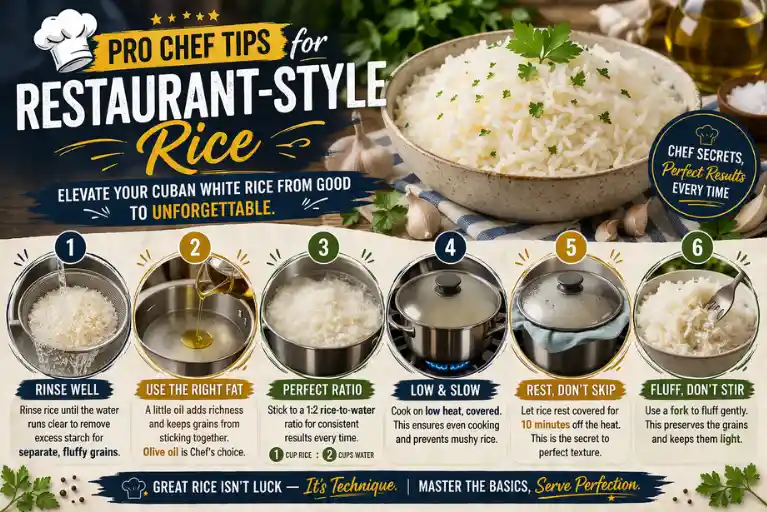
Steam Control (Secret to Fluffy Rice)
- Keep the lid closed during cooking
- Let the rice rest after cooking to finish steaming
Steam is what creates that light, airy texture
Oil Timing (Important Detail)
- Add oil at the beginning so it coats the grains evenly
- This prevents sticking and improves texture
This small step defines the authentic Cuban rice method
Fluffing Technique (Final Touch)
- Always use a fork, not a spoon
- Gently separate grains instead of pressing them
Proper fluffing ensures perfect Cuban white rice with separated grains
FAQs About the Best Cuban White Rice
Why is my Cuban rice sticky?
Your Cuban white rice becomes sticky when there’s too much water, excess starch, or over-stirring. Use the correct Cuban rice water ratio (1:2), avoid stirring, and add a little oil for fluffy, separated grains.
Do Cubans rinse rice?
In traditional Cuban rice recipes, rinsing is optional. Many Cuban cooks do not rinse rice because they rely on oil and technique to control texture. However, light rinsing can reduce starch if needed.
Can I use brown rice?
Yes, but it’s not traditional. Brown rice requires more water and longer cooking time, and the texture will be firmer—not the classic fluffy Cuban white rice.
How long does it last?
Cooked Cuban white rice lasts 3–4 days in the fridge when stored properly in an airtight container. For longer storage, you can freeze it for up to 1 month.
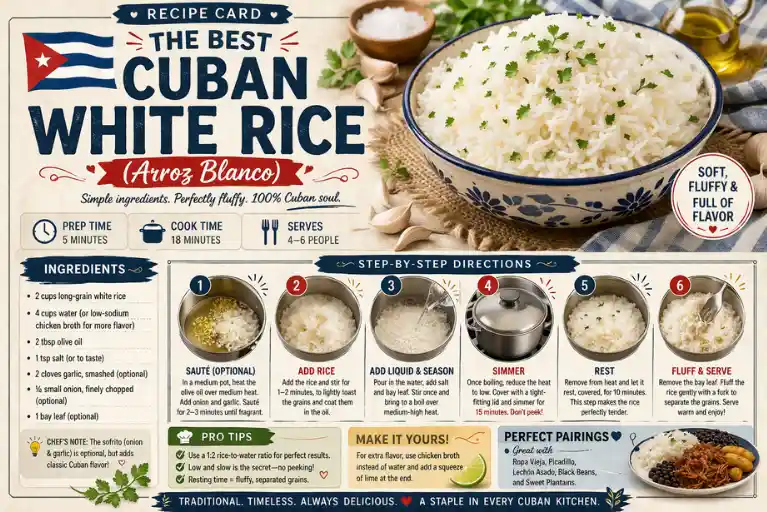
Recipe Card — Best Cuban White Rice Recipe (Arroz Blanco)
Course: Side DishCuisine: CubanDifficulty: Easy4
servings5
minutes20
minutes200
kcalA simple and authentic Cuban white rice recipe made with rice, water, oil, and salt, using the absorption method to create fluffy, light, and perfectly separated grains every time.
Ingredients
1 cup long-grain white rice
2 cups water (correct Cuban rice water ratio)
1–2 teaspoons oil (olive or neutral)
Salt to taste
Optional: 1–2 cloves garlic (minced) or 2 tablespoons onion (finely chopped)
Fluff gently with a fork and serve.
Instructions
- In a pot, combine rice, water, oil, and salt.
- Bring to a gentle boil over medium heat.
- Reduce heat to low, cover, and cook until water is absorbed (about 10–12 minutes).
- Turn off heat and let rice rest covered for 10 minutes.
Recipe Video
Notes
- Always follow the 1:2 rice-to-water ratio
- Avoid stirring to prevent sticky rice
- Let rice rest to achieve fluffy Cuban white rice texture
- Use long-grain rice for best results
Final Thought
Mastering how to make Cuban white rice is all about simple ingredients, правиль ratio, and proper technique. Once you understand the basics, you’ll be able to cook perfect, fluffy Cuban rice every time.